In the face of a challenge, there are the doers and the dawdlers. The staff at Blue Springs Lake in Blue Springs, Missouri, are doers. When the knife gate in the dam’s outlet tower was facing a full replacement, the lake project staff suggested they attempt to rebuild it instead. Despite the obstacles they faced, the team’s ingenuity and innovation prevailed – not only improving the functionality of the knife gate but also saving taxpayers an estimated $200,000.
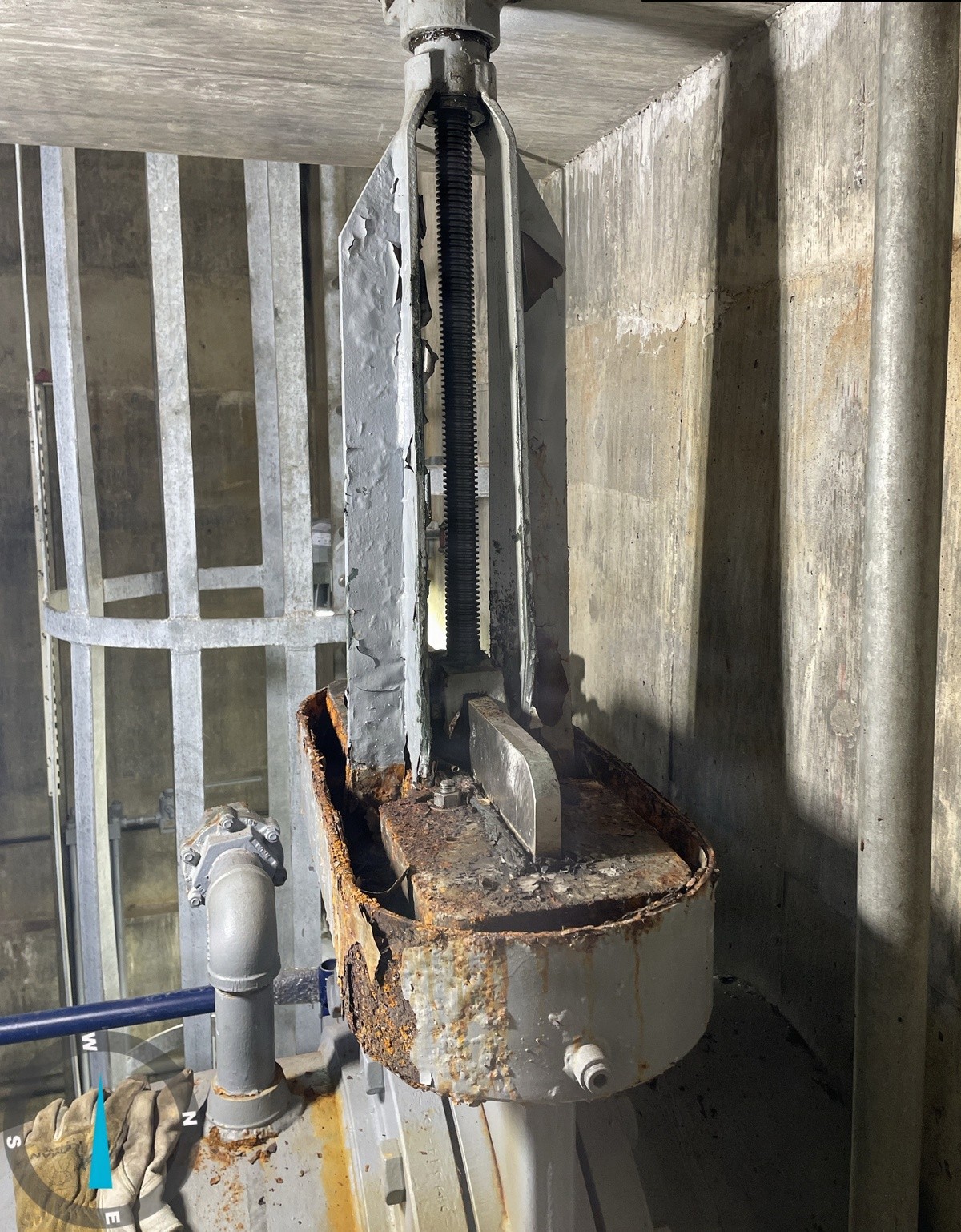
A knife gate is a specialized low-flow valve inside of a dam’s outlet tower, which features a sharp-edged blade designed to cut through debris so water can flow freely. The knife gate at Blue Springs Lake had not been serviced since its installation, more than 30 years ago. In desperate need of attention, engineers suggested it be replaced. However, due to the conditions in the outlet tower, the cost of a replacement would have been significant.
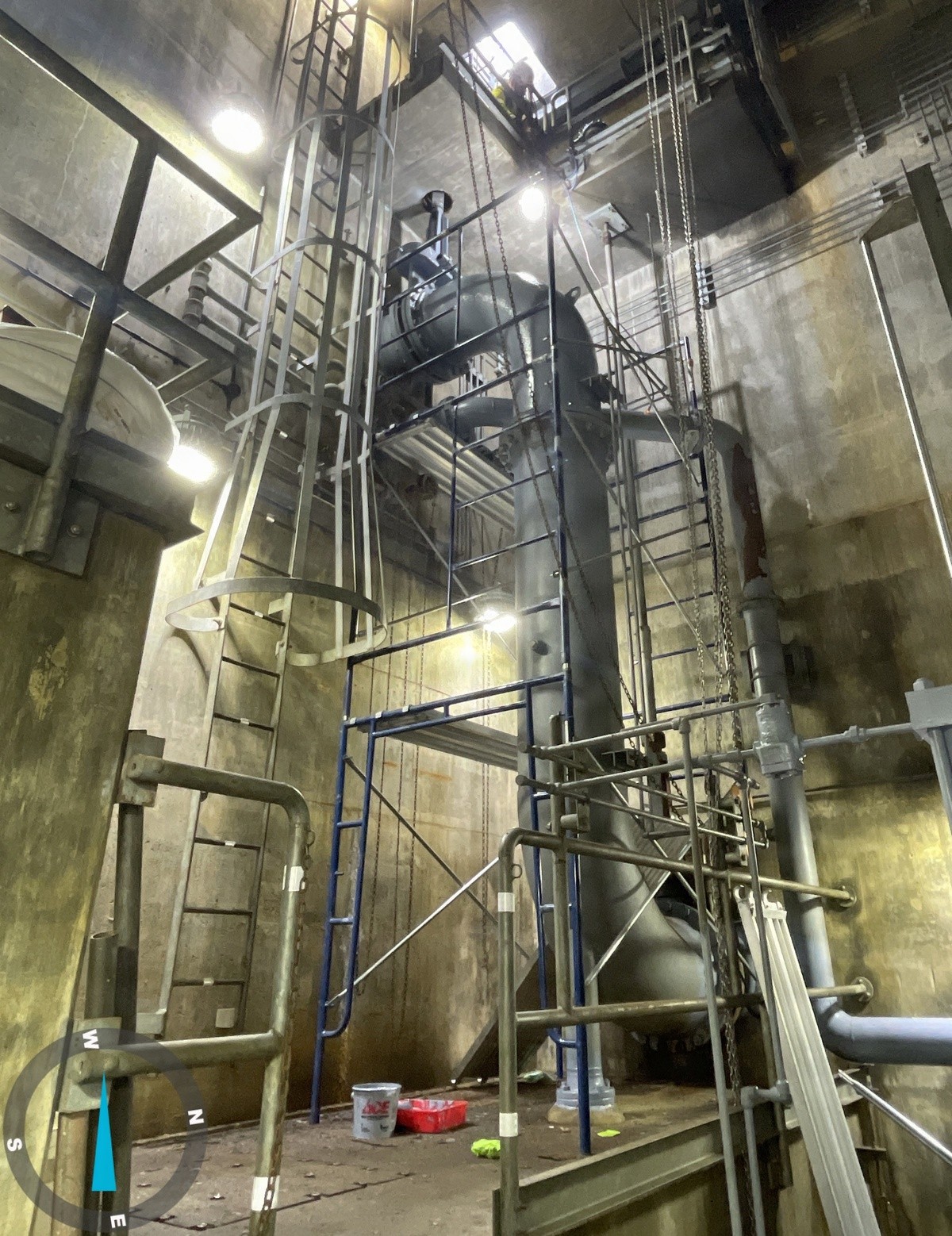
“The knife gate is about 25 feet off the operating floor and there’s no walkway or anything to get up to it,” said Kyle Forsythe, maintenance mechanic at Blue Springs Lake with the Kansas City District, U.S. Army Corps of Engineers. “The amount of money that would have cost to have a contractor come in and [replace] it would have been considerably higher than letting us take a crack at it.”
Recognizing the cost associated with replacing the knife gate and leveraging their various skills and backgrounds, Forsythe and his coworker, Josh Devaul, had another idea. After years of discussions and planning, the team decided they would try to repair and restore the knife gate themselves
“In the time we’ve worked together [my supervisor] has learned my background and my history, so he has more confidence in letting me tackle stuff like this,” said Forsythe. “We’ve worked on other knife gates, so we knew what we were getting into. It was more a matter of, ‘how do we get up there?’”
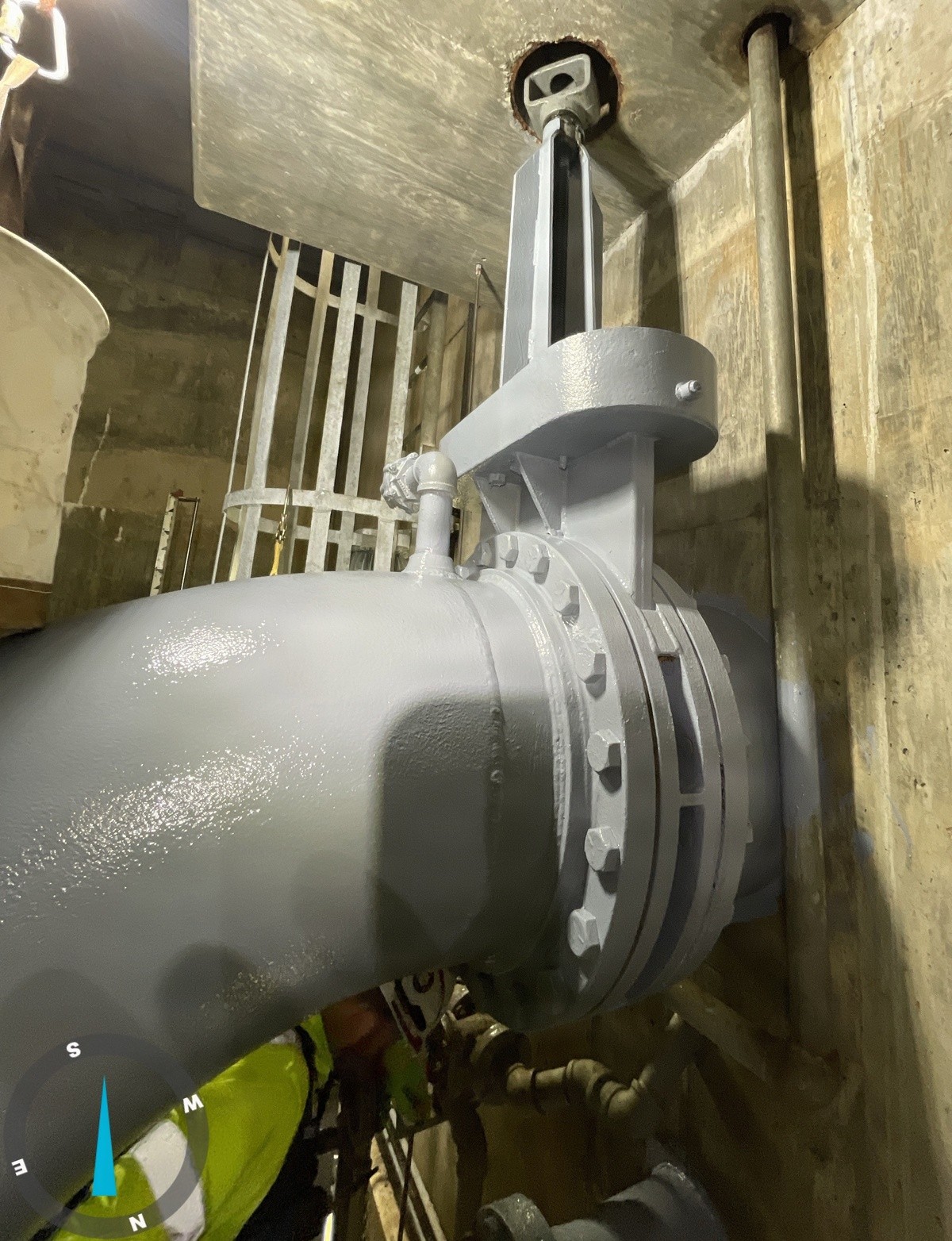
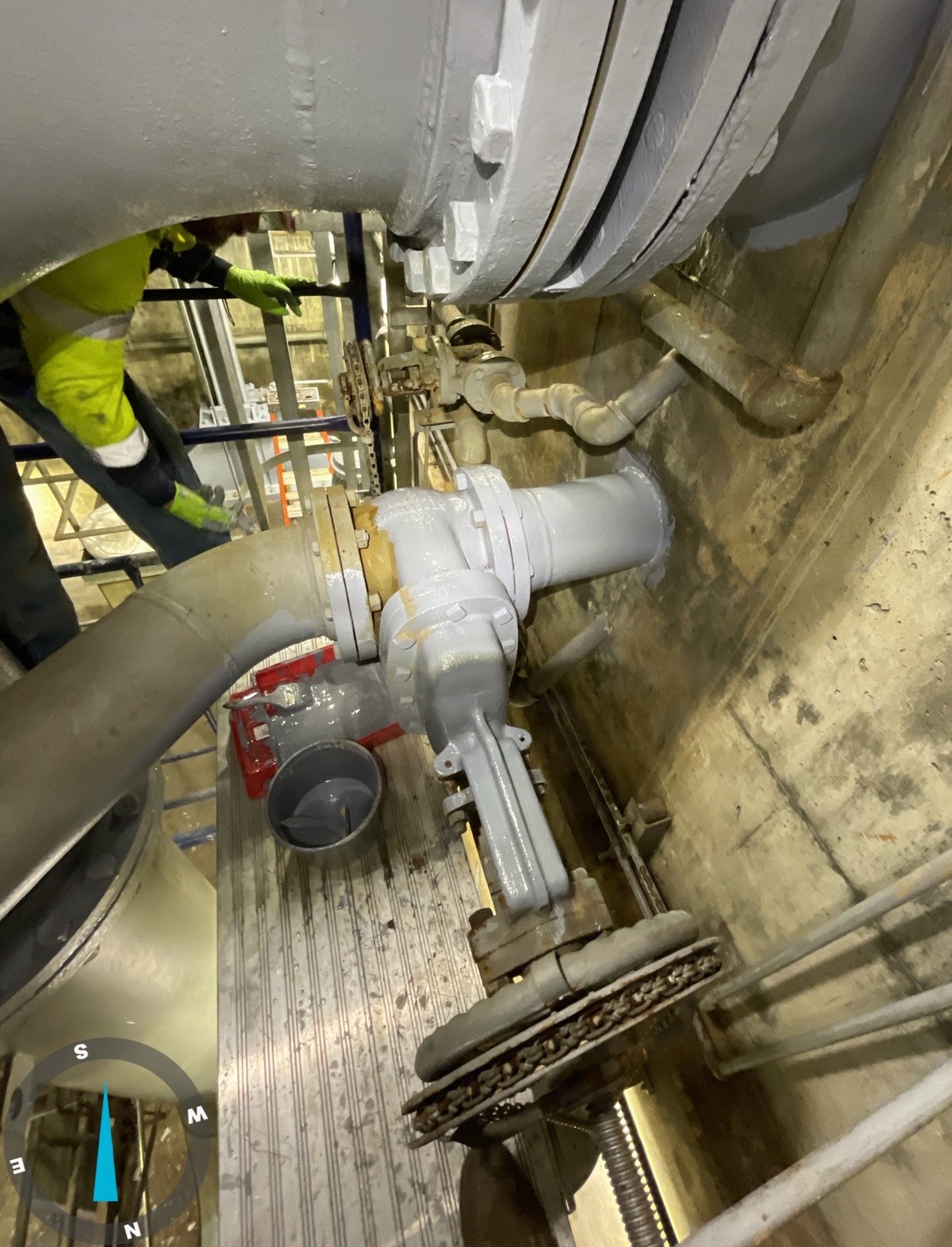
Building scaffolding inside of the outlet tower, the team was able to safely reach the knife gate and repair it. But they didn’t just repair and restore it; the work they did has improved efficiency and extended the knife gate’s overall life.
“We have been looking at this and trying to figure out how to do it for a couple years. We were able to get up there for the first time in the better part of 30 years,” said Forsythe. “It was still in good enough shape that we just needed to take all the packings out, clean everything and get it back to a functional place. It could easily last another 50 years.”
Blue Springs Lake was one of the last of 18 reservoirs built in the Kansas City District’s area of operations. Due to budget constraints at the time of construction, the Blue Springs Lake knife gate requires manual operation, whereas most other lakes’ knife gates are hydraulically operated. According to Forsythe, operating the knife gate prior to its repair was physically demanding. Now, it’s easier than ever to operate.
“When I first got to the lake, there was a six-foot bar that we had to put in the wheel. It would take about 45 minutes to move the knife gate, and you got a full body workout in the process,” said Forsythe. “Within a couple hours [of repairing it], we realized that’s probably the best it’s run since it was installed. You can spin it around with one hand now instead of two hands and a six-foot bar."
Repairing the knife gate in house was a chance for Forsythe and his coworkers to use their skills and knowledge while saving taxpayer money. For management, trusting the maintenance staff at Blue Springs Lake was a calculated risk, but one they were optimistic would pay off in the end.
“From his position as a supervisor, [Derek Dorsey, natural resource manager at Smithville, Blue Springs and Longview lakes] weighed the risks and potential benefits of trying to repair the knife gate themselves,” said Leigh Mitchell, deputy operations project manager at Smithville, Blue Springs and Longview lakes. “He considered [Forsythe and Devaul’s] skills and had a lot of confidence in their abilities, so he made the decision to move forward with a rebuild instead of a costly replacement and it paid off.”
While it’s true this repair project saved significant taxpayer money, the value goes well beyond the estimated $200,000 cost savings. Not only is the repaired knife gate functioning better than ever, but the money saved is going right back into the operation and maintenance of Blue Springs Lake and Dam.
“There is significant downstream infrastructure protected by [Blue Springs Lake and Dam.] By saving that money on this project, we’re able to put those funds toward doing more to protect that infrastructure,” said Mitchell. “The team’s innovation and their ability to do that work themselves has led to further protection of those downstream assets.”
For Forsythe and the rest of the Blue Springs Lake maintenance team, being able to put their skills to use is just part of the job – one they take seriously.
“There is a lot of infrastructure downstream from [Blue Springs Lake],” said Forsythe. “There are so many downstream effects if we don’t do our jobs and luckily, all of us love our jobs. We love coming to work. The dam functioning and functioning well is very important and it’s something we take a lot of pride in.”
Social Sharing