1 / 5Show Caption +Hide Caption –
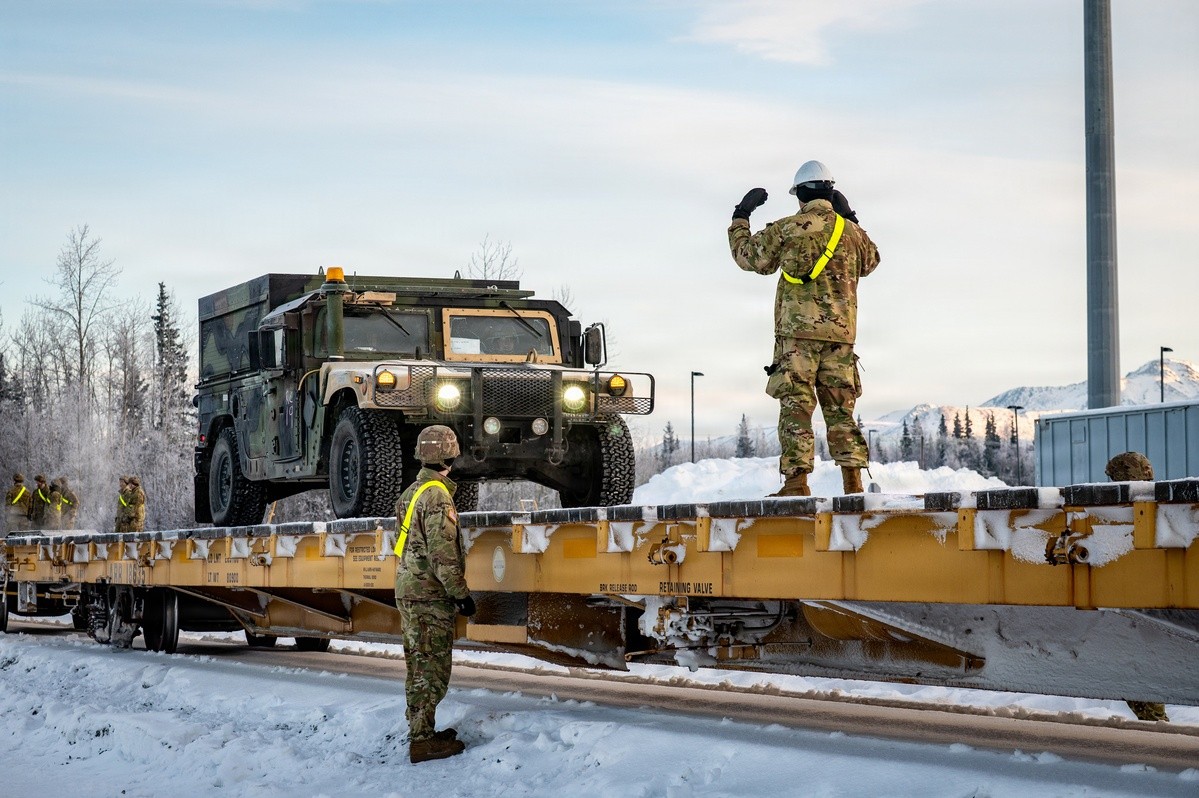
U.S. Army Soldiers assigned to the 3rd Battalion, 509th Parachute Infantry Regiment, 11th Airborne Division, direct vehicles onto a flatcar at Joint Base Elmendorf-Richardson, Alaska, Jan. 22, 2026, for Joint Pacific Multinational Readiness Center 26-02. The exercise tests units’ ability to deploy, integrate and operate effectively across the Indo-Pacific region.
(Photo Credit: Photo by U.S. Air Force Senior Airman Hunter Hites)VIEW ORIGINAL2 / 5Show Caption +Hide Caption –
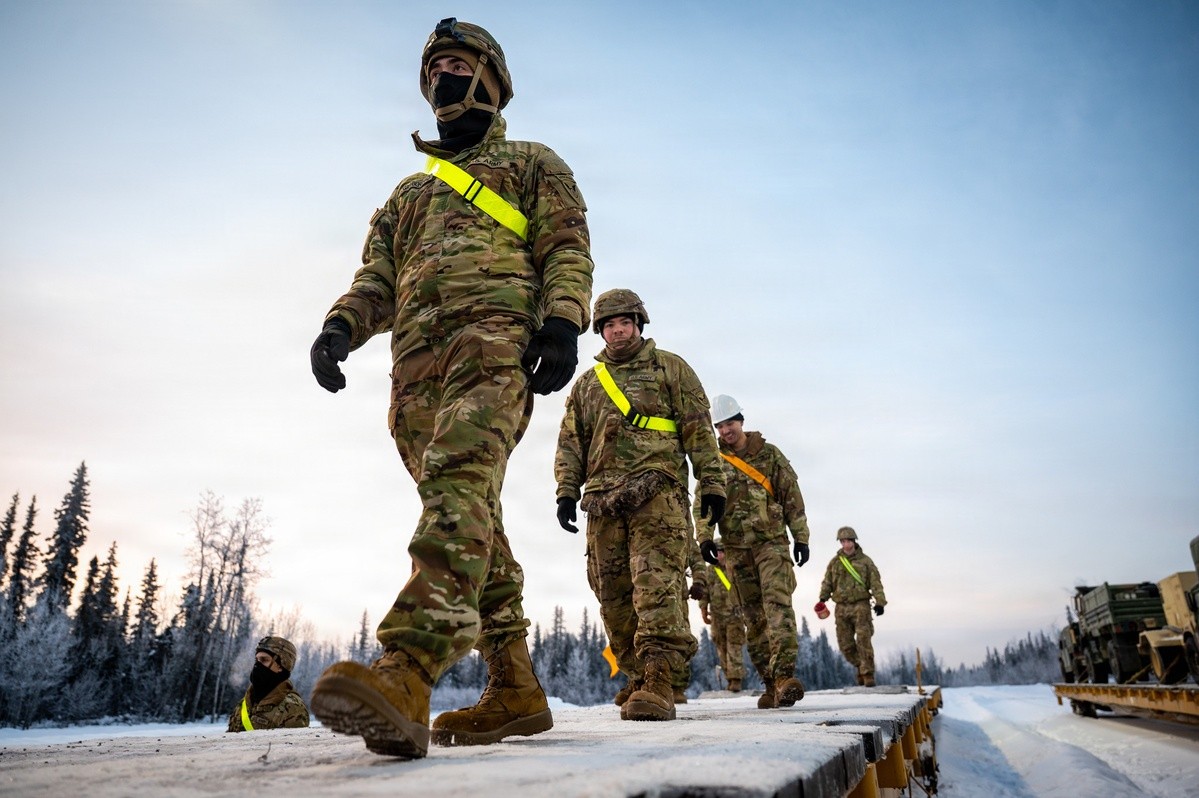
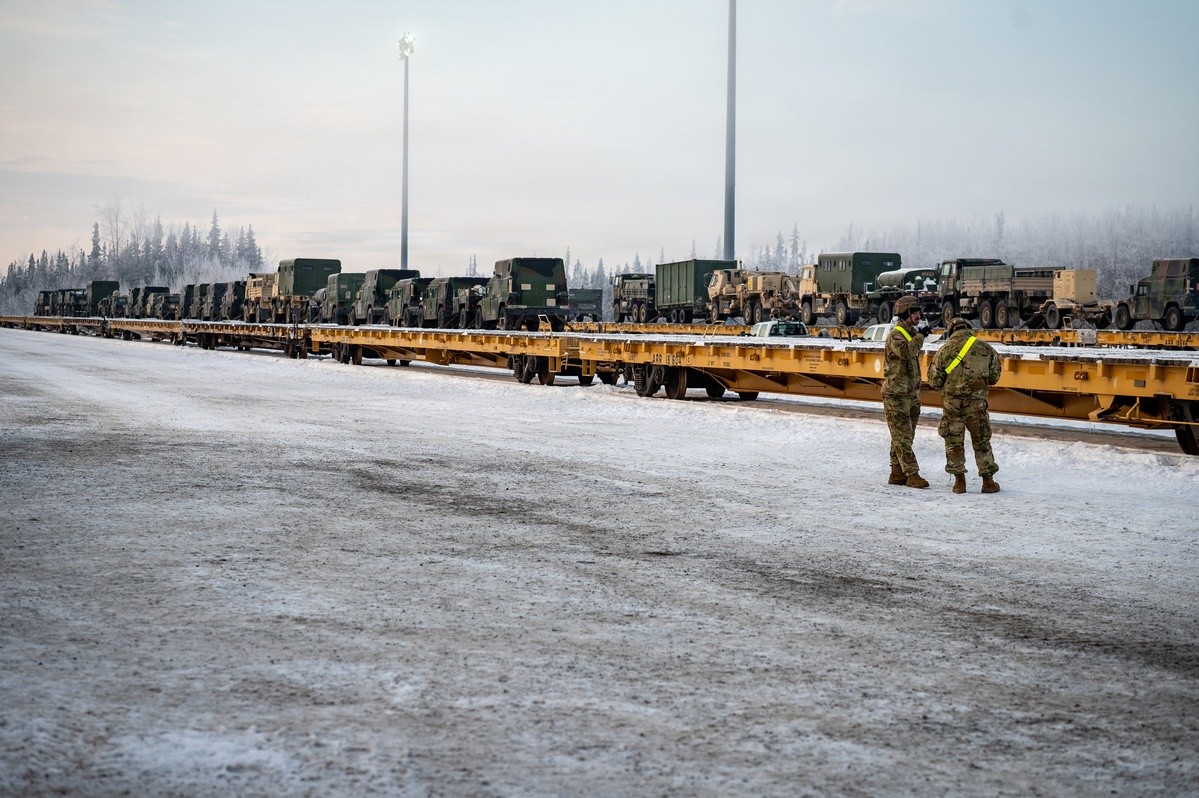
U.S. Army Soldiers assigned to the 3rd Battalion, 509th Parachute Infantry Regiment, 11th Airborne Division, assess freight cars at Joint Base Elmendorf-Richardson, Alaska, Jan. 22, 2026, in preparation for Joint Pacific Multinational Readiness Center 26-02. Exercise JPMRC is a large-scale training exercise designed to prepare U.S. and allied forces for operations in complex, multi-domain environments. The exercise tests units’ ability to deploy, integrate and operate effectively across the Indo-Pacific region.
(Photo Credit: Photo by U.S. Air Force Senior Airman Hunter Hites)VIEW ORIGINAL3 / 5Show Caption +Hide Caption –
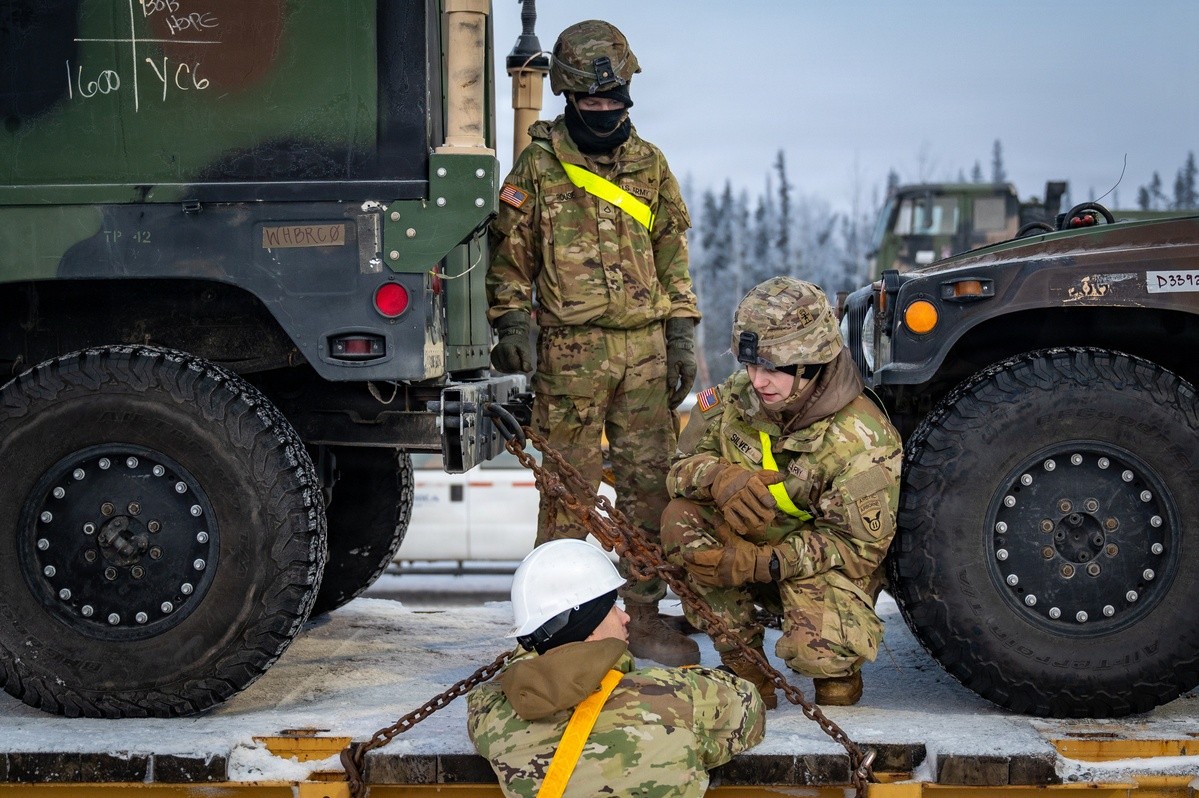
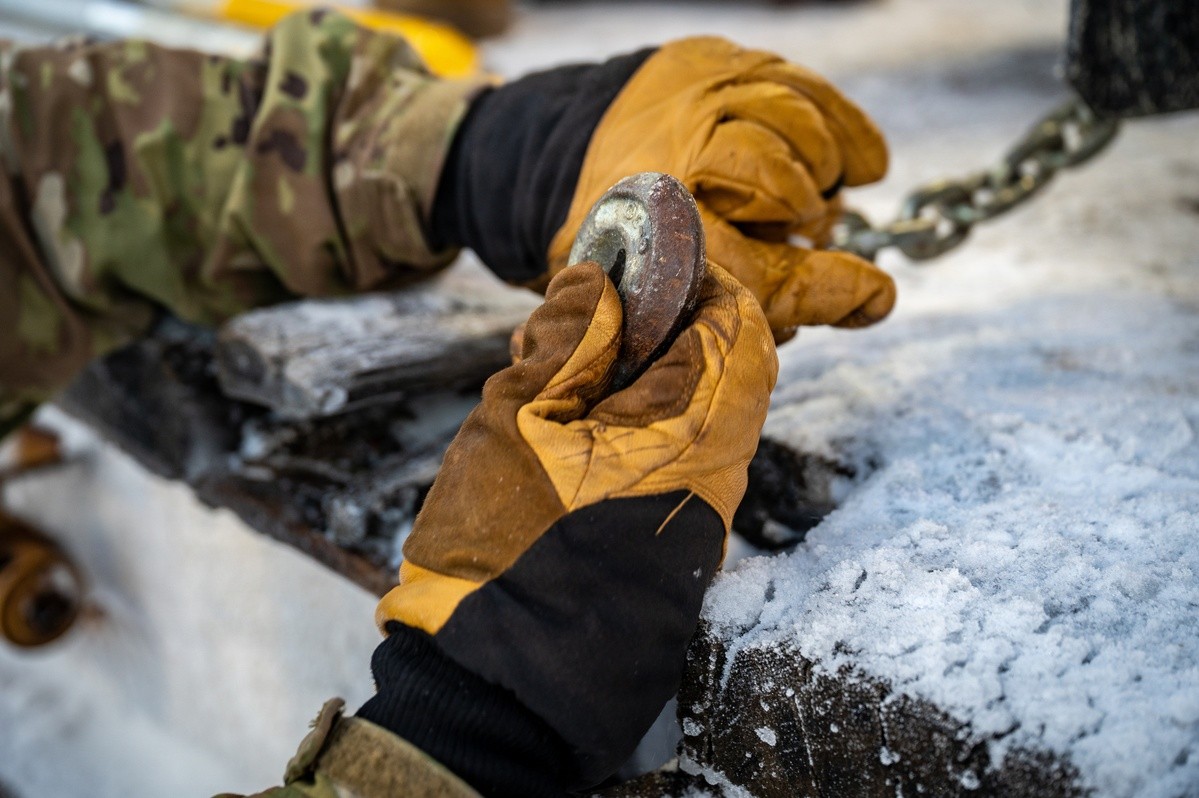
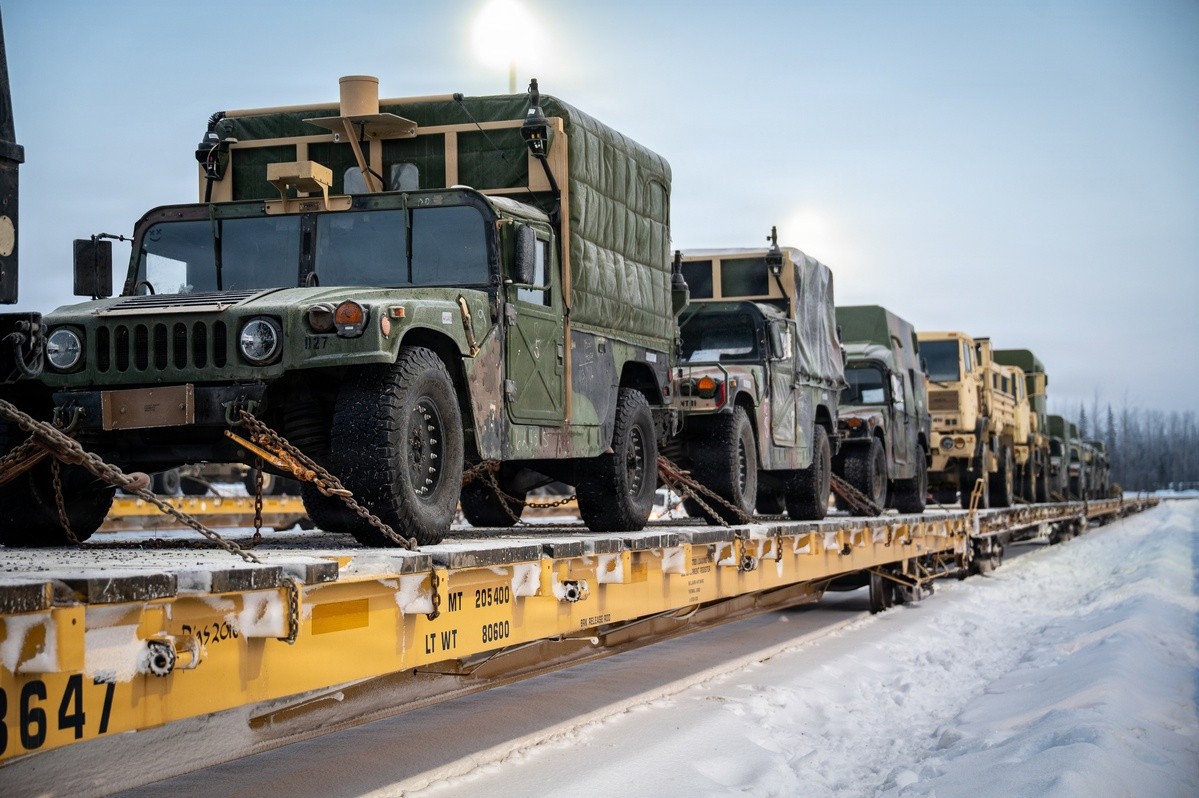
U.S. Army Soldiers assigned to the 3rd Battalion, 509th Parachute Infantry Regiment, 11th Airborne Division, secure vehicles on a flatcar at Joint Base Elmendorf-Richardson, Alaska, Jan. 22, 2026, in preparation for Joint Pacific Multinational Readiness Center 26-02. Rail loading enables the rapid movement of personnel and equipment, ensuring unit readiness and the ability to deploy efficiently for large-scale training exercises.
(Photo Credit: Photo by U.S. Air Force Senior Airman Hunter Hites)VIEW ORIGINAL4 / 5Show Caption +Hide Caption –
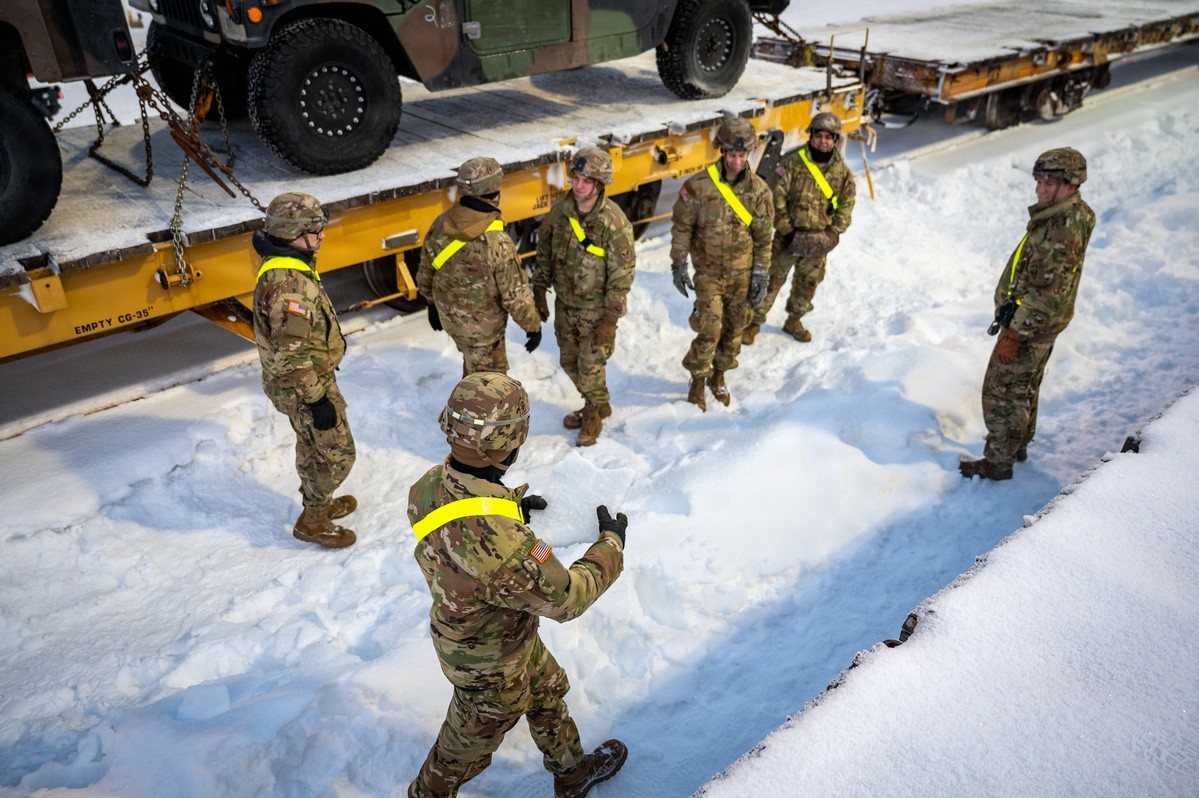
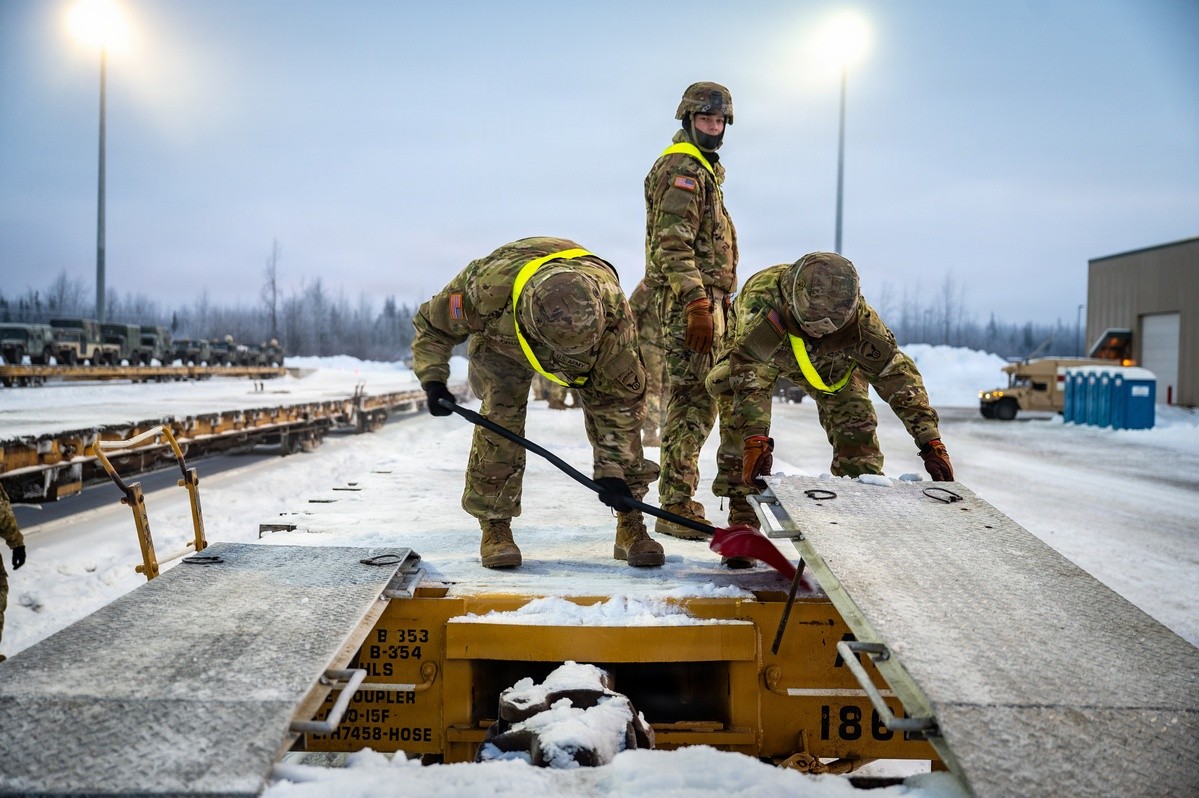
U.S. Army Soldiers assigned to the 3rd Battalion, 509th Parachute Infantry Regiment, 11th Airborne Division, prepare to clear snow from a flatcar at Joint Base Elmendorf-Richardson, Alaska, Jan. 22, 2026, in order to load freight in preparation for Joint Pacific Multinational Readiness Center 26-02. The exercise tests units’ ability to deploy, integrate and operate effectively across the Indo-Pacific region.
(Photo Credit: Photo by U.S. Air Force Senior Airman Hunter Hites)VIEW ORIGINAL5 / 5Show Caption +Hide Caption –
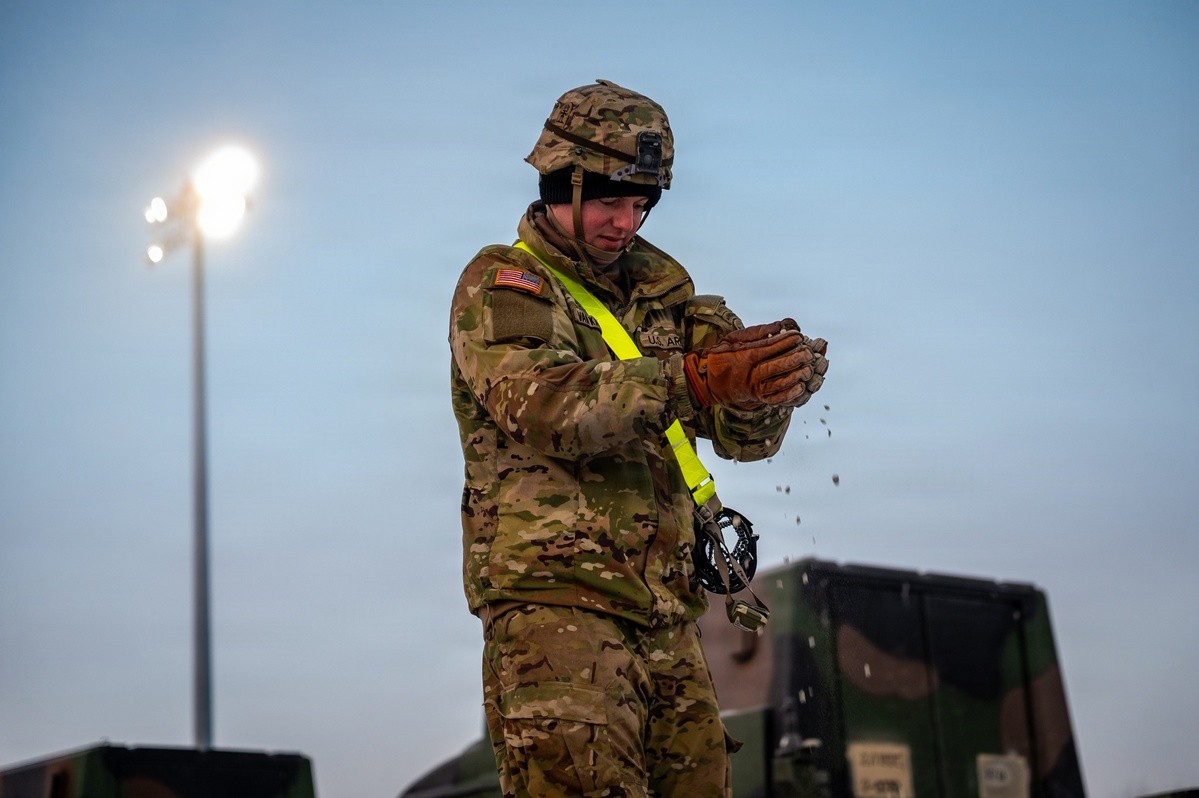
U.S. Army Spc. Clifton Van Kalsbeek, 3rd Battalion, 509th Parachute Infantry Regiment, 11th Airborne Division infantryman, lays gravel down on a flatcar at Joint Base Elmendorf-Richardson, Alaska, Jan. 22, 2026, in order to load freight in preparation for Joint Pacific Multinational Readiness Center 26-02. The exercise tests units’ ability to deploy, integrate and operate effectively across the Indo-Pacific region.
(Photo Credit: Photo by U.S. Air Force Senior Airman Hunter Hites)VIEW ORIGINAL
JOINT BASE ELMENDORF-RICHARDSON, Alaska — Large-scale arctic exercises far into the Alaska tundra require support just as sophisticated and robust as the operations themselves. It takes a coordinated network of planners, inspectors, and transportation specialists working behind the scenes to move equipment safely and efficiently.
In support of the Joint Pacific Multinational Readiness Center exercise at Fort Wainwright, logistics professionals from the 773rd Logistics Readiness Squadron and the 486th Movement Control Team, 17th Combat Sustainment Support Battalion, 11th Airborne Division helped transport critical equipment for several Army units across the installation.
“The entire operation is a coordinated effort between the deploying units, the division transportation office, the Movement Control Center, the installation transportation office, and Alaska Railroad representatives,” said William Lower, 773d LRS installation mobilization officer. “It’s a continuous flow from planning through final execution.”
The logistics workflow starts long before equipment enters the rail yard. Personnel working with unit movement officers identify all gear to be shipped, then work with the MCC and other transportation offices to book the necessary railcars. Training for the loading teams ensures personnel are prepared and proficient when operations begin.
1 / 5Show Caption +Hide Caption –
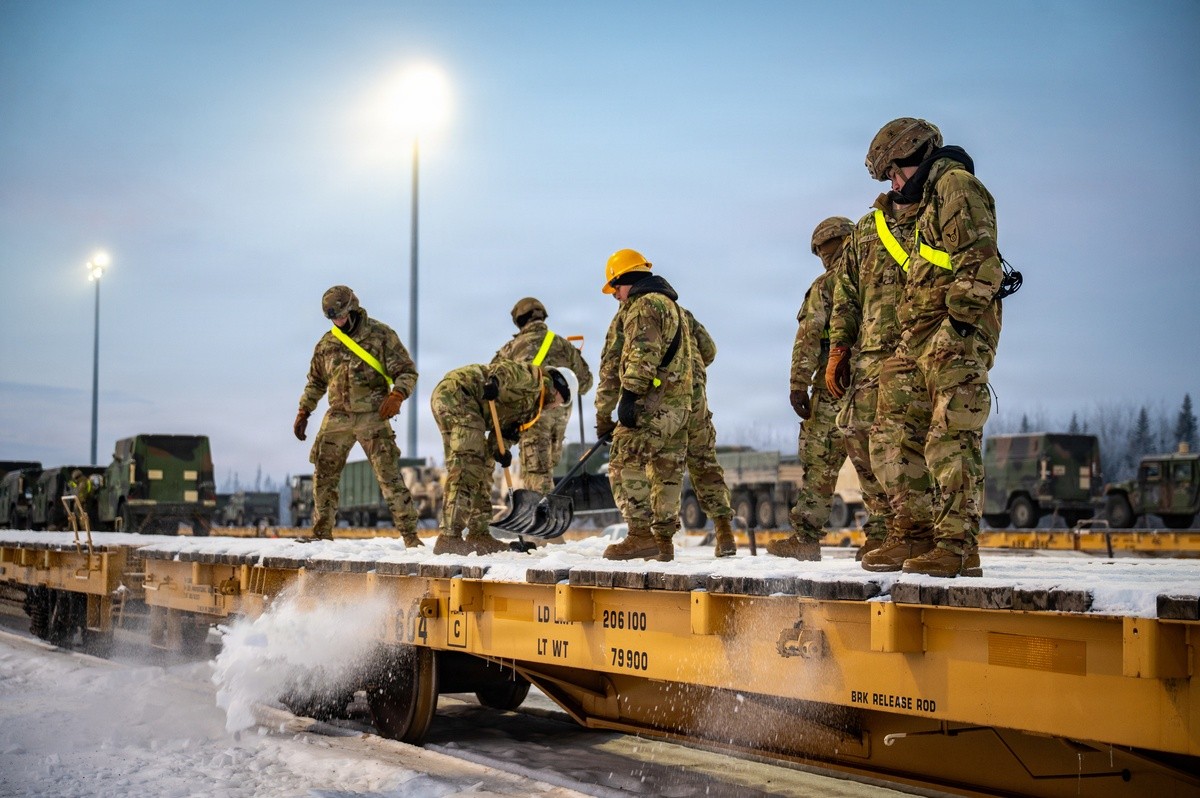
U.S. Army Soldiers assigned to the 3rd Battalion, 509th Parachute Infantry Regiment, 11th Airborne Division, clear snow from a flatcar at Joint Base Elmendorf-Richardson, Alaska, Jan. 22, 2026, in order to load freight in preparation for Joint Pacific Multinational Readiness Center 26-02. Exercise JPMRC is a large-scale training exercise designed to prepare U.S. and allied forces for operations in complex, multi-domain environments.
(Photo Credit: Photo by U.S. Air Force Senior Airman Hunter Hites)VIEW ORIGINAL2 / 5Show Caption +Hide Caption –
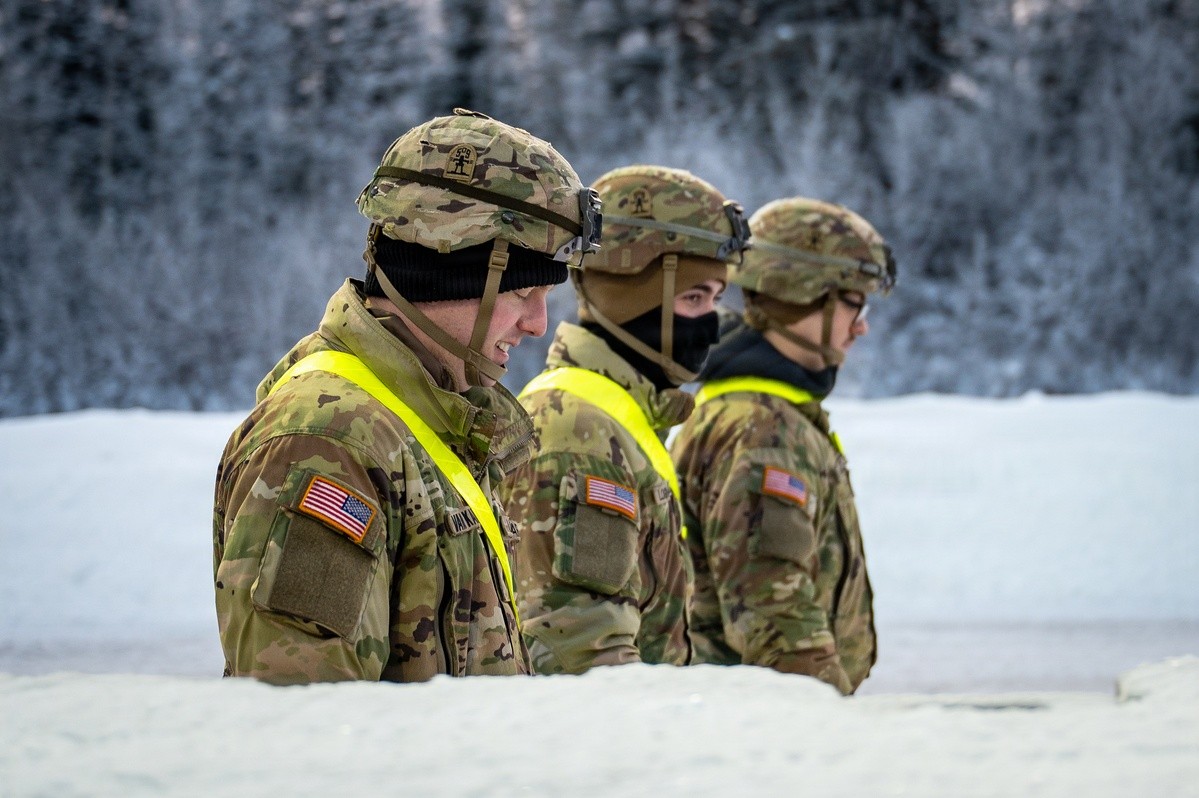
From left to right, U.S. Army Spc. Clifton Van Kalsbeek, Pfc. Diego Logan-Behshad, and Pfc. Ryan Sanchez, all 3rd Battalion, 509th Parachute Infantry Regiment, 11th Airborne Division infantrymen, move to clear snow from a flatcar at Joint Base Elmendorf-Richardson, Alaska, Jan. 22, 2026, in order to load freight in preparation for Joint Pacific Multinational Readiness Center 26-02. Exercise JPMRC is a large-scale training exercise designed to prepare U.S. and allied forces for operations in complex, multi-domain environments.
(Photo Credit: Photo by U.S. Air Force Senior Airman Hunter Hites)VIEW ORIGINAL3 / 5Show Caption +Hide Caption –
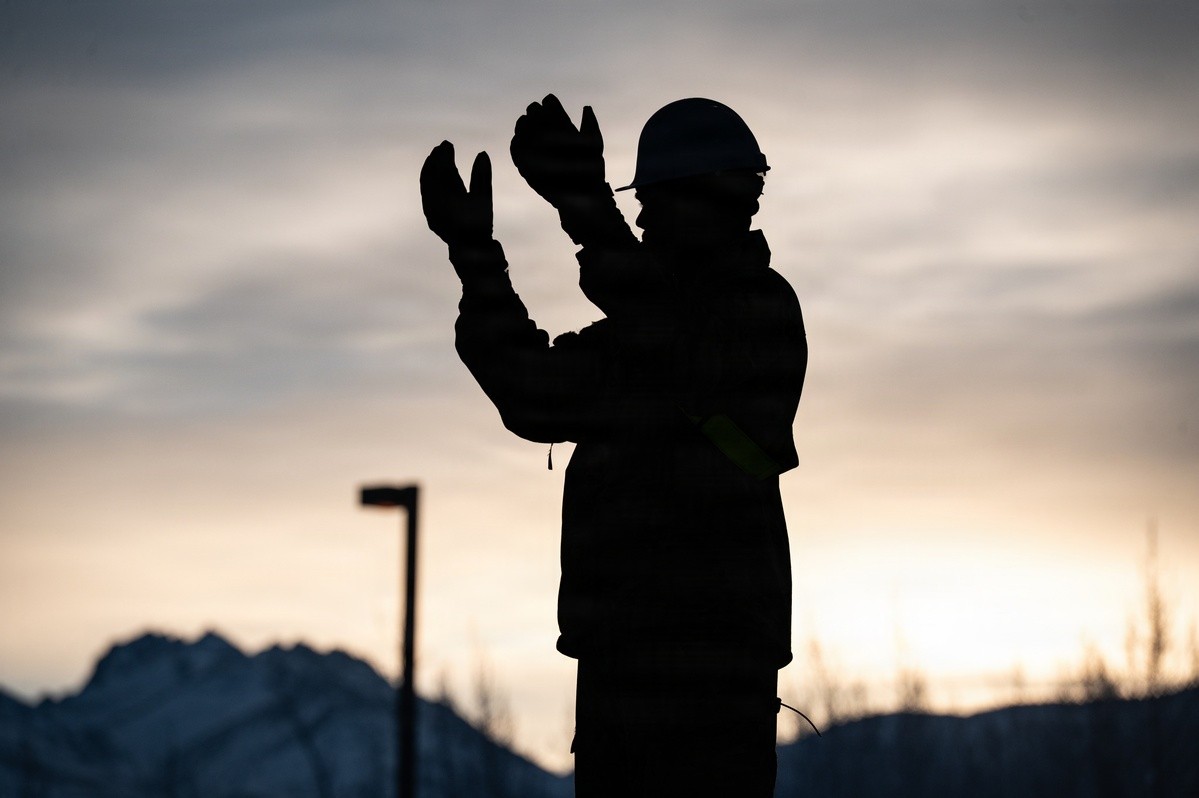
U.S. Army Pfc. Noah Souvenir, 3rd Battalion, 509th Parachute Infantry Regiment, 11th Airborne Division infantryman, directs vehicles onto a flatcar at Joint Base Elmendorf-Richardson, Alaska, Jan. 22, 2026, for Joint Pacific Multinational Readiness Center 26-02. Exercise JPMRC provides realistic, high-end training that enhances readiness and interoperability across U.S. and partner forces.
(Photo Credit: Photo by U.S. Air Force Senior Airman Hunter Hites)VIEW ORIGINAL4 / 5Show Caption +Hide Caption –
U.S. Army Soldiers assigned to the 3rd Battalion, 509th Parachute Infantry Regiment, 11th Airborne Division, clear snow from a flatcar at Joint Base Elmendorf-Richardson, Alaska, Jan. 22, 2026, in order to load freight in preparation for Joint Pacific Multinational Readiness Center 26-02. The exercise tests units’ ability to deploy, integrate and operate effectively across the Indo-Pacific region. (U.S. Air Force photo by Senior Airman Hunter Hites)
(Photo Credit: Senior Airman Hunter Hites)VIEW ORIGINAL5 / 5Show Caption +Hide Caption –
U.S. Army Pfc. Owen Pakkala and Spc. Alex Lawson, both 3rd Battalion, 509th Parachute Infantry Regiment, 11th Airborne Division infantrymen, assess freight at Joint Base Elmendorf-Richardson, Alaska, Jan. 22, 2026, for Joint Pacific Multinational Readiness Center 26-02. Exercise JPMRC provides realistic, high-end training that enhances readiness and interoperability across U.S. and partner forces.
(Photo Credit: Photo by U.S. Air Force Senior Airman Hunter Hites)VIEW ORIGINAL
“By working in tandem with the MCC, our team ensures every piece of equipment is not only properly inspected but also loaded onto trail cars precisely according to the approved load plan,” said U.S. Army Capt. Benjamin Mohn, 486th MCT commander, 17th CSSB, 11th Airborne Division. “This meticulous oversight is essential for maximizing the use of available space and ensuring equipment meets the Alaska Rail standards, guaranteeing that the train can transport the maximum amount of equipment possible in a single movement.”
A vital phase of the process is the transportation integrity and preparation for Shipment, TIPS, inspection. At the designated marshaling area, each vehicle and piece of cargo undergoes a detailed examination for transportability, mechanical soundness, proper documentation and safety compliance before being cleared for movement.
“Every piece of equipment receives a thorough TIPS inspection to ensure it’s mechanically sound, properly secured and documented for movement,” Lower said. “That step is essential to moving equipment safely and efficiently.”
Central to that effort was the railhead operation, a core logistics process that inspects, documents and loads military vehicles and cargo onto commercial rail cars for movement up to JMPRC. Railhead operations form a key node in the broader logistics network, ensuring vital equipment arrives intact and on schedule.
1 / 5Show Caption +Hide Caption –
A U.S. Army Soldier assigned to the 3rd Battalion, 509th Parachute Infantry Regiment, 11th Airborne Division, secures vehicles on a flatcar at Joint Base Elmendorf-Richardson, Alaska, Jan. 22, 2026, in preparation for Joint Pacific Multinational Readiness Center 26-02. Rail loading enables the rapid movement of personnel and equipment, ensuring unit readiness and ability to deploy efficiently for large-scale training exercises.
(Photo Credit: Photo by U.S. Air Force Senior Airman Hunter Hites)VIEW ORIGINAL2 / 5Show Caption +Hide Caption –
Vehicles sit after being loaded onto a flatcar at Joint Base Elmendorf-Richardson, Alaska, Jan. 22, 2026, in preparation for Joint Pacific Multinational Readiness Center 26-02. Exercise JPMRC is a large-scale training exercise designed to prepare U.S. and allied forces for operations in complex, multi-domain environments. Rail loading enables the rapid movement of personnel and equipment, ensuring unit readiness and the ability to deploy efficiently for large-scale training exercises.
(Photo Credit: Photo by U.S. Air Force Senior Airman Hunter Hites)VIEW ORIGINAL3 / 5Show Caption +Hide Caption –
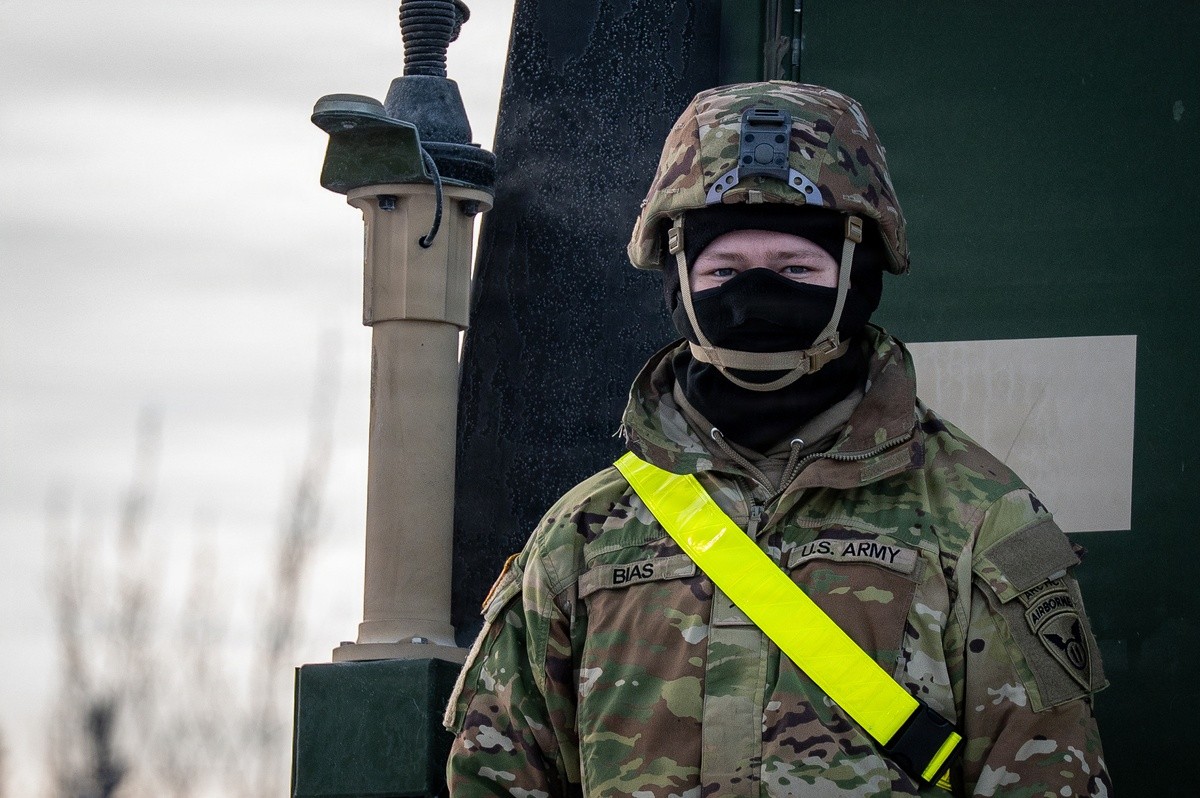
U.S. Army Pvt. Colby Bias, 3rd Battalion, 509th Parachute Infantry Regiment, 11th Airborne Division infantryman, awaits freight onto a flatcar at Joint Base Elmendorf-Richardson, Alaska, Jan. 22, 2026, for Joint Pacific Multinational Readiness Center 26-02. The exercise tests units’ ability to deploy, integrate and operate effectively across the Indo-Pacific region.
(Photo Credit: Photo by U.S. Air Force Senior Airman Hunter Hites)VIEW ORIGINAL4 / 5Show Caption +Hide Caption –
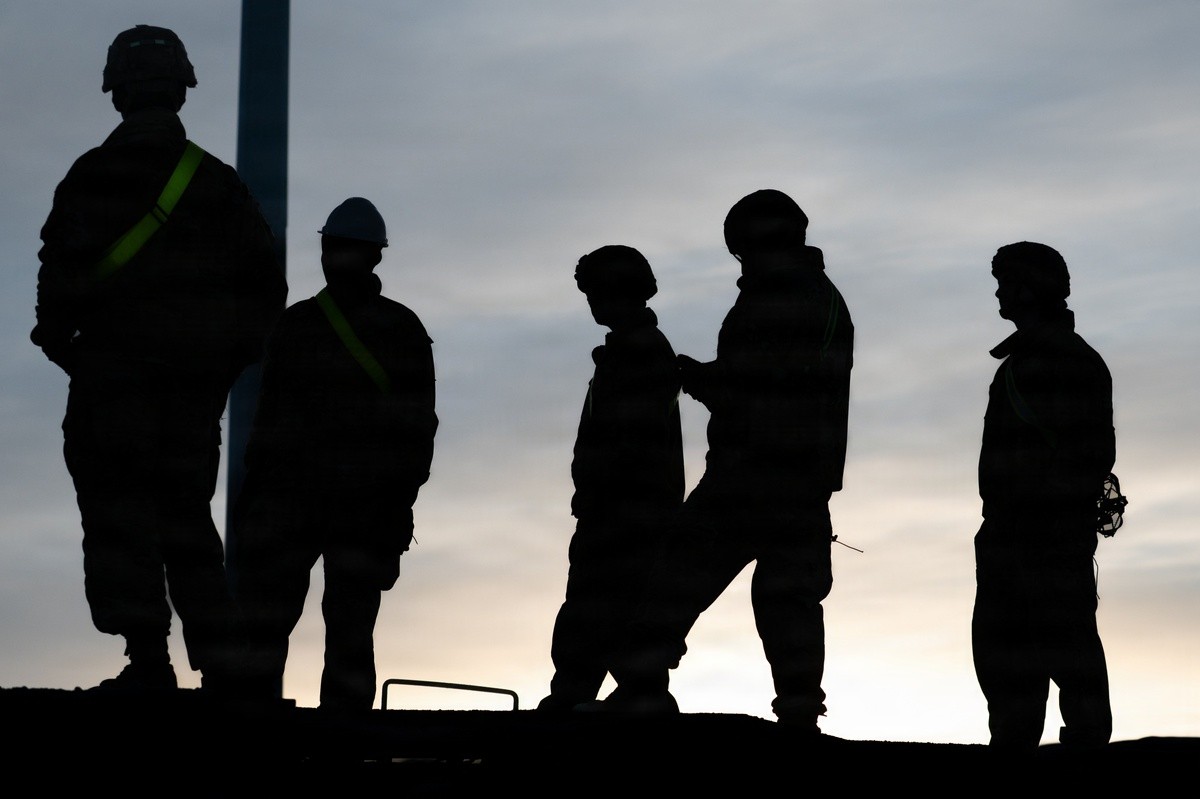
U.S. Army Soldiers assigned to the 3rd Battalion, 509th Parachute Infantry Regiment, 11th Airborne Division, load freight at Joint Base Elmendorf-Richardson, Alaska, Jan. 22, 2026, in preparation for Joint Pacific Multinational Readiness Center 26-02. The exercise tests units’ ability to deploy, integrate and operate effectively across the Indo-Pacific region.
(Photo Credit: Photo by U.S. Air Force Senior Airman Hunter Hites)VIEW ORIGINAL5 / 5Show Caption +Hide Caption –
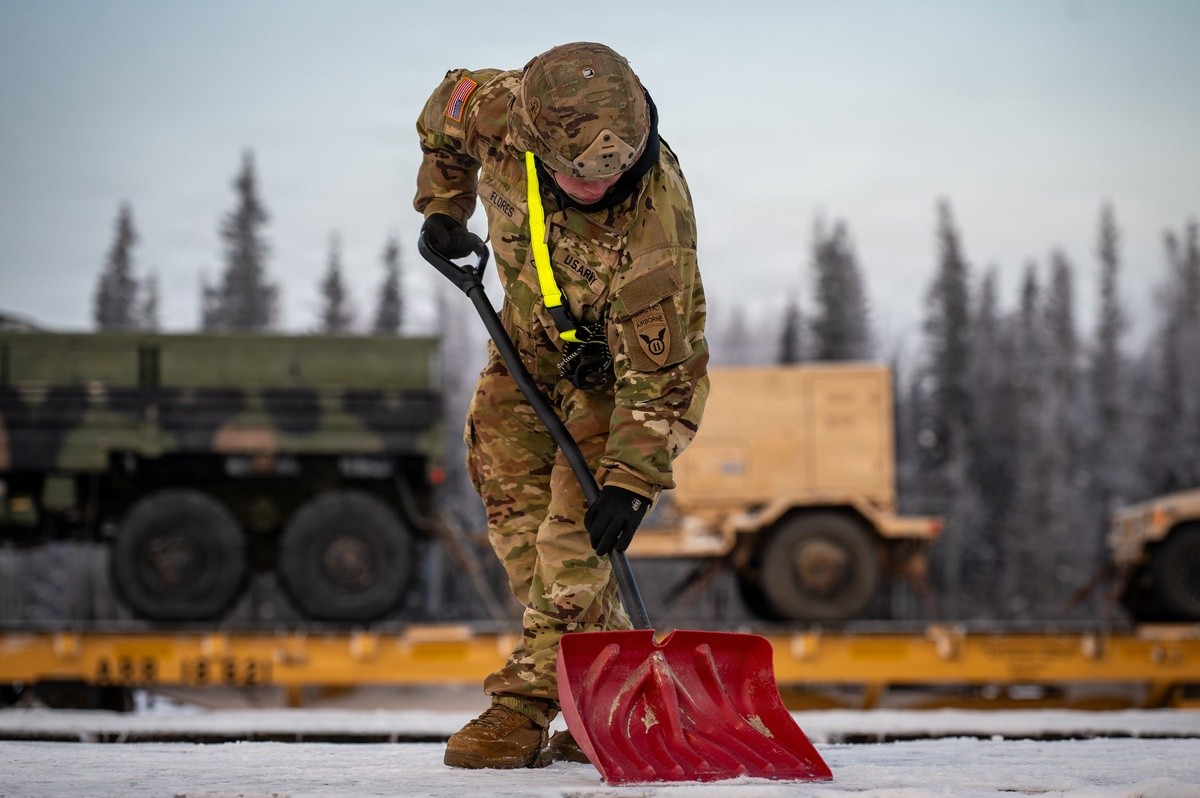
U.S. Army Pfc. Christopher Flores, 3rd Battalion, 509th Parachute Infantry Regiment, 11th Airborne Division infantryman, clears snow from a flatcar at Joint Base Elmendorf-Richardson, Alaska, Jan. 22, 2026, in order to load freight in preparation for Joint Pacific Multinational Readiness Center 26-02. The exercise tests units’ ability to deploy, integrate and operate effectively across the Indo-Pacific region.
(Photo Credit: Photo by U.S. Air Force Senior Airman Hunter Hites)VIEW ORIGINAL
By housing both the MCC and the ITO within LRS, the squadron ensures seamless integration of planning and execution, from initial coordination to cargo departure. This integration allowed for the 257 TIPS inspections of the 65 railcars of vital equipment in support of JPMRC.
“The MCC and ITO are integral parts of the 773d LRS,” Lower said. “By bringing those capabilities together, we’re able to synchronize the entire process and guarantee assets are deployed safely, securely and on schedule.”
Railhead and movement control operations often go unseen by Soldiers whose gear is already en route or in place, but these logistics professionals provide the backbone that enables units to meet training and operational objectives.
“The strong, trusted partnership between the MCT, the MCC, and all participating units is the bedrock of our success,” said Mohn. “This shared understanding allows our team to remain agile and effectively solve the inevitable challenges and friction that arise during complex operations, ensuring the mission is always accomplished.”
Social Sharing