
WASHINGTON — The Army, in partnership with industry and academia, is breaking through historical barriers to develop alternate sources of supply and give Soldiers the ability to repair their equipment anywhere around the globe.
Critical maintenance tasks have been tethered to inflexible supply chains because the Army could not access proprietary technical data for decades. Today, that paradigm is shifting.
“By renegotiating how the Army and industry share intellectual property, it gives us the ability to unlock the true potential of advanced manufacturing at the tactical edge, ensuring that Soldiers can fix what’s broken and return to the fight faster than ever before,” said Lt. Gen. Chris Mohan, commanding general of Army Materiel Command.
Securing intellectual property access marks a fundamental change in how the Army approaches its industry partners. Secretary of the Army Dan Driscoll recently addressed this paradigm shift, noting that the Army has contributed to acquisition bottlenecks and data rights limitations in the past.
"When I meet with primes, I highlight how bad of a customer we have been, and the characteristics that they have today, we created and incentivized over a long period of time," Driscoll said. "I appreciate that it’s so difficult to build against our demand signal, and it requires a balance sheet to outlast all of our insane processes."
The progress in accelerating alternative supply sources is yielding tangible results. The Army now has nearly 1,000 parts in its digital repository, acting as the blueprints necessary for localized repair, 3-D printing and reverse engineering.
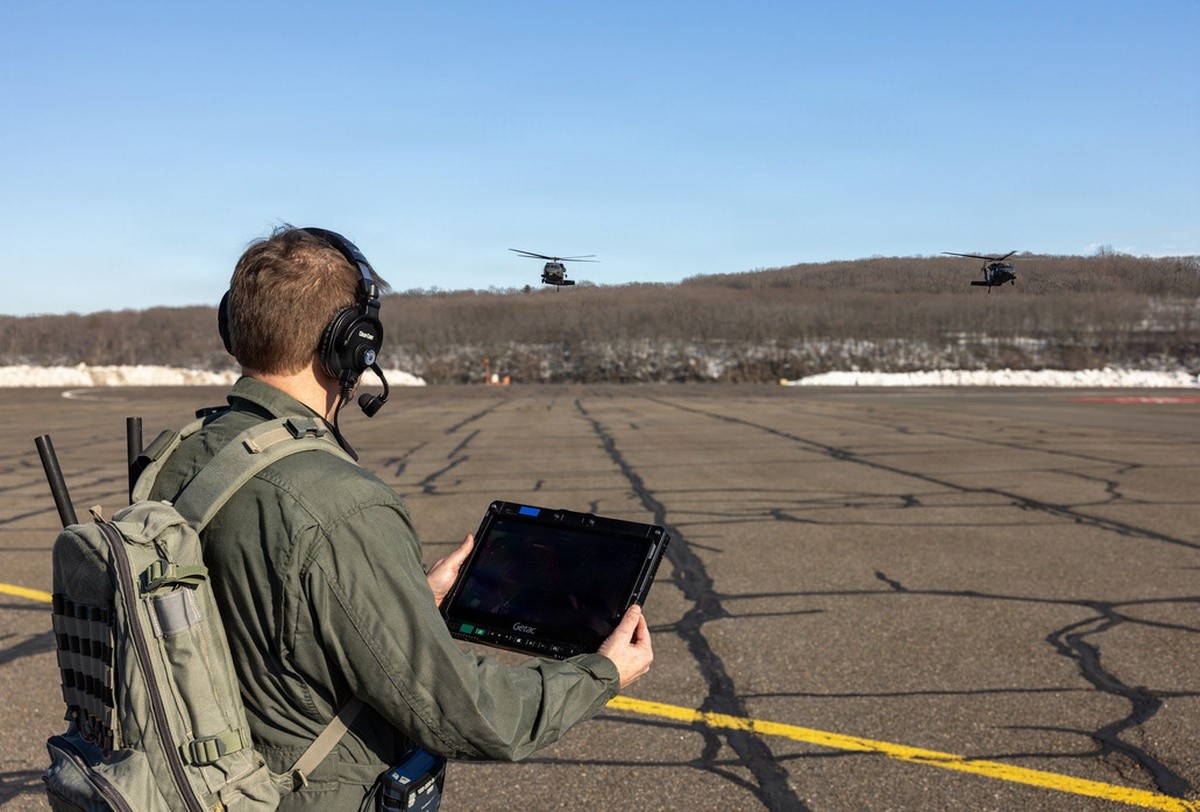
Army aviation is a powerful example of this critical collaboration. Through strong partnerships with Lockheed Martin Sikorsky and the National Institute for Aviation Research, NAIR, the Army is transforming how it sustains the UH-60 Black Hawk helicopter fleet.
The Army continues to build on the foundational work done through the digital twin of the UH-60L Black Hawk with Lockheed Martin Sikorsky and Wichita State University’s NIAR, where researchers meticulously disassembled and scanned the airframe to create a digital twin that now enables the rapid integration of advanced manufacturing.
In addition, with the tremendous support of Lockheed Martin Sikorsky and its suppliers, the Army is creating improved logistics channels for the Electronic Standby Instrument System knob, a critical component in the helicopter fleet. Through heavy use, the unit needs to be replaced. Several times a year, the damage is limited to the control knob only. The cost to replace the assembly is significantly more expensive than the knob itself; by having the ability to replace the knob organically, the Army is on a partnered path with industry to enable the quick repair and replacement of key warfighting components.
Also, as part of the longstanding public-private partnership with Lockheed Martin Sikorsky, the Corpus Christi Army Depot recently launched the first organic composite repair program for helicopter blades in the U.S. This furthers the ability for the Army to overhaul and repair key Black Hawk components.
The Army is leading the charge to transform and accelerate the parts qualification process to proliferate advanced manufacturing and harness its full potential to impact readiness. Continued collaboration is underway with the Office of the Secretary of War for Materiel Readiness to develop a centralized digital manufacturing exchange system to manage, validate and share technical data across the joint services for continued agility.
In a move to institutionalize these efforts, Driscoll designated AMC as the lead integrator and lifecycle manager for advanced manufacturing. Under this new mandate, AMC is aggressively dismantling bureaucratic hurdles and supply chain vulnerabilities by leveraging reverse engineering and digital twins to accelerate supply chain resiliency.
"This designation is not about ownership of advanced manufacturing, but about synchronizing capabilities across the Army to strengthen the supply chain and build readiness," Mohan said. "Our current qualification process is bogged in bureaucracy, and we owe it to our Soldiers to move with a sense of urgency and enable them to solve problems at their level."
Social Sharing