
DETROIT ARSENAL, Mich. — A Soldier’s strength is built on more than courage and rigorous training — it’s also in the gear worn on their bodies, stowed in their rucksacks and carried into conflict.
Diligent equipment management has always been a cornerstone of readiness. As the nature of warfare rapidly evolves, the U.S. Army is launching a powerful tool that will transform how today’s forces prepare for tomorrow’s fight, delivering the accuracy, agility and speed needed to succeed on the modern battlefield.
The Soldier Equipping and Asset Management System, or SEAM, represents a groundbreaking new era of organizational clothing and individual equipment, OCIE, management.
“SEAM puts OCIE control right where it belongs — in your hands,” said Command Sgt. Maj. Kofie B. Primus of the U.S. Army Tank-automotive and Armaments Command. “From managing [central issue facility] appointments to tracking OCIE to stay mission-ready, SEAM gives you an intuitive, tech-powered way to own every step of your equipment journey.”
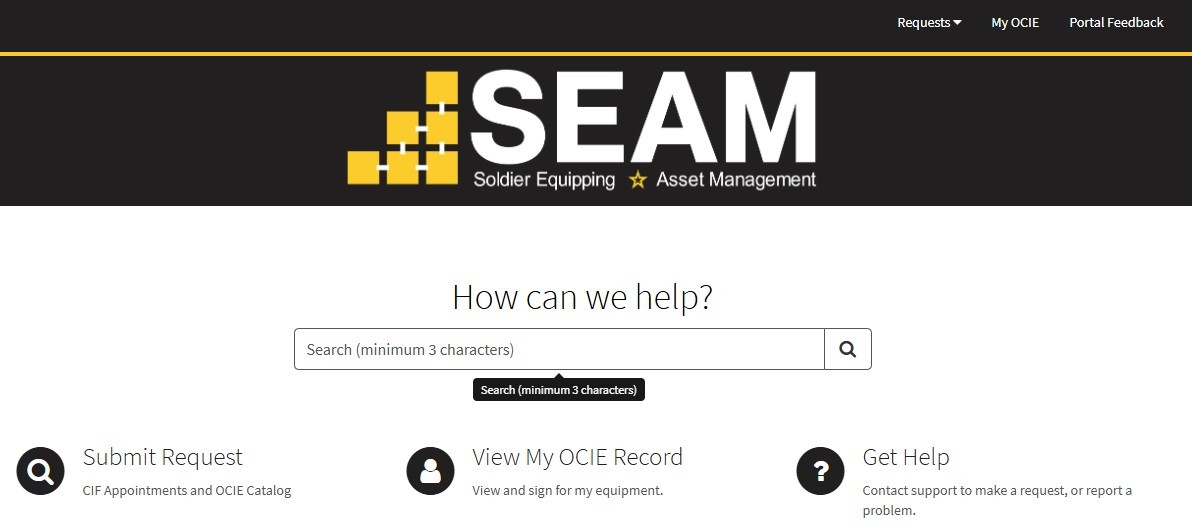
The next generation of OCIE management
Militaries worldwide have long struggled with a universal challenge: how to track millions of items — from uniforms and helmets to weapons — assigned to thousands of soldiers, across thousands of sites, in constant motion.
SEAM offers a next-generation logistics solution. The digital, cloud-based platform centralizes and streamlines OCIE management across echelons in real-time, tracking individual pieces of equipment all the way down to the user level.
As the Army pursues greater lethality and readiness, SEAM supports informed decision-making, curtails waste and enhances both convenience and clarity — with the warfighter squarely in the driver’s seat.
Soldiers will be able to easily order and monitor their gear through SEAM’s common access card-enabled online portal. The site is similar to many popular online shopping platforms, with the ability to search for items, view item details, add items to a shopping cart, submit orders and view order status.
It even has photos of each piece of OCIE, so Soldiers can visually confirm their inventory.
Records in SEAM will remain accurate and up-to-date as Soldiers move between units and assignments. Legacy and end-of-life items that the Army has determined have no economic value can be automatically removed, and duplicate items flagged.
The SEAM portal also has a mechanism that lets Soldiers schedule appointments at central issue facilities, or CIFs.
“SEAM brings OCIE management into the digital age, giving Soldiers the power to browse, schedule and equip with confidence and control,” Primus said.
SEAM was designed specifically to enhance Soldiers’ OCIE experience. But perhaps its most impactful feature is what it offers commanders and other decision-makers: real-time readiness insight.
The platform is being integrated with existing Army information technology systems and incorporates data from human resources, logistics, training and readiness domains, providing the first truly holistic view of the Army’s vast OCIE enterprise. Leaders and logisticians will be better able to forecast future needs based on force demands.
TACOM, as the central manager of the OCIE enterprise, is leading the SEAM initiative.
When SEAM rolls out across the Army on Feb. 17, it will be accessible anytime, anywhere, through government-approved devices — even cell phones.
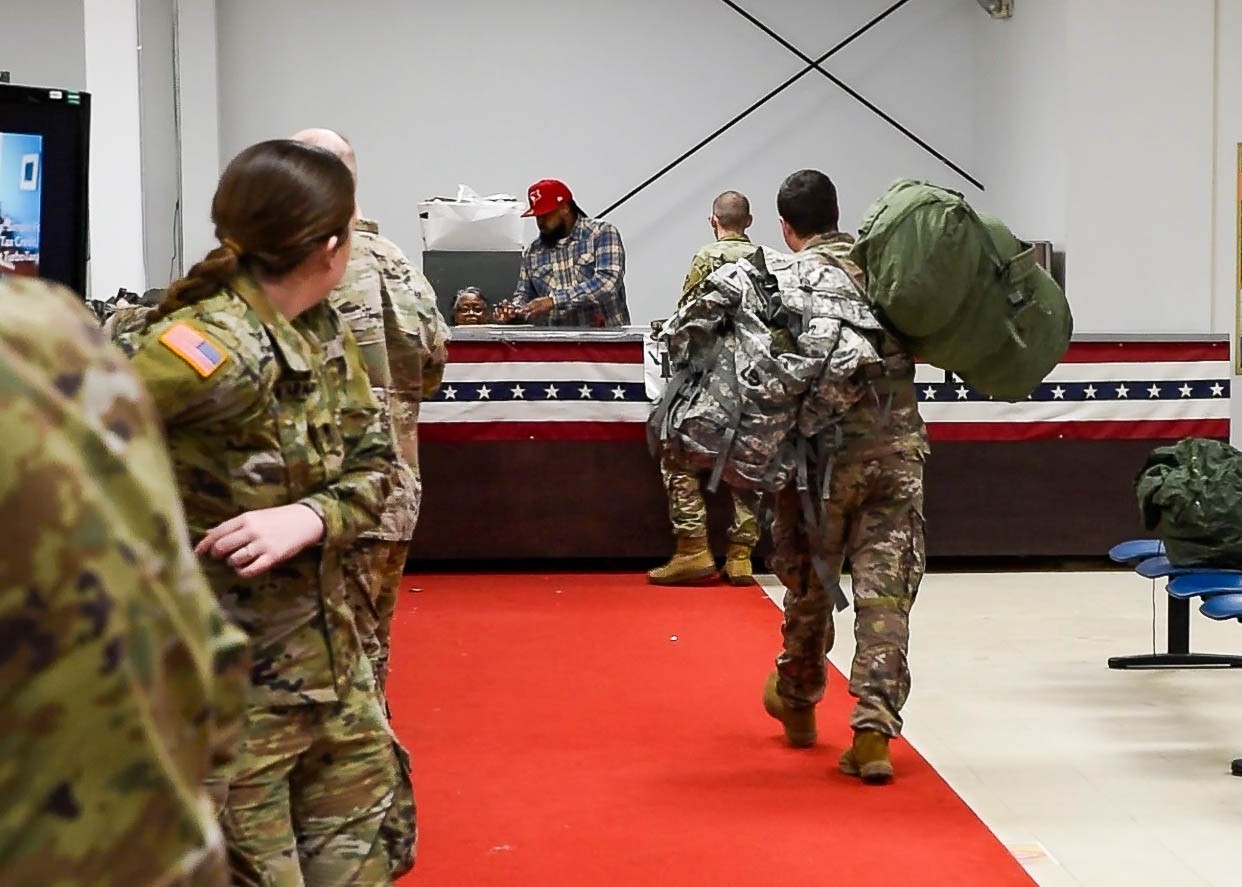
Why is SEAM revolutionary?
SEAM is replacing Installation Support Module-Central Issue Facility, ISM-CIF, the Army’s primary legacy system for OCIE management.
In use for the better part of two decades, ISM-CIF lacks modern OCIE direct ordering and asset-fielding capabilities. Its reliance on local records and non-integrated databases can lead to lapses in accountability.
SEAM was designed to eliminate those gaps at every stage, from the day OCIE is issued through end-of-lifecycle turn-in.
Unit leaders will be able to instantly see whether every Soldier is properly equipped. Soldiers will notice a smoother process for signing and validating records.
Under SEAM, OCIE guesswork evaporates.
“Every time a Soldier is issued gear, turns in gear, or has a change to the clothing record, he or she will be notified to validate the record,” said Chief Warrant Officer 4 Allen Flagg, CIF accountable property officer, Massachusetts Army National Guard.
Flagg noted a greatly improved process for dealing with obsolete items.
“If there is a recalled item, such as if an eye pro has been removed from the [Authorized Protective Eyewear] list, SEAM will notify the Soldier that the item should be disposed of, and a new request put into SEAM for an updated eye pro,” he said.
SEAM has a host of other advantages. It will enable the proactive fielding of equipment, ensure resources are positioned efficiently and simplify access to information about shortages and trends.
Unlike ISM-CIF, SEAM doesn’t use technical language that can be difficult to understand, said Ross Pursifull, SEAM mission lead at TACOM’s Integrated Logistics Support Center. Pursifull’s integral role in building SEAM included business process reengineering, user interface design and cataloging more than 7,000 photos of OCIE.
“All the strange codes that I had to decipher on my old OCIE record are gone,” he said. “Now, it’s pictures and plain English.”
The Army is launching SEAM amid a sweeping, force-wide transformation that promotes the use of emerging technologies and data and analytics.
“As the Army moves more toward leveraging data to inform decisions, SEAM is the modern-day method to ensure Soldiers have the right equipment they need to perform their tactical missions,” said recently retired Command Sgt. Maj. Jimmy Sellers of U.S. Army Materiel Command.
Soldiers can learn more about SEAM by reading the knowledge articles on the site. Training is underway for online direct ordering managers,supply sergeants, CIF and regional logistics support center personnel.
ISM-CIF will sunset by the end of 2026.
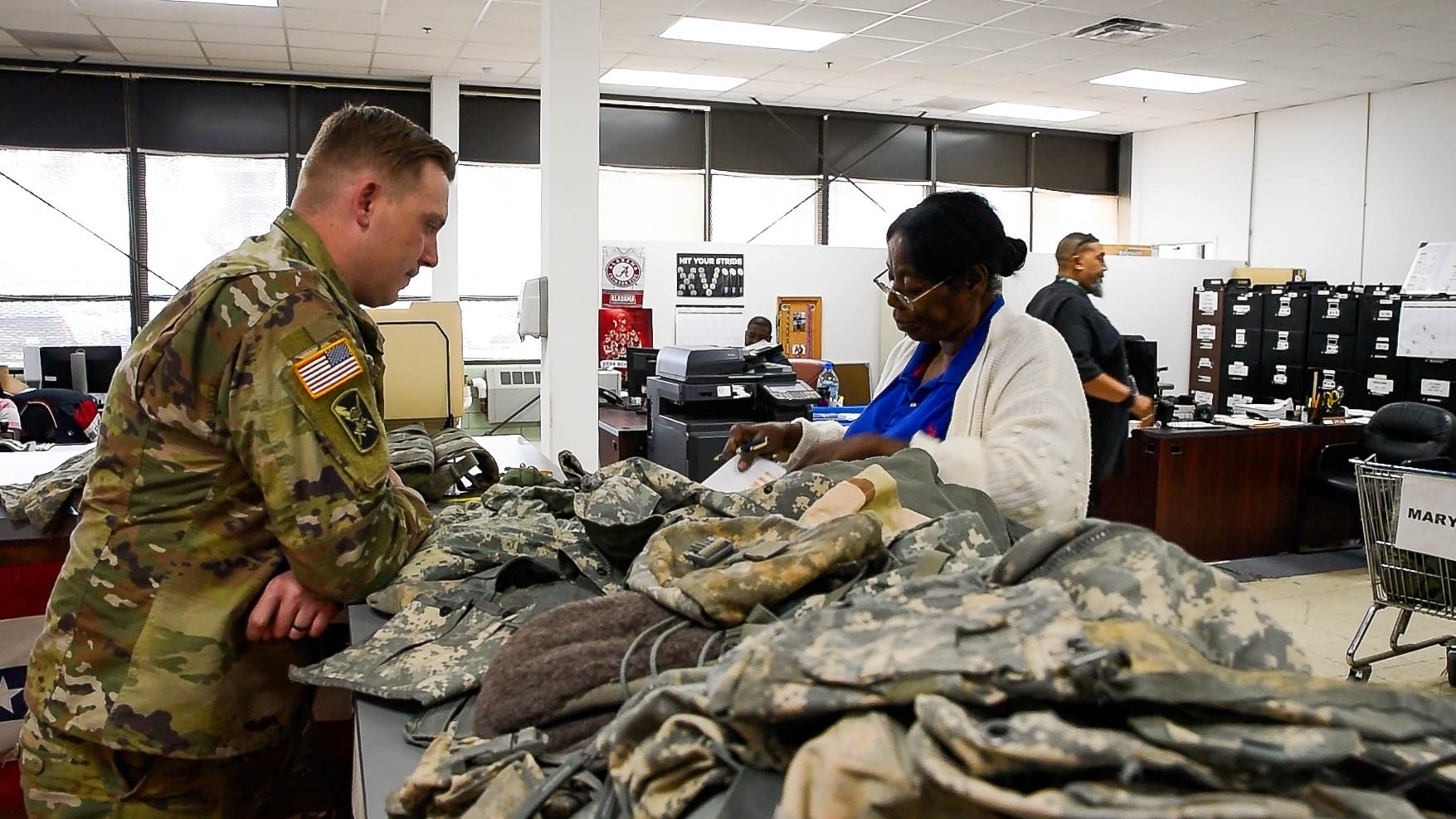
Modernization, readiness drive SEAM’s creation
SEAM grew out of the realization that as the Army modernizes its equipment and weapons, it needed a cutting-edge OCIE system to match.
Army officials have aggressively pushed in recent years to update the equipping enterprise to better serve Soldiers and units. A 2023 executive order directed CIF reform and the implementation of OCIE online direct ordering.
That order was a catalyst behind SEAM’s creation, said Adam Charczenko, SEAM portfolio manager and TACOM CIO/G6.
Platform development began in mid-2024. TACOM worked with several partners on the complex, highly collaborative effort, said Robert Ignozzi, branch chief for OCIE, TACOM Integrated Logistics Support Center.
“We now have better asset visibility, an improved, modern ordering experience and a much more stable platform,” he said.
TACOM is a subordinate command of AMC. Its partners in the project included Headquarters Department of the Army G-4; Forces Command, now part of Western Hemisphere Command; Training and Doctrine Command, now T2COM; U.S. Army Europe and Africa; U.S. Army Pacific; Army National Guard; U.S. Army Reserves Command; U.S. Army Cadet Command; Army Sustainment Command, Program Executive Office Soldier; and the Office of the Chief Information Officer.
No group played a more important role in SEAM than Soldiers. Their critical insight and feedback literally shaped how the system looks and works.
“The goal here was to put the power in Soldiers’ hands,” Charczenko said.
In May 2025, Lt. Gen. Heidi J. Hoyle, then-deputy chief of staff, G-4, issued a memo announcing the initial implementation of SEAM as the Army’s new system of record for OCIE.
As SEAM expands in capability and reach, officials expect it will revolutionize tasks for warehouses, issuing facilities and elsewhere. The system is absorbing the capabilities of the Standard Management Asset Readiness Tool, Mobility Inventory Control and Accountability System, Automated Personal Clothing Request system and the systems for ordering heraldry and veterans’ medals.
“As we continue to implement enhancements and integrate new systems, SEAM will become an even better system for the mission,” Michael Santos, SEAM IT project manager, TACOM CIO/G6, said.
Looking ahead
SEAM isn’t just a software upgrade. It represents a foundational shift in how the Army supports and equips the entire fighting force.
By uniting all facets of OCIE management into one data-centric system, SEAM will enable warfighters to operate quickly and with greater precision. That directly translates to increased lethality and readiness — core priorities of U.S. Secretary of War Pete Hegseth.
In a rapidly shifting global landscape, SEAM underscores the Army’s broader push toward a more modern, digitally focused sustainment system. It enhances readiness and operational effectiveness at speed and scale, promising a future where equipping is faster, easier and more dependable, from the strategic level all the way to the tactical edge.
Social Sharing