The Armor Branch exists to close with and destroy enemy forces using fire, maneuver, and shock effect, or to repel an assault by fire and counterattack. The Armor Branch is the combat arm of decision, because no other organization in the U.S. Army has the lethal combination of firepower, mobility, survivability, and situational awareness. Armor leaders have always been aggressive, decisive, and disciplined – we balance tactical acumen with our ability to understand how to maintain and sustain our formations. Above all else, Armor leaders are a team. From day one, we operate in crews, wingmen, sections, platoons, and as a part of the combined arms team to close with and destroy enemy forces. We trust in the tactical prowess and initiative of our crews, our wingmen, and our combined arms team to accomplish our mission.
The mission of the Armor Branch reflects the unchanging nature of warfare – warfare has always been and will always remain a brutal contest of wills between two opposing forces. We impose our will on the enemy at a decisive place and time through fire and maneuver. But while the nature of warfare remains unchanged, the character of warfare adapts to emergent technologies and threats. Senior leaders in the Armor Branch are responsible to provide junior leaders doctrinal guidance that matches the changing character of warfare.
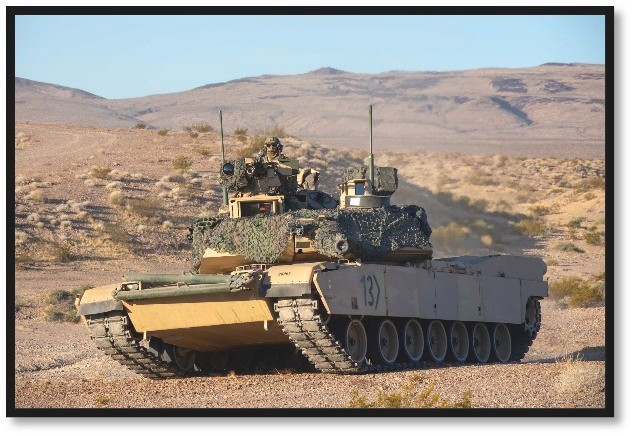
One of those changes – the Army’s recent restructuring – allows most of the Armor community to focus their doctrine, training, experience within the Army’s most lethal fighting force: the armored brigade combat team (ABCT). In this vein, the U.S. Army Armor School updated two foundational doctrinal publications: Army Techniques Publication (ATP) 3-20.15, Tank Platoon, and ATP 3-20.98, Scout Platoon. These two publications serve as sister publications, complementing one another and offering guidance to leaders across the entire Armor Branch.
ATP 3-20.15: Tank Platoon
The Army Publishing Directorate published the final version of ATP 3-20.15 in 2025 and supersedes the December 2019 version. The updated manual features several critical updates which add clarity to the previous version, with a notable shift away from counterinsurgency (COIN) to large-scale combat operations (LSCO) and multiple updates to align with our current doctrine. The manual is organized into six chapters: 1) Organization, 2) Planning and Preparing for Operations, 3) Offense, 4) Defense, 5) Tactical Enabling Tasks and Activities, and 6) Sustainment. Within each chapter, sections have been reorganized into a more logical flow, starting with a discussion on big picture concepts, subsequent planning considerations, and culminating in practical guidance on how to execute operations.
Of note, the updated manual introduces the Armor Force Fundamentals to the Armor Branch doctrine. The new doctrine defines fundamentals as a defined set of tasks or actions that allow a formation to fight effectively. The codification of the Armor Force Fundamentals, at echelon, provides a foundation for combat-ready formations, and helps all leaders build lethality, efficiency, and flexibility. Given the rapid pace of combat in LSCO, focusing on the blocking and tackling of armored maneuver warfare results in disciplined formations who can fight and win in any circumstance. When senior leaders articulate a need to “train the fundamentals,” the Armor community now has a common language that clarifies what those fundamentals are by formation type and echelon.
The other critical highlight to this doctrine is the clarity offered to junior leaders through the codification of nine appendices. This updated manual also consolidates the tank platoon battle drills in one doctrinal location for ease of reference for junior Armor officers and noncommissioned officers (NCOs).
These changes are not merely cosmetic – they are rooted in the fundamental role of the tank platoon. Starting in Chapter one, and re-emphasized throughout the entire document, is the reminder that the mission of the tank platoon is the same mission as that of the Armor Branch. The tank platoon exists to close with and destroy the enemy forces using fire, maneuver, and shock effects, or to repel an assault by fire and counterattack. Everything that the tank platoon does is rooted in that existential purpose – they fundamentally exist to close with and destroy the enemy.
Changes to ATP 3-20.15
- Reinforces the tank platoon’s primary mission: To close with and destroy the enemy.
- Adds Armor Fundamentals in Chapter one.
- LSCO Focus.
- Consolidates tank platoon battle drills in Appendix F.
- Adds doctrine on counter-unmanned aircraft systems (C-UAS) and electromagnetic warfare (EW).
- Expands discussion of maintenance repair flow.
- Includes and consolidates multiple topics in Appendices.
- Uses specific “how to” language meant to coach young Armor leaders.

ATP 3-20.98: Scout Platoon
Just as tank platoons and scout platoons work together to achieve a decisive effect on the battlefield, the scout platoon manual serves as a complimentary publication to the tank platoon manual and offers guidance to Armor leaders. The ATP-3-20.98 is currently under final revision and is anticipated to be published in summer 2026. This updated manual will also show a notable shift away from COIN to LSCO operations and aligns with current doctrine. This manual is similarly organized into six chapters: 1) The Scout Platoon, 2) Operational Planning and Preparation, 3) Reconnaissance, 4) Security, 5) Other Enabling Operations, and 6) Sustainment. For the sake of clarity and brevity, this manual will also include ten appendices, covering topics such as direct and indirect fire planning, enabler and UAS integration, urban operations, communications planning, and reports. For the first time in doctrine, this manual will also consolidate and describe scout platoon battle drills, to offer clarity and ease of reference for junior Armor leaders.
This manual also outlines the Armor Force Fundamentals, articulating critical tasks and fundamental daily tasks that are common to all Armor formations, while delineating specific scout platoon fundamentals unique to scout organizations and differentiated from tank platoon tasks. This manual also clarifies roles and responsibilities with a specific focus on the differences between a 6x36 cavalry squadron scout platoon and a 3x5 combined arms battalion scout platoon. Like the updates in the tank platoon manual, the sustainment chapter in the scout platoon manual will expand the discussion of maintenance repair flow, giving junior leaders a better perspective and understanding of their role in maintenance and sustainment.
More importantly, however, the updates to this manual reflect the changing role of the scout platoon in LSCO. Throughout the Global War on Terrorism (GWOT), scout platoons were almost entirely focused on reconnaissance operations. This was encapsulated in doctrine with the phrase that scouts were the “eyes and ears” of the commander. With the changing character of warfare, the ubiquitous presence of small-unmanned aircraft systems (s-UAS) and future integration of artificial intelligence (AI) will inevitably augment reconnaissance operations in the future. While reconnaissance will always remain a fundamental mission and capability of scout platoons, the focus on LSCO necessitates greater emphasis on security, counter reconnaissance, and support to maneuver forces for the scout platoon. In LSCO the scout platoon must be able to fight and survive before it can provide information or decision space for the commander, making the scout platoon unique in its mission set as both a maneuver force as well as a force specially trained for reconnaissance and security operations.
Changes to ATP 3-20.98
- Clarifies the scout platoon’s primary mission: To support maneuver operations through reconnaissance and security.
- Adds Armor Fundamentals in Chapter one.
- LSCO Focus.
- Consolidates scout platoon battle drills in Appendix F.
- Adds doctrine on C-UAS and EW.
- Expands discussion of maintenance repair flow.
- Includes and consolidates multiple topics in Appendices.
Conclusion
These updated manuals are intended to be a handrail for junior leaders. Armor leaders – lieutenants in particular – are different from other branches. All Armor leaders must be masters of maneuver warfare. It is in our DNA to be aggressive, decisive, and tactical masters of maneuver warfare. We differ from our infantry brethren in that we move faster, hit harder producing greater shock effect. While fires and aviation provide greater firepower and mobility, they lack the survivability and tenacity of an armored formation. Not only do we fight as a part of a combined arms team, Armor leaders uniquely understand the importance of our sustainment teammates.
These doctrinal updates are not just an attempt to blow the dust off old doctrine – they are a complete rewrite that grounds our doctrine in our identity as maneuver warfighters. These manual updates are both a guiderail for junior leaders – officers and NCOs – to understand their role in the tank and scout platoons, as well as a means for leaders to identify training gaps in their formations. As Armor leaders read through these manuals, they should be evaluating their formations on their ability to accomplish these critical tasks and adjusting their training to mitigate any identified gaps.
Future conflict against a near-peer threat will be characterized by a lethality unseen in previous conflicts. Already we see the impact of emergent technologies and multi-domain operations in Ukraine, Israel, Iran, and other areas of conflict around the globe. Armor leaders must prepare themselves and their formations – both physically and mentally – for the rigors of combat. These manuals offer a starting point for Armor leaders today as we train for tomorrow.
Lieutenant Colonel Mitchell Payne is currently serving as a Live Fire Senior Trainer with the National Training Center Operations Group at Fort Irwin, California. LTC Payne served as Squadron Commander for the 5th Squadron, 15th Cavalry Regiment at Fort Georgia, Georgia, and as Battalion Task Force Commander with the 3rd Infantry Division at Fort Stewart, Georgia. LTC Payne’s staff experience includes serving as the Brigade Executive Officer for the 188th Infantry Brigade and as the Squadron Executive Officer for 5th Squadron, 1st Cavalry Regiment, 1st Stryker Brigade Combat Team, 25th Infantry Division at Fort Wainwright, Alaska. Additionally, he was the Lead C2 OC/T for the Mission Command Training Program (MCTP) at Fort Leavenworth. LTC Payne holds a bachelor’s of arts degree in philosophy from Wheaton College, a master’s of military arts and science from the Command and General Staff College at Fort Leavenworth, Kansas, and a Ph.D. in organizational leadership and human resource development from Regent University. His military decorations include the Bronze Star Medal, the Meritorious Service Medal (with Silver Oak Leaf), and the Combat Action Badge.
Social Sharing