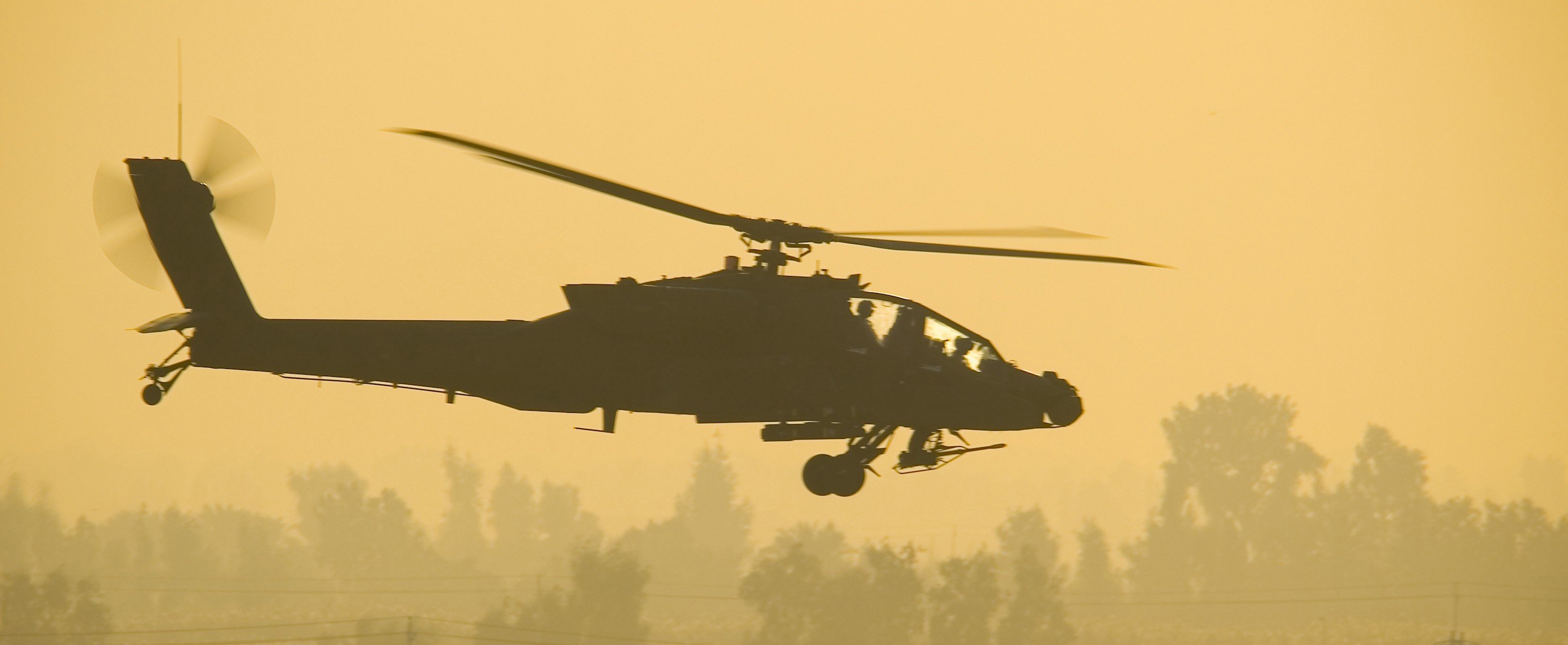
REDSTONE ARSENAL, Ala. -- The U.S. ambassador to Israel and the head of Israel's Ministry of Defense Directorate of Defense Research and Development held a ceremony Nov. 3 on the occasion of 30 years of rotorcraft technologies and human factors engineering collaboration.
The ceremony was headed by U.S. Ambassador to Israel Dan Shapiro and IMOD Head of DDR&D Brig. Gen. (res) Dr. Daniel Gold. James Lackey, director of the U.S. Army Aviation and Missile Research, Development and Engineering Center; Dr. Moshe Goldberg, IMOD Head of R&D Technology Base; and officials and guests attended.
American and Israeli scientists have engaged in a collaborative effort and have jointly conducted dozens of research and development programs, aimed at improving the performance of U.S. and Israel's military helicopters and to integrate advanced capabilities in future platforms.
The rotorcraft technologies effort is led by ARMDEC and the IMOD Directorate of DDR&D. Participating parties include the research and development teams at the Israel Air Force, the Technicon, Tel Aviv University, Ben-Gurion University and Haifa University.
"The significant 30-year milestone of our research collaboration with Israel is solid testimony to the enduring value of aviation project topics of mutual interest," Lackey said. "We both need to push the flight envelope and find ways to improve platform aero performance as well as work to develop and mature ideas to better integrate the human with machine; whether manned or unmanned. This cuts across all of our mission requirements."
The U.S. and Israel have collaborated with more than 100 scientists and engineers from both sides developing breakthrough technologies in the areas of aeronautical mechanics, aerodynamics and human factors engineering for helicopters.
"This rotorcraft cooperation has long been considered among the best U.S.-Israel research agreements," said Shapiro. "It is unique in that it brings together the technical leaders from our two countries to conduct joint research on problems of common interest to our countries. At the same time the personal connections have enriched understanding of each other's cultures and history and strengthened the ties between the two countries."
"The defense ties and close collaboration of the U.S. and Israel are deep and long lasting," said Gold. "The Rotorcraft Project Agreement collaboration is very special, as it embodies the deep research cooperation between the Parties. In my view, the RPA collaboration sets the gold standard for U.S.-Israeli Defense R&D."
The operation of helicopters is especially challenging due to the technical complexity and operational demands of low-level night flights. Accordingly, advanced HFE solutions are required to enable efficient and safe operation. The research efforts in this domain resulted in improved pilot displays and obstacle avoidance solutions. Additional efforts addressed the challenge of two aircraft jointly lifting heavy loads, beyond the capacity of a single helicopter. Some of the research products have been implemented in U.S. rotorcraft, come of which are also operated by the IAF. Other will be integrated in future platforms or upgrades.
"I only see more research collaboration opportunities both inside the aviation domain and in other areas of AMRDEC business," said Lackey. "During this trip, we identified a couple of specific topics to engage upon and thus will make proactive effort to mutually cultivate into formal project agreements."
---
The U.S. Army Aviation and Missile Research, Development and Engineering Center is part of the U.S. Army Research, Development and Engineering Command, which has the mission to provide innovative research, development and engineering to produce capabilities that provide decisive overmatch to the Army against the complexities of the current and future operating environments in support of the joint warfighter and the nation. RDECOM is a major subordinate command of the U.S. Army Materiel Command.
Related Links:
U.S. Army Aviation and Missile Research, Development and Engineering Center
U.S. Army Aviation and Missile Life Cycle Management Command
Social Sharing