1 / 7Show Caption +Hide Caption –
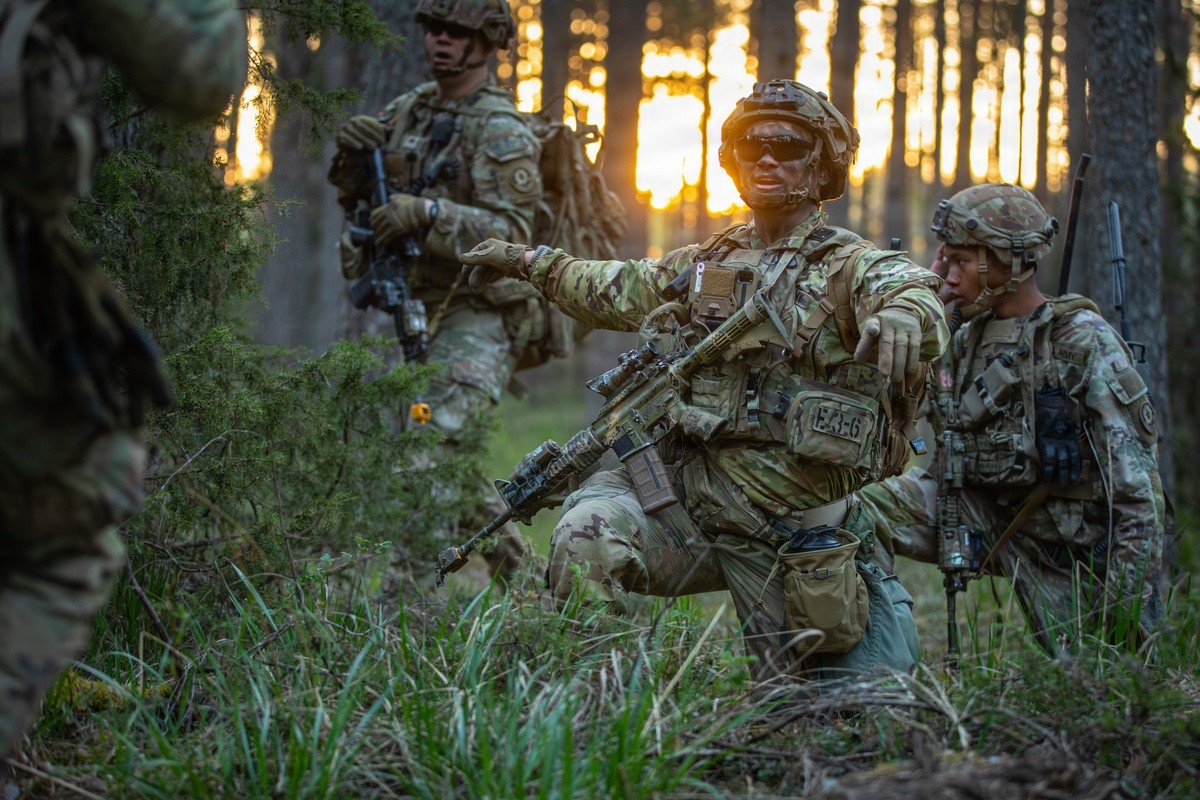
U.S. Army 1st Lt. Joshua Pugh, a platoon leader assigned to Echo Troop, 2nd Squadron, 2nd Cavalry Regiment, directs his platoon during the force-on-force phase of Project Flytrap at Pabradė Training Area, Lithuania, May 4, 2026. The force-on-force phase pits U.S. Soldiers against British paratroopers from the U.K. Parachute Regiment in a series of simulated engagements designed to test counter-unmanned aerial system integration in a contested environment. From April 27 to May 31, 2026, U.S. and Allied forces will conduct Project Flytrap as part of a series of linked exercises, including Sword 26, Saber Strike, Immediate Response, and Swift Response, which transform experimentation into capability. During Project Flytrap, Soldiers integrate counter-unmanned systems, AI-enabled command and control, and live data networks to move faster, decide faster, and fight more effectively across all domains. (U.S. Army photo by Sgt. Max Elliott)
(Photo Credit: Sgt. Max Elliott)VIEW ORIGINAL2 / 7Show Caption +Hide Caption –
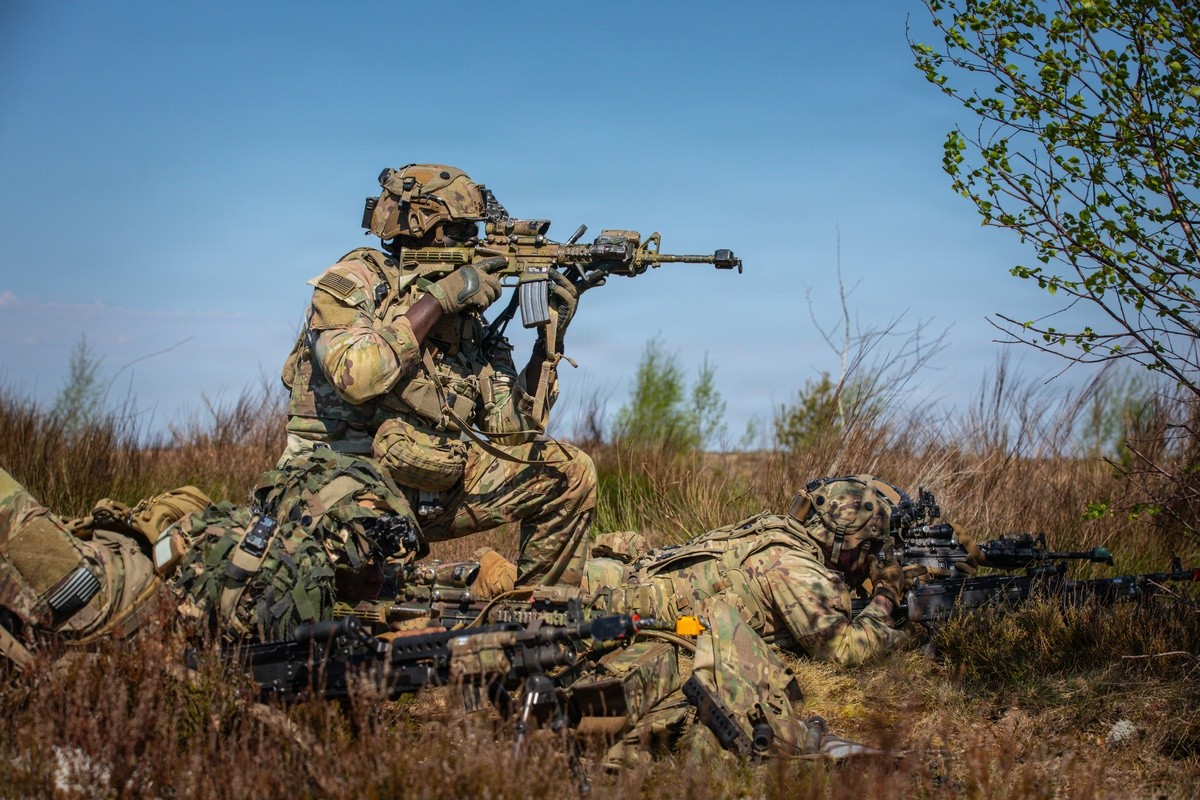
U.S. Army Staff Sgt. Fahad Kasamba, an infantryman assigned to Echo Troop, 2nd Squadron, 2nd Cavalry Regiment, engages a simulated enemy position alongside fellow Soldiers during the force-on-force phase of Project Flytrap at Pabradė Training Area, Lithuania, May 4, 2026. U.S. Soldiers faced off against British paratroopers from the U.K. Parachute Regiment in a series of simulated engagements designed to test counter-unmanned aerial system integration in a contested environment. From April 27 to May 31, 2026, U.S. and Allied forces will conduct Project Flytrap as part of a series of linked exercises, including Sword 26, Saber Strike, Immediate Response, and Swift Response, which transform experimentation into capability. During Project Flytrap, Soldiers integrate counter-unmanned systems, AI-enabled command and control, and live data networks to move faster, decide faster, and fight more effectively across all domains. (U.S. Army photo by Sgt. Max Elliott)
(Photo Credit: Sgt. Max Elliott)VIEW ORIGINAL3 / 7Show Caption +Hide Caption –
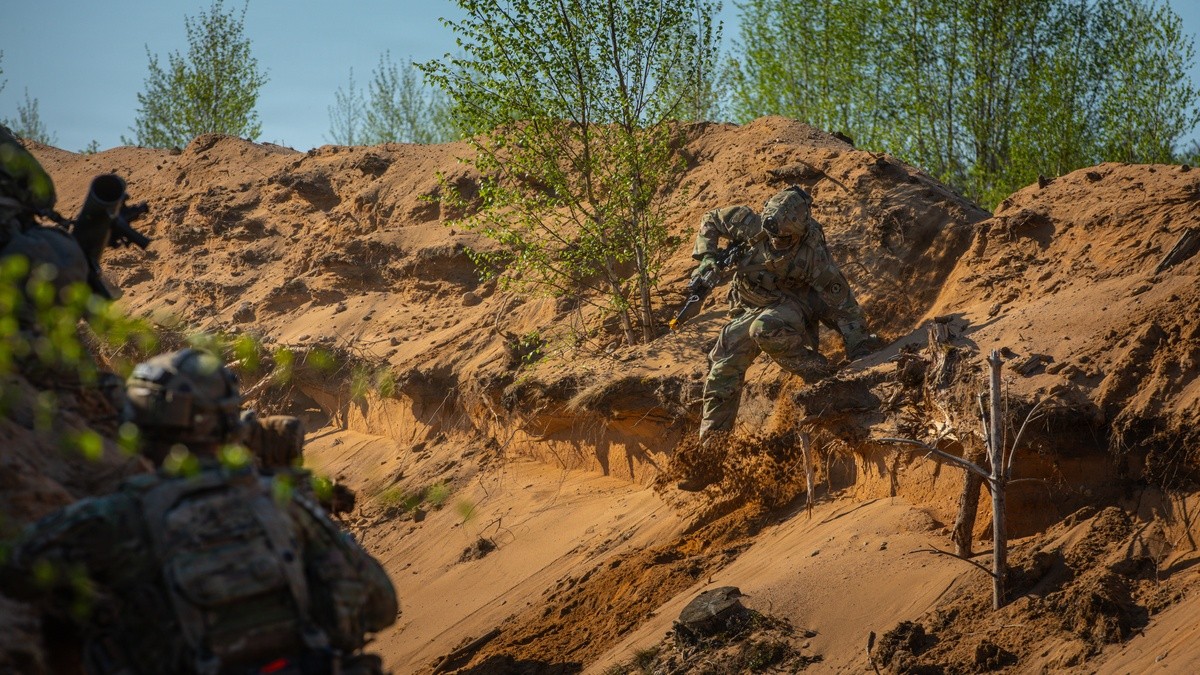
U.S. Army Pvt. Cody Reynolds, above, and Spc. Anthony Reyes, both infantrymen assigned to Echo Troop, 2nd Squadron, 2nd Cavalry Regiment, clear a trench during the force-on-force phase of Project Flytrap at Pabradė Training Area, Lithuania, May 4, 2026. U.S. Soldiers faced off against British paratroopers from the U.K. Parachute Regiment in a series of simulated engagements designed to test counter-unmanned aerial system integration in a contested environment. From April 27 to May 31, 2026, U.S. and Allied forces will conduct Project Flytrap as part of a series of linked exercises, including Sword 26, Saber Strike, Immediate Response, and Swift Response, which transform experimentation into capability. During Project Flytrap, Soldiers integrate counter-unmanned systems, AI-enabled command and control, and live data networks to move faster, decide faster, and fight more effectively across all domains. (U.S. Army photo by Sgt. Max Elliott)
(Photo Credit: Sgt. Max Elliott)VIEW ORIGINAL4 / 7Show Caption +Hide Caption –
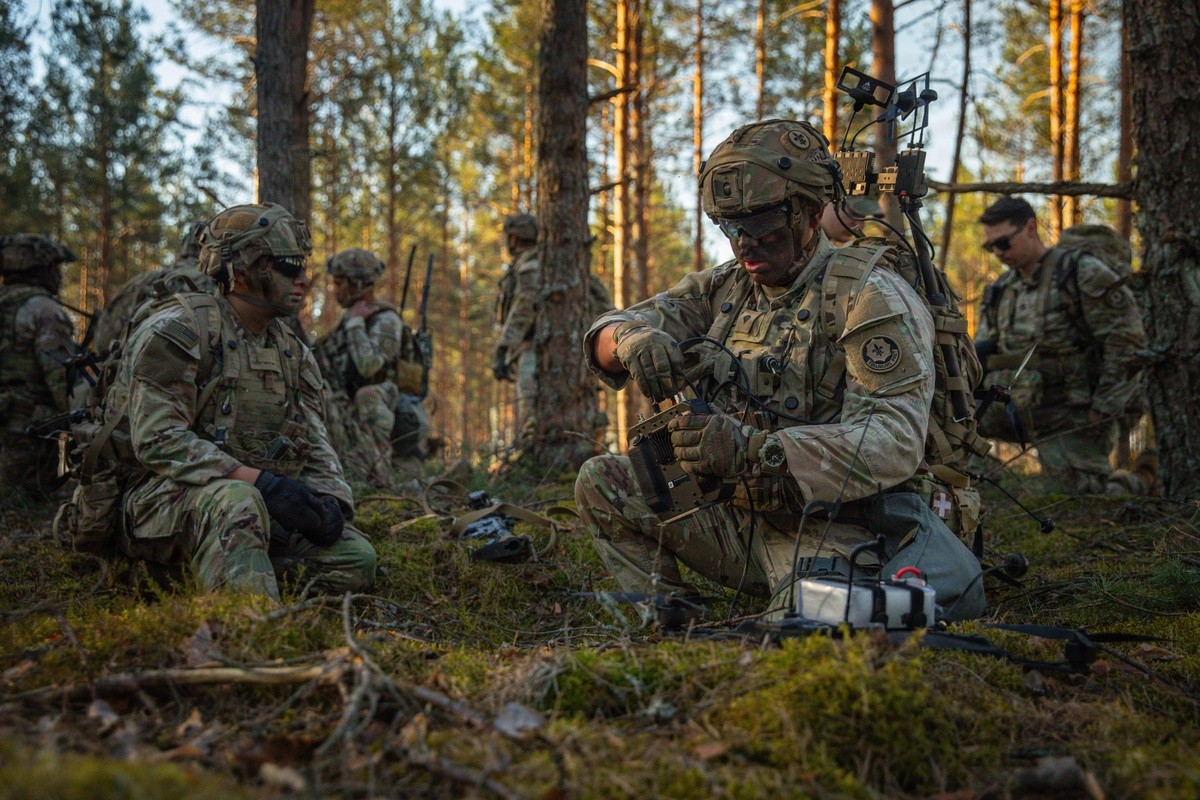
U.S. Army Spc. Jonathan Agurcia, an infantryman assigned to Echo Troop, 2nd Squadron, 2nd Cavalry Regiment, prepares a small unmanned aerial system for flight during the force-on-force phase of Project Flytrap at Pabradė Training Area, Lithuania, May 4, 2026. U.S. Soldiers faced off against British paratroopers from the U.K. Parachute Regiment in a series of simulated engagements designed to test counter-unmanned aerial system integration in a contested environment. From April 27 to May 31, 2026, U.S. and Allied forces will conduct Project Flytrap as part of a series of linked exercises, including Sword 26, Saber Strike, Immediate Response, and Swift Response, which transform experimentation into capability. During Project Flytrap, Soldiers integrate counter-unmanned systems, AI-enabled command and control, and live data networks to move faster, decide faster, and fight more effectively across all domains. (U.S. Army photo by Sgt. Max Elliott)
(Photo Credit: Sgt. Max Elliott)VIEW ORIGINAL5 / 7Show Caption +Hide Caption –
From left, U.S. Army Pfc. Chase Anders and Staff Sgt. Fahad Kasamba, infantrymen assigned to Echo Troop, 2nd Squadron, 2nd Cavalry Regiment, maneuver through a training area during the force-on-force phase of Project Flytrap at Pabradė Training Area, Lithuania, May 4, 2026. U.S. Soldiers faced off against British paratroopers from the U.K. Parachute Regiment in a series of simulated engagements designed to test counter-unmanned aerial system integration in a contested environment. From April 27 to May 31, 2026, U.S. and Allied forces will conduct Project Flytrap as part of a series of linked exercises, including Sword 26, Saber Strike, Immediate Response, and Swift Response, which transform experimentation into capability. During Project Flytrap, Soldiers integrate counter-unmanned systems, AI-enabled command and control, and live data networks to move faster, decide faster, and fight more effectively across all domains. (U.S. Army photo by Sgt. Max Elliott)
(Photo Credit: Sgt. Max Elliott)VIEW ORIGINAL6 / 7Show Caption +Hide Caption –
U.S. Army Soldiers assigned to Echo Troop, 2nd Squadron, 2nd Cavalry Regiment, assault an objective during the force-on-force phase of Project Flytrap at Pabradė Training Area, Lithuania, May 4, 2026. U.S. Soldiers faced off against British paratroopers from the U.K. Parachute Regiment in a series of simulated engagements designed to test counter-unmanned aerial system integration in a contested environment. From April 27 to May 31, 2026, U.S. and Allied forces will conduct Project Flytrap as part of a series of linked exercises, including Sword 26, Saber Strike, Immediate Response, and Swift Response, which transform experimentation into capability. During Project Flytrap, Soldiers integrate counter-unmanned systems, AI-enabled command and control, and live data networks to move faster, decide faster, and fight more effectively across all domains. (U.S. Army photo by Sgt. Max Elliott)
(Photo Credit: Sgt. Max Elliott)VIEW ORIGINAL7 / 7Show Caption +Hide Caption –
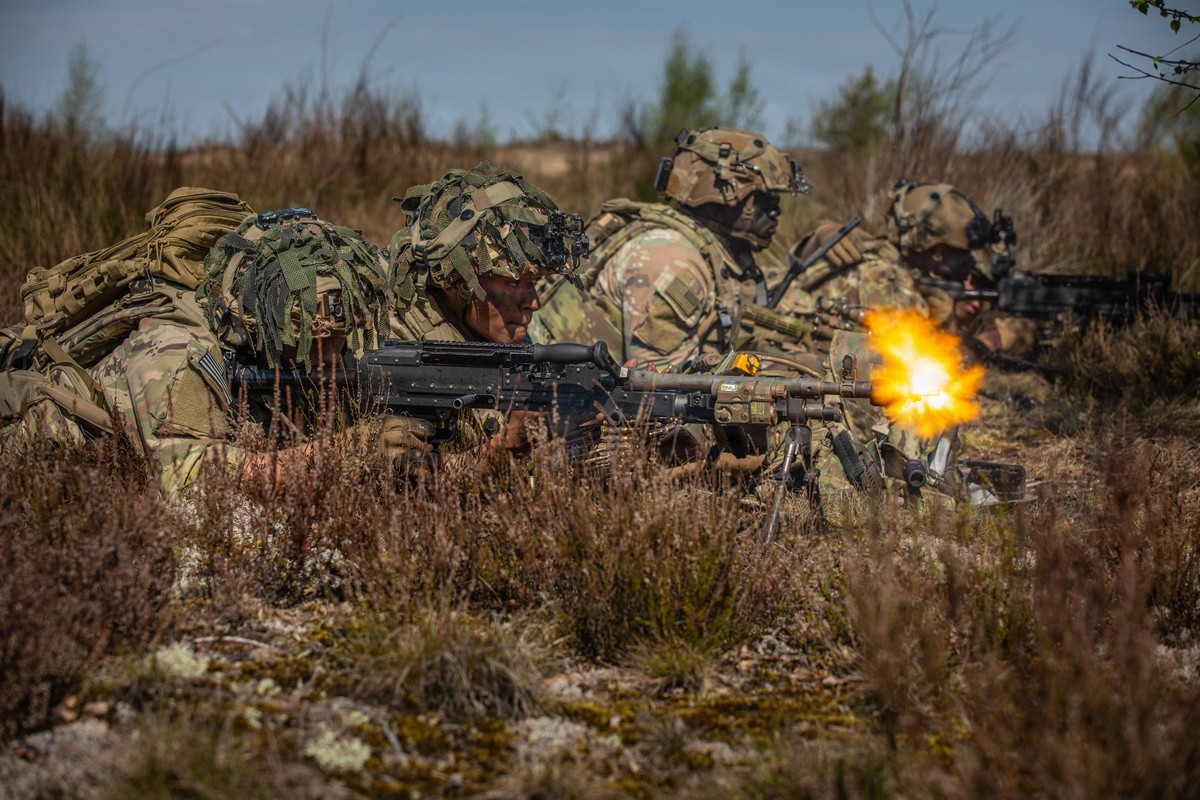
U.S. Army Pvt. Camden Lapenta, an infantryman assigned to Echo Troop, 2nd Squadron, 2nd Cavalry Regiment, mans an M249 light machine gun from a fighting position during the force-on-force phase of Project Flytrap at Pabradė Training Area, Lithuania, May 4, 2026. U.S. Soldiers faced off against British paratroopers from the U.K. Parachute Regiment in a series of simulated engagements designed to test counter-unmanned aerial system integration in a contested environment. From April 27 to May 31, 2026, U.S. and Allied forces will conduct Project Flytrap as part of a series of linked exercises, including Sword 26, Saber Strike, Immediate Response, and Swift Response, which transform experimentation into capability. During Project Flytrap, Soldiers integrate counter-unmanned systems, AI-enabled command and control, and live data networks to move faster, decide faster, and fight more effectively across all domains. (U.S. Army photo by Sgt. Max Elliott)
(Photo Credit: Sgt. Max Elliott)VIEW ORIGINAL
PABRADĖ, Lithuania — U.S. Infantrymen from 2nd Squadron, 2nd Cavalry Regiment faced off against British Paratroopers from the U.K. Parachute Regiment during the force-on-force phase of Project Flytrap at Pabradė Training Area, Lithuania, May 7, 2026, testing and integrating counter-unmanned aerial system technology in a contested field environment for the first time at the troop level.
Capt. Brendan Printup, the commander of Echo Troop, 2nd Squadron, 2nd Cavalry Regiment, said the exercise represents a turning point for how infantry formations fight.
"We are the ones proofing the concept," Printup said. "This is the first time at the troop level that we are going to be testing a mounted Stryker platform fighting the counter-UAS fight. These Eagle Troop Soldiers — I'm talking about the E-5 sergeants and below — this is their fight."
1 / 6Show Caption +Hide Caption –
From left, U.S. Army Pfc. Chase Anders, an infantryman, and Spc. Anthony Reyes, both infantrymen assigned to Echo Troop, 2nd Squadron, 2nd Cavalry Regiment, engage a simulated enemy position during the force-on-force phase of Project Flytrap at Pabradė Training Area, Lithuania, May 4, 2026. U.S. Soldiers faced off against British paratroopers from the U.K. Parachute Regiment in a series of simulated engagements designed to test counter-unmanned aerial system integration in a contested environment. From April 27 to May 31, 2026, U.S. and Allied forces will conduct Project Flytrap as part of a series of linked exercises, including Sword 26, Saber Strike, Immediate Response, and Swift Response, which transform experimentation into capability. During Project Flytrap, Soldiers integrate counter-unmanned systems, AI-enabled command and control, and live data networks to move faster, decide faster, and fight more effectively across all domains. (U.S. Army photo by Sgt. Max Elliott)
(Photo Credit: Sgt. Max Elliott)VIEW ORIGINAL2 / 6Show Caption +Hide Caption –
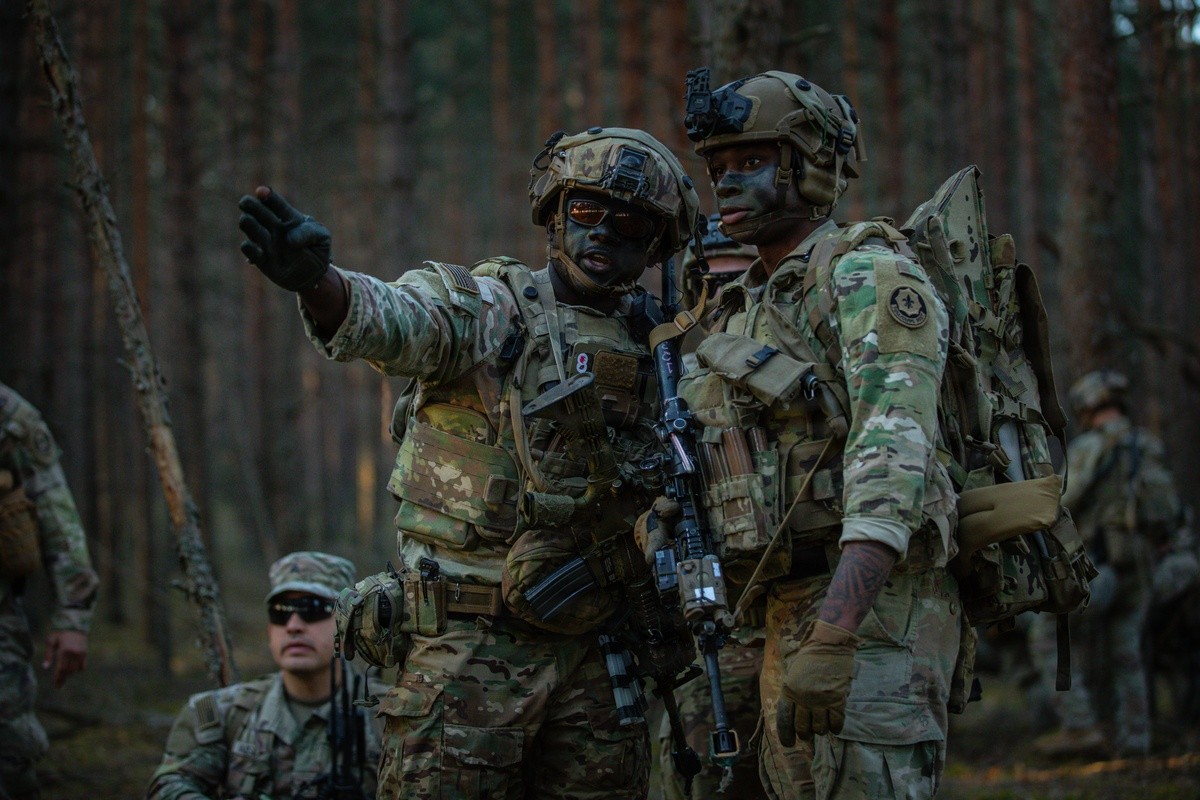
From left, U.S. Army Staff Sgt. Fahad Kasamba and Spc. Dennis Workman, infantrymen assigned to Echo Troop, 2nd Squadron, 2nd Cavalry Regiment, coordinate movement during the force-on-force phase of Project Flytrap at Pabradė Training Area, Lithuania, May 4, 2026. U.S. Soldiers faced off against British paratroopers from the U.K. Parachute Regiment in a series of simulated engagements designed to test counter-unmanned aerial system integration in a contested environment. From April 27 to May 31, 2026, U.S. and Allied forces will conduct Project Flytrap as part of a series of linked exercises, including Sword 26, Saber Strike, Immediate Response, and Swift Response, which transform experimentation into capability. During Project Flytrap, Soldiers integrate counter-unmanned systems, AI-enabled command and control, and live data networks to move faster, decide faster, and fight more effectively across all domains. (U.S. Army photo by Sgt. Max Elliott)
(Photo Credit: Sgt. Max Elliott)VIEW ORIGINAL3 / 6Show Caption +Hide Caption –
U.S. Army Pfc. Mickey Leonard, an infantryman assigned to Echo Troop, 2nd Squadron, 2nd Cavalry Regiment, pulls security in a prone position during the force-on-force phase of Project Flytrap at Pabradė Training Area, Lithuania, May 4, 2026. U.S. Soldiers faced off against British paratroopers from the U.K. Parachute Regiment in a series of simulated engagements designed to test counter-unmanned aerial system integration in a contested environment. From April 27 to May 31, 2026, U.S. and Allied forces will conduct Project Flytrap as part of a series of linked exercises, including Sword 26, Saber Strike, Immediate Response, and Swift Response, which transform experimentation into capability. During Project Flytrap, Soldiers integrate counter-unmanned systems, AI-enabled command and control, and live data networks to move faster, decide faster, and fight more effectively across all domains. (U.S. Army photo by Sgt. Max Elliott)
(Photo Credit: Sgt. Max Elliott)VIEW ORIGINAL4 / 6Show Caption +Hide Caption –
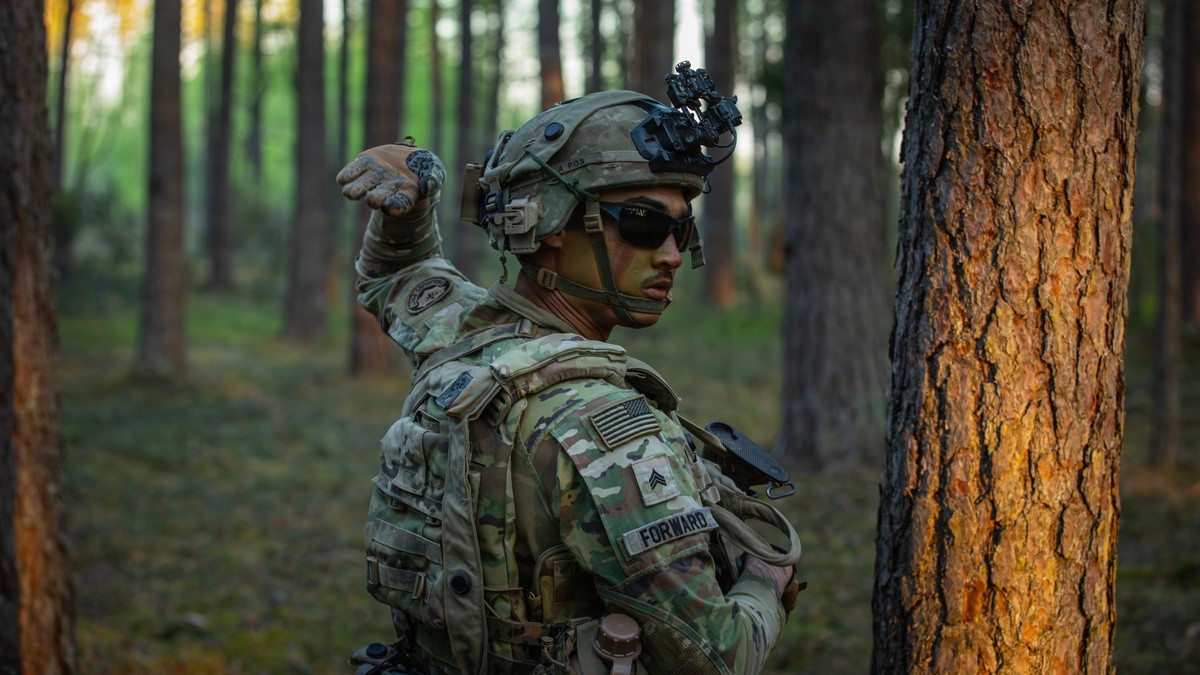
U.S. Army Sgt. Terrell Forward, an infantryman assigned to Echo Troop, 2nd Squadron, 2nd Cavalry Regiment, signals to his element during the force-on-force phase of Project Flytrap at Pabradė Training Area, Lithuania, May 4, 2026. U.S. Soldiers faced off against British paratroopers from the U.K. Parachute Regiment in a series of simulated engagements designed to test counter-unmanned aerial system integration in a contested environment. From April 27 to May 31, 2026, U.S. and Allied forces will conduct Project Flytrap as part of a series of linked exercises, including Sword 26, Saber Strike, Immediate Response, and Swift Response, which transform experimentation into capability. During Project Flytrap, Soldiers integrate counter-unmanned systems, AI-enabled command and control, and live data networks to move faster, decide faster, and fight more effectively across all domains. (U.S. Army photo by Sgt. Max Elliott)
(Photo Credit: Sgt. Max Elliott)VIEW ORIGINAL5 / 6Show Caption +Hide Caption –
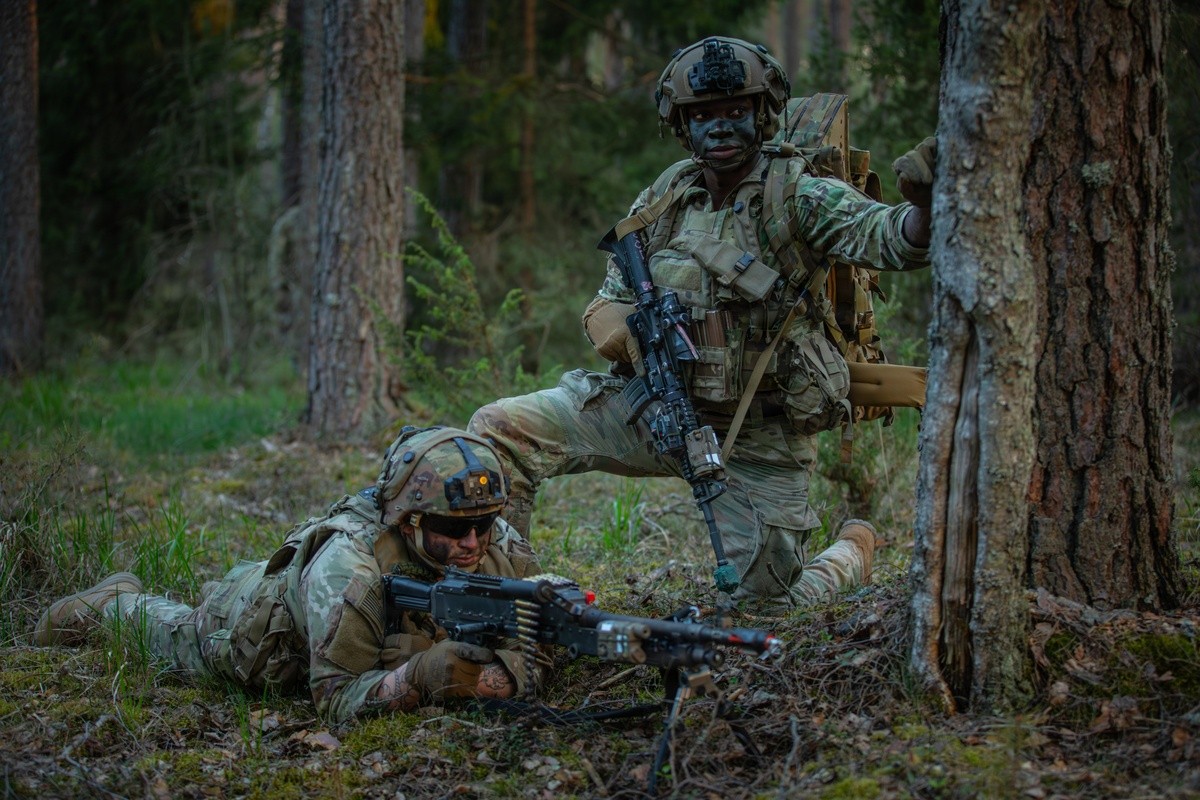
From left, U.S. Army Pfc. Owens Bowman Pulls security with an M249 light machine gun with Spc. Dennis Workman, both infantrymen assigned to Echo Troop, 2nd Squadron, 2nd Cavalry Regiment, during the force-on-force phase of Project Flytrap at Pabradė Training Area, Lithuania, May 4, 2026. U.S. Soldiers faced off against British paratroopers from the U.K. Parachute Regiment in a series of simulated engagements designed to test counter-unmanned aerial system integration in a contested environment. From April 27 to May 31, 2026, U.S. and Allied forces will conduct Project Flytrap as part of a series of linked exercises, including Sword 26, Saber Strike, Immediate Response, and Swift Response, which transform experimentation into capability. During Project Flytrap, Soldiers integrate counter-unmanned systems, AI-enabled command and control, and live data networks to move faster, decide faster, and fight more effectively across all domains. (U.S. Army photo by Sgt. Max Elliott)
(Photo Credit: Sgt. Max Elliott)VIEW ORIGINAL6 / 6Show Caption +Hide Caption –
U.S. Army Pfc. Mickey Leonard, an infantryman assigned to Echo Troop, 2nd Squadron, 2nd Cavalry Regiment, patrols through a forested area while carrying an M249 light machine gun during the force-on-force phase of Project Flytrap at Pabradė Training Area, Lithuania, May 4, 2026. U.S. Soldiers faced off against British paratroopers from the U.K. Parachute Regiment in a series of simulated engagements designed to test counter-unmanned aerial system integration in a contested environment. From April 27 to May 31, 2026, U.S. and Allied forces will conduct Project Flytrap as part of a series of linked exercises, including Sword 26, Saber Strike, Immediate Response, and Swift Response, which transform experimentation into capability. During Project Flytrap, Soldiers integrate counter-unmanned systems, AI-enabled command and control, and live data networks to move faster, decide faster, and fight more effectively across all domains. (U.S. Army photo by Sgt. Max Elliott)
(Photo Credit: Sgt. Max Elliott)VIEW ORIGINAL
Brig. Gen. John B. Mountford, the V Corps deputy commanding general for readiness, framed the broader significance of the exercise.
"More than 8,000 troops from eight nations are operationalizing the Eastern Flank Deterrence Initiative," Mountford said. "We are turning NATO's increased investment into real warfighting capability here in Lithuania. Project Flytrap partners with industry to field counter-drone technology now, protecting Soldiers at the speed of relevance, from the Baltics to the High North."
1 / 6Show Caption +Hide Caption –
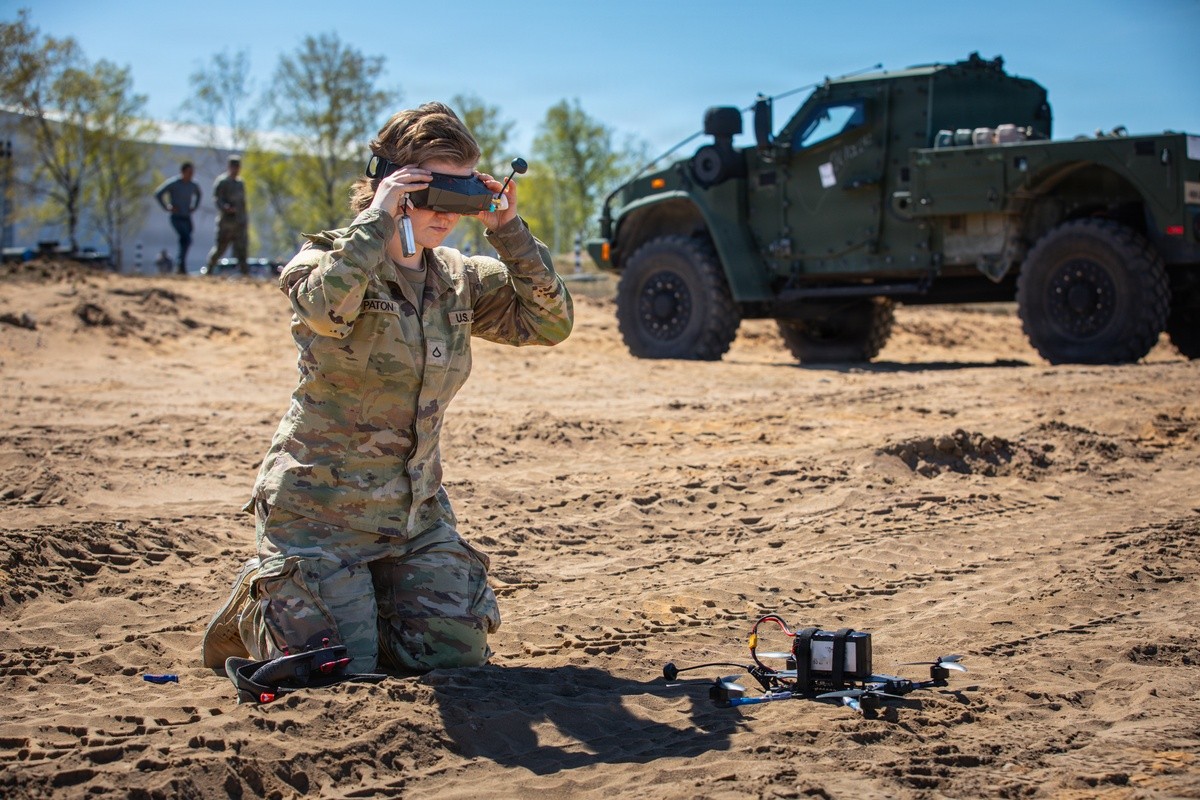
U.S. Army Spc. Jonathan Agurcia, an infantryman assigned to Echo Troop, 2nd Squadron, 2nd Cavalry Regiment, dons a first-person view headset before operating a small unmanned aerial system during the force-on-force phase of Project Flytrap at Pabradė Training Area, Lithuania, May 4, 2026. U.S. Soldiers faced off against British paratroopers from the U.K. Parachute Regiment in a series of simulated engagements designed to test counter-unmanned aerial system integration in a contested environment. From April 27 to May 31, 2026, U.S. and Allied forces will conduct Project Flytrap as part of a series of linked exercises, including Sword 26, Saber Strike, Immediate Response, and Swift Response, which transform experimentation into capability. During Project Flytrap, Soldiers integrate counter-unmanned systems, AI-enabled command and control, and live data networks to move faster, decide faster, and fight more effectively across all domains. (U.S. Army photo by Sgt. Max Elliott)
(Photo Credit: Sgt. Max Elliott)VIEW ORIGINAL2 / 6Show Caption +Hide Caption –
A counter-unmanned aerial system sits staged in a field during Project Flytrap at Pabradė Training Area, Lithuania, May 2, 2026. Project Flytrap is a counter-unmanned aerial system exercise designed to evaluate emerging technologies and inform future Army requirements and doctrine along NATO's eastern flank. (U.S. Army photo by Sgt. Max Elliott)
(Photo Credit: Sgt. Max Elliott)VIEW ORIGINAL3 / 6Show Caption +Hide Caption –
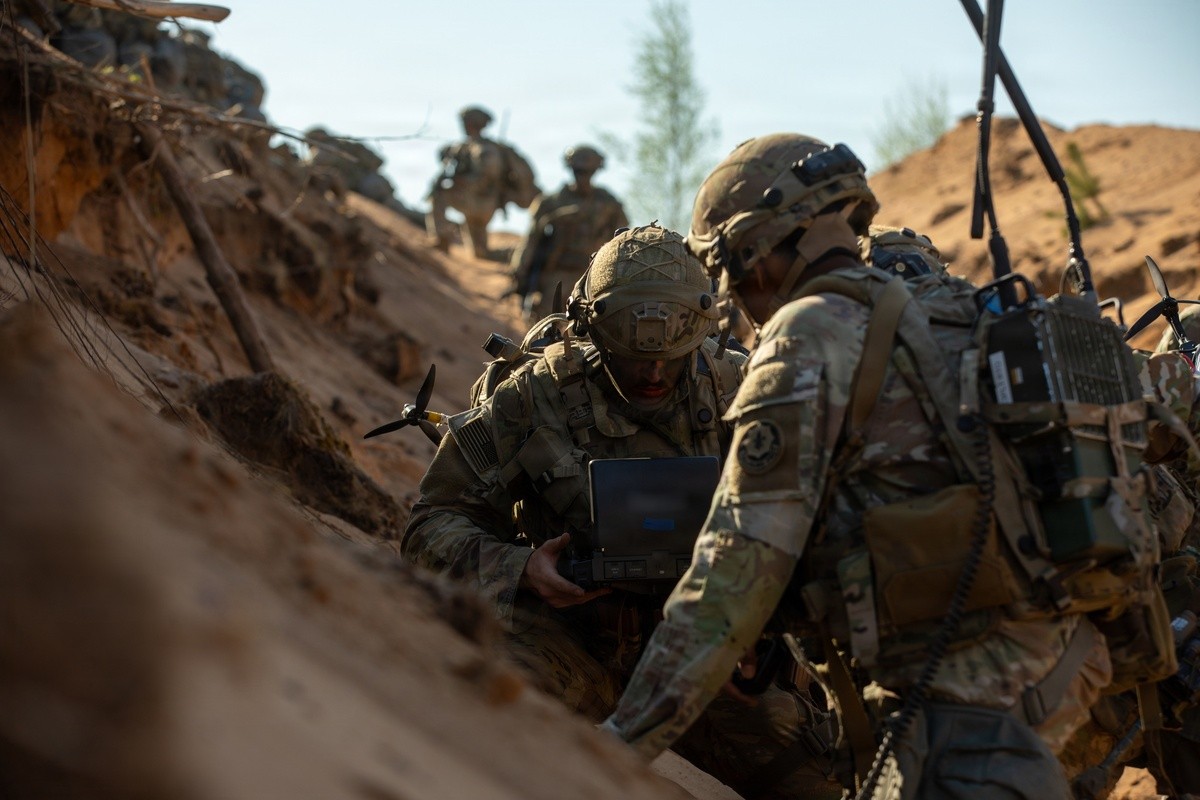
U.S. Army Spc. Adam Curry, an infantryman assigned to Echo Troop, 2nd Squadron, 2nd Cavalry Regiment, monitors a tablet displaying unmanned aerial system feed data during the force-on-force phase of Project Flytrap at Pabradė Training Area, Lithuania, May 4, 2026. U.S. Soldiers faced off against British paratroopers from the U.K. Parachute Regiment in a series of simulated engagements designed to test counter-unmanned aerial system integration in a contested environment. From April 27 to May 31, 2026, U.S. and Allied forces will conduct Project Flytrap as part of a series of linked exercises, including Sword 26, Saber Strike, Immediate Response, and Swift Response, which transform experimentation into capability. During Project Flytrap, Soldiers integrate counter-unmanned systems, AI-enabled command and control, and live data networks to move faster, decide faster, and fight more effectively across all domains. (U.S. Army photo by Sgt. Max Elliott)
(Photo Credit: Sgt. Max Elliott)VIEW ORIGINAL4 / 6Show Caption +Hide Caption –
U.S. Army Pv2. Hoyce Komrosky, an infantryman assigned to Echo Troop, 2nd Squadron, 2nd Cavalry Regiment, patrols through a forested area during the force-on-force phase of Project Flytrap at Pabradė Training Area, Lithuania, May 4, 2026. U.S. Soldiers faced off against British paratroopers from the U.K. Parachute Regiment in a series of simulated engagements designed to test counter-unmanned aerial system integration in a contested environment. From April 27 to May 31, 2026, U.S. and Allied forces will conduct Project Flytrap as part of a series of linked exercises, including Sword 26, Saber Strike, Immediate Response, and Swift Response, which transform experimentation into capability. During Project Flytrap, Soldiers integrate counter-unmanned systems, AI-enabled command and control, and live data networks to move faster, decide faster, and fight more effectively across all domains. (U.S. Army photo by Sgt. Max Elliott)
(Photo Credit: Sgt. Max Elliott)VIEW ORIGINAL5 / 6Show Caption +Hide Caption –
Pfc. Hailey Paton, an infantryman assigned to Echo Troop, 2nd Squadron, 2nd Cavalry Regiment, dons first-person view goggles before operating a small unmanned aerial system during Project Flytrap at Pabradė Training Area, Lithuania, May 2, 2026. Project Flytrap directly supports the Eastern Flank Deterrence Initiative by evaluating scalable counter-drone solutions that can integrate into NATO's existing air defense networks. (U.S. Army photo by Sgt. Max Elliott)
(Photo Credit: Sgt. Max Elliott)VIEW ORIGINAL6 / 6Show Caption +Hide Caption –
Pfc. Hailey Paton, an infantryman assigned to Echo Troop, 2nd Squadron, 2nd Cavalry Regiment, monitors a first-person view feed while operating an unmanned aerial system during Project Flytrap at Pabradė Training Area, Lithuania, May 2, 2026. Project Flytrap places emerging counter-drone technology directly in the hands of Soldiers to generate real-time feedback and inform future Army training requirements and doctrine. (U.S. Army photo by Sgt. Max Elliott)
(Photo Credit: Sgt. Max Elliott)VIEW ORIGINAL
The technology being evaluated spans reconnaissance drones, first-person view strike systems, electronic jammers and artificial intelligence-enabled command and control platforms, tools that — until recently — primarily existed in laboratories and defense contractor proposals. Here, they are mounted to vehicles, strapped to Soldiers’ backs and launched from fighting positions carved into the Lithuanian sand.
From April 27 to May 31, 2026, U.S. and Allied forces will conduct Project Flytrap as part of a series of linked exercises, including Sword , Saber Strike, Immediate Response and Swift Response, which transform experimentation into capability.
During Project Flytrap, Soldiers integrate counter-unmanned systems, AI-enabled command and control and live data networks to move faster, decide faster and fight more effectively across all domains. The force-on-force phase continues through May 8.








Social Sharing