
Story by U.S. Army Sgt. Katy O’Brien
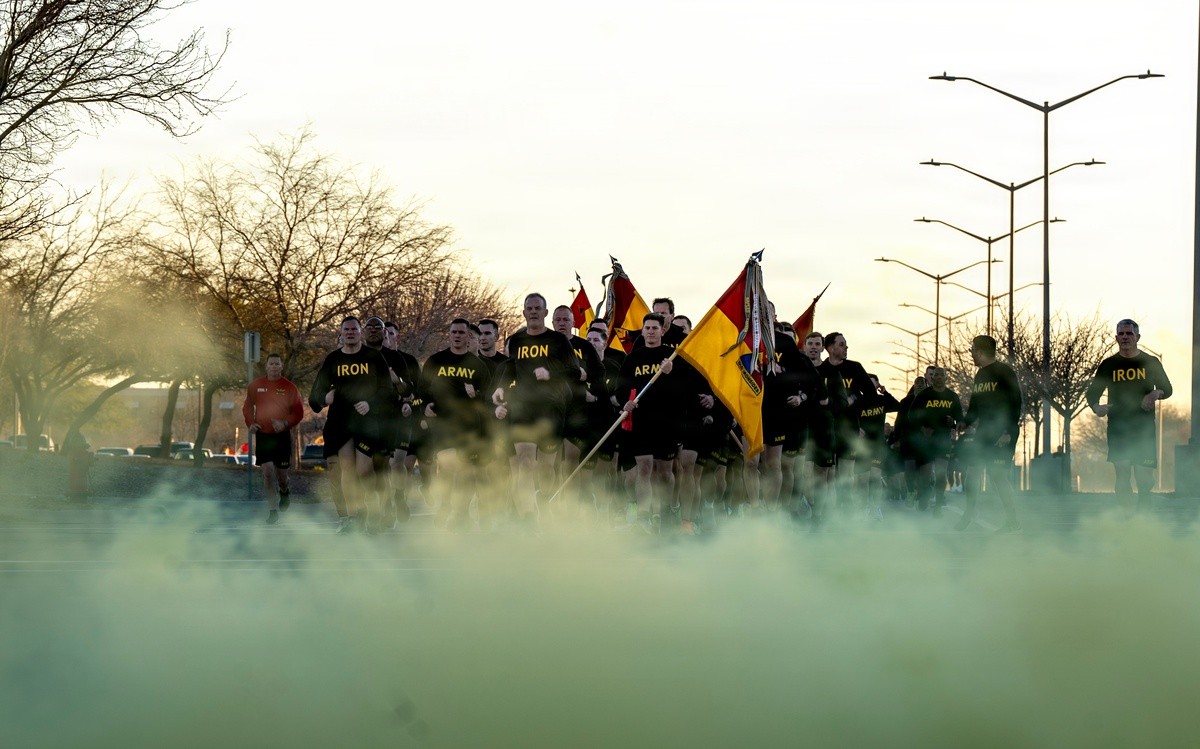
FORT BLISS, Texas – The dark sky lightens as the sun rises on an early day. A speaker crackles to life, and salutes are rendered as reveille is trumpeted. Voices rise to a crescendo as a crowd sings the "Iron Soldier March,” the song of the 1st Armored Division. Iron Soldiers stand in position, ready to join their fellow Soldiers on a division run.
The air echoes with a thundering cadence, in rhythmic harmony, as Soldiers belt out time-honored cadences to boost morale and esprit de corps as they run.
During the run, Soldiers are in high spirits as they encounter a barrage of simulated gun and artillery fire, traverse through areas covered in smoke, and barrel through cascading water toward the division headquarters.
The yearly celebration of the 1st Armored Division’s legacy, Torch Week, has begun.
“It took immense effort and tremendous, trailblazing innovation to forge this organization and define American armored warfare,” Maj. Gen. Curtis Taylor, commanding general of the 1st Armored Division, said in a note to Soldiers assigned to the division. “This is the week for us to come together as a division and show the Army what excellence looks like.”
Many ideas define excellence: readiness, fitness, lethality. This reach for excellence is what every unit in the Army strives for, but what sets each unit apart is its collective history – the legacy of those who came before.
Legacy is a word that has meaning far beyond its written definition. It can be following in the footsteps of those who came before, forging a new path, or knowledge passed down from one generation to the next.
“Legacy is history. We look back on our history within the military, within our family, within our country,” said Spc. Caleb Alexander, an infantryman assigned to 4th Battalion, 6th Infantry Regiment, 3rd Armored Brigade Combat Team, 1st AD. "Every experience, every memory, every bond we form, is part of our legacy," he said.
“Legacy is what sets the foundation for us to move forward, progress and get better.”
Alexander’s view on legacy was partially shaped by his grandfather’s service in the Marine Corps.
“My grandfather was a Marine veteran,” he said. “He led me to join the military. He was very proud to be part of the service, the military, and the Corps. It was very much his heritage, his belief and who he was as a person.”
“I did a lot of research growing up,” he said. “I always joke and tell people that when I was about three or four, I decided I didn't like the taste of crayons very much. Ultimately, I felt like the Army was going to give me a better chance moving forward and gave me more opportunities in life.”
Many things define the United States Army legacy: the bravery of its Soldiers throughout the battles and wars it has fought, the values it demands from those who serve, and the endless commitment to answer the call when the need arises.
“I hope you feel an immense sense of pride in being a part of this historic formation and calling yourself an Iron Soldier,” Taylor said. “I challenge each and every one of you to complete this week with the tenacity and pride that has always defined America’s Tank Division.”
To honor the legacy of units such as the 1st Armored Division, annual esprit de corps weeks are held, featuring a myriad of events. These legacy weeks are one of the many ways units within the Army inspire camaraderie and instill pride.
“The Army has its light units, the shock and awe. The 1st Armored Division comes, and it beats the enemy by attrition,” said Sgt. David Martinez, a combat engineer assigned to the 16th Engineer Battalion, 1st Brigade Combat Team, 1st Armored Division. “The legacy of the 1st Armored Division is expanding our front line. Very significant deterrence for anyone out there who is trying to take the U.S. on. The might of the 1st Armored Division has never gone away.”
The 1st Armored Division’s legacy is the strength of Iron Soldiers.
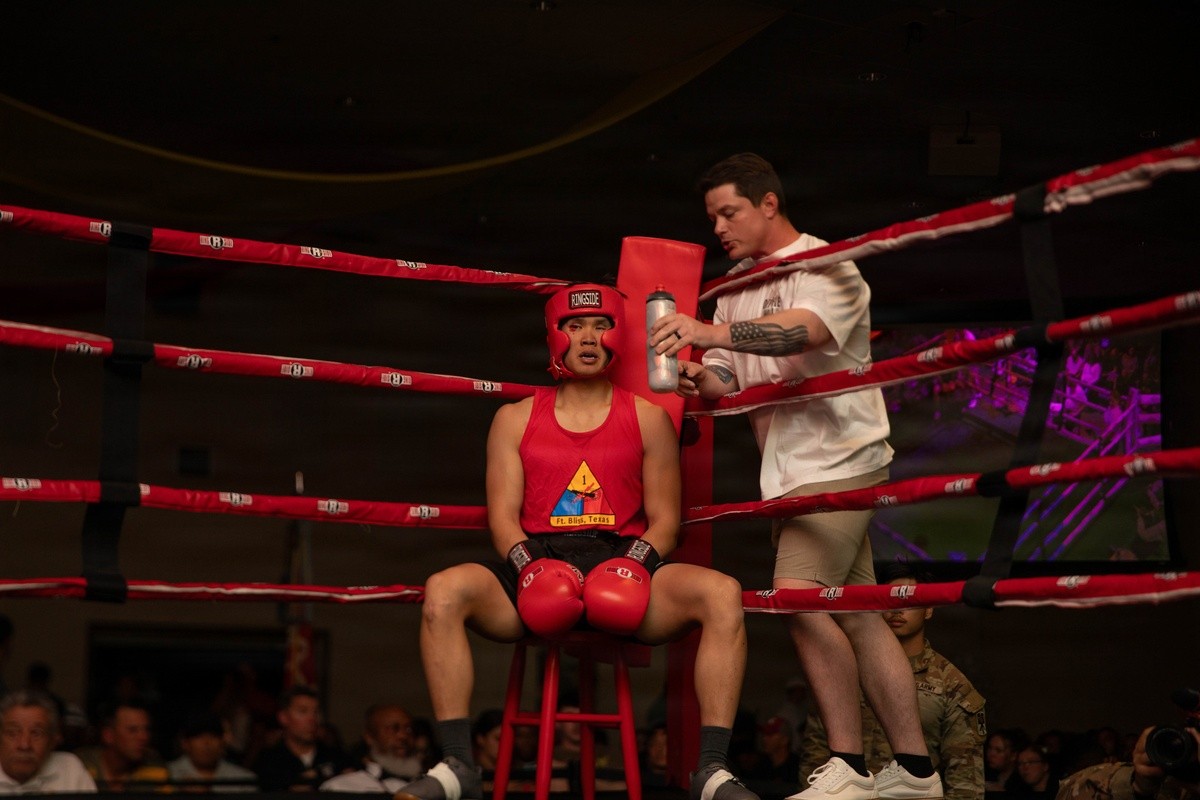
The division’s first large-scale operation was Operation Torch. This operation set the foundation, and operations such as Operation Desert Shield and Operation Desert Storm further built the 1st Armored Division’s legacy into what it is today.
Torch Week is a chance for the Soldiers currently serving in the 1st Armored Division to look back on the current legacy and envision how they can be part of the division’s legacy in the future.
“You are all part of this living history, and together, you are forging our future,” Taylor said.
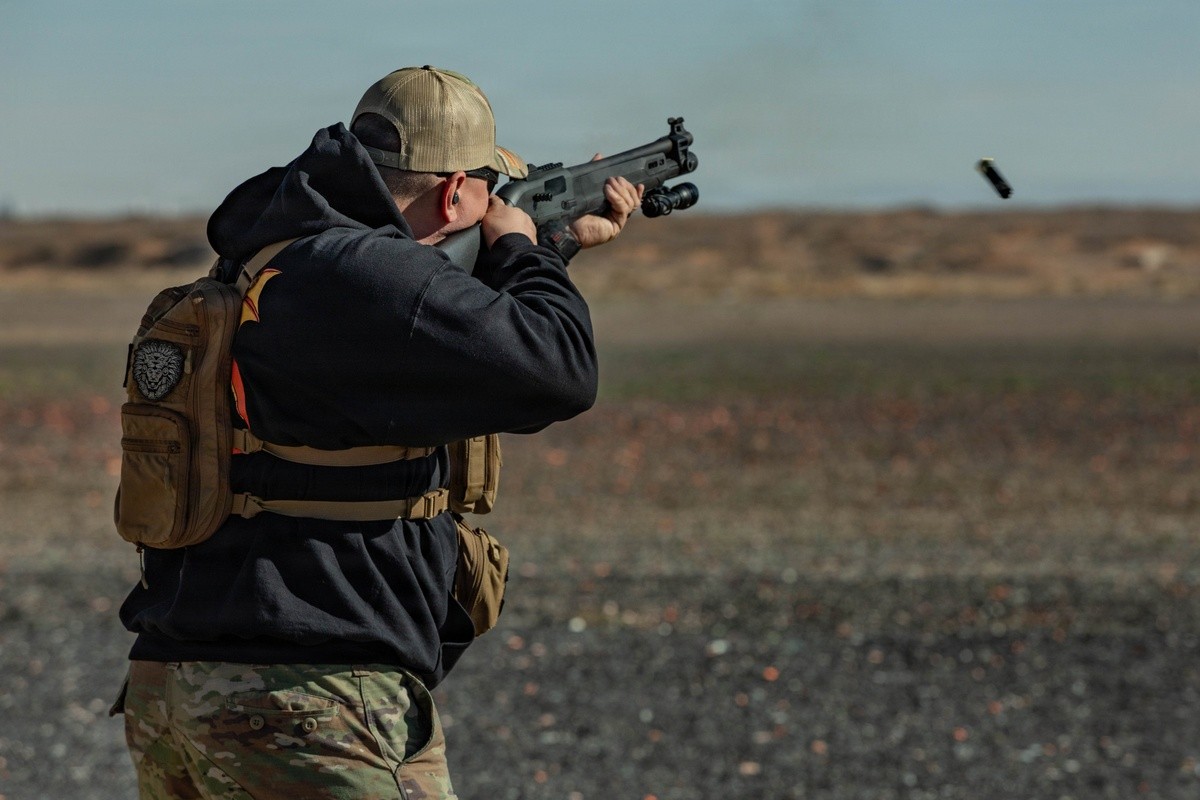
The Army is always researching new ways to innovate in rapidly growing fields, whether it’s the equipment it uses or the way it fights.
During World War II, hand-to-hand combat was less refined and taught only as a survival tool. The Army adapted skills from many fighting styles, such as jujutsu, street fighting, and wrestling. The rudimentary fighting techniques used were a result of limited training time.
At the conclusion of World War II, the number of personnel with combat skills dwindled, and the Army identified a needed skill set.
“Combatives are important to the Army because you never know what situation you're going to be in,” said Sgt. Ahmir Thomas, a motor transport operator assigned to 142nd Corps Sustainment Support Battalion, 1st Armored Division Sustainment Brigade. “You might have to be in a situation where you are in close quarters and need close combatives, so it’s good to know these tools, so when you’re in those situations, you come out alive and go home safe to your families.”
Combatives was revitalized in 1995. Modern combatives uses more refined hand-to-hand combat techniques to incapacitate and restrain enemies, in addition to survival. Multiple disciplines are used because of their similarities and the ways they can exploit each other's weaknesses.
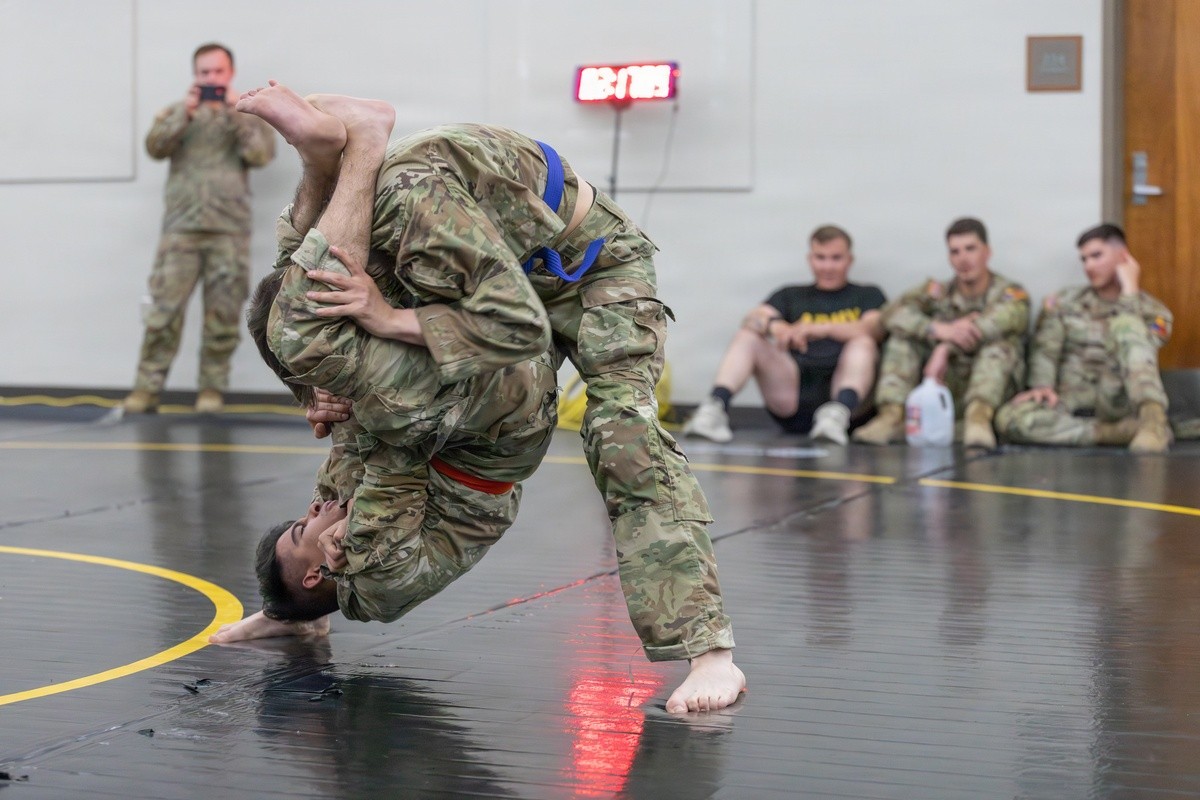
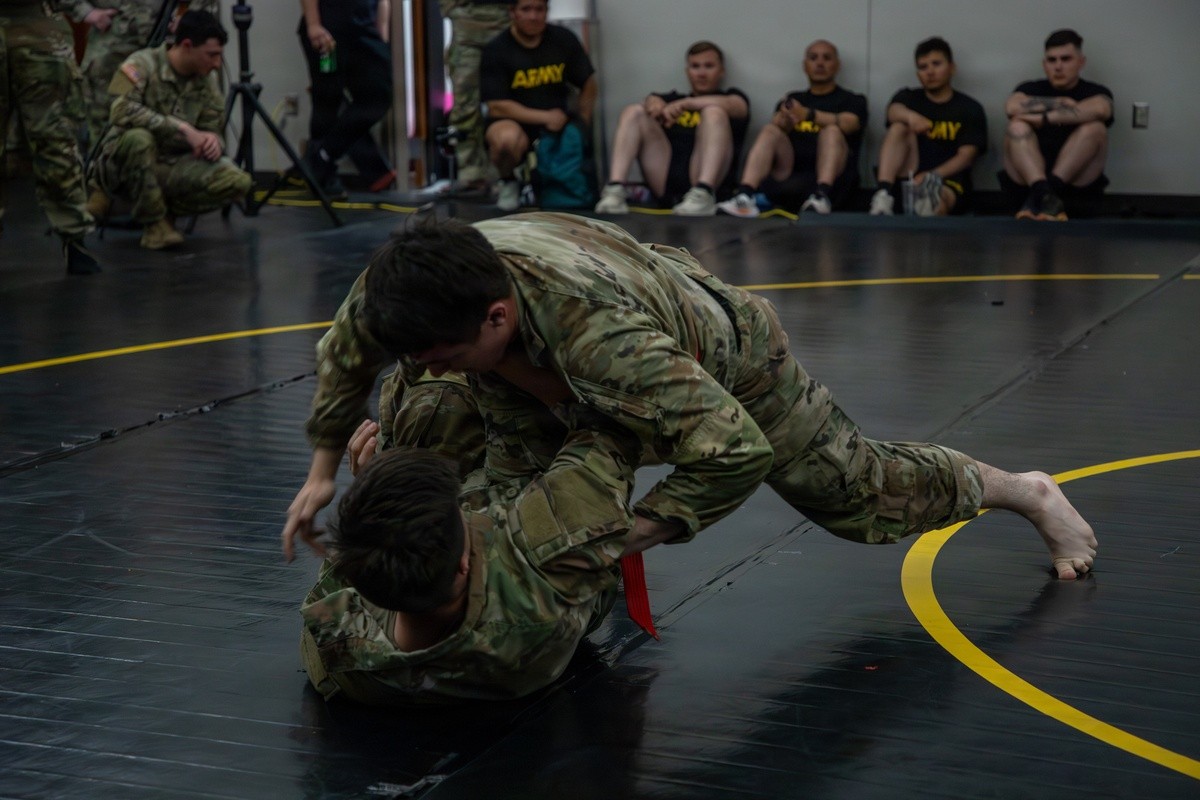
“I would say it’s beneficial to take tools from other [martial] arts because not one art is really superior,” Thomas said.
Martial Arts is just one example of how the Army consistently innovates and transforms to fight on an ever-changing battlefield.
“We are in a similar period today, redefining our division through innovation efforts across the formation,” Taylor said. “Just as our predecessors built this division from the ground up, you stand at the forefront of shaping its future.”
Drone usage is another example of innovation the 1st Armored Division is bringing into its legacy. The first types of drones were used for target practice. Today, drones are being integrated into the battlefield in ways not previously available.
“This is the future of warfare,” Taylor said after he watched the first-person view the drone pilots have while operating their drones.
The drone competition was fierce as competitors strove to be named the drone racing champion of Torch Week.
Torch Week, with more than 20 events, ended with the entire division gathered for the awards ceremony, where Soldiers were recognized for their accomplishments and victories in competitive events.
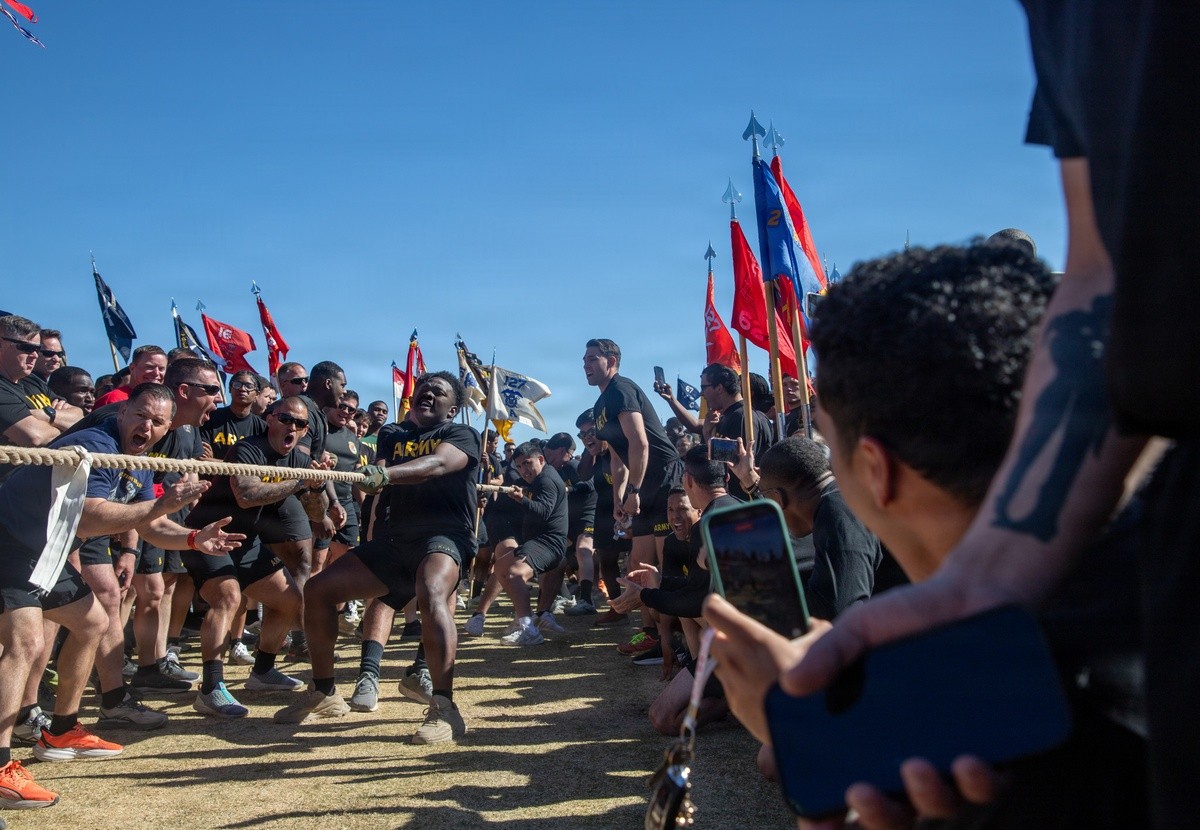
“I am incredibly proud of this team,” said Taylor. “This division continues to win in every environment.”
With the words of his closing remarks echoing in their minds, Iron Soldiers dispersed and headed home to be with their family and friends. The sky darkened as the sun set on Torch Week 2026.
Social Sharing