


The Cost of Innovation
Transformation in contact has fundamentally changed the Army. The new mobile brigade combat team (MBCT) is more lethal, agile, and technologically enabled than ever before, but it is also logistically fragmented. From drones to power generation to fielded vehicles, units increasingly rely on commercial off-the-shelf systems and proprietary civilian supply chains. These systems fill critical operational gaps but expose a growing disconnect between what the brigade employs in combat and what the Army can fuel, repair, and resupply.
As the Army prepares for large-scale combat operations (LSCO), it must confront a critical paradox: battlefield capability without the means to sustain it becomes a liability, not an advantage. The fragmented supply chains and energy diversity within today’s brigade combat teams (BCTs) require more than incremental fixes; they demand deliberate investment in centralized sourcing, modular logistics infrastructure, and updated sustainment doctrine.
The Supply Problem
The MBCT has embraced emerging technologies to enhance survivability, reconnaissance, and tactical mobility across dispersed terrain. From small unmanned systems to light vehicles and modular power sources, the MBCT reflects the Army’s push toward agility and adaptability in complex operating environments. But every capability gain has come with an invisible cost: non-standard sustainment. Many of these systems are commercially sourced, lack full Class IX (CLIX) integration, and require civilian vendor support to repair or replace components. The result is a brigade that fights with modern tools, but relies on fragile, external supply chains to keep them operational. Two highly visible examples of this supply chain problem are first-person view (FPV) drones and the Infantry Squad Vehicle (ISV).
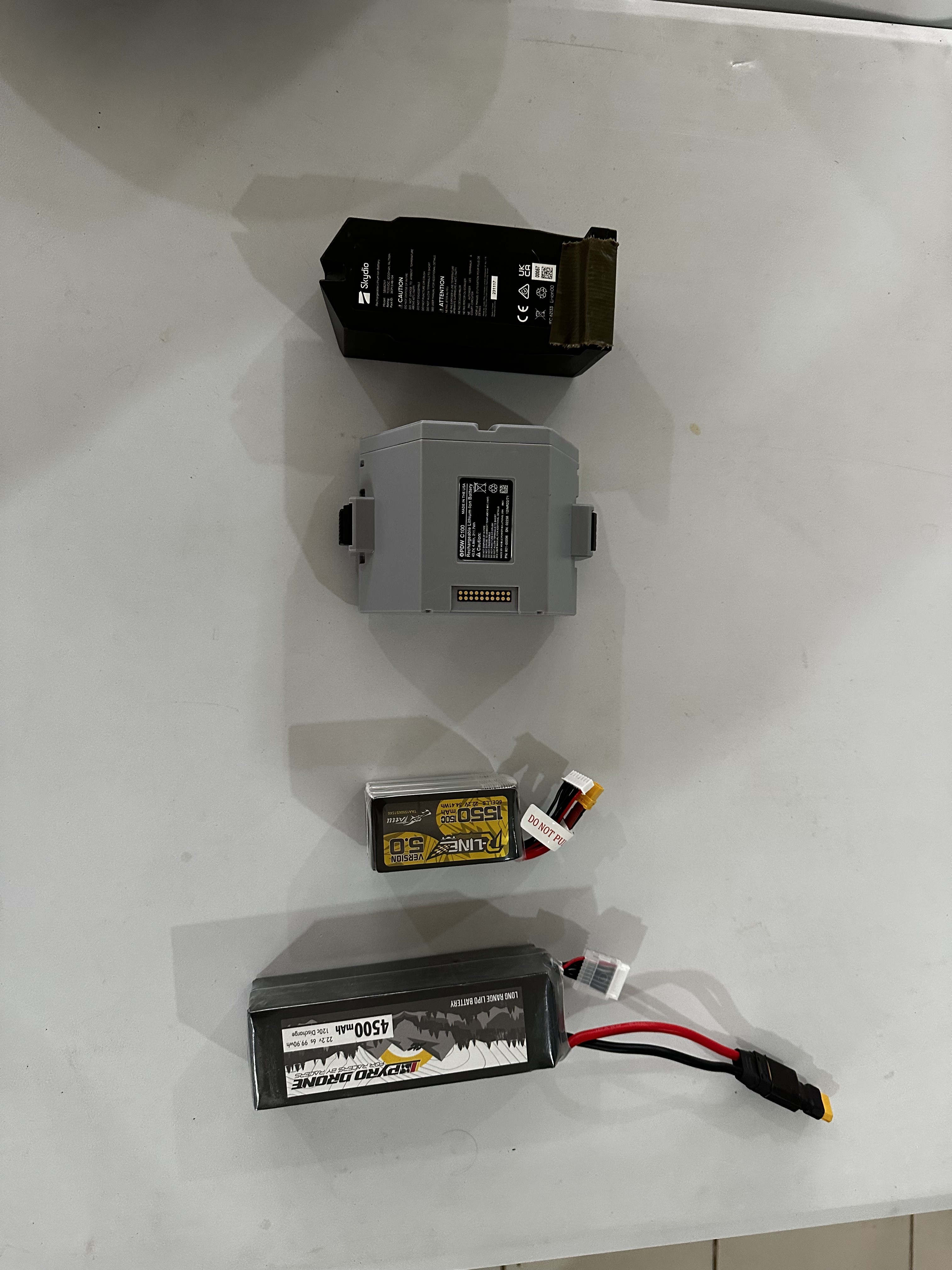
While the Army can fabricate FPV airframes through the Allied Trades enterprise, the components that make these drones combat effective (batteries, charging systems, and firmware) must still be sourced from the commercial sector. Each drone variant relies on different power sources and software configurations, none of which are standardized or stocked within the Army supply system. There are no national stock numbers, no CLIX lines, and no centralized provisioning for these critical components. Sustaining these systems in combat still depends entirely on commercial access, which is a fragile proposition in a contested theater.
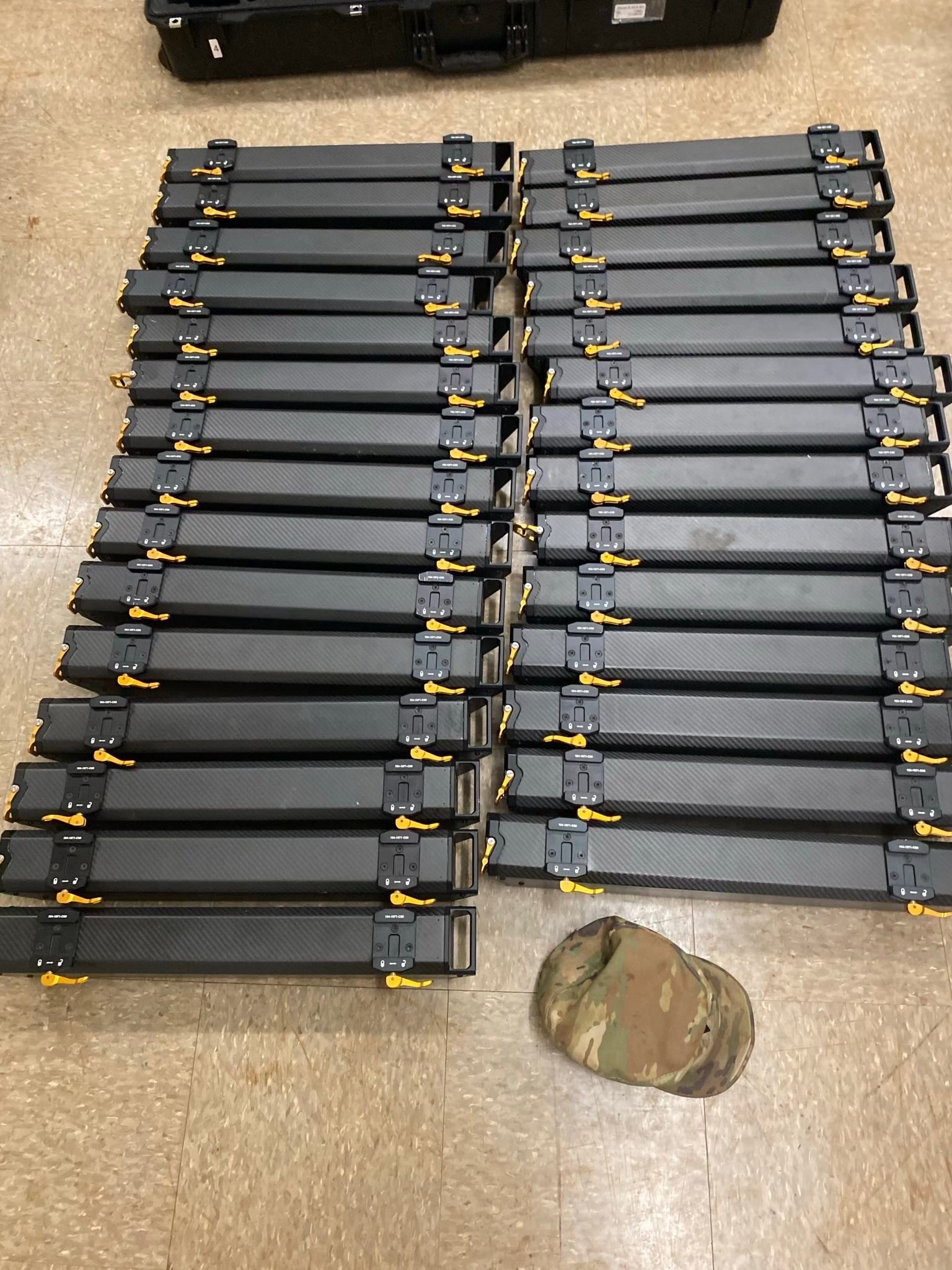
The FPV drone example is only the leading edge of a much larger challenge: the mass employment of drones in LSCO. Unlike legacy systems with predictable failure rates, drones will be lost, expended, or destroyed by the hundreds or thousands per day. Some are designed to be fire-and-forget while others are recoverable but require immediate refurbishment or component replacement to rejoin the fight. Yet the Army currently lacks a concept for volume-based drone sustainment. BCTs are experimenting with 3D printing and small-batch fabrication using Allied Trades teams and the Metal Working and Machining Shop Set, but these efforts are not scaled for sustained operations. A three- to five-person Allied Trades shop equipped with a single printer can support prototyping or ad hoc repairs, but it cannot keep pace with the replacement demand of high-intensity drone warfare.
There is no forward stockage plan for drone parts, no doctrinal construct for surge fabrication of batteries or flight controllers, and no modular CLIX node that consolidates the gimbals, microcontrollers, or firmware updates these systems require. While limited components can be fabricated in the field, the Army lacks the expeditionary manufacturing capacity, technical repositories, and sourcing authority needed to mass-produce complete systems at the scale BCT operations demand. In practice, this means brigades will “go black,” not due to poor tactics, but because the industrial base to regenerate combat power was never positioned forward. Until drone sustainment is treated with the same seriousness as fuel or ammunition, these platforms will remain finite assets with no viable replenishment plan.
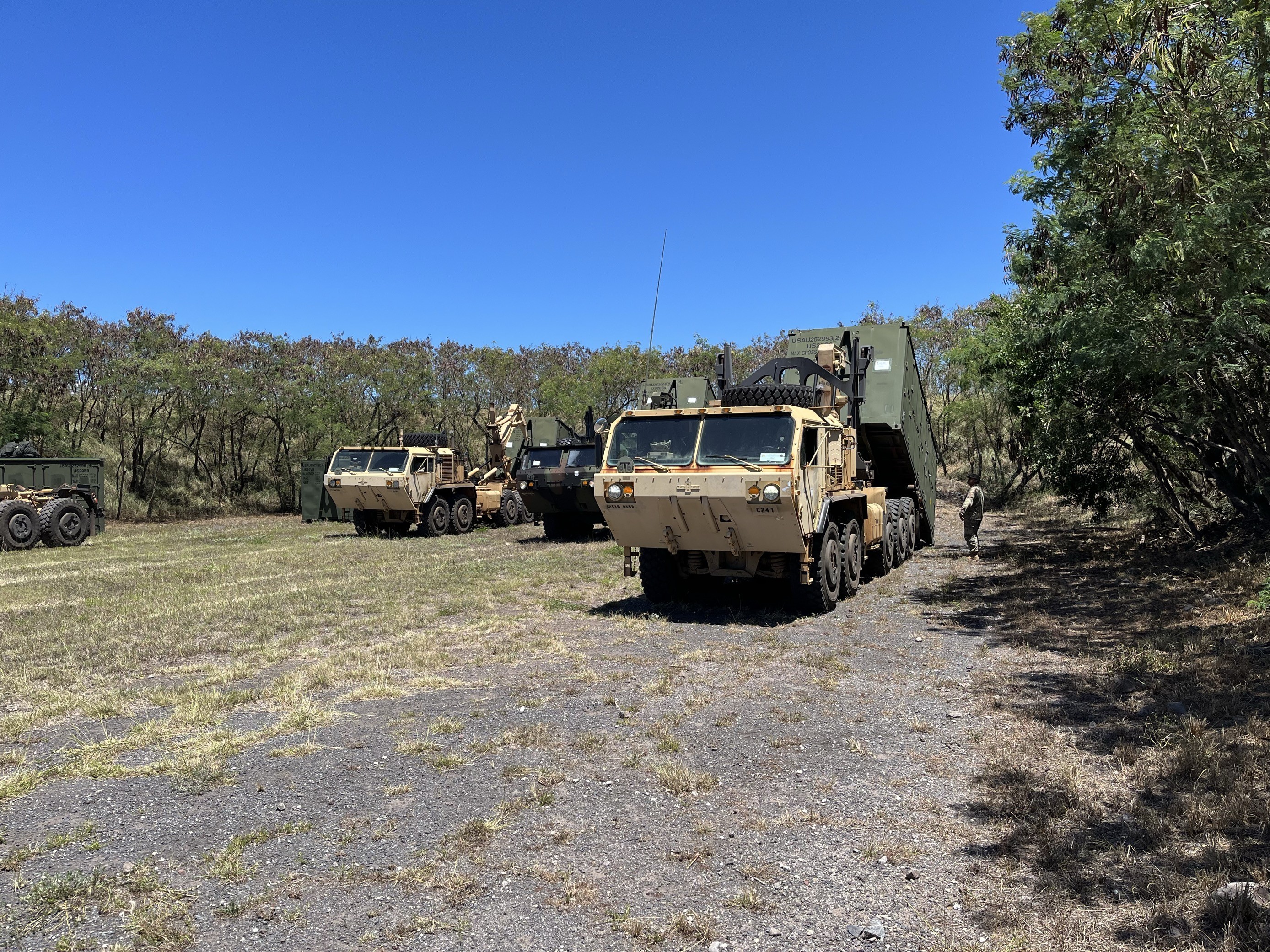
A parallel challenge exists with the ISV. Designed to enhance distributed mobility for infantry squads, the ISV fills a critical operational gap, but its sustainment architecture is still catching up. Of the roughly 500 CLIX lines needed to fully support the platform, only about 300 are currently loaded into the Global Combat Support System-Army (GCSS-Army), and even fewer are provisioned for rapid issue. If LSCO began today, most units would be unable to sustain their ISV fleets in contact. At the tactical level, there is a limited supply of CLIX lines to fill shop stock lists, and even fewer lines to provide the redundancy required for authorized stockage lists (ASLs). Without a robust CLIX foundation, battalion- and brigade-level sustainers cannot build the stockage depth needed to support ISV readiness during high-tempo operations.
When ISV components fail, units face two unacceptable choices: cannibalize another vehicle or attempt direct coordination with the commercial manufacturer. Neither option is viable in a contested environment. There is no theater-based vendor support, no established maintenance pipeline, and limited technical depth within the formation.
To be clear, the Army has taken steps to prepare maintainers. Many 91B Wheeled Vehicle Mechanics have undergone new equipment training (NET) on the ISV. But this training often occurred before the vehicle was widely fielded or a comprehensive technical manual (TM) was available to guide sustainment tasks. In garrison, faults have been minimal due to the platform’s newness. But in combat, under real conditions, with terrain-induced wear, enemy fire, and accelerated usage, maintainers must learn on the fly. That is not impossible, but it is a significant burden when most Soldiers received their NET before any diagnostic baselines or repair doctrine had matured.
In the event of a conflict, the ISV program manager and the Army will undoubtedly surge support and rapidly expand CLIX integration. But that will be cold comfort to the first unit into the fight. Without a ready, operational stockpile already resident in the unit’s ASL, early-entry formations will face critical mobility losses when they can least afford them. The Army cannot wait for sustainment to catch up to lethality. The ISV must be supported from day zero.
The Fuel Problem
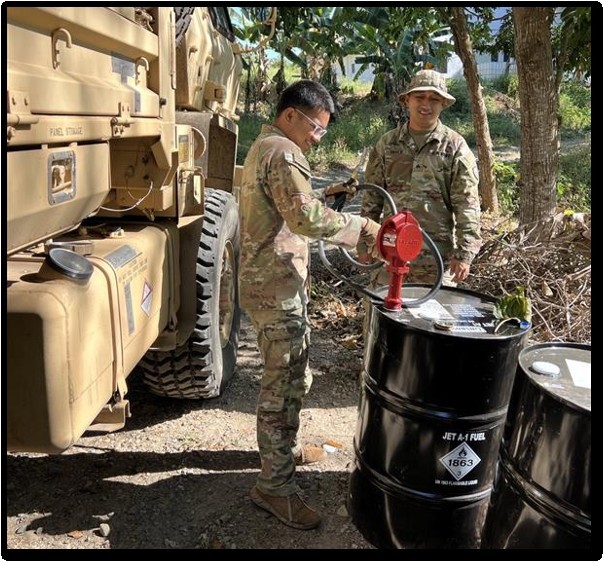
While parts availability is one half of the sustainment challenge, the other half is fuel. As brigades adopt more commercially derived platforms to increase tactical mobility, they also inherit non-standard fuel requirements, chief among them being motor gasoline (MOGAS). This second fuel type must now be stored and distributed in large quantities across the formation, creating a growing distribution dilemma. Every gallon of MOGAS carried reduces the brigade’s jet petroleum 8 (JP-8) fuel capacity, impacting mission-critical systems like generators and tactical vehicles.
With no increase in fuel transport or storage assets, fuel bifurcation reduces the brigade’s overall days of supply and compresses resupply timelines. Sustainment formations must support two fuel types without additional equipment, force structure, or doctrinal guidance. The result is a dangerous tradeoff: fuel endurance is sacrificed for platform mobility. At the tactical edge, this means tighter resupply windows, diminished operational reach, and increased risk during high-tempo operations. Unless the Army invests in modular fuel infrastructure or enforces fuel-type commonality, brigades will continue to face a distribution burden they are not equipped to carry in LSCO.
The Power Problem
Alongside fuel, power has become one of the most underappreciated but critical forms of sustainment on the modern battlefield. Nearly every system in the MBCT, from individual Soldier equipment to mission command platforms, sensors, and unmanned systems, requires a continuous supply of portable electrical energy. Yet, unlike fuel, water, or ammunition, power is often treated as an individual Soldier issue rather than a logistical one. Power generation is not one of the 10 classes of supply.
As a result, brigades face a sprawling and uncoordinated power ecosystem: dozens of incompatible battery types, ad hoc charging setups, limited distribution plans, and no standard approach to power resupply. When batteries die, the tactical edge loses more than convenience: it loses communications, targeting, intelligence feeds, and freedom of maneuver.
Power must be treated as a core class of supply. This means developing operational-level plans to store, transport, and distribute charged batteries with the same rigor applied to fuel or water. Sustainment units must be equipped with mobile charging stations, battery resupply kits, and renewable energy platforms that can operate forward in contested environments. Brigade S-4s and support operations officer sections must incorporate power distribution into operational planning cycles and logistics estimates, ensuring pre-charged assets are staged at brigade and division support areas and pushed forward as predictably as food or ammunition.
The People Problem
Another symptom of this fractured system is the lack of organic repair capability for commercial platforms. When an ISV or any other commercially procured system breaks down in the field, units often hit a sustainment dead end. There is no TM in the Army system, no qualified mechanic trained to diagnose or repair the platform, and no CLIX lines for even the most common replacement parts such as axles, brake systems, or engine sensors. These are not exotic failures; they are standard wear-and-tear issues that, on legacy systems, would be fixed by a field maintenance team in minutes. Instead, even minor damage on a commercial platform can result in a total loss, with no means of repair at the company, battalion, or even brigade level.
This generates a compounding loss of mobility and combat power that degrades a formation more rapidly than enemy contact. The Army has built tactical units that depend on systems they cannot fix under fire, undermining the very flexibility these platforms were meant to provide. To be clear, this is not solely a training failure: it is a modernization gap. The Army cannot reasonably train every 91B on every emerging system. Instead, it must equip maintainers with tools that extend their reach. That means fielding modern maintenance support devices (MSDs) that can interface with legacy and commercial systems and institutionalizing tele-maintenance as a core function of field-level sustainment. A single 91B with the right diagnostics and reach-back support can sustain what entire teams cannot sustain if left isolated. Until part provisioning, platform integration, and SME connectivity catch up to procurement, the Army will continue to field formations that can drive to the fight but cannot keep fighting once they get there.
The Way Forward
To close these gaps before LSCO, the Army must act decisively across several critical areas of sustainment reform.
First, the Army must centralize sustainment for commercial systems by accelerating CLIX integration and establishing a dedicated clearinghouse for non-standard end items and parts. This effort must go beyond simply loading CLIX lines into GCSS-Army; it must create a scalable infrastructure that identifies, catalogs, and provisions high-demand commercial components across all echelons of support. That includes batteries, sensors, firmware modules, and other non-standard repair parts associated with platforms such as the ISV, FPV drones, and mobility systems.
This clearinghouse must function as a digital repository and a logistical node, bridging the gap between rapid acquisition and long-term sustainment. It must incorporate real-time unit feedback, operational usage data, and failure rates to prioritize provisioning. More importantly, it must insulate tactical formations from having to engage directly with commercial vendors or the strategic industrial base during combat operations. If a part is employed in the BCT, it must be supported by the Army supply system.
Second, the Army must revise its fuel and power distribution architecture to reflect the operational reality of multi-fuel and multi-battery dependence. Most BCTs now rely on a blend of JP-8 and MOGAS to power vehicles, generators, and small platforms, yet lack the modular storage and distribution equipment to manage both effectively. Also, nearly every tactical system requires tailored power, from lithium-ion drone batteries to AA batteries for sensors, and proprietary packs for radios and optics.
This fragmentation demands a shift in how we think about energy sustainment. Fuel and electrical power must be treated as co-equal classes of supply. Units must be equipped with multiple fuel distribution systems that can handle MOGAS and JP-8 concurrently, and sustainment doctrine must expand to include power generation, charging, and battery resupply as deliberate logistical tasks. Otherwise, BCTs will continue to face operational risk from running out of gas and running out of charge.
Third, the Army must doctrinally define the tactical echelon responsible for drone fabrication and concentrate Allied Trades and additive manufacturing capability at that level. While BCTs are already experimenting with small-scale 3D printing and limited fabrication, they lack the manpower, technical depth, and throughput to sustain drone fleets during high-tempo operations. This is a matter of innovation and a force design problem.
If the division sustainment brigade (DSB) is identified as the nexus for drone production, then the bulk of Allied Trades personnel and 3D printing equipment must be aligned under that formation. Centralizing drone sustainment at the DSB will enable higher-volume fabrication, more consistent quality control, and better coordination with CLIX provisioning and repair workflows. It will also allow subordinate brigades to request, receive, and employ drone systems without having to generate them internally.
This is a doctrinal and a force modernization line of effort. The Army must formalize the role of Allied Trades in drone sustainment and ensure additive manufacturing systems are fielded at the right echelon, not scattered across formations where they cannot achieve scale. Drone production must become an industrial capability.
Fourth, the Army must accept that it will never train every 91B mechanic on every piece of emerging technology, but it can empower tactical maintainers through smarter connectivity and diagnostic tools. This begins with institutionalizing tele-maintenance as a core enabler of field-level sustainment. Tactical maintainers must be able to rapidly connect with subject matter experts, whether at the DSB, program office, or original manufacturer level to receive real-time technical assistance.
At the same time, the Army must modernize its MSDs to ensure they can interface with every assigned platform, manned and unmanned, military and commercial. Today’s MSDs are often unable to connect to newer systems, particularly commercial vehicles, drones, and autonomous platforms. Without functional MSD compatibility, even a well-trained maintainer is left guessing. Rather than pushing every system-specific skill down to the lowest echelon, the Army must equip the lowest echelon with the tools to reach up. Tele-maintenance and interoperable diagnostics turn a single 91B into a distributed node on a network of sustainers, engineers, and technical experts. In LSCO, connectivity is capability.
Conclusion
The true danger of fragmented sustainment is not administrative: it is operational. In LSCO, a brigade that cannot source parts, generate power, or repair its systems must depend on fragile commercial networks that will not survive first contact. What begins as a capability gap quickly becomes a combat liability. The result is a force unprepared for battlefield endurance.
LSCO will punish fragmentation. A BCT juggling multiple battery types, fuel variants, proprietary platforms, and disconnected sustainment tools risks collapsing under its own logistical entropy with no enemy strike required. To prepare for LSCO, the Army must confront hard truths: we cannot train every Soldier on every system, but we can connect them to experts. We cannot print drones everywhere, but we can produce them at scale where it matters. We cannot simplify the battlefield, but we can simplify how we sustain it. That means standardizing parts, consolidating distribution, modernizing tools, and recognizing that power generation must be co-equal classes of supply and planned equally in combat operations. The future of sustainment is not just about moving supplies; it is about connecting Soldiers to the means of survival. If we do not build that network now, we may arrive at the next war ready to fight, but unable to finish.
--------------------
MAJ Sean McLachlan is the deputy G-4 for the 25th Infantry Division and formerly the support operations officer for the 225th Light Support Battalion, 2nd Light Brigade Combat Team, 25th Infantry Division. He has master’s degrees in military history from Norwich University and the U.S. Army Command and General Staff College and is a PhD candidate at Liberty University. He is the winner of the 2024 LTG Arthur Gregg Sustainment Leadership Award and the Transportation Corps Field Grade Officer of the Year.
--------------------
This article was published in the fall 2025 issue of Army Sustainment.
RELATED LINKS
The Current issue of Army Sustainment in pdf format
Current Army Sustainment Online Articles
Connect with Army Sustainment on LinkedIn
Connect with Army Sustainment on Facebook
---------------------------------------------------------------------------------------------------------------
Social Sharing