VICENZA -- What might a training event at Longare have in common with Plutarch?
If someone had historical interest in researching strategic planning, one would discover that Plutarch, a Greek biographer and essayist who lived in the first century, described a specific combat formation in one of his scripts.
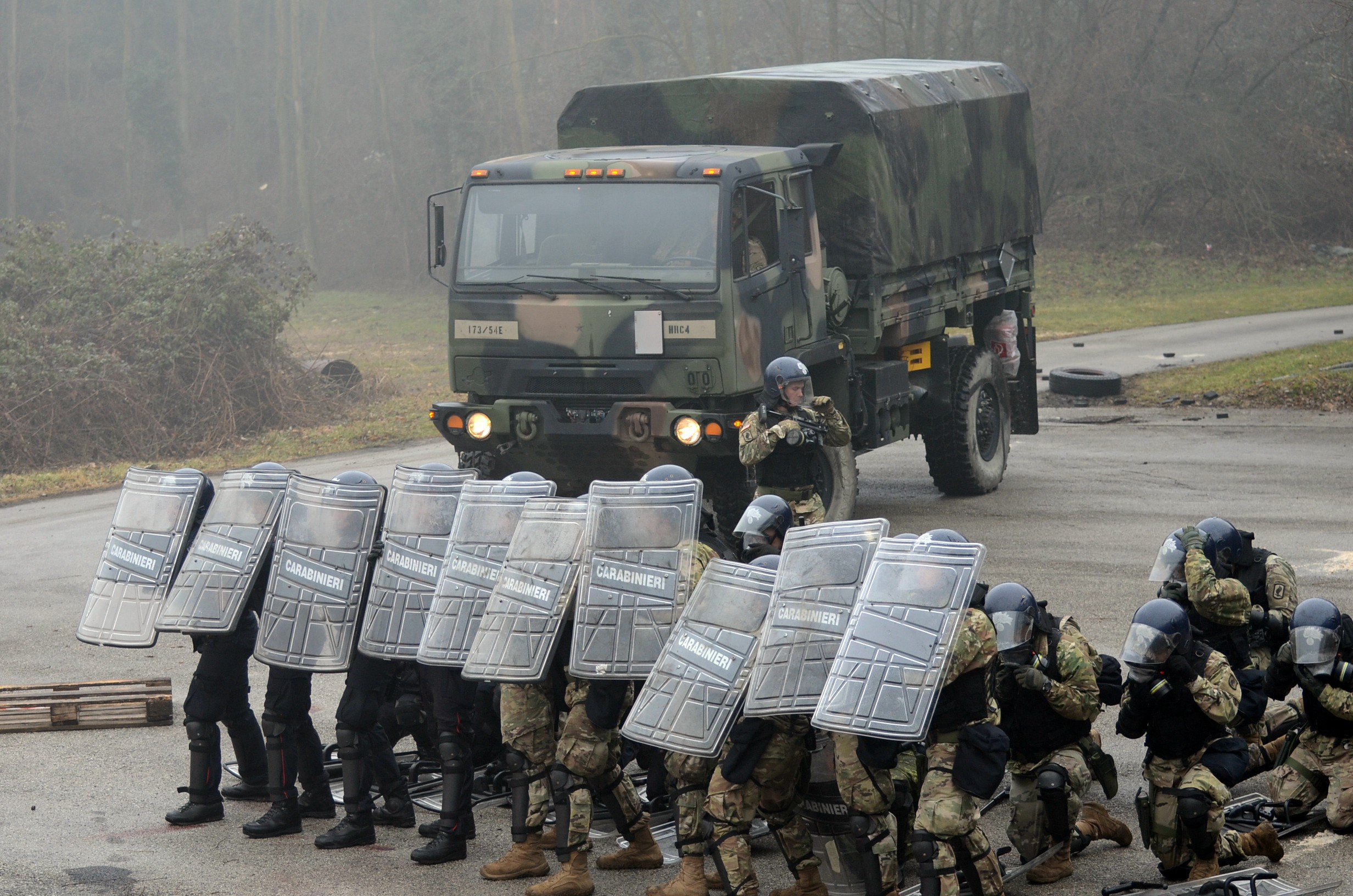
This formation called testudo, or tortoise, was used by Roman legionaries during battles to form a packed group covered with shields in such a way as to create front and side walls.
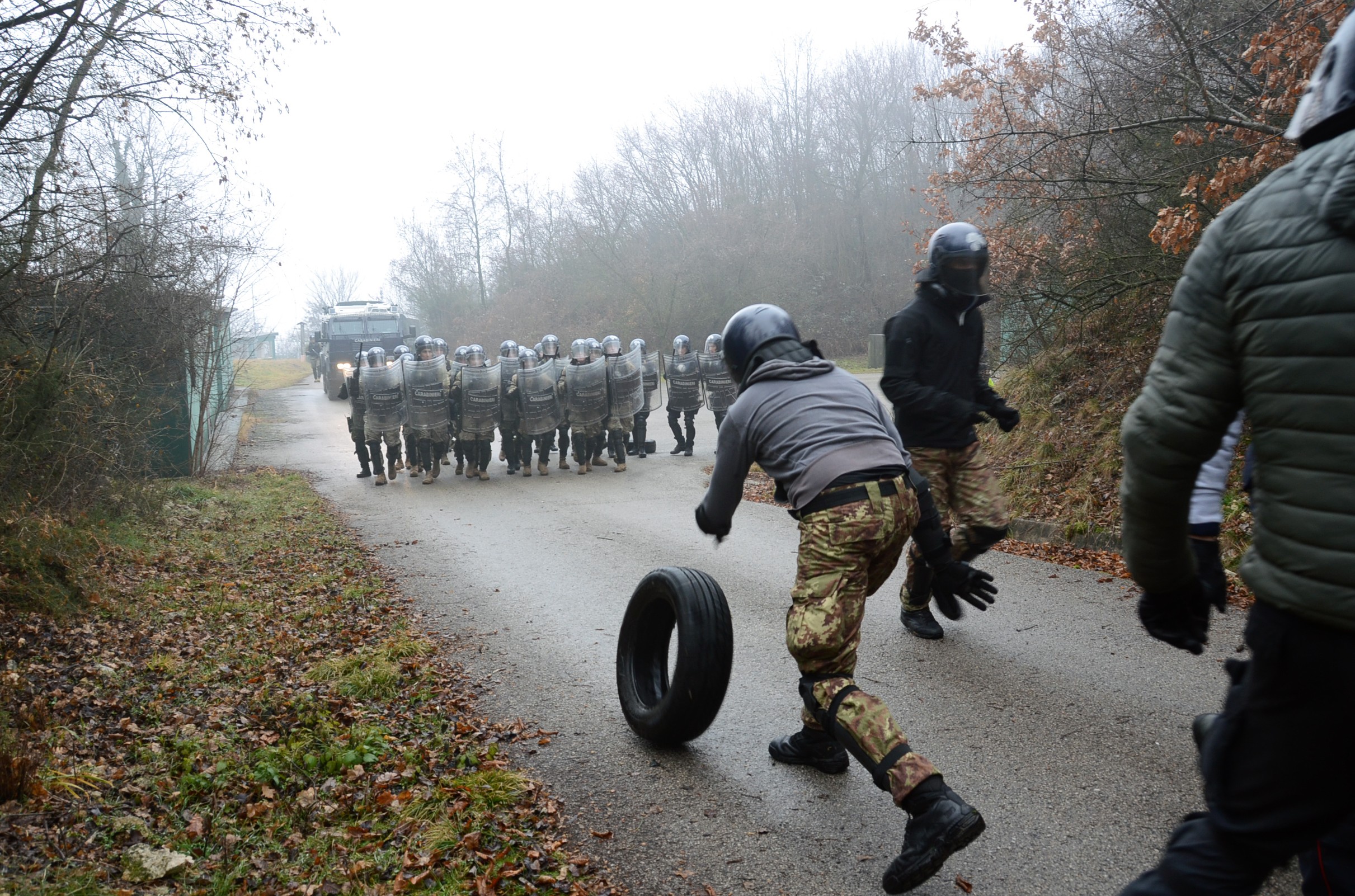
Testudo formation is still used, and it was practiced during the training at the Longare training area at the beginning of February.
"This training, complementary to the Crowd and Riot Course for staff held at NATO Stability Policing Center of Excellence, is a milestone in order to prepare and develop CRC capability in a combined environment," said Italian Army Lt. Col. Michele Testa, CRC qualified, and combined event coordinator.
Testa, who works in operations for U.S. Army Africa, also added that CRC is not only used by military police.
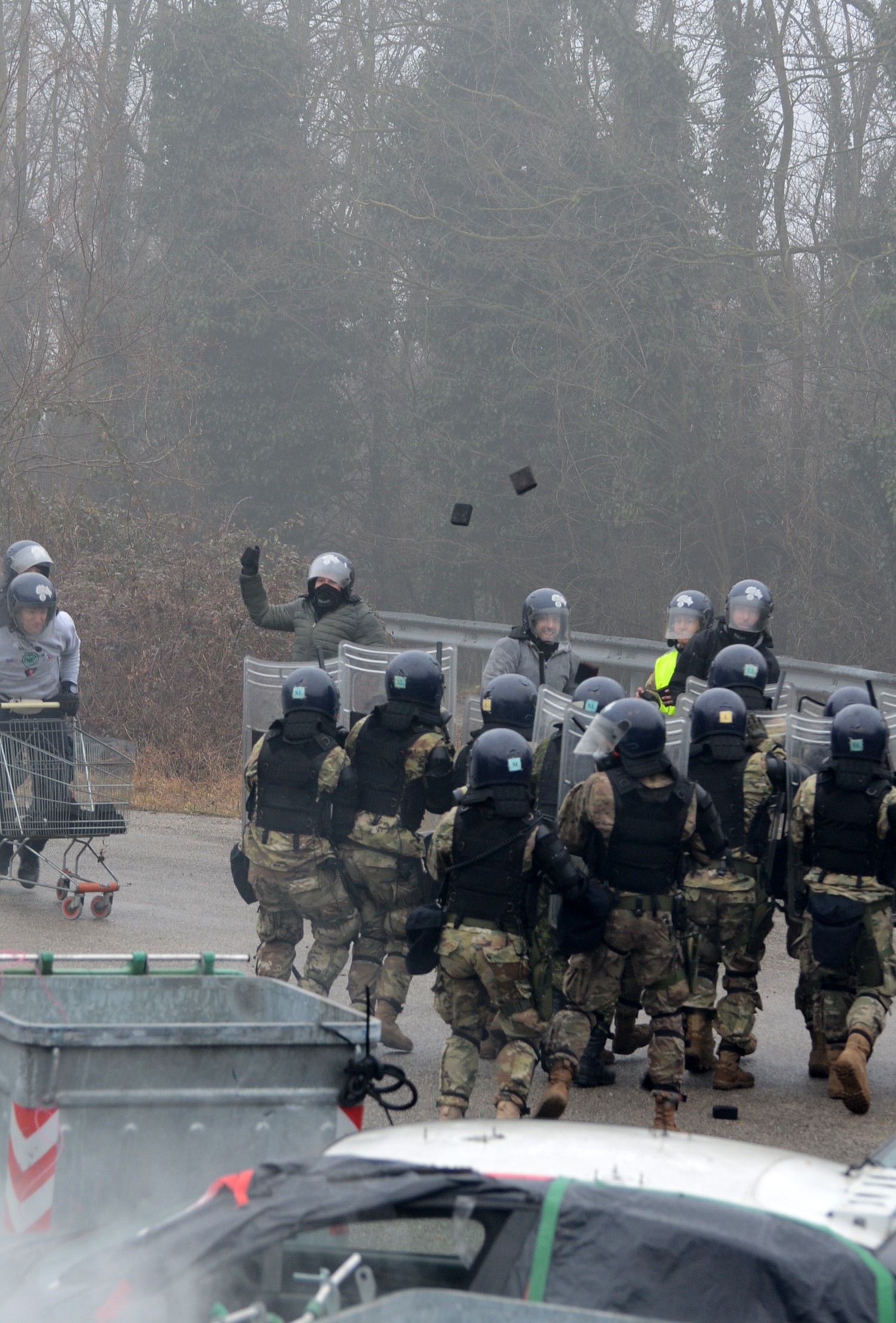
"First boots are always Army boots, and being able to escalate force from showing presence/deterrence to use of lethal force can have immediate positive results on the local population and gather their appreciation and support," he said. "Proper usage of CRC capabilities while engaged by crowds and riots can effectively lower the level of tension and avoid overuse of friendly strength. It's a new combat mindset."
About 20 Soldiers assigned to Battle Company, 54th Brigade Engineer Battalion, 173rd Airborne Brigade, had the opportunity to experience this training alongside Canadian 1st Combat Engineer Regiment engineers and 10 Carabinieri of the 7th Regiment "Trentino Alto Adige."
"The purpose of the activity is to develop common procedures specific to these situations," said 7th Carabinieri Rgt. Operations and Training Chief 1st Lt. Innocenzo Colonna.
Colonna explained that the training was directed by two CRC instructors and a member also coming from 7th Regiment.
"The training was really successful; participants worked hard to meet the objectives despite some issues caused by the nature of the training," he said.
He also stated that consolidating future collaborations is based on building upon experiences like these.
Most of the American Soldiers were new to this training. First Lt. Sarah Melville, Engineer Support Platoon leader assigned to Battle Company, 54th BEB, 173rd (A), said she thought the multinational training challenged American Soldiers to be adaptive and dynamic in order to achieve integrated missions.
"The CRC training was a great opportunity to build camaraderie with forces from our host nation and to build upon our relationship with the Canadian 1st Combat Engineer Regiment engineers," she said.
"It strengthened our Soldiers' abilities to train with soldiers from other nations, which not only increases their cultural awareness but also increases their confidence in our own Soldier skills and training." Melville said that overall, the multinational training increased interoperability with partner nations.
"This exercise also helped build our relationship with the 7th Carabinieri Regiment for future training and for other training with the Italian forces.
"Furthermore, if our platoon were to encounter crowds or riots during training or real-world missions, we now have an understanding of the escalation of force and strategies to control riots and crowds," she added.
Social Sharing