
11th Airborne Division
America's Arctic Angels
Latest News
-
 11th Airborne Division Activates Installation Reception Companies as Arctic Force Grows
October 6, 2026
11th Airborne Division Activates Installation Reception Companies as Arctic Force Grows
October 6, 2026
-
 U.S., Indian armies close Exercise Yudh Abhyas 2026
October 1, 2026
U.S., Indian armies close Exercise Yudh Abhyas 2026
October 1, 2026
-
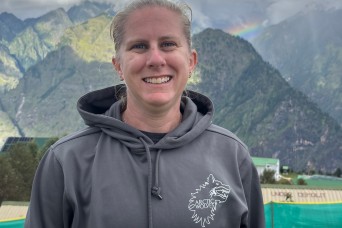 The Army sent a civilian occupational therapist to the Himalayas. Here's why.
October 1, 2026
The Army sent a civilian occupational therapist to the Himalayas. Here's why.
October 1, 2026
-
 US, Indian forces fly and fight together in Yudh Abhyas 2026 combined air assault
September 27, 2026
US, Indian forces fly and fight together in Yudh Abhyas 2026 combined air assault
September 27, 2026
-
 U.S., Indian armies complete bilateral live-fire exercise during Yudh Abhyas 2026
September 26, 2026
U.S., Indian armies complete bilateral live-fire exercise during Yudh Abhyas 2026
September 26, 2026
-
 U.S., Indian Army artillery crews strengthen interoperability during Yudh Abhyas 2026
September 25, 2026
U.S., Indian Army artillery crews strengthen interoperability during Yudh Abhyas 2026
September 25, 2026
-
 M-LIDS strengthens counter-UAS interoperability during Yudh Abhyas 2026
September 25, 2026
M-LIDS strengthens counter-UAS interoperability during Yudh Abhyas 2026
September 25, 2026
-
 US, Indian Army snipers train on long-range marksmanship during Yudh Abhyas 2026
September 24, 2026
US, Indian Army snipers train on long-range marksmanship during Yudh Abhyas 2026
September 24, 2026
-
 U.S., Indian Army companies rehearse combined air assault ahead of Yudh Abhyas 2026 objective
September 23, 2026
U.S., Indian Army companies rehearse combined air assault ahead of Yudh Abhyas 2026 objective
September 23, 2026
-
 U.S., Indian Army Soldiers build camaraderie through tug-of-war during Yudh Abhyas 2026
September 23, 2026
U.S., Indian Army Soldiers build camaraderie through tug-of-war during Yudh Abhyas 2026
September 23, 2026
-
 From enlisted infantryman to scout platoon leader: A 1st Lt.'s path through the Army
September 22, 2026
From enlisted infantryman to scout platoon leader: A 1st Lt.'s path through the Army
September 22, 2026
-
 Maintaining Soldier performance while training in the Himalayas
September 22, 2026
Maintaining Soldier performance while training in the Himalayas
September 22, 2026
-
 US, Indian Army scouts and snipers integrate drone, jungle tactics during Yudh Abhyas 2026
September 22, 2026
US, Indian Army scouts and snipers integrate drone, jungle tactics during Yudh Abhyas 2026
September 22, 2026
Images
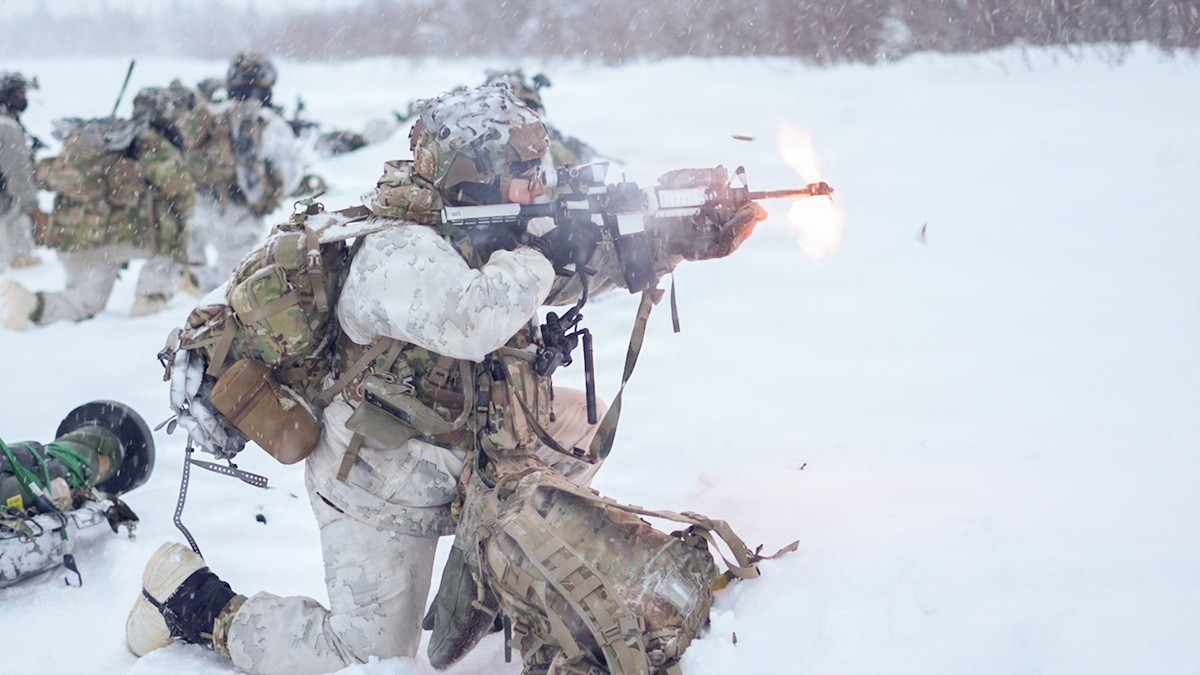
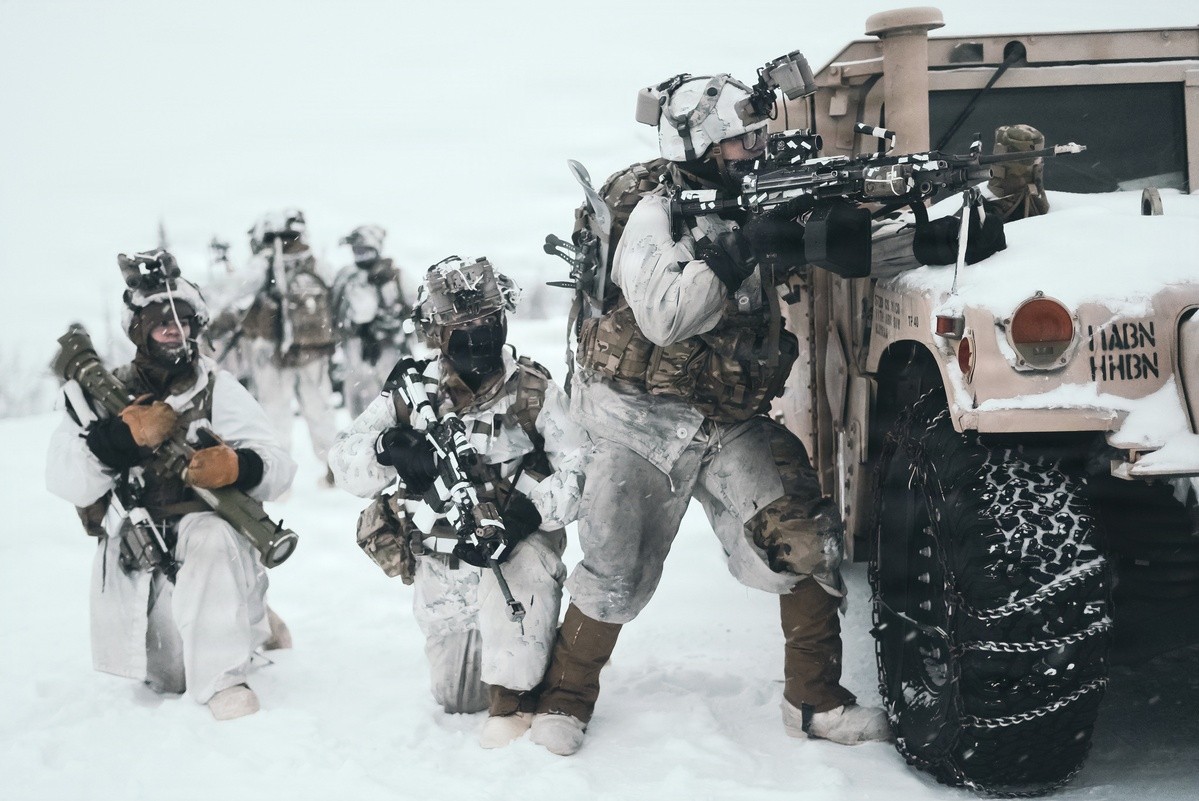
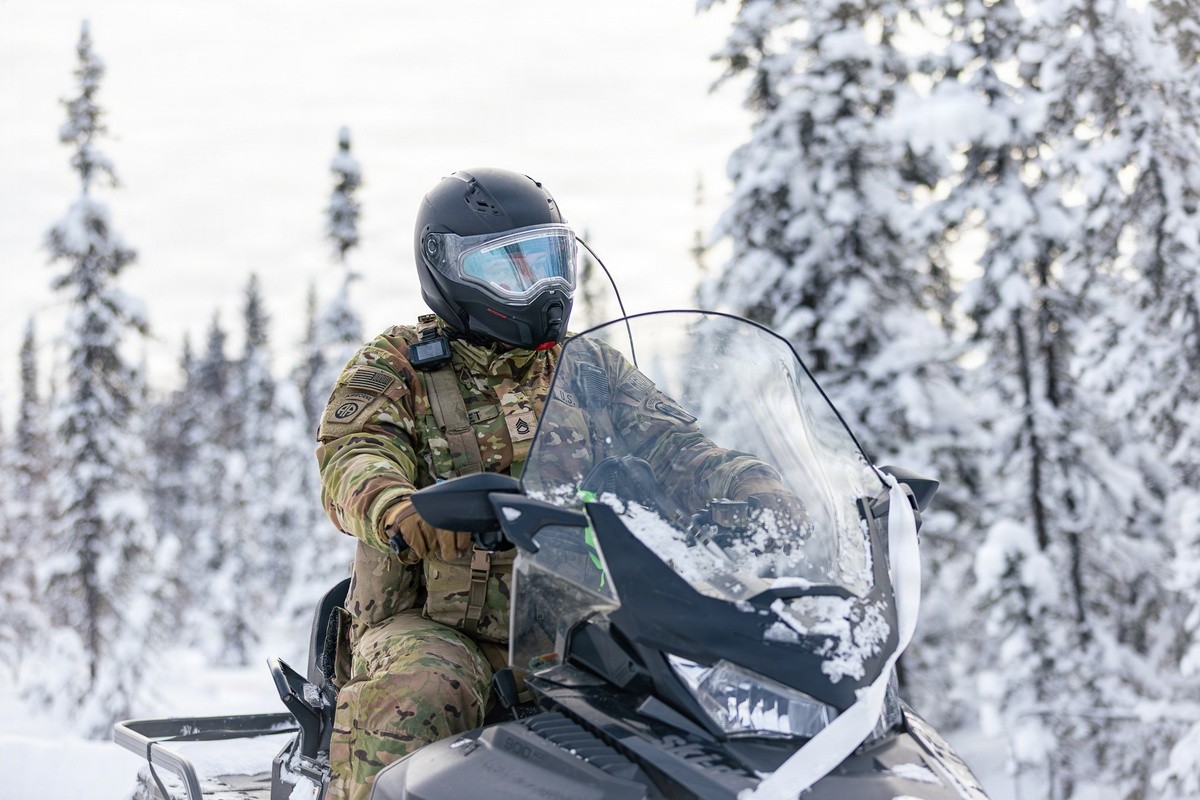
JPMRC 26-02







News Releases
News Release 04_20_26_bear_encounter.pdf [PDF - 69.4 KB]
News Release 04_17_26_bear_encounter.pdf [PDF - 70.5 KB]
Welcome to the 11th Airborne Division "Arctic Angels"


The 11th Airborne Division was historically activated on 25 February, 1943, during World War II. Following major roles in the Pacific Theater, the Division also pioneered Air Assault tactics, techniques and procedures as the 11th Air Assault Division (Test), and was eventually inactivated on July 3rd, 1965.
On June 6th, 2022, the 11th Airborne Division, 1st Brigade, 11th Airborne Division, and 2nd Brigade, 11th Airborne Division, were activated at subsequent ceremonies on Fort Wainwright and Joint Base Elmendorf-Richardson.


Mission
11th Airborne Division executes expeditionary operations worldwide, conducts multi-domain operations in the Indo-Pacific theater and the Arctic, and on order, decisively defeats any adversary in extreme cold weather, mountainous and high-latitude environments through large scale combat operations.
Vision
Leveraging the strength of our people, America’s Arctic Angels are ready to deploy, fight and win decisively against any adversary, anytime and anywhere in a joint, multi-domain environment across the spectrum of conflict and operations. Our units are led by agile and adaptive leaders of character who master the fundamentals, seek continuous growth and execute the commander’s intent through disciplined initiative as part of a cohesive team of committed professionals.
Contributing the values of A.N.G.E.L.S
Arctic Tough
Night Fighters
Great Teammates
Experts in the Fundamentals
Lethal
Standard Bearers
America’s Arctic Angels– Arctic Tough!
11th Airborne Division | Units
-
The 1st Mobile Brigade Combat Team (Air Assault), known as the “Arctic Wolves,” is based at Fort Wainwright, Alaska, and serves as a key component of the 11th Airborne Division’s Arctic force. Specializing in air assault operations and extreme cold weather warfare, the Arctic Wolves are trained to rapidly maneuver, project combat power, and operate across vast and austere terrain in the Arctic and Indo-Pacific regions.
-
The 2nd Mobile Brigade Combat Team (Airborne), known as the “Spartans,” is based at Joint Base Elmendorf-Richardson, Alaska, and serves as a rapidly deployable force within the 11th Airborne Division. Specializing in expeditionary Arctic warfare and joint forcible entry operations, the Spartans are trained to conduct airborne assaults, seize and secure key terrain, and enable follow-on forces across the Indo-Pacific and Arctic regions.
-
The Arctic Aviation Command, 11th Airborne Division, provides mission command and oversight of Army aviation forces in Alaska, enabling air assault, sustainment, and MEDEVAC operations in extreme cold weather and Arctic environments. As the division’s aviation enabler, it plays a critical role in supporting the movement of the 1st Maneuver Brigade Combat Team out of Fort Wainwright, executing air assault operations that rapidly project combat power across vast and austere terrain. The command ensures training readiness, risk mitigation, and resourcing to support operations in high latitude, mountainous, and cold weather conditions.
With its two aviation battalions, the command delivers aerial command and control, air movement, and air assault capabilities while providing timely information collection and increased maneuver space for ground forces. Arctic Aviation Command enables the combined arms team to disrupt, delay, and defeat enemy forces while extending operational reach through mobility, logistics, and reconnaissance. This capability strengthens joint and allied interoperability, reinforces credible deterrence, and ensures the division remains ready to fight and win in the Arctic.
-
The Division Engineer Battalion provides mission command to plan, integrate, and direct engineer capabilities in support of the 11th Airborne Division. It synchronizes combat, general, and geospatial engineering operations, enabling freedom of maneuver while enhancing survivability and operational reach across complex and austere environments. The battalion coordinates with higher headquarters for airlift support and integrates assigned and attached engineer units to deliver mission tailored effects in support of division operations.
The battalion executes mobility, countermobility, and survivability tasks that enable brigade combat teams to fight and win. These capabilities include rapid runway repair, airfield and landing zone construction, base camp development, obstacle reduction, and area clearance. By providing critical engineering support across the battlefield, the Division Engineer Battalion strengthens readiness, enhances interoperability, and reinforces the division’s ability to project and sustain combat power in Arctic and expeditionary operations.
-
The 17th Combat Sustainment Support Battalion, known as “The Ready Battalion,” operates out of Joint Base Elmendorf-Richardson and Fort Wainwright, Alaska and provides essential sustainment and mission command support to the 11th Airborne Division. Specializing in area sustainment and CBRNE operations, the Ready Battalion is trained and equipped to deliver responsive and flexible logistics across the Arctic and Indo-Pacific regions, ensuring forces remain supplied, maintained, and operational in the most extreme environments.
-
The Northern Warfare Training Center, based in Black Rapids, Alaska, provides world class cold weather and mountain warfare training to U.S. military forces and designated personnel to enhance warfighting capability in extreme environments. As the Army’s premier Arctic and mountain training institution, NWTC builds individual and unit proficiency in operating across snow covered, mountainous, and high latitude terrain, strengthening readiness for operations in some of the most challenging conditions on earth.
In addition to training, NWTC supports joint and coalition partners through theater security cooperation and outreach missions aligned with Indo Pacific objectives. The center is also prepared to assist in rescue and recovery operations worldwide and conducts high altitude rescue missions in coordination with the U.S. Department of the Interior in the vicinity of Denali National Park. Through these efforts, NWTC enhances interoperability, strengthens partnerships, and reinforces the Army’s ability to fight and win in cold weather and mountainous environments.
-
The Sgt. 1st Class Christopher R. Brevard Noncommissioned Officer Academy, located at Joint Base Elmendorf Richardson, develops disciplined and adaptive leaders by training noncommissioned officers and specialists in the fundamentals of leadership and warfighting. The academy prepares NCOs to serve as subject matter experts in their military occupational specialties while building the skills required to supervise, train, and lead Soldiers in dynamic and demanding environments.
Through structured professional military education, the academy enhances readiness by instilling confidence, accountability, and a strong sense of responsibility. NCOs are trained to communicate intent, enforce standards, and lead teams in the execution of collective tasks, ensuring units remain cohesive, lethal, and prepared to accomplish their missions.
The History of the Division
11th Airborne Division
The 11th Airborne Division was formally activated at Camp Mackall, North Carolina, on 25 February 1943, commanded by Major General Joseph M. Swing. Initial combat formations included the 511th Parachute Infantry Regiment; 187th and 188th Glider Infantry Regiments; 457th Parachute Field Artillery Battalion; and the 674th and 675th Glider Field Artillery Battalions.
Between February and December 1943, MG Swing forged the unit into a combat-capable formation. The division’s excellent performance in the North Carolina Knollwood Maneuvers convinced the War Department of the value of division-size Airborne units. MG Swing authored “War Department Circular 113,” which became the bible for U.S. Airborne operations.


In early 1944, the 11th Airborne Division trained at Fort Polk, Louisiana, before deploying to New Guinea in the southwestern Pacific, where it completed its combat preparations.
On 18 November 1944, the 11th Airborne Division landed unopposed at Leyte, Philippines, and began combat operations. It destroyed two enemy divisions in jungle passes near Jaro, then conducted several small-scale amphibious assaults synchronized with airborne assaults.
Participating in the 31 January 1945 assault amphibious landing on Luzon, the 11th Airborne Division spearheaded the Sixth Army’s attack, jumping into Tagaytay Ridge and fighting to liberate Manila. On 23 February 1945, the 11th Airborne Division executed a daring raid on a Japanese detention camp at Los Baños, Luzon, rescuing 2,147 Allied civilian internees. In addition, the men of the division conducted other difficult operations by sea and by parachute, keeping the enemy off-balance with well-timed precise attacks that continued until August, 1945.
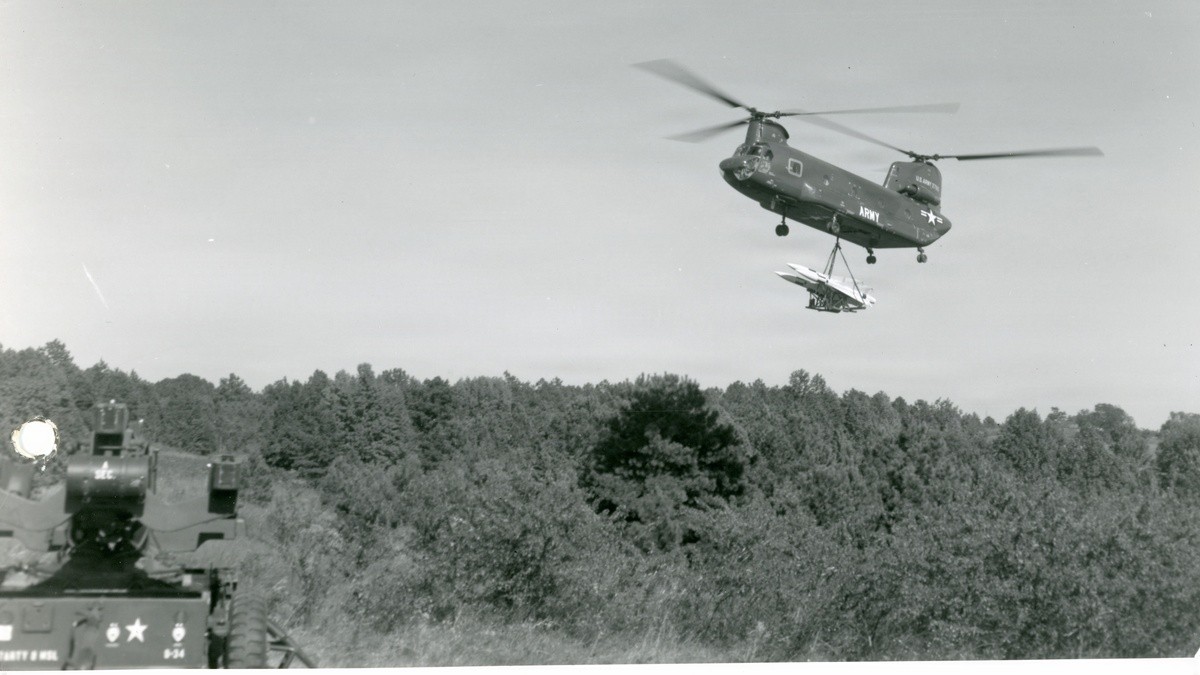


The 11th Airborne Division then redeployed to Okinawa to be the vanguard of the post-war Japanese occupation forces. It remained in Japan until May 1949, when it relocated to Fort Campbell, Kentucky.
In 1950, the 187th Glider Infantry Regiment and 674th Airborne Field Artillery Battalion transformed into the 187th Regimental Combat Team. It fought for two years in Korea where it conducted two combat parachute assaults.
The 11th Airborne Division deployed to Germany early in 1956, then deactivated on August 1, 1958. It reactivated at Fort Campbell, Kentucky, on February 1, 1963, and became the 11th Air Assault Division (Test), to develop and refine air assault tactics and equipment for a new helicopter-borne Army. On completion of that mission, the 11th Air Assault Division was inactivated on June 29, 1965.
For their conspicuous gallantry and intrepidity, above and beyond the call of duty, two 11th Airborne Division Soldiers were posthumously awarded the Medal of Honor for their valorous actions in the Philippine Islands in WWII. They are Private Elmer E. Fryar, and Private First Class Manuel Perez, Jr.
The 11th Airborne Division was again activated on D-Day, June 6th, 2022, at ceremonies on Fort Wainwright and Joint Base Elmendorf-Richardson. It is currently headquartered at Joint Base Elmendorf-Richardson, Alaska.


Read More
11th Airborne Division Association
The appearance of external hyperlinks does not constitute endorsement by the United States Department of Defense of the linked websites, or the information, products or services contained therein. Other than for authorized activities, such as military exchanges and Morale, Welfare and Recreation sites, the United States Department of Defense does not exercise any editorial control over the information you may find at these locations.
General Information
A world of dreams and adventures awaits!
Traveling to Alaska
Whether you're flying, driving or coming by the Alaska Marine Highway, it's useful to check the Department of Homeland Security official page on Crossing US Borders. Additionally, there may be restrictions on traveling through Canada; for those, please check here.
Depending on the time of year, conditions in Alaska and Canada may make travel difficult. For Alaska, please check Alaska 511. For Canada, please check Yukon 511 or DriveBC.
Incoming Soldier - JBER
-
Anchorage International Airport - when you arrive and get your bags, look for the “Atwood Lounge” (ASYMCA Military Lounge) inside the airport from which you can call In-processing, at 907-384-1906. In-processing personnel will usually be able to pick you up within an hour depending on personnel and/or weather. While you can hire a taxi at an average cost of $40-$60 and request reimbursement when you do the finance portion of your in-processing, this is not the preferred means for new Soldiers.
Reception Detachment JBER, Staff Duty: (907) 903-4281
-
Make reservations with JBER-Richardson side of post (closest to your duty station) at DSN 317-384-5660; Commercial 907-384-5660. Additional lodging is available at JBER-Elmendorf Northstar Inn at 907-552-2454.
Barracks rooms are available for Soldiers ranks E-1 through E-5 traveling without dependents. Soldiers ranking E-6 through E-9, O-1 through O-6, and WO-1 through WO-5 must make reservations with the numbers listed above.
To check the status of on-post housing availability, contact the JBER Housing Office at 907-384-3907 or DSN 317-384-3907. The JBER-Richardson Housing Office is located in the Welcome Center, Building 600, on the corner of Richardson Drive and Fifth Street, across the street from the Post Theater.
-
Elementary: There are three elementary schools on post that are a part of the Anchorage School District. They cover pre-kindergarten through fifth grade.
Middle and High School: There are no middle or high schools on JBER.
Visit http://www.asdk12.org for information regarding school districts in Anchorage and http://www.matsuk12.us for the Mat-Su Valley. (Palmer and Wasilla are a one hour commute from JBER.)
For any questions, reach out to Adele Daniels, JBER School Liaison, Program Manager, Office - (907) 384-1505 or adele.daniels.1@us.af.mil.
Incoming Soldier - Fort Wainwright
-
At the Visitor Center, request a map and ask for directions to the Fort Wainwright Welcome Center, which is located at Building 3401, Santiago Avenue - where you must sign in with Military Personnel Division. Make sure you have a copy of your orders and leave form.
Reception Detachment Fort Wainwright, Staff Duty: (907) 353-4311
-
E-5 and below unaccompanied Soldiers will reside in Ft Wainwright Garrison Replacement Detachment Barracks (Bldg 3401). E-6 and above and those accompanied with Family Members should make temporary housing arrangements before they report to Ft Wainwright. Housing and lodging in the Ft Wainwright area is very tight. Ensuring you have a pre arranged place to stay is a near must for non barracks Soldiers. The IHG is next to the Welcome Center, and it is the most convenient place to stay during in-processing.
Fort Wainwright has more than 1,500 Privatized Housing Units located on post. Please visit North Haven Communities at http://www.nhcalaska.com/". To check the status of on-post housing availability or more information, contact the North Haven Housing Office at 907-356-1883/1882/1881.
Please make sure you stop by the Housing Office before signing a lease. When signing documents, ensure there is a military clause in your lease agreement or bring it by the legal office in the Welcome Center. A military clause allows you a legal avenue to break your lease if you need to relocate for a permanent change of station or deployment.
-
Elementary: There is one elementary school (Arctic Light) on Fort Wainwright, grades K-5.
- Immediately outside of Trainor Gate is Ladd Elementary, grades K-5.
- Immediately outside of Montgomery Gate is Ticasuk Brown Elementary School, grades K-5.
Middle and High School: There are no middle or high schools on Fort Wainwright.
- Immediately outside of Trainor Gate is Tanana Middle School, grades 6-8.
- Lathrop High School, grades 9-12, is approximately 3 miles from post.
Visit https://www.k12northstar.org for information regarding schools in the Fairbanks/North Pole areas.
For any questions, reach out to Janet Farris, Fort Wainwright School Liaison Officer, Office - (907) 353-1043 or Janet.e.farris2.naf@army.mil.
FAQs
-
The cost of living in Alaska varies by location. Being stationed in Alaska qualifies you for Cost of Living Adjustment (COLA). To see the the most current COLA rates, use the Defense Travel Management Office's COLA Lookup tool.
-
Alaska has incredible recreational activities. To name a few, some of these activities are: hunting, fishing, hiking, camping, skiing, and snow-machining. If stationed at JBER, JBER Life! publishes a Bi-Annual Adventure Guide and if stationed at Fort Wainwright, check out the MWR's Outdoor Recreation Center.
-
Soldiers stationed in Alaska will draw additional cold weather gear at CIF during in-processing. Soldiers also receive a one-time allotment of Remote and Austere Conditions Assignment Incentive Pay (RAC-AIP). This varies by location but is intended to assist with increased costs for cold weather. Check out our Welcome Guide to learn more.
-
Safety is paramount when outside in the Last Frontier. Travel with a buddy, carry bear spray and be aware of your surroundings.
-
Fort Wainwright in Fairbanks and JBER in Anchorage have different Basic Allowance for Housing (BAH) rates. To see the most up to date rates, use the BAH Lookup Tool on the Defense Travel Management Office's website. (Zip code for JBER/Anchorage is 99505 and Fort Wainwright/Fairbanks is 99703)
Employment
For assistance with employment;
11th Airborne Division Resources
The appearance of external hyperlinks does not constitute endorsement by the United States Department of Defense of the linked websites, or the information, products or services contained therein. Other than for authorized activities, such as military exchanges and Morale, Welfare and Recreation sites, the United States Department of Defense does not exercise any editorial control over the information you may find at these locations.
Contact Us
Media Desk
11abndivmediadesk@army.mil
Fort Wainwright Garrison
usarmy.wainwright.id-pacific.mbx.pao@army.mil
CG's Hotline
907-384-BOSS
DVIDS
Social Media Links
Help Tell Our Story
11th Airborne Division Public Affairs is always looking to share your pictures and videos that capture the incredible work of our Arctic Angels.

Innovating in The Arctic
The 11th ABN DIV Innovation and Experimentation Team is focused on building lethal and responsive Warfighters, equipped with the right equipment ready to fight and win decisively against any adversary in the extreme cold weather, mountainous, high latitude operations, and in the INDOPACOM AoR. The 11th ABN DIV employs arctic innovation at a scale unable anywhere else.
Current Focus Areas:
- Power Generation & Storage in Extreme Cold
- Arctic Sustainment & Mobility
- UXS/cUAS
- Additive Manufacturing
- Soldier Driven Solutions
- Data Integration
11ABN is currently prioritizing projects for end user field testing at the Army’s premier Arctic training event, JPMRC 27-02.
Industry & Partners
Seeking an evaluation for your Company’s product? Reach out to the below link to engage for a demo.
11ABN Industry Engagement Request
DoW organization seeking to partner on a project? Please reach out at the team email:
11thAirborneInnovations@army.mil
Arctic Innovations Lab
Have an idea for improving your equipment or the Army? Both Joint Base Elmendorf-Richardson & Ft Wainwright currently have labs in development, expected to open for limited operations in June. Come by to design & build your prototype!
Capabilities:
- Additive Manufacturing
- CNC Milling
- Metal Fabrication
- Laser Cutter
- Textile
- Woodworking
- Electronics
UAS Fabrication Facilities will be collocated in both labs for internal production of UAS for your formations.
News
Check out our news page to see the latest innovations.
Projects
[Coming Soon]
11th Airborne Division Inspector General’s Office
The 11th Airborne Division Inspector General conducts inquiries into and provides the Commanding General a continuous assessment of the division's readiness, discipline, efficiency, economy, morale, training, and operational effectiveness.
Contact Information
JBER: Inspector General Office (907) 384-0323
Fort Wainwright: Inspector General Office (907) 353-6204
Email: usarmy.jber.usarak.list.usarak-ig@army.mil
File a request here
What We Do
Soldiers and DA Civilians who function as an extension of the eyes, ears, and conscience of the 11th Airborne Division Commander. We are fair and impartial factfinders that have sworn an oath to uphold the standards, policies, and regulations of the Army without prejudice or partiality.
Bottom Line: We work with the Commanding General to contribute to the war-fighting readiness of 11th Airborne Division units, Soldiers, and Families.
Functions of the Inspector General
-
Find facts and make recommendations on war-fighting readiness of the 11th Airborne Division.
-
Find facts relating to possible misconduct.
-
Support and help Commanders, Soldiers, and Civilians on doing what is right and correct injustices (real or perceived).
-
Support and help Commanders, Soldiers, and Civilians by ensuring they know what "right" is.
Why visit the Inspector General?
- If you think someone has violated a Law, Article, Rule, Regulation or Policy!
- ANYONE can talk to the Inspector General
- Soldiers, Civilians, Family Members, anyone
- NO ONE can stop you from talking to the Inspector General
- Have you given your chain of command an opportunity to solve the problem?
- Did you exercise the Open Door Policy?
- If IG assistance is needed, contact your local IG first
- IGs are not policy makers
- If you feel a policy is flawed
- IGs can only recommend, not order a resolution
- Only Commanders can order; the role of the IG is to advise the Commander
- IGs can only resolve a case based on facts
- A claim that someone has violated something is not a fact, claims must be supported with evidence
- Be sure you have a problem; Be honest and truthful; Be patient with your request from the IG; Be understanding of the process that governs resolving requests for assistance from the Inspector General's Office To complain without fear of reprisal is the right of any Soldier, Civilian, or Family Member seeking IG help.
Special Leave Travel Allowance - Alaska
1. Individual Eligibility
- Unaccompanied Soldiers (including those in barracks without command-sponsored dependents)
- Not eligible: Soldiers with command-sponsored dependents PCS’d to the division
- Assignment: Permanently assigned to a PDS in Alaska for at least one year
- First-time use: Must not have already received reimbursement for this allowance during current tour
2. Allowance Details
- Covers: One roundtrip coach airfare between Alaska PDS and Home of Record (HOR)
- Reimbursement: Only for cash/credit payments (no miles/points)
- Travel window: 18 DEC 2025 – 30 SEP 2026 (FY26 funds)
- Destination: Must be your official Home of Record (HOR)
- Past travel: May request reimbursement for eligible travel already completed
3. Travel & Submission Instructions
Booking:
- All travel must be arranged and reimbursed through the Defense Travel System (DTS)
- Do not book directly through CTO/SATO or at the airport
DTS Process:
- Create an Authorization (AUTH) in DTS for both past and future travel
- Use “Government Funded Leave” category
- For travel between 01 JUN 2026 and 30 SEP 2026, you must book through DTS
- Submit DTS authorizations at least 2 weeks before your trip
- Use your individual Government Travel Charge Card (GTCC); CBA use requires O-6 memo
Required Documentation (upload in DTS AUTH or Voucher):
- Signed O-6 SLTAA Approval memo (template available)
- Home of Record documentation (DD1966 or annotated on O-6 memo)
- Approved IPPS-A leave form or signed DA31 with “SLTAA” in remarks
Line of Accounting: Use “26 SLTAA” in DTS
Post-Trip: Submit voucher in DTS after travel for reimbursement
- Deadlines: All DTS authorizations and reimbursement requests must be approved by 31 JULY 2026 (late submissions subject to funds availability)
- Program extended: SLTAA is funded through 31 DEC 2027 (future guidance for FY27 funds will be provided)
4. Receipt Documentation for Vouchers
If travel was arranged in DTS:
Upload the e-ticket receipt from DTS
If requesting reimbursement for past travel:
- Itinerary showing dates and departure/destination
- Payment receipt itemizing cash/credit/miles used
- Receipts/invoices must show any upgrade costs
Need Help?
- Step-by-step guide with screenshots below
- Contact your unit S1 for assistance