The cutting edge of battle by land, sea or air
Heritage & History
Early History
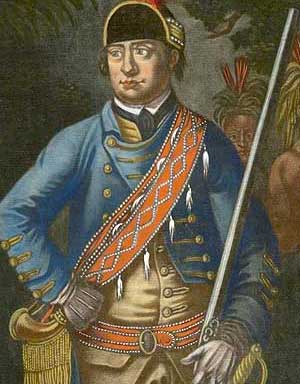 PHOTO: Maj. Robert Rogers
A color mezzotint of a representation of American colonial ranger Robert Rogers. Photo courtesy of the Brown University Digital Repository.
The U.S. Army Ranger history predates the Revolutionary War. In the mid-1700s, Capt. Benjamin Church and Maj. Robert Rogers both formed Ranger units to fight during King Phillips War and the French and Indian War. Rogers wrote the 19 standing orders that are still in use today.
In 1775, the Continental Congress formed eight companies of expert riflemen to fight in the Revolutionary War. Later, during 1777, this force of hardy frontiersmen, commanded by Dan Morgan, was known as the Corps of Rangers. Francis Marion, "The Swamp Fox," organized another famous Revolutionary War Ranger element, known as Marion's Partisans.
During the War of 1812, companies of U.S. Rangers were raised from among the frontier settlers as part of the Regular Army. Throughout the war, they patrolled the frontier from Ohio to western Illinois on horseback and by boat. They participated in many skirmishes and battles with the British and their Indian allies. Many famous men belonged to Ranger units during the 18th and 19th centuries, including Daniel Boone and Abraham Lincoln.
The Civil War included Rangers such as John Singleton Mosby, who was the most famous Confederate Ranger. His raids on Union camps and bases were so effective - part of North-Central Virginia soon became known as Mosby's Confederacy.
World War II
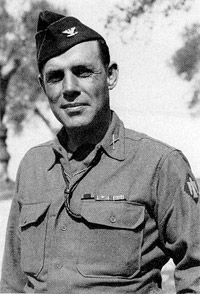 PHOTO: Col. William O'Darby. U.S. Army photo.
After the Civil War, more than half a century passed without military Ranger units in America. However, during World War II, from 1941-1945, the United States, using British Commando standards, activated six Ranger infantry battalions. Then-Maj. William O. Darby, who was later a brigadier general, organized and activated the 1st Ranger Battalion at Carrickfergus, Northern Ireland, June 19, 1942. The 1st Ranger Battalion participated in the North African landing at Arzeu, Algeria, the Tunisian Battles, and the critical Battle of El Guettar.
PHOTO: Col. William O'Darby. U.S. Army photo.
After the Civil War, more than half a century passed without military Ranger units in America. However, during World War II, from 1941-1945, the United States, using British Commando standards, activated six Ranger infantry battalions. Then-Maj. William O. Darby, who was later a brigadier general, organized and activated the 1st Ranger Battalion at Carrickfergus, Northern Ireland, June 19, 1942. The 1st Ranger Battalion participated in the North African landing at Arzeu, Algeria, the Tunisian Battles, and the critical Battle of El Guettar.
The 3rd and 4th Ranger Battalions were activated and trained by Col. Darby in Africa near the end of the Tunisian Campaign. The 1st, 3rd, and 4th Battalions formed the Ranger force. They began the tradition of wearing the scroll shoulder sleeve insignia, which has been officially adopted for today's Ranger battalions.
U.S. Army Rangers show off the ladders they used to storm the cliffs at Pointe du Hoc, which they assaulted in support of the Omaha Beach landings on D-Day.
The 2nd and 5th Ranger Battalions participated in the D-Day landings at Omaha Beach, Normandy, June 6, 1944. It was during the bitter fighting along the beaches that the Rangers gained their motto, "Rangers, lead the way!" They conducted daring missions to include scaling the cliffs of Pointe Du Hoc, overlooking Omaha Beach, to destroy German gun emplacements trained on the beachhead.
The 6th Ranger Battalion operated in the Philippines and formed the rescue force that liberated American prisoners of war, from a Japanese POW camp at Cabanatuan in January 1945. The 6th Battalion destroyed the Japanese POW camp and evacuated more than 500 prisoners.
The 75th Infantry Regiment was first organized in the China-Burma-India Theater as Task Force Galahad, Oct. 3, 1943. It was during the campaigns in the China-Burma-India Theater that the regiment became known as Merrill's Marauders after its commander, Maj. Gen. Frank D. Merrill. The Ranger battalions were deactivated at the end of World War II.
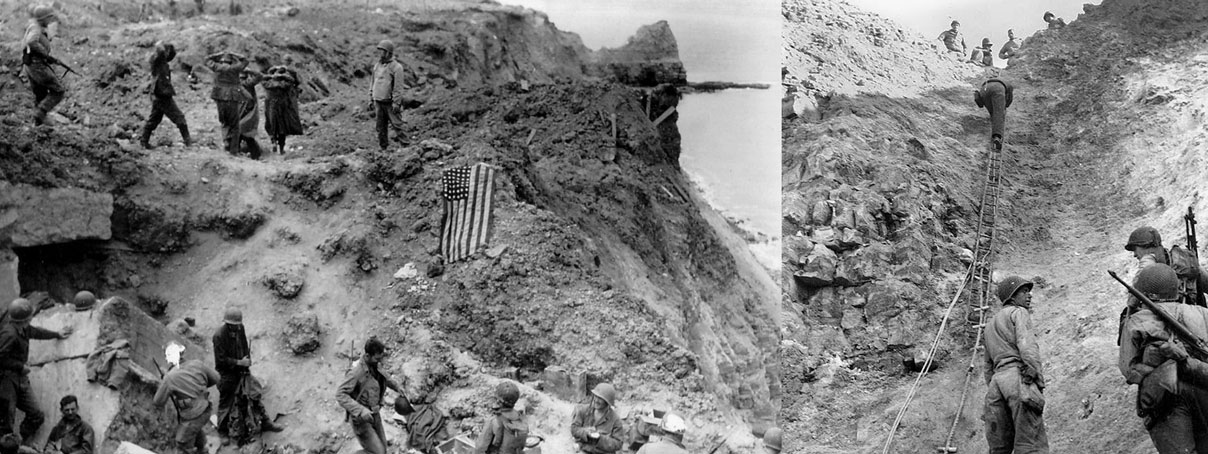 PHOTOS: Rangers at Pointe du Hoc
LEFT: D-Day +2, after relief forces reached the Rangers. The US flag had been spread out to stop fire of friendly tanks coming from inland. Prisoners are being escorted by American Soldiers.
RIGHT: Normandy Invasion, June 6, 1944. U.S. Army Rangers show off the ladders they used to storm the cliffs at Pointe du Hoc, which they assaulted in support of Omaha Beach landings on D-Day.
Korean War & Beyond
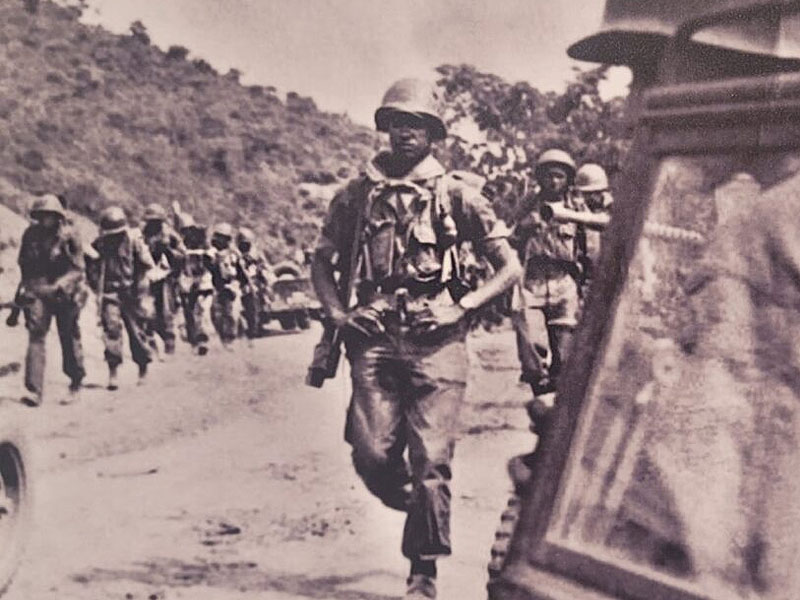 PHOTO: 1st Lt. Bernard B. Pryor of the 2d Ranger Infantry Company (Airborne) leading his platoon. U.S. Army photo.
The outbreak of hostilities in Korea, June 1950, again signaled the need for Rangers. Fifteen Ranger companies were formed during the Korean War. The Rangers went to battle throughout the winter of 1950 and the spring of 1951. They were nomadic warriors, attached first to one regiment and then to another. They performed "out front" work - scouting, patrolling, raids, ambushes, spearheading assaults, and as counterattack forces, to regain lost positions.
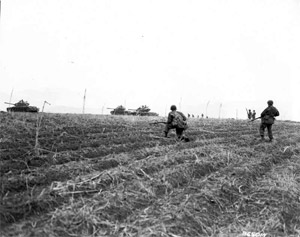 PHOTO: Men of the 3rd U.S. Rangers, 3rd Infantry Division, advance north of the Imjim River across the 38th Parallel in Korea, while under heavy mortar fire from Chinese communists. U.S. Army photo.
Rangers were again called to serve their country during the Vietnam War. The 75th Infantry was reorganized once more, Jan. 1, 1969, as a parent regiment under the Combat Arms Regimental System. Fifteen separate Ranger companies were formed from this reorganization. Thirteen served proudly in Vietnam until inactivation, Aug. 15, 1972.
In January 1974, Gen. Creighton Abrams, Army chief of staff, directed the formation of a Ranger battalion. The 1st Battalion (Ranger), 75th Infantry, was activated and parachuted into Fort Stewart, Ga., July 1, 1974. The 2nd Battalion (Ranger), 75th Infantry, followed with activation, Oct. 1, 1974. The 3rd Battalion, 75th Infantry (Ranger), and Headquarters and Headquarters Company, 75th Infantry (Ranger), received their colors on Fort Benning, Ga., Oct. 3, 1984. The 75th Ranger Regiment was designated during February 1986.
The modern Ranger battalions were first called upon in 1980. Elements of 1st Battalion, 75th Infantry (Ranger), participated in the Iranian hostage rescue attempts.
In October 1983, 1st and 2nd Ranger Battalions spearheaded Operation Urgent Fury by conducting a daring low-level parachute assault to seize Point Salines Airfield and rescue American citizens at True Blue Medical Campus.
The entire 75th Ranger Regiment participated in Operation Just Cause. Rangers spearheaded the action by conducting two important operations. Simultaneous parachute assaults were conducted onto Torrijos/Tocumen International Airport, Rio Hato Airfield and Gen. Manuel Noriega's beach house, to neutralize Panamanian Defense Forces. The Rangers captured 1,014 enemy prisoners of war and more than 18,000 arms of various types.
Elements of Company B, and 1st Platoon Company A, 1st Battalion, 75th Ranger Regiment, deployed to Saudi Arabia, Feb. 12, 1991 to April 15, 1991, in support of Operation Desert Storm.
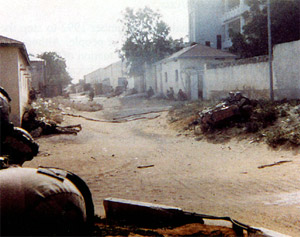 PHOTO: Soldiers of Task Force Ranger take cover and return fire during the Battle of Mogadishu. U.S. Army photo.
In August 1993, elements of 3rd Battalion and 75th Ranger Regiment, deployed to Somalia to assist United Nations forces in bringing order to a desperately chaotic and starving nation. The Rangers conducted a daring daylight raid with 1st Special Forces Operational Detachment-Delta, Oct. 3, 1993. For nearly 18 hours, the Rangers delivered devastating firepower, killing an estimated 600 Somalis in what many have called the fiercest ground combat since Vietnam.
The 75th Ranger Regiment deployed Regimental Reconnaissance Detachment, Team 2, and a command and control element to Kosovo in support of Task Force Falcon, Nov. 24, 2000.
After the 9/11 terrorist attacks, Rangers were called upon to lead the way in the Global War on Terrorism. The 3rd Battalion and 75th Ranger Regiment spearheaded ground forces by conducting an airborne assault to seize Objective Rhino in Afghanistan in support of Operation Enduring Freedom, Oct. 19, 2001. The 3rd Battalion employed the first airborne assault in Iraq to seize Objective Serpent in support of Operation Iraqi Freedom, March 28, 2003.
Due to the changing nature of warfare and the need for an agile and sustainable Ranger force, the Regimental Special Troops Battalion was activated, July 17, 2006. The RSTB conducts sustainment, intelligence, reconnaissance and maintenance missions, which were previously accomplished by small detachments assigned to the regimental headquarters and then attached within each of the three Ranger battalions. The activation of the RSTB signifies a major waypoint in the transformation of the Ranger force from a unit designed for short-term "contingency missions" to continuous combat operations without loss in lethality or flexibility.
Today, Rangers from all four of its current battalions continue to lead the way in overseas contingency operations. The 75th Ranger Regiment is conducting sustained combat operations in multiple countries deploying from various locations in the United States, a task that is unprecedented for the regiment. Rangers continue to conduct combat operations with almost every deployed special operations, conventional and coalition force in support of both Operations Enduring Freedom and Iraqi Freedom. The Ranger Regiment is executing a wide range of diverse operations that include airborne and air assaults into Afghanistan and Iraq, mounted infiltrations behind enemy lines, complex urban raids and rescue operations.
In addition to conducting missions in support of overseas contingency operations, the 75th Ranger Regiment continues to train in the United States and overseas to prepare for future no-notice worldwide combat deployments. The regiment also continues to recruit, assess and train the next generation of Rangers and Ranger leadership.
Medal of Honor
The Medal of Honor is the nation's highest medal awarded to members of the armed forces for valor in combat. The medal was first authorized in 1861 for Sailors and Marines and following year for Soldiers as well. Medals of Honor are awarded sparingly and are bestowed only to the bravest of the brave. We encourage you to learn more about all the Soldiers who served throughout our nations history that received a Medal of Honor for their heroic actions. Below are the U.S. Army Ranger recipients.

SFC
Christopher A. Celiz
READ MORE

SFC
Leroy A. Petry
READ MORE

COL
Ralph Puckett Jr.
READ MORE

1LT
Jack. L. Knight
READ MORE

SFC
Gary L. Littrell
READ MORE

SSG
Laszlo Rabel
READ MORE

SSG
Robert J. Pruden
READ MORE

SPC
Robert D. Law
READ MORE
Christopher A. Celiz
Operation Freedom's Sentinel, War on Terror
Sergeant First Class Christopher A. Celiz distinguished himself by conspicuous gallantry above and beyond the call of duty while engaged with the enemy in Paktia Province, Afghanistan, on July 12th, 2018. As the leader of a special purpose unit comprised of partnered forces and members of the 1st Battalion, 75th Ranger Regiment, Sergeant First Class Celiz led an operation to clear an area of enemy forces and thereby disrupt future attacks against the government of Afghanistan and allied forces. Shortly after his team reached their final objectives, a large enemy force attacked, placed effective fire on him and his team, preventing them from maneuvering to counterattack. Realizing the danger the attack posed to his team and the operation, Sergeant First Class Celiz voluntarily exposed himself to intense enemy machine-gun and small-arms fire to retrieve and employ a heavy weapon system, thereby allowing U.S. and partnered forces to regain the initiative, maneuver to a secure location, and begin treatment of a critically wounded partnered force member. As a medical evacuation helicopter arrived, it was immediately engaged by accurate and sustained enemy fire. Knowing how critical it was to quickly load the casualty, Sergeant First Class Celiz willingly exposed himself to heavy enemyfire to direct and lead the evacuation. As the casualty moved from a position of cover and out into intense enemy fire, Sergeant First Class Celiz made a conscious effort to ensure his body acted as a physical shield to his team carrying the casualty and the crew of the aircraft. As the casualty was loaded and Sergeant First Class Celiz’s team returned to cover, he alone remained at the aircraft, returning a high volume of fire and constantly repositioning himself to act as a physical shield to the aircraft and its crew. With his final reposition, Sergeant First Class Celiz placed himself directly between the cockpit and the enemy, ensuring the aircraft was able to depart. As the helicopter lifted off, Sergeant First Class Celiz was hit by enemy fire. Fully aware of his own injury but understanding the peril to the aircraft from the intense enemy machine gun fire, Sergeant First Class Celiz motioned to the aircraft to depart rather than remain behind to load him. His selfless actions saved the life of the evacuated partnered force member and almost certainly prevented further casualties among other members of his team and the aircrew. Throughout the entire engagement, Sergeant First Class Celiz significantly changed the course of battle by repeatedly placing himself in extreme danger to protect his team, defeat the enemy, and it ultimately cost him his life. Sergeant First Class Celiz’s extraordinary heroism and selflessness above and beyond the call of duty were in keeping with the highest traditions of military service and reflect great credit upon himself, his unit, and the United States Army.
Full details
https://www.army.mil/medalofhonor/celiz/
Leroy A. Petry
Operation Enduring Freedom, War on Terror
For conspicuous gallantry and intrepidity at the risk of his life above and beyond the call of duty: Staff Sergeant Leroy A. Petry distinguished himself by acts of gallantry and intrepidity at the risk of his life above and beyond the call of duty in action with an armed enemy in the vicinity of Paktya Province, Afghanistan, on May 26, 2008. As a Weapons Squad Leader with D Company, 2nd Battalion, 75th Ranger Regiment, Staff Sergeant Petry moved to clear the courtyard of a house that potentially contained high-value combatants. While crossing the courtyard, Staff Sergeant Petry and another Ranger were engaged and wounded by automatic weapons fire from enemy fighters. Still under enemy fire, and wounded in both legs, Staff Sergeant Petry led the other Ranger to cover. He then reported the situation and engaged the enemy with a hand grenade, providing suppression as another Ranger moved to his position. The enemy quickly responded by maneuvering closer and throwing grenades. The first grenade explosion knocked his two fellow Rangers to the ground and wounded both with shrapnel. A second grenade then landed only a few feet away from them. Instantly realizing the danger, Staff Sergeant Petry, unhesitatingly and with complete disregard for his safety, deliberately and selflessly moved forward, picked up the grenade, and in an effort to clear the immediate threat, threw the grenade away from his fellow Rangers. As he was releasing the grenade it detonated, amputating his right hand at the wrist and further injuring him with multiple shrapnel wounds. Although picking up and throwing the live grenade grievously wounded Staff Sergeant Petry, his gallant act undeniably saved his fellow Rangers from being severely wounded or killed. Despite the severity of his wounds, Staff Sergeant Petry continued to maintain the presence of mind to place a tourniquet on his right wrist before communicating the situation by radio in order to coordinate support for himself and his fellow wounded Rangers. Staff Sergeant Petry's extraordinary heroism and devotion to duty are in keeping with the highest traditions of military service, and reflect great credit upon himself, 75th Ranger Regiment, and the United States Army.
Full details
https://www.army.mil/medalofhonor/petry/
Ralph Puckett Jr.
Korean War
For conspicuous gallantry and intrepidity at the risk of his life above and beyond the call of duty: First Lieutenant Ralph Puckett, Jr., distinguished himself by acts of gallantry and intrepidity above and beyond the call of duty while serving as the commander 8th U.S. Army Ranger Company during the period of 25 November, 1950, through 26 November, 1950, in Korea. As his unit commenced a daylight attack on Hill 205, the enemy directed mortar, machine gun, and small-arms fire against the advancing force. To obtain fire, First Lieutenant Puckett mounted the closest tank, exposing himself to the deadly enemy fire. Leaping from the tank, he shouted words of encouragement to his men and began to lead the Rangers in the attack. Almost immediately, enemy fire threatened the success of the attack by pinning down one platoon. Leaving the safety of his position, with full knowledge of the danger, First Lieutenant Puckett intentionally ran across an open area three times to draw enemy fire, thereby allowing the Rangers to locate and destroy the enemy positions and to seize Hill 205. During the night, the enemy launched a counterattack that lasted four hours. Over the course of the counterattack, the Rangers were inspired and motivated by the extraordinary leadership and courageous example exhibited by First Lieutenant Puckett. As a result, five human-wave attacks by a battalion-strength enemy — enemy element were repulsed. During the first attack, First Lieutenant Puckett was wounded by grenade fragments, but refused evacuation and continually directed artillery support that decimated attacking enemy formations. He repeatedly abandoned positions of relative safety to make his way from foxhole to foxhole, to check the company’s perimeter and to distribute ammunition amongst the Rangers. When the enemy launched a sixth attack, it became clear to First Lieutenant Puckett that the position was untenable due to the unavailability of supporting artillery fire. During this attack, two enemy mortar rounds landed in his foxhole, inflicting grievous wounds, which limited his mobility. Knowing his men were in a precarious situation, First Lieutenant Puckett commanded the Rangers to leave him behind and evacuate the area. Feeling a sense of duty to aid him, the Rangers refused the order and staged an effort to retrieve him from the foxhole while still under fire from the enemy. Ultimately, the Rangers succeeded in retrieving First Lieutenant Puckett and they moved to the bottom of the hill, where First Lieutenant Puckett called for devastating artillery fire on the top of the enemy-controlled hill. First Lieutenant Puckett’s extraordinary heroism and selflessness above and beyond the call of duty were in keeping with the highest traditions of military service and reflect great credit upon himself, his unit, and the United States Army.
Full details
https://www.army.mil/medalofhonor/puckett/
Jack. L. Knight
World War II
He led his cavalry troop against heavy concentrations of enemy mortar, artillery, and small-arms fire. After taking the troop's objective and while making preparations for a defense, he discovered a nest of Japanese pillboxes and foxholes to the right front. Preceding his men by at least 10 feet, he immediately led an attack. Singlehandedly he knocked out two enemy pillboxes and killed the occupants of several foxholes. While attempting to knock out a third pillbox, he was struck and blinded by an enemy grenade. Although unable to see, he rallied his platoon and continued forward in the assault on the remaining pillboxes. Before the task was completed he fell mortally wounded. First Lt. Knight's gallantry and intrepidity were responsible for the successful elimination of most of the Japs' positions and served as an inspiration to officers and men of his troop.
Full details
https://www.cmohs.org/recipients/jack-l-knight
Gary L. Littrell
Vietnam War
For conspicuous gallantry and intrepidity in action at the risk of his life above and beyond the call of duty. Sfc. Littrell, U.S. Military Assistance Command, Vietnam, Advisory Team 21, distinguished himself while serving as a Light Weapons Infantry adviser with the 23d Battalion, 2d Ranger Group, Republic of Vietnam Army, near Dak Seang. After establishing a defensive perimeter on a hill on 4 April, the battalion was subjected to an intense enemy mortar attack which killed the Vietnamese commander, one adviser, and seriously wounded all the advisers except Sfc. Littrell. During the ensuing four days, Sfc. Littrell exhibited near superhuman endurance as he singlehandedly bolstered the besieged battalion. Repeatedly abandoning positions of relative safety, he directed artillery and air support by day and marked the unit's location by night, despite the heavy, concentrated enemy fire. His dauntless will instilled in the men of the 23d Battalion a deep desire to resist. Assault after assault was repulsed as the battalion responded to the extraordinary leadership and personal example exhibited by Sfc. Littrell as he continuously moved to those points most seriously threatened by the enemy, redistributed ammunition, strengthened faltering defenses, cared for the wounded, and shouted encouragement to the Vietnamese in their own language. When the beleaguered battalion was finally ordered to withdraw, numerous ambushes were encountered. Sfc. Littrell repeatedly prevented widespread disorder by directing air strikes to within 50 meters of their position. Through his indomitable courage and complete disregard for his safety, he averted excessive loss of life and injury to the members of the battalion. The sustained extraordinary courage and selflessness displayed by Sfc. Littrell over an extended period of time were in keeping with the highest traditions of the military service and reflect great credit on him and the U.S. Army.
Full details
https://www.cmohs.org/recipients/gary-l-littrell
Laszlo Rabel
Vietnam War
For conspicuous gallantry and intrepidity in action at the risk of his life above and beyond the call of duty. S/Sgt. Rabel distinguished himself while serving as leader of Team Delta, 74th Infantry Detachment. At 1000 hours on this date, Team Delta was in a defensive perimeter conducting reconnaissance of enemy trail networks when a member of the team detected enemy movement to the front. As S/Sgt. Rabel and a comrade prepared to clear the area, he heard an incoming grenade as it landed in the midst of the team's perimeter. With complete disregard for his life, S/Sgt. Rabel threw himself on the grenade and, covering it with his body, received the complete impact of the immediate explosion. Through his indomitable courage, complete disregard for his safety, and profound concern for his fellow soldiers, S/Sgt. Rabel averted the loss of life and injury to the other members of Team Delta. By his gallantry at the cost of his life in the highest traditions of the military service, S/Sgt. Rabel has reflected great credit upon himself, his unit, and the U.S. Army.
Full details
https://www.cmohs.org/recipients/laszlo-rabel
Robert J. Pruden
Vietnam War
For conspicuous gallantry and intrepidity in action at the risk of his life above and beyond the call of duty. S/Sgt. Pruden, Company G, distinguished himself while serving as a reconnaissance team leader during an ambush mission. The six-man team was inserted by helicopter into enemy-controlled territory to establish an ambush position and to obtain information concerning enemy movements. As the team moved into the preplanned area, S/Sgt. Pruden deployed his men into two groups on the opposite sides of a well-used trail. As the groups were establishing their defensive positions, one member of the team was trapped in the open by the heavy fire from an enemy squad. Realizing that the ambush position had been compromised, S/Sgt. Pruden directed his team to open fire on the enemy force. Immediately, the team came under heavy fire from a second enemy element. SSgt. Pruden, with full knowledge of the extreme danger involved, left his concealed position and, firing as he ran, advanced toward the enemy to draw the hostile fire. He was seriously wounded twice but continued his attack until he fell for a third time, in front of the enemy positions. S/Sgt. Pruden's actions resulted in several enemy casualties and withdrawal of the remaining enemy force. Although grievously wounded, he directed his men into defensive positions and called for evacuation helicopters, which safely withdrew the members of the team. S/Sgt. Pruden's outstanding courage, selfless concern for the welfare of his men, and intrepidity in action at the cost of his life were in keeping with the highest traditions of the military service and reflect great credit upon himself, his unit, and the U.S. Army.
Full details
https://www.cmohs.org/recipients/robert-j-pruden
Robert D. Law
Vietnam War
For conspicuous gallantry and intrepidity in action at the risk of his life above and beyond the call of duty. Sp4c. Law distinguished himself while serving with Company I. While on a long-range reconnaissance patrol in Tinh Phuoc Thanh Province, Sp4c. Law and five comrades made contact with a small enemy patrol. As the opposing elements exchanged intense fire, he maneuvered to a perilously exposed position flanking his comrades and began placing suppressive fire on the hostile troops. Although his team was hindered by a low supply of ammunition and suffered from an unidentified irritating gas in the air, Sp4c. Law's spirited defense and challenging counterassault rallied his fellow soldiers against the well-equipped hostile troops. When an enemy grenade landed in his team's position, Sp4c. Law, instead of diving into the safety of a stream behind him, threw himself on the grenade to save the lives of his comrades. Sp4c. Law's extraordinary courage and profound concern for his fellow soldiers were in keeping with the highest traditions of the military service and reflect great credit on himself, his unit, and the U.S. Army.
Full details
https://www.cmohs.org/recipients/robert-d-law
Historic Engagements
- French and Indian War
- Revolutionary War
- War of 1812
- The Civil War
- World War II
- Korean War
- Vietnam War
- Iranian hostage conflict
- Operation Urgent Fury
- Operation Just Cause
- Operation Desert Storm
- Somalia
- Kosovo
- Operation Enduring Freedom
- Operation Iraqi Freedom
- Global War on Terror
Heritage Resources
For Further Exploration
- Fort Benning — 75th Ranger Regiment history
- CMH: Lineage & Honors, 75th Ranger Regiment
- CMH: Lineage & Honors, 1st Battalion, 75th Ranger Regiment
- CMH: Lineage & Honors, 2nd Battalion, 75th Ranger Regiment
- CMH: Lineage & Honors, 3rd Battalion, 75th Ranger Regiment
- CMH: Lineage & Honors, Special Troops Battalion, 75th Ranger Regiment
- CMH: Lineage & Honors, Military Intelligence Battalion, 75th Ranger Regiment
- Ranger Hall of Fame
Related Articles
- The Rangers of WWII: Leading the way for future generations
- Rangers honor WWII legend
- DVIDS: I survived the battle of Cisterna, The story of Pfc. James Palmer of the 1st Ranger Battalion in WWII
- The Battle for Hill 205: U.S. Army Rangers and the Beginning of the Korean War's Third Phase
- After Vietnam: A 'Yes' that changed my life
- Sgt. Maj. Thomas Payne: Army Ranger to receive Medal of Honor for hostage rescue mission