MEDAL OF HONOR
Korean WarLive Webcast: Medal of Honor Ceremony
Watch the Medal of Honor ceremony live webcast, at
President will award the Medal of Honor to Colonel (Ret.) Ralph Puckett Jr. for his heroic acts during the Korean War.

Live Webcast: Hall of Heroes Induction
Watch the Hall of Heroes Induction Ceremony live webcast, at
The U.S. Army will induct Colonel (Ret.) Ralph Puckett Jr. into the Pentagon's Hall of Heroes. The Pentagon ceremony will add Colonel (Ret.) Ralph Puckett Jr.'s name to the distinguished roster in the Hall of Heroes, the Defense Department's permanent display of record for all recipients of the Medal of Honor.

Colonel (Ret.) Ralph Puckett Jr.

born
December 8, 1926 - April 8, 2024
hometown
Batesburg-Leesville and Lugoff, S.C.
Enlistment date
West Point, 1949
Military Occupation (MOS)
Infantry Senior Sergeant 11Z
Unit
8th Ranger Company, 8213th Army Unit, 8th U.S. Army
Deployments
Korea 1950, Vietnam 1967
Born in Tifton, Georgia, Ralph Puckett Jr. graduated from the United States Military Academy, West Point and received his commission as an Infantry Officer in 1949. Assigned to occupation duty in Okinawa, he volunteered for the Eighth Army Ranger Company, which was formed shortly after the Korean Conflict began in 1950.
 PHOTO: Col. Puckett with his family (Photo courtesy of the Puckett Family).
Selected as the company’s commander, 1st Lt. Puckett had five-and-a-half weeks to train his Rangers before being committed to combat operations. While attached to Task Force Dolvin and leading the advance of the 25th Infantry Division on Nov. 25, 1950, Puckett and his Rangers attacked and secured Hill 205 in the vicinity of Unsan, Korea. Though outnumbered ten to one, Puckett and his Rangers defeated five successive Chinese counterattacks over four hours that night and into the early morning hours of Nov. 26. Finally, on the sixth assault, with supporting artillery fires unavailable, the Ranger company was overrun in hand-to-hand combat. Having suffered multiple serious wounds, Puckett was unable to move. Despite orders to abandon him, fellow Rangers fought their way to his side and evacuated him to safety. For his actions, Puckett was awarded the Distinguished Service Cross.
Though offered a medical discharge for his wounds, Puckett refused and continued to serve on active duty at assignments that included the U.S. Army Ranger School and West Point. As a Ranger advisor to the Columbian Army, Puckett established the prestigious Escuela de Lanceros program. Later, after completing Special Forces training in 1960, Puckett commanded B and C teams in the 10th Special Forces Group in Bad Tolz, Germany.
"He feared no man, he feared no situation and he feared no enemy. Clearly a unique, courageous Soldier in combat and even more importantly, in my opinion, Col. Puckett was an ultimate Infantry leader."
- Retired General Jay Hendrix
Retiring in 1971, he became the national programs coordinator of Outward Bound, Inc., and subsequently established Discovery, Inc., a leadership and teamwork development program that focused on “Personal Growth through Safe Adventure.” In 1992, he was an inaugural inductee into the U.S. Army Ranger Hall of Fame and, from 1996 to 2006, he served as the first honorary colonel of the 75th Ranger Regiment. Other honors followed, including an appointment as an ambassador of goodwill by the Western Hemisphere Institute for Security Cooperation, selection as a 2004 distinguished graduate of the U.S. Military Academy, and being chosen as a 2007 recipient of the Infantry’s Doughboy Award.


His awards include two Distinguished Service Crosses (one to be upgraded to the Medal of Honor); two Silver Stars; two Legions of Merit; two Bronze Stars with V device for valor; five Purple Hearts; ten Air Medals; the Army Commendation Medal; and the World War II Victory Medal, among others. In addition, he earned the Combat Infantryman’s Badge with star, Special Forces Tab, Ranger Tab, Master Parachutist Wings, Glider Badge and Columbian Lancero Ranger Badge.
Puckett remained active in military affairs and his local community until his death on April 8, 2024. He is survived by his wife, a son, a daughter, six grandchildren, four great-grandchildren and preceded in death by a daughter.
 IMAGE: Col. Puckett receiving his second Distinguished Service Cross from President Lyndon B. Johnson “To the family of Col. Ralph Puckett Jr. – Who distinguished himself in very exceptional service to his country – a proud son of Georgia – a great national patriot.” (Photo courtesy of the Puckett Family).
The Battle
Nov. 25-26, 1950 | Hill 205 | In the vicinity of Unsan, Korea

Eighth Army
1st Lt. Ralph Puckett, United States Army, distinguished himself by conspicuous gallantry and intrepidity in action at the risk of his life above and beyond the call of duty on 25-26 November 1950 while serving as Commander, Eighth Army Ranger Company, Task Force Dolvin. As the Rangers commenced the daylight attack of Hill 205, the enemy directed mortar, machinegun and small arms fire against the advancing force. To obtain supporting fire, 1st Lt. Puckett mounted the closest tank exposing himself to the deadly enemy fire. Leaping from the tank, he yelled, "Let's go!" and began to lead his Rangers in the attack.
Almost immediately, enemy machinegun fire threatened the success of the attack by pinning down one platoon. Leaving the safety of his position with full knowledge of the danger; 1st Lt. Puckett intentionally ran across an open area three times to draw enemy fire thereby allowing his Rangers to locate and destroy the enemy machinegun and enabling the company to seize Hill 205. Later that night, the enemy counter-attacked in the near zero degree weather. During the next four hours the 57-man company, inspired and motivated by the extraordinary leadership and courageous example exhibited by Lt. Puckett, repulsed five human wave attacks by a 500-man battalion assaulting behind intense mortar barrages. Continually directing 'danger close' artillery support that decimated attacking enemy formations, repeatedly abandoning positions of relative safety to make his way from foxhole to foxhole to check the perimeter, interceding at each point of decision in the battle, redistributing ammunition and keeping only one eight-round clip for his own rifle, 1st Lt. Puckett's encouragement and dauntless will instilled in his men an unfailing desire and perseverance to resist.
 IMAGE: Hill 205 Battlemap
Although wounded in the thigh by a grenade fragment during the first assault, 1st Lt. Puckett refused evacuation. During the course of battle, 1st Lt. Puckett once again intentionally exposed himself three more times to an enemy sniper before the sniper was killed. Unable to obtain artillery support to repel the sixth enemy assault, 1st Lt. Puckett and his command were overrun by the enemy. Two mortar rounds detonated in 1st Lt. Puckett's foxhole inflicting severe wounds to his feet, buttocks, and left arm. Though the wounds to his right foot were so severe the doctors considered amputation for several months, 1st Lt. Puckett maintained the presence of mind to report that his command was being overrun by the enemy. Grievously wounded and unable to move on his own, 1st Lt. Puckett ordered his men to leave him behind.
Later two of his Rangers fought their way to his position killing three enemy who were only 10 yards from where 1st Lt. Puckett lay defenseless. Although 1st Lt. Puckett ordered his Rangers to leave him behind, they refused. Later as the enemy fired at the rescuers Puckett again ordered his men to leave him to ensure their safety. Finally secure at the bottom of Hill 205 and despite the seriousness and pain of his wounds, 1st Lt. Puckett maintained the presence of mind to direct a heavy concentration of artillery fire on the enemy now on top of the hill. 1st Lt. Puckett's extraordinary courage and devotion to duty are in keeping with the highest traditions of military service and reflect great credit upon himself, his unit, and the United States Army.
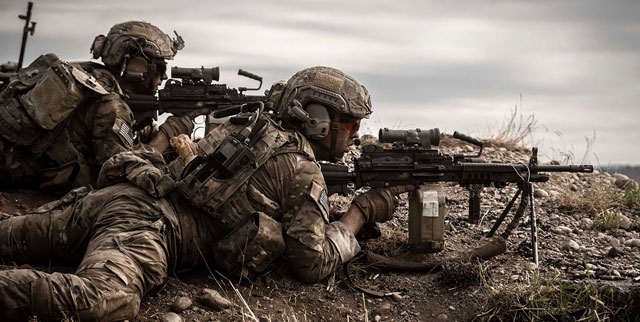
Rangers Lead the Way
The 75th Ranger Regiment is the U.S. Army's premier large-scale special operations force, and it is made up of some of the most elite Soldiers in the world. The Rangers specialize in joint special operations raids and joint forcible entry operations.
The Ceremony


"He leads from the front. He leads by example. He leads with heart. He is a Ranger, and that’s how Rangers lead — that’s how you lead."
PRESIDENT JOSEPH R BIDEN,
White House Medal of Honor Ceremony, May 21, 2021
"Colonel Puckett is a true hero of the Korean War. With extraordinary valor and leadership, he completed missions until the very end, defending Hill 205 and fighting many more battles requiring equal valiance. Without the sacrifice of veterans, including Colonel Puckett and the Eighth Army Ranger Company, freedom and democracy we enjoy today couldn’t have blossomed in Korea."
SOUTH KOREAN PRESIDENT MOON JAE-IN,
White House Medal of Honor Ceremony, May 21, 2021
RELATED STORIES FROM ARMY.MIL
Eighth Army
Eighth Army was officially activated at Memphis, Tennessee, on June 10, 1944 and soon thereafter, it deployed to the Southwest Pacific. Under the command of LTG Robert L. Eichelberger, Eighth Army methodically eliminated the last enemy resistance remaining on New Guinea and New Britain. From December 26, 1944 until August 15, 1945, Eighth Army was actively engaged in the reconquest of the Philippines – the largest joint campaign of the War in the Pacific. Collectively, the five “Victor” operations launched by Eighth Army would result in the liberation of the southern and central portions of the Philippine Archipelago – fully two-thirds of the land area of the Philippines. From February 19, to April 3, 1945, Eighth Army units (ranging from company-size teams to division-level task forces) conducted fourteen major amphibious assaults and twenty-four minor landings. During this 44-day period, Eighth Army averaged an assault landing every day and a half. Subsequently, it earned the nickname “Amphibious Eighth” – alluding to its participation in more than sixty amphibious assaults during World War II.
While combat operations were still on-going in the Philippines, Eighth Army simultaneously began preparations for Operation Downfall – the invasion of Japan. However, with the sudden surrender of the Japanese Empire on August 15, 1945, Eighth Army’s mission transitioned from one of conquest to one of occupation and it was the “Amphibious Eighth” that led the Army of Occupation into Japan. On December 31, 1945, Sixth Army was relieved of occupation duties and Eighth Army assumed an expanded role in the occupation, which encompassed the formidable tasks of disarmament, demilitarization, and democratization. These missions were flawlessly executed at the operational level by Eighth Army and it was the military occupation of Japan that ensured the economic recovery and political democratization of that island nation. With the outbreak of hostilities in Korea on June 25, 1950, Eighth Army would face another major challenge.
Due to the tactical situation that existed during the first six weeks of the Korean War, Republic of Korea and US ground forces were compelled to conduct an economy of force mission. Inherently risky and difficult to execute under the best of circumstances, a series of delays and withdrawals defined the ROK-US effort in the early stages of the Korean War. Running out of space to trade for time, Lieutenant General Walton H. Walker (Commanding General, Eighth Army) ordered his command to withdraw behind the Naktong River and establish a defensive posture oriented on terrain retention. On August 1, 1950, a defensive perimeter (labeled by journalists as the “Pusan Perimeter”) was organized. The successful defense of the Pusan Perimeter represented a defining moment in the Korean War; it set the stage for the UN Offensive.
The breakout from the Pusan Perimeter, in concert with the amphibious assault at Inchon on September 15, 1950, resulted in the collapse of the entire North Korean People’s Army. For all practical purposes, the NKPA had been defeated and any hope of continuing the war with North Korean forces alone was a concept wholly without merit. By October 1, 1950, Eighth Army reached the 38th parallel and on October 9, it began its main advance across this border – spearheaded by the 1st Cavalry Division and the 1st ROK Division. On October 19, these two divisions captured the North Korean capital of Pyongyang and on November 24, 1950, Eighth Army began its so-called “end-of-the-war offensive.” Final victory seemed imminent, but the situation would change with devastating suddenness.
On November 25, the full-scale intervention of the Chinese People’s Volunteer Army changed the entire complexity of the war and forced Eighth Army and X Corps (which were operating independently of each other at that time) to transition to the defense. With the advantage of surprise and numerical superiority, the CPVA launched multiple synchronized attacks that ultimately expelled friendly forces from North Korea and on January 4, 1951, Seoul would change hands for the third time within a six-month period. Before it could organize an effective line of defense, Eighth Army had withdrawn a total of 275 miles (which qualifies as the longest retreat in US military history). Subsequently, the “myth of the millions of Chinese in Korea” was widely circulated among the rank and file and rumors of vacating the peninsula were rampant.
By mid-January 1951, Eighth Army (now under the command of Lieutenant General Matthew B. Ridgway) launched a series of highly successful limited objective attacks. With emphasis on lateral security, these operations were “force oriented” as opposed to “terrain oriented.” Any ground that was taken was incidental to closing with and destroying the enemy. On March 15, 1951, Seoul was recaptured for the fourth and last time during the course of the war. By the end of the month, Eighth Army reached the 38th parallel and three weeks later, established strong defensive positions twenty miles beyond (in most sectors of the main line of resistance). By the spring of 1951, both opposing forces had concluded that the issue of achieving a decisive military victory was no longer a viable option as neither side wanted to expand the scope and scale of the conflict.
However, the Chinese Communists were determined to launch one last major effort to capture Seoul. Once this was achieved, they would advocate a cease-fire. With the capital of South Korea in their hands, the Communists would be in an enviable position to negotiate an armistice favorable to their own terms. The Fifth Phase Chinese Offensive (April 22 - July 8, 1951) qualified as the largest ground action of the Korean War. During this two-phased campaign, the Chinese People’s Volunteer Army failed miserably to achieve its primary objective and sustained catastrophic losses in the process. By the summer of 1951, the situation on the ground had developed into a holding action. Thus, it seemed mutually advantageous for the belligerents to initiate negotiations and to transfer a stalemated military situation to the conference table.
The history of the Korean War truce talks began on July 10, 1951 and after two years of intricate, verbose and exasperating dialogue, an armistice was finally consummated on July 27, 1953 – formally suspending full-scale hostilities on the peninsula. As the post-Armistice period began, Eighth Army assisted the Republic of Korea in relief and rehabilitation efforts and it continues to play a significant role in the common defense of South Korea. Today, there is no evidence to suggest that North Korea has abandoned its option of unifying the peninsula by force of arms.
To enhance and sustain mission accomplishment, the force structure of Eighth Army has transformed multiple times since its establishment. During World War II, it fought in the Pacific Theater of Operations as a field army. In the immediate post-World War II era, Eighth Army served in Japan as an Army of Occupation. During the Korea War, Eighth army served as both a field army and theater army and throughout the preponderance of the Cold War, it remained primarily a theater army. On November 20, 1954, it was merged with US Army Forces Far East (AFFE) as the major Army command in the region. On July 1, 1957, AFFE was discontinued and United States Forces Korea was officially activated; thus, Eighth Army was consolidated with USFK and the United Nations Command with headquarters in Seoul. This tri-command headquarters was commanded by General George H. Decker.
On November 7, 1978, General John W. Vessey, Jr. assumed command of the newly established ROK-US Combined Forces Command, while serving concurrently as the Commander of UNC and USFK and as the Commanding General, Eighth Army. On 1 December 1992, Eighth Army reverted to a three-star command billet and was separated from UNC/USFK/CFC. On March 13, 1998, Eighth Army was designated as the Army Service Component Command for USFK. This status was discontinued on January 23, 2012 when Eighth Army was redesignated as an operational-level Field Army Headquarters. Eighth Army relocated its headquarters from Yongsan to Camp Humphreys in the summer of 2017.
Today, Eighth Army supports United Nations Command (UNC)/Combined Forces Command (CFC)/United States Forces Korea (USFK) efforts to deter aggression on the Korean peninsula. On order, Eighth Army is prepared to conduct Noncombatant Evacuation Operations (NEO) and Reception, Staging, Onward Movement, and Integration (RSO&I) operations.
Operation Inherent Resolve

Operation Inherent Resolve
On Oct. 14, 2014, the Department of Defense formally established the Combined Joint Task Force - Operation Inherent Resolve (CJTF-OIR) in order to formalize ongoing military actions against the rising threat posed by ISIS in Iraq and Syria. Fueled by sectarian conflicts and division, ISIS ascended from relative obscurity in 2013 to propagate an extremist socio-political ideology, and claimed to have created an Islamic caliphate. Its’ successful acquisition of conventional weapons, establishment of armed formations, rapid territorial growth and unconscionable atrocities shocked the world and destabilized the region. By June 2014, the security situation in Iraq had deteriorated with the Iraqi cities of Mosul and Tikrit falling in rapid succession to ISIS aggressors.
CJTF-OIR was established by the United States Army Central Command (ARCENT), Camp Arifjan, Kuwait. On June 24, 2014, ARCENT was designated as the Joint Forces Land Component Command (JFLCC) for the conduct of operations in Iraq. This designation established the first operational headquarters since the departure of U.S. troops from the region in 2011. By August, JFLCC was engaged, taking the fight to ISIS via air operations. Defensive and offensive operations rapidly matured with the rescue of innocent Yazidi victims trapped on Sinjar Mountain, the recapture of the Mosul and Haditha Dams and the defense of Baghdad and Kirkuk. On Sept. 17, 2014, ARCENT was re-designated the Combined Forces Land Component Command. The command was authorized to conduct Combined Joint Operations in Iraq, which ultimately led to the formal establishment of CJTF-OIR. As CJTF-OIR grew, it encompassed the efforts and contributions of more than sixty Coalition partners throughout the Combined Joint Operations Area (CJOA) of Iraq and Syria.
III Corps assumed authority of CJTF-OIR from ARCENT on Sept. 22, 2015 and immediately initiated an aggressive plan to increase pressure on ISIS and bring new capabilities to bear throughout the theater of operations. Logisticians sustained the CJTF and delivered more than 146,000 tons of supplies and materiel with 1,700 ground and air movements. Additionally, more than $700 million worth of logistical contracts were executed to sustain operations throughout the CJOA.
Coalition fires were directed at ISIS leadership and infrastructure. Deliberate and dynamic precision airstrikes targeted ISIS economic infrastructure significantly degrading its ability to govern. More than 15,000 coalition airstrikes destroyed enemy military capabilities and provided freedom of maneuver to regional security and partner forces. Operation Tidal Wave II deprived ISIS of 80% of its oil collection facilities as well as $25 million a month in oil revenue, which negatively impacted ISIS military operations and halted enemy expansion. The adherence to strict rules of engagement, and the principles of necessity, distinction, proportionality and humanity, prevented unnecessary suffering among non-combatants in the conflict zones. Subsequent operations resulted in a dramatic contraction of ISIS controlled areas with the recovery of over 29,000 square kilometers in Syria and Iraq.
Increases in operational tempo, training and support to Iraqi Security Forces and Syrian opposition groups provided the foundation for broader strategic success. Iraqi and Syrian “Train and Equip Funds” provided the necessary assets and capabilities to achieve increasingly higher levels of partner participation. With comprehensive and consistent Coalition support, partner forces steadily gained the confidence needed to fight and win against ISIS. With CJTF-OIR’s operational support, 10,000 fighting personnel comprised of police, counterterrorism units and local tribal fighters acted in concert to liberate Ramadi in December 2015.
Following Ramadi’s liberation, Syrian Democratic Forces (SDF), supported by CJTF-OIR Advise and Assist teams, reclaimed Shaddadi, a town in northeastern Syria. Shaddadi served as a critical node for training, logistics and revenue and was the main supply artery between the ISIS capital Raqqa and the Iraqi city of Mosul. Peshmerga forces, supported by CJTF-OIR elements, liberated Sinjar and numerous ISIS controlled towns east of Mosul. After 28 days of fighting, Iraqi forces recaptured Fallujah on June 26, 2016, which forced ISIS further away from Baghdad and paved the way for the liberation of the Euphrates River Valley. Following each success in Syria and Iraq, CJTF-OIR trained Wide Area Security Forces, assumed the responsibility for liberated areas, and enabled military formations to rest and transition to the next military objective.
XVIII Airborne Corps assumed authority from III Corps, on Aug. 21, 2016. The transfer of authority sustained and accelerated the plan to degrade and destroy ISIS. On Aug. 25, 2016, Iraqi elements seized the airfield at Qayyarah, thus positioning forces within close logistical striking distance of Mosul. Following a brief strategic pause, Iraqi forces, again supported by coalition fires, air support and targeting teams, began the battle for Mosul on Oct. 17, 2016, which cleared the eastern half of the city by Jan. 24, 2017.
In Syria, CJTF-OIR expanded the train and equip program and worked with Vetted Syrian Opposition (VSO) troops in multiple regions. This anti-ISIS group fought to secure the strategic isolation of Raqqa by clearing the city of Manbij on Aug. 15, 2016. Like their Iraqi counterparts, VSO partnered forces politically organized, policed and patrolled on previously ISIS-held ground to secure liberated territories. Near Raqqa, SDF forces relied upon Coalition airlift capabilities to transition combat forces across Lake Assad to encircle the Tabqah Dam, effectively isolating the city from the west as of April 2017. SDF began the assault on the city of Raqqa on June 6, 2017, and continue to make steady gains despite heavy resistance.
After a brief refit and consolidation of gains in East Mosul, Iraqi forces resumed the offensive on Feb. 19, 2017 to take the western side of the city. Iraqi formations fought through a multi-layered cordon of defenses, and engaged in house-to-house fighting. After nearly nine months of battle Iraqi Prime Minister Haider Al-Abadi declared the city of Mosul liberated on July 10, 2017. Coalition partners supported the Iraqi effort with observation, selective fires, and logistics while strategic decisions in the battle were made and implemented by the Iraqi Government and Commanders From October 2014 to July 2017, CJTF-OIR, Coalition, Syrian and Iraqi partnered forces working together have made enormous progress denying ISIS aspirations. Coalition forces have defeated insurgent counterattacks, reclaimed thousands of square kilometers and significantly weakened the ISIS terror infrastructure in Iraq and Syria. One Mission, Many Nations!
Official Citation
The President of the United States of America, authorized by Act of Congress, March 3, 1863, has posthumously awarded in the name of Congress the Medal of Honor to
Colonel (Ret.) Ralph Puckett Jr.
United States Army
For conspicuous gallantry and intrepidity at the risk of his life above and beyond the call of duty:
First Lieutenant Ralph Puckett, Jr., distinguished himself by acts of gallantry and intrepidity above and beyond the call of duty while serving as the commander 8th U.S. Army Ranger Company during the period of 25 November, 1950, through 26 November, 1950, in Korea.
As his unit commenced a daylight attack on Hill 205, the enemy directed mortar, machine gun, and small-arms fire against the advancing force. To obtain fire, First Lieutenant Puckett mounted the closest tank, exposing himself to the deadly enemy fire. Leaping from the tank, he shouted words of encouragement to his men and began to lead the Rangers in the attack.
Almost immediately, enemy fire threatened the success of the attack by pinning down one platoon. Leaving the safety of his position, with full knowledge of the danger, First Lieutenant Puckett intentionally ran across an open area three times to draw enemy fire, thereby allowing the Rangers to locate and destroy the enemy positions and to seize Hill 205.
During the night, the enemy launched a counterattack that lasted four hours. Over the course of the counterattack, the Rangers were inspired and motivated by the extraordinary leadership and courageous example exhibited by First Lieutenant Puckett. As a result, five human-wave attacks by a battalion-strength enemy — enemy element were repulsed.
During the first attack, First Lieutenant Puckett was wounded by grenade fragments, but refused evacuation and continually directed artillery support that decimated attacking enemy formations.
He repeatedly abandoned positions of relative safety to make his way from foxhole to foxhole, to check the company’s perimeter and to distribute ammunition amongst the Rangers.
When the enemy launched a sixth attack, it became clear to First Lieutenant Puckett that the position was untenable due to the unavailability of supporting artillery fire. During this attack, two enemy mortar rounds landed in his foxhole, inflicting grievous wounds, which limited his mobility.
Knowing his men were in a precarious situation, First Lieutenant Puckett commanded the Rangers to leave him behind and evacuate the area. Feeling a sense of duty to aid him, the Rangers refused the order and staged an effort to retrieve him from the foxhole while still under fire from the enemy.
Ultimately, the Rangers succeeded in retrieving First Lieutenant Puckett and they moved to the bottom of the hill, where First Lieutenant Puckett called for devastating artillery fire on the top of the enemy-controlled hill.
First Lieutenant Puckett’s extraordinary heroism and selflessness above and beyond the call of duty were in keeping with the highest traditions of military service and reflect great credit upon himself, his unit, and the United States Army.
President's Remarks
2:10 P.M. EST, October 15, 2013
THE PRESIDENT: Welcome to the White House. Last month, the United States Army released a remarkable piece of video. It's from the combat helmet cameras of a MedEvac helicopter crew in Afghanistan. It's shaky and grainy, but it takes us to the frontlines that our troops face every day. And in that video, as the helicopter touches down by a remote village, you see, out of a cloud of dust, an American Soldier.
He's without his helmet, standing in the open, exposing himself to enemy fire, standing watch over a severely wounded Soldier. He helps carry that wounded Soldier to the helicopter, and places him inside. Then, amidst the whipping wind and deafening roar of the blades, he does something unexpected. He leans in and kisses the wounded Soldier on the head -- a simple act of compassion and loyalty to a brother in arms. And as the door closes and the helicopter takes off, he turns and goes back the way he came, back into the heat of battle.
In our nation's history, we have presented our highest military decoration, the Medal of Honor, nearly 3,500 times for actions above and beyond the call of duty. But this may be the first time that we can actually bear witness to a small part of those actions for ourselves. And today we honor the American in that video -- the Soldier who went back in -- Captain William Swenson.
Not far away that day was then Corporal Dakota Meyer, to whom we presented the Medal of Honor two years ago. Today is only the second time in nearly half a century that the Medal of Honor has been awarded to two survivors of the same battle. Dakota is not here today, but I want to welcome some of the Soldiers and Marines who fought alongside both of these men, and the families of those who gave their lives that day.
Moments like this, Americans like Will, remind us what our country can be at its best -- a nation of citizens who look out for one another; who meet our obligations to one another, not just when it's easy, but when it's hard; especially when it's hard. Will, you're an example -- to everyone in this city, to our whole country -- of the professionalism and patriotism we should strive for -- whether we wear the uniform or not. Not just on particular occasions, but all the time.
For those who aren't familiar with the story of the battle that lead to Will being here today, I want to take you back to that September morning four years ago. It's around sunrise. A column of Afghan soldiers and their American advisors are winding their way up a narrow trail towards a village to meet with elders. But just as the first soldier reaches the outskirts of the village, all hell breaks loose.
Almost instantly, four Americans, three Marines, and a Navy corpsman at the front of the column are surrounded. Will and the Soldiers in the center of the column are pinned down. Rocket-propelled grenade, mortar, and machine gun fire, all of this is pouring in from three sides.
As he returns fire, Will calls for air support. But his initial requests are denied -- Will and his team are too close to the village. Then Will learns that his non-commissioned officer, Sergeant First Class Kenneth Westbrook, has been shot in the neck. So Will breaks across 50 meters of open space, bullets biting all around. Lying on his back, he presses a bandage to Kenneth's wound with one hand and calls for a MedEvac with the other, trying to keep his buddy calm.
By this time, the enemy has gotten even closer -- just 20 or 30 meters away. Over the radio, they're demanding the Americans surrender. Will stops treating Kenneth long enough to respond -- by lobbing a grenade.
Finally, after more than an hour and a half of fighting, air support arrives. Will directs them to nearby targets. Then it's time to move. Exposing himself again to enemy fire, Will helps carry Kenneth the length of more than two football fields, down steep terraces, to that helicopter. And then, in the moment captured by those cameras, Will leans in to say goodbye.
But more Americans -- and more Afghans -- are still out there. So Will does something incredible. He jumps behind the wheel of an unarmored Ford Ranger pickup truck. A Marine gets in the passenger seat. And they drive that truck -- a vehicle designed for the highway -- straight into the battle.
Twice, they pick up injured Afghan soldiers -- bullets whizzing past them, slamming into the pickup truck. Twice they bring them back. When the truck gives out, they grab a Humvee. The Marine by Will's side has no idea how they survived. But, he says, "by that time it didn't matter. We [were] not leaving any Soldiers behind."
Finally, a helicopter spots those four missing Americans -- hours after they were trapped in the opening ambush. So Will gets in another Humvee, with a crew that includes Dakota Meyer. And together, they drive. Past enemy fighters. Up through the valley. Exposed once more.
When they reach the village, Will jumps out -- drawing even more fire, dodging even more bullets. But they reach those Americans, lying where they fell. Will and the others carry them out, one-by-one. They bring their fallen brothers home.
Scripture tells us, "The greatest among you shall be your servant." Captain Will Swenson was a leader on that September morning. But like all good leaders, he was also a servant -- to the men he commanded, to the more than a dozen Afghans and Americans whose lives he saved, to the families of those who gave their last full measure of devotion on that far away field. As one of his fellow Soldiers later said, "Will did things that nobody else would ever do, and he did it for his guys, and for everybody on the ground, to get them out."
That's why after I called Will to tell him he'd be receiving this medal, one of the first things he did was to invite to this ceremony, those who fought alongside him. I'd like all of those who served with such valor, alongside Will -- both Army and Marines -- who fought for each other, please stand and be recognized.
Thank you. Will also reached out to the families of the four Americans who gave their lives that day. To them he wrote, and I'm quoting Will now, "We have never met. We have never spoken, but I would like to believe I know something about each of you through the actions of your loved ones that day. They were part of a team, and you are now part of that team."
So, I would ask the members of this team, the families of First Lieutenant Michael Johnson, Gunnery Sergeant Edwin Johnson, Gunnery Sergeant Aaron Kenefick, and Hospitalman Third Class James Layton, as well as the family of Kenneth Westbrook, to please stand.
Kenneth was the Soldier Will delivered to the safety of that helicopter. After being airlifted out, he made it to Walter Reed. He started rehab, and spent time with his wife Charlene, who joins us her today. She still remembers the first time she spoke to Will, when he called from Afghanistan, to check in on Kenneth. Soon after that phone call, however, Kenneth took a turn for the worst. He succumbed to complications from his treatment. I think it's safe to say that Charlene will always be grateful for the final days she was able to spend with her husband. Even now, a month rarely goes by when Will doesn't call or text, checking in with Charlene and her three boys. "That's the kind of man he is," Charlene says about Will. "You don't have to ask Will for help. He just knows when to be there for you."
So, Will Swenson was there for his brothers. He was there for their families. As a nation, we thank God that patriots like him are there for us all. So, Will, God bless you and all the men you've fought alongside, and for everything you've done for us. God bless all of our men and women in uniform. God bless the United States of America.
With that, I'd like my military to read the citation please.
[the citation is read and the medla is presented]
(Applause.)
THE PRESIDENT: Let me say once again, not only to Will, but to all our men and women in uniform, who have served us with such incredible courage and professionalism, that America is grateful for you. To the families of those we've lost, we will never forget.
Will, you are a remarkable role model for all of us, and we're very grateful for your service.
We are going to have a reception after this. I hear the food is pretty good around here. I hope all of you have a chance to stay, and for those of you who have a chance to thank Will personally, this is very welcome. I'm going to be exiting with Will and Michelle, first. We'll take a couple of pictures. Enjoy yourselves this afternoon.
God bless America.
END 2:30 P.M. EST
Hall of Heroes Induction
CEREMONY REMARKS | October 16, 2013
Secretary of Defense Chuck Hagel
Secretary Hagel: Good afternoon. Secretary McHugh, General Odierno, Sergeant Major Chandler, Chairman Dempsey, ladies and gentlemen, the men and women who serve our country today in uniform, the civilian employees who support our men and women in uniform, and in particular our special guests here this afternoon, who have been recognized, and our most honored guest, Captain Swenson and his family.
I have a quite elegant speech, of course. But I will dispense with these eloquent words. And I'm going to make a couple of comments I hope that will add to the true eloquence of the chiefs and secretary's comments. I could not improve on, or I don't mean to duplicate what they said, what President Obama said yesterday, what everyone in this room knows about this very special individual.
Let me add my thoughts this way. Many important words have been said about Will Swenson, appropriately so, over the last few days. One particular point that President Obama made yesterday was that at a time in our country when we need more unifying dimensions and dynamics to remind us who we are, yes, as a great nation, but, even more importantly, as a good people. The Will Swenson story does that. It does remind us who we are -- sacrifice, service, going beyond your own personal ambitions, your own personal interests, and serving the interests of others first.
I don't know a more complete picture that could be presented or example noted of that selflessness than the story of Will Swenson and those who have gone before, and every man and women in the history of this great republic who have given so much of themselves, and the people in this room and all over the world who continue to do that.
Will, you mean an awful lot to a lot of people, but your biggest contribution probably will come later. And that is the role model that you have already projected, not just for men and women in uniform, but the next generations behind you. We all recognize as parents, as individuals who have any responsibility for positions in life, that that is our biggest, most significant responsibility, to improve upon the inheritance that we were each given, the blessings and the good things. We know about bad things.
But that's not our role. Our role is to improve, make it better, inspire, uplift our people, our families, our country and the world. And as President Obama noted yesterday, the Will Swenson story is a great reminder of those responsibilities and how we can do it with dignity, with eloquence, with never asking anything in return.
I want to also note something that was said here today, mentioned by the chief, mentioned by the secretary. Yes, Will Swenson proved his valor on the battlefield. It is well documented. It should be well documented. But he also did something else that represented tremendous courage and integrity. And I've always thought the two indispensable elements of anyone's life are courage and character. And if we're without those in some measure, it's a pretty hallow existence.
He questioned -- he dared to question the institution that he was faithful to and loyal to. Mistakes were made, in his case. Now, that's courage and that's integrity and that's character. As the institution itself reflected on that same courage and integrity institutionally, the institution, the United States Army, corrected the mistake. They went back and acknowledged a mistake was made and they fixed it.
Another great dimension of our republic, of our people, we have an inherent capability to self-correct. Free people have that capability if they have the will and the courage to self-correct. And we all do in our own personal lives. Institutions don't always. Eventually they will be forced to. In this case, the United States Army was not forced to. It did self-correct. It was a wrong. They corrected it. They fixed it.
We're sorry that you and your family had to endure through that, but you did and you handled it right. And I think that deserves a tremendous amount of attention and credit. We celebrate you today, Will. We celebrate your family. We celebrate your very brave colleagues who have been recognized, those who didn't make it back, their families today. But we celebrate all the good things about our country today because of you. And we're grateful.
May God bless you and your family, Will. Thank you. Thank you.
Editor's Note: The remarks above represent the Secretary of Defense's prepared remarks as taken directly from: http://www.defense.gov/speeches/speech.aspx?speechid=1811
Secretary of the Army John M. McHugh
Secretary McHugh: Good Afternoon. You know, as I was sitting listening to the Chief (of Staff of the Army Gen. Ray Odierno), I looked at this stage as all of you are, and, like many of you, I've had the honor of attending literally dozens of events here; but never so much as in this kind of occasion does this place look so special and so beautiful. And fittingly so.
And speaking of beautiful, you all look good. Chief (Odierno) as he always does, did a great job of introducing individuals by name, so I'm not going to recount all of those; just know that you are all very, very welcome, and we all deeply appreciate your attendance, whether you are a part of the civilian or Army uniformed family or a member of the Department of Defense family, we are deeply appreciative.
I do want to give a couple special welcomes to our distinguished members of my former haunt for 17 years, the House of Representatives, Welcome. So, how are you doing? How are we doing? We'll talk later. You are truly welcome and thank you for during a very busy time for coming here and sharing this special moment.
Mr. Secretary, Secretary Hagel, as always, we deeply appreciate your personal attention to these kinds of occasions, the deep concern you bring for the men and women in uniform and their families. Your presence here today is making this an even more special occasion.
But we would not have an event, to state the obvious, without Captain Will Swenson, without the love and support of his parents, Carl and Julia, the continued love and special relationship with Kelsey Long, all of the distinguished guests that he and others have brought with them, you make this moment what it is.
By way of confession, I have to tell you whenever I share a dais with the Secretary of Defense, I get a little bit more self-conscious about my remarks. I want to be honest with you, as well. I'm even more on edge this afternoon, and frankly, Mr. Secretary, it doesn't have much to do with you. It's Will's mom's presence that has me a little nervous. Now, if you had occasion to read or see President Obama's remarks yesterday at the White House during that very touching ceremony, he observed that both the Captain's parents are retired Seattle University professors. Carl was a math professor; that one field of study more than any other that drove me into political science. But more frightening, Julia's field was English. And as the President noted, she made sure that even at a young age, Will not only dotted his i's and crossed his t's, but he practiced perfect grammar at all times. So, Julia, ma'am, I have done my best today and will continue to ensure correct usage and correct syntax. Or, as we say back home where I'm from, I hope I got good English.
Most importantly, truly, thank you both very much for being here; you have much to be proud of -- or, I guess I should say much of which to be proud. To state the obvious, this is a tremendous honor, for the Army and, if I may, for me, personally, as we gather to induct Captain William David Swenson into our Hall of Heroes -- the first officer in the United States Army to receive the Medal of Honor for any conflict since the Vietnam War. And that makes this special occasion even more special. This is also, as Will himself has said, a time of mixed emotions, a time when we pay tribute to uncommon valor, but at the same time, we mourn and we remember the horrible loss of comrades and friends.
The Battle of Ganjgal was ferocious. And it was tragic. And we lost so many good lives that day. But following the violence, and the death, came inspiration. And we were inspired by those who fought there, by those who would not accept defeat -- and, as the Chief noted, we are indeed, honored to have many of those warriors who fought by Will's side that day -- his battle buddies -- joining us -- both Army and Marines -- and I deeply appreciate the rightful recognition you gave them. But I would say to you: If you question what this concept of "jointness" is about, if you really doubt it's being applied -- look at this battle; look at those uniforms. I don't think you'll question it anymore.
Gentlemen: God love you. God Bless you for your service, and for all that you not just did that day, but every day that you serve in uniform. I will also say that from that single fierce battle -- two Medals of Honor, two Navy Crosses, a Silver Star, Nine Bronze Stars with V(alor) device -- that is an amazing measure of honor. And even by that incredible standard, Will Swenson is truly a hero amongst heroes. And today, because of this event, he will have his name will enshrined along with those who have gone before, forever a part of our Nation's and our Army's history. And his name will be displayed alongside such others as Alvin York and Audie Murphy and Les Sabo.
The reason I single out Les Sabo, even though his name, certainly outside this room, may not be as recognizable as others, is that his story, and Will's, offer a common and an important lesson for our Army. About a year and a half ago, I stood in this very room, close to this very spot as we inducted Specialist Sabo into our Hall of Heroes. And that followed a ceremony in which Les' family received the Medal of Honor at the White House just the day before. In 1970, Les Sabo sacrificed his life in a far away field in Cambodia, and he did so to save the lives of his fellow Soldiers.
For more than 40 years, his story was all but lost to anyone outside of his family. And as you may recall, that was the case until a writer happened to stumble upon his records in the National Archives. And that writer began to push anew for the Medal of Honor that should have been awarded decades earlier.
And today, we similarly pause to bestow an overdue honor, once more.
Now, I couldn't do much for Les Sabo at the time; perhaps there is something, Will, I hope I can do for you, and, as I know you feel even more importantly, for those who may follow in your footsteps. This morning I issued a directive requiring that all Medal of Honor nominations be sent immediately to the awards and decorations branch of the Army Human Resources Command (HRC). As soon as an honors packet is created at battalion level, we will have immediate visibility at Army headquarters. Each subsequent command's review will also be required to be immediately forwarded to HRC; and in return, HRC will follow up with the original command every 30 days until that award packet reaches its final review. A parallel process that will provide greater oversight; a way by which we can ensure that no future award packet is lost along the way, or paperwork misplaced or somehow forgotten in the fog of war.
Our heroes have always taught us many things, and that's true here, today. Sometimes our heroes teach us how to make ourselves better. And Will, for that as well, I -- we all -- want to thank you. But Will has taught us a lot more than how to make our processes better. He's also taught us about things like valor and courage and teamwork and sacrifice. And there's more. To prepare for today, I watched some of the videos that we coerced Will into doing, and he did incredibly well. And for all of the impressive things that I heard from him, I was particularly struck by something he said in relation to that day.
As the Chief (of Staff of the Army) noted, on that day, we lost three Marines, First Lieutenant Michael Johnson, Gunnery Sergeant Edwin Johnson, Staff Sergant Aaron Kenefick; we lost a Navy Corpsman, James Layton; and, about a month later, Army Sergeant First Class Kenneth Westbrook -- the Soldier whose forehead Will gently kissed as he lifted him onboard a MedEvac helicopter.
I know that their families have already been recognized, but I would ask, respectfully, that we pause once more to remember their sacrifice, and to again thank each of them for being here today. Join with me (Applause). And I would say, from the bottom of my heart, no matter what uniform your loved one wore, from this day forward, you are all a beloved part of our Army family. God bless you, and thank you.
We also lost nine Afghans, men whose names Americans will likely never know, at least not in large numbers. And in the interview I mentioned, Will spoke about them, their sacrifice, and their struggling nation. And Will observed, and I'm going to quote here, "the Afghan people in Kunar Province got to see their government, their leaders, their Soldiers, their brothers, out there trying to do the right thing, trying to find the Afghan solution to their problems," he concluded, "they saw the Afghans … fight."
In telling the story of those Afghans, those warriors who fought alongside them that day, in witness to their courage and conviction, Will may have taught us the most important lesson of all. He taught us all: There's hope. Hope comes in many forms, comes in many faces and many voices. Where a baby's cry is heard, there is hope that the world will go on. Where a teacher, someone who has devoted an entire lifetime not to power, not to glory, not to money, but for the conveyance of knowledge, when that teacher speaks in understanding tones to a struggling student, there is hope for a better future. And when a prayer of remembrance is said over the casket of a fallen hero, what that Soldier died for -- freedom and liberty and the right to breathe free -- that sacrifice gives us hope that all the people of the world, wherever they may live, may one day realize what is universally proclaimed as the American dream.
Since 1775, the Army -- the United States Army, along with the comrades-in-arms we have, the Navy, the Marine Corps, the Air Force, and the Coast Guard, band together as a band of warriors -- have continuously brought hope, have continuously brought that dream to the oppressed. Wherever those forces are stationed, they have always brought hope.
Will, you and your comrades that day were many things, but you were true messengers of hope -- hope to the Afghan people. And a renewed hope to every American who like all of us has lived in the cloak of freedom and liberty that the courage and skill and conviction of the American Soldier has provided for more than 238 years, that that freedom will endure into the future, as well.
Will, that is a high honor and, in its own way, a heavy burden. And through your service, your courage, your leadership and sacrifice, you have given me -- you've given us all -- hope. So, Captain Swenson, congratulations, to you, to your family on this very special tribute, and thank you, too, on behalf of our Army, our Nation, for your service and your valor.
God bless you, God bless the United States of America, and this glorious Army that keeps her free. Thank you.
Editor's Note: The remarks above represent the Secretary of the Army's prepared remarks as taken directly from: https://www.army.mil/article/113249/
Army Chief of Staff
General Raymond T. Odierno
General Odierno: Good afternoon everybody. It's good to see so many people here. It's really a privilege to see such a great turnout to honor Captain William Swenson, who today joins a rare fraternity of military service members who have displayed extraordinary acts of valor during exceptional circumstances, with great risk to their own personal safety.
Captain Swenson embodies the essence of a Soldier and represents what every man and woman who dons this uniform strives to be: an individual who has earned the trust of all with whom they associate; one who possesses a humility and selflessness that we all respect; one who embraces esprit de corps and routinely demonstrates a dedication to his profession that epitomizes the ethos of the American Soldier. In the face of imminent danger, he never quit. He always put his mission first. He never accepted defeat. And above all else, he never left his fallen comrades. Just as he was there for them that day, his friends, his band of brothers are here for him today.
On September 8th, 2009, five service members made the ultimate sacrifice, and their presence is felt in the hearts of everyone here. We remember 1st Lt. Michael Johnson, U.S. Marine Corps; Gunnery Sergeant Aaron Kenefick, U.S. Marine Corps; Gunnery Sergeant Edwin Johnson, U.S. Marine Corps; Hospitalman 3rd Class James Layton, U.S. Navy; and Sergeant First Class Kenneth Westbrook, United States Army. We are honored to have their Gold Star family members here with us today, so I would ask them to please stand and be recognized.
I'd like to recognize our distinguished guests: Secretary Hagel, the Secretary of Defense -- sir, thank you for being here; Representatives Jeff Denham from California and Tulsi Gabbard from Hawaii -- thank you so much for both being here; Secretary McHugh, the Secretary of the Army and Acting Secretary Fanning, the Acting Secretary of the Air Force -- thank you for being here; General Marty Dempsey, the Chairman of the Joint Chiefs -- sir, thank you for being here; Generals Mark Welsh, the Chief of Staff of the Air Force; General Gordon Sullivan, the head of AUSA and the 32nd Chief of Staff of the Army; General John Campbell, the Vice Chief of Staff of the Army; and Sergeant Major of the Army Ray Chandler, my battle buddy -- thank you for being here; and other distinguished guests from our Department of Defense and Army leadership that are joining us today, and Marine Corps and all our other service members.
I'd like to extend a special welcome to Captain Swenson's family and friends: his father, Carl, and his mother, Julia; and Ms. Kelsey Long. I also like to recognize several members of the Marine Corps and Army who were on the ground with Will that fateful day in Ganjgal. Thank you so much for your service to our nation, your sacrifices and dedication. Your presence today reinforces the personal nature of combat and the strong bonds formed under extraordinary conditions. I'd like you all to stand as well to be recognized.
It was on September the 8th, 2009, that Army Captain Will Swenson and Sergeant First Class Westbrook were part of a combined patrol with Afghan National Border Police and an Afghan National Army unit and their 12 Marine Corps advisers and Navy medic. Together, the group set off for the village of Ganjgal in Kunar Province, to meet with village elders and discuss the creation of a local security force.
Just after dawn, as they approached the outskirts of the village on foot, they were ensnarled in a vicious ambush. Over 60 well-armed insurgents began firing heavy machine guns, rocket propelled grenades, and small arms from entrenched positions in the village and the surrounding mountains. Captain Swenson and the patrol were pinned down behind low stone walls while a lead team was trapped in a courtyard. Sniper rounds and explosions impacted closer and closer while the insurgents taunted the patrol over the radio, demanding their surrender. As the enemy began to envelop the patrol, the reality set in that the men were surrounded, out manned and outgunned.
Captain Swenson began radioing for artillery and aviation support, but the brigade's Aerial Scout Weapons Team was already supporting other troops in contact to the north. Dangerously exposed, he repeatedly called for smoke to conceal their withdrawal. The men continued to hold their ground, and at one point, the enemy got so close that Will threw a hand grenade to keep them at bay. As the patrol bounded back, continuous enemy fire wounded many of the men, including the ranking officer, Major Williams, and Captain Swenson's teammate, Sergeant First Class Westbrook.
In the fury of the attack, Will took charge. With one hand, he treated Sergeant First Class Westbrook, and with the other he held a radio hand-mic, identifying enemy targets to a Scout Weapons Team that had just arrived on station. Receiving word of a MedEvac helicopter inbound, Captain Swenson exposed himself to enemy fire and marked the landing zone by holding a signal panel on top of him. As the helicopter landed, Will loaded Sergeant First Class Westbrook inside and returned to the battle.
As the majority of the patrol withdrew from the valley, Captain Swenson returned to the kill zone in an unarmed truck to evacuate the dead and wounded Afghan soldiers and police. Next, he organized a recovery party for the lead team of three Marines and Navy corpsman that were still trapped in the initial ambush location. Then he drove back into the ambush zone, stopping to treat wounded Afghans and mark their locations for extraction.
While aerial platforms searched for the missing service members, Captain Swenson waited in the open, continuing to take fire from the enemy. The enemy contact was so intense that a Combat Search and Rescue helicopter sent to assist was unable to land. After an hour, the helicopter located the missing men and confirmed that they had been killed in action. Once again, Will exposed himself to continuous enemy machine gun fire to recover his fallen comrades and return them to base.
Captain Swenson symbolizes what is best about our Soldiers and our Army. Taking charge on the battlefield early that morning, Will led a team of brothers-in-arms against great odds, and rallied them in their efforts to save each other. In the end, the battle lasted nearly six hours, and Will had returned to the kill zone four times to treat and evacuate wounded service members and coalition partners.
On September 8th, 2009, Captain Swenson demonstrated incredible competence: technical and tactical proficiency, leading a joint and combined team under fire, taking an extreme situation and performing to the best of his ability. He demonstrated commitment to every fellow service member, to our multinational partners, and he brought honor upon our nation. He demonstrated great character: he understood the inherent trust that must exist between service members. In combat, the uniform you wear is inconsequential. What matters are the men and women you live, sleep, eat, and fight with -- and that unspoken commitment that you have to each other. Captain Will Swenson's strength of character is undeniable. Even after the battle, Will was not afraid to point out deficiencies in the operation that caused difficulties in obtaining the appropriate and timely support. He recognized the value of assessing performance and he had the character to stick to his convictions. That's how we grow as Soldiers; that's how we grow as an Army; that's how we grow as a joint force.
By honoring Captain Swenson's actions today, we honor the heroes who have sacrificed for this nation, along with every service member who has raised their right hand to defend this country and our ideals.
Throughout our history and over the course of the last twelve years of war, I have seen first-hand how U.S. Army Soldiers, Sailors, Airmen, and Marines have served with the competence, character, and commitment that our great nation deserves. Captain Swenson is the epitome of these qualities and much, much more, having demonstrated his leadership in the ultimate crucible of combat. The strength of our nation is our Army, the strength of our Army is our Soldiers, the strength of our Soldiers is our families, and this is what makes us Army Strong. Thank you very much.
Editor's Note: The remarks above represent the Army Chief of Staff's prepared remarks as taken directly from: https://www.army.mil/article/113243/

President Joseph Biden presents the Medal of Honor to retired Col. Ralph Puckett Jr. during a ceremony at the White House in Washington, D.C., May 21, 2021. Puckett was awarded the Medal of Honor for his heroic actions while serving then as commander of the Eighth Army Ranger Company when his company of 57 Rangers was attacked by Chinese forces at Hill 205 near the Chongchon River, during the Korean Conflict on November 25-26, 1950. (Spc. XaViera Masline).

President Joseph Biden presents the Medal of Honor to retired Col. Ralph Puckett Jr. during a ceremony at the White House in Washington, D.C., May 21, 2021. Puckett was awarded the Medal of Honor for his heroic actions while serving then as commander of the Eighth Army Ranger Company when his company of 57 Rangers was attacked by Chinese forces at Hill 205 near the Chongchon River, during the Korean Conflict on November 25-26, 1950. (Spc. XaViera Masline).

President Joseph Biden presents the Medal of Honor to retired Col. Ralph Puckett Jr. during a ceremony at the White House in Washington, D.C., May 21, 2021. Puckett was awarded the Medal of Honor for his heroic actions while serving then as commander of the Eighth Army Ranger Company when his company of 57 Rangers was attacked by Chinese forces at Hill 205 near the Chongchon River, during the Korean Conflict on November 25-26, 1950. (Spc. XaViera Masline).

Secretary of the Army Christine Wormuth presents a photo and citation to retired Army Lt. Col. John D. Lock, accepting on behalf of Medal of Honor recipient Army 1st Lt. Ralph Puckett, Jr., in a ceremony in which Puckett and five other Medal of Honor recipients were inducted into the Pentagon Hall of Heroes, at Joint Base Myer-Henderson Hall, Va., July 6, 2022. (DoD photo by Lisa Ferdinando).

Secretary of Defense Lloyd J. Austin III presents the Medal of Honor flag to retired Army Lt. Col. John D. Lock, accepting on behalf of Medal of Honor recipient Army 1st Lt. Ralph Puckett, Jr., in a ceremony in which Puckett and five other Medal of Honor recipients were inducted into the Pentagon Hall of Heroes, at Joint Base Myer-Henderson Hall, Va., July 6, 2022. (DoD photo by U.S. Navy Petty Officer 2nd Class Alexander Kubitza).
