
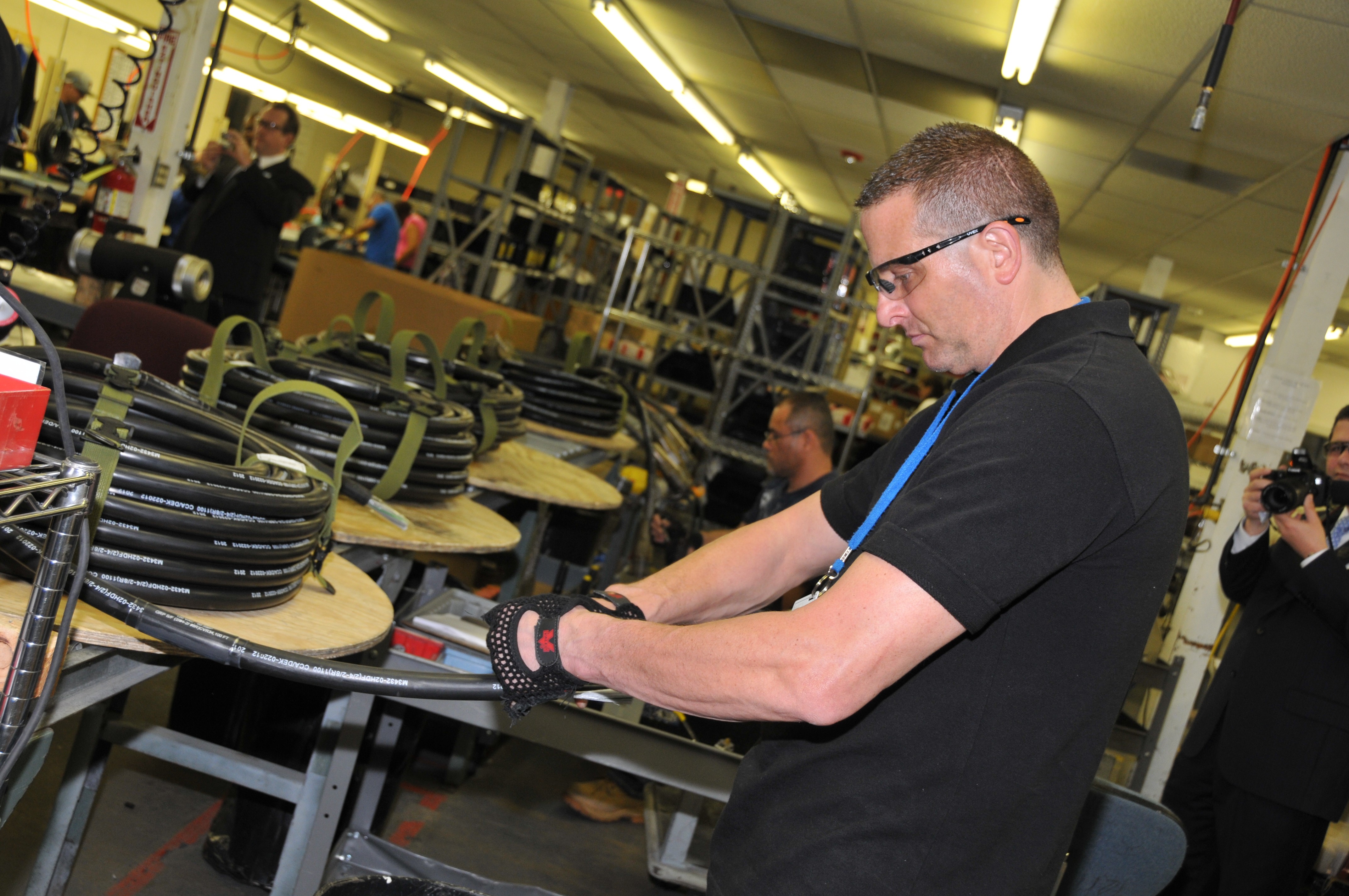
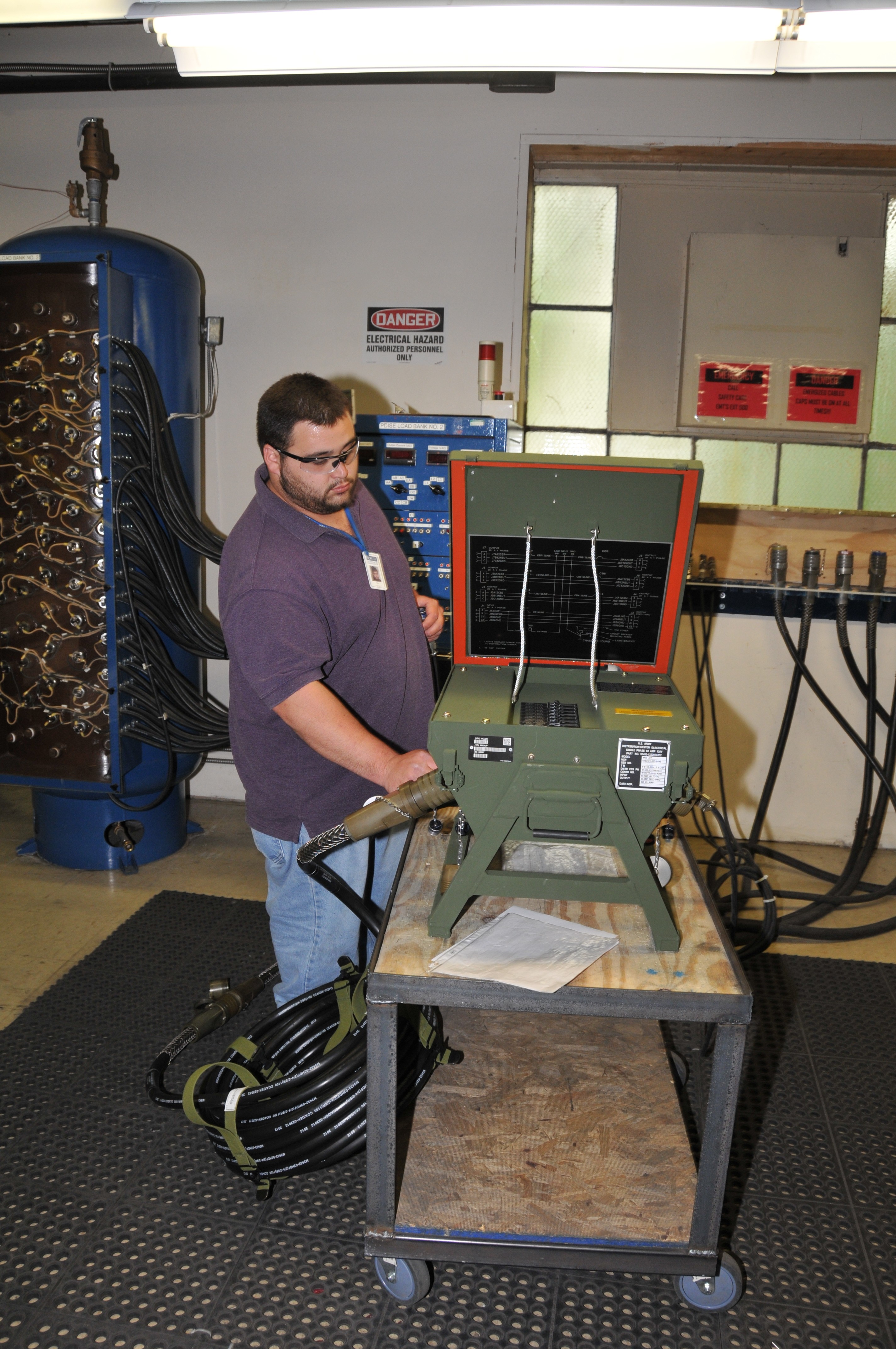
With an emphasis on improving energy efficiency and effective power distribution, tactical power experts gathered in Reading, Pa. on May 3 to mark the 10,000th Power Distribution Illumination System Electrical (PDISE) Enclosure unit produced.
Often described as a more rugged version of a home electrical distribution box, PDISE is the principal power distribution system for the U.S. Army.
The Project Manager for Mobile Electric Power (PM MEP), which is assigned to the Program Executive Office Command, Control and Communications-Tactical (PEO C3T), is utilizing PDISE to improve how the Army distributes power on the battlefield. The PDISE system allows Soldiers to distribute power more efficiently between power generation sources and power consuming equipment, which can help to reduce the number of generators on the battlefield.
"You have to keep in mind the Soldiers who touch your equipment every day and how they rely on it," said Col. Brian Cummings, project manager for MEP. "Sometimes that's all they have."
Bill Sverapa, PEO C3T's deputy program executive officer, said providing reliable power more efficiently results in lives saved.
"By providing the best power solutions to the field, we save lives," said Sverapa. "Better efficiency results in less fuel used, which means fewer convoys that are often targeted for attack."
The ceremony took place at the headquarters of the manufacturer of PDISE, Fidelity Technologies Corporation. Invited guests included military and defense industry representatives, elected officials and employees.
PDISE allows Soldiers, Sailors, Airmen and Marines to get electricity where it's needed, when it's needed without jeopardizing personal safety or damaging mission essential equipment. PDISE systems are fielded to units in both Iraq and Afghanistan, and are used wherever U.S. Army Soldiers are either stationed or deployed.
PDISE units are designed to work with any of the Army's standard generator sets including the older sets that are being retired, currently fielded products such as the Tactical Quiet Generators (TQG), and the new Advanced Medium Mobile Power Sources (AMMPS) generators.
In July PM MEP will begin fielding the leaner, fuel-saving AMMPS generators to Afghanistan. First targeted for several remote outposts of the 173rd Airborne Brigade Combat Team, this new family of generators will cut fuel consumption 21 percent across the board.
"Your equipment is going to be critical for one of the greatest operational energy projects that's been done in the last decade of war," said Cummings. "We'll be taking PDISE equipment with other technology and we'll get it to the 173rd and show what a great operational difference you can make by right-sizing power and distributing power properly."
The 173rd will serve as the operational energy model for the Army, during this time of increased focus on energy efficiency. AMMPS are 100 percent more reliable than the Tactical Quiet Generators (TQGs) they're replacing and offer a 10 percent reduction in size and weight.
In supplying AMMPS generators to Afghanistan, fuel convoys will be reduced each year by 1,000 tankers holding 2,500 gallons of fuel each - or 84 tankers and 210,000 gallons of fuel per month.
Bob Thoens, PM MEP's product director for Large Power Sources, said that PDISE units are in high demand.
"Especially right now with the amount of coverage and importance of operational energy," said Thoens. "Not only is right-sizing the generators important but using the PDISE equipment to distribute that energy more effectively in the battlefield is equally important."
Less fuel consumed on the battlefield means fewer convoys needed to supply that fuel. Since these supply convoys are often targeted by enemy attacks, taking them off the roads directly translates to less risk to our Soldiers.
Rep. Jim Gerlach (R-Pa) congratulated Fidelity on its accomplishment of producing 10,000 units and reinforced the need to get the best equipment to the Soldier.
"We're going to have some very challenging decisions in the coming months in Congress relative to continuing funding in the military," he said. "But whatever we do, we have to recognize in Congress the importance of making sure the men and women in the field have the very best equipment they need to carry out their missions day to day. This is one of the pieces of equipment."
During the next 14 months of the existing contract, Fidelity expects to produce an additional 3,400 PDISE units.
Social Sharing