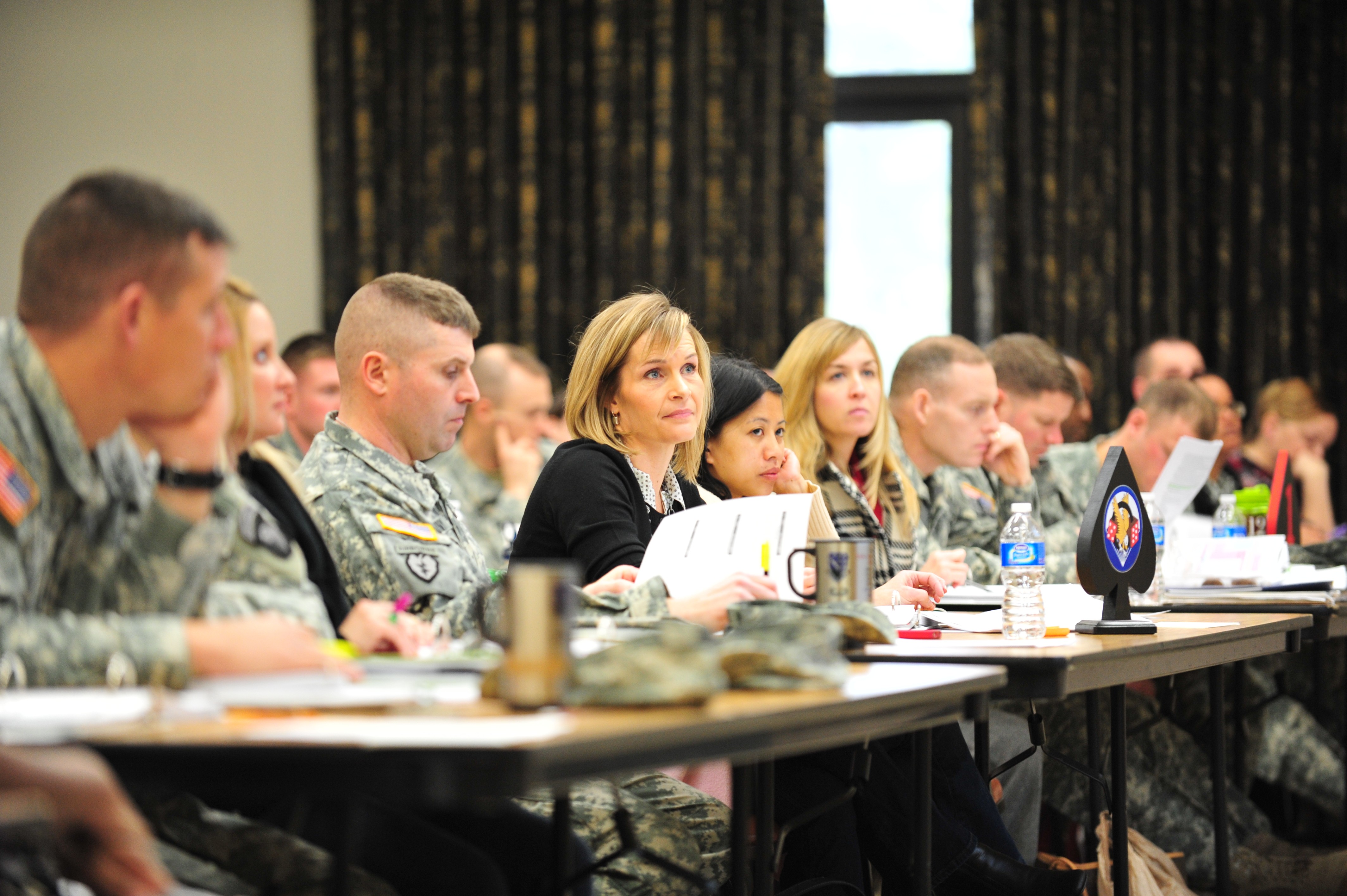
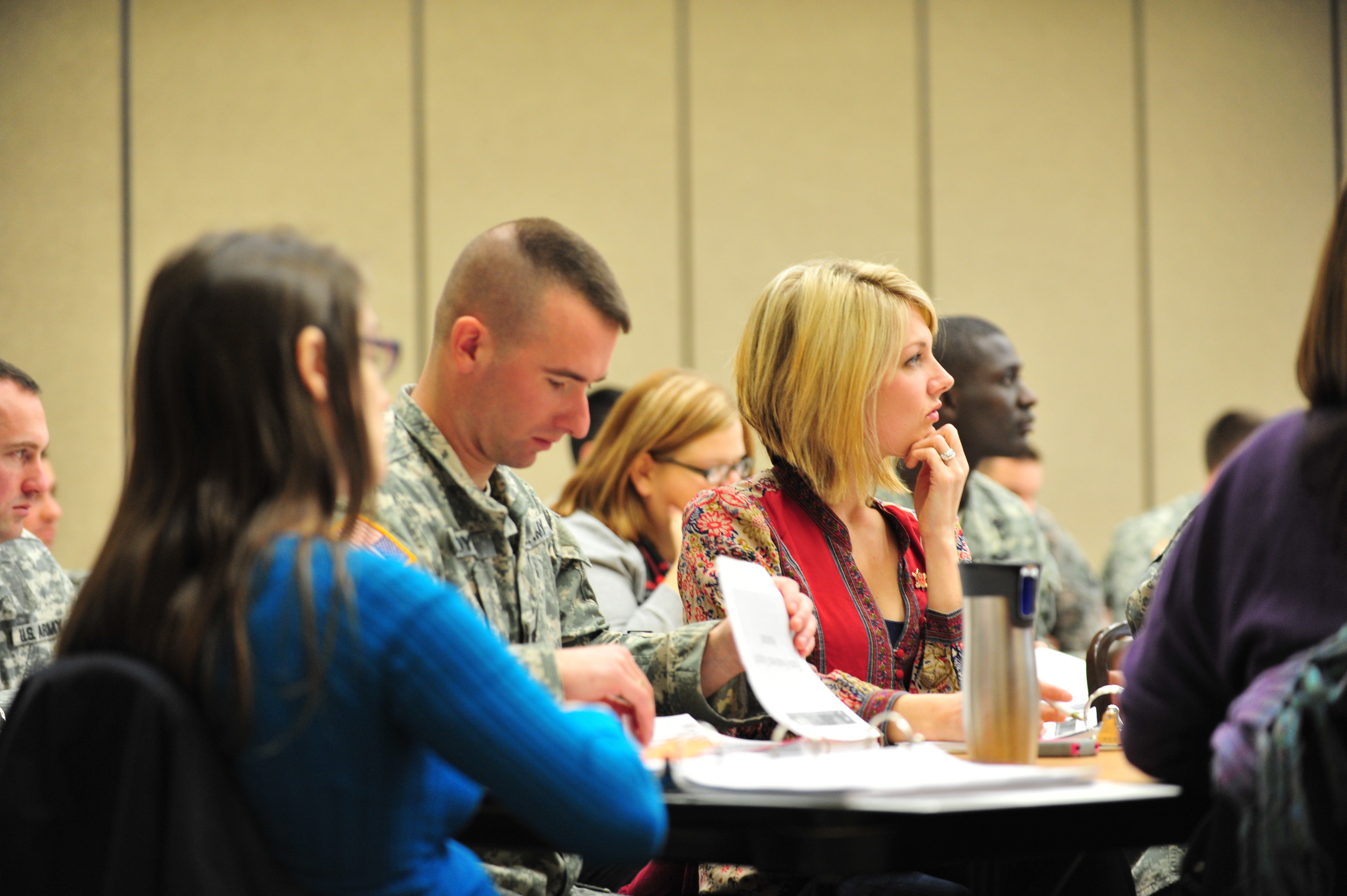
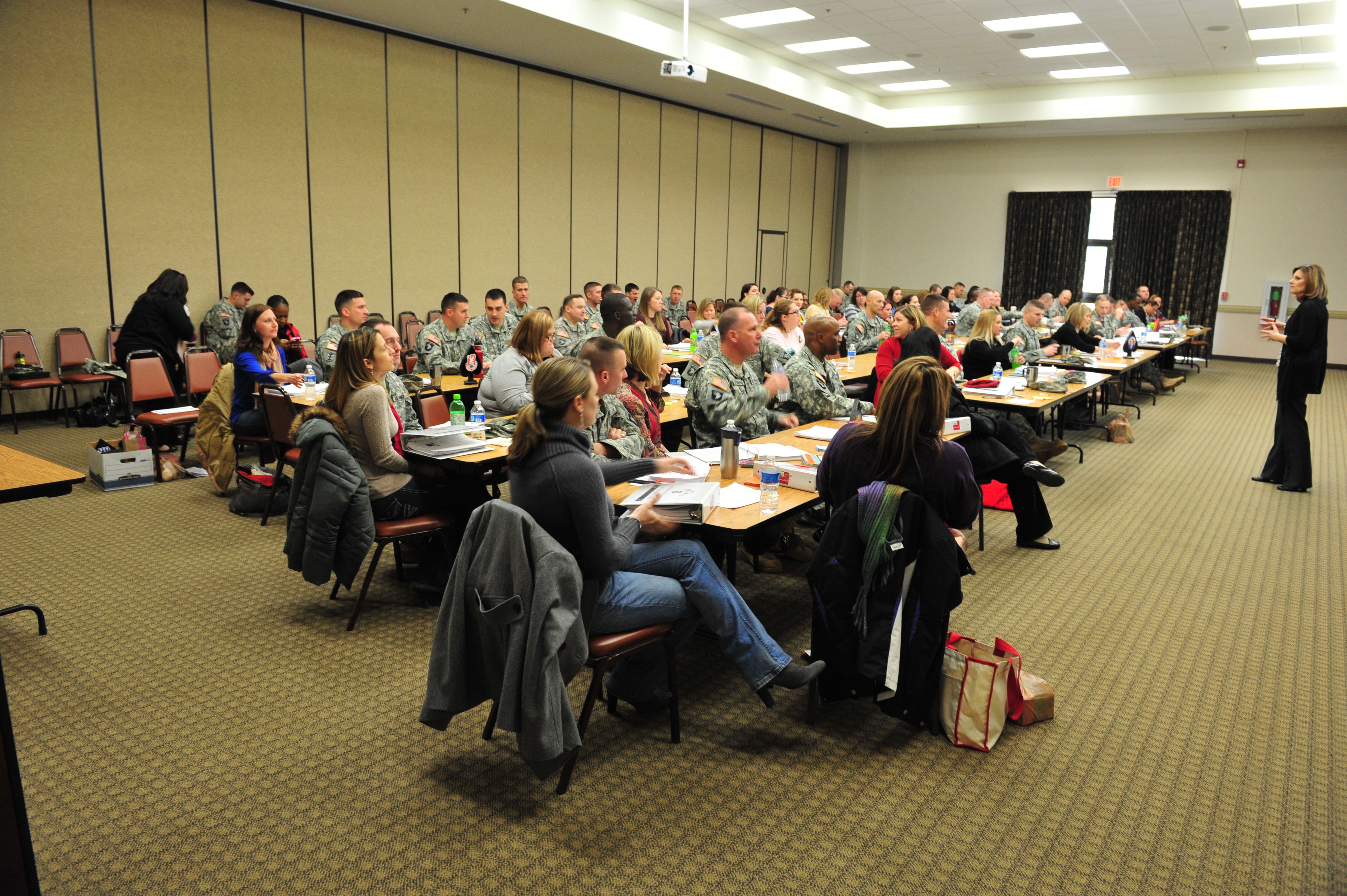
FORT CAMPBELL, Ky. - Family Readiness Group leaders and volunteers of the 4th Brigade Combat Team, 101st Airborne Division completed their training necessary to be qualified to operate a unit FRG Feb. 13th, 2012 at the Family Readiness Center on Fort Campbell, Ky.
"We are training approximately 90 leaders, only a third of which are commanders and the rest are volunteers, to be qualified to perform their appointed duties within their respective Family Readiness Groups," said Lena Anderson, the 4th Brigade Family Readiness Support Advisor.
The first training covered was FRG fundraising, which included the proper handling of any funds that may be in the FRG's possession. Another topic covered was the requirements for the frequency and manner in which the families must be contacted by the FRG leaders. One of the more somber topics covered was the FRG's role in casualty affairs.
The brigade commander Col. Valery C. Keaveny, Jr. was in attendance with his wife, Kimberly Keaveny, both of whom are very supportive of the FRG.
"I believe that family readiness is a critical part of the unit and Soldier readiness. And therefore family readiness is a commander's issue," said Col. Keaveny. "I expect commanders to be personally and deeply involved in preparing their families to support our Soldiers in the unit throughout our train-up and as we deploy."
In addition to the brigade's commander, all six of 4th Brigade's battalion commanders, over 30 company commanders, and most of their spouses were in attendance.
"We have an amazing group of commanders and volunteers, they are "go-getters" who are ready to get in there and help the family members," said Kimberly. "They are very enthusiastic and they genuinely want to help the Families of 4th Brigade."
Usually, the FRG is thought of as a social organization which is a way for the Families of a unit to get together and build support relationships with each other, prior to and for the duration of a unit's deployment. However, the main function of an FRG is to inform families of the unit's activities and resources that are available to them through the Army. The U.S. Army and Fort Campbell have very specific guidelines outlining how an FRG may and may not operate, most of the time those rules or regulations go unnoticed by the unit's members.
"It is a requirement of Fort Campbell that FRG leaders receive training within 60 days of their appointment to the position," said Anderson.
Although the day's training sessions were focused on the key leaders of the unit, the true purpose of the day's events were not lost on those who attended.
"The most important aspect of today's training is getting the leaders trained, getting them the information they need to properly run the FRG," said Kimberly. "This way they can be a facilitator and a resource for the Family members."
Col. Keaveny wanted to emphasize to the Families of the Soldiers within the 4th Brigade how vital they were to the mission.
"I want to make sure they know they are a welcome and integral member of the unit, we value them as a Family," said Keaveny. "We value their Soldiers' service but we know how important the entire Family is."
This is the first phase of training that the FRG leaders will receive.
"The next big FRG training event will be the Currahee University in the beginning of April, it's main focus will be the FRG's involvement with Social Media, specifically Facebook," said Anderson.
Social Sharing