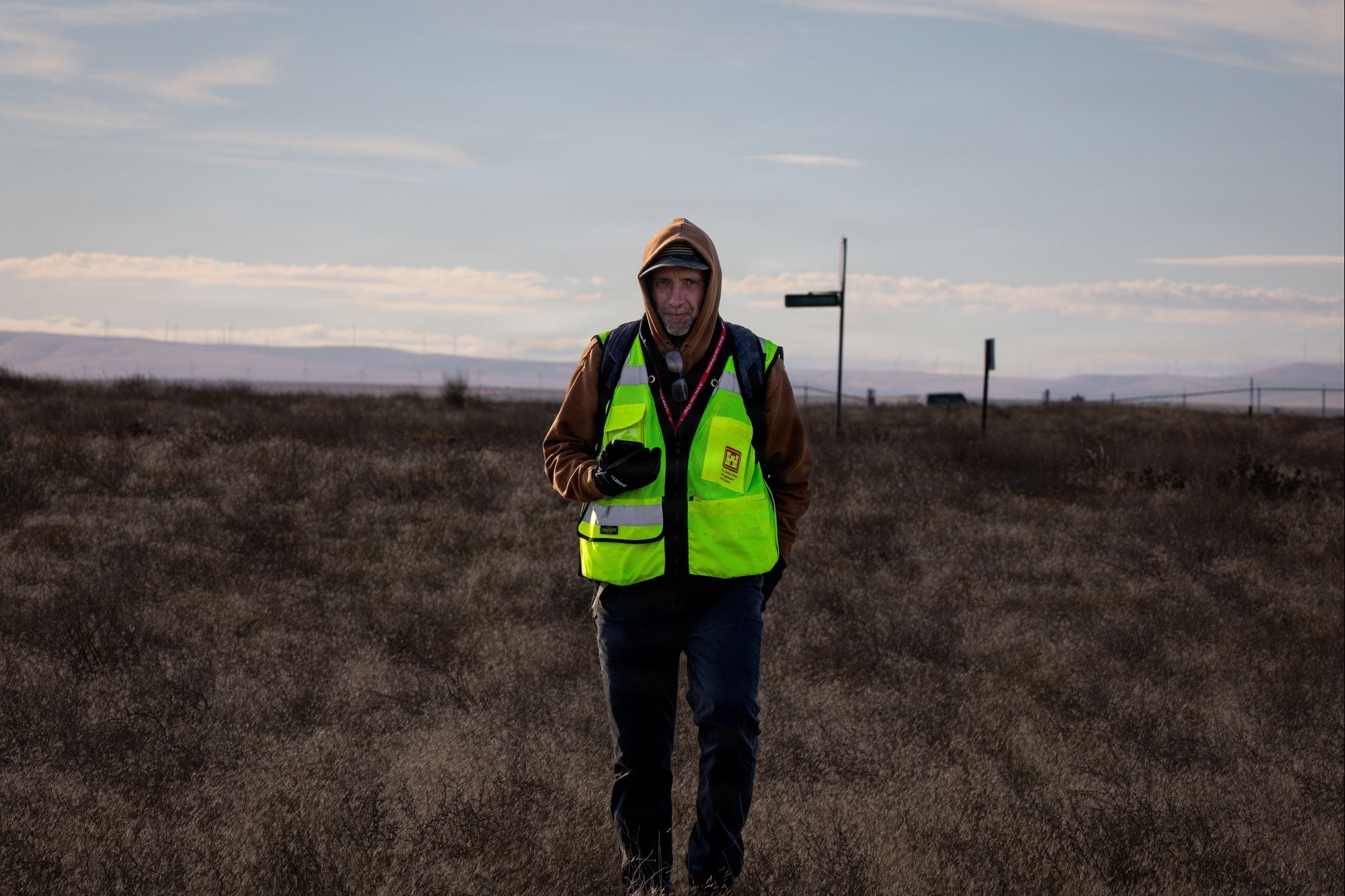
HERMISTON, Ore. — The U.S. Army Corps of Engineers Military Munition Response Program is working to clear a 416-acre swath of property for the Oregon National Guard at the former Umatilla Army Ammunition Depot. The parcel of land had been identified in 2023 as potentially containing unexploded ordnance derived from the destruction of stockpiled munitions at the adjacent demolition range. During this timeframe Ordnance and Explosives Safety Specialist Randy Schneider worked with Mr. Jim Arnold from the Oregon Military Department to calculate the potential distance that munitions may have been ejected from a large-scale demolition event and established an “Eastern Buffer Zone” that would require further investigation to determine the probability of encountering munitions.
A USACE Omaha District team led by Military Munitions Design Center Chief Jason Blair and Ordnance and Explosives Safety Specialist Andrew Goldman conducted a visual surface inspection of the site the week of Nov. 17.
“The hope is that with this inspection, we can give the green light for the Oregon National Guard so that they can further develop this property to better support the war fighter as part of the Rees Training Center,” Blair said.
The Umatilla Army Ordnance Depot was established in 1941 and played a key role in supporting the U.S. war effort during World War II. In 1962, the facility was redesignated as the Umatilla Army Depot and began storing chemical munitions. By 1966, it became known as the Umatilla Chemical Depot and held 12 percent of the nation’s chemical weapons stockpile.

The depot officially closed in 2012 following seven years of cleanup operations.
The Raymond Rees National Guard Training Center supports both individual and collective training for units up to battalion size, or about 300 to 800 Soldiers. The center encompasses roughly 8,000 acres; the addition of the Eastern Buffer Zone would add more than 400 acres for training use.
Cindy LaFore, range operations manager at the training center, was the primary point of contact for the USACE team on the ground and she stated, “We’re really looking forward to getting use of the buffer zone,”
The center is home to the Regional Training Institute, one of only two infantry training schools located west of the Mississippi River, LaFore told the team.
The center holds 80 to 90 days of training exercises every year, LaFore said. Access to the Eastern Buffer Zone as additional training grounds would be a significant benefit.
Before the Eastern Buffer Zone can be classified as a “low probability” area, USACE must determine the presence or absence of potential munition items.
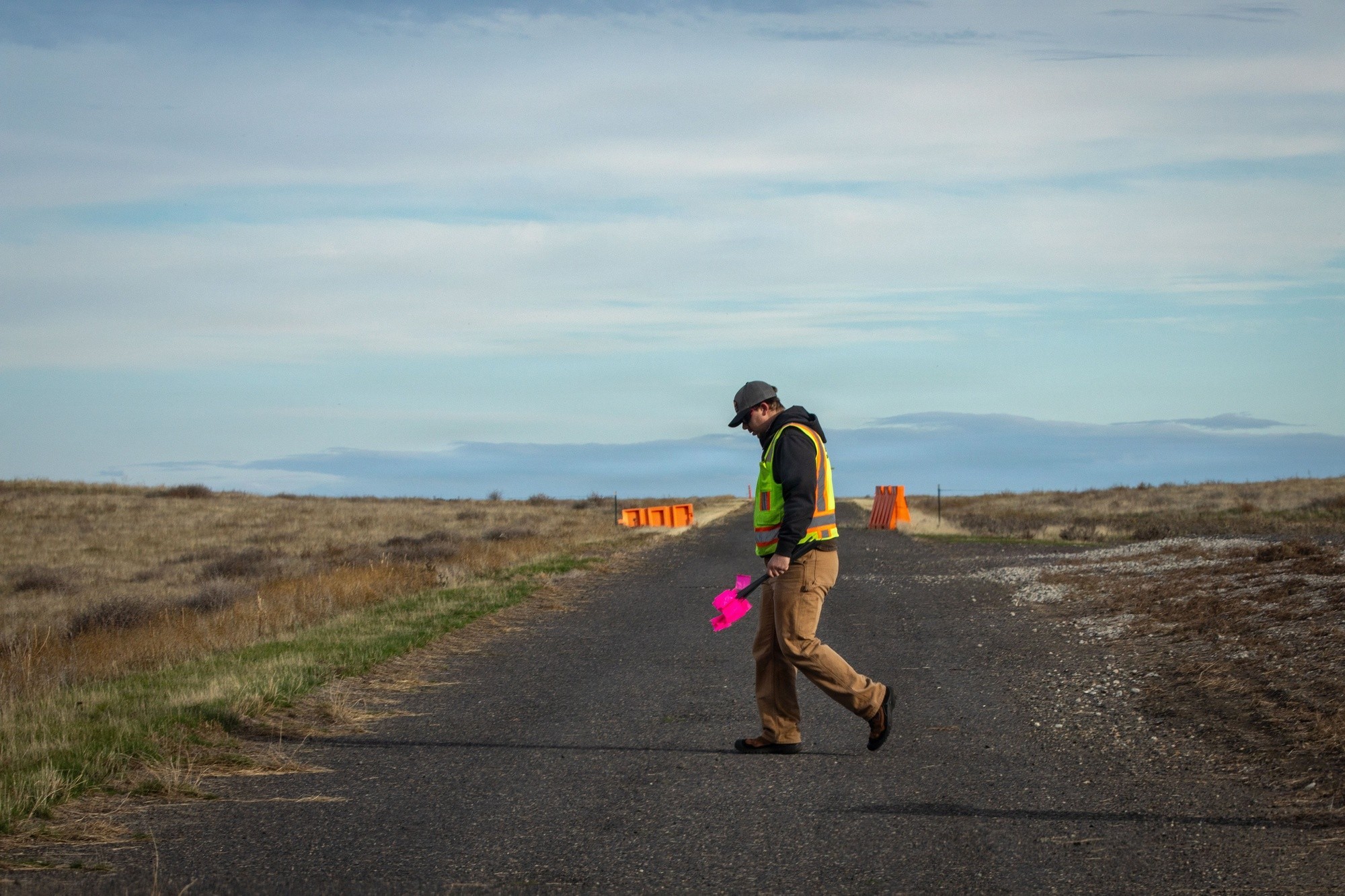
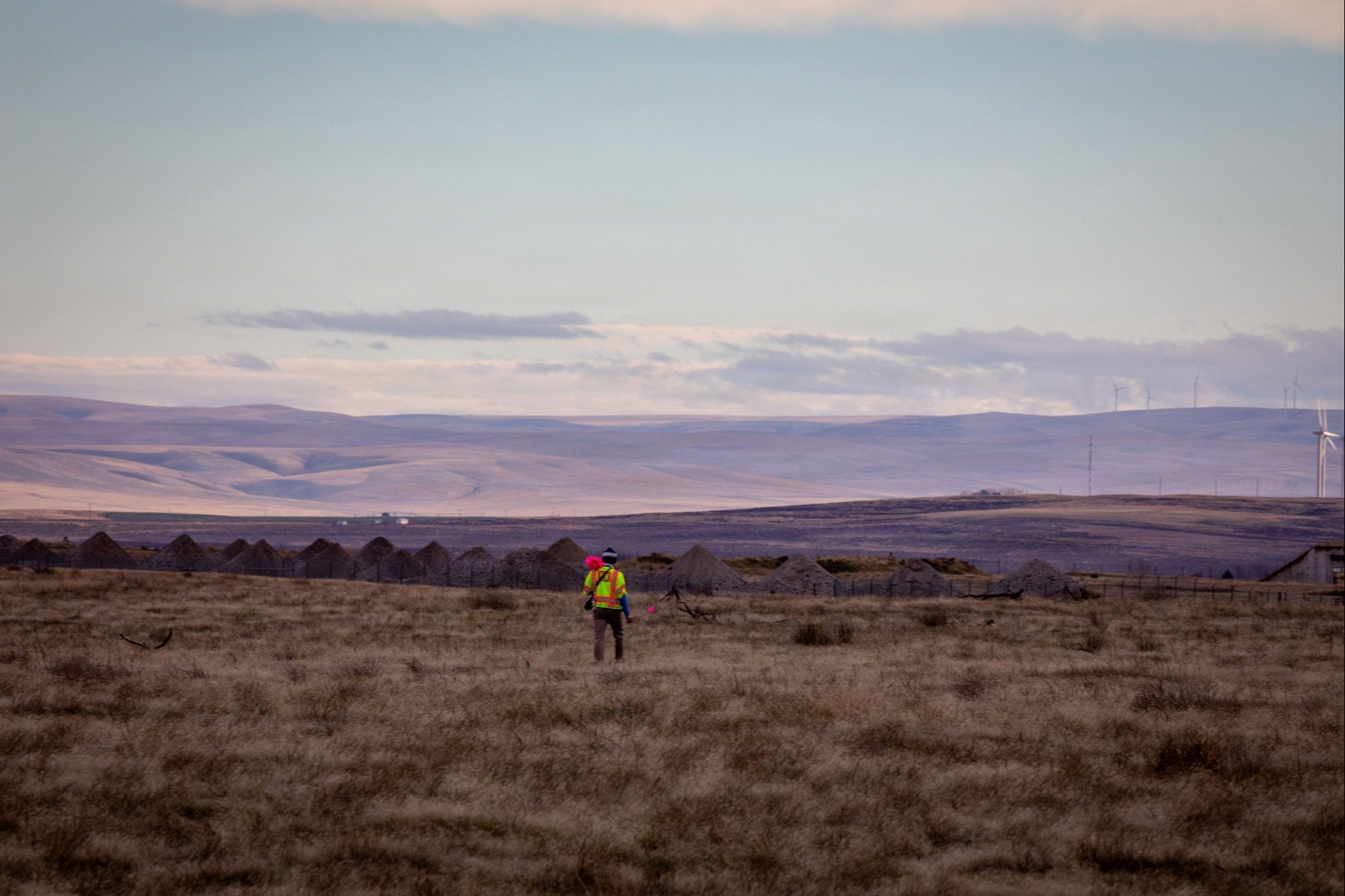
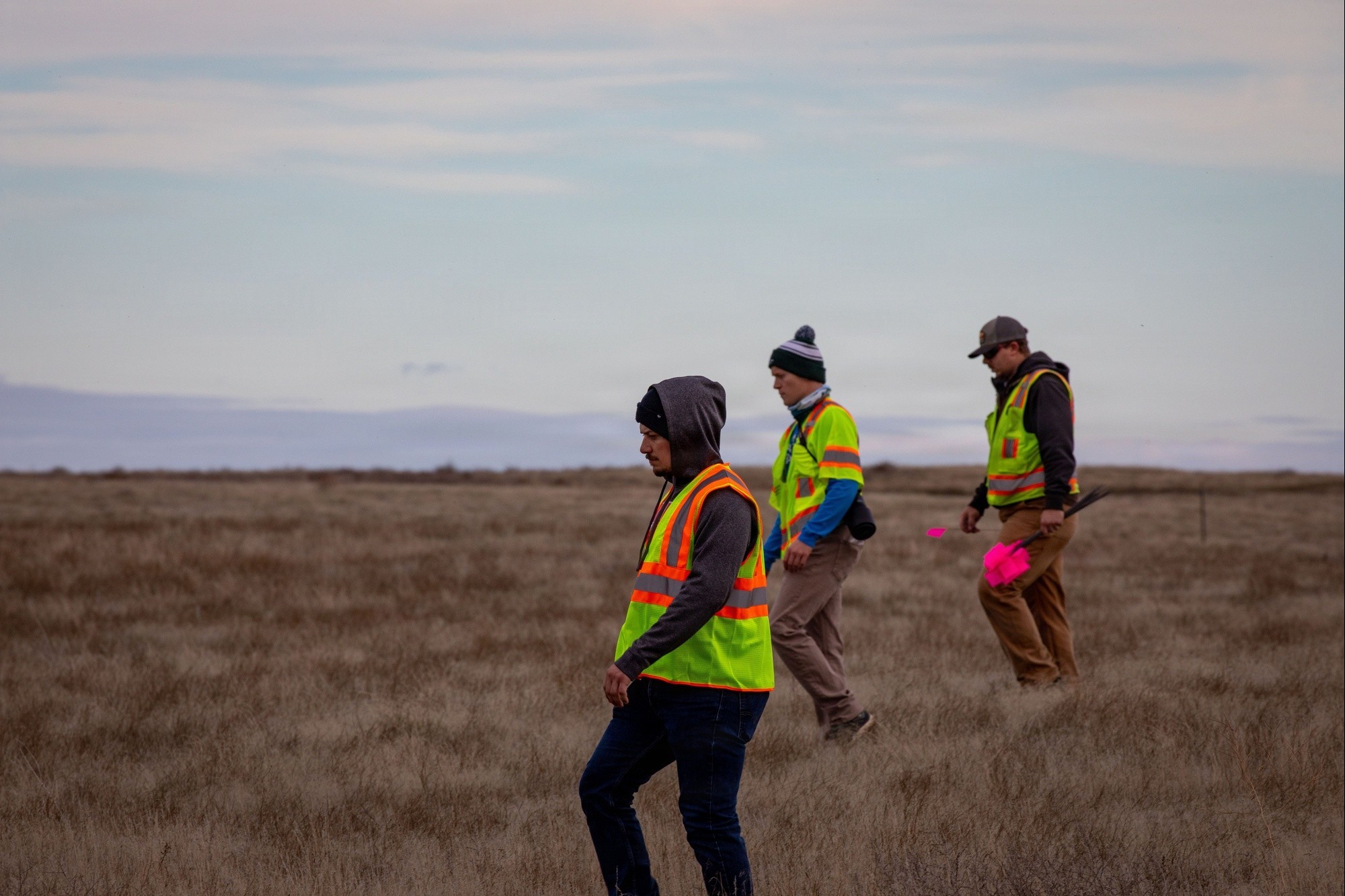
The inspection was performed under the supervision of the USACE Ordinance and Explosives Safety Specialist team and consisted of five personnel assembling in a line formation and safely traversing the work area while inspecting the ground for evidence of use, such as munitions debris or munitions and explosives of concern.
The team included the two technical leads, an additional OESS, a field geophysicist and two field assistants.
Over the course of five days, the team walked in tandem, searching the property in a grid pattern. They covered up to 13 miles daily to inspect the entire 416-acre site.
According to Blair, choosing to do this fieldwork internally with USACE technicians saved over $4 million in contracting costs and rapidly progressed the schedule.
The team found no evidence of munitions debris, or any type of contamination associated with historical activities. Following the survey a Munitions and Explosives of Concern probability assessment will now be generated displaying the low probability of munitions hazards and the property will be handed back over to the Reese Training Center to be utilized for a land navigation course to train current and future Oregon National Guard soldiers.
Social Sharing