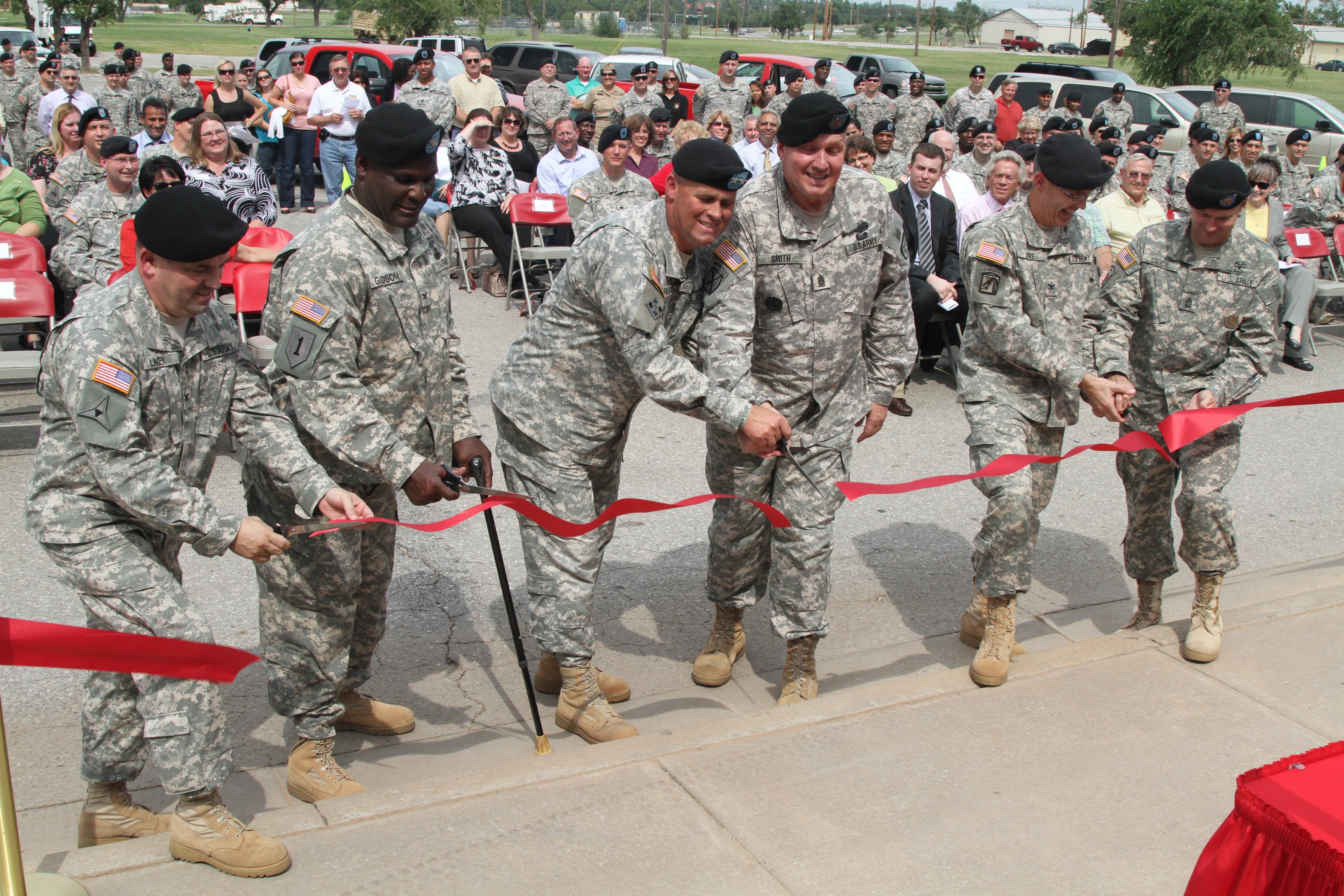
FORT SILL, Okla.-- Col. Greg Gadson arrived at Fort Sill to watch the man who saved his life, 1st Sgt. Frederick Johnson, retire from the Army. Afterward he joined the Lawton-Fort Sill community in celebrating the opening of the Resiliency Training Campus Sept. 18, which will empower Soldiers and others with the tools for life effectiveness through educational and preventive mind, body, and spirit programs.
The new RTC is modeled after one in Fort Hood, Texas, in which existing resources are pulled together in one central location so Soldiers, family members, and retirees can easily access it.
The Fort Sill campus offers more than 200 different services in the buildings on Craig Road, including what was formerly known as the Religious Support Operations Center.
"I think it's a recognition that the Army is really concerned about the resiliency of our Soldiers. We are going through difficult times and it's OK to get help. You've got to help yourself get through it. I didn't get through this by myself," said Gadson.
His presence was a testament to his personal strength as he has overcome an improvised explosive device attack in which he lost both of his legs and the regular use of his right arm and hand while he was deployed in Iraq.
"I was blown from my vehicle at night and he (Johnson) not only had to find me, first he had to realize I was missing and then find me and also had to resuscitate me and begin the evacuation process. I wouldn't be here today if it weren't for him," said Gadson.
Gadson has overcome his personal tragedy even though he doesn't regard it as such.
"Certainly looking back it's not anything easy to go through but I think whatever happens in your life is only relevant to your own experiences. So I would never say what I've been through has been more difficult than anything anyone else has been through," said Gadson.
Now as the Army Wounded Warrior Program director, he will be able to help others who have had similar experiences by sharing how he made it through.
"My faith; my family; my friends have been an integral part of my recovery. It's like any tough thing that you ever do. You just have to focus and believe and fight," said Gadson.
1st Sgt. John Peterson, senior non-commissioned officer on the campus, said Soldiers should first use the web-based global assessment tool to be honest with themselves and discover what areas they may need support in whether it be educational, financial, marital, spiritual etc. Afterward they can request that service through a kiosk or at the coordination center inside the RTC Support Center.
Peterson said they haven't taken away any services that were available before, but more have been added and put into one location for easy access. The setup of the RTC also makes it very convenient to get help as there is scheduled child care, a fitness center, counselors and even a meditation room to be alone with your thoughts.
Peterson added there will be different options for those who want confidentiality and those who want to show their command they're making improvements in areas.
"I want people to come here because they want the help. They can feel comfortable. They can get these skills that they need to be able to grow and be viable members of our society and of our Army," said Fires Center of Excellence and Fort Sill Commanding General Maj. Gen. David Halverson.
Gadson is proof that despite the worst of war Soldiers can overcome. Halverson and other leaders want to ensure Team Sill is resilient and able to get the help they need in any situation.
"We have to not only win on the battlefield but we have to sustain ourselves and be fit to fight back at home," said Halverson.
Social Sharing