

ADM Hyman George Rickover emphasized the importance of logistics when he said, “The art of war is the art of the logistically feasible.” Sustainment operations in the U.S. Indo-Pacific Command (USINDOPACOM) present unique challenges because of the region’s limited infrastructure, vast distances across the Pacific Ocean, and the constant need for multinational cooperation. As we prepare for potential conflict with China, many leaders predict that sustainment will be the most influential factor determining success or failure.
To modernize the force and preparefor large-scale combatoperations (LSCO) in the Indo-Pacific, the Army is transforming forward support companies (FSCs) into combat logistics companies (CLCs) within new light support battalions (LSBs). The CLC has similarpersonnel and equipment capabilities as the FSC, including a distribution platoon, maintenance company, and field feeding section. Their modified table of organization and equipment is being updated to align with the newly structured LSBs and the task forces they directly support, but it still needs major improvements to increase its effectiveness.
I served in the Army’s first CLC, supporting 1st Battalion, 27th Infantry Regiment (1-27 IN BN), 2nd Mobile Brigade, both in garrison and during Joint Pacific Multinational Readiness Center (JPMRC) 25. We had the unique tasking to sustain 1-27 IN BN without any heavy expanded mobility tactical truck (HEMTT) platforms, except for one M984 wrecker, for the entire exercise. Operating under this constraint forced Coyote CLC to move all classes of supply on smaller, more mobile platforms without creating any gaps in support for 1-27 IN BN. My experience in Coyote CLC highlighted USINDOPACOM’s need for lighter and more mobile sustainment without increasing the risk of culmination. To strengthen the Transformation in Contact (TiC) initiative and close the gap between sustainment and the force it supports, the Army must field the Tactical Light Fueler (TLF), Lightweight Water Purification System (LWPS), and lighter vehicles to CLCs to improve sustainment operations in the complex USINDOPACOM.
TLF
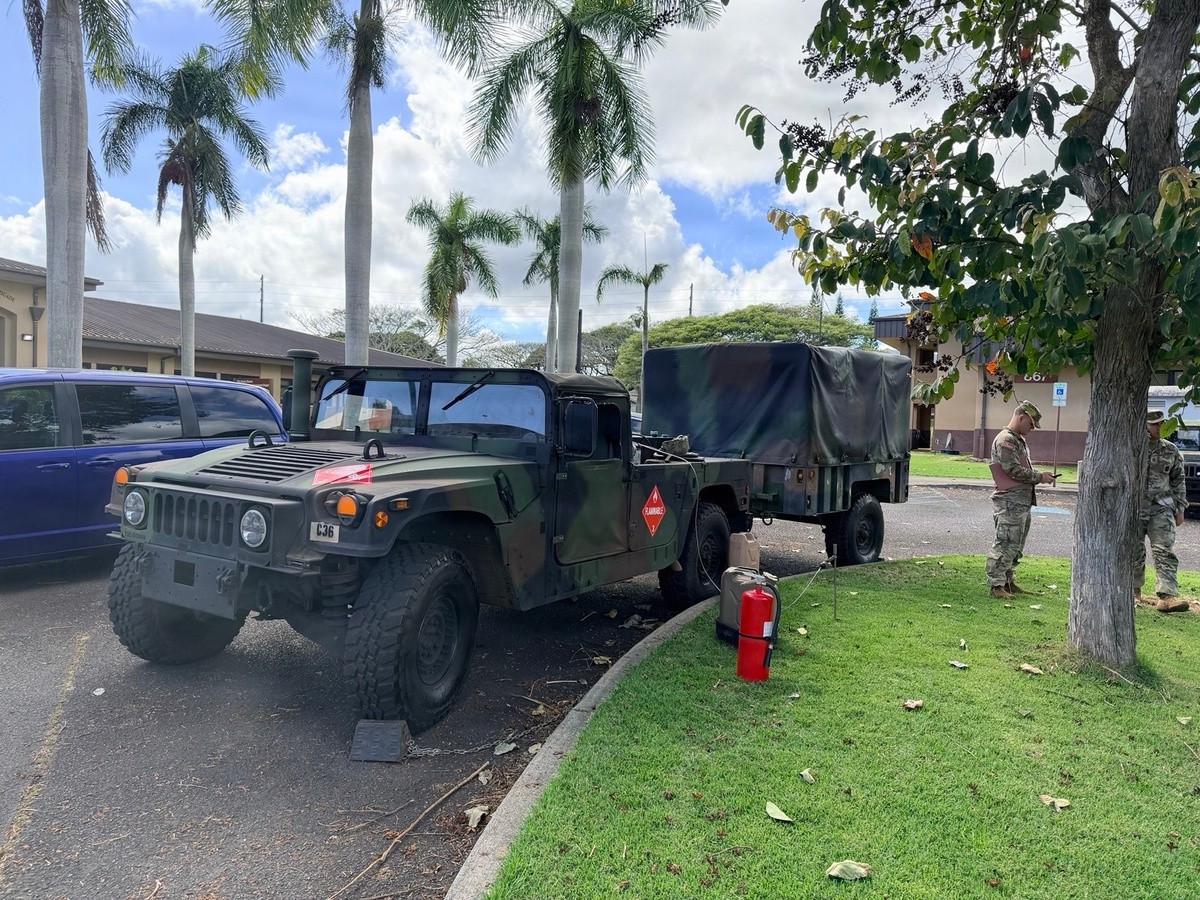
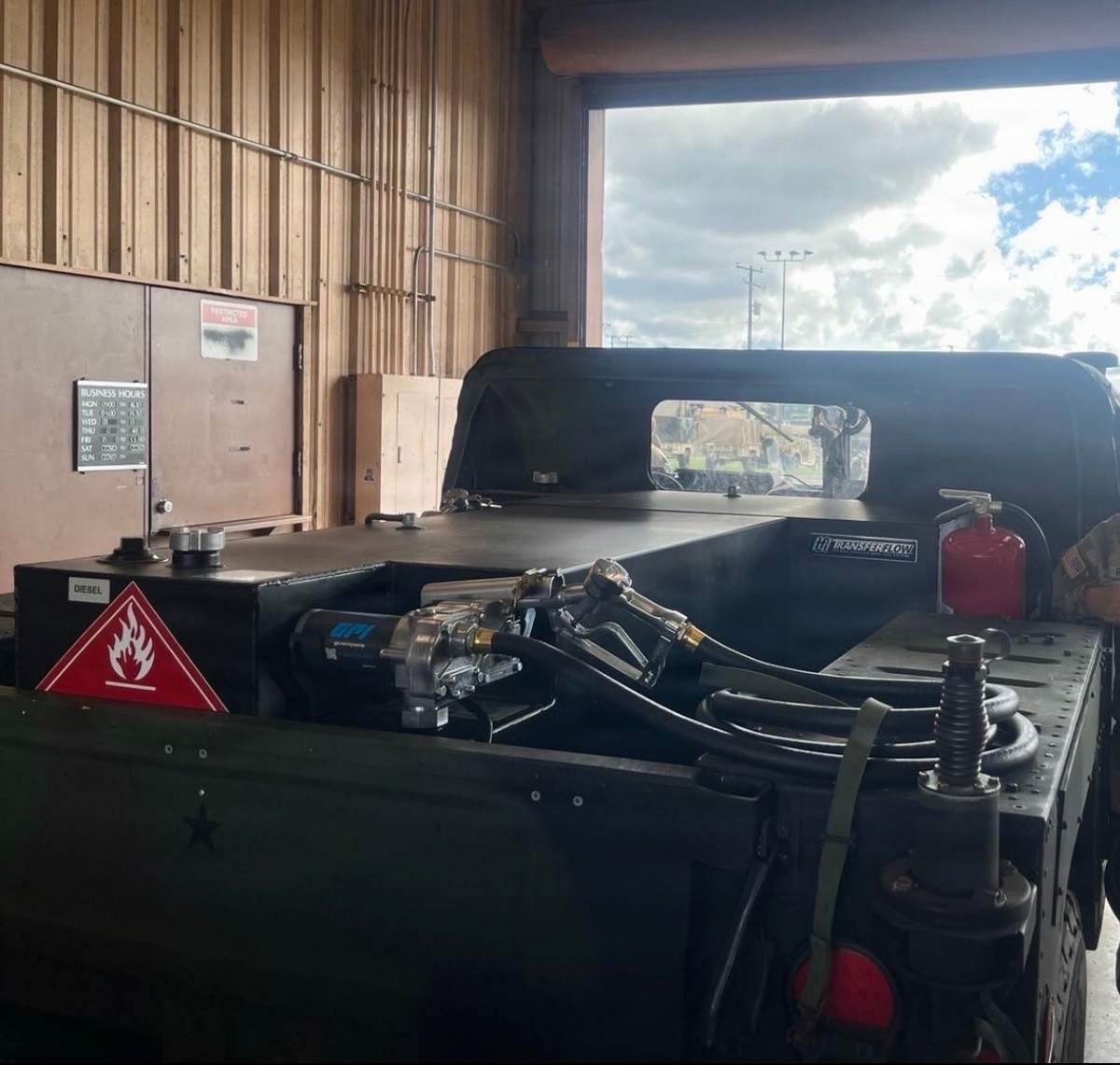
Coyote CLC sustained 1-27 IN BN during JPMRC 25 without any HEMTT platforms except for one M984 wrecker. This requirement led to the invention of the TLF as a replacement for the Modular Fuel System (MFS). The team built the TLF from an M1152 cargo/troop carrier, three 100-gallon fuel drums,and a blast shield to protect the Soldiers operatingthe vehicle. CW2 Noe Aleman and SGT Ronald Rodriguez from Coyote CLC’s maintenance platoon led the effort to design and refine this new fueler, spending the months before JPMRC preparing it to support a battalion’s fleet of Infantry Squad Vehicles (ISVs), Humvees, and Light Medium Tactical Vehicles (LMTVs). The TLF carries 425 gallons of fuel, consisting of three 100-gallon tanks and 25 five-gallon fuel cans, compared to the MFS’s 2,500-gallon capacity.
COL Christopher D. Johnson, the former 25th Division Sustainment Brigade commander, noted that during the first JPMRC rotation with ISVs, A Company distributed only 2,700 gallons of fuel as opposed to 45,000 gallons the previous year. Because of this significantly lower consumption rate, Coyote CLC successfully sustained 1-27 IN BN with the TLF. A combination of fuel-can swaps at preplanned cache sites and refuel-on-the-move operations kept 1-27 IN BN ready for continuous operations. In addition, its smaller profile allowed CoyoteCLC to maneuver to remote logisticsrelease points (LRPs)and conceal the platform in Oahu’s jungle terrain.
Modern drone warfare has made sustainment a vulnerable and decisive target,and the abilityto conceal our sustainment assetsallows our maneuverforces to remain in the fight. Recent conflicts have shown that disrupting sustainment operations has a more decisive effect on combat power than engaging with maneuver forces directly. In the modern fight, survivability now matters as much as capacity. Because fuel consumptionrates are considerably lower, we can scale down the platforms that need support. Water consumption, however, remainshigh in the Indo-Pacific’s heat, creating a sustainment problemthat cannot be solved by fielding smaller vehicles.
LWPS
Soldiers in USINDOPACOM consumelarge amounts of water to stay hydratedin the region’s heat and humidity. Without the ability to employ Hippos, Coyote CLC relied on alternate sustainment methods. During JPMRC 25, the company used water-can swaps at cache sites and refilled Water Buffalos using CAMELs to prevent any gaps in support. While these methods worked, Coyote CLC relied on frequent resupplies from the brigade support area (BSA) because of its small internal capacity. An LWPS would further increase flexibility by allowing Coyote CLC to filter their own water for extended periods without relying on the BSA for continuous resupply.
While LWPS can reduce the amount of water resupplies from the BSA to the CLC, they are not practical for maneuver units to operate independently. In USINDOPACOM, units are often dispersed and constantly displacing. The LWPS would add unnecessary vulnerability to the maneuver unit in an already complex tacticalenvironment. While the LWPS is impractical to employ at the maneuver unit level, it has a small enough footprint to make it an asset in the CLC without sacrificing combat power or survivability.
The LWPS can purify up to 125 gallons per hour (GPH) of fresh water (75 GPH of salt water), can operate 20 hours per day, and can be transported by two Soldiers. Its small frame can be transported in a Humvee, and its adaptable configuration allows units to adjust quickly to changing tactical environments. Its six optional additional attachments expand its capability for cold weather; ocean intake; nuclear, biological, and chemical survivability; and other mission requirements. They have immense power versatility and can be operated with multi-fuel or electric engines. These systems are easy to learn and would significantly increase the independence of maneuver units.
In USINDOPACOM, water remains a constant necessity. Enabling CLC units to partially sustain themselves and their maneuver unit would strengthen their lethality during LSCO. To successfully provide LWPS to the CLCs, proper training and maintenance are imperative to ensure effective use. As lighter platforms for waterand fuel sustainment become more viable,the requirement for large HEMTT platforms decreases, reinforcing the need to modernize and lighten the sustainment fleet.
Lighter Vehicles
HEMTT platforms, particularly the M1120 Load Handling System, have supported Army sustainment operations for decades. As mobile brigades field ISVs, sustainment platforms must evolve to match the maneuver fleet’s mobility. CLCs need lighter systems such as Humvees, flatbed LMTVs, and ISVs instead of traditional HEMTT platforms. Humvees support TLF configurations; LMTVs carry palletized classes of supply; and ISVs transport sustainment Soldiers. ISVs enable infantry units to push deeper into remote terrain where HEMTT platforms cannot follow. During JPMRC 25, Coyote CLC could not have executed critical cache missions or LRPs with HEMTTs due to theirsize, limited mobility, and inability to traverse deep jungle routes. In addition to the size and immobility, HEMTT platforms are loud and easily detectable, increasing operational risk.
It is undoubtably expensive to field new vehicles to CLCs. However, the repair parts on lighter vehicles are significantly cheaper, and the engine compartments are more accessible, making on-the-spot repairs more feasible in comparison to HEMTT platforms. Modern drone warfare has made logistics the primary target set. Continuing to employ large equipment increases the likelihood that enablers will be targeted and destroyed. In addition, the sole reliance on preplanned LRPs creates targetable patterns, allowing the enemy to know where sustainment will be and when. Employing caches degrades that predictability and reduces the massing of vehicles. Caches support a dispersed and constantly displacing fight where maneuver units can resupply themselves as the battlefield allows. The modern fight demands leaders that are willing to innovate and adapt. Relianceon old methods creates vulnerabilities that the enemy can and will exploit. To keep pace with mobile brigades, the next essential step in TiC is modernizing the sustainment fleet to align with the Army’s light mobileplatforms.
Conclusion
The Indo-Pacific region requires lighter and more mobile sustainment systems to keep pace with the rapidly transforming mobile brigades. In a dispersed operational environment, plagued with drone strikes and the absenceof secure rear areas, innovation is now an operational requirement. The transformation of FSCs to CLCs is just the beginning of the necessary sustainment modernization. CLCs need the TLF, LWPS, and lighter vehicles to strengthen the TiC initiative. With these capabilities in place, sustainment forces will be positioned to support maneuver units effectively and maintain operational reach across the Pacific.
--------------------
1LT Alexis LeBlanc is currently a student in the Logistics Captains Career Course at Army Sustainment University on Fort Lee, Virginia. She was previously stationed at Schofield Barracks, Hawaii. She served in 25th Infantry Division as a combat logistics platoon leader during Transformation in Contact (TiC) in 2024 and as a combat logistics company executive officer during TiC 2.0 in 2025. She is a graduate of the Basic Officer Leaders Course and has Bachelor of Arts degrees in political science and criminology from Louisiana State University. She is pursuing a Master of Business Administration degree in finance from Louisiana State University Shreveport and will graduate in August 2026.
--------------------
This article was published in the summer 2026 edition of Army Sustainment Professional Bulletin.
RELATED LINKS
Army Sustainment on Line of Departure
-------------------------------------------------------------------------------------------
Social Sharing