

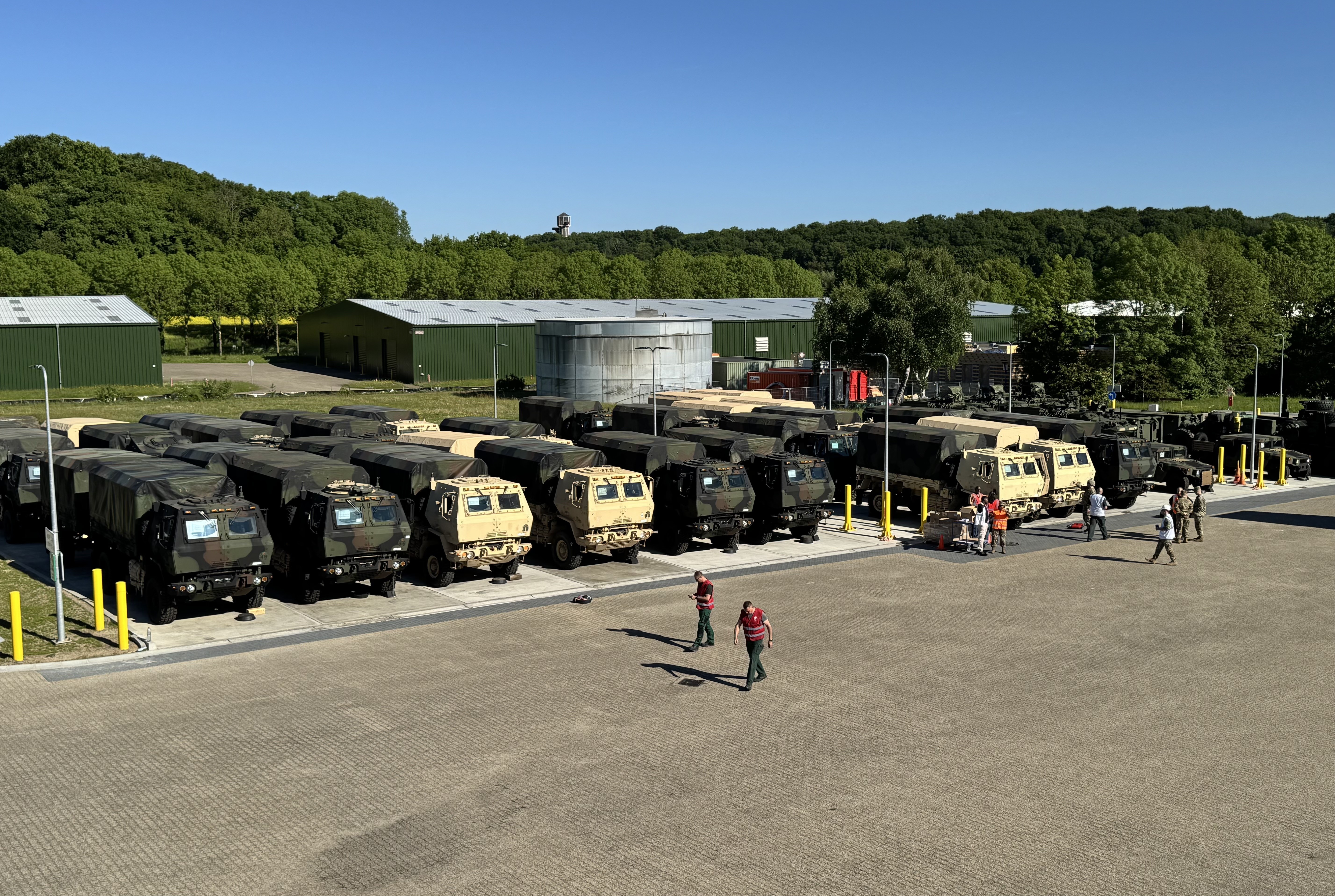

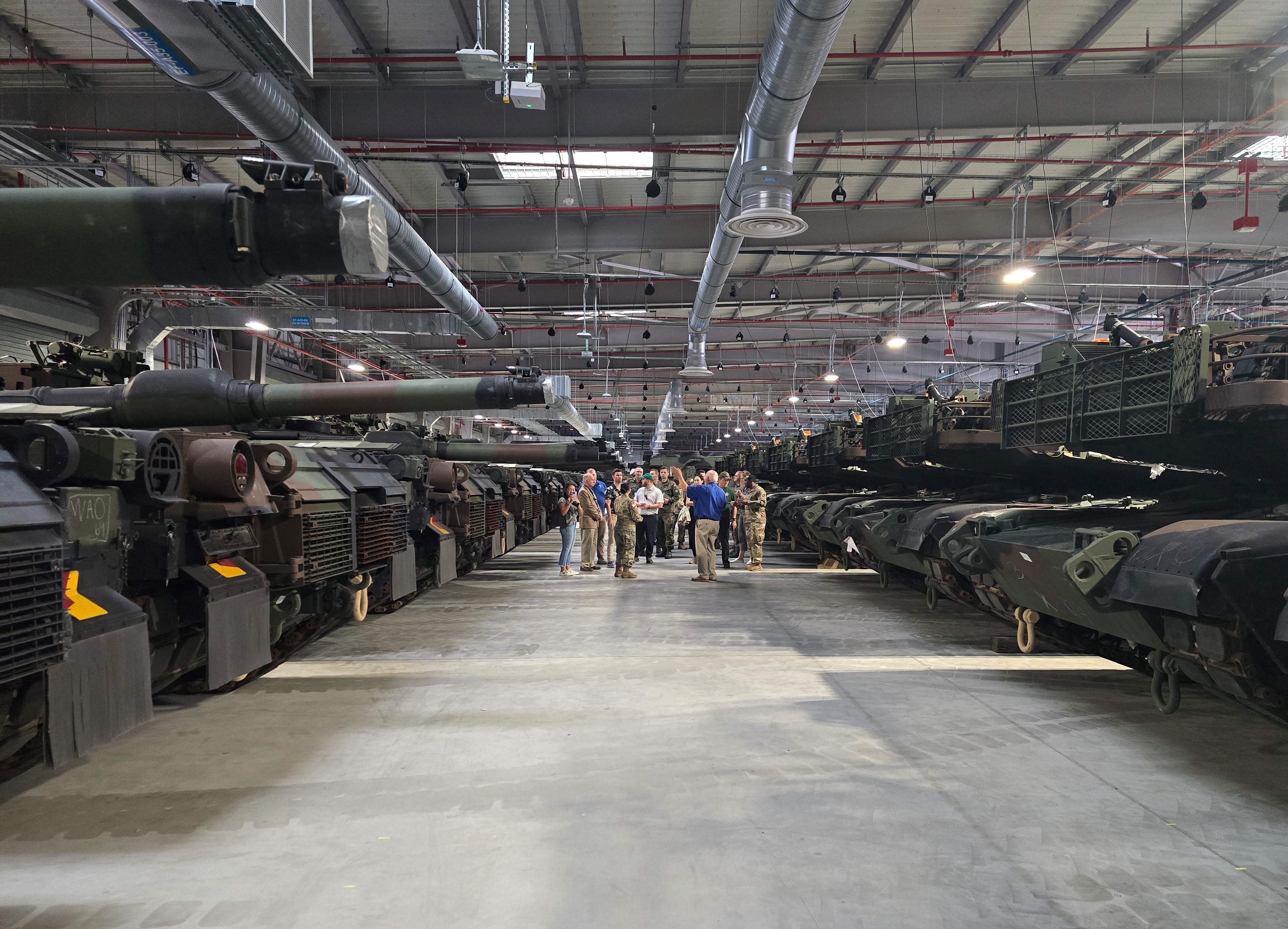


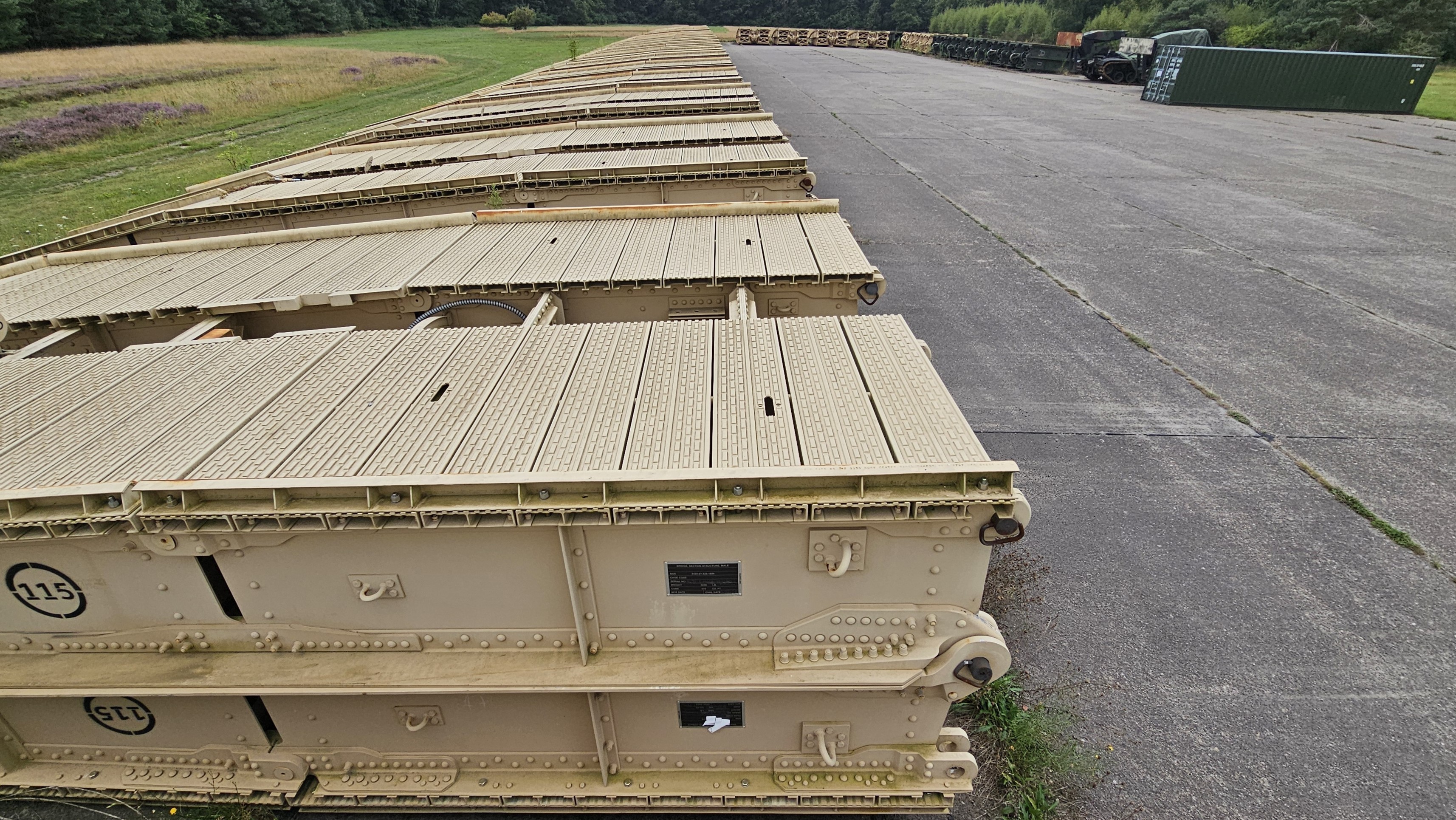
Since before the Cold War, the U.S. has sought to support our partners and allies in Europe. We have accomplished this through the forward stationing of units in virtually every corner of the continent. These formations have provided tactical and strategic capabilities for the combatant commanders and political decision makers to leverage. As the adage goes, “If you want peace, prepare for war.” How does the U.S. Army support its European allies for large-scale combat operations (LSCO) while being geographically separated by an ocean and after a decade of troop reductions? The Army’s answer is Army prepositioned stocks (APS)-2 Europe.
Background
The implementation of rotational, regionally aligned forces into Europe is part of the Army’s ability to maintain a presence without adding permanently stationed formations. These rotational forces have provided considerable reassurance of the U.S. commitment to supporting NATO. As seen with Russia’s incursion and subsequent war with Ukraine, the U.S. Army Europe and Africa (USAREUR-AF) responded accordingly, and through XVIII Airborne Corps and V Corps quickly strengthened the eastern border. XVIII Airborne Corps and V Corps provided impressive support forces stationed in theater. Within days, Soldiers were flown in from their home stations in the U.S. However, should the conflict continue to escalate, it would still take the Army a considerable amount of time to reinforce those forces in Europe with conventional forces to match any Russian armor and mechanized forces. How would the Army, through USAREUR-AF, reinforce with a sufficient combat-credible force to match Russia’s significant military might?
APS
To support LSCO activities, in 2015 the Army transferred the existing European Activity Set into APS, designated in the European theater as APS-2. The foundation of the APS program derived from the storing of equipment in Western Europe to deter a Soviet invasion during the Cold War. The program evolved over the years and was first designated as the Army Combat Equipment Group-Europe (CEG-E), before transitioning into APS. APS leverages a work force of active-duty Soldiers and Army civilians to provide this break glass in case of war.
Today’s APS-2 footprint provides the Army and USAREUR-AF with a strategic reserve of two armored brigade combat teams (ABCTs), a fires brigade, a sustainment brigade, a division headquarters, and multiple specialty operational projects strategically placed at six sites across Europe. Under the U.S. Army Materiel Command (AMC) and U.S. Army Sustainment Command (ASC), the 405th Army Field Support Brigade (AFSB) administers the combat readiness of a significant tool for deterring or reinforcing LSCO across the continent.
APS vs. TPE
Those who have used U.S. Central Command theater-provided equipment (TPE) know the value of having a fleet waiting for troops to hit the ground and start operations. TPE provides everything from vehicles to generators. The difference between APS and TPE is who owns the property and what it is designed to do. While TPE was quickly passed between rotating units, APS is designed to be handed off to a force deploying into theater to provide a combat-credible force capable of responding quickly and at scale. APS equipment is diligently serviced, stored, and maintained at a high operational readiness (OR) rate, so when the decision is made to deploy, it is ready for the front lines. To maintain such high rates of readiness, AMC and ASC provide technical direction, specifically Technical Manual 38-470, Storage and Maintenance of Army Prepositioned Stock Materiel. With sufficient humidity-controlled storage, these supplies can be maintained for four years in storage with an appropriate exercise cycle to ensure a strategic capability can be put in the hands of the warfighter with confidence.
Building Readiness with the Host Nation
Several 405th AFSB APS Army field support battalions (AFSBns) employ significant host-nation labor forces to supplement the battalion’s small active-duty Army and civilian staff. This is accomplished through a partnership with a host nation’s ministry of defense (MoD) to provide a labor force or establishment of a direct-hire labor force, which in turn creates a generational capability that allows for the service, accountability, and maintenance of the equipment to continue at a steady pace.
Some host-nation employees began their relationship with the U.S. Army working for the CEG-E, providing decades of continuity. Having Dutch, Italian, Polish, or Belgian workers start at these sites at the entry level, and become foremen and supervisors, results in a connection to the community that a rotating force would not be able to maintain. While the Army leadership continues to keep the formation on track with modernization, readiness standards, and property accountability, a work force of host-nation mechanics, supply technicians, and other subject matter experts enables a continuity of effort that is difficult to maintain otherwise.
Impact on Strategic Decision Making
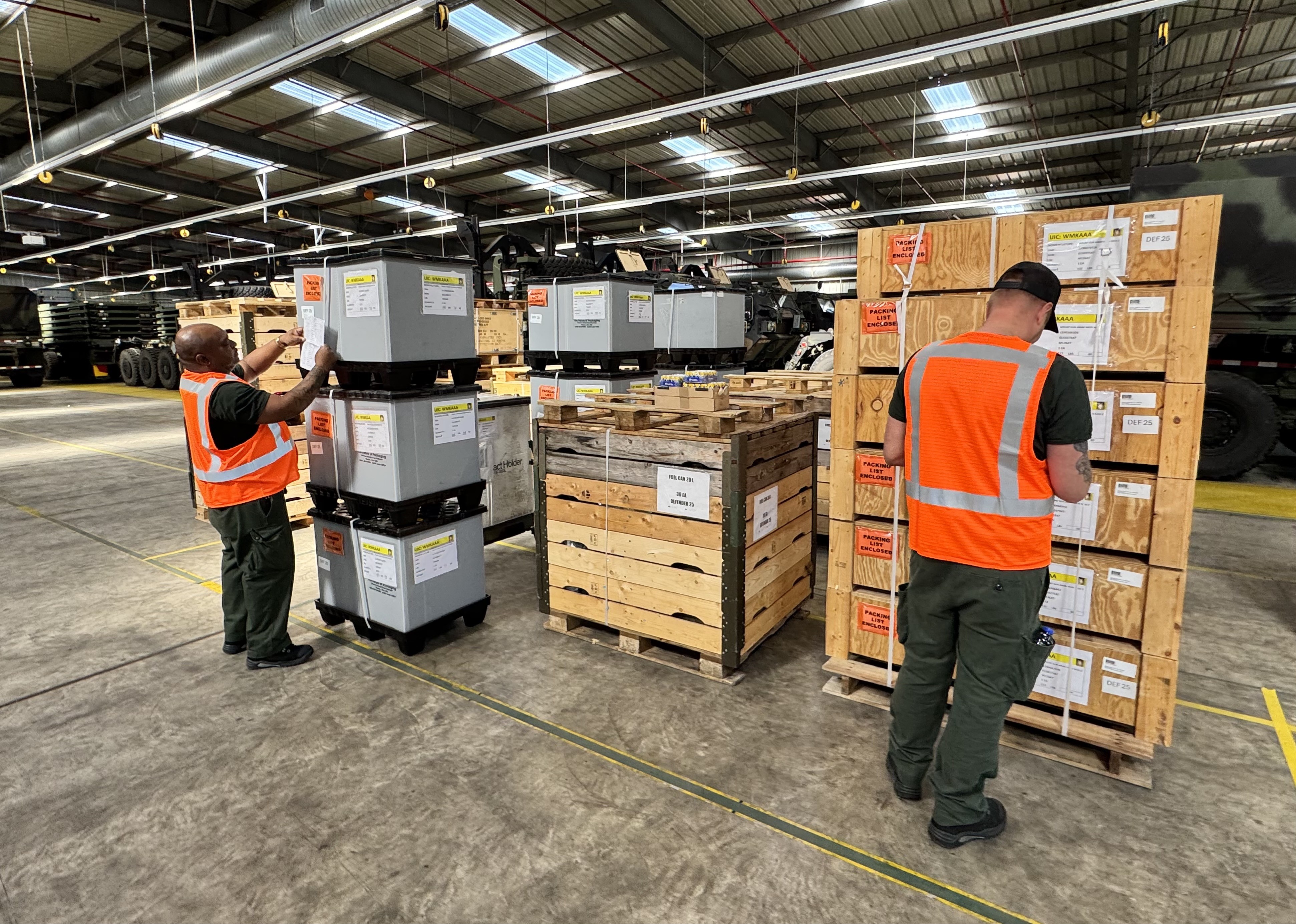
What does APS-2 do for the combat commander and the strategic decisions made in Europe? Most notably, deploying Army units are not waiting 30 to 45 days for a boat to be loaded with home-station equipment, sailed across the Atlantic Ocean, offloaded at a port, moved over land to its destination, and then married up with the Soldiers. Moreover, that is assuming a boat is available at the port, and that the unit has fully prepared their deployment manifest and deployment list. For example, during the USAREUR-AF’s Dynamic Employment of Forces to Europe for NATO Deterrence and Enhanced Readiness (DEFENDER) 25 exercise, a unit identification code (UIC) of APS equipment was issued to a small element of the receiving unit at the storage site in the Netherlands. Within three days the complete UIC arrived at the training area in Greece.
DEFENDER is the Army’s largest annual opportunity to exercise intermodal movement of personnel and equipment into theater for initial and follow-on operations critical to LSCO. Led by USAREUR-AF, the exercise focuses on the strategic deployment of continental U.S. (CONUS)-based forces, employment of APS, and follow-on exercises, demonstrating lethality and interoperability with allies and partners.
An additional strategic impact is the flexibility to conduct that same deployment and the associated negotiating power. The Army articulates the rapid mobility of combat power by activating APS equipment through its declared annual exercises, without escalating political negotiations, physically moving units, or placing Soldiers in harm’s way. This showcases the speed and lethality of U.S. military options.
For Army logisticians who are acutely aware of both manpower and financial costs, APS provides a cost-effective way to preserve OR. As an example, to maintain an ABCT worth of equipment, you need the full might of a support battalion with their field support companies, an investment of Soldier labor best kept in the field. By contrast, the APS AFSBn strength is modest, with manpower typically fewer than 15 Soldiers and 40 civilians, but supplemented by a host-nation team, a considerable tradeoff when we look at total Army manpower versus the capability gained.
Continuing to Provide Value Beyond Initial Concept
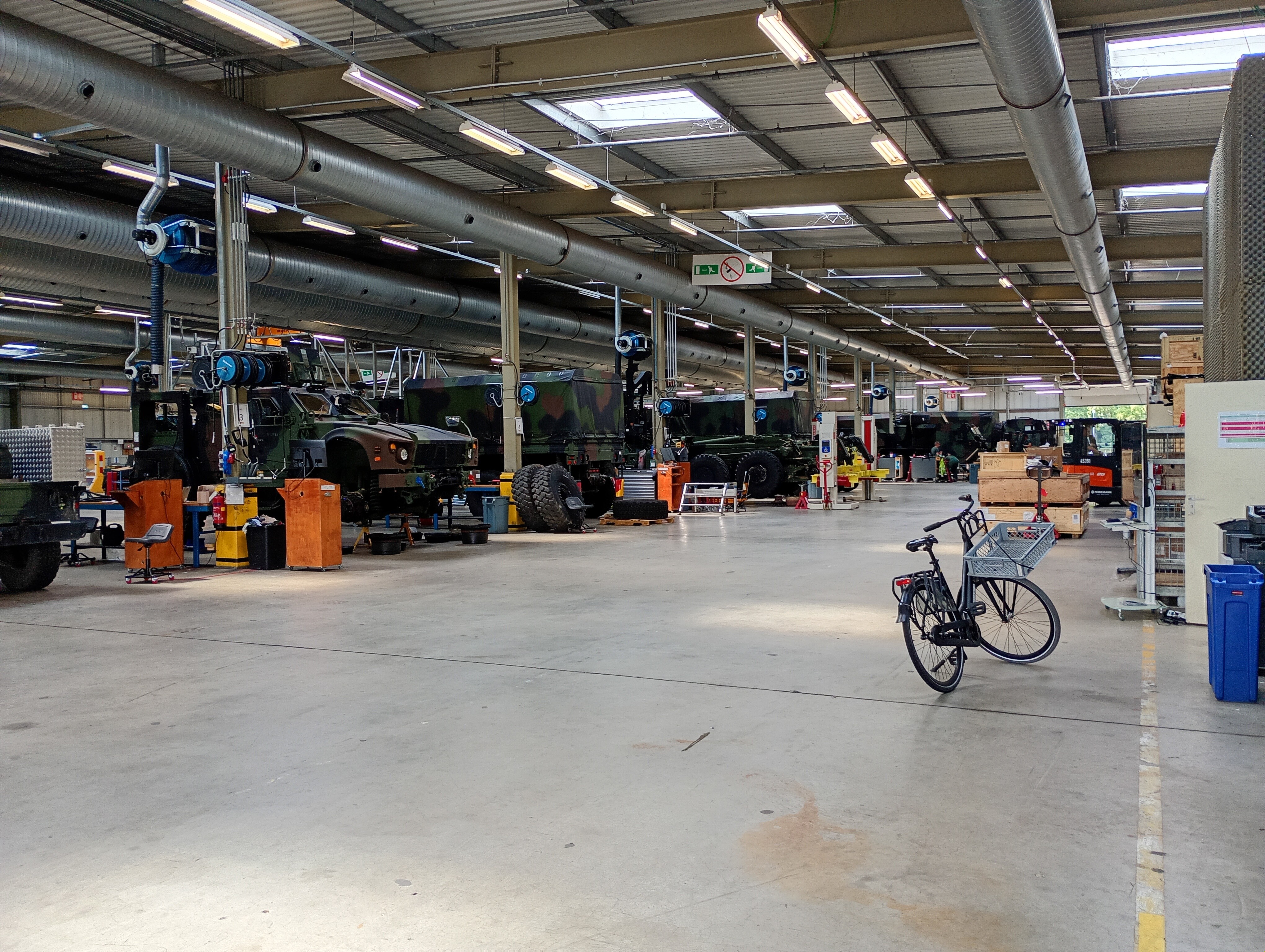
While APS-2 is designed to support the Army during conventional, contingency, or exercise operations, the APS sites themselves are of tremendous value. Once the barns are empty, the theater is left with substantial facilities that provide flexibility for the sustainment of the force in contact. Using the AFSBn Benelux site at Zutendaal, Belgium, as an example, the base has a maintenance capacity of 27 bays with 28 humidity-controlled warehouses for approximately 80,000 square meters, with approximately 500,000 square meters of outdoor parking/staging space. Once the UICs deploy in support of the missions, these facilities can then be reused as part of the larger theater sustainment plan. Having the capability to conduct maintenance just short of a depot-level standard is perfect to facilitate rear-area support.
This substantial space can also be used for more than just maintenance operations. These same warehouses can be used to stage theater-wide reception, staging, and onward movement (RSOM) of follow-on forces. Equipment and/or manpower being brought from CONUS can be consolidated in a secured and permissible area, before being transported closer to the decisive point of action. This was a valuable lesson learned from Desert Shield and Desert Storm, with the massing of combat power well outside of the enemy’s known indirect fire capabilities.
APS-2 sites at AFSBn Poland and AFSBn Africa are equally well situated geographically to provide RSOM and maintenance support. AFSBn Poland provides a location close to the eastern side of Europe that could be used as a recovery site for battle loss and battle damage. A new sprawling facility with a deep partnership with the Polish MoD, it provides a secure location with a maintenance focus on combat platforms. AFSBn Africa has immediate access to rail, a large seaport, and a military airport, providing substantial multi-mobile capabilities to conduct RSOM operations for CONUS based forces.
Conclusion
While most Army logisticians have considerable tactical and operational experience, we must look at theater capabilities holistically at a grand geographic scale. It is incumbent on all logisticians to consider and provide options for how we build readiness and bring value beyond our initial mission. Conducting LSCO in the European theater will require integration at scale geographically to overcome the obstacles of time, space, and financial constraints. The Army’s APS program is a great example of building readiness for the theater in support of LSCO, but it also provides opportunities to go beyond the initial intent and to best use the resources at hand to maintain that readiness beyond the start of a conflict.
--------------------
LTC George Horne is the commander of Army Field Support Battalion-Benelux in the Netherlands. Between 2007 and 2018, he deployed four times to Iraq and Afghanistan, serving in an assortment of positions. Prior to command, he served as the lead planner for U.S. Army Europe and Africa’s G37 for large-scale global exercises and with Security Assistance Group-Ukraine as the lead base operating support-integrator. He has a Master of Science degree in logistics and supply chain management from the University of Kansas.
--------------------
This article was published in conjunction with the fall 2025 issue of Army Sustainment.
RELATED LINKS
The Current issue of Army Sustainment in pdf format
Current Army Sustainment Online Articles
Connect with Army Sustainment on LinkedIn
Connect with Army Sustainment on Facebook
---------------------------------------------------------------------------------------------------------------
Social Sharing