1 / 23
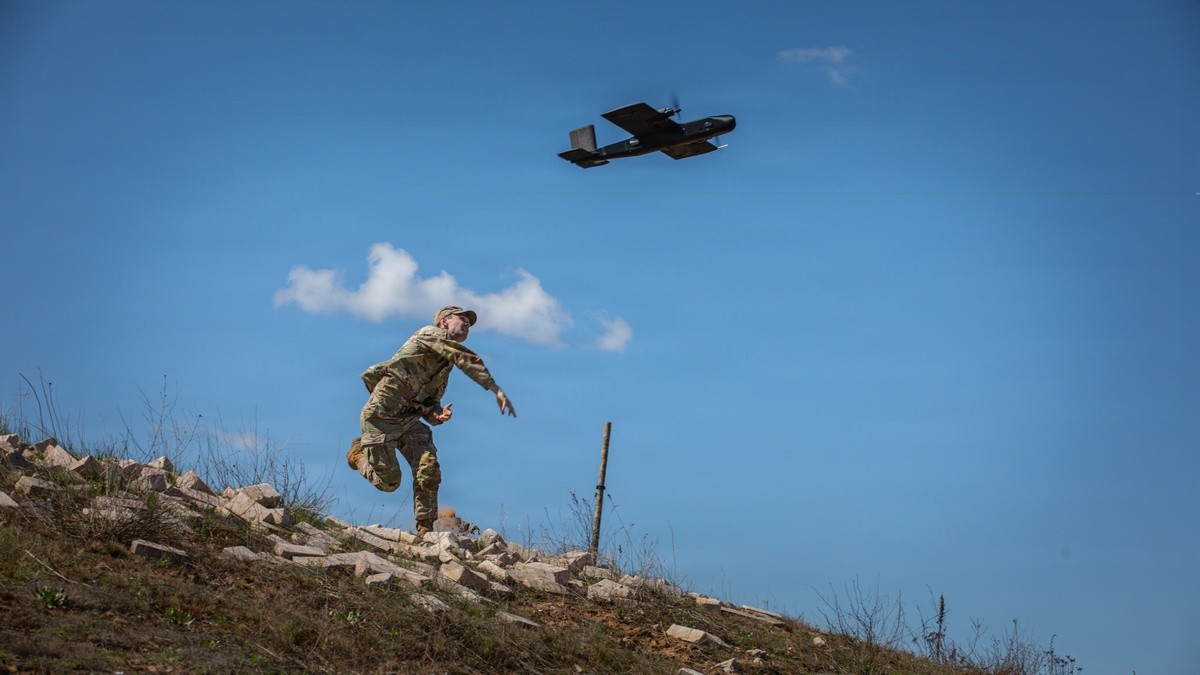
U.S. Army Sgt. Todd Kelly, a squadron master trainer assigned to 2nd Squadron, 2nd Cavalry Regiment, hand-launches a Peregrine one-way attack unmanned aerial system during Project Flytrap at Pabradė Training Area, Lithuania, May 15, 2026. One-way attack unmanned aerial systems are expendable platforms designed to strike targets by navigating directly to pre-programmed coordinates, providing ground forces with a low-cost offensive strike capability on the modern battlefield. From April 27 to May 31, 2026, U.S. and Allied forces will conduct Project Flytrap as part of a series of linked exercises, including Sword 26, Saber Strike, Immediate Response, and Swift Response, which transform experimentation into capability. During Project Flytrap, Soldiers integrate counter-unmanned systems, AI-enabled command and control, and live data networks to move faster, decide faster, and fight more effectively across all domains.
(U.S. Army photo by Sgt. Max Elliott)
(Photo Credit: Sgt. Max Elliott)View original2 / 23
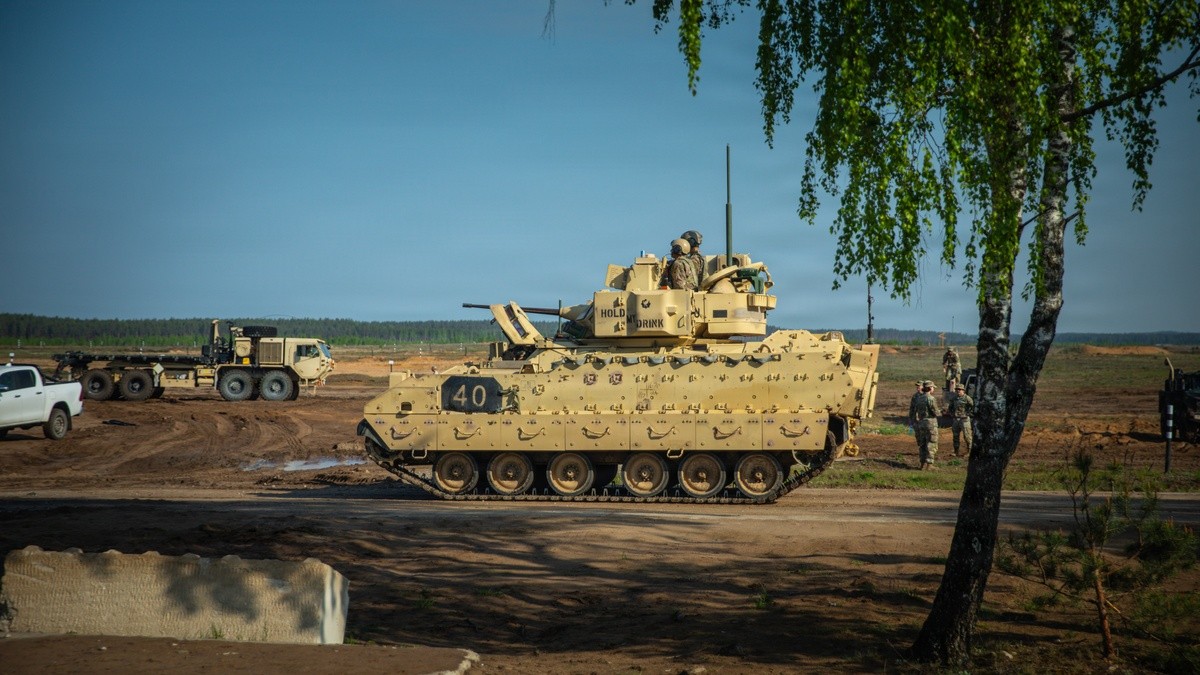
An M2A3 Bradley Infantry Fighting Vehicle assigned to 6th Squadron, 1st Cavalry Regiment moves toward a range to conduct counter-unmanned aerial system technology testing during Project Flytrap at Pabradė Training Area, Lithuania, May 14, 2026. The Bradley, armed with the M242 25mm Bushmaster chain gun, represents one of the Army's most versatile ground platforms now being evaluated for its effectiveness against low-flying unmanned aerial threats on the modern battlefield. From April 27 to May 31, 2026, U.S. and Allied forces will conduct Project Flytrap as part of a series of linked exercises, including Sword 26, Saber Strike, Immediate Response, and Swift Response, which transform experimentation into capability. During Project Flytrap, Soldiers integrate counter-unmanned systems, AI-enabled command and control, and live data networks to move faster, decide faster, and fight more effectively across all domains.
(U.S. Army photo by Sgt. Max Elliott)
(Photo Credit: Sgt. Max Elliott)View original3 / 23
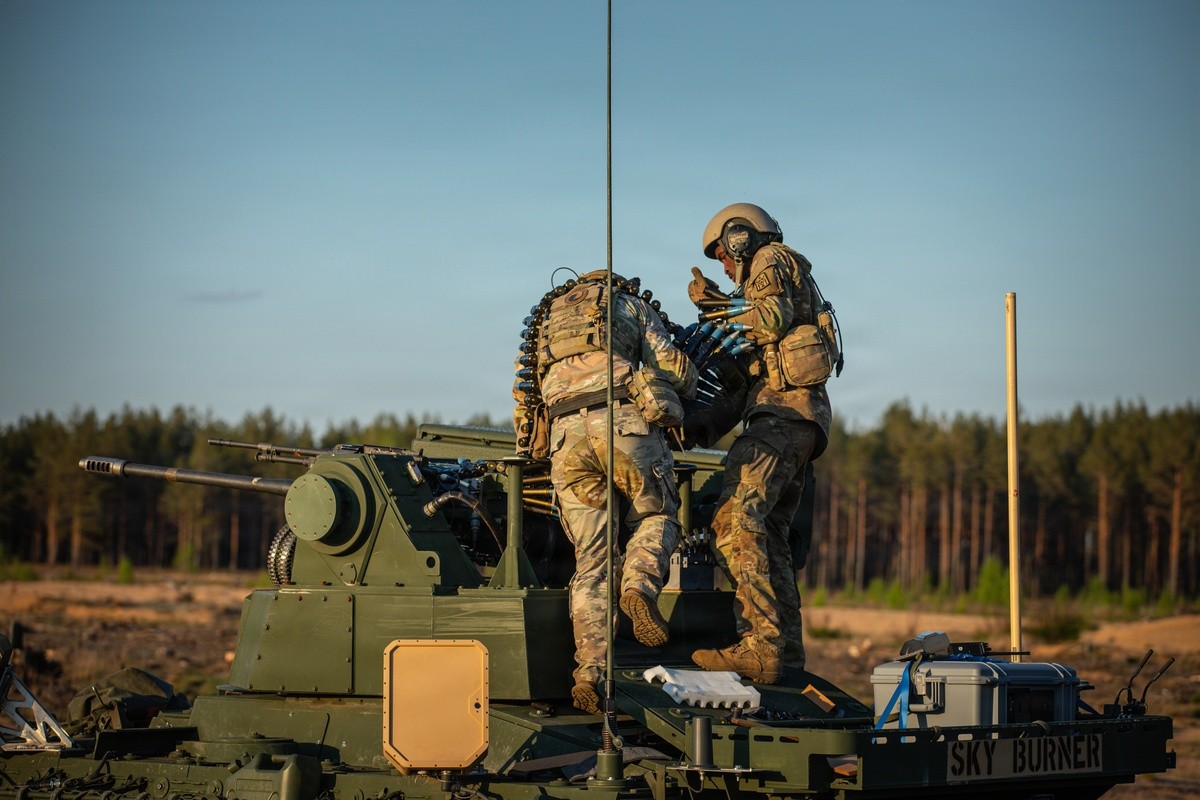
U.S. Army air and missile defense crewmembers assigned to 5th Battalion, 4th Air Defense Artillery Regiment load the XM914 30mm cannon aboard an M1265A1 Maneuver Short-Range Air Defense Stryker during counter-unmanned aerial system live-fire testing at Pabradė Training Area, Lithuania, May 14, 2026. The XM914 is capable of firing up to 200 rounds per minute, making rapid and accurate ammunition loading a critical component of crew readiness during counter-drone engagements. From April 27 to May 31, 2026, U.S. and Allied forces will conduct Project Flytrap as part of a series of linked exercises, including Sword 26, Saber Strike, Immediate Response, and Swift Response, which transform experimentation into capability. During Project Flytrap, Soldiers integrate counter-unmanned systems, AI-enabled command and control, and live data networks to move faster, decide faster, and fight more effectively across all domains.
(U.S. Army photo by Sgt. Max Elliott)
(Photo Credit: Sgt. Max Elliott)View original4 / 23
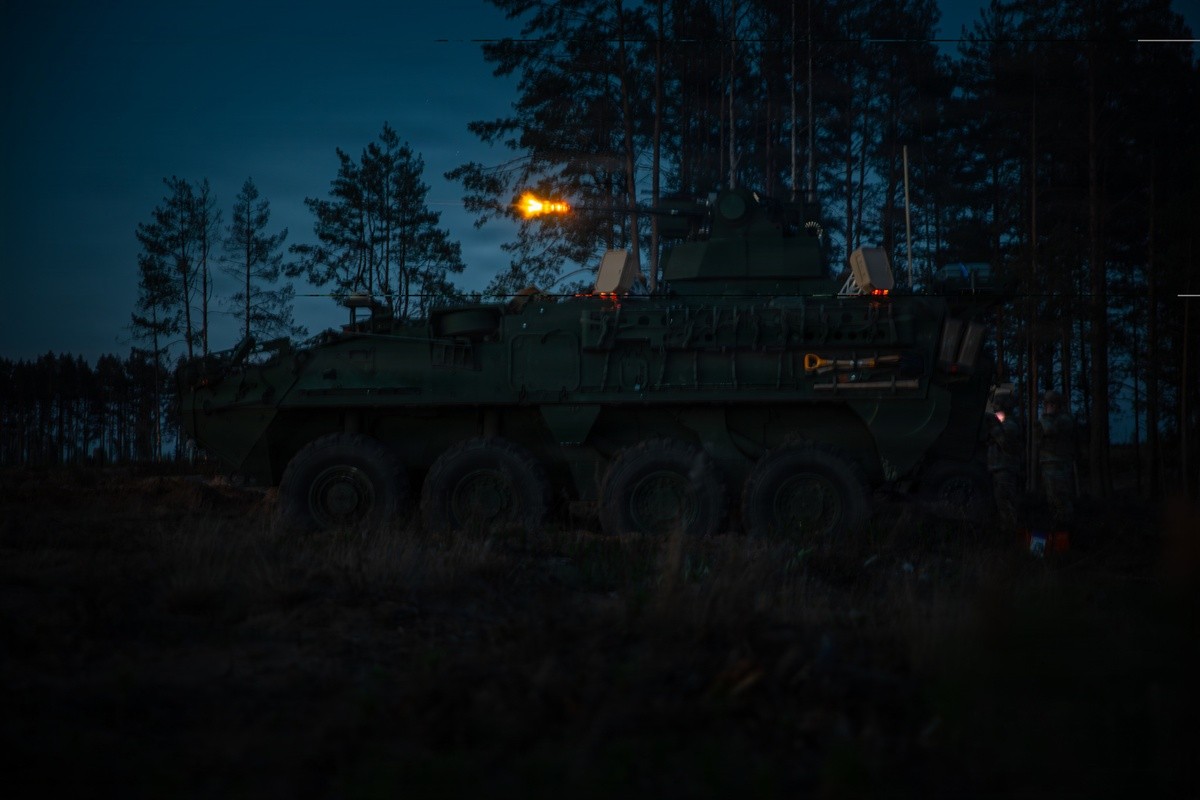
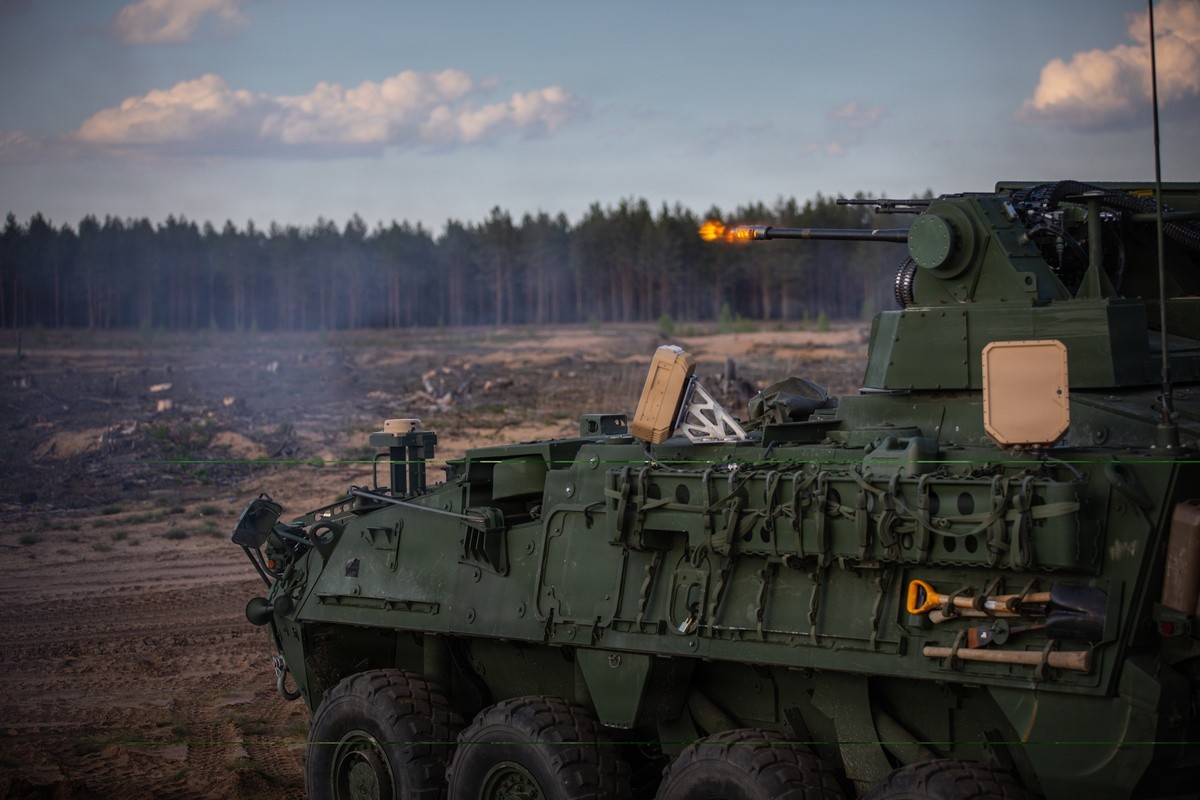
An M1265A1 Maneuver Short-Range Air Defense Stryker assigned to 5th Battalion, 4th Air Defense Artillery Regiment engages unmanned aerial targets with its XM914 30mm cannon during nighttime counter-unmanned aerial system live-fire testing at Pabradė Training Area, Lithuania, May 14, 2026. The M1265A1's onboard sensor suite provides crews with 360-degree aerial surveillance and target tracking capability in complete darkness, extending the platform's effectiveness across all lighting conditions on the modern battlefield. From April 27 to May 31, 2026, U.S. and Allied forces will conduct Project Flytrap as part of a series of linked exercises, including Sword 26, Saber Strike, Immediate Response, and Swift Response, which transform experimentation into capability. During Project Flytrap, Soldiers integrate counter-unmanned systems, AI-enabled command and control, and live data networks to move faster, decide faster, and fight more effectively across all domains.
(U.S. Army photo by Sgt. Max Elliott)
(Photo Credit: Sgt. Max Elliott)View original5 / 23
U.S. Army Pfc. Hayden Regeon, an air and missile defense crewmember assigned to 5th Battalion, 4th Air Defense Artillery Regiment, boresights the XM914 30mm cannon of an M1265A1 Maneuver Short-Range Air Defense Stryker prior to live-fire testing during Project Flytrap at Pabradė Training Area, Lithuania, May 14, 2026. Boresighting aligns a weapon system's sighting equipment with its barrel to ensure accuracy before live fire, a critical step in validating a crew's readiness to engage aerial targets. From April 27 to May 31, 2026, U.S. and Allied forces will conduct Project Flytrap as part of a series of linked exercises, including Sword 26, Saber Strike, Immediate Response, and Swift Response, which transform experimentation into capability. During Project Flytrap, Soldiers integrate counter-unmanned systems, AI-enabled command and control, and live data networks to move faster, decide faster, and fight more effectively across all domains.
(U.S. Army photo by Sgt. Max Elliott)
(Photo Credit: Sgt. Max Elliott)View original6 / 23
A small unmanned aerial system piloted by U.S. Army Spc. Jonathan Agurcia, an infantryman assigned to Echo Troop, 2nd Squadron, 2nd Cavalry Regiment, maneuvers over Pabradė Training Area, Lithuania, during Project Flytrap, May 15, 2026. Small unmanned aerial systems provide ground forces with an agile, low-cost platform for reconnaissance, surveillance and target acquisition in complex terrain and contested environments. From April 27 to May 31, 2026, U.S. and Allied forces will conduct Project Flytrap as part of a series of linked exercises, including Sword 26, Saber Strike, Immediate Response and Swift Response, which transform experimentation into capability. During Project Flytrap, Soldiers integrate counter-unmanned systems, AI-enabled command and control, and live data networks to move faster, decide faster, and fight more effectively across all domains. (U.S. Army photo by Sgt. Max Elliott)
(Photo Credit: Sgt. Max Elliott)View original7 / 23
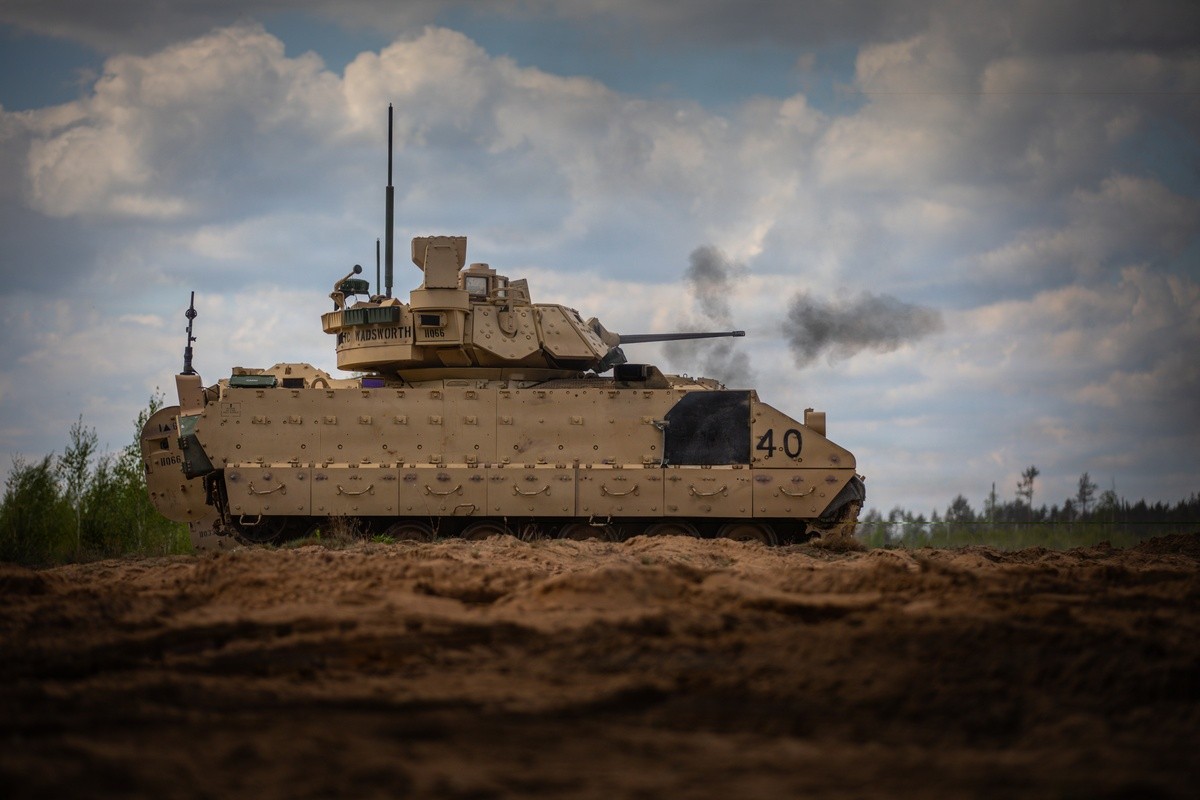
An M2A3 Bradley Infantry Fighting Vehicle assigned to 6th Squadron, 1st Cavalry Regiment engages an unmanned aerial system with its M242 25mm Bushmaster chain gun during Project Flytrap at Pabradė Training Area, Lithuania, May 10, 2026. The M242 Bushmaster is capable of engaging both ground and aerial targets, making it a versatile platform for the counter-unmanned aerial system mission. From April 27 to May 31, 2026, U.S. and Allied forces will conduct Project Flytrap as part of a series of linked exercises, including Sword 26, Saber Strike, Immediate Response, and Swift Response which transform experimentation into capability. During Project Flytrap, Soldiers integrate counter-unmanned systems, AI-enabled command and control, and live data networks to move faster, decide faster, and fight more effectively across all domains. (U.S. Army photo by Sgt. Max Elliott)
(Photo Credit: Sgt. Max Elliott)View original8 / 23
An M1265A1 Maneuver Short-Range Air Defense Stryker and an M2A3 Bradley Infantry Fighting Vehicle, both assigned to units participating in Project Flytrap , occupy firing positions during counter-unmanned aerial system live-fire testing at Pabradė Training Area, Lithuania, May 14, 2026. The integration of both platforms onto a single range demonstrates the Army's effort to evaluate a layered approach to counter-drone defense, combining the mobility and firepower of ground combat vehicles against evolving aerial threats. From April 27 to May 31, 2026, U.S. and Allied forces will conduct Project Flytrap as part of a series of linked exercises, including Sword 26, Saber Strike, Immediate Response, and Swift Response, which transform experimentation into capability. During Project Flytrap, Soldiers integrate counter-unmanned systems, AI-enabled command and control, and live data networks to move faster, decide faster, and fight more effectively across all domains.
(U.S. Army photo by Sgt. Max Elliott)
(Photo Credit: Sgt. Max Elliott)View original9 / 23
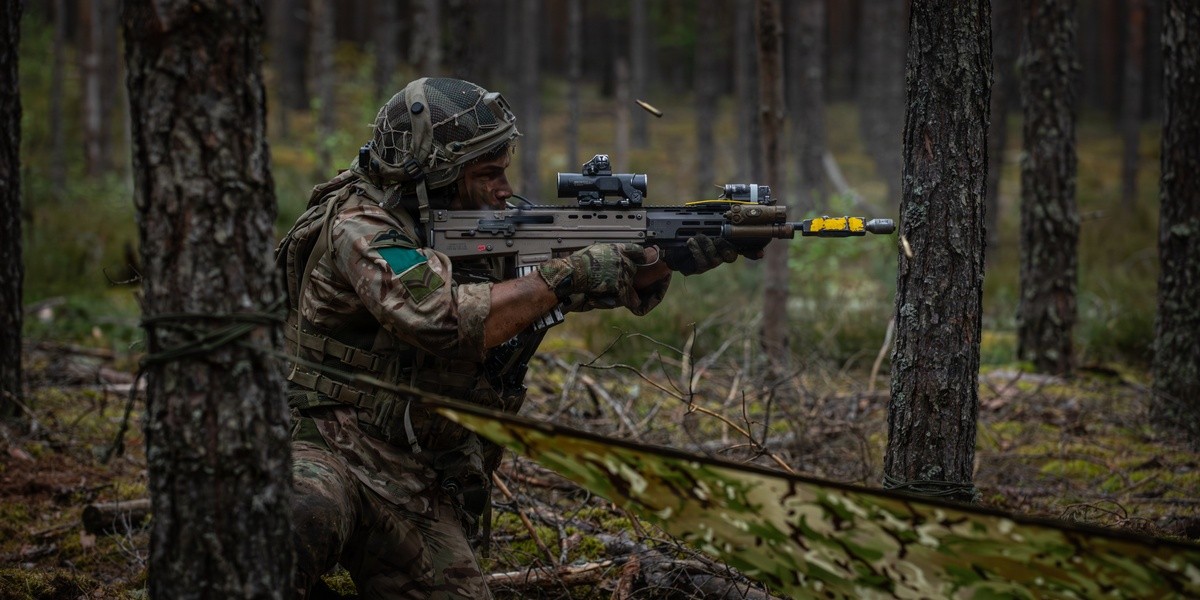
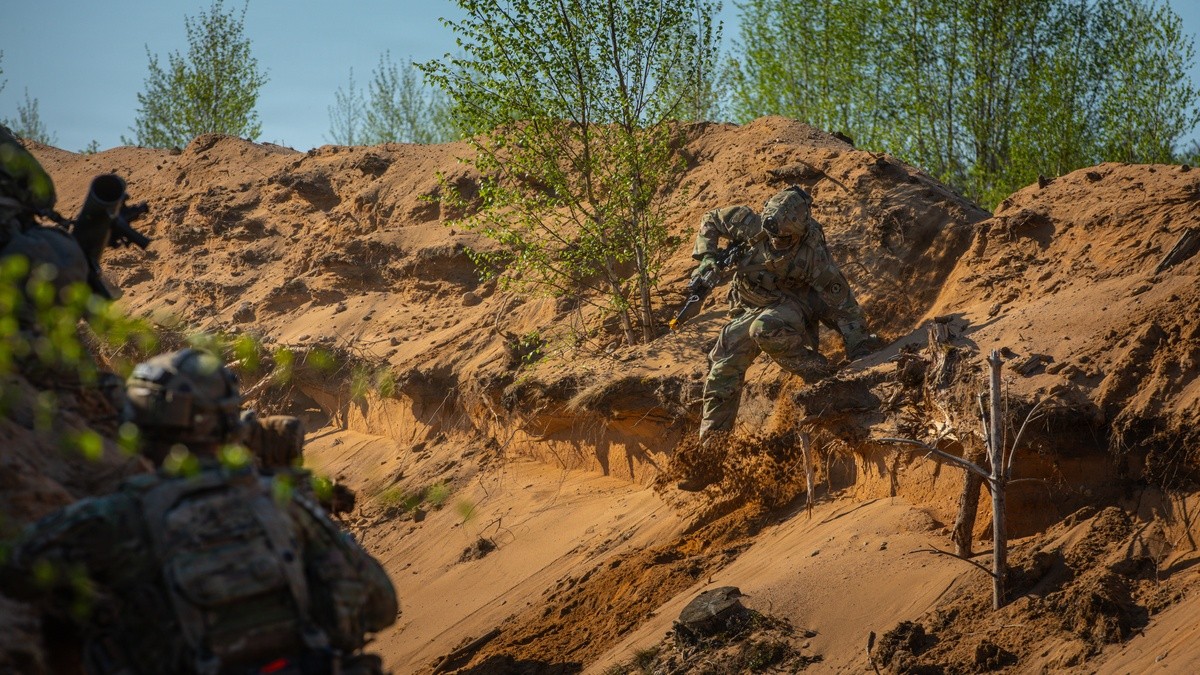
A British paratrooper from the U.K. Parachute Regiment hastily moves between fighting positions during the force-on-force phase of Project Flytrap at Pabradė Training Area, Lithuania, May 8, 2026. The force-on-force phase pits U.S. Soldiers against British paratroopers from the U.K. Parachute Regiment in a series of simulated engagements designed to test counter-unmanned aerial system integration in a contested environment. From April 27 to May 31, 2026, U.S. and Allied forces will conduct Project Flytrap as part of a series of linked exercises, including Sword 26, Saber Strike, Immediate Response, and Swift Response, which transform experimentation into capability. During Project Flytrap, Soldiers integrate counter-unmanned systems, AI-enabled command and control, and live data networks to move faster, decide faster, and fight more effectively across all domains. (U.S. Army photo by Sgt. Max Elliott)
(Photo Credit: Sgt. Max Elliott)View original10 / 23
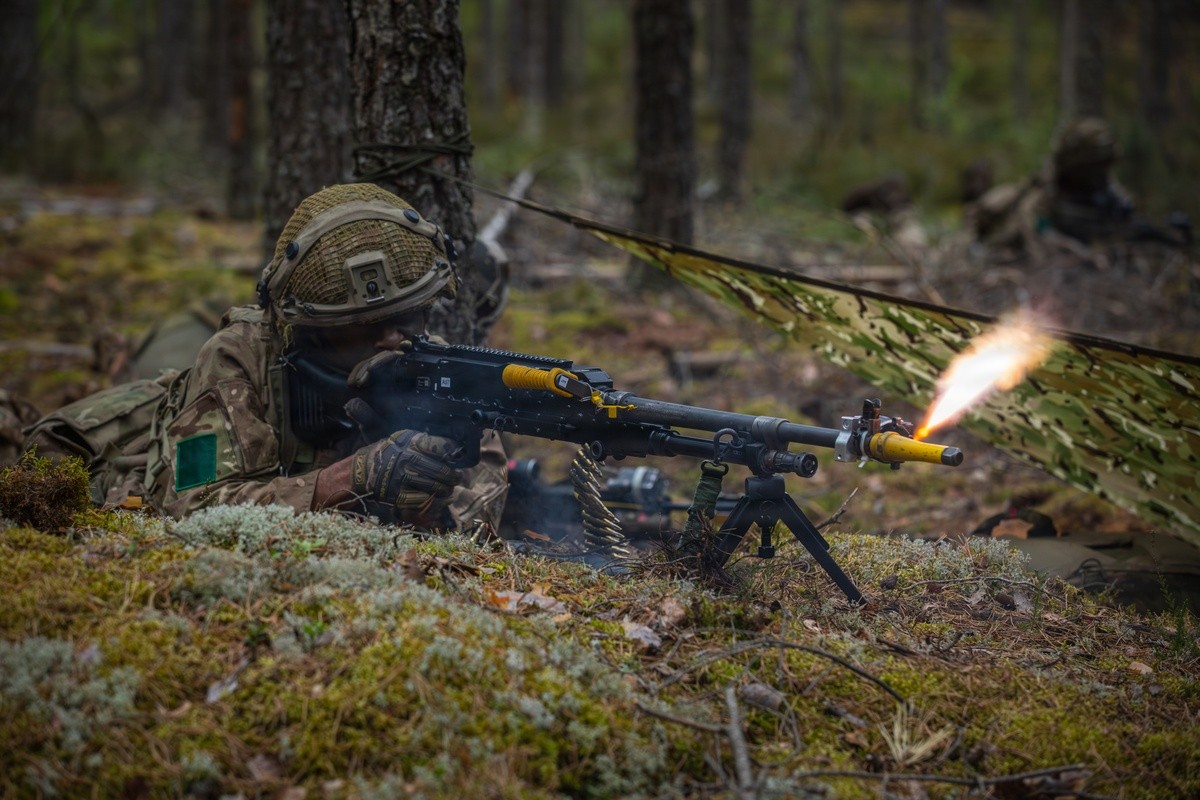
A British paratrooper from the U.K. Parachute Regiment provides suppressive fire during the force-on-force phase of Project Flytrap at Pabradė Training Area, Lithuania, May 8, 2026. The force-on-force phase pits U.S. Soldiers against British paratroopers from the U.K. Parachute Regiment in a series of simulated engagements designed to test counter-unmanned aerial system integration in a contested environment. From April 27 to May 31, 2026, U.S. and Allied forces will conduct Project Flytrap as part of a series of linked exercises, including Sword 26, Saber Strike, Immediate Response, and Swift Response, which transform experimentation into capability. During Project Flytrap, Soldiers integrate counter-unmanned systems, AI-enabled command and control, and live data networks to move faster, decide faster, and fight more effectively across all domains. (U.S. Army photo by Sgt. Max Elliott)
(Photo Credit: Sgt. Max Elliott)View original11 / 23
U.S. Army Soldiers assigned to Echo Troop, 2nd Squadron, 2nd Cavalry Regiment, conduct mission planning during the force-on-force phase of Project Flytrap at Pabradė Training Area, Lithuania, May 8, 2026. The force-on-force phase pits U.S. Soldiers against British paratroopers from the U.K. Parachute Regiment in a series of simulated engagements designed to test counter-unmanned aerial system integration in a contested environment. From April 27 to May 31, 2026, U.S. and Allied forces will conduct Project Flytrap as part of a series of linked exercises, including Sword 26, Saber Strike, Immediate Response, and Swift Response, which transform experimentation into capability. During Project Flytrap, Soldiers integrate counter-unmanned systems, AI-enabled command and control, and live data networks to move faster, decide faster, and fight more effectively across all domains. (U.S. Army photo by Sgt. Max Elliott)
(Photo Credit: Sgt. Max Elliott)View original12 / 23
U.S. Army Soldiers assigned to Echo Troop, 2nd Squadron, 2nd Cavalry Regiment, organize sectors of fire during the force-on-force phase of Project Flytrap at Pabradė Training Area, Lithuania, May 8, 2026. The force-on-force phase pits U.S. Soldiers against British paratroopers from the U.K. Parachute Regiment in a series of simulated engagements designed to test counter-unmanned aerial system integration in a contested environment. From April 27 to May 31, 2026, U.S. and Allied forces will conduct Project Flytrap as part of a series of linked exercises, including Sword 26, Saber Strike, Immediate Response, and Swift Response, which transform experimentation into capability. During Project Flytrap, Soldiers integrate counter-unmanned systems, AI-enabled command and control, and live data networks to move faster, decide faster, and fight more effectively across all domains. (U.S. Army photo by Sgt. Max Elliott)
(Photo Credit: Sgt. Max Elliott)View original13 / 23
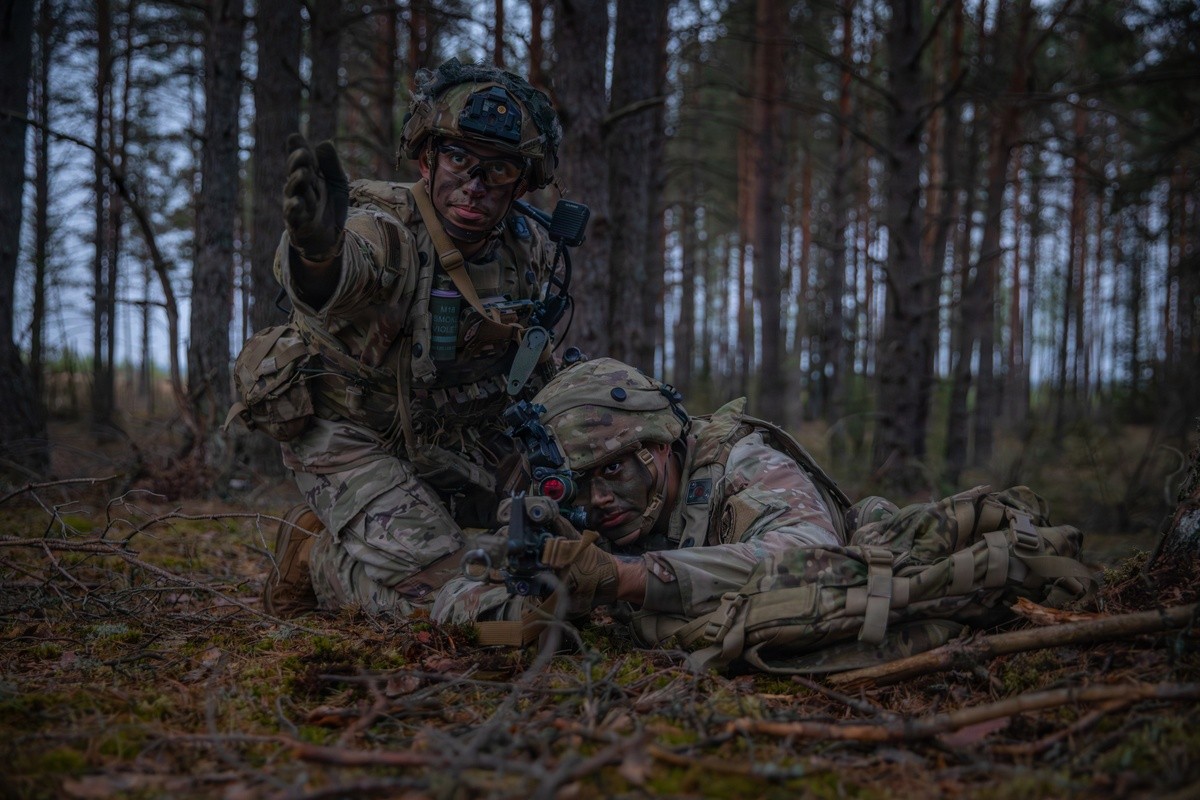
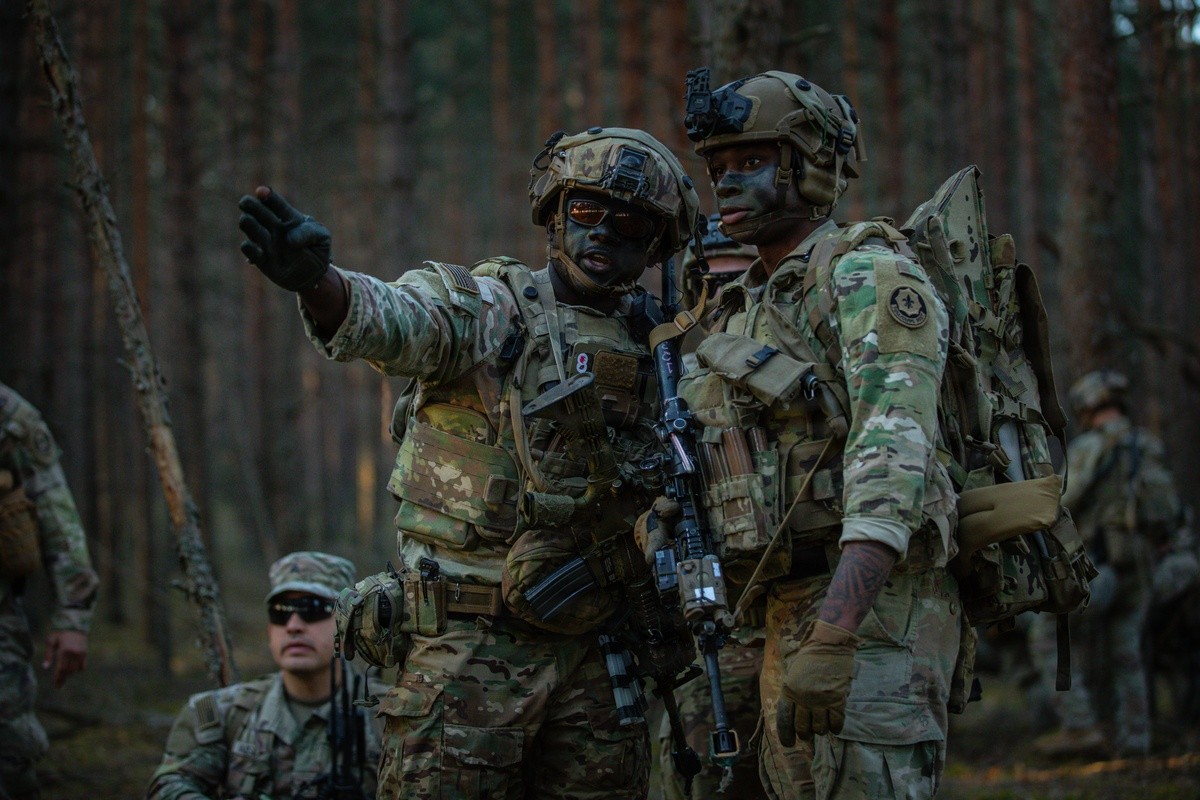
Staff Sgt. Mateus Nunes, a squad leader assigned to Echo Troop, 2nd Squadron, 2nd Cavalry Regiment, directs his squad to fighting positions during the force-on-force phase of Project Flytrap at Pabradė Training Area, Lithuania, May 8, 2026. The force-on-force phase pits U.S. Soldiers against British paratroopers from the U.K. Parachute Regiment in a series of simulated engagements designed to test counter-unmanned aerial system integration in a contested environment. From April 27 to May 31, 2026, U.S. and Allied forces will conduct Project Flytrap as part of a series of linked exercises, including Sword 26, Saber Strike, Immediate Response, and Swift Response, which transform experimentation into capability. During Project Flytrap, Soldiers integrate counter-unmanned systems, AI-enabled command and control, and live data networks to move faster, decide faster, and fight more effectively across all domains. (U.S. Army photo by Sgt. Max Elliott)
(Photo Credit: Sgt. Max Elliott)View original14 / 23
A U.S. Army Soldier assigned to Echo Troop, 2nd Squadron, 2nd Cavalry Regiment, provides suppressive fire during the force-on-force phase of Project Flytrap at Pabradė Training Area, Lithuania, May 8, 2026. The force-on-force phase pits U.S. Soldiers against British paratroopers from the U.K. Parachute Regiment in a series of simulated engagements designed to test counter-unmanned aerial system integration in a contested environment. From April 27 to May 31, 2026, U.S. and Allied forces will conduct Project Flytrap as part of a series of linked exercises, including Sword 26, Saber Strike, Immediate Response, and Swift Response, which transform experimentation into capability. During Project Flytrap, Soldiers integrate counter-unmanned systems, AI-enabled command and control, and live data networks to move faster, decide faster, and fight more effectively across all domains. (U.S. Army photo by Sgt. Max Elliott)
(Photo Credit: Sgt. Max Elliott)View original15 / 23
A British paratrooper from the U.K. Parachute Regiment engages U.S. Forces during the force-on-force phase of Project Flytrap at Pabradė Training Area, Lithuania, May 8, 2026. The force-on-force phase pits U.S. Soldiers against British paratroopers from the U.K. Parachute Regiment in a series of simulated engagements designed to test counter-unmanned aerial system integration in a contested environment. From April 27 to May 31, 2026, U.S. and Allied forces will conduct Project Flytrap as part of a series of linked exercises, including Sword 26, Saber Strike, Immediate Response, and Swift Response, which transform experimentation into capability. During Project Flytrap, Soldiers integrate counter-unmanned systems, AI-enabled command and control, and live data networks to move faster, decide faster, and fight more effectively across all domains. (U.S. Army photo by Sgt. Max Elliott)
(Photo Credit: Sgt. Max Elliott)View original16 / 23
A U.S. Army Soldier assigned to Echo Troop, 2nd Squadron, 2nd Cavalry Regiment, advances through a smoke screen during the force-on-force phase of Project Flytrap at Pabradė Training Area, Lithuania, May 8, 2026. The force-on-force phase pits U.S. Soldiers against British paratroopers from the U.K. Parachute Regiment in a series of simulated engagements designed to test counter-unmanned aerial system integration in a contested environment. From April 27 to May 31, 2026, U.S. and Allied forces will conduct Project Flytrap as part of a series of linked exercises, including Sword 26, Saber Strike, Immediate Response, and Swift Response, which transform experimentation into capability. During Project Flytrap, Soldiers integrate counter-unmanned systems, AI-enabled command and control, and live data networks to move faster, decide faster, and fight more effectively across all domains. (U.S. Army photo by Sgt. Max Elliott)
(Photo Credit: Sgt. Max Elliott)View original17 / 23
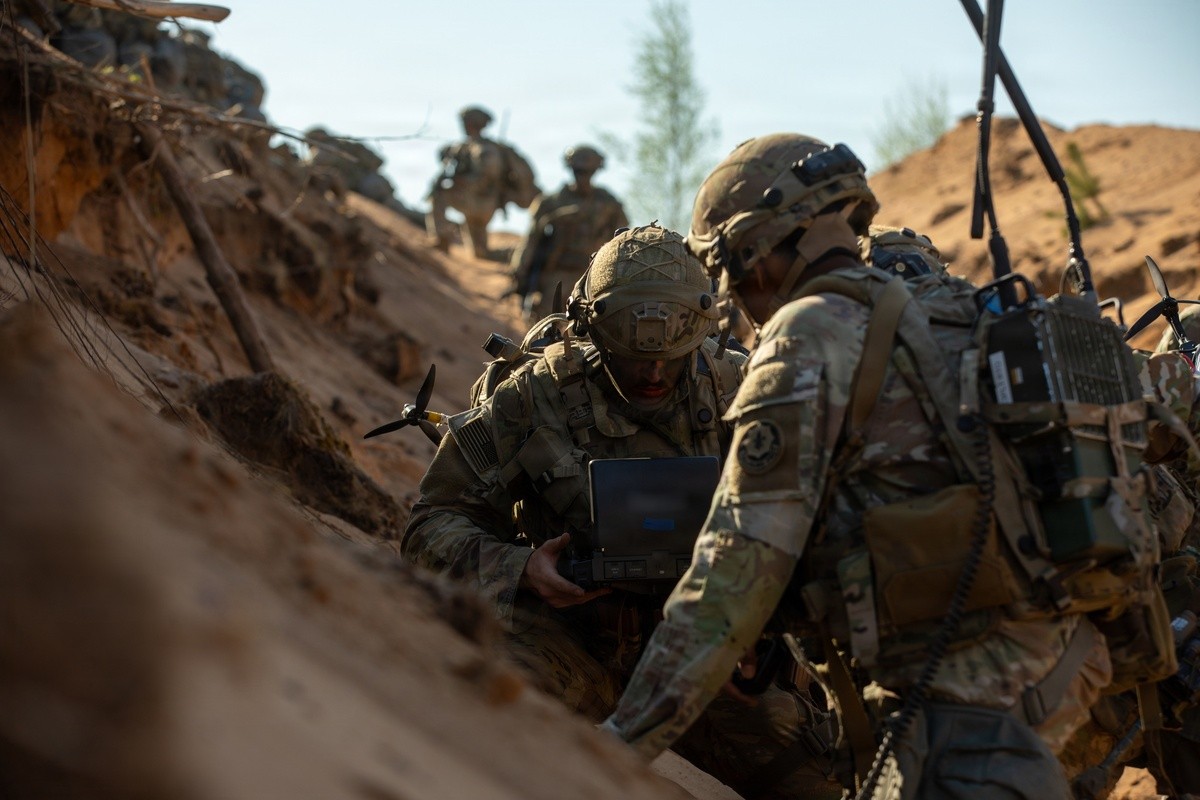
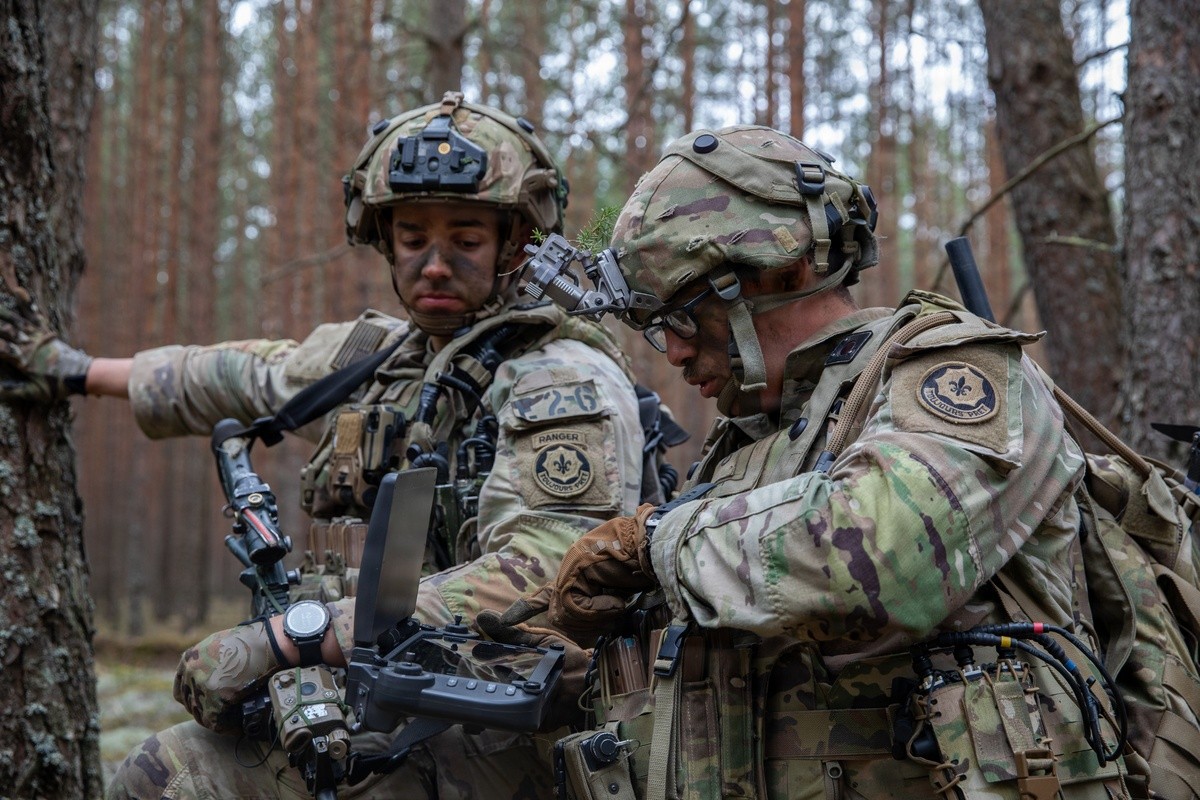
U.S. Army Spc. Adam Curry, an infantryman assigned to Echo Troop, 2nd Squadron, 2nd Cavalry Regiment, monitors a tablet displaying unmanned aerial system feed data during the force-on-force phase of Project Flytrap at Pabradė Training Area, Lithuania, May 4, 2026. U.S. Soldiers faced off against British paratroopers from the U.K. Parachute Regiment in a series of simulated engagements designed to test counter-unmanned aerial system integration in a contested environment. From April 27 to May 31, 2026, U.S. and Allied forces will conduct Project Flytrap as part of a series of linked exercises, including Sword 26, Saber Strike, Immediate Response, and Swift Response, which transform experimentation into capability. During Project Flytrap, Soldiers integrate counter-unmanned systems, AI-enabled command and control, and live data networks to move faster, decide faster, and fight more effectively across all domains. (U.S. Army photo by Sgt. Max Elliott)
(Photo Credit: Sgt. Max Elliott)View original18 / 23
From left, U.S. Army Pfc. Chase Anders and Staff Sgt. Fahad Kasamba, infantrymen assigned to Echo Troop, 2nd Squadron, 2nd Cavalry Regiment, maneuver through a training area during the force-on-force phase of Project Flytrap at Pabradė Training Area, Lithuania, May 4, 2026. U.S. Soldiers faced off against British paratroopers from the U.K. Parachute Regiment in a series of simulated engagements designed to test counter-unmanned aerial system integration in a contested environment. From April 27 to May 31, 2026, U.S. and Allied forces will conduct Project Flytrap as part of a series of linked exercises, including Sword 26, Saber Strike, Immediate Response, and Swift Response, which transform experimentation into capability. During Project Flytrap, Soldiers integrate counter-unmanned systems, AI-enabled command and control, and live data networks to move faster, decide faster, and fight more effectively across all domains. (U.S. Army photo by Sgt. Max Elliott)
(Photo Credit: Sgt. Max Elliott)View original19 / 23
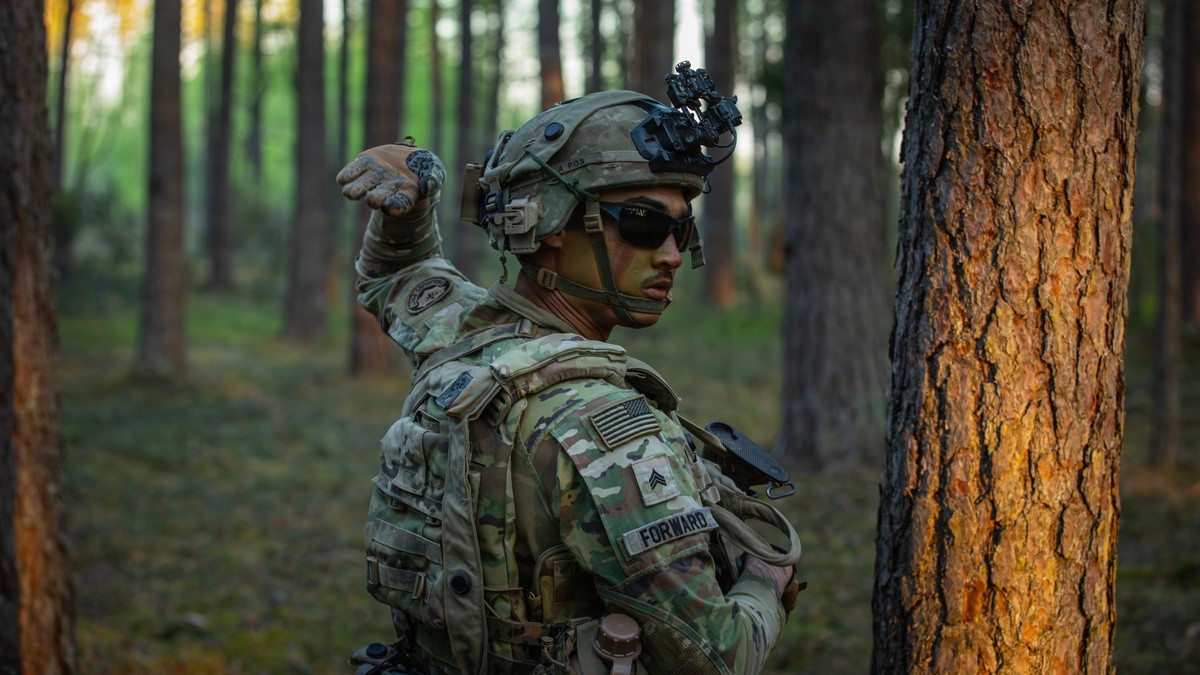
U.S. Army Sgt. Terrell Forward, an infantryman assigned to Echo Troop, 2nd Squadron, 2nd Cavalry Regiment, signals to his element during the force-on-force phase of Project Flytrap at Pabradė Training Area, Lithuania, May 4, 2026. U.S. Soldiers faced off against British paratroopers from the U.K. Parachute Regiment in a series of simulated engagements designed to test counter-unmanned aerial system integration in a contested environment. From April 27 to May 31, 2026, U.S. and Allied forces will conduct Project Flytrap as part of a series of linked exercises, including Sword 26, Saber Strike, Immediate Response, and Swift Response, which transform experimentation into capability. During Project Flytrap, Soldiers integrate counter-unmanned systems, AI-enabled command and control, and live data networks to move faster, decide faster, and fight more effectively across all domains. (U.S. Army photo by Sgt. Max Elliott)
(Photo Credit: Sgt. Max Elliott)View original20 / 23
U.S. Army Spc. Jonathan Agurcia, an infantryman assigned to Echo Troop, 2nd Squadron, 2nd Cavalry Regiment, dons a first-person view headset before operating a small unmanned aerial system during the force-on-force phase of Project Flytrap at Pabradė Training Area, Lithuania, May 4, 2026. U.S. Soldiers faced off against British paratroopers from the U.K. Parachute Regiment in a series of simulated engagements designed to test counter-unmanned aerial system integration in a contested environment. From April 27 to May 31, 2026, U.S. and Allied forces will conduct Project Flytrap as part of a series of linked exercises, including Sword 26, Saber Strike, Immediate Response, and Swift Response, which transform experimentation into capability. During Project Flytrap, Soldiers integrate counter-unmanned systems, AI-enabled command and control, and live data networks to move faster, decide faster, and fight more effectively across all domains. (U.S. Army photo by Sgt. Max Elliott)
(Photo Credit: Sgt. Max Elliott)View original21 / 23
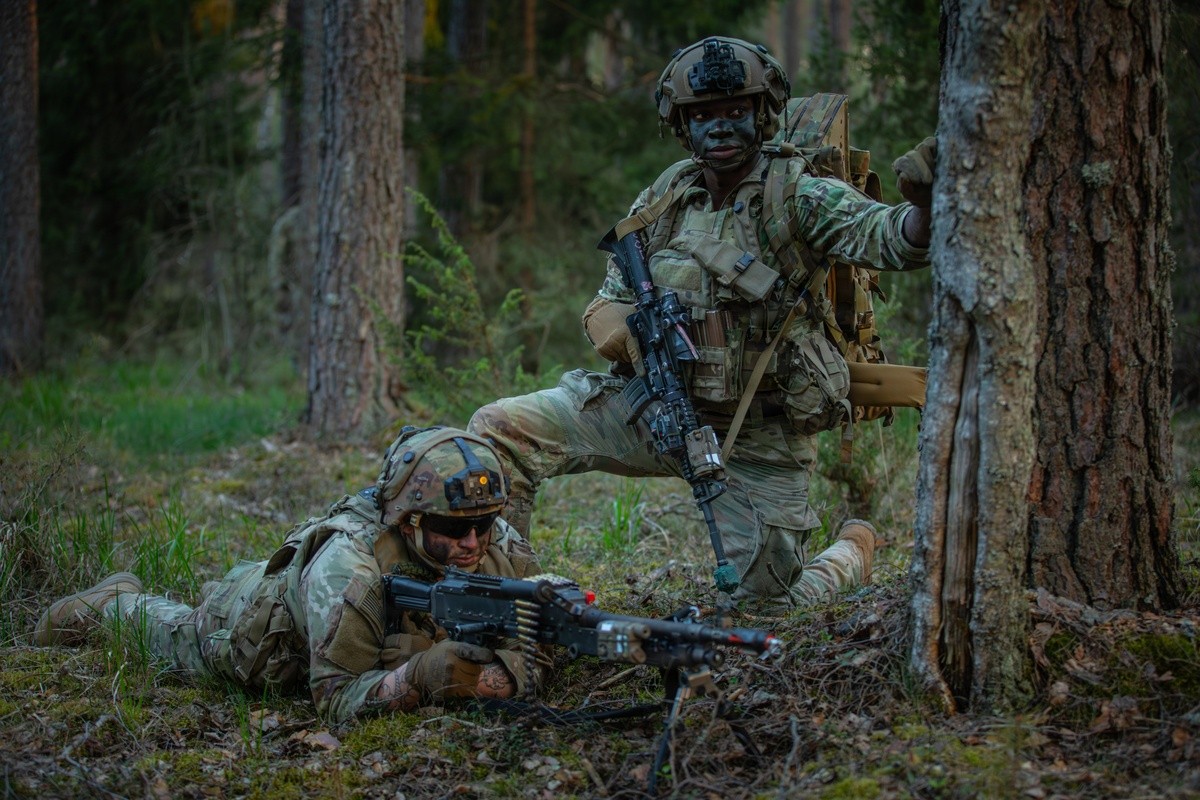
From left, U.S. Army Pfc. Owens Bowman Pulls security with an M249 light machine gun with Spc. Dennis Workman, both infantrymen assigned to Echo Troop, 2nd Squadron, 2nd Cavalry Regiment, during the force-on-force phase of Project Flytrap at Pabradė Training Area, Lithuania, May 4, 2026. U.S. Soldiers faced off against British paratroopers from the U.K. Parachute Regiment in a series of simulated engagements designed to test counter-unmanned aerial system integration in a contested environment. From April 27 to May 31, 2026, U.S. and Allied forces will conduct Project Flytrap as part of a series of linked exercises, including Sword 26, Saber Strike, Immediate Response, and Swift Response, which transform experimentation into capability. During Project Flytrap, Soldiers integrate counter-unmanned systems, AI-enabled command and control, and live data networks to move faster, decide faster, and fight more effectively across all domains. (U.S. Army photo by Sgt. Max Elliott)
(Photo Credit: Sgt. Max Elliott)View original22 / 23
From left, U.S. Army Spc. Alexandria Suastegui, Spc. Emilio Veliz and Pfc. Silas Moore, all signal support systems specialists assigned to 2nd Squadron, 2nd Cavalry Regiment, assemble a counter-unmanned aerial system during setup operations for Project Flytrap at Pabradė Training Area, Lithuania, April 30, 2026. The exercise brings together military personnel and industry representatives to rapidly refine and evaluate counter-drone technologies in a field environment. (U.S. Army photo by Sgt. Max Elliott)
(Photo Credit: Sgt. Max Elliott)View original23 / 23
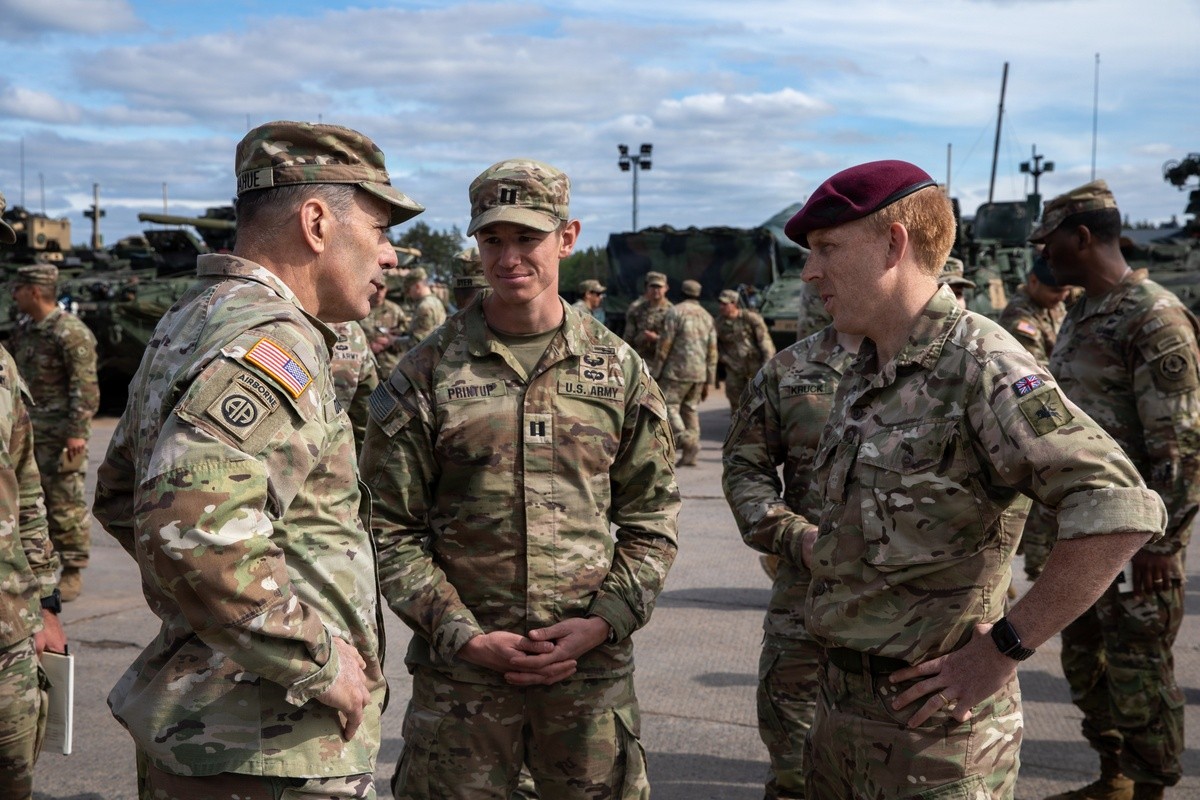
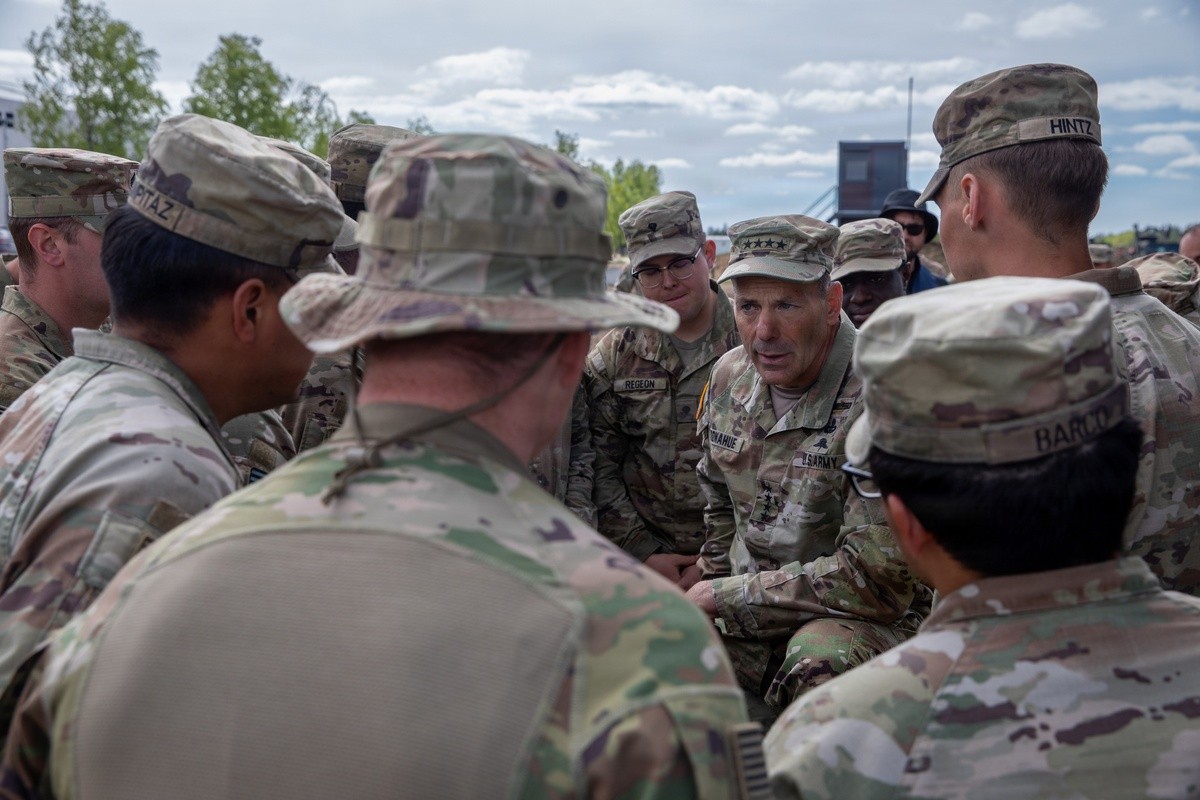
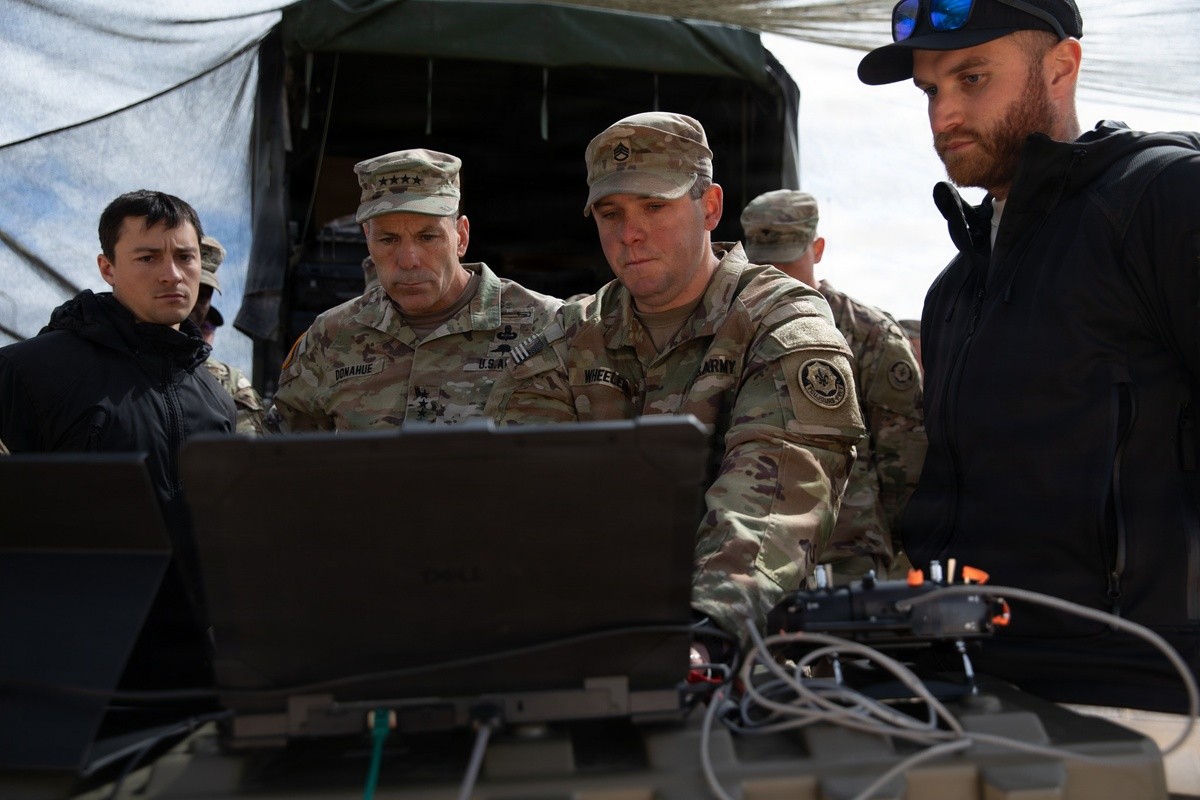
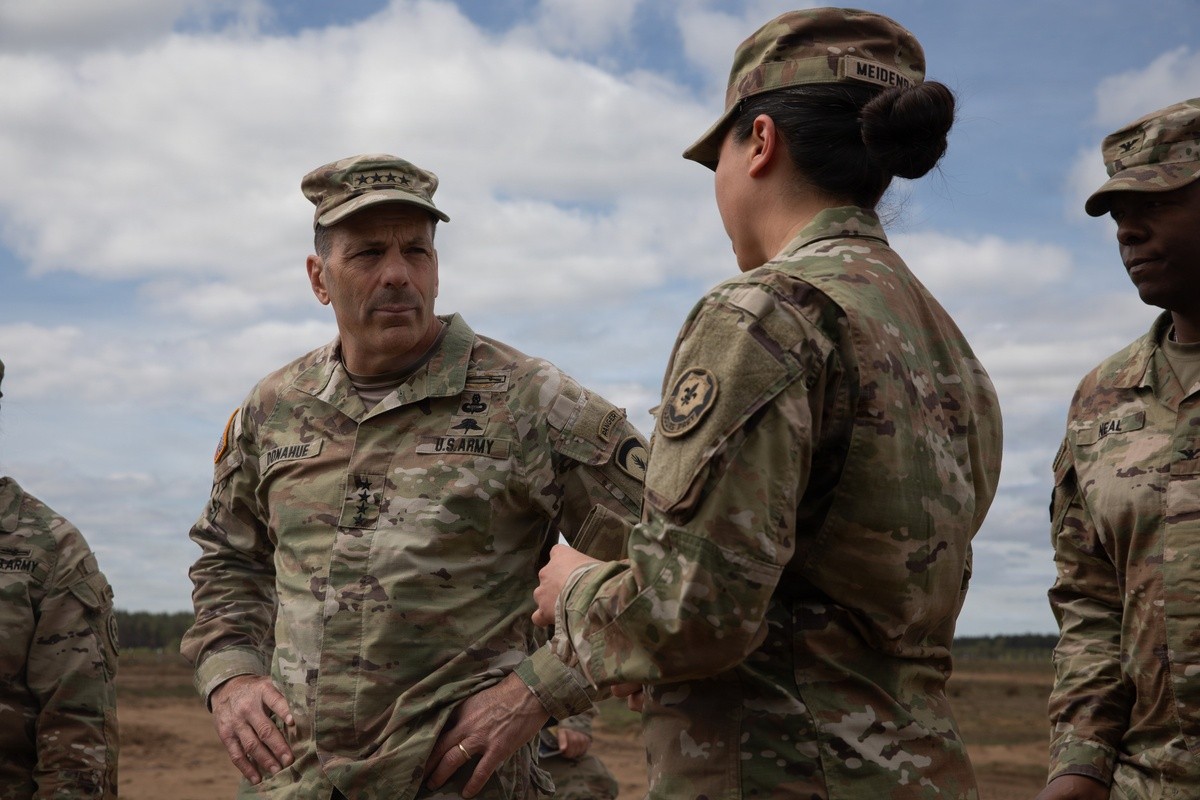
Gen. Christopher T. Donahue, commanding general of U.S. Army Europe and Africa and commander of NATO Allied Land Command, speaks with unit commanders of the U.S. and U.K. forces participating in Project Flytrap at Pabradė Training Area, Lithuania, May 11, 2026. The exercise saw U.S. troops face off against paratroopers from the U.K. Parachute Regiment in combat scenarios involving simulated small arms fire, explosives and indirect fire, as well as surveillance and attacks by unmanned aerial systems. From April 27 to May 31, 2026, U.S. and Allied forces will conduct Project Flytrap as part of a series of linked exercises, including Sword 26, Saber Strike, Immediate Response, and Swift Response, which transform experimentation into capability. During Project Flytrap, Soldiers integrate counter-unmanned systems, AI-enabled command and control, and live data networks to move faster, decide faster, and fight more effectively across all domains. (U.S. Army photo by Sgt. Nicodemus Taylor)
(Photo Credit: Sgt. Nicodemus Taylor)View original
PABRADĖ, Lithuania — Above the pine forest of the Pabradė Training Area, roughly 30 kilometers from the Belarusian border, a small quadcopter rises into a sky shared with dozens of other drones. Friendly and adversary, sensor and strike, American and British. Below it, Soldiers are learning, in real time, what it takes to fight as a squadron in three dimensions.
“Right now, we are implementing these systems at the troop level, company level and squadron level,” said U.S. Army Staff Sgt. Mateus Nunes, an infantryman assigned to Echo Troop, 2nd Squadron, 2nd Cavalry Regiment. “We are just seeing how they work.”
1 / 23
U.S. Army Pfc. Hayden Regeon, an air and missile defense crewmember assigned to 5th Battalion, 4th Air Defense Artillery Regiment, performs maintenance on the XM914 30mm cannon of an M1265A1 Maneuver Short-Range Air Defense Stryker during Project Flytrap at Pabradė Training Area, Lithuania, May 14, 2026. The M1265A1 Maneuver Short-Range Air Defense Stryker is designed to detect, track and engage aerial threats including unmanned aerial systems, rotary-wing and low-flying fixed-wing aircraft, providing mobile air defense coverage to maneuver forces on the battlefield. From April 27 to May 31, 2026, U.S. and Allied forces will conduct Project Flytrap as part of a series of linked exercises, including Sword 26, Saber Strike, Immediate Response, and Swift Response, which transform experimentation into capability. During Project Flytrap, Soldiers integrate counter-unmanned systems, AI-enabled command and control, and live data networks to move faster, decide faster, and fight more effectively across all domains.
(U.S. Army photo by Sgt. Max Elliott)
(Photo Credit: Sgt. Max Elliott)View original2 / 23
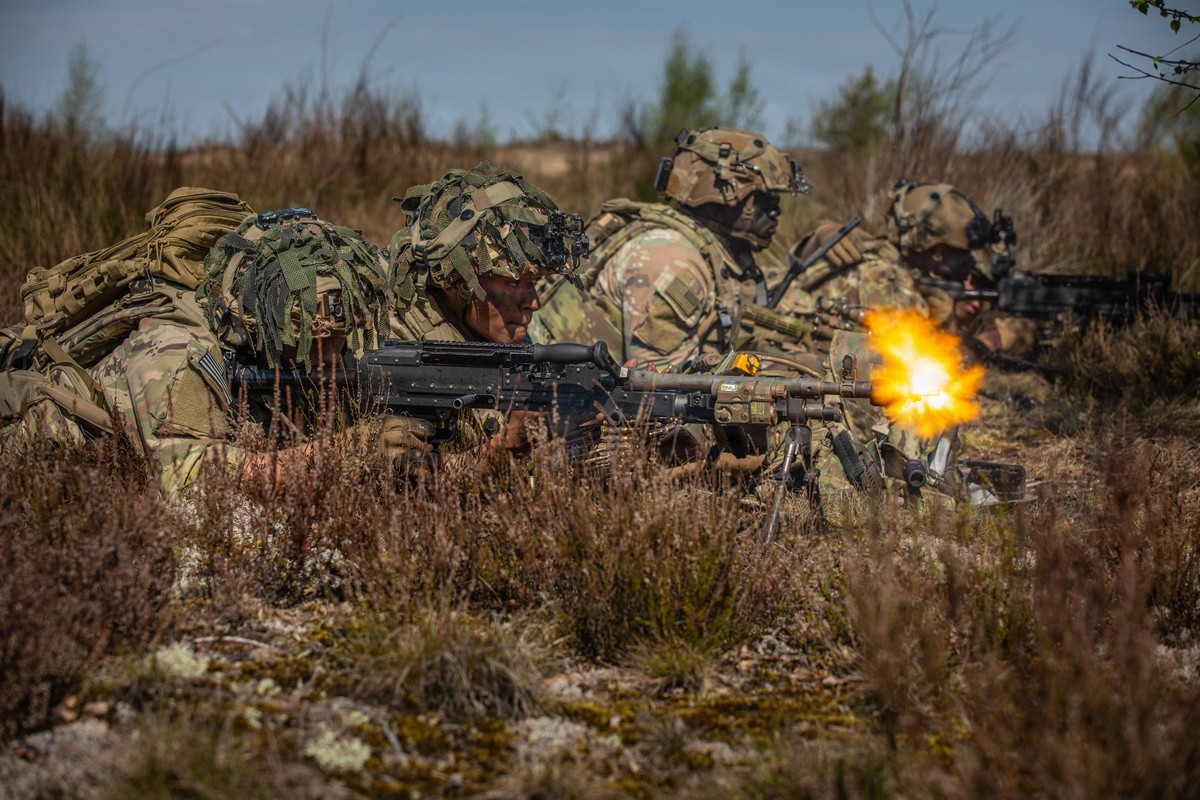
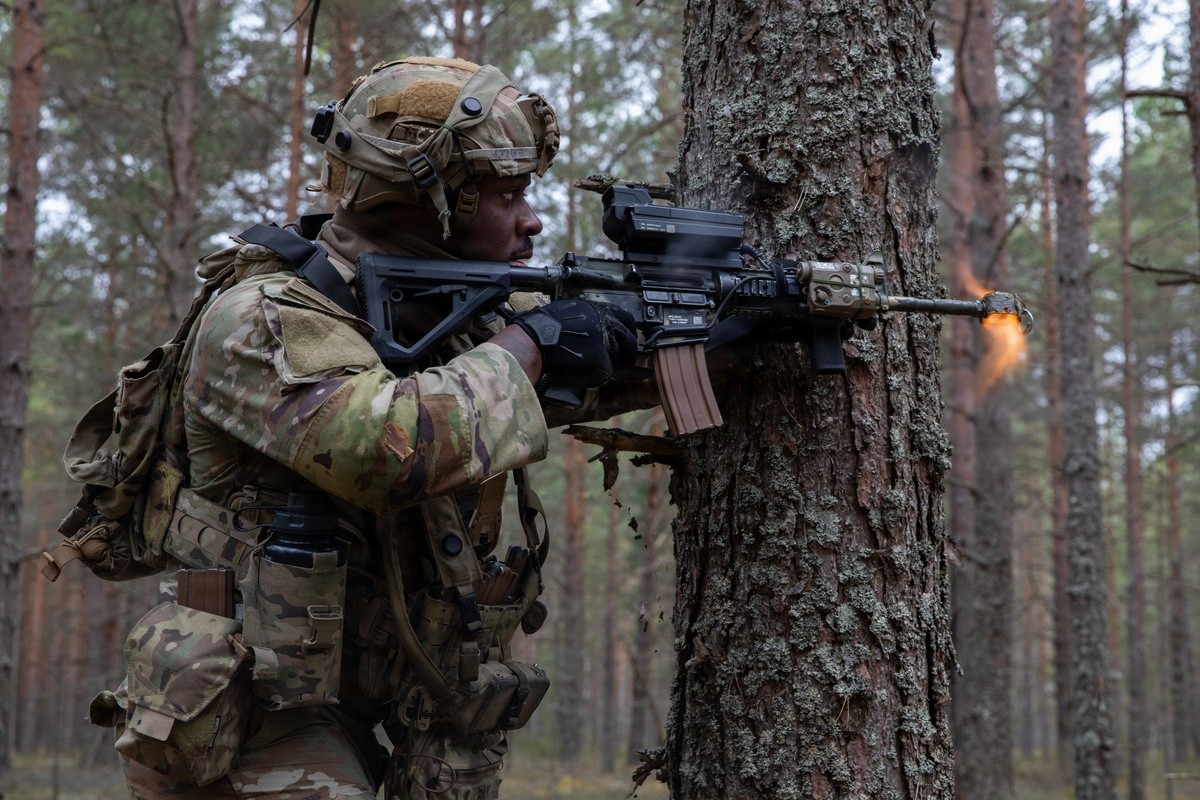
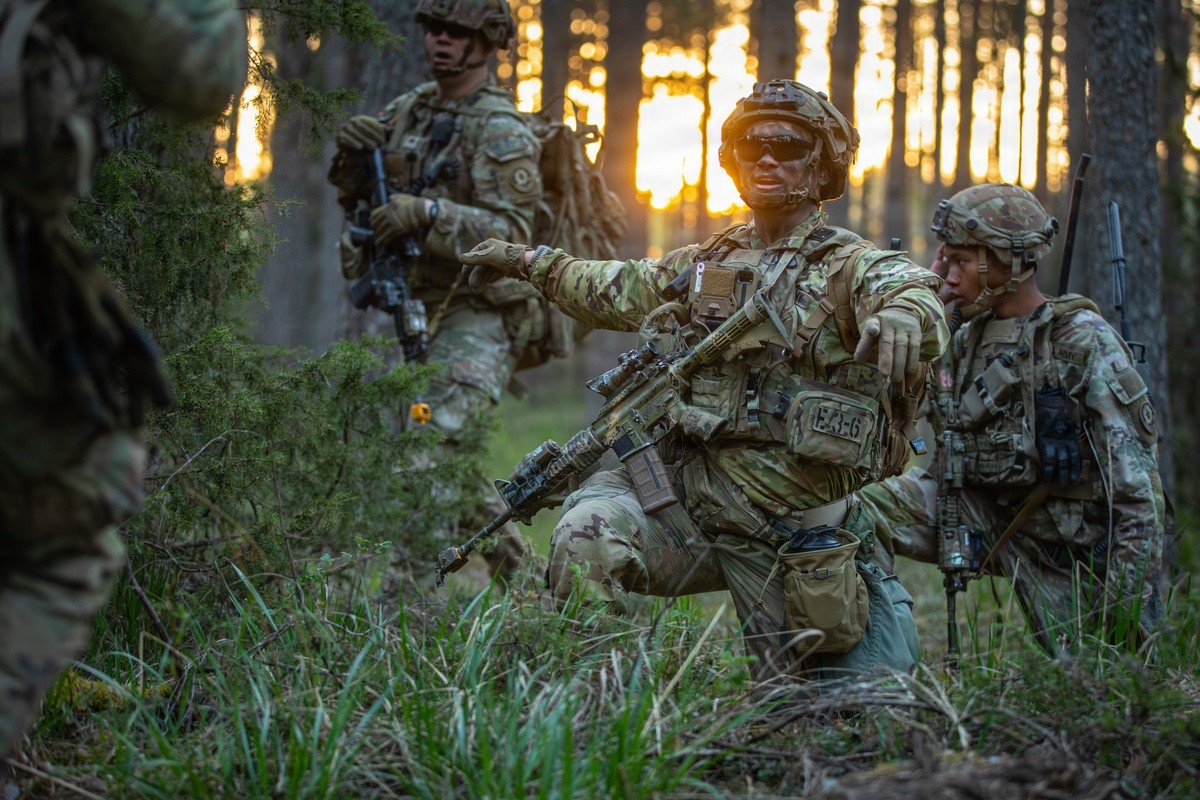
U.S. Army Sgt. 1st Class Tyler Harrington, a platoon sergeant assigned to Echo Troop, 2nd Squadron, 2nd Cavalry Regiment, engages an enemy during the force-on-force phase of Project Flytrap at Pabradė Training Area, Lithuania, May 8, 2026. The exercise saw U.S. troops face off against paratroopers from the U.K. Parachute Regiment in combat scenarios involving simulated small arms fire, ordnance, indirect fire, and surveillance and attacks by unmanned aerial systems. From April 27 to May 31, 2026, U.S. and Allied forces will conduct Project Flytrap as part of a series of linked exercises, including Sword 26, Saber Strike, Immediate Response, and Swift Response, which transform experimentation into capability. During Project Flytrap, Soldiers integrate counter-unmanned systems, AI-enabled command and control, and live data networks to move faster, decide faster, and fight more effectively across all domains. (U.S. Army photo by Sgt. Nicodemus Taylor)
(Photo Credit: Sgt. Nicodemus Taylor)View original3 / 23
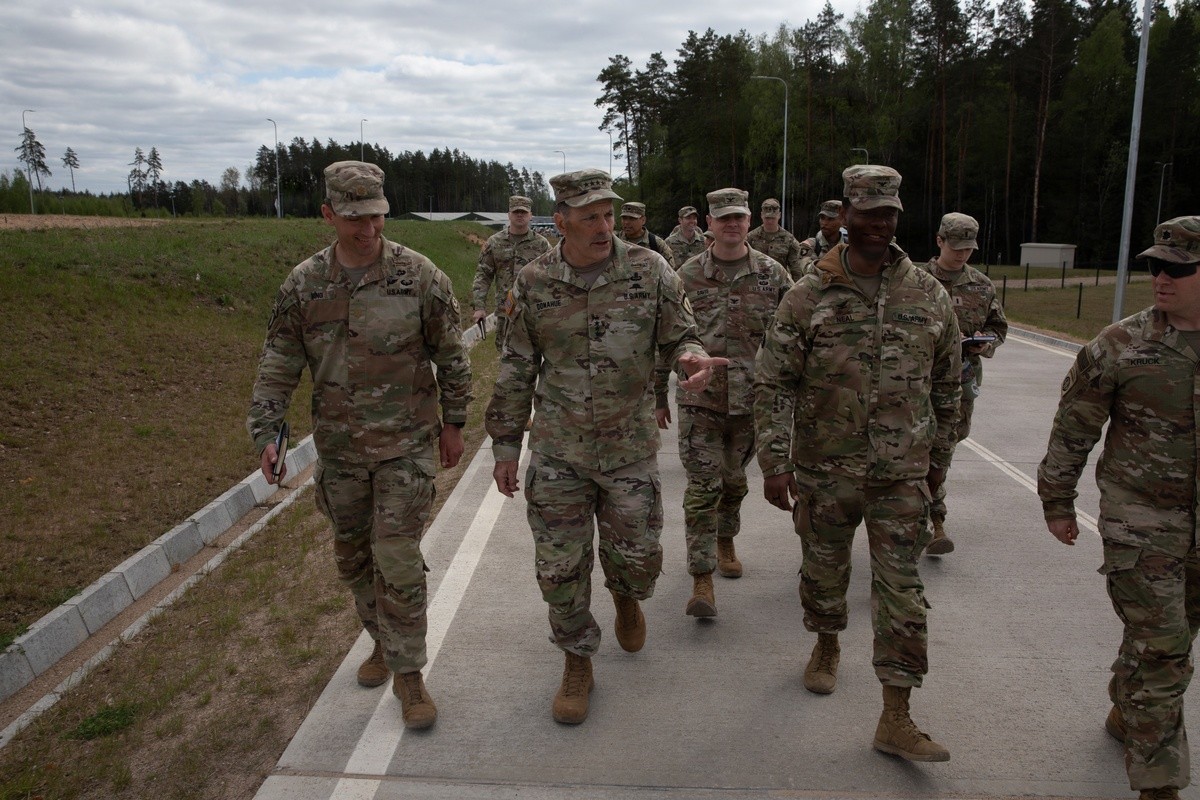
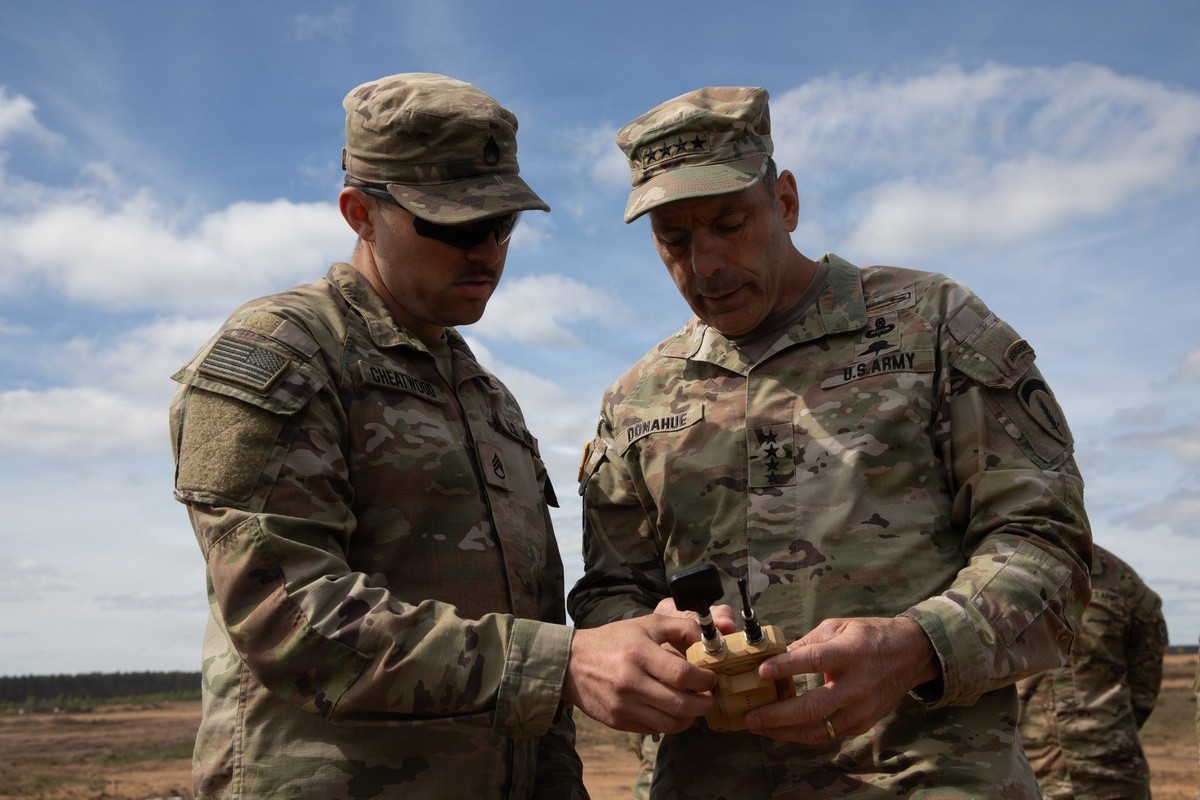
Gen. Christopher T. Donahue, commanding general of U.S. Army Europe and Africa and commander of NATO Allied Land Command, tours the Project Flytrap area of operations with 2nd Cavalry Regiment leadership at Pabradė Training Area, Lithuania, May 11, 2026. Flytrap is a multinational operation that aims to help the U.S. and its allies address the expansion of drones on the battlefield by evaluating commercial solutions that can operate within NATO’s existing air defense networks. From April 27 to May 31, 2026, U.S. and Allied forces will conduct Project Flytrap as part of a series of linked exercises, including Sword 26, Saber Strike, Immediate Response, and Swift Response, which transform experimentation into capability. During Project Flytrap, Soldiers integrate counter-unmanned systems, AI-enabled command and control, and live data networks to move faster, decide faster, and fight more effectively across all domains. (U.S. Army photo by Sgt. Nicodemus Taylor)
(Photo Credit: Sgt. Nicodemus Taylor)View original4 / 23
Gen. Christopher T. Donahue, commanding general of U.S. Army Europe and Africa and commander of NATO Allied Land Command, operates an unmanned ground vehicle during Project Flytrap at Pabradė Training Area, Lithuania, May 11, 2026. Donahue assumed command in December 2024 and now oversees U.S. Army operations across Europe and Africa while helping advance allied land-power integration at the strategic level. From April 27 to May 31, 2026, U.S. and Allied forces will conduct Project Flytrap as part of a series of linked exercises, including Sword 26, Saber Strike, Immediate Response, and Swift Response, which transform experimentation into capability. During Project Flytrap, Soldiers integrate counter-unmanned systems, AI-enabled command and control, and live data networks to move faster, decide faster, and fight more effectively across all domains. (U.S. Army photo by Sgt. Nicodemus Taylor)
(Photo Credit: Sgt. Nicodemus Taylor)View original5 / 23
U.S. Army Staff Sgt. Fahad Kasamba, an infantryman assigned to Echo Troop, 2nd Squadron, 2nd Cavalry Regiment, engages a simulated enemy position alongside fellow Soldiers during the force-on-force phase of Project Flytrap at Pabradė Training Area, Lithuania, May 4, 2026. U.S. Soldiers faced off against British paratroopers from the U.K. Parachute Regiment in a series of simulated engagements designed to test counter-unmanned aerial system integration in a contested environment. From April 27 to May 31, 2026, U.S. and Allied forces will conduct Project Flytrap as part of a series of linked exercises, including Sword 26, Saber Strike, Immediate Response, and Swift Response, which transform experimentation into capability. During Project Flytrap, Soldiers integrate counter-unmanned systems, AI-enabled command and control, and live data networks to move faster, decide faster, and fight more effectively across all domains. (U.S. Army photo by Sgt. Max Elliott)
(Photo Credit: Sgt. Max Elliott)View original6 / 23
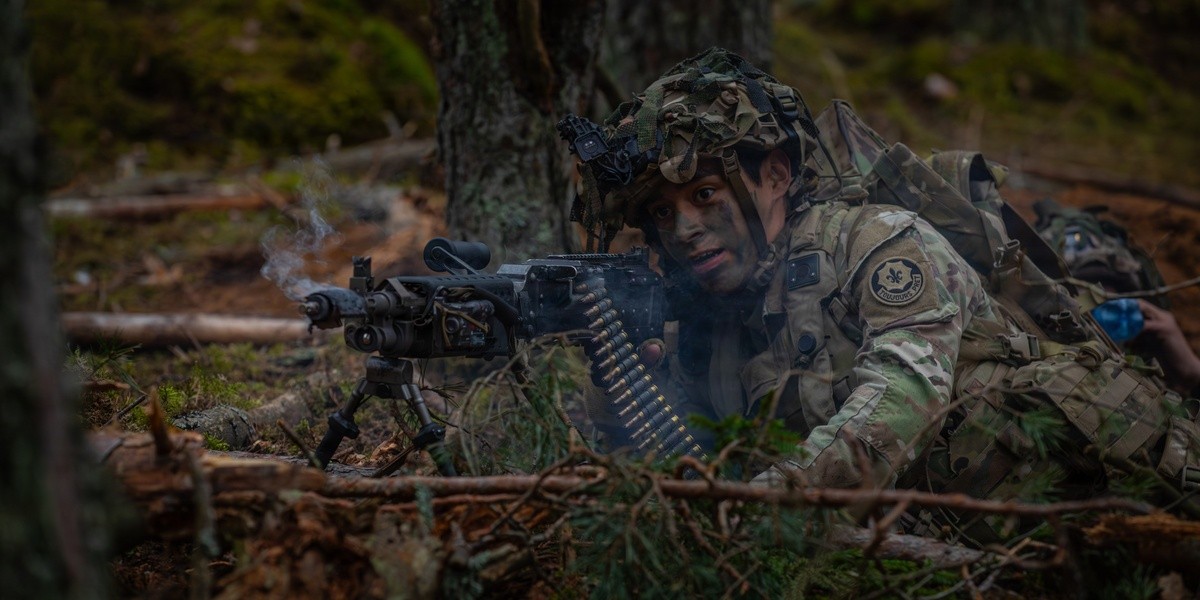
U.S. Army Pvt. Camden Lapenta, an infantryman assigned to Echo Troop, 2nd Squadron, 2nd Cavalry Regiment, mans an M249 light machine gun from a fighting position during the force-on-force phase of Project Flytrap at Pabradė Training Area, Lithuania, May 4, 2026. U.S. Soldiers faced off against British paratroopers from the U.K. Parachute Regiment in a series of simulated engagements designed to test counter-unmanned aerial system integration in a contested environment. From April 27 to May 31, 2026, U.S. and Allied forces will conduct Project Flytrap as part of a series of linked exercises, including Sword 26, Saber Strike, Immediate Response, and Swift Response, which transform experimentation into capability. During Project Flytrap, Soldiers integrate counter-unmanned systems, AI-enabled command and control, and live data networks to move faster, decide faster, and fight more effectively across all domains. (U.S. Army photo by Sgt. Max Elliott)
(Photo Credit: Sgt. Max Elliott)View original7 / 23
From left, U.S. Army Pfc. Chase Anders, an infantryman, and Spc. Anthony Reyes, both infantrymen assigned to Echo Troop, 2nd Squadron, 2nd Cavalry Regiment, engage a simulated enemy position during the force-on-force phase of Project Flytrap at Pabradė Training Area, Lithuania, May 4, 2026. U.S. Soldiers faced off against British paratroopers from the U.K. Parachute Regiment in a series of simulated engagements designed to test counter-unmanned aerial system integration in a contested environment. From April 27 to May 31, 2026, U.S. and Allied forces will conduct Project Flytrap as part of a series of linked exercises, including Sword 26, Saber Strike, Immediate Response, and Swift Response, which transform experimentation into capability. During Project Flytrap, Soldiers integrate counter-unmanned systems, AI-enabled command and control, and live data networks to move faster, decide faster, and fight more effectively across all domains. (U.S. Army photo by Sgt. Max Elliott)
(Photo Credit: Sgt. Max Elliott)View original8 / 23
Pfc. Tommy Spurr, an infantryman assigned to Echo Troop, 2nd Squadron, 2nd Cavalry Regiment occupies a fighting position during the force-on-force phase of Project Flytrap at Pabradė Training Area, Lithuania, May 8, 2026. Forces from the U.S. and U.K. are participating in this iteration of the Flytrap exercise to increase interoperability and build relationships while also improving modern warfighting capabilities. From April 27 to May 31, 2026, U.S. and Allied forces will conduct Project Flytrap as part of a series of linked exercises, including Sword 26, Saber Strike, Immediate Response, and Swift Response, which transform experimentation into capability. During Project Flytrap, Soldiers integrate counter-unmanned systems, AI-enabled command and control, and live data networks to move faster, decide faster, and fight more effectively across all domains. (U.S. Army photo by Sgt. Nicodemus Taylor)
(Photo Credit: Sgt. Nicodemus Taylor)View original9 / 23
U.S. Army Spc. Jonathan Agurcia, an infantryman assigned to Echo Troop, 2nd Squadron, 2nd Cavalry Regiment, prepares a small unmanned aerial system for flight during the force-on-force phase of Project Flytrap at Pabradė Training Area, Lithuania, May 4, 2026. U.S. Soldiers faced off against British paratroopers from the U.K. Parachute Regiment in a series of simulated engagements designed to test counter-unmanned aerial system integration in a contested environment. From April 27 to May 31, 2026, U.S. and Allied forces will conduct Project Flytrap as part of a series of linked exercises, including Sword 26, Saber Strike, Immediate Response, and Swift Response, which transform experimentation into capability. During Project Flytrap, Soldiers integrate counter-unmanned systems, AI-enabled command and control, and live data networks to move faster, decide faster, and fight more effectively across all domains. (U.S. Army photo by Sgt. Max Elliott)
(Photo Credit: Sgt. Max Elliott)View original10 / 23
U.S. Army Sgt. Jeremiah Ray, an infantryman assigned to Echo Troop, 2nd Squadron, 2nd Cavalry Regiment, engages an enemy during the force-on-force phase of Project Flytrap at Pabradė Training Area, Lithuania, May 8, 2026. The exercise involved U.S. Soldiers performing tactical movements, reacting to enemy contact, responding to encounters with enemy unmanned aerial systems, and utilizing their own UAS for surveillance and reconnaissance. From April 27 to May 31, 2026, U.S. and Allied forces will conduct Project Flytrap as part of a series of linked exercises, including Sword 26, Saber Strike, Immediate Response, and Swift Response, which transform experimentation into capability. During Project Flytrap, Soldiers integrate counter-unmanned systems, AI-enabled command and control, and live data networks to move faster, decide faster, and fight more effectively across all domains. (U.S. Army photo by Sgt. Nicodemus Taylor)
(Photo Credit: Sgt. Nicodemus Taylor)View original11 / 23
U.S. Army Sgt. Nicodemus Taylor, a public affairs mass communication specialist assigned to the 196th Mobile Public Affairs Detachment, photographs counter-unmanned aerial system live-fire testing at Pabradė Training Area, Lithuania, May 14, 2026. Public affairs Soldiers document training events and operations across the European theater to inform the American public and demonstrate the U.S. Army's commitment to NATO collective defense along the eastern flank. From April 27 to May 31, 2026, U.S. and Allied forces will conduct Project Flytrap as part of a series of linked exercises, including Sword 26, Saber Strike, Immediate Response, and Swift Response, which transform experimentation into capability. During Project Flytrap, Soldiers integrate counter-unmanned systems, AI-enabled command and control, and live data networks to move faster, decide faster, and fight more effectively across all domains.
(U.S. Army photo by Sgt. Max Elliott)
(Photo Credit: Sgt. Max Elliott)View original12 / 23
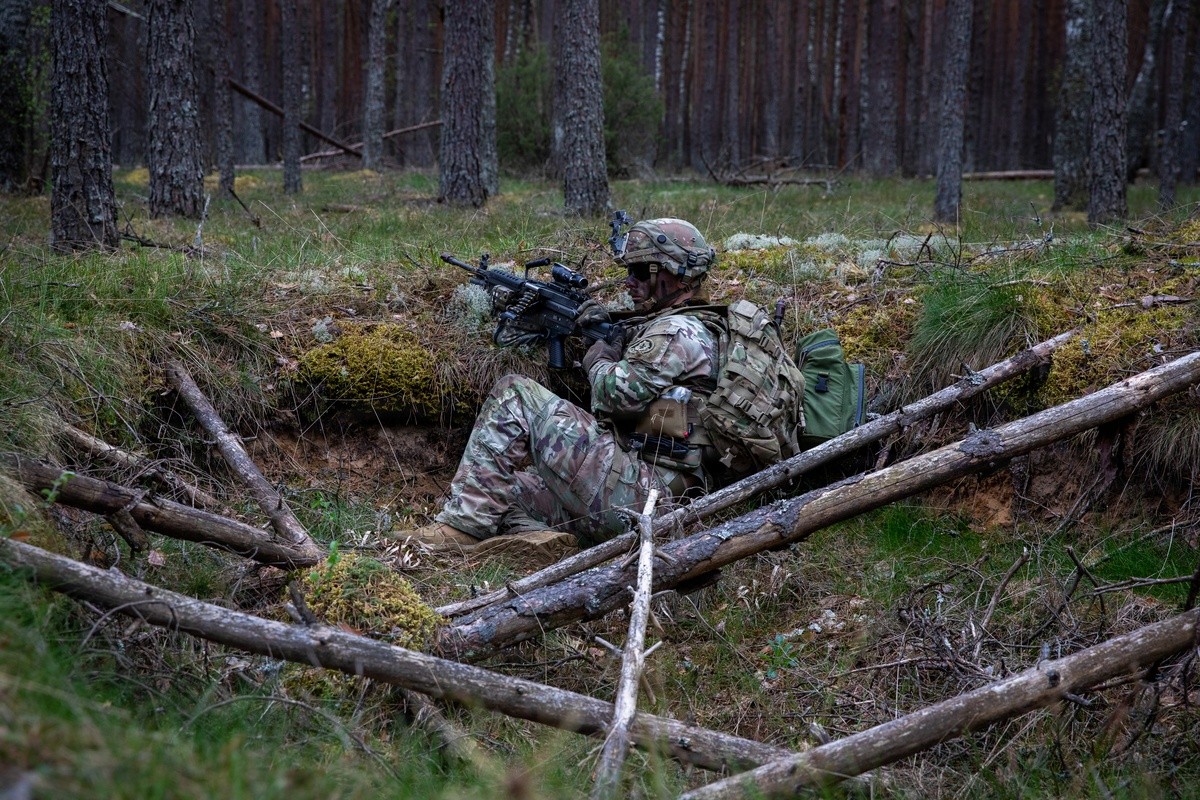
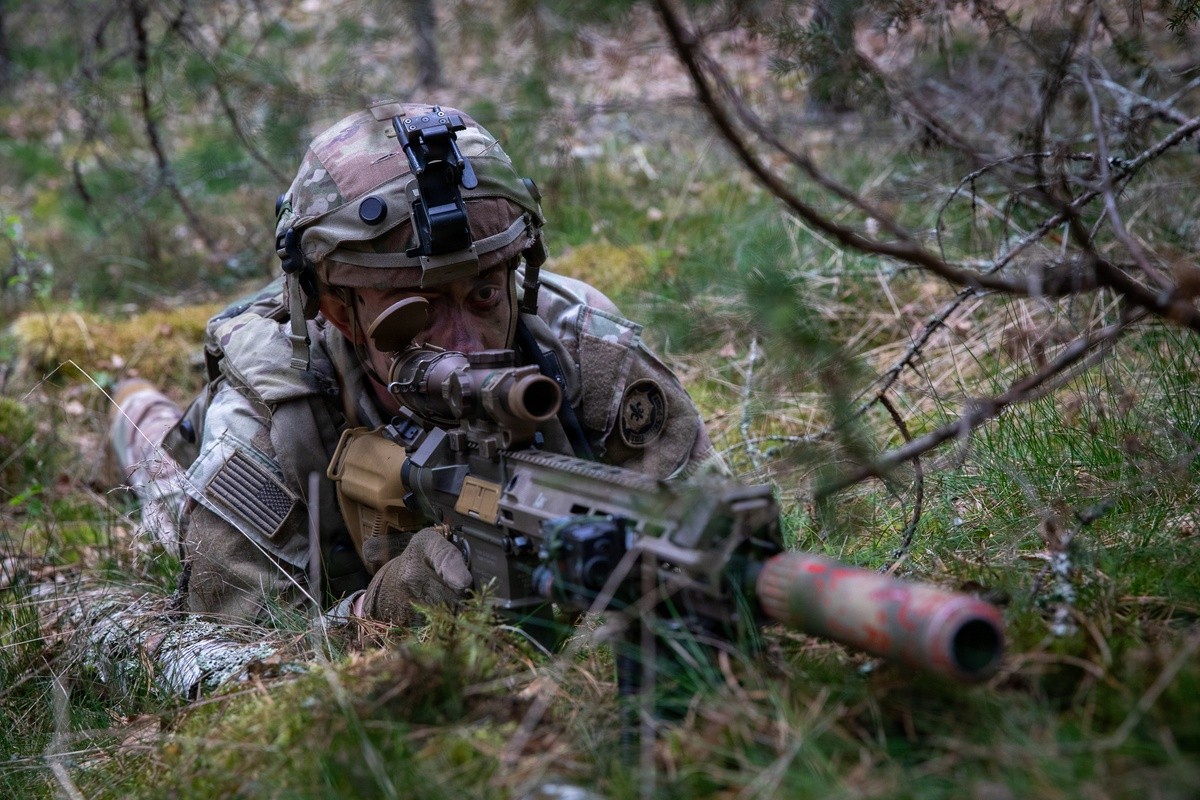
U.S. Army Pfc. Bryce VanAntwerp, an infantryman assigned to Echo Troop, 2nd Squadron, 2nd Cavalry Regiment, looks down the sights of his weapon while posting security during the force-on-force phase of Project Flytrap at Pabradė Training Area, Lithuania, May 8, 2026. Flytrap is a multinational exercise that directly supports the Eastern Flank Deterrence Initiative, NATO’s plan for a unified, layered air defense shield along its eastern borders. From April 27 to May 31, 2026, U.S. and Allied forces will conduct Project Flytrap as part of a series of linked exercises, including Sword 26, Saber Strike, Immediate Response, and Swift Response, which transform experimentation into capability. During Project Flytrap, Soldiers integrate counter-unmanned systems, AI-enabled command and control, and live data networks to move faster, decide faster, and fight more effectively across all domains. (U.S. Army photo by Sgt. Nicodemus Taylor)
(Photo Credit: Sgt. Nicodemus Taylor)View original13 / 23
Two U.S. Army Soldiers assigned to Echo Troop, 2nd Squadron, 2nd Cavalry Regiment operate an airborne reconnaissance drone during the force-on-force phase of Project Flytrap at Pabradė Training Area, Lithuania, May 8, 2026. Flytrap is a multinational operation that aims to help the U.S. and allies address the proliferation of drones on the battlefield by evaluating commercial solutions that can operate within NATO’s existing air defense networks.From April 27 to May 31, 2026, U.S. and Allied forces will conduct Project Flytrap as part of a series of linked exercises, including Sword 26, Saber Strike, Immediate Response, and Swift Response, which transform experimentation into capability. During Project Flytrap, Soldiers integrate counter-unmanned systems, AI-enabled command and control, and live data networks to move faster, decide faster, and fight more effectively across all domains. (U.S. Army photo by Sgt. Nicodemus Taylor)
(Photo Credit: Sgt. Nicodemus Taylor)View original14 / 23
Sgt. 1st Class Cozzie Horsford, an infantryman assigned to 2nd Squadron, 2nd Cavalry Regiment, gives instruction to paratroopers from the U.K. Parachute Regiment during Project Flytrap at Pabradė Training Area, Lithuania, April 30, 2026. Project Flytrap is part of a larger series of linked exercises collectively called Sword26 that allows the U.S. to exchange resources, expertise and intelligence with allies and partners to strengthen relationships and increase the ability to fight effectively. (U.S. Army photo by Sgt. Nicodemus Taylor)
(Photo Credit: Sgt. Nicodemus Taylor)View original15 / 23
U.S. Army Pvt. Cody Reynolds, above, and Spc. Anthony Reyes, both infantrymen assigned to Echo Troop, 2nd Squadron, 2nd Cavalry Regiment, clear a trench during the force-on-force phase of Project Flytrap at Pabradė Training Area, Lithuania, May 4, 2026. U.S. Soldiers faced off against British paratroopers from the U.K. Parachute Regiment in a series of simulated engagements designed to test counter-unmanned aerial system integration in a contested environment. From April 27 to May 31, 2026, U.S. and Allied forces will conduct Project Flytrap as part of a series of linked exercises, including Sword 26, Saber Strike, Immediate Response, and Swift Response, which transform experimentation into capability. During Project Flytrap, Soldiers integrate counter-unmanned systems, AI-enabled command and control, and live data networks to move faster, decide faster, and fight more effectively across all domains. (U.S. Army photo by Sgt. Max Elliott)
(Photo Credit: Sgt. Max Elliott)View original16 / 23
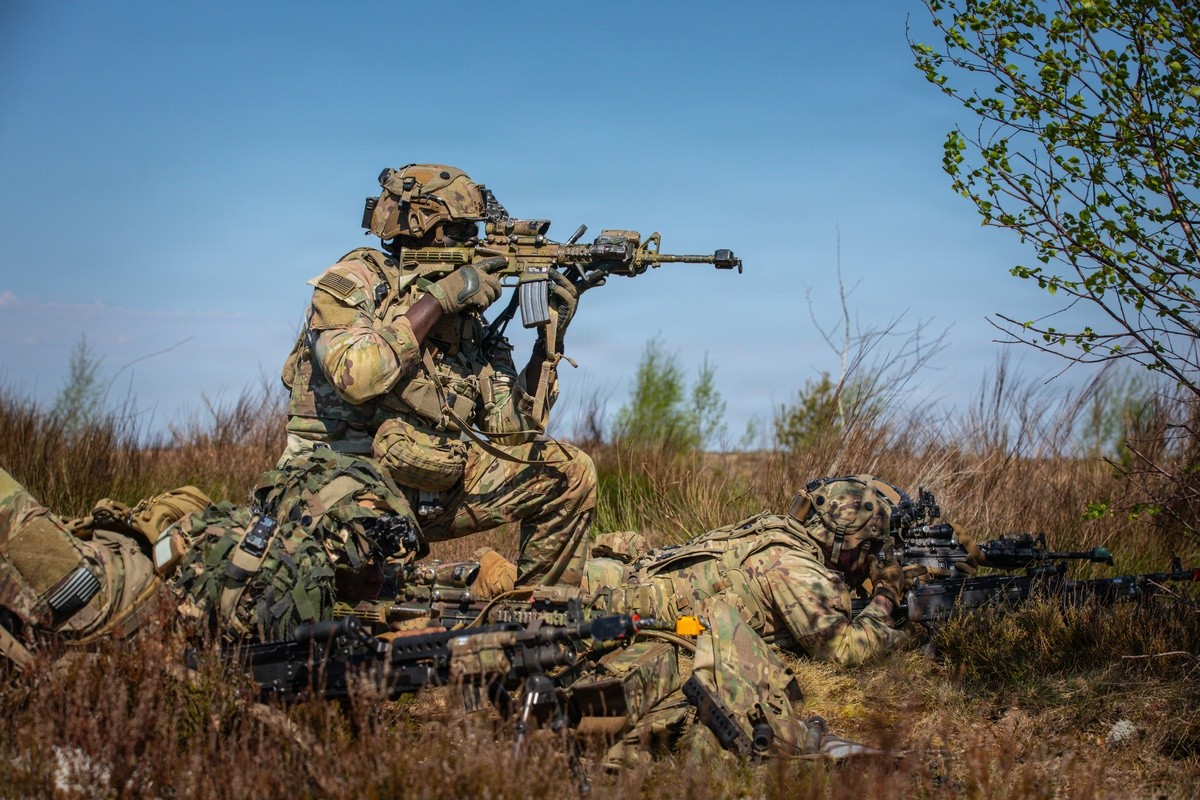
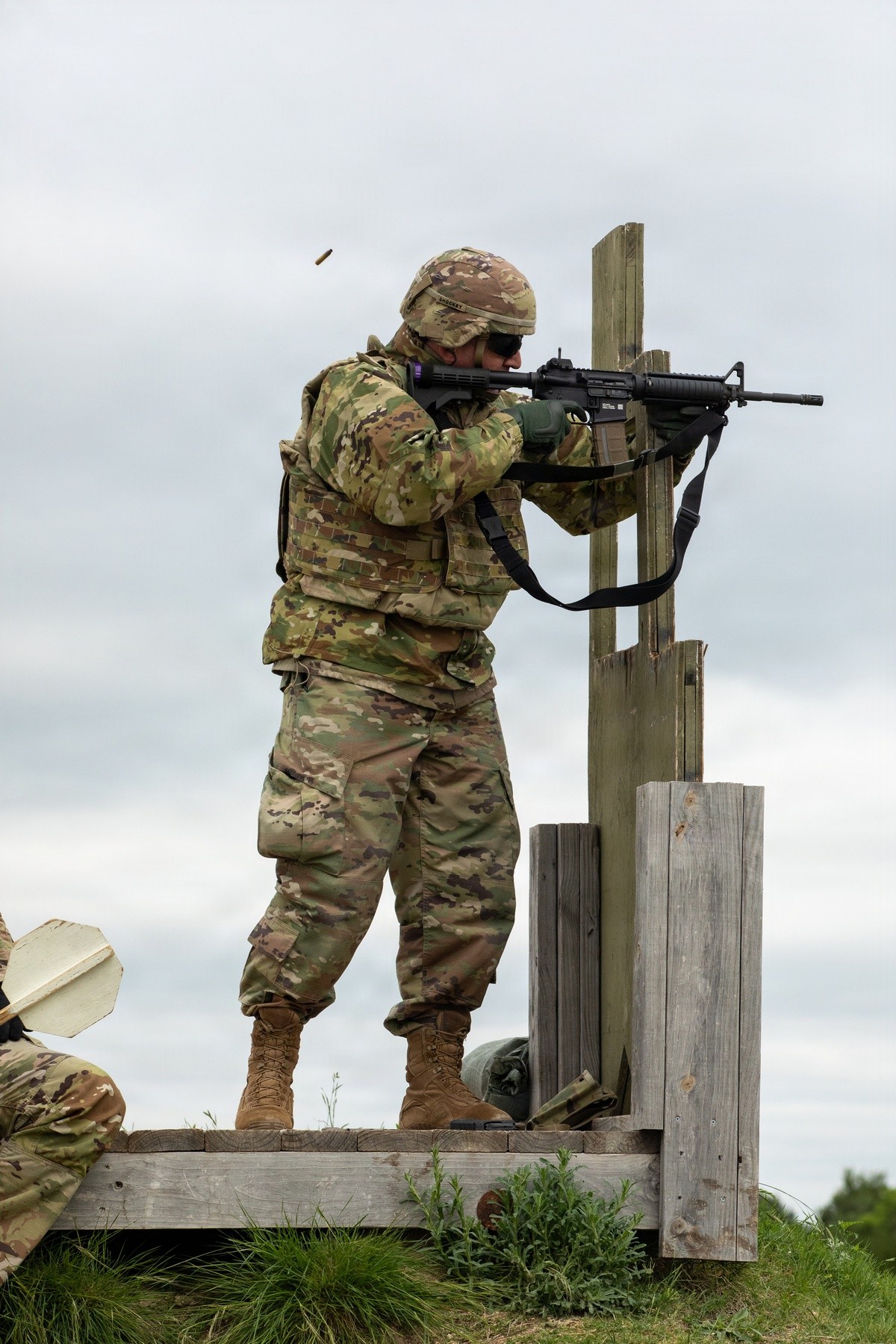
A Soldier fires his M4 carbine during a pre-deployment weapons qualification at Fort Hood, Texas, April 18, 2026. Qualifying on individual weapon systems is an annual Army requirement for Soldiers in order to remain proficient in Army marksmanship standards. (U.S. Army photo by Sgt. Nicodemus Taylor)
(Photo Credit: Sgt. Nicodemus Taylor)View original17 / 23
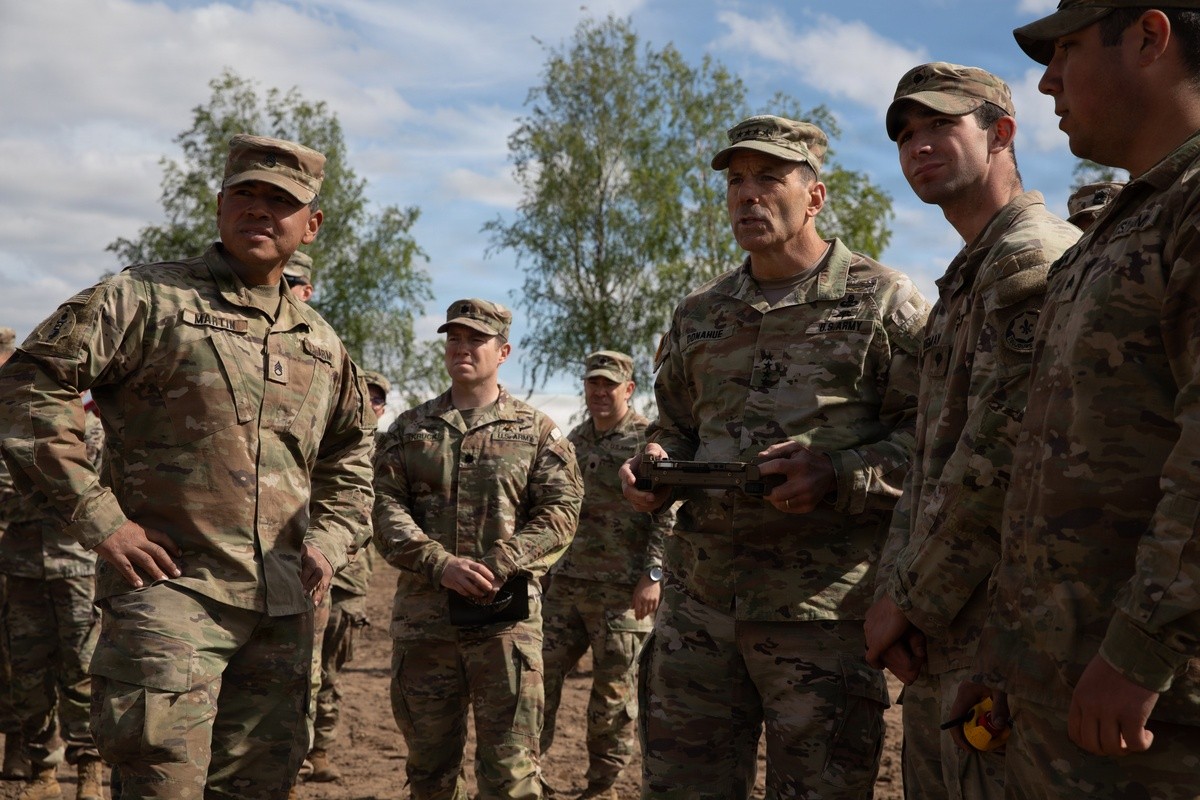
Gen. Christopher T. Donahue, commanding general of U.S. Army Europe and Africa and commander of NATO Allied Land Command, speaks with U.S. Army Soldiers participating in Project Flytrap at Pabradė Training Area, Lithuania, May 11, 2026. Flytrap is a multinational operation that aims to help the U.S. and its allies address the expansion of drones on the battlefield by evaluating commercial solutions that can operate within NATO’s existing air defense networks. From April 27 to May 31, 2026, U.S. and Allied forces will conduct Project Flytrap as part of a series of linked exercises, including Sword 26, Saber Strike, Immediate Response, and Swift Response, which transform experimentation into capability. During Project Flytrap, Soldiers integrate counter-unmanned systems, AI-enabled command and control, and live data networks to move faster, decide faster, and fight more effectively across all domains. (U.S. Army photo by Sgt. Nicodemus Taylor)
(Photo Credit: Sgt. Nicodemus Taylor)View original18 / 23
U.S. Soldiers and U.K. paratroopers pose for a photo during preparations for Project Flytrap at Pabradė Training Area, Lithuania, April 30, 2026. The exercise tests maneuver-based counter-drone systems designed to provide Soldiers with low-cost, rapidly deployable solutions against evolving aerial threats. (U.S. Army photo by Sgt. Max Elliott)
(Photo Credit: Sgt. Max Elliott)View original19 / 23
U.S. Army Soldiers assigned to Echo Troop, 2nd Squadron, 2nd Cavalry Regiment, assault an objective during the force-on-force phase of Project Flytrap at Pabradė Training Area, Lithuania, May 4, 2026. U.S. Soldiers faced off against British paratroopers from the U.K. Parachute Regiment in a series of simulated engagements designed to test counter-unmanned aerial system integration in a contested environment. From April 27 to May 31, 2026, U.S. and Allied forces will conduct Project Flytrap as part of a series of linked exercises, including Sword 26, Saber Strike, Immediate Response, and Swift Response, which transform experimentation into capability. During Project Flytrap, Soldiers integrate counter-unmanned systems, AI-enabled command and control, and live data networks to move faster, decide faster, and fight more effectively across all domains. (U.S. Army photo by Sgt. Max Elliott)
(Photo Credit: Sgt. Max Elliott)View original20 / 23
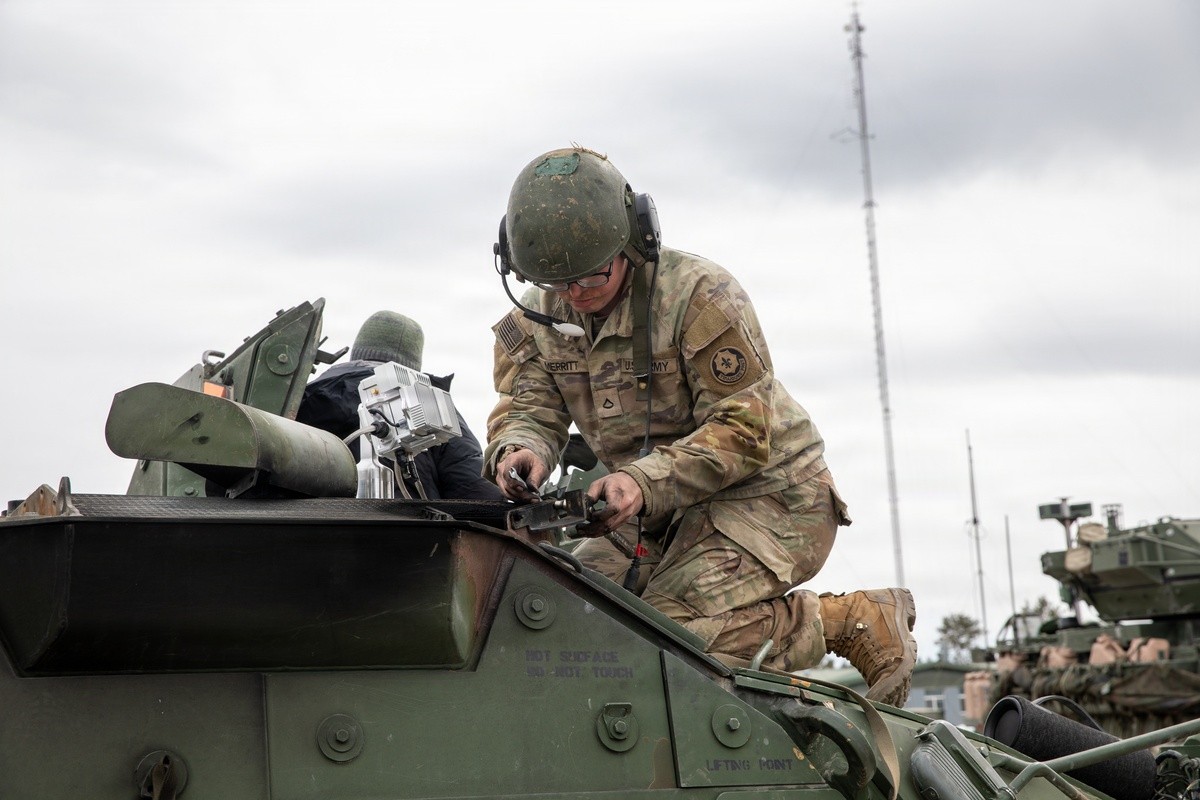
Pfc. Hunter Merritt, an infantryman assigned to 2nd Squadron, 2nd Cavalry Regiment, replaces a vent cover on an M1296 Stryker during Project Flytrap at Pabradė Training Area, Lithuania, April 30, 2026. Project Flytrap is a multinational operation that aims to help the U.S. and allies address the proliferation of drones on the battlefield by evaluating commercial solutions that can operate within NATO’s existing air defense networks. (U.S. Army photo by Sgt. Nicodemus Taylor)
(Photo Credit: Sgt. Nicodemus Taylor)View original21 / 23
From left, U.S. Army Staff Sgt. Fahad Kasamba and Spc. Dennis Workman, infantrymen assigned to Echo Troop, 2nd Squadron, 2nd Cavalry Regiment, coordinate movement during the force-on-force phase of Project Flytrap at Pabradė Training Area, Lithuania, May 4, 2026. U.S. Soldiers faced off against British paratroopers from the U.K. Parachute Regiment in a series of simulated engagements designed to test counter-unmanned aerial system integration in a contested environment. From April 27 to May 31, 2026, U.S. and Allied forces will conduct Project Flytrap as part of a series of linked exercises, including Sword 26, Saber Strike, Immediate Response, and Swift Response, which transform experimentation into capability. During Project Flytrap, Soldiers integrate counter-unmanned systems, AI-enabled command and control, and live data networks to move faster, decide faster, and fight more effectively across all domains. (U.S. Army photo by Sgt. Max Elliott)
(Photo Credit: Sgt. Max Elliott)View original22 / 23
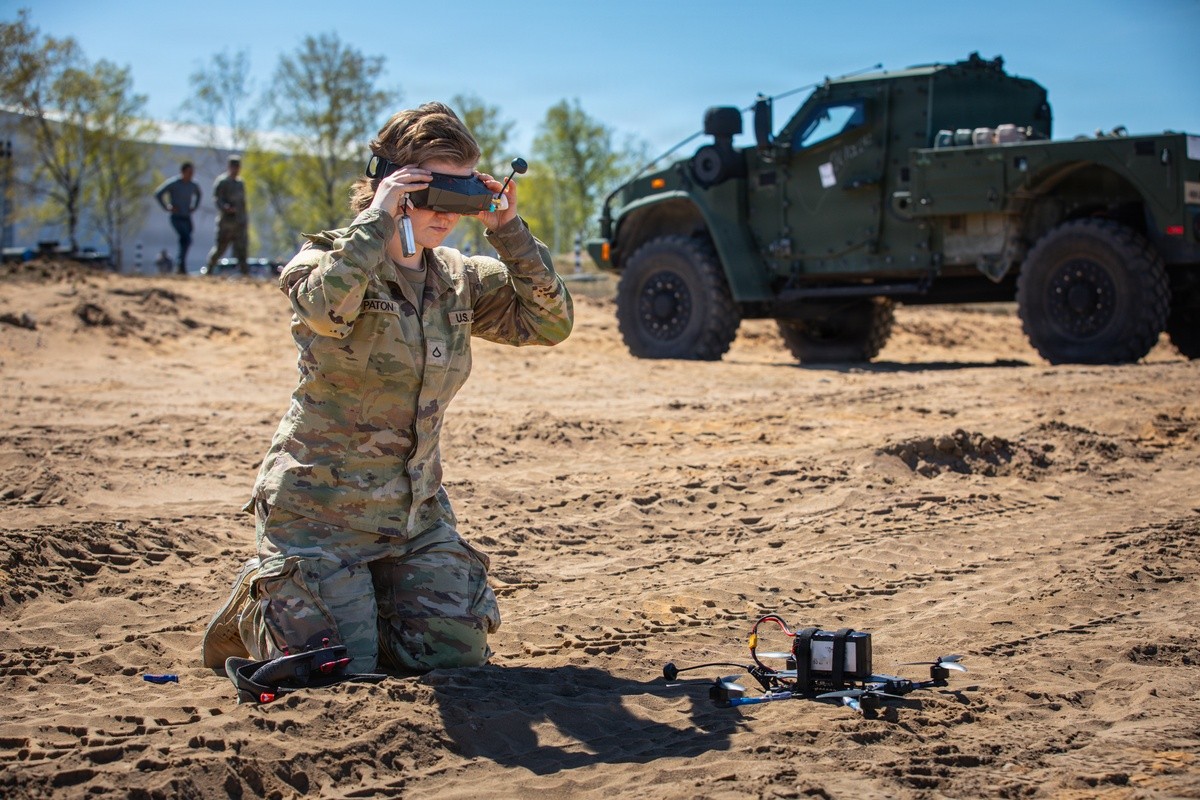
Pfc. Hailey Paton, an infantryman assigned to Echo Troop, 2nd Squadron, 2nd Cavalry Regiment, monitors a first-person view feed while operating an unmanned aerial system during Project Flytrap at Pabradė Training Area, Lithuania, May 2, 2026. Project Flytrap places emerging counter-drone technology directly in the hands of Soldiers to generate real-time feedback and inform future Army training requirements and doctrine. (U.S. Army photo by Sgt. Max Elliott)
(Photo Credit: Sgt. Max Elliott)View original23 / 23
U.S. Army Sgt. Esteban Ward, an infantryman assigned to Echo Troop, 2nd Squadron, 2nd Cavalry Regiment, operates a drone overhead from a remote command and control device during the force-on-force phase of Project Flytrap at Pabradė Training Area, Lithuania, May 8, 2026. Flytrap is a multinational exercise intended to increase cohesive integration among different intelligence, fire and protection systems to combat evolving drone threats. From April 27 to May 31, 2026, U.S. and Allied forces will conduct Project Flytrap as part of a series of linked exercises, including Sword 26, Saber Strike, Immediate Response, and Swift Response, which transform experimentation into capability. During Project Flytrap, Soldiers integrate counter-unmanned systems, AI-enabled command and control, and live data networks to move faster, decide faster, and fight more effectively across all domains. (U.S. Army photo by Sgt. Nicodemus Taylor)
(Photo Credit: Sgt. Nicodemus Taylor)View original
This is Project Flytrap 5.0, a U.S. Army V Corps counter-unmanned aerial systems initiative that has spent the past year scaling from the individual Soldier to the squadron level against the same low-cost drones reshaping the modern battlefield. Held from April 30 to May 19 as part of Saber Strike 26, the exercise puts 2nd Squadron, 2nd Cavalry Regiment in the lead, with the 52nd Air Defense Artillery Brigade and the United Kingdom's 3rd Parachute Regiment integrating and testing more than 50 industry-provided technologies, including radars, radio frequency defeat systems, kinetic interceptors, launched effects and unmanned ground vehicles. The systems were networked across a combined U.S.-U.K. tactical data architecture and tested against a live opposing force.
The program’s arc has been deliberate. Iterations 2.0 through 4.0, carried out in Germany and Poland between May and August 2025, tested which counter-UAS equipment belonged at which echelon and developed and standardized initial tactics for fighting drones at the small-unit level. Flytrap 4.5 at Putlos, Germany, last November, tested the next generation of industry technology and sharpened individual operator proficiency. Now, Flytrap 5.0 is the first to integrate these systems at a squadron scale.
"We are transforming to enable offensive maneuver in a drone and electronic-warfare saturated environment, and Flytrap is essential to making that happen,” said Gen. Christopher Donahue, commander of U.S. Army Europe and Africa. “This effort is about getting technology into the hands of Soldiers, in the field, to figure out what works and what doesn’t. Then we share those lessons across the Army and the joint force, and with our allies.”
1 / 22
A counter-unmanned aerial system sits staged in a field during Project Flytrap at Pabradė Training Area, Lithuania, May 2, 2026. Project Flytrap is a counter-unmanned aerial system exercise designed to evaluate emerging technologies and inform future Army requirements and doctrine along NATO's eastern flank. (U.S. Army photo by Sgt. Max Elliott)
(Photo Credit: Sgt. Max Elliott)View original2 / 22
A U.S. Army Soldier assigned to Echo Troop, 2nd Squadron, 2nd Cavalry Regiment, engages an enemy during the force-on-force phase of Project Flytrap at Pabradė Training Area, Lithuania, May 8, 2026. Participants in the exercise used blank rounds and blank-firing adapters to simulate real-world battlefield conditions without expending live ammunition and without risk of harm. From April 27 to May 31, 2026, U.S. and Allied forces will conduct Project Flytrap as part of a series of linked exercises, including Sword 26, Saber Strike, Immediate Response, and Swift Response, which transform experimentation into capability. During Project Flytrap, Soldiers integrate counter-unmanned systems, AI-enabled command and control, and live data networks to move faster, decide faster, and fight more effectively across all domains. (U.S. Army photo by Sgt. Nicodemus Taylor)
(Photo Credit: Sgt. Nicodemus Taylor)View original3 / 22
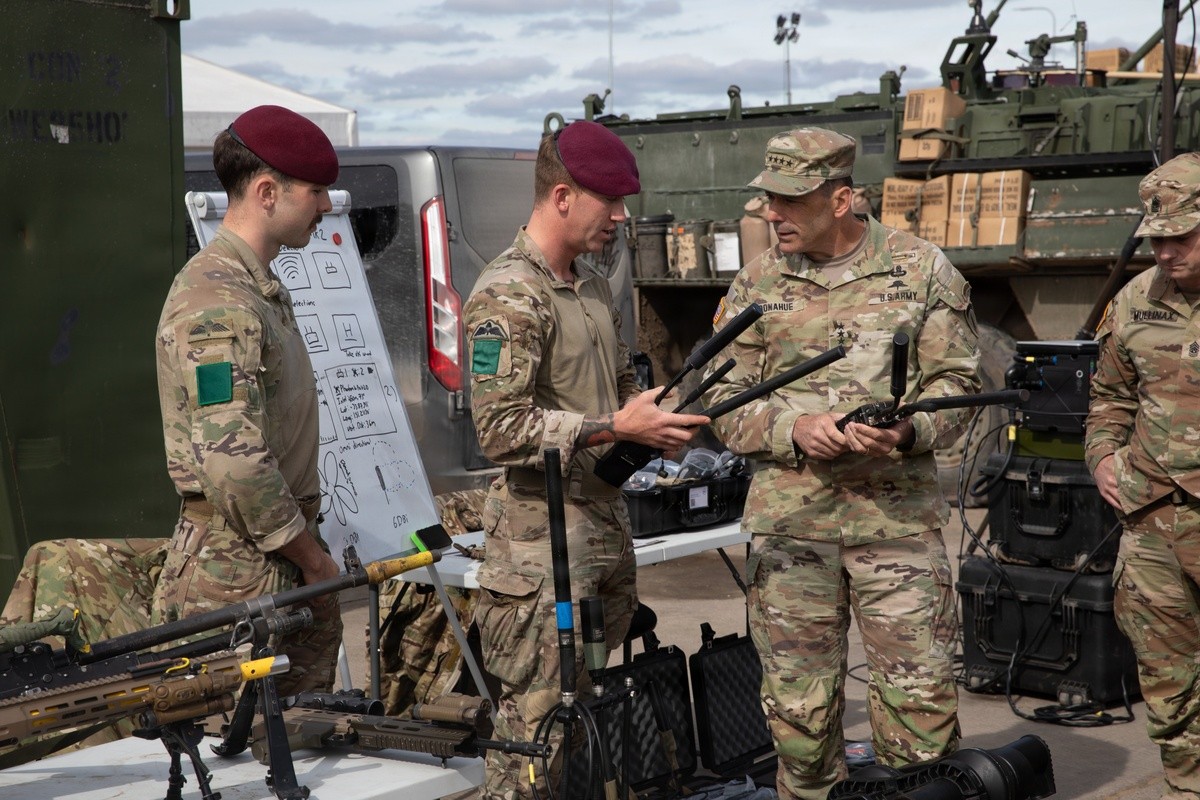
Gen. Christopher T. Donahue, commanding general of U.S. Army Europe and Africa and commander of NATO Allied Land Command, observes a demonstration of new drone technology implemented during Project Flytrap at Pabradė Training Area, Lithuania, May 11, 2026. Flytrap is a multinational operation that aims to help the U.S. and allies address the proliferation of drones on the battlefield by evaluating commercial solutions that can operate within NATO’s existing air defense networks. From April 27 to May 31, 2026, U.S. and Allied forces will conduct Project Flytrap as part of a series of linked exercises, including Sword 26, Saber Strike, Immediate Response, and Swift Response, which transform experimentation into capability. During Project Flytrap, Soldiers integrate counter-unmanned systems, AI-enabled command and control, and live data networks to move faster, decide faster, and fight more effectively across all domains. (U.S. Army photo by Sgt. Nicodemus Taylor)
(Photo Credit: Sgt. Nicodemus Taylor)View original4 / 22
U.S. Army 1st Lt. Joshua Pugh, a platoon leader assigned to Echo Troop, 2nd Squadron, 2nd Cavalry Regiment, directs his platoon during the force-on-force phase of Project Flytrap at Pabradė Training Area, Lithuania, May 4, 2026. The force-on-force phase pits U.S. Soldiers against British paratroopers from the U.K. Parachute Regiment in a series of simulated engagements designed to test counter-unmanned aerial system integration in a contested environment. From April 27 to May 31, 2026, U.S. and Allied forces will conduct Project Flytrap as part of a series of linked exercises, including Sword 26, Saber Strike, Immediate Response, and Swift Response, which transform experimentation into capability. During Project Flytrap, Soldiers integrate counter-unmanned systems, AI-enabled command and control, and live data networks to move faster, decide faster, and fight more effectively across all domains. (U.S. Army photo by Sgt. Max Elliott)
(Photo Credit: Sgt. Max Elliott)View original5 / 22
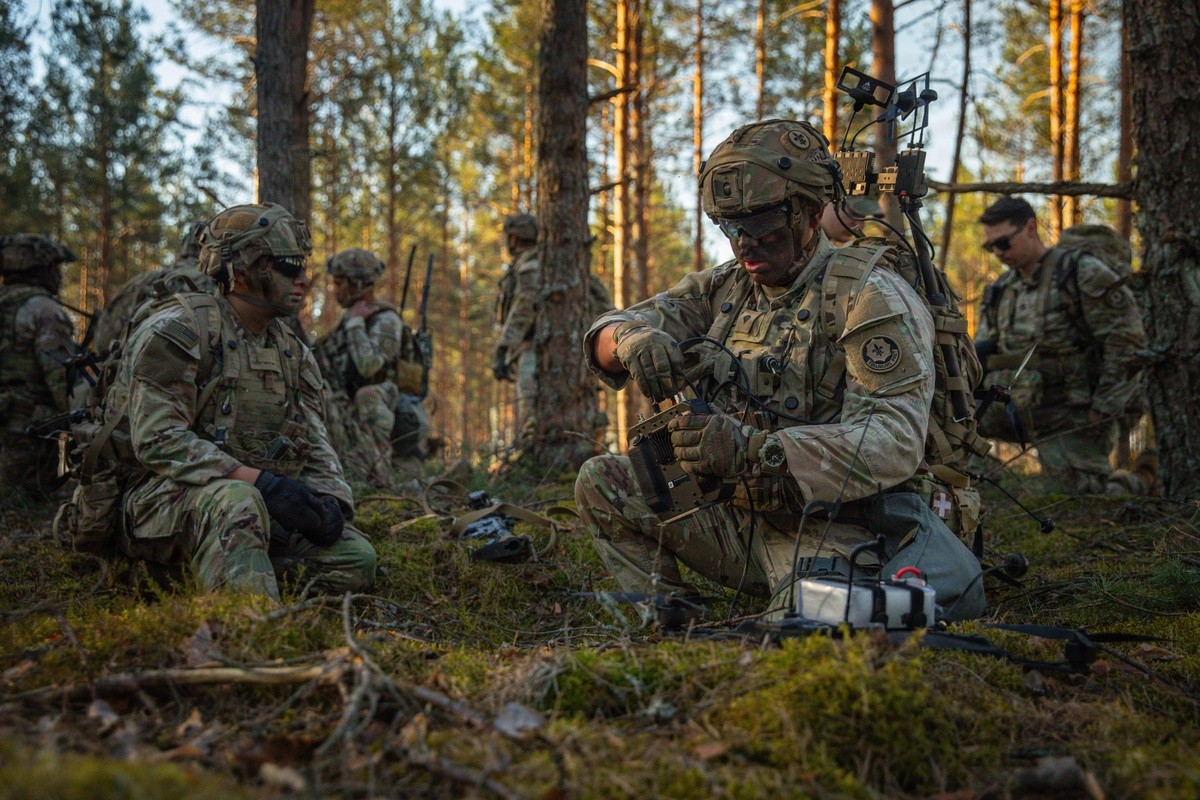
From left, U.S. Army Spc. Emilio Veliz and Pfc. Silas Moore, both signal support systems specialists assigned to 2nd Squadron, 2nd Cavalry Regiment, explain the capabilities of a counter-unmanned aerial system to a paratrooper with the U.K. Parachute Regiment ahead of Project Flytrap at Pabradė Training Area, Lithuania, April 30, 2026. The exercise is part of V Corps' broader effort to bridge the gap between laboratory innovation and field-ready solutions for Soldiers on the front line. (U.S. Army photo by Sgt. Max Elliott)
(Photo Credit: Sgt. Max Elliott)View original6 / 22
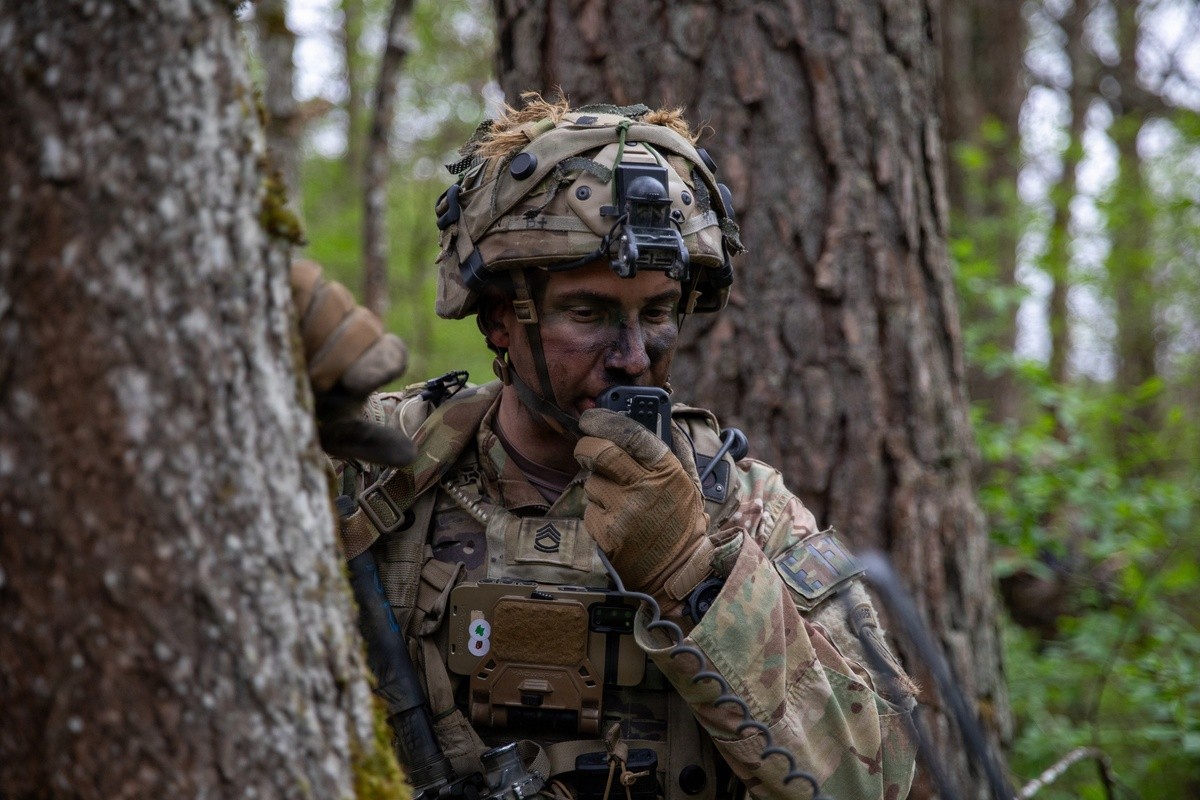
U.S. Army Sgt. 1st Class Tyler Harrington, an infantryman assigned to Echo Troop, 2nd Squadron, 2nd Cavalry Regiment, contacts higher command over the radio during the force-on-force phase of Project Flytrap at Pabradė Training Area, Lithuania, May 8, 2026. The exercise saw U.S. troops face off against paratroopers from the U.K. Parachute Regiment in combat scenarios involving simulated small arms fire, ordnance, indirect fire, and surveillance and attacks by unmanned aerial systems. From April 27 to May 31, 2026, U.S. and Allied forces will conduct Project Flytrap as part of a series of linked exercises, including Sword 26, Saber Strike, Immediate Response, and Swift Response, which transform experimentation into capability. During Project Flytrap, Soldiers integrate counter-unmanned systems, AI-enabled command and control, and live data networks to move faster, decide faster, and fight more effectively across all domains. (U.S. Army photo by Sgt. Nicodemus Taylor)
(Photo Credit: Sgt. Nicodemus Taylor)View original7 / 22
U.S. Army Pv2. Hoyce Komrosky, an infantryman assigned to Echo Troop, 2nd Squadron, 2nd Cavalry Regiment, patrols through a forested area during the force-on-force phase of Project Flytrap at Pabradė Training Area, Lithuania, May 4, 2026. U.S. Soldiers faced off against British paratroopers from the U.K. Parachute Regiment in a series of simulated engagements designed to test counter-unmanned aerial system integration in a contested environment. From April 27 to May 31, 2026, U.S. and Allied forces will conduct Project Flytrap as part of a series of linked exercises, including Sword 26, Saber Strike, Immediate Response, and Swift Response, which transform experimentation into capability. During Project Flytrap, Soldiers integrate counter-unmanned systems, AI-enabled command and control, and live data networks to move faster, decide faster, and fight more effectively across all domains. (U.S. Army photo by Sgt. Max Elliott)
(Photo Credit: Sgt. Max Elliott)View original8 / 22
Gen. Christopher T. Donahue, commanding general of U.S. Army Europe and Africa and commander of NATO Allied Land Command, engages with paratroopers from the U.K. Parachute Regiment at Pabradė Training Area during a briefing on the new equipment being used in Project Flytrap, at Pabradė Training Area, Lithuania, May 11, 2026. U.S. and British forces are participating in this iteration of the Flytrap exercise to increase interoperability and build relationships while also improving modern warfighting capabilities. From April 27 to May 31, 2026, U.S. and Allied forces will conduct Project Flytrap as part of a series of linked exercises, including Sword 26, Saber Strike, Immediate Response, and Swift Response, which transform experimentation into capability. During Project Flytrap, Soldiers integrate counter-unmanned systems, AI-enabled command and control, and live data networks to move faster, decide faster, and fight more effectively across all domains. (U.S. Army photo by Sgt. Nicodemus Taylor)
(Photo Credit: Sgt. Nicodemus Taylor)View original9 / 22
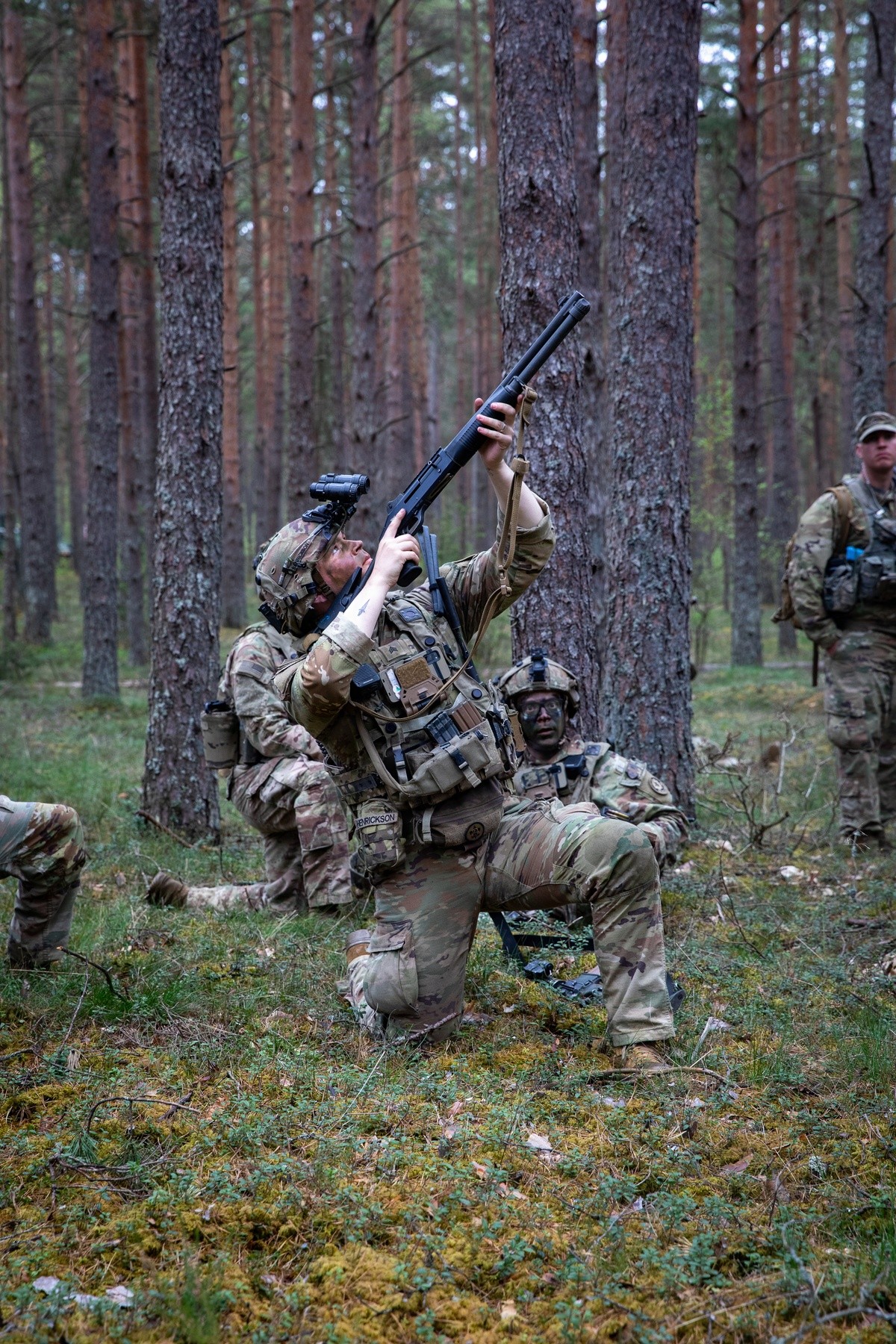
U.S. Army Pfc. Kenneth Spalding and Sgt. 1st Class Tyler Harrington, infantrymen assigned to Echo Troop, 2nd Squadron, 2nd Cavalry Regiment, watch for drones overhead during the force-on-force phase of Project Flytrap at Pabradė Training Area, Lithuania, May 8, 2026. Flytrap is a multinational operation that aims to help the U.S. and allies address the proliferation of drones on the battlefield by evaluating commercial solutions that can operate within NATO’s existing air defense networks. From April 27 to May 31, 2026, U.S. and Allied forces will conduct Project Flytrap as part of a series of linked exercises, including Sword 26, Saber Strike, Immediate Response, and Swift Response, which transform experimentation into capability. During Project Flytrap, Soldiers integrate counter-unmanned systems, AI-enabled command and control, and live data networks to move faster, decide faster, and fight more effectively across all domains. (U.S. Army photo by Sgt. Nicodemus Taylor)
(Photo Credit: Sgt. Nicodemus Taylor)View original10 / 22
Pfc. Silas Moore, a signal support systems specialist assigned to 2nd Squadron, 2nd Cavalry Regiment, adjusts communications equipment on an M1296 Stryker during Project Flytrap at Pabradė Training Area, Lithuania, April 30, 2026. Project Flytrap directly supports the Eastern Flank Deterrence Initiative, NATO’s plan for a unified, layered air defense shield along its eastern borders. (U.S. Army photo by Sgt. Nicodemus Taylor)
(Photo Credit: Sgt. Nicodemus Taylor)View original11 / 22
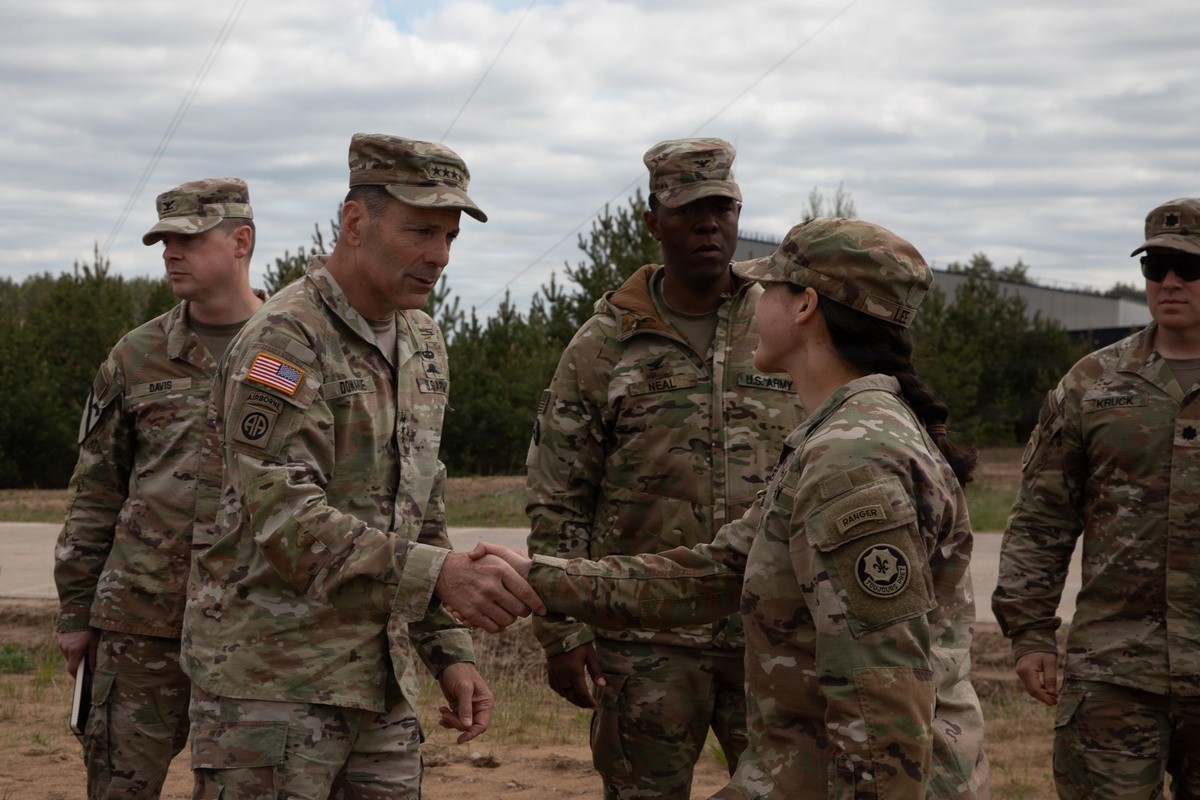
Gen. Christopher T. Donahue, commanding general of U.S. Army Europe and Africa and commander of NATO Allied Land Command, greets a U.S. Army Soldier and participant in Project Flytrap at Pabradė Training Area, Lithuania, May 11, 2026. Flytrap is a multinational exercise that directly supports the Eastern Flank Deterrence Initiative, NATO’s plan for a unified, layered air defense shield along its eastern borders. From April 27 to May 31, 2026, U.S. and Allied forces will conduct Project Flytrap as part of a series of linked exercises, including Sword 26, Saber Strike, Immediate Response, and Swift Response, which transform experimentation into capability. During Project Flytrap, Soldiers integrate counter-unmanned systems, AI-enabled command and control, and live data networks to move faster, decide faster, and fight more effectively across all domains. (U.S. Army photo by Sgt. Nicodemus Taylor)
(Photo Credit: Sgt. Nicodemus Taylor)View original12 / 22
U.S. Army Pfc. Mickey Leonard, an infantryman assigned to Echo Troop, 2nd Squadron, 2nd Cavalry Regiment, pulls security in a prone position during the force-on-force phase of Project Flytrap at Pabradė Training Area, Lithuania, May 4, 2026. U.S. Soldiers faced off against British paratroopers from the U.K. Parachute Regiment in a series of simulated engagements designed to test counter-unmanned aerial system integration in a contested environment. From April 27 to May 31, 2026, U.S. and Allied forces will conduct Project Flytrap as part of a series of linked exercises, including Sword 26, Saber Strike, Immediate Response, and Swift Response, which transform experimentation into capability. During Project Flytrap, Soldiers integrate counter-unmanned systems, AI-enabled command and control, and live data networks to move faster, decide faster, and fight more effectively across all domains. (U.S. Army photo by Sgt. Max Elliott)
(Photo Credit: Sgt. Max Elliott)View original13 / 22
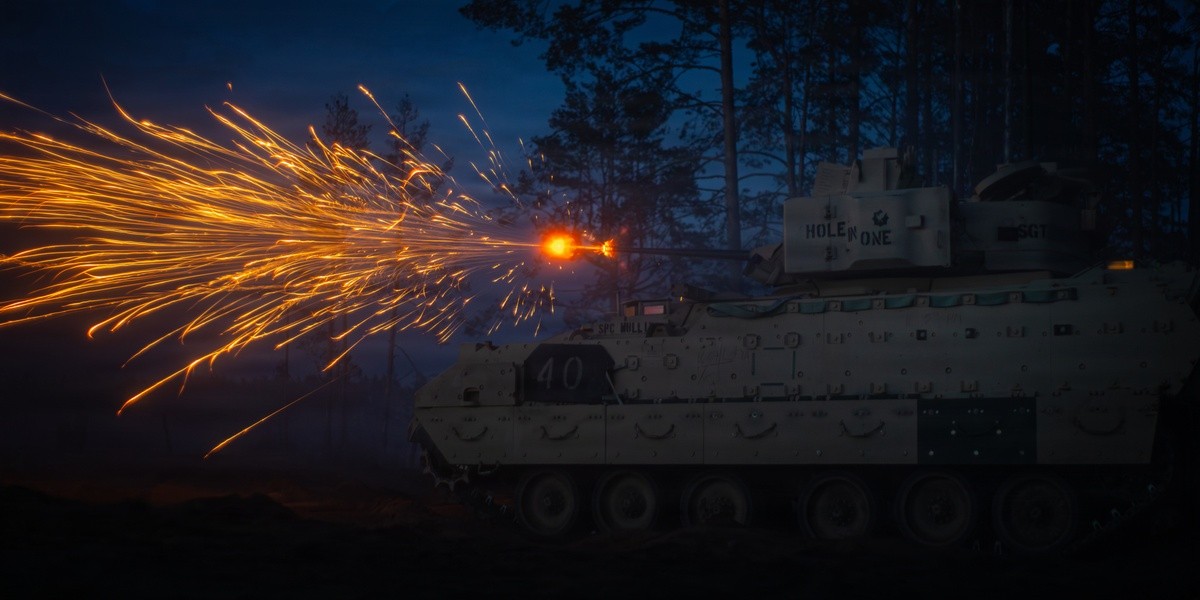
An M2A3 Bradley Infantry Fighting Vehicle assigned to 6th Squadron, 1st Cavalry Regiment fires its M242 25mm Bushmaster chain gun during counter-unmanned aerial system live-fire testing at Pabradė Training Area, Lithuania, May 14, 2026. The M242 Bushmaster is capable of engaging both ground and aerial targets at ranges up to 2,500 meters, making the Bradley a viable platform for defeating low-flying unmanned aerial threats on the modern battlefield. From April 27 to May 31, 2026, U.S. and Allied forces will conduct Project Flytrap as part of a series of linked exercises, including Sword 26, Saber Strike, Immediate Response, and Swift Response, which transform experimentation into capability. During Project Flytrap, Soldiers integrate counter-unmanned systems, AI-enabled command and control, and live data networks to move faster, decide faster, and fight more effectively across all domains.
(U.S. Army photo by Sgt. Max Elliott)
(Photo Credit: Sgt. Max Elliott)View original14 / 22
An M1265A1 Maneuver Short-Range Air Defense Stryker assigned to 5th Battalion, 4th Air Defense Artillery Regiment fires its XM914 30mm cannon during counter-unmanned aerial system live-fire testing at Pabradė Training Area, Lithuania, May 14, 2026. The XM914 30mm cannon is one of three weapon systems integrated into the Maneuver Short-Range Air Defense Stryker's Reconfigurable Integrated-weapons Platform, which also includes a Stinger missile launcher and an M240 7.62mm machine gun, providing crews with multiple options to defeat aerial threats at varying ranges. From April 27 to May 31, 2026, U.S. and Allied forces will conduct Project Flytrap as part of a series of linked exercises, including Sword 26, Saber Strike, Immediate Response, and Swift Response, which transform experimentation into capability. During Project Flytrap, Soldiers integrate counter-unmanned systems, AI-enabled command and control, and live data networks to move faster, decide faster, and fight more effectively across all domains.
(U.S. Army photo by Sgt. Max Elliott)
(Photo Credit: Sgt. Max Elliott)View original15 / 22
Gen. Christopher T. Donahue, commanding general of U.S. Army Europe and Africa and commander of NATO Allied Land Command, receives updates on unit operations during Project Flytrap at Pabradė Training Area, Lithuania, May 11, 2026. Flytrap is a multinational exercise intended to increase cohesive integration among different intelligence, fire and protection systems to combat evolving drone threats. From April 27 to May 31, 2026, U.S. and Allied forces will conduct Project Flytrap as part of a series of linked exercises, including Sword 26, Saber Strike, Immediate Response, and Swift Response, which transform experimentation into capability. During Project Flytrap, Soldiers integrate counter-unmanned systems, AI-enabled command and control, and live data networks to move faster, decide faster, and fight more effectively across all domains. (U.S. Army photo by Sgt. Nicodemus Taylor)
(Photo Credit: Sgt. Nicodemus Taylor)View original16 / 22
Paratroopers from the U.K. Parachute Regiment prepare to operate an M1126 Stryker during Project Flytrap at Pabradė Training Area, Lithuania, April 30, 2026. Forces from the U.S. and U.K. are participating in this iteration of the Project Flytrap exercise to increase interoperability and build relationships while also improving modern warfighting capabilities. (U.S. Army photo by Sgt. Nicodemus Taylor)
(Photo Credit: Sgt. Nicodemus Taylor)View original17 / 22
Pfc. Hailey Paton, an infantryman assigned to Echo Troop, 2nd Squadron, 2nd Cavalry Regiment, dons first-person view goggles before operating a small unmanned aerial system during Project Flytrap at Pabradė Training Area, Lithuania, May 2, 2026. Project Flytrap directly supports the Eastern Flank Deterrence Initiative by evaluating scalable counter-drone solutions that can integrate into NATO's existing air defense networks. (U.S. Army photo by Sgt. Max Elliott)
(Photo Credit: Sgt. Max Elliott)View original18 / 22
Gen. Christopher T. Donahue, commanding general of U.S. Army Europe and Africa and commander of NATO Allied Land Command, receives information on new counter-unmanned aerial system technology being used in Project Flytrap at Pabradė Training Area, Lithuania, May 11, 2026. Flytrap is a multinational exercise intended to increase cohesive integration among different intelligence, fire and protection systems to combat evolving drone threats. From April 27 to May 31, 2026, U.S. and Allied forces will conduct Project Flytrap as part of a series of linked exercises, including Sword 26, Saber Strike, Immediate Response, and Swift Response, which transform experimentation into capability. During Project Flytrap, Soldiers integrate counter-unmanned systems, AI-enabled command and control, and live data networks to move faster, decide faster, and fight more effectively across all domains. (U.S. Army photo by Sgt. Nicodemus Taylor)
(Photo Credit: Sgt. Nicodemus Taylor)View original19 / 22
U.S. Army Sgt. Connor Henrickson, an infantryman assigned to Echo Troop, 2nd Squadron, 2nd Cavalry Regiment, prepares to fire on a drone overhead during the force-on-force phase of Project Flytrap at Pabradė Training Area, Lithuania, May 8, 2026. Flytrap is a multinational exercise intended to increase cohesive integration among different intelligence, fire and protection systems to combat evolving drone threats. From April 27 to May 31, 2026, U.S. and Allied forces will conduct Project Flytrap as part of a series of linked exercises, including Sword 26, Saber Strike, Immediate Response, and Swift Response, which transform experimentation into capability. During Project Flytrap, Soldiers integrate counter-unmanned systems, AI-enabled command and control, and live data networks to move faster, decide faster, and fight more effectively across all domains. (U.S. Army photo by Sgt. Nicodemus Taylor)
(Photo Credit: Sgt. Nicodemus Taylor)View original20 / 22
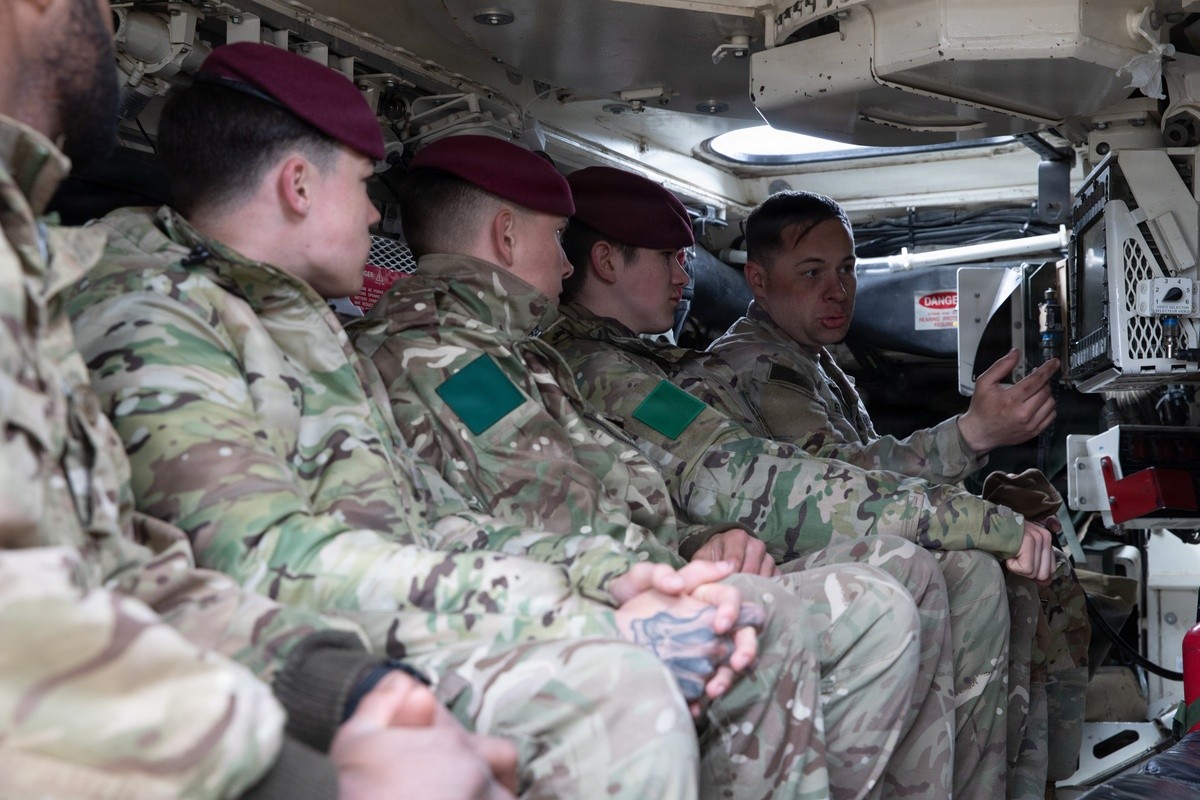
Sgt. Richard Ellzey, an infantryman assigned to 2nd Squadron, 2nd Cavalry Regiment, teaches paratroopers from the U.K. Parachute Regiment how an onboard computer system in an M1296 Stryker can display real-time images from the battlefield in a combat scenario during Project Flytrap at Pabradė Training Area, Lithuania, April 30, 2026. Project Flytrap is a multinational exercise intended to increase cohesive integration among different intelligence, fire and protection systems to combat evolving drone threats. (U.S. Army photo by Sgt. Nicodemus Taylor)
(Photo Credit: Sgt. Nicodemus Taylor)View original21 / 22
U.S. Army Pfc. Mickey Leonard, an infantryman assigned to Echo Troop, 2nd Squadron, 2nd Cavalry Regiment, patrols through a forested area while carrying an M249 light machine gun during the force-on-force phase of Project Flytrap at Pabradė Training Area, Lithuania, May 4, 2026. U.S. Soldiers faced off against British paratroopers from the U.K. Parachute Regiment in a series of simulated engagements designed to test counter-unmanned aerial system integration in a contested environment. From April 27 to May 31, 2026, U.S. and Allied forces will conduct Project Flytrap as part of a series of linked exercises, including Sword 26, Saber Strike, Immediate Response, and Swift Response, which transform experimentation into capability. During Project Flytrap, Soldiers integrate counter-unmanned systems, AI-enabled command and control, and live data networks to move faster, decide faster, and fight more effectively across all domains. (U.S. Army photo by Sgt. Max Elliott)
(Photo Credit: Sgt. Max Elliott)View original22 / 22
U.S. Army Sgt. Esteban Ward, an infantryman assigned to Echo Troop, 2nd Squadron, 2nd Cavalry Regiment, prepares to fire a simulated round from an AT4 anti-armor weapon during the force-on-force phase of Project Flytrap at Pabradė Training Area, Lithuania, May 8, 2026. From April 27 to May 31, 2026, U.S. and Allied forces will conduct Project Flytrap as part of a series of linked exercises, including Sword 26, Saber Strike, Immediate Response, and Swift Response, which transform experimentation into capability. During Project Flytrap, Soldiers integrate counter-unmanned systems, AI-enabled command and control, and live data networks to move faster, decide faster, and fight more effectively across all domains. (U.S. Army photo by Sgt. Nicodemus Taylor)
(Photo Credit: Sgt. Nicodemus Taylor)View original
Flytrap 5.0 is formally nested inside the Eastern Flank Deterrence Initiative, NATO’s warfighting concept in the land domain. EDFI links digital architecture and operating systems across nations to detect and decide faster, leveraging artificial intelligence to process data faster, to connect units and effects to strike faster and at scale. It also means reducing the cost curve in defeating drones and incorporating cheaper attritable systems.
"Success in Flytrap 5.0 is a little different than other exercises — in some ways failure is still success," said Maj. Jared Whitaker, the V Corps technical integration and assessment lead for Project Flytrap. "The industry who creates these systems can get immediate feedback, make hardware and technical changes rapidly — so that when those systems are fielded to Soldiers, they've already got a look by Soldiers and will perform significantly better than in the past."
Flytrap 6.0 will take the program to the brigade level. That is an order of magnitude more platforms, Soldiers, and decisions, and at the level at which V Corps intends to fully validate the capability. Until then, the pine at Pabradė is the proving ground.



























Social Sharing