Back to U.S. Army Southern European Task Force, Africa
LUANDA, Angola — As U.S. Army medical professionals concluded a week-long knowledge exchange with the Angolan Military Health Division, U.S. Army Southern European Task Force, Africa (SETAF-AF) medical and public affairs personnel conducted a parallel test of emerging technology designed to bridge language gaps during multinational engagements, Sept. 20-27.

While the medical team focused on infection control, trauma surgery and epidemiology, SETAF-AF public affairs personnel conducted a field test of two real-time translation apps, aiming to identify scalable, no-cost tools that bridge language gaps when dedicated interpreters are unavailable.
“We’re always looking for ways to improve how we tell the story of our missions,” said U.S. Army 1st Lt. Tucker Chase, a public affairs officer assigned to SETAF-AF. “Translation tools like these help us engage more directly with our counterparts and ensure their voices are accurately represented.”
Angola, a Portuguese-speaking nation with over 40 additional local languages, is one of 54 African countries where SETAF-AF operates. The language tech trial is part of a broader SETAF-AF innovation effort that uses African engagements as a proving ground for mission-enabling technologies — from unmanned aerial systems and advanced weaponry, to mobile logistics and digital tools like translation software.
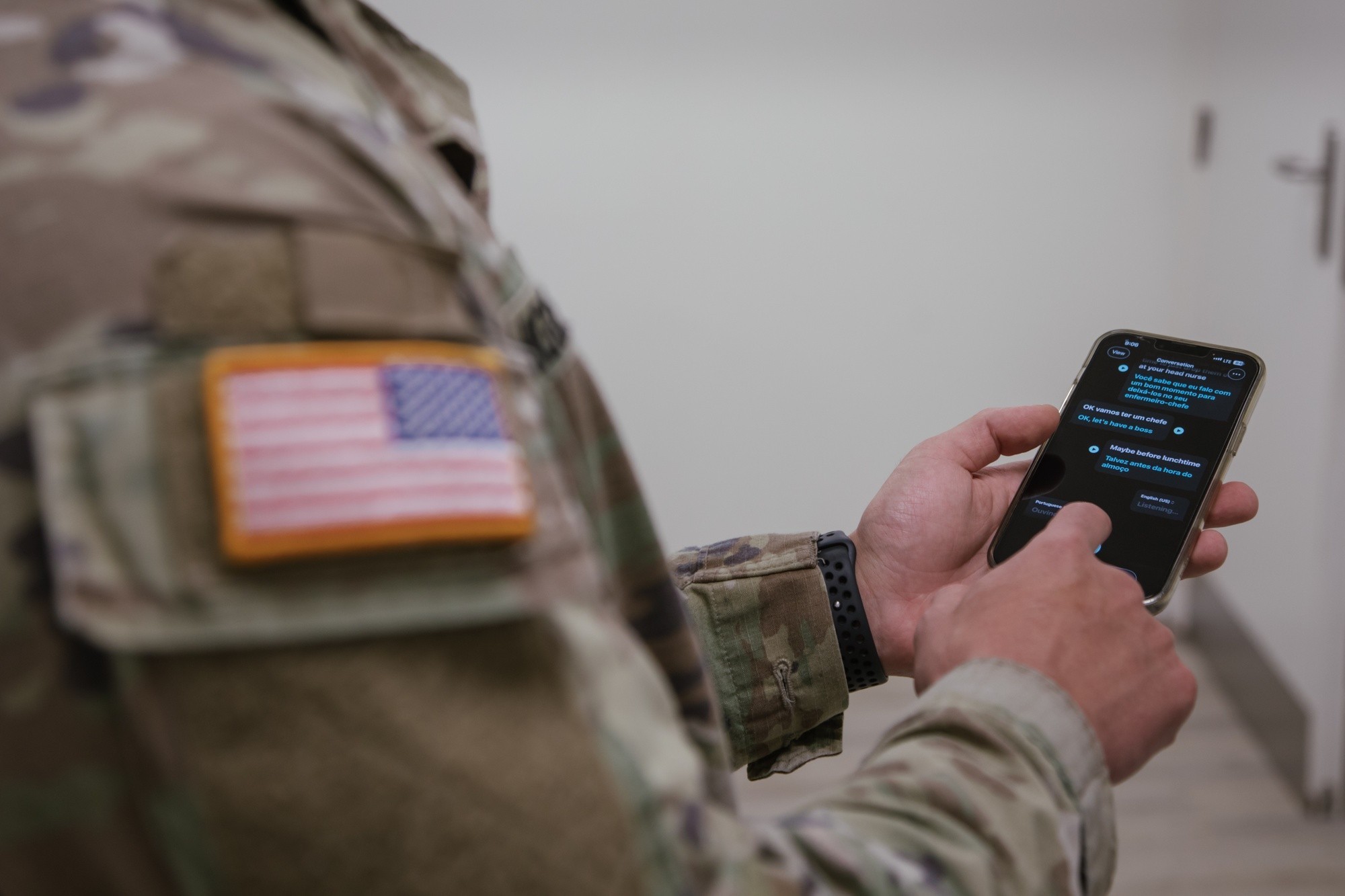
Among the standout features of the winning translation app were its conversation views, which offer side-by-side or face-to-face modes. These layouts allowed smoother interviews without the need to pass the phone back and forth, logging the full conversation for later review.
“This app doesn’t replace human interpreters, but it’s a practical solution when resources are limited,” Chase said. “It’s intuitive, fast and helps us maintain the authenticity of our engagements.”
U.S. medical personnel also found the technology helpful during training sessions and medical engagements.
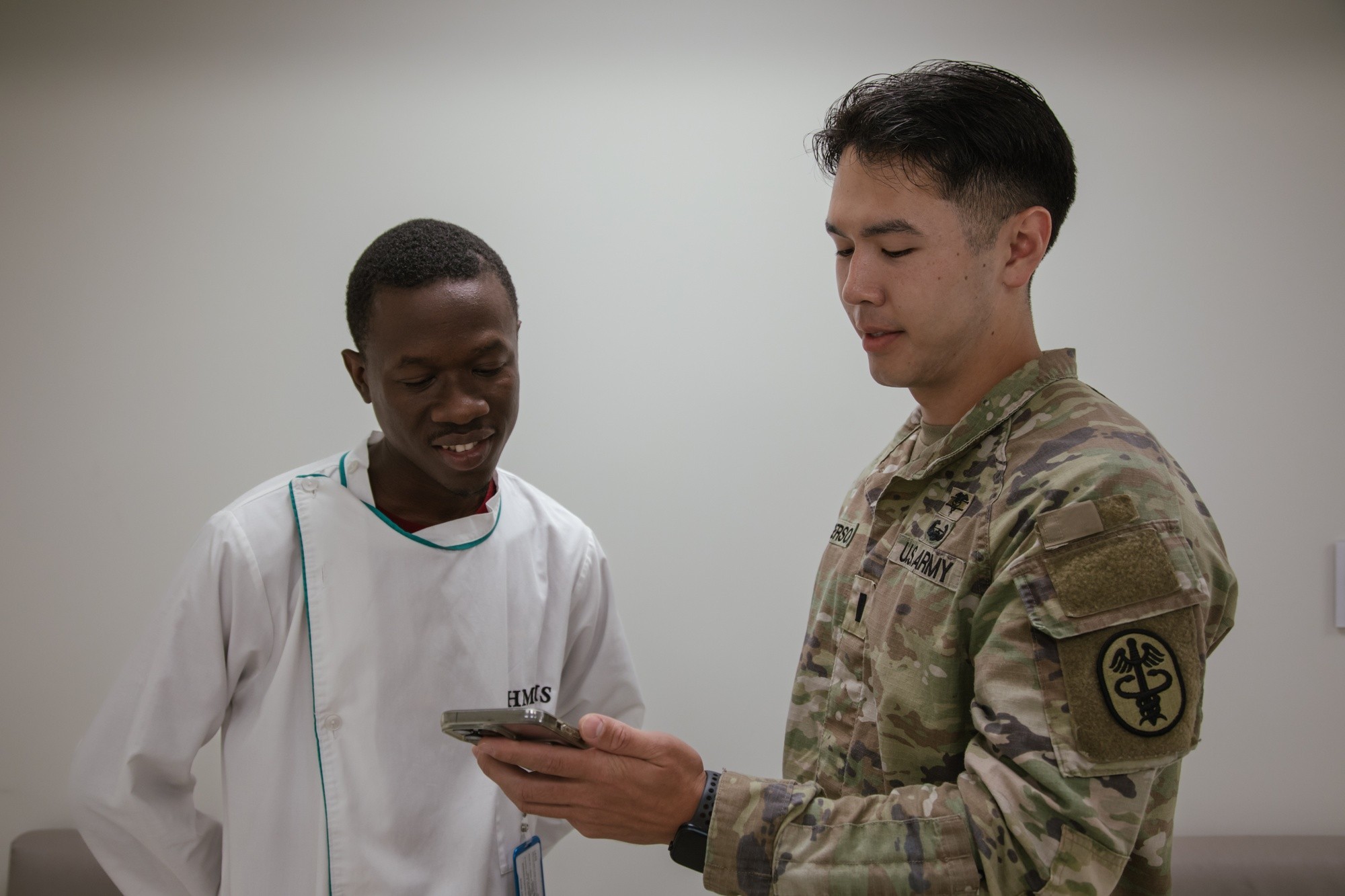
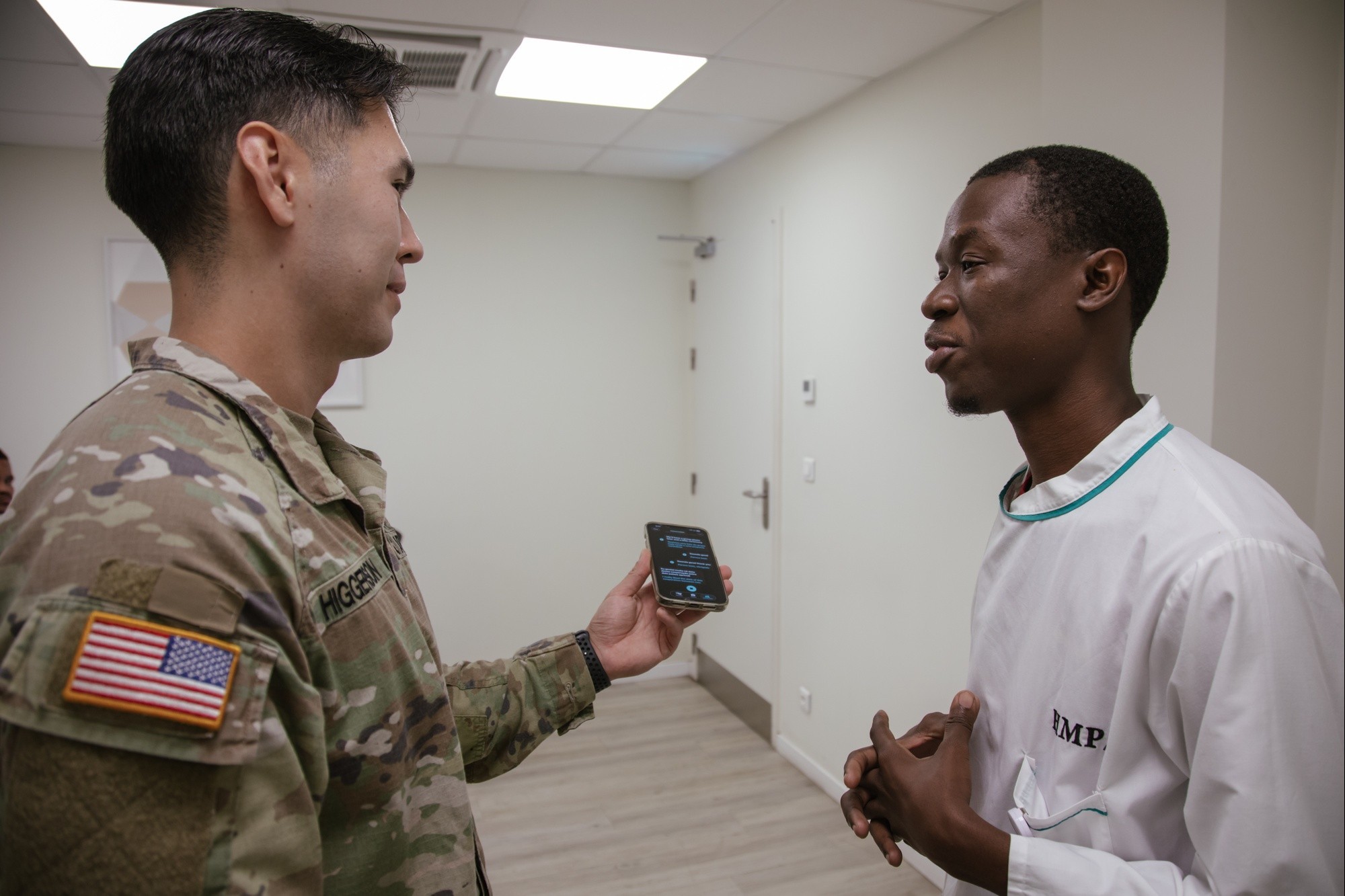
“The app was nice to have," said U.S. Army 1st Lt. Matthew Higgerson, a perioperative nurse with Landstuhl Regional Medical Center, Medical Readiness Command, Europe. "We had three translators with us, but many times they were busy or not available. That’s when this would come in handy.”
The autotranslate function enabled hands-free communication, automatically translating speech without requiring the team to tap the microphone each time.
“I would pull out my phone and open the app,” Higgerson said. “We’d basically just talk regularly as if we’re having a conversation, then give each other time to read what was translated and continue talking.”
The translation app proved particularly valuable during a joint medical press conference, where Chase used it to record interviews with U.S. and Angolan medical personnel. The app provided real-time transcription, enabled note-free engagement and streamlined post-event reporting.
“It allowed me to generate an accurate transcript and summary afterward, while staying fully engaged in documenting the event,” Chase said. “The process increased both the efficiency and accuracy of post-event reporting. It freed me to actively listen, take photos and support SMEs, all while ensuring nothing was missed.”
The U.S. Embassy in Luanda hosted the Angola exchange, which supported the embassy’s disaster response initiative, aimed at strengthening bilateral readiness for public health crises and humanitarian emergencies. The mission aligned with U.S. Africa Command priorities and bolstered joint preparedness between the U.S. and Angolan militaries.
SETAF-AF’s ongoing innovation efforts help ensure U.S. forces remain mission-ready in linguistically and culturally diverse environments, leveraging real-world conditions in Africa to stress-test solutions before wider deployment.
About SETAF-AF
U.S. Army Southern European Task Force, Africa (SETAF-AF) prepares Army forces, executes crisis response, enables strategic competition and strengthens partners to achieve U.S. Army Europe and Africa and U.S. Africa Command campaign objectives.
Follow SETAF-AF on: Facebook, Twitter, Instagram, YouTube, LinkedIn & DVIDS
Social Sharing