FORT RUCKER, Ala. -- The Aviation and Missile Command's Aviation Center Logistics Command at Fort Rucker conducted a training exercise June 20-22 in conjunction with the Aviation Center for Excellence at Fort Rucker to assess readiness and preparedness for the upcoming hurricane season.
ACLC and the Aviation Center for Excellence were joined by the 110th Aviation Brigade, the 1st Aviation Brigade and the Fort Rucker Garrison's Directorate of Plans, Training, Mobilization and Security in conducting the assessment.
Each year, ACLC and its contractor, Army Fleet Support, verify preparations for the possibility of a severe hurricane. To improve on operations conducted during the Hurricane Isaac evacuation in August of 2012, ACLC communicated with AFS and the 110th Flight Training Brigade on ensuring the effectiveness of its consolidated efforts in securing the more than 600 rotary-wing aviation assets at Fort Rucker. The lessons learned from 2012, when Hurricane Isaac was potentially a threat to the safety of the fleet, helped to formulate the scenarios and responses that were presented for this training exercise.
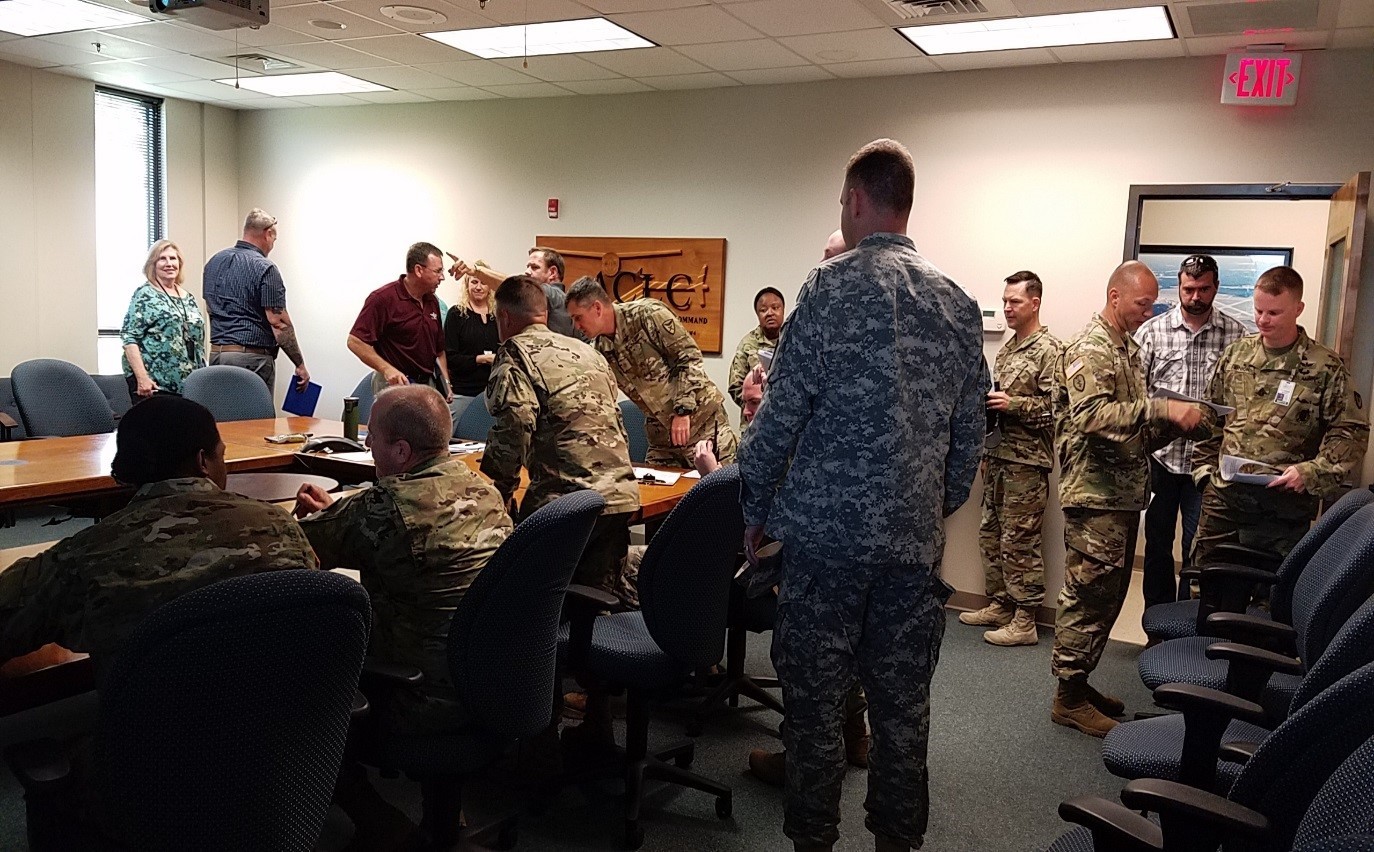
On June 22, key personnel from ACLC, AFS and the 110th Aviation Brigade gathered in the ACLC's headquarters, a location which serves as the Emergency Operations Center for Aircraft Stacking during a hurricane evacuation operation. Every point of contact was briefed prior to this meeting and given detailed information. The information included the conditional stages of the hurricane threat, the communication chain and documentation required for the staging of aircraft. This preparatory gathering was the best opportunity to probe into questions and concerns, which may not have been addressed before, as well as covering contingencies for the possibilities that may be encountered through "Murphy's Law." Every bit of data that pertains to aircraft, personnel and resources was real and accurate for this exercise to ensure the accuracy of responses and quantifiable information.
The exercise scenario was as follows: "At 0700, the Installation Operations Center announced that Tropical Storm Amy had intensified to a hurricane in the Gulf of Mexico and was expected to arrive at Fort Rucker at 1500 on 23 June with sustained winds of 75 knots."
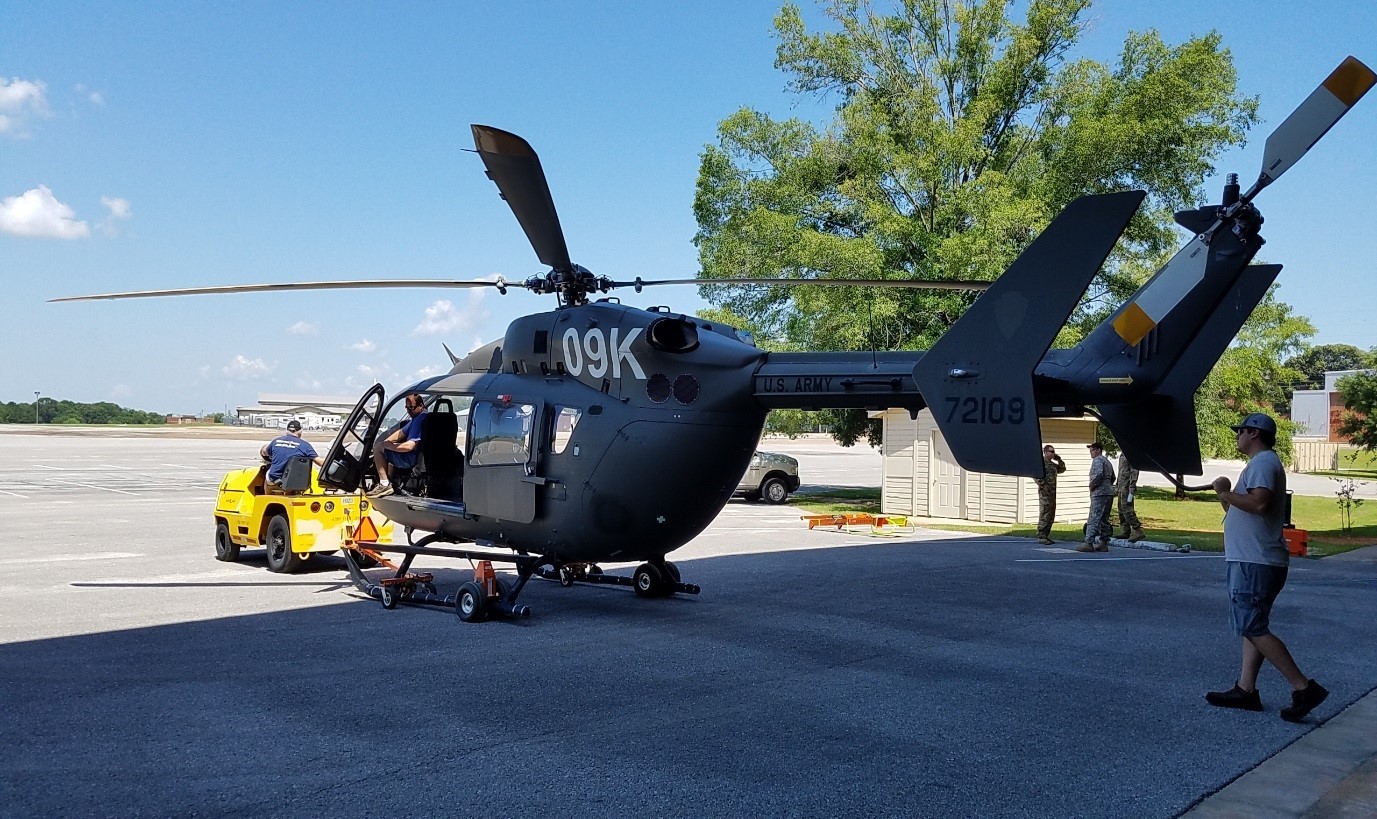
At the commencement of the exercise, communication was initiated, in response to the perceived hurricane threat. However, much like a real-world situation, everything would not go according to plan. Operational failures were introduced into the exercise to provide an opportunity for responsiveness. Issues arose, such as the control tower at Hanchey Army Airfield misdirecting the first UH-60 Black Hawk helicopter on where to land. Other fictional issues included two inoperable hoists and a C-12 fixed wing aircraft that broke on start-up so it could not fly away from Cairns Army Airfield; and a UH-72 Lakota helicopter landing in the wrong place and requiring immediate repositioning due to inbound CH-47 Chinook helicopters. All responses to issues arising in the exercise were measured.
The overall effectiveness of the hurricane evacuation exercise produced excellent results. Its primary objective was to test the process of relocating aircraft at Fort Rucker airfields due to the requirement to stack all aircraft. This goal was achieved as well as validating communications and solidifying a mutual understanding of the processes and procedures that are currently in place. ACLC's Chief of Operations Mikael Ash stated that the exercise, "started as an ACLC internal event and has grown in scope every year. The importance of the event is that it sets expectations and gets everyone in the proper mindset now that hurricane season is upon us."
If there was something gained from this training exercise, it would definitely be a heightened awareness of what to do during an actual event and the preparedness required to operate while implementing contingencies for the unplanned occurrences. In moving forward, the Aviation Center Logistics Command will continue to provide effective oversight in the quality and readiness of the Army's aviation assets in personnel and equipment. "Ever Vigilant!"
Editor's Note: Sgt. 1st Class Curtis Harris is the NCOIC at ACLC, Cairns Phase Maintenance.
Social Sharing