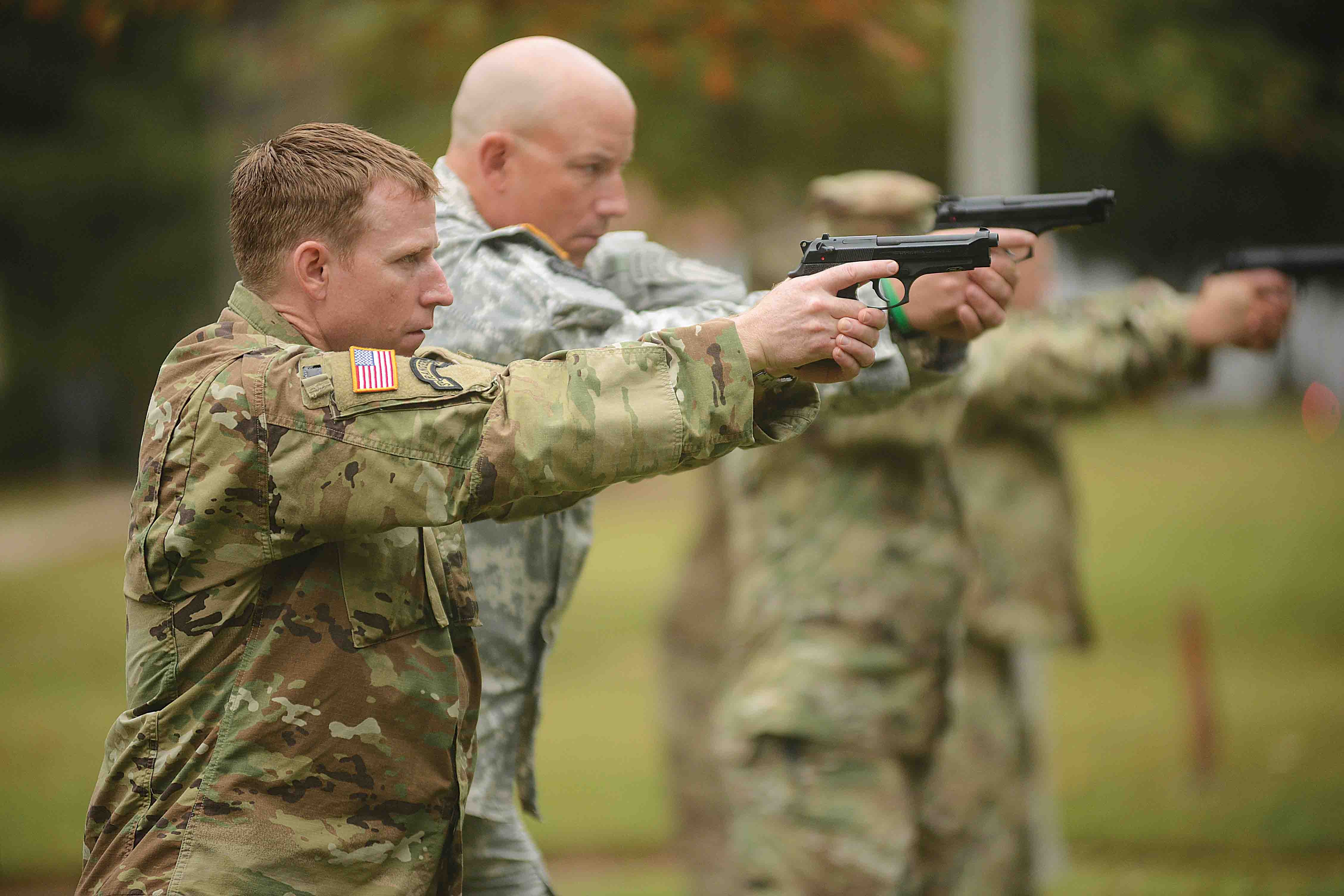
FORT BENNING, Ga., (Nov.4 2015) -- Maj. Gen. Scott Miller, Maneuver Center of Excellence commanding general, held a Leadership Day with battalion and brigade command teams from across Fort Benning to cultivate a culture of innovation and creativity among leaders.
"How do you take future maneuver and enhance what you already do? How do you start applying this - let's work it here at Benning," Miller said.
The Leadership Day began with physical training on Peden Field and continued at Riverside, the commanding general's home, as leaders were showcased emerging capabilities to stimulate a dialogue on potential concepts for application both in training and combat, said Col. F. Wayne Brewster II, director of the Maneuver Battle Lab. Leaders looked at small unmanned aerial and ground systems to highlight capabilities available to Soldiers at the lower tactical level that enhances situational understanding.
The systems are meant to reduce risk by having eyes on the battlefield before blindly sending in Soldiers. "Why would I ever put troops in an uncertain environment if I have the ability to send something else?" Miller said. "Can we get to a place where we can reduce troop densities - listen to this carefully - reduce troop densities in uncertain situations," he said, clarifying that he has no intention of reducing troops.
At Riverside, MCoE leaders experienced training their Soldiers go through, including firing techniques led by the Army Marksmanship Unit and enhanced first responder medical training to include the Combat Lifesaver Course through the Medical Simulation Training Center. Representatives from Martin Army Community Hospital taught the medical training.
Leaders also viewed a demonstration of Remote Human Type Targets -autonomous targets that provide a more challenging scenario in training given their ability to move and provide aural queues, Brewster said.
"As leaders, we see the opportunities to incorporate some of these tools into training," said Col. Chuck Freeman, deputy commandant of the Armor School.
It is important to bring leaders together and discuss how the Maneuver Center trains leaders and Soldiers given the complexity of the current and anticipated operating environments, Brewster said.
"We have to challenge our assumptions as well as review what and how we train to ensure it nets the desired attributes and competencies required," Brewster said. "We can't simply keep doing what we have always done as conditions and potential threats change."
Miller discussed the concept of putting time back on the clock by training with dry firing and going beyond combat lifesaving.
"If I'm a hard casualty, I really hope the first person that shows up knows how to save my life," Miller said. "I need somebody who is going to start the lifesaving process. We are in the business of saving people's lives."
In putting time back on the clock, Miller spoke to the leaders about using structures, ranges and resources to their unit's advantage. He said that when a unit trains at the old hospital, why not incorporate mannequins, dry fire and robotic human targets to maximize training efforts.
Freeman said the opportunities allow leaders to be more creative and innovative in their approach to accomplish those tasks and that getting the resources to assist Soldiers is important.
"I walk around Fort Benning and I see training opportunities," Miller said.
Brewster said the day got leaders to think about training possibilities.
"There is no set checklist for being innovative," he said. "It's fueled by a supportive culture that shares ideas to solve challenging problems that face us."
Social Sharing