
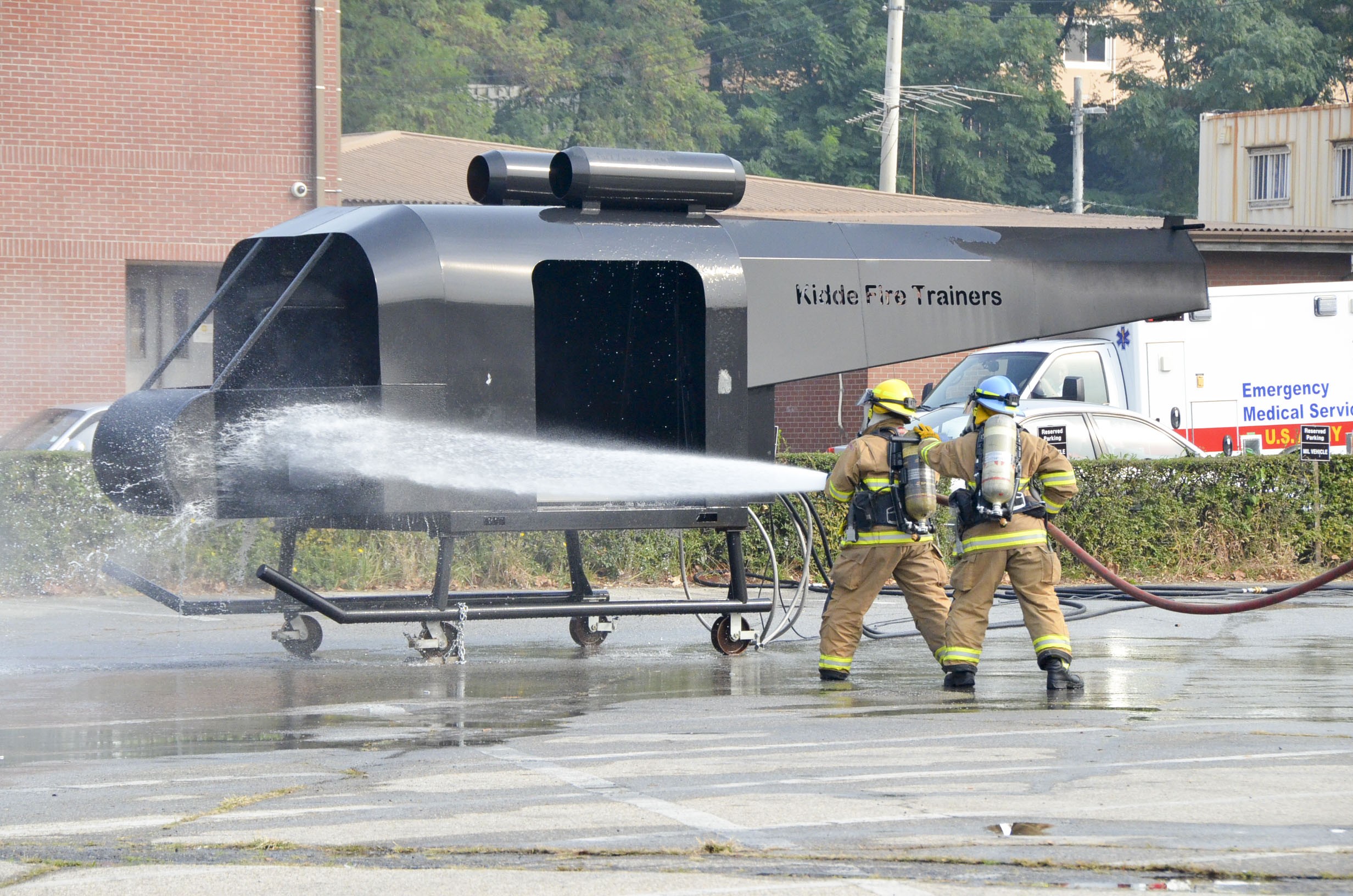
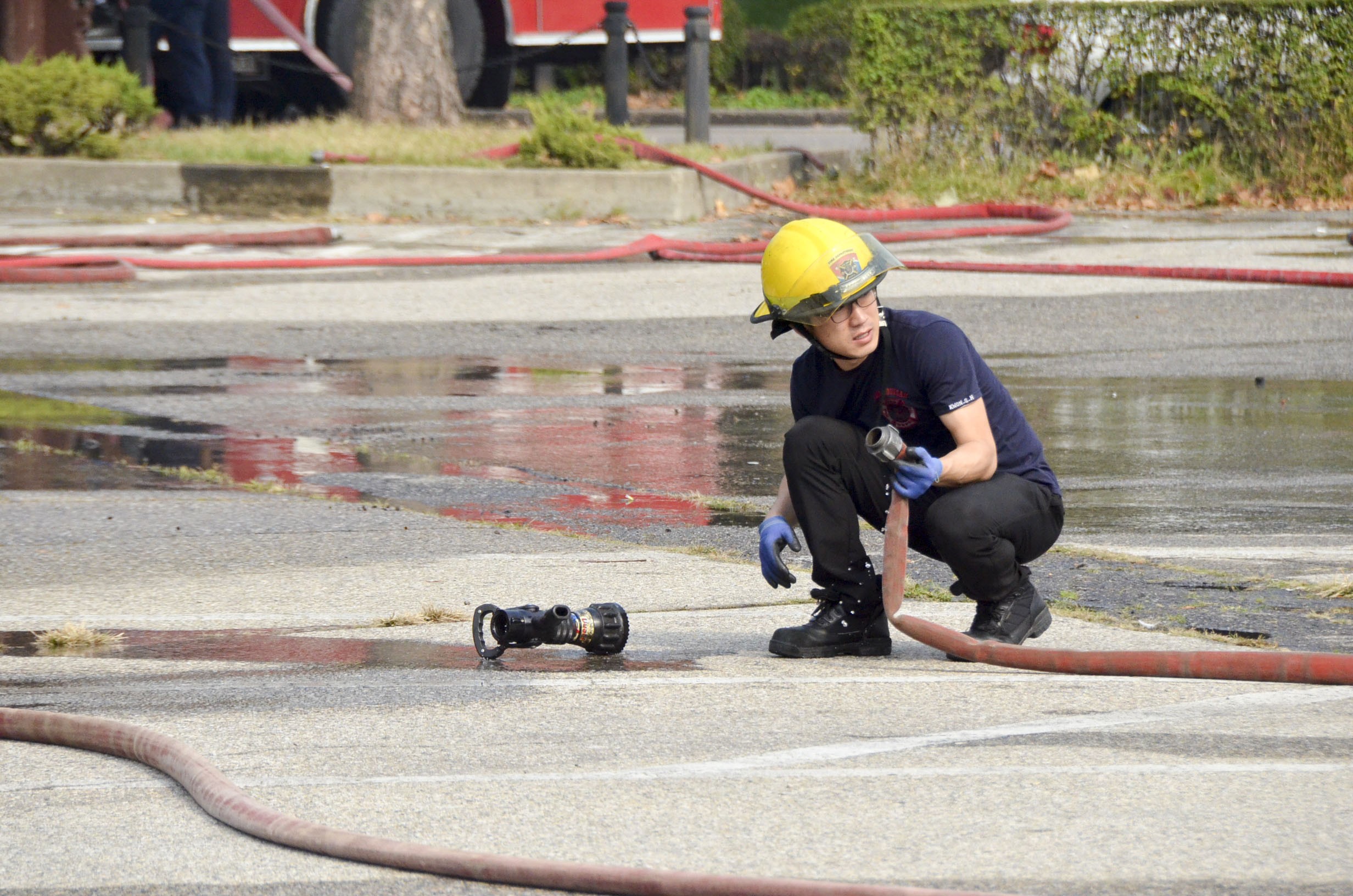
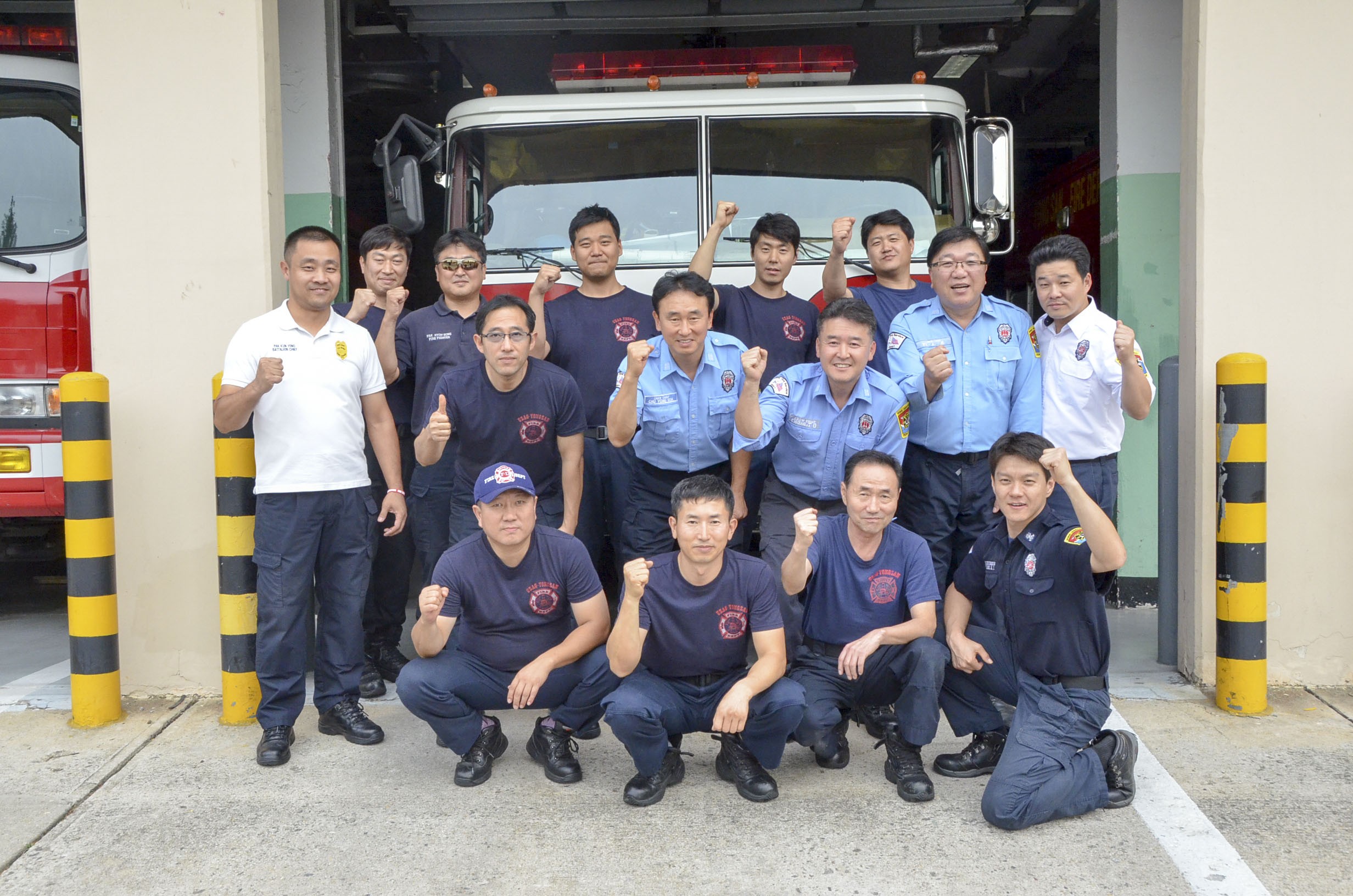
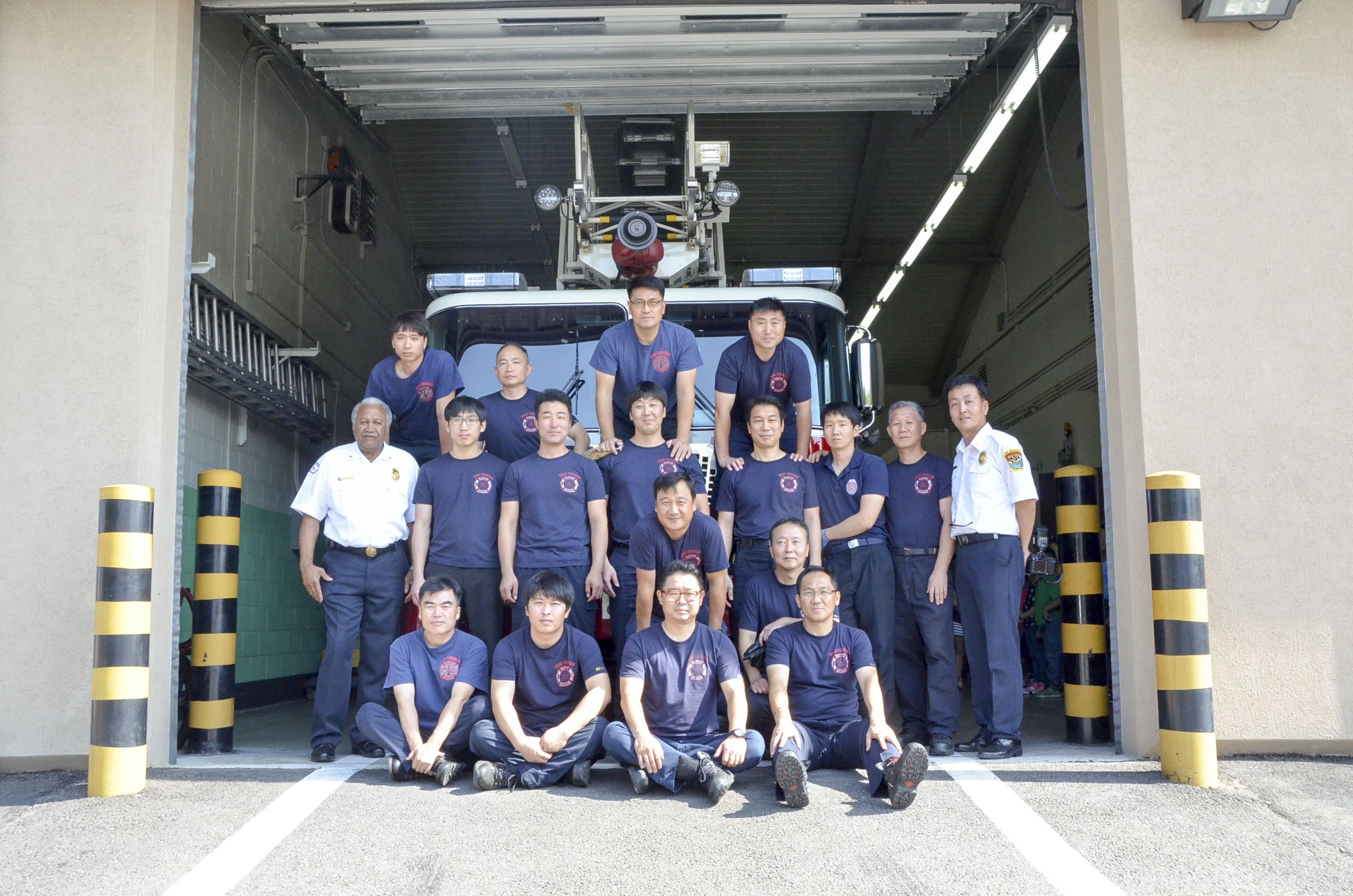
YONGSAN GARRISON -- Becoming proficient in one's job can take years. Becoming an expert is a lifelong process. Chu Yong Suk, rescue crew chief from U.S. Army Garrison Yongsan's Fire Department, demonstrates expertise on a daily basis. Having been part of the community for the more than a decade, Chu shares his experience of how he got to where he is today:
Did you always want to become a firefighter?
When I was in high school I witnessed a car accident. A crew from the local fire department showed up to the scene to help out. This was in the mid-1980s, and there weren't a lot of fire stations in Korea as you can see today. I was scared and could feel my heart racing because the crew was pulling people out of the wrecked car. Even in the midst of all that, I thought the members of the crew and the work they did was very respectable.
I didn't really think back to this incident until I was looking for a suitable job. It wasn't easy to get a job during the late 1990's due to the financial crisis, but thankfully I got accepted, allowing me to build a career in this field for the past 15 years.
Do you ever have to face situations where you have to make difficult choices?
Of course. The mission of a fire department is divided into three parts: life safety, instance stabilization and property conservation. Everything comes after saving lives. That takes priority. When it comes to life safety, we not only focus on the subjects that need to be rescued, but also the safety of the firefighters. Even in the direst situation, if the life of the crew members is put at too much of a risk, then we cannot complete the rescue mission. This is because if my own safety gets compromised, another team has to come rescue me, which can be seen as a failure in completing the first part of the mission.
That's why experience is so important for senior officers when they are in the initial size-up process. At first glance, it may seem selfish that we weigh the gains and losses on a scale, but this is crucial in ensuring the safety of crew members, and thus ensuring the life safety of those who have to be rescued. The job requires you to be cool-headed and pragmatic, which is not always easy, but is essential.
Although it is difficult to say what's wrong and what's right, I have faced situations where a decision had to be made on whether the operation was going to be offensive or defensive. It's hard for everyone to have a say in making that choice; this is where the role of command-control groups and leaders come in. Experience is key in this process, because when you come face-to-face with the fire, any textbook knowledge you might have will not be enough.
Being a firefighter means that you have to deal with dangerous situations. Have you ever faced a time when your life was on the line?
When I was working in a local fire department, there was once a hostage situation. Some taxi drivers had formed a union and placed explosive gas around a mayor's office in order to strike a deal. Unfortunately, during the process of negotiating, someone ignited a fire. We were outside standing by, not really expecting anything to happen when the gas exploded. One of our members wasn't wearing his personal protection equipment (PPE) mask; so during the backdraft of the explosion he fainted while letting the hose loose on the floor.
I can't even start to express the fear I felt in that moment. It was pure chaos as we attached a respirator to the team member's face and tried to get him out. Although my job is dealing with fire, I've never had another time when I was so scared of it. I barely got out of there alive.
Two people died as the flame engulfed our surroundings, trapping us. The member that we rescued couldn't go out on missions for a while because of the trauma.
It is hard to come across a situation where you actually see the fire start. Even if a fire started next door, it takes at least five minutes to prepare and respond right after we receive a call or see smoke. You can prepare yourself in this process, but that time was different as the flames just came bursting out of the door.
During the 15 years of my career, that was the most dangerous moment I have ever been in. It was really a turning point for me in the sense that I realized the importance of always being prepared to make rational decisions. I was reminded how essential it was to stick to the fundamental principles. If my ignorance starts affecting my job performance, then it really destroys any sense of purpose for me as a firefighter. Not only is my own life safety compromised, but others would have to compromise their life safety for me.
Over the years, what has become the most important value for you?
As much as physical fitness is crucial for a firefighter, so is knowledge and the ability to make decisions. If a firefighter does not possess the ability to stay cool-headed, all the theoretical knowledge of using the provided equipment becomes null in the moment of need. Whether it comes to safety equipment, daily patterns, or basic skills, the most important value for me is being able to think twice.
Even if other people pass by a situation, a firefighter should be able to look at it twice. For example, connecting the hose to the fire hydrant seems like a simple task -- one that anyone can accomplish -- but unexpected twists can occur. Sometimes the coupling doesn't seem to fit and at other times you lose control of the hose. Physical fitness is not the only requirement of a firefighter; it's always important to read your manuals and be familiar with your own equipment. If this process gets cut off, then suddenly, your helmet doesn't seem to fit, your hands won't go into your gloves, you fail to deliver water to the necessary spot and the whole time you have no idea what went wrong. Everyone goes through this at least once.
What makes the difference in the end is that habit of thinking twice and having the ability to make keen observations. Once this attitude starts settling in, one can analyze a situation from a wider perspective. I believe that if you don't think about becoming a professional all the time, the rest of your being won't follow suit.
Where do you get the motivation that allows you to retain your standards?
To tell you the truth, if there isn't a situation, it's easy to become complacent. We work 24-hour shifts that allow us to go home every other day. Usually firemen like me recharge at our own homes, because that's the only place we can relax.
On the other hand, spending so much time away from home can become an issue. If a firefighter works in the force for 30 years, he has to stay away from his family for 15. Sometimes this aspect can drain you. You see your wife and children one day, then you don't get to see them on the next. When they were little, my children used to ask where their father went. This is one of the common difficulties all firemen have to go through. That is why family becomes such a big source of encouragement on days you are off duty. Once you've been on the job for a while you start realizing how important they are and develop a stronger sense of responsibility.
What would be advice that you would give to others trying to become experts in their fields of profession?
People who have been running a tteokbokki (spicy stir-fried rice cakes) shop for more than 10 years become masters in that field of work. It's the same for firemen, as well as anyone in other fields of occupation.
I am currently working to attain as many accreditations and licenses as possible within my profession. The reason behind this is because if I retire from this job, the experience that I would have gathered over the years would all just come to an end. Rather than seeing that happen, I would like to contribute to the field with the knowledge and experience that I have as a facility manager or an engineer. Likewise, people should continually make that effort to reach excellence. With consistency, one will be able to help a certain field take great strides forward, just like the owner of the tteokbokki shop.
Related Links:
U.S. Army Garrison Yongsan Homepage
Social Sharing