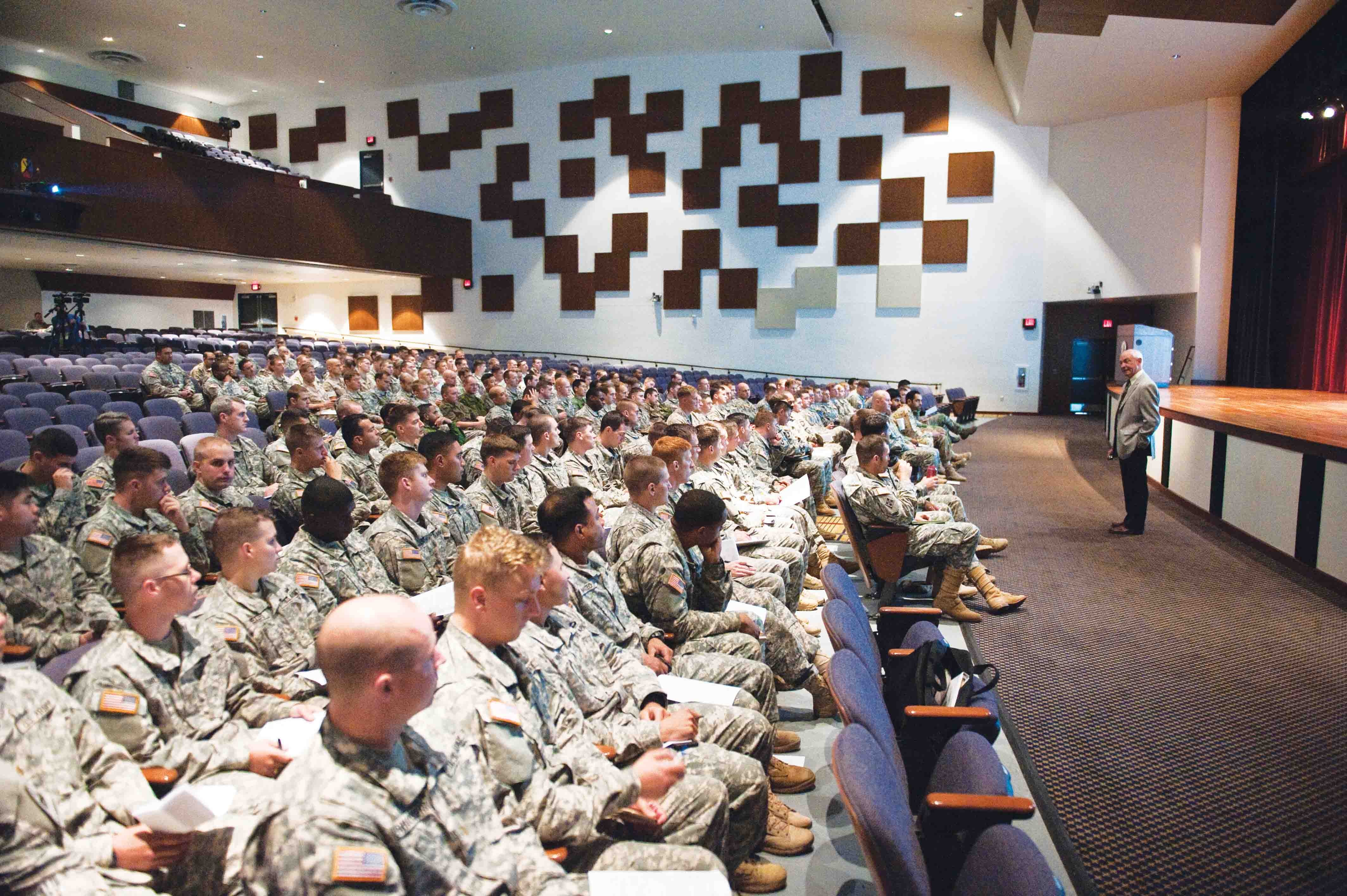
FORT BENNING, Ga., (June 10, 2015) -- The Army is a profession only because the American people trust the Army, and because they rely on the knowledge that Army officials are going to be effective in protecting the United States, said retired Col. Don M. Snider, current senior fellow in the Center for Army Profession and Ethics and adjunct professor of the Army War College.
"What you're learning here at Benning is abstract knowledge and soon you're going to go out and command," Snider said. "But you will not command based (solely) on what's in your computer, but what's in your head and heart. Of course, you look at doctrine; of course, you look at tactics. But it takes years to become a professional because it takes years to learn how."
Snider visited the Maneuver Center of Excellence June 4 to discuss the Army as a profession in the current historical context as part of the combat leader speaker program.
Snider explained to the Soldiers present that he had spent the past 12 years leading the Army's research on profession and eventually writing the doctrine and establishing for the Army what it means to be a profession in today's world.
Snider said that working as a Soldier does not always encompass a physical office or bureaucratic day-to-day job, but a higher moral calling. He quoted James Toner, saying that a Soldier has four purposes: to prepare to kill, to kill, to prepare to die and to die. "This is not a job, this is a lethal profession with immense moral obligation to yourself and your country," Snider said. "You need to be a servant, always asking what more you can do, and be willing to do it."
"Your chosen profession creates a moral obligation - Americans trust you to know how to do your job adherent to a code of conduct; a moral code that encompasses military experience, espirit de corps and good stewardship of your profession," Snider said.
"In the Army, your role is to stay relevant without hindering functional imperatives," Snider said. "Your ethic has to evolve with the world - with national culture and beliefs, international law and treaties, and both legal and moral foundations.
"We all have responsibilities to help the Army maintain its status as a profession," Snider said. "We have professional doctrine, we understand the ethic better. Now we need to work on embedding the ethic in the lives and actions of our Soldiers."
Social Sharing