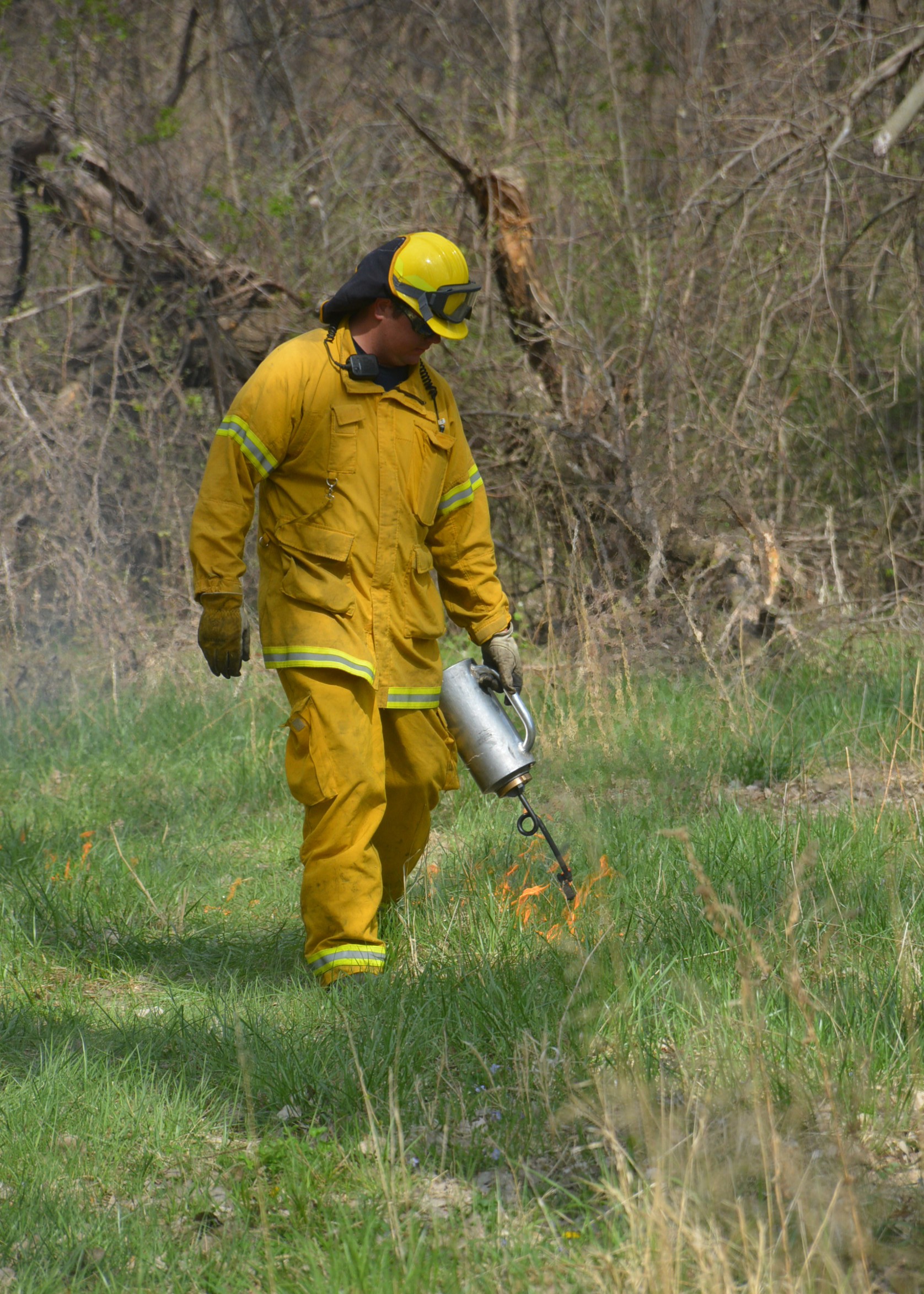
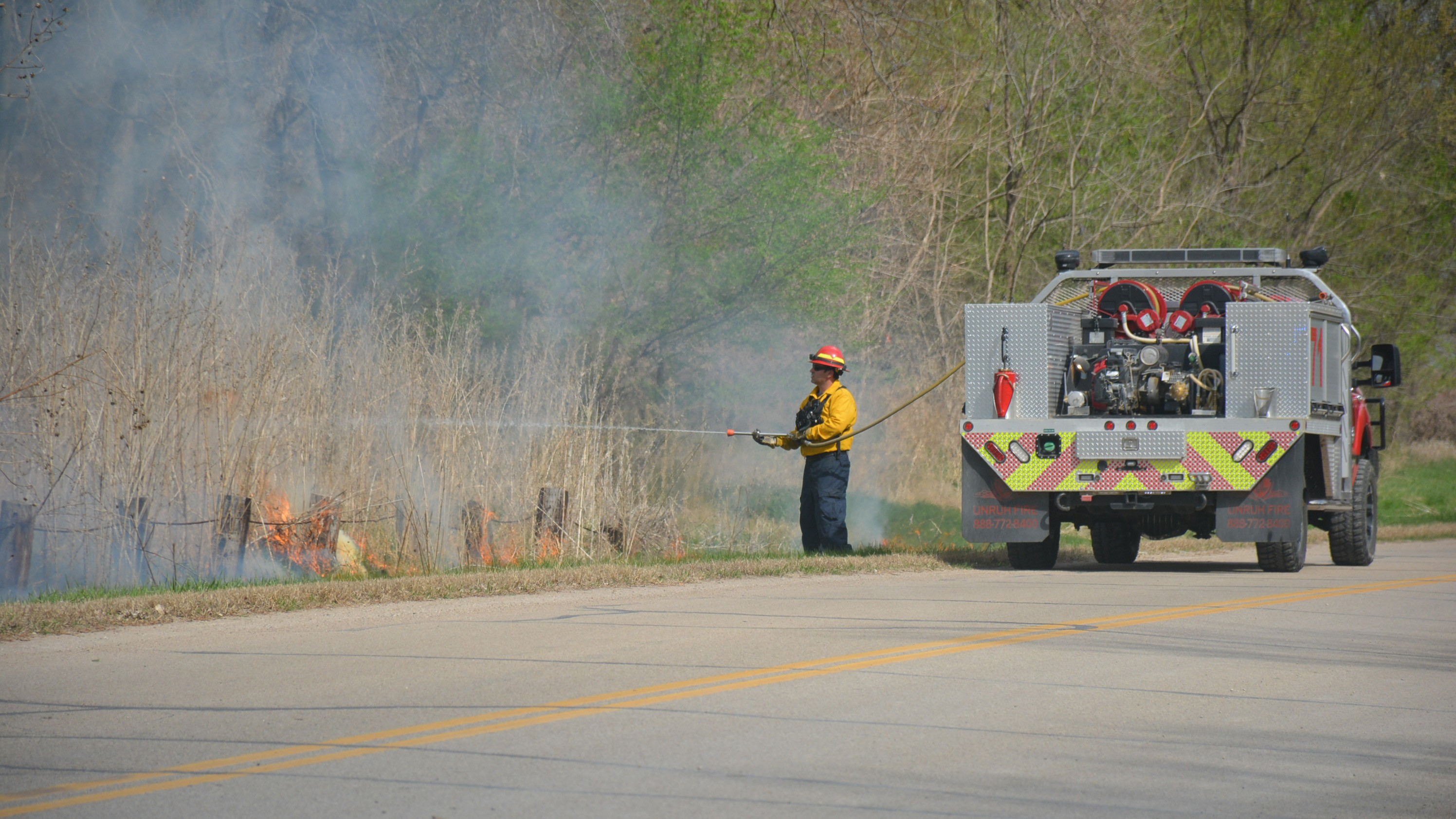
It's that time of the year-- when a smoky scent covers the Fort Riley area.
Mark Neely, Fort Riley wild land manager, said prescribed burns are done for a variety of reasons but are completely weather dependent. Some of those reasons include construction preparation, hazardous fuel reduction, obnoxious weed control and mitigating wildfires. A prescribed burn has a lot of planning and preparation that must be considered.
"A lot of things have to line up to execute a burn," Neely said. "It's just like a prescription and you have to meet the parameters inside this prescription to be able to get the burn and meet the objectives."
For the fire department to execute a burn, it cannot be too windy or too wet. The fire department also takes training schedules into consideration. The ideal temperature lies between 40 and 95 degrees Fahrenheit. Wind direction and speeds slower than 15 mph also define ideal burn conditions. The weather conditions match requirements the most in early spring months, Neely said.
Some areas at Fort Riley are burned on a rotational basis. These areas are burned at least every three years.
Neely said before executing (or igniting) a burn, the wild land team visits, the sight several times to ensure the burn plan's viability for safety. The firefighters burn near schools and homes and that plan keeps homes and people safe. The plan includes a well-defined border.
"We know where the burn is going to go and we make sure that border is a solid border, whether it is a tank trail or a fire break we have to put in," Neely said.
Neely said prescribed burns rejuvenate the ground to allow for maintained grasslands.The United States Forest Service states natural prairie grass thrives as a result of these burns and recycles nutrients back into the soil to promote regrowth.
Social Sharing