
Mission Statement: 7th Signal Command (Theater) delivers resilient command, control, communications and computer capabilities to enable Army operations in the Continental United States and Global command and control across the full spectrum of Joint and Coalition multi-domain environments.
Commander's Vision: 7th Signal Command (Theater) enables a seamlessly connected Army, serving as the lead integrator for CONUS-based networks and enabling commanders to effectively manage, train and project forces worldwide.
7th Signal Command (Theater) Leadership
-
 7th Signal Command (Theater) Commanding GeneralBG Anne-Marie R. Wiersgalla
-
 7th Signal Command (Theater) Command Sergeant MajorCSM Katrina L. Richardson
-
 7th Signal Command (Theater) Acting Civilian Deputy to the Commanding GeneralDr. James E. Cronkhite
-
 7th Signal Command (Theater) Command Chief Warrant OfficerCW5 Marvin R. Henriquez
-
 7th Signal Command (Theater) Chief of StaffCOL Jason P. Kendzierski
Freedom of Information Act (FOIA)
-
In line with Executive Order 13392, the Freedom of Information Act (FOIA) Requester Service ensures adherence to the FOIA, a federal law granting individuals the right to request access to federal agency records. However, this access is subject to limitations imposed by nine legal exemptions and three special law enforcement exclusions that safeguard certain information from disclosure.
It's important to note that the information provided here is not exhaustive. The processing of FOIA requests within the 7th Signal Command (Theater) is governed by Title 5 U.S.C. § 552 (the legal citation for FOIA), Department of Defense (DOD) Regulation 5400.7-R, and Army Regulation (AR) 25-55. 7th SC(T)'s obligation to uphold national security laws may result in the redaction or withholding of specific documents or portions thereof.
-
- You have the right to request records under the Freedom of Information Act.
- You have the right to appeal any denial of records under the Freedom of Information Act.
- You have the right to request a "fee waiver" if you can demonstrate that the requested record(s) is in the public interest and not primarily in the commercial interest of the requester.
- Under Executive Order 13526, you have the right to request a review of specific documents for declassification and release to the public.
-
Submit a letter including your full name and address, phone number, e-mail address, a reasonable description of the record(s) requested, and a statement of your fee category and your willingness to pay applicable fees. Find sample letter here Sample FOIA_PA request.docx. Submit the letter to: usarmy.meade.7-sig-cmd.mbx.hq-foia@army.mil.
-
- Those properly and currently classified in the interest of national defense/security or foreign policy. If the information qualifies as exemption 1, there is no-discretion regarding its release.
- Those related solely to the internal personnel rules and practices of the Department of Defense or any of its components.
- Those concerning matters that a statute specifically exempts from disclosure by terms that permit no discretion on the issue. A few examples of such statues are: Patent secrecy, restricted data, communication intelligence, confidentiality of medical quality, contractor proposals, etc.
- Those containing trade secrets or commercial or financial information that a DoD component receives from a person or organization outside the government. The disclosure of such records will likely cause substantial harm to the competitive position of the source providing the information.
- Those containing information considered privileged in litigation, primarily under the deliberative process privilege.
- Information of personnel and medical files, as well as similar personal information in other files, that would result in a clearly unwarranted invasion of personal privacy.
- Records or information compiled for law enforcement purposes, i.e., civil criminal, or military law, including the implementation of Executive Orders or regulations issued pursuant to law.
- Records pertaining to the regulation or supervision of financial institutions.
- Those records containing geological and geophysical information and data (including maps) concerning wells.

7th Signal Command (Theater) was activated on 1 July 1975 at Fort Ritchie, Maryland and tasked to oversee and support all CONUS signal operations, complementing 5th Signal Command in Europe and 6th Signal Command in the Pacific. The Command provided communications, automation, visual information, printing and publications, and records management services to CONUS Army units.
7th Signal Command (Theater) was deactivated on 1 October 1993 and its functional support components were redistributed to Fort Detrick, Maryland and several other posts. On 22 July 2008, 7th Signal Command (Theater) was reactivated at Fort Eisenhower, Georgia as part of the “Grow the Army" initiative. Its commander at reactivation was Brigadier General Jennifer Napper. On 1 September 2021, 7th Signal Command (Theater) Headquarters re-stationed its operational components to Fort Meade, Maryland, increasing ARCYBER’s lethality and the readiness and capability of DODIN-A Operations for the Army. The Command's support components remain at Fort Eisenhower.
7th Signal Command’s three subordinate Signal Brigades are 93d Signal Brigade, headquartered at Fort Eustis, Virginia; the 106th Signal Brigade at Fort Sam Houston, Texas; and the 21st Signal Brigade at Fort Detrick, Maryland.

The 93rd Signal Brigade was originally constituted as the 93d Signal Battalion on 3 November 1941 and activated on 15 May 1942 at Camp Crowder, Missouri. 93d Signal Battalion departed New York aboard the Queen Elizabeth and arrived in England on 26 April 1944. Shortly after its arrival, The Battalion shipped out for France to support forces deployed to Normandy. 93d Signal Battalion served in Luxemburg for the duration of the Ardennes Campaign and deployed into Germany on 9 March 1945 until the end of the war.
On 22 December 1945, 93d Signal Battalion left Europe aboard the Texarkana Victory Ship en route to Hampton Roads, Virginia. Shortly after their arrival, 93d Signal Battalion was inactivated at Camp Patrick Henry, Virginia on 3 January 1946. 93d Signal Battalion was called back to active duty on 24 February 1955 at Fort Huachuca, Arizona and one decade later it was inactivated on 21 September 1972.
93d Signal Brigade was activated again in Germany on 16 March 1981. The Brigade then deployed to Saudi Arabia in 1990 with 7th (VII) Corps in support of Operations Desert Shield and Desert Storm. The unit deactivated along with 7th (VII) Corps after Desert Shield and Desert Storm.
In February 1998, 93d Signal Brigade was activated once again at Fort Eisenhower, Georgia, where it would remain for almost 10 years. Elements of the Brigade deployed multiple times in support of the Global War on Terrorism, particularly Operation Iraqi Freedom I, II, and III. 93d Signal Brigade was deactivated and reflagged as the 35th Signal Brigade on 16 April 2007. In 2008, 93d Signal Brigade would again call Fort Eustis, Virginia its home, this time with a new mission as part of the newly formed 7th Signal Command (Theater).
93d Signal Brigade honors include Campaign streamers for participation in World War II, Northern France, Rhineland, Ardennes-Alsace, Central Europe, Southwest Asia, Defense of Saudi Arabia; liberation and defense of Kuwait; and the cease-fire ending Operation Desert Storm.

The 106th Signal Brigade traces its history back to Birmingham Army Air Base located in Alabama, where it was constituted as the 932d Signal Battalion and activated on 15 February 1943 with the mission of supporting Army Air Corps operations. In April 1944, the 932d was reorganized and re-designated as the 932d Signal Battalion, which served in Europe during World War II earning 5 Campaign streamers.
The unit returned to the United States in October of 1945 and was inactivated at Camp Kilmer, New Jersey. The 932d was activated again on 12 August 1963 at Camp Des Loges, France and re-designated as Headquarters and Headquarters Detachment, 106th Signal Group, as part of U.S. Army Europe. It was later assigned to U.S. Army Strategic Communications Command on 1 July 1964.
The 932d was relocated to Stuttgart, Germany in March, 1967 and later inactivated in November, 1967. On 16 October 1991, the 106th was reactivated, in Corozal, Panama, re-designated as the 106th Signal Brigade, and assigned to U.S. Army Information Systems Command (USAISC) providing strategic and tactical communications support to the U.S. Army South (USARSO) and U.S. Southern Command (SOUTHCOM). The brigade was later inactivated in October 1997 as part of the provisions of the Panama Treaty.
On 16 July 2008, the 106th Signal Brigade was reorganized and reactivated at Fort Sam Houston, Texas, as part of the 7th Signal Command (Theater), with a mission to secure and defend the western portion of the LandWarNet in CONUS.

The 21st Signal Brigade began as the 21st Signal Group, activated on 1 September 1965 at Fort Liberty, North Carolina. The 21st Signal Group provided area signal communications support throughout 10,000 square miles of the I and II Corps tactical zones in South Vietnam, participated in 13 campaigns during the Vietnam War from 1966-1971, and was awarded the Meritorious Unit Commendation. It was inactivated on 27 November 1971 at Fort Lewis, Washington. Effective 16 October 2003, the 1108th Signal Brigade, a remaining element of the inactivated 7th Signal Command, was redesignated as the 21st Signal Brigade at Fort Detrick, Maryland.
On 1 June 2010, the 21st Signal Brigade was reassigned from 9th Signal Command (Army) to 7th Signal Command (Theater). The brigade's mission is to conduct network operations for theater-based LandWarNet communications systems, networks, and enterprise services, and provide and defend global information capabilities to enable joint and combined Battle Command from the President of the United States to the Warfighter during full spectrum operations.
News
-
 NETCOM renames network enterprise centers to reflect evolving cyberspace mission
October 6, 2026
-
 Army's only active duty Combat Camera unit proves it is mission ready
September 30, 2026
-
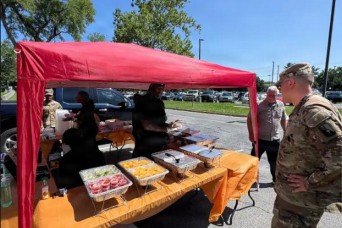 302d Signal Battalion holds back-to-school fundraiser for military families
August 17, 2026
-
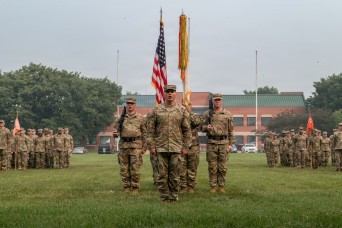 21st Theater Signal Brigade holds change of command ceremony
July 28, 2026
-
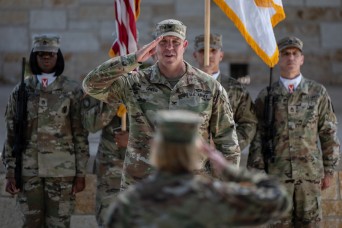 106th Theater Signal Brigade holds change of command ceremony
July 21, 2026
-
 7th Signal Command HHC holds change of command ceremony
June 29, 2026
-
 7th Signal Command (Theater) NCO Named ARCYBER & INSCOM 2026 Senior Career Counselor of the Year
April 28, 2026
-
 55th Public Affairs NCO wins Army’s Inaugural Operator-Maintainer of the Year Award
March 16, 2026
-
 7th Signal Command Soldier excels at Army Holistic Health and Fitness Integrator course
February 26, 2026
21st Theater Signal Brigade
-
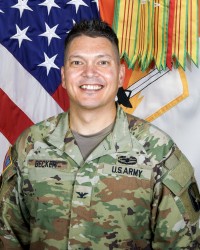 Brigade CommanderCOL Richard D.I. Becker
-
 Command Sergeant MajorCSM Cesar Ruiz
93d Theater Signal Brigade
-
 CommanderCOL Glenroy Haskins
-
 Command Sergeant MajorCSM Melanie Coronado
93d Signal Brigade
106th Theater Signal Brigade
-
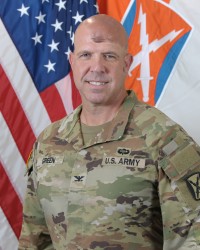 Brigade CommanderCOL Christopher Green
-
 Command Sergeant MajorCSM Joshua Miles
7th Signal Command (Theater) Jobs
Available Jobs: USAJOBS - Search.
Helpful Links
- Incoming Soldiers | CAC Required
- Defense Visual Information Distribution Service (DVIDS) - 7th Signal Command
- US Army Network Enterprise Command
- Army Cyber Command
- Defense Travel System
- Army Training Information System
- Fort Meade Homepage
- Fort Gordon Homepage
- 21st Signal Brigade
- 93d Signal Brigade
- 106th Signal Brigade