
593rd CSC
593rd Corps Sustainment Command
Features
-
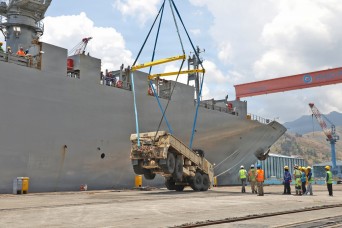 593d CSC Spearheads Complex Sustainment Operations for Balikatan 2026, Strengthening U.S.-Philippine Alliance
May 18, 2026
593d CSC Spearheads Complex Sustainment Operations for Balikatan 2026, Strengthening U.S.-Philippine Alliance
May 18, 2026
-
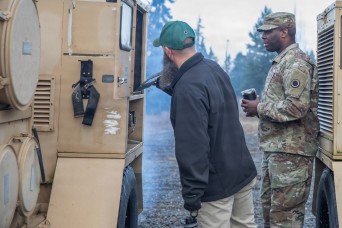 593rd CSC Hosts I Corps COMET Team for Maintenance Readiness
January 29, 2026
593rd CSC Hosts I Corps COMET Team for Maintenance Readiness
January 29, 2026
-
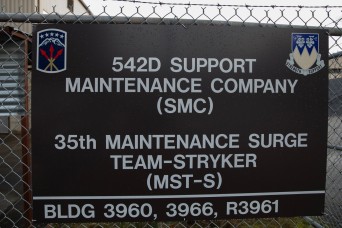 35th MST-S Drives Readiness Across JBLM Stryker Formations
January 21, 2026
35th MST-S Drives Readiness Across JBLM Stryker Formations
January 21, 2026
-
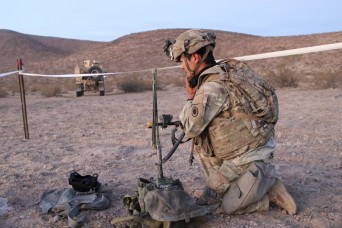 Sustaining the Fight: 13th CSSB Powers Lancer Brigade during NTC 25-11
December 12, 2025
Sustaining the Fight: 13th CSSB Powers Lancer Brigade during NTC 25-11
December 12, 2025
-
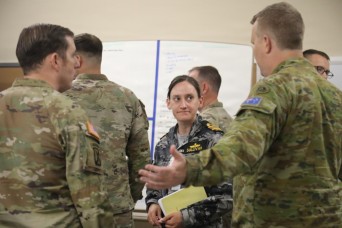 Army Pacific Sustainment Workshop Strengthens Theater Logistics at JBLM
December 17, 2025
Army Pacific Sustainment Workshop Strengthens Theater Logistics at JBLM
December 17, 2025
-
 Training Tomorrow’s Leaders at JBLM
September 2, 2025
Training Tomorrow’s Leaders at JBLM
September 2, 2025
-
 Port to Fort: 13th CSSB Supports Ghost Brigade Redeployment
July 31, 2025
Port to Fort: 13th CSSB Supports Ghost Brigade Redeployment
July 31, 2025
-
 593rd Corps Sustainment Command Powers SABAK 25 in the Philippines
August 20, 2025
593rd Corps Sustainment Command Powers SABAK 25 in the Philippines
August 20, 2025
-
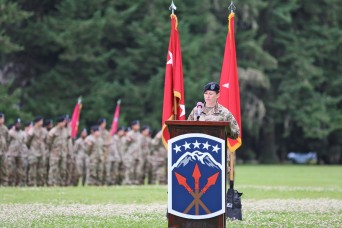 Change of Command Ceremony Marks New Chapter for 593rd CSC
July 10, 2025
Change of Command Ceremony Marks New Chapter for 593rd CSC
July 10, 2025
-
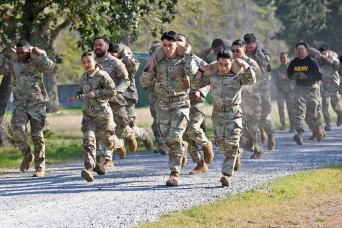 593rd CSC Takes Action During Sexual Assault Awareness and Prevention Month
April 30, 2025
593rd CSC Takes Action During Sexual Assault Awareness and Prevention Month
April 30, 2025
-
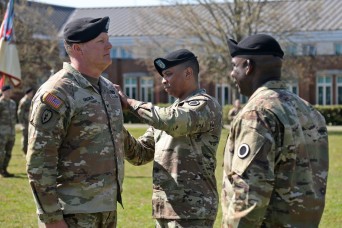 593rd ESC Redesignation: Strengthening Logistics for the Indo-Pacific Mission
April 22, 2025
593rd ESC Redesignation: Strengthening Logistics for the Indo-Pacific Mission
April 22, 2025
-
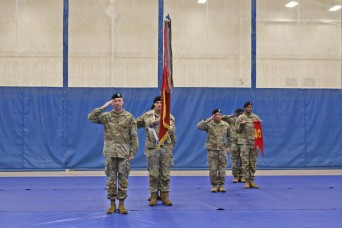 53rd Transportation Battalion (Movement Control) Inactivation
April 15, 2025
53rd Transportation Battalion (Movement Control) Inactivation
April 15, 2025
-
 Commander of 593d ESC Promoted to Brigadier General
July 15, 2024
Commander of 593d ESC Promoted to Brigadier General
July 15, 2024
-
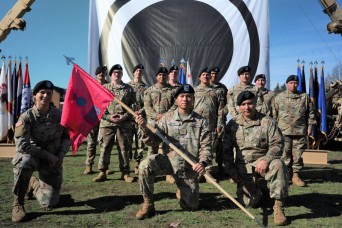 Modernized Stryker maintenance platoon activates at JBLM
October 20, 2023
Modernized Stryker maintenance platoon activates at JBLM
October 20, 2023
-
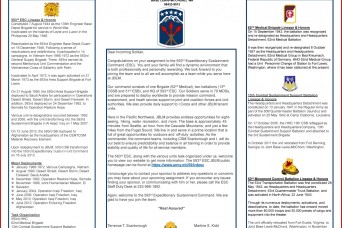 593d CSC Welcome Letter
October 25, 2023
593d CSC Welcome Letter
October 25, 2023
-
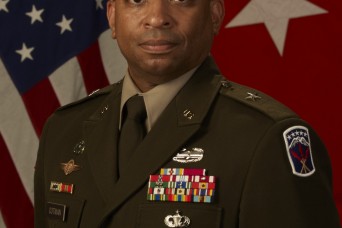 Brig. Gen. Kevin L. Cotman, Commander, 593rd Corps Sustainment Command
May 24, 2023
Brig. Gen. Kevin L. Cotman, Commander, 593rd Corps Sustainment Command
May 24, 2023
-
 Command Sergeant Major Dawadrain D. Clark Sr.
October 18, 2023
Command Sergeant Major Dawadrain D. Clark Sr.
October 18, 2023
-
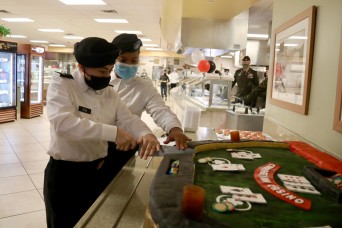 Meet Your ESC
November 29, 2021
Meet Your ESC
November 29, 2021
-
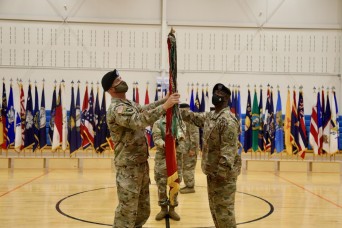 53rd Transportation Battalion (Movement Control) Activates at JBLM
December 3, 2021
53rd Transportation Battalion (Movement Control) Activates at JBLM
December 3, 2021
-
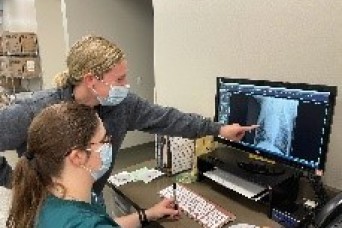 Program teams Army veterinarians, veterinary hospital
November 29, 2021
Program teams Army veterinarians, veterinary hospital
November 29, 2021
-
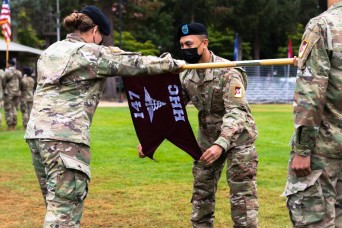 Last Active Duty CSH converts to new Hospital Center, Field Hospital design
September 21, 2021
Last Active Duty CSH converts to new Hospital Center, Field Hospital design
September 21, 2021
Mission
Mission: The 593d Corps Sustainment Command synchronizes sustainment and protection capabilities to set and sustain the Pacific Theater. The command executes theater mission command, JRSOI, distribution management, infrastructure development, and protection operations to enable I Corps, USARPAC, and the Joint Force commanders to conduct operations across contested environments.
End state: A globally responsive CSC capable of extending I Corps, and aligned forces operational reach, that is known & trusted, focused on providing operational sustainment and protection support across the Indo-Pacific AOR.
More 593rd CSC


593D SUSTAINMENT COMMAND Shoulder Sleeve Insignia

Description/Blazon
On a black disc 2 1/4 inches (5.72 cm) in diameter, a white circle 2 inches (5.08 cm) in diameter and 1/4 inch (.64 cm) in width.
Symbolism
A white circle was used as a corps badge by an organization designated I Corps during the Civil War. The white circle was selected as the identifying device for the current I Corps.
Background
I Corps was organized in January 1918 in the Regular Army at Neufchateau, France. The shoulder sleeve insignia was approved by the Adjutant General, American Expeditionary Forces telegram on 3 December 1918 and approved by the War Department on 17 June 1922. (TIOH Drawing Number A-1-57)
593D SUSTAINMENT COMMAND Distinctive Unit Insignia

Description/Blazon
A gold color metal and enamel device 1 1/8 inches (2.86 cm) in height overall consisting of a gold Philippine sunburst surmounted in base by a scarlet chevron all between an open wreath of green magnolia leaves, below a gold scroll inscribed in red letters "REST ASSURED."
Symbolism
The Philippine sunburst is used to represent the Philippine Presidential Unit Citation and service in the Far East. The scarlet chevron symbolizes the Meritorious Unit Commendation awarded the unit, while the chevron also suggests strong support. The supporting magnolia leaves represent Camp Claiborne, Louisiana, where the unit was originally activated, the magnolia tree being the state tree of Louisiana.
Background
The distinctive unit insignia was originally approved for the 593d General Support Group on 1 May 1969. It was redesignated effective 21 March 1973, for the 593d Support Group. The insignia was redesignated effective 16 April 2008, for the 593d Sustainment Brigade, with description and symbolism updated. The insignia was redesignated effective 16 July 2013, for the 593d Sustainment Command.
593D CSC LINEAGE & HONORS
Constituted 7 August 1944 as the 1350th Engineer Base Depot Brigade for service in World War.
Inactivated on the Islands of Leyte and Luzon in the Philippines 20 May 1946.
Reactivated as the 593d Engineer Base Depot Guam on 16 December 1948. Following a series of reactivations and redefinitions, it participated in 14 campaigns. In Vietnam from 1966-1972 as the 593rd General Supply Brigade. There, 593rd earned its second Meritorious Unit Commendation and the Vietnamese Cross of Gallantry with Palm.
Inactivated In April 1972, it was again activated on 21 March 1973 as the 593d Area Support Brigade at Fort Lewis.
On 31 August 1990, the 593rd Area Support Brigade deployed to Saudi Arabia for participation in Operations Desert Shield, Desert Storm, and Desert Farewell. In addition, 593rd deployed on 24 December 1992, to Somalia for Operation Restore Hope.
Various unit re-designations occurred between 1993 and 2006, with the unit transforming into the 593rd Sustainment Brigade in Al Asad, Iraq on 1 May 2007.
On 12 June 2012, the 593d SB deployed to Afghanistan as the headquarters of the CENTCOM Materiel Recovery Element.
Upon redeployment to JBLM, 593d SB transformed into the 593d Expeditionary Sustainment Command on 16 July 2013.
On 16 April 2025, 593rd ESC redesignated as the 593rd Corps Sustainment Command and donned the I Corps patch.
Major Deployments
- January 1966-1972, Various Campaigns, Vietnam
- August 1990, Desert Shield, Desert Storm, Desert Farewell, Saudi Arabia
- December 1992, Operation Restore Hope, Somalia
- November 1998, Joint Humanitarian Mission, El Salvador
- January 2004, Operation Iraqi Freedom, Iraq
- June 2006, Operation Iraqi Freedom, Iraq
- May 2010, Operation Iraqi Freedom, Iraq
June 2012, Operation Enduring Freedom, Afghanistan
Unit Awards

Soldiers assigned to 593d HHC are authorized to wear five MUCs, which will be worn with four oak leaf clusters, as unit awards temporarily while assigned to this organization.
These awards include:
- 593d Sustainment Brigade, HHC Meritorious Unit Commendation 12 Jun 06 to 11 Jun 07 2013-55 (Operation Iraqi Freedom)
- 593d Support Group; Headquarters and Headquarters Company, Meritorious Unit Commendation 2004 (Operation Iraqi Freedom)
- 593d Support Group, HHC Meritorious Unit Commendation 8 Aug 90 to 28 Apr 91 1994-27 / 1996-01 (Gulf War)
- 593s General Support Group, HHC; MUC 1 Jun 69 to 31 May 70 (Vietnam)
- Headquarters and Headquarters Company, 1350th Engineer Base Depot Group, Meritorious Unit Commendation (Army), and Streamer embroidered PACIFIC THEATER, WWII
Task Organization
593d Headquarters and Headquarters Company
13th Combat Sustainment Support Battalion
504th Military Police Battalion
864th Engineer Battalion
13th Combat Sustainment Support Battalion (CSSB) "PIONEERS"
The battalion is part of the regular army and tasked with providing military policing support to I Corps.
The 13th CSSB is a modular, Corps-level sustainment organization that provides multifunctional logistics support to maneuver, fires, and effects formations, as well as logistics assistance to other units across I Corps and the joint force. 13th CSSB traces its lineage back to 1941, beginning as the Headquarter and Headquarters Detachment, 60th Quartermaster Battalion (Laundry). Activated in 1942, the unit supported operations in Northern France and the Rhineland during WWII and later earned campaign credit in the Korean War.
Through multiple redesignations, the battalion served in Germany under the 2nd Support Command and the 7th Support Group before relocating to Fort Benning in 1991. Throughout the 1990s and early 2000s, 13th CSSB deployed in support of major operations including Desert Storm, Operation Continue Hope in Somalia, Operation Joint Forge in Hungary, Hurricane Mitch relief efforts, and Intrinsic Action in Kuwait and Saudi Arabia. During Operation Iraqi Freedom, the battalion delivered critical fuel, water, maintenance, and distribution support across the theater, enabling early sustainment operations in Baghdad and supporting major combat units including the 3rd Infantry Division and 101st Airborne Division.
Reflagged as the 13th CSSB in 2006 and later attached to the 3rd Sustainment Brigade, the battalion deployed to LSA Anaconda for OIF (07-09), operating key logistics hubs and training Iraqi Security Forces. In 2011, the unit moved to Joint Base Lewis- McChord, where it continues to provide sustainment support through subordinate units, including the 21st Inland Cargo Transportation Company, 24th Composite Supply Company, 63rd Ordnance Company, 140th Movement Control Team, 513th Transportation Company, 542nd Ordnance Company, 564th Quartermaster Company, and the Headquarters and Headquarters Company.
Their motto is "Find A Way."
504TH MILITARY POLICE BATTALION "DRAGON FIGHTERS"
The 504th Military Police Battalion provides military police support to I Corps and USARPAC. Originally constituted on 29 July 1921 as the 304th Military Police Battalion in the Organized Reserve, the unit was organized in Tennessee in 1922, inactivated in 1938, and simultaneously withdrawn from the Organized Reserve and allotted to the Regular Army. After redesignation as the 504th Military Police Battalion on 1 June 1940, the unit was activated at Fort Sam Houston in 1941 and later deployed to Western Europe during WWII. The battalion earned campaign credit and multiple assault arrowheads for operations in Tunisia, Sicily, Italy, Southern France, the Rhineland, Ardennes-Alsace, and Central Europe.
Following inactivation in Germany in 1947, the battalion was reactivated at Camp Gordon in 1950 and later deployed to Vietnam, where it participated in 17 campaigns and earned numerous decorations. After returning to the United States, several companies were inactivated in 1972.
In the early 2000s, the 504th deployed to Saudi Arabia and supported the invasion of Iraq from 2003-2004. In July 2026, 504th moved from under I Corps to a subordinate unit of the 593rd Corps Sustainment Command.
Their motto is "Duty, Justice, and Honor."
864TH ENGINEER BATTALION "PACEMAKERS"
The 864th Engineer Battalion is a combat engineer battalion, specializing in construction, base support, and infrastructure operations. Activated in 1942 as the 864th Engineer Aviation Battalion at Geiger Field, Washington, the unit served in the Pacific during WWII, earning campaign streamers for New Guinea, the Bismarck Archipelago, and Luzon, along with Philippine Presidential Unit Citation. Redesignated as the 864th Engineer Battalion in 1956, the unit deployed to Vietnam in 1965 as the first construction battalion-size unit in theater, constructing ports, base camps, and critical lines of communication. Their performance earned the battalion its enduring nickname, "Pacemakers."
Since Vietnam, the battalion has supported missions across the globe, including construction and humanitarian projects in Honduras, Thailand, Alaska, and across the U.S., and continued to play a key role in CENTCOM operations. Pacemaker Soldiers have executed road and airfield repair, materiel recovery, and base support missions in Afghanistan and other forward environments.
Their motto is "Aliquid Expectavit," meaning "Anything Expected."
Battalion Command Teams
-
 13th CSSB CommanderLTC Matthew Boersema
 -
 13th CSSB CSMCSM Jose Graulau
 -
 504th MP BN CommanderLTC Abby Lanni
 -
 504th MP BN CSMCSM Joshua Dubois
 -
 864th BN CommanderCSM Funkhouser
 -
 864th EN BN CSMCSM Ramon Juarez
Resources
- For Families
- For Military Kids
- JBLM Website
- JBLM In-processing
- Housing Division
- BOSS - Better Opportunities for Single Service Members
- I Corps
- Ready and Resilient
- SHARP 593d CSC SHARP team - (253) 302-2756
- Suicide Prevention
- Equal Opportunity
- Safety
- CASCOM
- Army Logistics University
- JBLM Alert System