
Fires Center of Excellence and Fort Sill
Fires Strong!
WHO WE ARE
Located at the historic Fort Sill, Oklahoma, the Fires Center of Excellence (FCOE) is a dynamic Transformation and Training Command (T2COM) organization responsible for building the U.S. Army from the ground up. Our mission begins with the sacred trust of taking civilian volunteers and forging them into skilled, disciplined soldiers through Basic Combat Training. As the intellectual and professional home of the U.S. Army's Field Artillery and Air Defense Artillery, we then develop these Soldiers and their leaders into the world's most lethal and technically advanced Fires experts, ensuring the Army is prepared to win on any battlefield.
MISSION
The Fires Center of Excellence trains, educates, and develops Soldiers and Leaders; creates and develops capabilities; and provides a Fires Force to support the Joint Warfighting Commander across the spectrum of operations in Joint and Multinational environments.
VISION
The Fires Center of Excellence creates the world's premier Fires Force; ready to employ responsive, cross-domain fires to win in any operational environment.
PRIORITIES
Transform in Contact
Initial Military Training (IMT) Expansion
Support Warfighting Readiness
Fort Sill News
-
 Ordnance Training Detachment-Sill hosts Norwegian Foot March
October 8, 2026
Ordnance Training Detachment-Sill hosts Norwegian Foot March
October 8, 2026
-
 Not alone: Fort Sill summit strengthens connections before crisis
September 28, 2026
Not alone: Fort Sill summit strengthens connections before crisis
September 28, 2026
-
 US Army, Singapore Armed Forces integrate fires capabilities during Daring Warrior 2026
September 28, 2026
US Army, Singapore Armed Forces integrate fires capabilities during Daring Warrior 2026
September 28, 2026
-
 Fort Sill Retiree Appreciation Days brings services, fellowship under one roof
September 24, 2026
Fort Sill Retiree Appreciation Days brings services, fellowship under one roof
September 24, 2026
-
 Fort Sill community carries memory forward during 25th anniversary 9/11 Remembrance Run
September 14, 2026
Fort Sill community carries memory forward during 25th anniversary 9/11 Remembrance Run
September 14, 2026
-
 Army artillery brigade builds tactical proficiency
September 1, 2026
Army artillery brigade builds tactical proficiency
September 1, 2026
FCOE LEADERS
Leaders
-
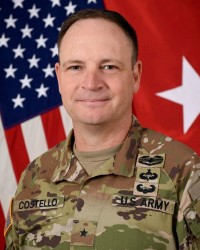 Commanding GeneralBG Patrick M. Costello
 -
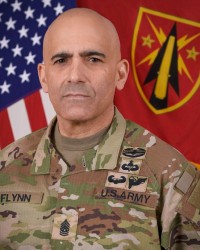 Command Sergeant MajorCSM Robert A. Flynn
 -
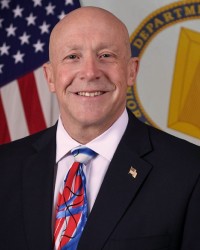 Deputy to the Commanding GeneralDr. Alvin Peterson
 -
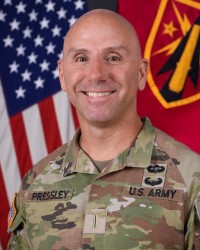 Command Chief Warrant OfficerCW5 Kenneth Pressley
 -
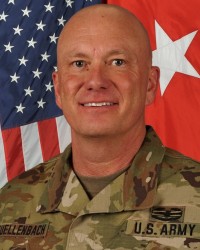 ARNG Deputy Commanding General (FA)BG Shawn M. Fuellenbach
 -
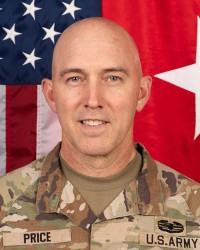 ARNG Deputy Commanding General (ADA)BG Ryan Price
 -
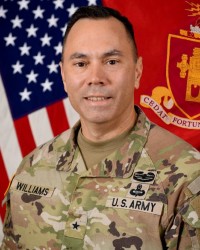 Commandant of the Field ArtilleryBG Jason T. Williams
 -
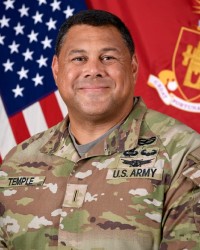 Chief Warrant Officer of the Field ArtilleryCW5 Joey C. Temple
 -
 Command Sergeant Major of the Field ArtilleryCSM John A. Bamba
 -
 Commandant of the Air Defense ArtilleryBG Marc E. Pelini
 -
 CWOB of the Air Defense ArtilleryCW4 Corey C. Fuller
 -
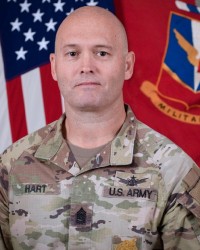 Command Sergeant Major of the Air Defense ArtilleryCSM Kelly M. Hart
 -
 FIRES Center Chief of StaffCOL Jayson Morgan
 -
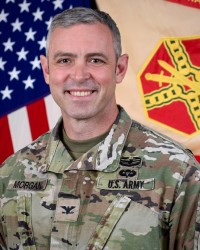 Fort Sill Garrison CommanderCOL John Morgan
 -
 Fort Sill Garrison Command Sergeant MajorCSM Jared F. English
 -
 30th ADA BDE CommanderCOL Robert A. Ferryman
434th Field Artillery Brigade
-
Contact Info:
BDE Email: usarmy.sill.fcoe.mbx.434-fa-bde-pao@army.mil
Brigade Staff Duty: 580-442-1273
Brigade Public Affairs Officer: 580-442-2052
Welcome Letter [PDF - 37.1 KB]
-
Staff Duty: 580-558-7230
Welcome Letter [PDF - 124.9 KB]
-
Staff Duty: 580-442-0461
Welcome Letter [PDF - 7.8 MB]
-
Staff Duty: 580-442-1204 / 580-558-2543
Welcome Letter [PDF - 1.9 MB]
-
Staff Duty: 580-442-1331
Welcome Letter [PDF - 2.1 MB]
-
Staff Duty: 580-558-7522
Welcome Letter [PDF - 34.7 KB]
-
Staff Duty: 580-442-3908
Welcome Letter [PDF - 133.3 KB]
-

Graduation dates for FY27 for 434 FA on Ft Sill View original Graduation Dates for FY27

428th Field Artillery Brigade
-
Contact Info:
S1
OIC: (580) 442-4822
NCOIC: (580) 442-0999S2
Security Manager: (580) 442-4653
S3
OIC: (580) 442-6910
NCOIC: (580) 442-5162S4
OIC: (580) 442- 5502
NCOIC: (580) 442-4472S6
OIC: (580) 442-3891
NCOIC: (580) 442-0079BDE Staff Duty
Desk: (580) 442-2803
Mobile: (580) 442-9950Chaplain: (580) 442-0020
Assistant: (580) 442-3440Retention: (580) 442-5602
SARC: (580) 442-4564
Mobile: 483-5943Victim Advocate: (580) 442-6280
Mobile: 580-458-9223EO: (580) 442-2116
FA School - Army National Guard (ARNG) - Deputy Assistant Commandant: (580) 442-3058
FA School - Army National Guard (ARNG) - Proponent NCO: (580) 442-4970
FA School - Army National Guard (ARNG) - Operations NCO: (580) 442-0778
FA School - Army National Guard (ARNG)- Master Gunner Liaison: (580) 442-4089
Welcome Letter [PDF - 49.1 KB]
-
Images and Information
-
Contact Info:
BN CDR: (580) 442-4339
BN CSM: (580) 917-9343
BN XO: (580) 442-8984
S1 Personnel: (580) 442-2355/1796
S3 Operations: (580) 442-1746
S4 Logistics: (580) 442-7942
S6 Commo: (580) 442-7942/1744
BN/BDE Staff Duty Desk: (580) 442-2803
BDE Chaplain: (580) 919-6403
2-2 FA HSB BTRY: (580) 442-2825
2-2 FA A BTRY: (580) 442-4812
2-2 FA B BTRY: (580) 442-6223
-
Contact Info:
S1 Personnel: (580) 442-4662/4665
S2 Intelligence: (580) 442-0227
S3 Operations: (580) 442-6302
S4 Logistics: (580) 442-5092
S6 Commo: (580) 442-0227
BDE Staff Duty: (580) 442-2803 (Desk)
BDE Chaplain: (580) 919-6403
Retention: (580) 442-5093
BDE SARC
Desk: (580) 442-4564
Mobile: 483-5943BDE Victim Advocate
Desk: (580) 442-6280
Mobile: 580-442-6280EO: (580) 442-3571
Suicide Prevention: (800) 273-8255
Welcome Letter [PDF - 5.3 MB]
-
Contact Info:
Alpha BTRY CQ: Bldg 4401 - (580) 442-6002
Bravo BTRY CQ: Bldg 4403 - (580) 442-4403
Charlie BTRY CQ: Bldg 2436 - (580) 442-5322/6066
Delta BTRY CQ: Bldg 4407 - (580) 442-8878
National Guard: (405) 351-0425
Battalion HQ: Bldg 4402 - (580) 442-6480/Staff Duty (580) 442-6480
Welcome Letter [PDF - 76.9 KB]
13B Welcome Letter [PDF - 274.8 KB]
13M Welcome Letter [PDF - 60.7 KB]
13R Welcome Letter [PDF - 57.8 KB]
13J Welcome Letter [PDF - 43.2 KB]
13F Welcome Letter [PDF - 255.7 KB]
U.S. Army Field Artillery School (USAFAS)
-
The Field Artillery School trains Soldiers, Officers and Marines in tactics, techniques and procedures for the use of fire support systems in combat. The school provides individual training from the basic level to mid-level leadership skills. The school supports collective training of lessons learned on todays battlefields by maintaining a professional conversation with Soldiers and Marines in the field through the Fires Bulletin magazine, blogs and other media, and by supporting high-tech gaming simulations for the advance training of staff elements throughout the military.
At all times, the school supports the field artillery mission, which is to destroy, neutralize, or suppress the enemy by cannon, rocket and missile fire and to help integrate all lethal and nonlethal fire support assets into combined arms operations
-
At the beginning of the 20th century, field artillery officers and soldiers had limited opportunities for training, particularly in advanced skills such as massing fires. To address this gap, President Theodore Roosevelt commissioned Army Captain Dan T. Moore to study European field artillery training methods. After observing the German Artillery School, Moore submitted a favorable report, prompting the War Department to establish a dedicated field artillery school in the United States.
In 1910, Captain Moore was sent to Fort Sill, Oklahoma, to organize the School of Fire for Field Artillery, which opened in September 1911 with Moore as its first commandant. The school’s mission was to provide both theoretical and practical instruction on the latest weapons and fire direction procedures. The outbreak of the Mexican Revolution in 1916 temporarily closed the school as students were deployed to guard the border. The school reopened in 1917, following the United States’ entry into World War I, with Colonel William J. Snow as commandant and an expanded curriculum.
After World War I, the school’s leadership initiated long-term programs to improve field artillery mobility, gunnery, and equipment. Despite budget constraints in the 1920s, innovative leaders in the Gunnery Department, supported by school commandants, drove modernization efforts throughout the 1930s. Major Carlos Brewer introduced new fire direction techniques to enhance responsiveness, while Major Orlando Ward developed the fire direction center, centralizing command and control to facilitate massed fires. Brewer, Ward, and Lieutenant Colonel H.L.C. Jones also advocated for replacing horses with motor vehicles to improve artillery mobility.
World War II
During World War II, the Field Artillery School pioneered the use of air observation to control artillery fires, maximizing the effectiveness of new long-range guns. In 1942, the War Department authorized organic field artillery air observation, enabling artillery air observers to adjust massed fires and conduct liaison, reconnaissance, and other critical missions throughout the war.
Cold War and Beyond
In the postwar era, the school adapted to the challenges of the atomic age and the Cold War. In 1946, the War Department consolidated all artillery training and development under the U.S. Army Artillery Center at Fort Sill. This center included the Artillery School, the Antiaircraft and Guided Missile School at Fort Bliss, Texas, and the Coast Artillery School at Fort Scott, California. Air defense artillery became a separate branch in 1966.
The 1950s saw significant technological advancements, including the first firing of a nuclear-capable field artillery gun—the 280mm "Atomic Annie"—in 1953. School personnel also contributed to the development of rocket and missile systems such as the Honest John rocket, Corporal missile, and Redstone missile, all capable of carrying nuclear warheads. In 1963, the school tested aerial rocket artillery, equipping helicopters with rockets—a capability proven effective during the Vietnam War.
The school also played a key role in the development of the Field Artillery Digital Automated Computer (FADAC), introduced in 1966-67, which positioned field artillery as a leader in Army computing technology. In the years following the Vietnam War, the school supported the introduction of advanced systems such as the Multiple-Launch Rocket System, the Army Tactical Missile System, and the Paladin 155mm self-propelled howitzer.
The effectiveness of field artillery in operations such as Desert Storm (1990-91) and in Iraq and Afghanistan (2001 to present) has validated the school’s ongoing modernization efforts. Today, field artillery officers and soldiers are trained to perform complex fire missions, as well as a wide range of other operational tasks, demonstrating adaptability and technical proficiency.
Evolution of the School
- School of Fire for Field Artillery (1911–1919)
- Field Artillery School (1919–1946)
- The Artillery School (1946–1955)
- The Artillery and Guided Missile School (1955–1957)
- U.S. Army Artillery and Guided Missile School (1957)
- U.S. Army Artillery and Missile School (1957–1969)
- U.S. Army Field Artillery School (1969–present)
-
730 Schimmelpfenning Avenue Bldg. 730
Fort Sill, OK 73503Command Sergeant Major
580-512-6077
Executive Officer580-558-9102
Aide to the Commandant
580-919-6288Commandant Executive Assistant
520-671-8391Assistant Commandant
580-583-9374
FA Deputy
580-442-2563
Office of the Chief of Field Artillery
580-442-3782NCOA Assistant Commandant
580-442-3141
FA Harding Fellow
571-588-7792
-
"The Field Artillery is more than a collection of skilled officers and soldiers it is a unified team whose influence shapes the battlefield at every turn. Our mission goes far beyond simply pulling a lanyard; we deliver precise and timely fire support, integrating advanced technology and coordinated teamwork to ensure success. Whether training at home or operating in combat zones around the world, Field Artillery professionals stand ready to adapt and respond whenever and wherever the Army calls. Our culture is defined by lifelong bonds, adaptability, and a commitment to both precision and lethality. This unique environment not only drives mission success but also fosters personal growth and camaraderie, making the Field Artillery the best team in the Army."
MYTH:
The Field Artillery is no longer relevant in today’s Army or on the modern battlefield.FACT:
Field Artillery is more relevant than ever in today’s Army, thanks to its rapid adoption of cutting-edge technology and its central role in modern warfare. Recent operations have seen the employment of tens of thousands of artillery rounds including high explosive, bunker buster, illumination, smoke, and GPS guided munitions demonstrating the Field Artillery’s versatility and precision. Today’s Field Artillery Officers are at the forefront of integrating advanced systems such as unmanned aerial vehicles (UAVs), digital fire control, and networked sensors, enabling real-time targeting and coordination across the battlefield. By synchronizing fires with assets like close air support, attack helicopters, missiles, rockets, and mortars, Field Artillery professionals ensure that joint and combined arms teams can respond rapidly and decisively to any threat. The Field Artillery’s embrace of innovation and technology not only amplifies its impact on the modern battlefield but also cements its role as a vital force multiplier in achieving mission success.MYTH:
BOLC is a long, tedious course filled with difficult classroom lectures and little practical experience.FACT:
The Field Artillery Basic Officer Leader Course (BOLC) is designed to be both comprehensive and engaging, lasting 18 weeks and 4 days to ensure officers master essential FA-specific skills. Far from being just classroom-based, BOLC immerses students in hands-on field exercises and state-of-the-art simulation training, where they actively call for and adjust artillery fire on real targets. Leveraging modern technology, trainees use advanced digital fire control systems and participate in realistic scenarios that mirror today’s operational environments. Each Second Lieutenant fires, on average, $100,000 worth of live rounds, gaining invaluable experience with the latest munitions and equipment. BOLC prepares officers not only with foundational knowledge, but with practical skills and confidence to lead in the modern Field Artillery force.MYTH:
Fort Sill is not a desirable place to be stationed, even temporarily for BOLC.FACT:
Fort Sill offers a unique and rewarding experience, especially for those who appreciate the outdoors and adventure. Located adjacent to the stunning Wichita Mountains Wildlife Refuge, Fort Sill provides immediate access to over 59,000 acres of protected wilderness, home to free-ranging buffalo, Texas longhorn cattle, elk, deer, and prairie dogs. The area is a haven for outdoor enthusiasts, with opportunities for hiking, mountain biking, rock climbing, rappelling, camping, fishing, and hunting all just minutes from post. The breathtaking scenery and abundant wildlife make it a favorite destination for photographers and nature lovers alike. Additionally, Fort Sill’s convenient location places it just an hour from Oklahoma City and two hours from Dallas, offering easy access to urban amenities and travel. Far from being remote or undesirable, Fort Sill combines world-class training with exceptional quality of life and recreation.MYTH:
Field Artillery does not offer many opportunities for military school attendance or specialized training.FACT:
Contrary to the belief that Field Artillery offers limited military school opportunities, the latest Army Board Guidance highlights a wealth of advanced training and educational pathways available to Field Artillery officers and NCOs. In addition to completing Joint Fires Observer (JFO) qualification as part of their initial training, Field Artillery personnel are eligible for a variety of elite schools, including Ranger, Airborne, Air Assault, Pathfinder, and Jumpmaster. The guidance also emphasizes broadening assignments such as instructor, recruiter, and observer/controller roles, as well as professional military education like the Advanced Leader Course and Senior Leader Course. Achievement and participation in these schools are not only encouraged but are also recognized as key factors for career progression and selection for leadership positions. This robust framework ensures that Field Artillery Soldiers and officers have ample opportunities for professional growth and specialized training throughout their careers.MYTH:
There is no guarantee that I’ll get to serve as a Fire Support Officer (FSO) or Platoon Leader (PL), especially for females who are limited in the Field Artillery.FACT:
Since 2016, all Field Artillery (FA) positions including Fire Support Officer (FSO), Platoon Leader (PL), and Fire Direction Officer (FDO) have been open to both men and women, with no gender-based restrictions. The U.S. Army’s integration policy ensures that all qualified officers, regardless of gender, are eligible for assignment to any FA role. It is standard practice and a branch priority for new Field Artillery lieutenants (2LT/1LT) to rotate through all three key developmental positions: FSO, PL, and FDO, to ensure broad professional experience and leadership development. Assignment to these roles is based on operational needs, performance, and career progression not gender. In fact, women have successfully served and excelled in every FA officer position, including in combat arms units, since the policy change. The Army’s commitment to equal opportunity is enforced by both Department of Defense and Army regulations, and is reflected in assignment practices, promotion boards, and leadership development programs across the force.MYTH:
As an FA officer, I am limited to where I can post.FACT:
Despite the misconception that Field Artillery (FA) officers are limited in their duty station options, the reality is that FA officers have a wide range of assignment possibilities both in the United States and overseas. FA officers are posted wherever there are Army maneuver units, which includes installations across Europe, Asia, the Middle East, and the continental U.S. Additionally, FA officers can serve as Ground Liaison Officers (GLOs) on Naval and Air Force bases, supporting joint operations and enhancing inter-service coordination. These diverse assignment opportunities reflect the Army’s global mission and the integral role of Field Artillery in supporting maneuver forces and joint operations. As a result, FA officers enjoy broad flexibility in their career paths and can expect to serve in a variety of locations throughout their service. -
Guide to Saint Barbara Celebrations
“How to Conduct a Saint Barbara’s Celebration" by the US Field Artillery Association provides comprehensive guidance for organizing and executing Saint Barbara’s Day events. It begins with a history of the military dining-in tradition, tracing its origins from early England and the British Army to its adoption by the U.S. military. The document then describes the various types of Saint Barbara’s Day celebrations, such as dining-ins, dining-outs, military balls, dinner dances, and parades, highlighting their common elements like receiving lines, toasts, reading of legends, and award inductions, as well as the protocols that ensure these events are conducted with dignity and professionalism. Detailed planning advice is offered, including timelines, task breakdowns for different officers, suggested briefing outlines, and sample programs and agendas for each event format. The document also outlines the nomination procedures for the Orders of Saint Barbara and the Artillery Order of Molly Pitcher, explaining the criteria for each award and providing guidance on how to wear the associated medallions. Additional appendices enrich the resource with the legend of Saint Barbara, the story of Molly Pitcher, the myth of Fiddler’s Green, lists of traditional music and choral selections, ceremonial punch rituals, and a variety of historical punch recipes. Finally, it includes sample forms, memos, and invitations to assist with the administrative aspects of the celebration. Altogether, the document serves as a thorough resource for fostering professionalism, camaraderie, and a sense of tradition within the Field Artillery community.
Saint Barbara Award Cheat Sheet
The St. Barbara’s Award Packet Procedures Cheat Sheet offers a concise guide for submitting award nominations for the Ancient Order, Honorable Order, and Molly Pitcher awards. It outlines membership requirements, payment instructions, necessary documentation, and deadlines to avoid late fees, emphasizing the importance of complete and accurate packets for timely processing. The guide also provides contact information and directs users to the latest forms online for efficient submission.
The USAFAS Reading List is a curated selection of books and documents intended to broaden the intellectual horizons of Field Artillery professionals. It includes foundational American documents, military and American history, biographies, memoirs, classic fiction, and self-improvement literature. The list encourages critical thinking and discussion, aiming to help soldiers learn from the experiences and ideas of others, and to develop a well-rounded understanding of military, political, and cultural issues relevant to their profession.
Field Artillery Captains Career Course (FACCC)
-
Welcome Letter [PDF - 193.6 KB]
-
The primary point of contact for reporting to FACCC is the A/1-30th Battery XO at (580) 442-6594.
Students report on the date indicated in the email/welcome letter you received or will receive from the Alpha Battery XO. Early reporting is not authorized. In accordance with Army Regulation 350-1 (Army Training and Leader Development) you may not report on a temporary physical profile, except for Pregnancy and Post-Partum profiles and profiles which are due to an operational deployment.
This is not a traditional PCS. After reporting, you will execute three days of in- processing briefs as a class, to include drawing class materials (texts and instruments). You are responsible for in-processing not included during these briefs. Specifically, you’re required to in-process the post transportation, finance, and housing offices on your own time. You will not draw TA-50 from the Central Issuing Facility; however, some students find it useful to bring equipment such as rucksacks for physical readiness training. You must carry forward your dress uniform (ASU or AGSU) for payday activities, social events, and graduation.
IPPS-A absence requests are required regardless of whether you are coming from another unit on Fort Sill or another duty station. You do not require a DA Form 4187 to report. If you are coming from another unit on Fort Sill, you do not need to out-process post, only your losing unit.
If you believe you have an issue that may preclude you from reporting on the right day or will interrupt in-processing activities, contact the Alpha Battery XO immediately.
-
- Student Code of Conduct
Students must conduct themselves in the manner expected of any Soldier both on and off duty. A Soldier’s conduct revolves around the Seven Army Values, which are: Loyalty, Duty, Respect, Selfless Service, Honor, Integrity and Personal Courage. The Army and FACCC evaluates all personal actions against these core values and the Leadership Requirements Model.
Academic dishonesty is not tolerated. Each graded examination, evaluation, and assignment is an individual effort. Students may work together only when their SGL direct.
The FACCC does not authorize acquiring or providing inappropriate assistance before, during, or after a written examination, except as instructed by the test administrator. The FACCC prosecutes infractions for this under Article 92 of the Uniform Code of Military Justice (failure to obey an order or regulation).
All work on quizzes, examinations, and assignments must be your own original work. On examinations, you may not communicate with other students or make a record of your answers. In addition, the FACCC requires all students to report any unauthorized assistance before, during, or after written examinations involving yourself and/or other students.
Students must not perform any act or omission that provides themselves or other students an unfair advantage over their peers, such as collaboration (or toleration thereof) on graded examinations, evaluations, or assignments, unless their SGL specifically authorizes them to do so.
All students are obligated to report suspected honor code violations to their SGL as soon as possible.The chain of command may dismiss any student found in violation of this code of conduct. Students have the right to appeal involuntary dismissal.
- Academic Graduation Requirements
The FACCC evaluates academic subject matter on a basis of 2000 POI points. SGLs calculate weight point achievement to the second decimal place percentage (0.00%) and use it to determine each student's completion of training. The minimum passing score for all graded assignments is 80.00% (70.00% for International Military Students [IMS]). SGLs may direct students who earn a failing grade on a written assignment to re-write the assignment. The maximum achievable score on a rewrite is 80.00% (70.00% for IMS).
Students must achieve a cumulative average of at least 80% in each block of instruction and on all 200-point exams to graduate which include the Fire Support Planning Exam, Field Artillery Battalion Planning Exam, Fire Control Exam, and Cumulative Exam (70% for IMS).
- Physical Graduation Requirements
Physical Fitness: The FACCC requires students to participate in and lead physical readiness training (PRT) formations throughout the course. SGLs deduct participation points at their discretion based on the student’s ability to arrive, coordinate, lead, and conduct PRT professionally and correctly. Students conduct PRT daily, and their SGLs report accountability to the Course Manager NLT 0550 every duty day.
Students conduct an entry Army Combat Fitness Tests (ACFT) shortly after arrival. A second, “diagnostic” ACFT is self-administered by students at the mid-point of the course. Students who score a minimum of 540 points with a minimum score of 80 points in each event on the entry ACFT are exempt from body fat screening.
Students must meet height and weight standards in accordance with AR 350-1, AR 600- 9, and FM 7-22 to begin the course. All U.S. Army Students must maintain height and weight requirements throughout the duration of the course. IMS and USMC Students are not required to meet Army height and weight standards to enroll into the course.
The battery administers an initial body fat assessment and ACFT. Soldiers who fail to meet Army physical fitness and body fat standards will be dismissed from the course. Following dismissal from the course, the battery commander notifies HRC of the Soldier’s ineligibility for training and initiates appropriate actions to include flagging per AR 600-8-2. The battery commander also enrolls the Soldier into a remedial physical fitness program.
One ACFT retest and one height and weight rescreening are allowed. They are administered NET seven days and NLT 24 days after the initial failure.
For students who fail to meet Army physical fitness and body fat standards, SGLs will annotate them as “DID NOT GRADUATE” (Part I, Block L.) and “Failed to Achieve Course Standards” (Part III, Block A.) on the DA Form 1050 (Service School Academic Evaluation Report). Officers who fail to achieve course standards are not eligible to enroll in any PME courses for six months after their dismissal. The six-month waiting period begins on the day after the student signs the DA Form 1059. Soldiers who fail to meet standards a second time are not eligible to enroll in any PME courses for one year after the second failure. It is a command decision whether to recommend an officer for separation.
-
Fort Sill Lodging
Aultman Hall, Buiding Number 5676
Fort Sill, OK 73503
(580) 442-5000 / 3214Welcome Center
BLDG 4700 Hartell Hall
Fort Sill, OK 73503
For ORB Updates, see student records at BLDG 4700. Turn in current ORB with corrections and appropriate award paperworkMedical Care for Students
TMC #1, BLDG 2913. Sign-in is conducted on a walk-in basis from 0700-0800 and 1230-1330, Monday through Friday. Saturday and Federal/Training Holiday sick call for this student population is conducted at the Bleak Troop Medical Clinic (TMC). Sign-in for Saturday and Federal/Training Holidays will be conducted from 0700-0800.Cowan Dental Clinic (Temporary Location)
Bldg. 6037A, Bessinger Rd.(Located Behind Allen Dental Clinic)
Dental Clinic Information 580 442-5544 (0730-1630) M-F
Sick Call (0730-0900) on Training Holidays
***Hand Carry Records Each Visit***
Field Artillery Basic Officer Leader Course (BOLC)
-
Welcome Letter [PDF - 308.8 KB]
-
Course Overview [PDF - 1.8 MB]
-
Reporting Instructions [PDF - 925.8 KB]
Field Artillery Proponent Office (FAPO)
-
The Field Artillery Proponent Office (FAPO) serves as the strategic architect for the branch, managing the standards, requirements, and personnel readiness of Field Artillery Officers, Warrant Officers, and Enlisted Soldiers. By executing the eight Army personnel lifecycle functions, FAPO standardizes the career continuum, optimizes CMF 13 Enlisted progression, aligns force structure authorizations, and administers regimental honors. To sustain the future of Fires leadership, FAPO actively recruits and validates premier Warrant Officer candidates while evaluating ROTC and USMA Cadets to cultivate the next generation of Field Artillery Officers.
-
- Facilitate personnel related requirements and actions in close coordination with Human Resources Command (EPMD/OPMD), the Fires Center of Excellence at Fort Sill and all units, agencies, or elements impacted by personnel management decisions, actions, and/or functions.
- Fulfill active Army CMF 13 MOS assignments in accordance with approved guidance, assignment of advanced individual training (AIT) start dates, maintaining personnel trend and personnel projection data, maintaining access to Army systems of record, and maintaining coordination with external agencies across the larger accessions enterprise.
- Conduct Warrant Officer recruiting engagements across the force IOT identify and recruit the best warrant officer candidates IAW HQDA-G1 Warrant Officer Accession requirements.
- Conduct Warrant Officer Accession tasks to include Warrant Officer application review, accession mission validation, and selection board trend analysis.
- Evaluate Cadet files IOT identify the best candidates for Field Artillery officers.
- Continuously review and make recommendations to TOEs, TDAs, ASIs, and standards of grade to appropriately support the force and future; evaluate the personnel inventory and recommend adjustments to support authorizations and force structure changes; establish and maintain career progression patterns; validate and adjust MOS models to maximize and grow talent.
- Manage Knox, Hamilton, and Gruber Award processes and the Honorary and Distinguished Regimental Program.
- Support Cadet Summer Training and USMA Branch Week.
- Conduct branch orientation engagements to inform and educate the ROTC Cadet cohort.
Lifecycle Functions:
- Structure
- Acquisition
- Distribution
- Professional Development
- Sustainment
- Compensation
- Deployment
- Transition
-
KEY FUNCTIONS OF THE FIELD ARTILLERY PROPONENT OFFICE ENLISTED CAREER MANAGERS:
The Proponent Office supports the development of noncommissioned officers (NCOs) through several key functions, ensuring they are equipped with the necessary skills and opportunities for career advancement. These key functions enable the Proponent Office to effectively support NCO development, ensuring that they are prepared to meet the demands of their roles and contribute to the success of the Field Artillery mission.
Key Functions of the Proponent Office in Supporting NCO Development
- Professional Development Guidance:
- Provides NCOs with structured guidance and resources for professional growth, including mentorship programs and training opportunities.
- Offers career advice tailored to individual NCOs based on their specific management fields.
- Centralized Selection Board Support:
- Facilitates centralized selection processes for NCOs, ensuring that selection board members are well-informed and equipped to evaluate candidates effectively.
- Ensures that selection criteria are aligned with the needs of the Field Artillery and reflect the competencies required for leadership roles.
- Personnel Life-Cycle Management:
- Oversee the full range of personnel management functions, from recruitment to retirement, to ensure that NCOs have clear paths for career progression.
- Monitors the assignment and promotion processes to maintain a balanced and sustainable force of NCOs.
- Training and Education Coordination:
- Collaborates with training institutions to develop and implement educational programs that enhance NCO competencies and leadership skills.
- Advocates for training opportunities that align with current operational requirements and future needs.
- Feedback and Assessment Mechanisms:
- Establishes feedback systems to gather input from NCOs regarding their development needs and the effectiveness of current programs.
- Utilizes assessment tools to evaluate the impact of development initiatives on NCO performance and readiness.
- Collaboration with Other Agencies:
- Coordinates with the Human Resources Command and the Fires Center of Excellence to ensure that NCO development efforts are integrated into broader personnel and operational strategies.
- Engages with other military branches and agencies to share best practices and enhance NCO training and development.
- Promotion of Leadership Opportunities:
- Encourages NCOs to take on leadership roles and participate in joint exercises, fostering a culture of initiative and responsibility.
- Supports initiatives that recognize and reward exemplary NCO performance and leadership
-
- 730 Schimmelpfenning Avenue Bldg. 730
- Fort Sill, OK 73503
Field Artillery Proponent Office Leadership
- Chief Field Artillery Proponent Officer 580-919-1887
- Chief Career Management NCO 580-442-4973
- Field Artillery Proponent Warrant Officer 520-725-9322
Field Artillery Engagement Officers
- Operations Officer 580-442-4948
- Plans Officer 580-442-0947
Field Artillery Proponent Office Enlisted Career Managers/Operations
- NG Field Artillery Proponent NCO 520-672-7537
- 13Z Career Management NCO 580-583-9374
Field Artillery Proponent Office Enlisted Career Managers
- 13B Career Management NCO 520-671-8623
- 13F Career Management NCO 520-671-8681
- 13J Career Management NCO 928-989-3595
- 13M Career Management NCO 571-588-0829
- 13R Career Management NCO 520-716-9267
-
History:
The Henry A. Knox Award is named after the first Chief of Artillery, and first Secretary of War, Major General Henry A. Knox. The award recognizes the most outstanding active component battery. Originally called the Knox Trophy and Medal, the awards were established in 1924 by the Chief of Field Artillery and presented annually. The Trophy recognized the best artillery battery, and the Medal recognized the best enlisted Artillery Soldier. Before World War II, the awards were not presented. In 2002, the Knox Trophy was reinstated, and the Medal was replaced with the Gruber Award to recognize individual Soldiers.
The Alexander Hamilton Award recognizes the best Army National Guard (ARNG) Battery. It was created in 2002 and is named after American Statesman and Continental Army Artilleryman Alexander Hamilton. Alexander Hamilton was an outstanding artillery battery commander and a skilled cohort of General George Washington during the Revolutionary War. Hamilton helped frame the U.S. Constitution and served as the nation’s first Secretary of the Treasury.
The Edmund L. Gruber Award is named after Brigadier General Edmund L. Gruber, a noted Field Artillery Officer, who as a First Lieutenant in 1908 composed the “Caisson Song”, which the Army adapted as “The Army Song” (The Army Goes Rolling Along) in 1952. The Gruber Award was established in 2002 to recognize individual Field Artillery Soldiers for innovations that resulted in significant contributions to enhance the Field Artillery’s war fighting capabilities, morale, readiness, and maintenance.
Submission:
The submission window opens on 2 November 2026 and closes on 29 January 2027. The Memorandum of Instruction (MOI) provides all the guidance and information you need for your submission. Ensure the maximum of 10 images submitted with your packet are clear, high-resolution images.
The Field Artillery Proponent Officer (FAPO) will not provide example packets due to the competitive nature of the awards.
Don’t miss the deadline! Any packets submitted after 29 January 2027 will be considered on a case-by-case basis.
-
- Secure National Guard concurrence/non-concurrence on all significant force structure initiatives affecting the FA force structure
- Intermediary between the ARNG FA Community and the Active-Duty FA Community; connect RFIs and RFAs from the ARNG FA organizations with the proper office or representative to action and advise.
- Provide ARNG Concurrence & Recommendations for Field Artillery Military Occupational Class Structure and ASI changes and updates
- Receive & process all ARNG branch transfer and MOS waiver requests
- Serve as ARNG representative at all working groups and IPRs within FAPO’s AO
-
- DA PAM 600-25
- https://api.army.mil/e2/c/downloads/2026/08/03/6b7e1b61/cmf-13-da-pam-600-25-29-jul-26.pdf
- DA PAM 600-3
- https://api.army.mil/e2/c/downloads/2026/07/23/e1c05864/da-pam-600-03-fa-cao-jul-2026.pdf
- DA PAM 611-21
- https://api.army.mil/e2/c/downloads/2025/12/04/20612de5/chapter-10c-enlisted-mos-specifications.pdf
- CMF 13 Board Supplement
- https://api.army.mil/e2/c/downloads/2026/08/03/d39ea414/cmf-13-board-products-29-jul-26.pdf
- Field Artillery Branch HRC page
- https://www.hrc.army.mil/content/17531
30th Air Defense Artillery Brigade
-

U.S. Army Fort Sill and Morale, Wellness and Recreation (MWR) hosts Freedom Fest in celebration of the of America's 250th birthday at Fort sill, Oklahoma, on June 27, 2026. Freedom Fest included live music, military displays, food trucks, fireworks and performances from the 145th Army Band. (U.S. Army photo by Cpl. Emaney Wilson) View original Test Caption
Test Caption 2

Soldiers in advanced individual training on Fort Sill learn about the single channel ground and airborne radio system. To help prevent the spread of COVID-19, students and instructors had to wear masks. View original Caption Test 2
-
Contact Info:
POSITION | PHONE | BLDG/RM
2-6 ADA CDR: 580-558-0794 in 1614/102
2-6 ADA XO: 580-558-0792 in 1614/103
2-6 ADA CSM: 580-558-0791 in 1614/104
2-6 ADA S-3: 580-558-0125 in 1614/223
2-6 ADA S-3 NCOIC: 580-558-0127 in 1614/223
2-6 ADA Admin/Secretary: 580-558-0793 in 1614/107
2-6 ADA BN S6: 580-558-0588
-
Contact Info:
POSITION | PHONE | BLDG/RM
3-6 ADA CDR: 580-558-0057 in 4100/125C
3-6 ADA XO: 580-558-4174 in 4100/125B
3-6 ADA CSM: 580-558-4176 in 4100/125D
3-6 ADA S-3: 580-558-4184 in 4100/217
3-6 ADA S-3 NCOIC: 580-558-4187 in 4100/217
3-6 ADA Admin/Secretary/Driver: 580-558-4122 in 4100/125A
3-6 ADA Orderly Room: 580-442-5422 in 3030/110
3-6 ADA BN S6: 580-558-4320 in 4100/216A
3-6 Senior Instructor (14T/14E): 580-558-4108/4099 in 4100/125C


U.S. Army Air Defense Artillery School (USAADAS)
-
Mission Statement
The Air Defense Artillery School trains and provides doctrinal support for air defenders across the globe in support of the integrated, modernized Army of 2030.
Vision Statement
Provide the Army and combatant commanders a flexible, adaptive, and tailorable air defense artillery force able to defeat the full range of threats across the spectrum of operations. Impress upon our allies and investors the true nature of our innovation in technology, advancements and reliability in and out of theater to meet the modernization needs of Army 2030.
Primary Lines of Effort
- The Air Defense Artillery School offers joint and combined air and missile defense (AMD) training through advanced individual training (AIT) for all air defense military occupational specialties (MOSs), officer training, and warrant officer training, and supports advanced leader training (ALC) and senior leader training (SLC) through the Non-Commissioned Officer Academy (NCOA).
- Army Medical Department (AMEDD) direct commissioning course training provides the operational force with well-trained and disciplined Soldiers who contribute immediately to their units of assignment.
- JCU - Through its newly developed Planner’s and Operator's Courses, the Joint Counter small Unmanned Aircraft Systems (C-sUAS) University (JCU), provides training on the latest technology and advancements to teach students the best possible ways to combat UAS threats.
-
730 Schimmelpfenning Avenue Bldg. 730
Fort Sill, OK 73503
580-558-0833Command Sergeant Major
(580) 442-5368Aide to the Commandant
(580) 442-5389Commandant Executive Assistant
(580) 442-5377Assistant Commandant
(580) 442-5421ADA - DAC - ARNG
(580) 442-4638ADA Deputy
(580) 442-0494Office of the Chief of Air Defense Artillery
(580) 442-0617NCOA Assistant Commandant
(580) 442-3141 -
Basic Officer Leaders Course:
Must report to 2nd Battalion, 6th Air Defense Artillery at Building 1614 Randolph Road, and Room 212 to the Operation NCO. The contact information is 580-558-0594 during duty hours and 580-442-8091 after duty hours.All other officers' students (PCC, CCC, and WOAC):
Must report to 2nd Battalion, 6th Air Defense Artillery at Building 1614 Randolph Road, Room 212 to the Operation NCO. The contact information is 580-558-0594 during duty hours and 580-442-8091 after duty hoursAdvanced Individual Training or Reclassification:
This category of student will report to the Staff Duty NCO, Headquarters 30th Air Defense Artillery Brigade, 1611 Cardin Road, 24 hours a day, for in-processing and assignment to barracks. The duty phone number is 580- 442-2091 or DSN 639-2091.Non-Commissioned Officers Academy Students:
Will report to building 3662 Swartz Road. In case of emergency, phone 580-442-2417/3141 or DSN 639-2417/3141. -
Upon arrival to Fort Sill, report to building 1607 Battalion S-1.
DO NOT REPORT TO HOUSING OFFICE IN BLDG 4700 UNLESS YOUR FOLLOW ON ASSIGNMENT IS FORT SILL.
IN-PROCESSING: Battery in-processing will take place on Day 1. Uniform for reporting for Day 1 is the ACU. ARRIVE NO LATER THAN 0830 on your class start date in order to expedite your in-processing. All students are encouraged to drive their Personally Owned Vehicles to Fort Sill. Personally Owned Vehicles will be parked in the Parking Lot located at the Bamford Dining Hall (Bldg 2755). Your in-processing will take place in Hopkins Hall (Bldg. 2760) in room 222.
After duty hours: Report to Bldg 1611, 30th ADA BDE Staff Duty NCO Building 1607 is located next to 30th ADA BDE Headquarters.
POC's & Emergency POC's:
Duty hours: C/1-56 ADA Orderly Room 580-442-4616
After duty hours: 30th ADA BDE SDNCO 580-442-2091Billeting Housing/Finance info: Active Duty Officers are encouraged to arrange for billeting prior to the start of their course. The majority of active duty students in the Officer Education System (OES) prefer to live at Independence Place at Fort Sill at the following link: http://www.lawtonapts.com/
National Guard Officers: Must report to IHG Inn at 5676 Ferguson Road, 580-442-5000, for lodging. Officers should call to verify lodging reservations. The IHG Inn is located at 5676 Fergusson Road. The phone number is 580-442-5000 or DSN 639-5000 or the fax is 580-442-7033.
Early Reporting instructions: Reservations for Official Government travelers (TDY, PCS and National Guard/Reserve) will be accepted 60 days in advance of the date of arrival. For all other categories, reservations will be accepted on a space available basis.
-
Officers must report to Unaccompanied Housing Office at 5676 Ferguson Road, 580- 442-5000, for lodging. Officers should call to verify lodging reservations. The IHG Inn is located at 5676 Fergusson Road. The phone number is 580-442-5000 or DSN 639-5000 or the fax is 580-442-7033. Reservations for Official Government travelers (TDY, PCS, National Guard/Reserve) will be accepted 60 days in advance of the date of arrival. For all other categories, reservations will be accepted on a space available basis.
Reservations held after 6 p.m. require a credit card guarantee. The office accepts MasterCard, Visa, American Express, and Discover credit cards.
Reservation information can be requested electronically directly via e-mail, telephone or fax.
Students are discouraged from bringing their dependents/family members to Fort Sill schools because support facilities are not available.
Students will be provided lodging accommodations on post if possible. Overflow will be accommodated through the lodging off post. Army overflow students will get a statement of non-availability from the office at 4700 Hartell Hall and return to IHG for authorization to seek accommodations in Lawton.
Post lodging may not be available for students that come earlier than their report date. Students must check out on the last day of school at the lodging desk. If you stay longer, you will pay the hotel cost for that day(s).
-
From I-44 :
take Exit 41 (Ft. Sill Key Gate). Once through the checkpoint, continue west on Sheridan Road. At Ft Sill Blvd and Sheridan Rd, turn right continue north on Ft Sill Blvd to Randolph Rd. Turn left onto Randolph Rd, continue west, 30th ADA Brigade Staff Duty is located in Bldg 1611 (across from Fort Sill MP Office).From Sheridan Road (Bentley Gate):
Once through the checkpoint, continue north on Sheridan Road. At Ft Sill Blvd and Sheridan Rd, turn left continue north on Ft Sill Blvd to Randolph Rd. Turn left onto Randolph Rd, continue west, 30th ADA Brigade Staff Duty is located in Bldg 1611 (across from Fort Sill MP Office).From Ft Sill Blvd (Scott Gate):
Once through the checkpoint, continue north on Ft Sill Blvd to Randolph Rd. Turn left onto Randolph Rd, continue west, 30th ADA Brigade Staff Duty is located in Bldg 1611 (across from Fort Sill MP Office).
Air Defense Artillery Captains Career Course (ADACCC)
-
On behalf of the Air Defense Commandant, we would like to formally welcome you to the Air Defense Captain's Career Course (ADCCC)! Please read our vision, learning priorities, and initial in-processing instructions found on this site. This will facilitate your professional development & growth while attending ADCCC.
Vision:
ADCCC will graduate technically & tactically proficient Leaders across a broad range of Air Defense weapon systems capable of employing critical & creative thinking in conjunction with doctrinal foundations, throughout the Military Decision-Making Process (MDMP). The intent is to produce synchronized orders that enable Commanders at all levels to effectively exercise mission command in a complex & dynamic operational environment. Students are actively encouraged to seek out all learning opportunities leveraging individual and class experiences collectively to grow and evolve throughout the course.Priorities
Learning Environment.
Everybody learns differently; both small and large group learning are to be conducted in a respectful and courteous manner and in a collaborative environment. As Leaders, students are expected to set the example for those around them and this starts with participation. This is a discussion-based course.Physical Excellence.
All academic awards are linked to physical fitness and military bearing. Awards are conditional and will only be issued to those who demonstrate holistic excellence. You will take two record ACFT/AFTs while attending ADCCC and must pass height weight standards IAW AR 600-9 to be admitted to and graduate the course.Discipline.
Integrity and loyalty are key attributes that both cadre and the chain of command look for in students. All cadre exist to guide students through personal & professional issues to ensure the maintenance of a positive environment which fosters growth. Unprofessionalism will not be tolerated and may result in a negative course evaluation and, or removal from the course.Team Work.
ADCCC is a stressful and demanding course. It is encouraged for all students to work together to ensure no one is left behind. Student working groups and study groups are encouraged within the bounds of the academic guidelines established in the ISAP.Development.
Although students will be subject to the unit and course mentorship programs, it is an individual responsibility to participate in these events. Unwillingness to participate will negatively affect junior officers and inhibits the ability to learn.Doctrine.
All ADCCC instruction and content is based around doctrinal foundations. Individual experiences are invaluable and a key element of the classroom environment. However, all MDMP and tactical training will be grounded in doctrine.Professionalism.
Lastly, ADCCC Students are the custodians of the Profession of Arms; they are the future Leader of the US Army and are expected to conduct themselves accordingly. Like all training, cadre aim to prepare students to become agile and adaptive Leaders, capable of operating in complex environments as part of the staff or command team.Once you have orders to attend ADCCC, do not hesitate to reach out to me if you have any questions. You can expect to receive a course Welcome Letter approximately 60 days before your class start date.
While you're here, please take a moment to review the “In-Processing Instructions” tab!FIRST TO FIRE!
Connor M. Lewis
CPT, AD
ADCCC Manager
580-558-0126
connor.m.lewis7.mil@army.mil -
Although this move is a PCS, you will be in student status while here at Fort Sill. There are no formal post in-processing requirements. DO NOT report to Building 4700, the Welcome Center; housing stamps are no longer required for Permissive TDY/house hunting.
Report to the 2-6 ADA BN Headquarters (Building 1612, Randolph Road) and have BN S1 sign you in on IPPS-A. After that, report to your instructor's classroom (Snow Hall, 002, 003, 101, or 102 depending on your instructor, names are outside the room) on the west wing of Snow Hall, Building 730 if during duty hours, or at 0900 the following day. Ensure you are in the duty uniform (ACUs) when you report to Building 1612. Instructions for the first day of class will be included in your Welcome Letter. You must bring one (2) copies of your orders and a copy of your completed DA31/IPPS-A approved Absence to the first day of class.
Please ensure you contact the TRICARE service center and verify you are enrolled in the correct region. Fort Sill falls under TRICARE West.
You will conduct in-processing during the first week of the course. The only requirements you will need to take care of on your own is the scheduling of your household goods. Please try to have them delivered prior to the start of the course—work specific situations through your Small Group Instructor.
You will be administered a height and weight screening during the second week of the course. Per AR 350-6, you must pass height and weight to remain in the course. Failure to do so may result in a referred DA1059 and a mandatory 180 day waiting period before re- enrollment. You will take two record ACFT/AFTs during the course, the first being on week one.
There are a few things we need from you as soon as possible:
- First, log-in to Blackboard at https://ellc.learn.army.mil
- You will not have any access to courses in the system, however the initial log in will get your account added so that we may assign you to a course
- Please send your blackboard user name and a copy of your STP to our team
- You will go TDY for the Battle of Westport Staff Ride during the first half of the course. Please ensure that you have a government travel card, that it will not expire during the course, and that you are released from your previous unit's DTS hierarchy. Taking care of these issues now will save you trouble later
Travel safe, and we look forward to your attendance in the course.
FIRST TO FIRE!
Connor M. Lewis CPT, AD
ADCCC Manager
580-558-0126
connor.m.lewis7.mil@army.mil
Air Defense Artillery Basic Officer Leader course (BOLC)
-
Welcome Students
I want to congratulate you on your selection to serve our nation as an Air Defense Artillery (ADA) Officer. The training you will receive over 19 weeks and 4 days at Basic Officer Leader Course-Branch (BOLC-B) will be mentally challenging and physically demanding. Upon graduation, you will be prepared to assume the role of a Platoon Leader who embodies the Warrior Ethos and is prepared to lead Soldiers through inspiration and motivation. This is an exciting time in your career as the branch undergoes the most significant change since its creation in 1968. With the constant threat of aerial attack platforms and worldwide missile production, our branch’s relevancy in tactical, operational, and strategic operations has increased exponentially. I encourage you to reflect on this tremendous responsibility prior to arriving for your first day of officer instruction as an Air Defender.
Please take the time to read through the documents below, specifically the Welcome Letter. If you have any questions or concerns please do not hesitate to contact me at the phone number: 580-558-5140 or colten.d.garcia.mil@army.mil. Other contacts are listed below.
COLTEN GARCIA
CPT, AD
Course ManagerContact Information:
BOLC Course Manager: (580) 558-5140BOLC Office Number: (580) 558-5121
BOLC Instructor Email: ada-bolc@army.mil
30th ADA BDE Staff Duty: (580) 559-3465
Fort Sill Housing Office: (520) 715-0011 or (520) 715-9849
IHG Hotel: (580) 442-5000Documents
Direct Commission Course (DCC)
31st Air Defense Artillery Brigade
-
STAFF DUTY: 580-558-7982
CMD GROUP NCOIC: 580-442-0434
PAO: 580-558-0905
S1 OIC: 580-442-0428
S1 NCOIC: 580-442-0858
S2 OIC: 580-442-1458
S2 NCOIC: 580-442-7256
S3 OIC: 580-442-0436
S3 OPS SGM: 580-442-0368
S4 OIC: 580-442-0304
S4 NCOIC: 580-442-7153
S6 OIC: 580-442-0347
S6 NCOIC: 580-442-0435
SPO OIC: 580-442-0310
SPO NC OIC: 580-442-0317
FDC OIC: 580-442-0334
FDC NC OIC: 580-442-0338
SAFETY OFFICER: 580-442-0519
-
Inprocessing Information
Contact BN Staff Duty: 580-442-1545
-
Contact Information:
Command Group NCOIC: 580-558-0541
STAFF DUTY: 580-558-0557
BN CSM: 580-588-0554
BN CDR: 580-558-0553
BN XO: 580-558-0559
S1 OIC: 580-558-0540
S1 NCOIC: 580-558-0545
S2 OIC: 580-558-0699
S2 NCOIC: 580-558-0537
S3 OIC: 580-558-0507
S3 Ops CSM: 580-558-0670
S4 OIC: 580-558-0518
S4 NCOIC: 580-558-0552
S6 OIC: 580-558-0657
S6 NCOIC: 580-558-0538
CHAPLAIN: 580-442-0738
Legal: 580-442-0333
-
Contact Information:
BN CDR: 580-442-4468
BN CSM: 580-442-5292
BN XO: 580-442-0182
S1: 580-442-831
S2: 580-442-8026
S3: 580-442-8326
S4: 580-422-8191
S6 OIC: 580-442-5587
75th Field Artillery Brigade
-
75th Field Artillery Brigade
3440 Koehler Loop
Fort Sill, OK 7350324-hour contact line:
(580) 442-6016 -
Other Information:
Other Helpful Information
75th Field Artillery Brigade Emergency Operations Center/Staff Duty:
Building# 3440 Koehler Loop
Fort Sill, OK 73503
(580) 442-6016Fort Sill Lodging
http://sill.corviasmilitaryliving.com
Corvias Military Living
5445 Greble Rd.,
Fort Sill, OK 73503
Phone: 580-581-2100EFMP
http://www.rach.sill.amedd.army.mil/EFMP.php
Bus Service
Lawton/Fort Sill Pages
-

1 / 2 Official portrait of U.S. Army Col. Paul I. Lashley, commander of the 75th Field Artillery Brigade. View original 
2 / 2 Official portrait of U.S. Army Command Sgt. Maj. Philip T. Cole, senior enlisted leader of the 75th Field Artillery Brigade. View original Portraits of:
U.S. Army Col. Paul I. Lashley, commander of the 75th Field Artillery Brigade
U.S. Army Command Sgt. Maj. Philip T. Cole, senior enlisted leader of the 75th Field Artillery Brigade
-
Mission Statement
1st Battalion, 14th Field Artillery Regiment provides air mobile, all-weather, long-range precision fires, in support of large-scale combat operations; on order, deploys world-wide to provide strike fires in support of joint and multinational forces.
Welcome Letter
-
Mission Statement
The 2nd Battalion, 4th Field Artillery Regiment, places people first and builds lethality for large-scale combat operations, on order deploys world-wide to provide accurate, timely, and decisive rocket and missile fires in support of III Armored Corps
-
Mission Statement
The 2-18th Field Artillery Regiment is a Multiple Launch Rocket System (MLRS) battalion. On order, 2-18th FAR deploys for worldwide contingency operations in order to plan, synchronize, and deliver surface to surface precision and general support rocket and missile fires in support of combined and joint forces conducting full spectrum operations.
-
Mission Statement
The 2nd Battalion, 20th Field Artillery Regiment “Deep Strike” is a disciplined, highly trained, cohesive team of professionals that genuinely cares for our Soldiers and their Families. We are ready and resilient, masters of our Warfighting Functions, prepared to fight and WIN our nation's wars - by providing lethal, devastating fires in support of the Joint Force. Our success in our mission has been, and will remain to be, the PEOPLE of OUR organization.
Welcome
Welcome to 2nd Battalion, 20th Field Artillery Regiment (2-20 FAR), "Deep Strike" - the Premier Long Range Precision Fires organization in the United States Army. The battalion has a storied history and a significant relevance to today's Large Scale Combat Operations. We are an essential element for shaping the battlefield through our devastating long-range lethal fires. Our fires enables the Army to fight and win our nation's wars. The battalion motto is "Duty not Reward" — we serve our country not for personal gain, but for our commitment to each other, the Army, and our fellow country men and women. We are the long line of Soldiers that answered the call when our nation needed us. We stand as an example for what is just and good in this country and the world.
The battalion is built on a bedrock of cohesive teams of professional Officers, NonCommissioned Officers, and Soldiers. Our teams consist of launcher sections, fire direction centers, ammunition sections, and maintenance/sustainment teams. All are essential for mission success, and every Soldier is needed. We look forward to adding your talents and abilities to our team. All of you have the ability to positively impact the organization and mission. We will challenge you to be better every day and to also make our organization better. Our goal is to create a climate built on trust that empowers leaders' actions at all levels. GMLRS is a simple acronym to serve as a reminder of who the Deep Strike Battalion is and what we are trying to achieve.
In closing, we look forward to meeting you in person, serving together, and continuing the storied history of this outstanding organization. I will part by offering some words of advice that served me well through my Army career. "Earned not given " - It is a simple expression, but has significant power when applied in practice. When you earn something it cannot be taken away from you, because the work, the effort, the blood, sweat, and tears you put into accomplishing that feat can never be taken away from you. It defines and becomes part of who you are. Earn it!
-
Mission Statement
Welcome to the 3-13th Field Artillery Regiment, one of the most active Battalions here at Fort Sill, Oklahoma. We are composed of a Headquarters Battery, two combat-ready Multiple Launch Rocket System (MLRS) Batteries, and a Forward Support Company. The 3rd Battalion, 13th Field Artillery Regiment is prepared to deploy worldwide to provide SEAD, counterfire and STRIKE in support of combined joint and multinational forces.
Welcome Letter
-
Mission Statement
100th Brigade Support Battalion provides full spectrum combat service support to 75th Field Artillery Brigade to dominate any adversary in a multidomain operations.


NCOA
-
When reporting to the NCOA you must be in duty uniform. Students’ will report to the location specified by your SGL in the welcome email sent out prior to your NCOA arrival. Students’ must physically bring all specified documentation required for in-processing (see below). Students’ arriving after duty hours, or prior to your report date, please contact your SGL and you will receive further instructions.
Students from outside Fort Sill, OK. with an ATTRS wait, “W” status reservations, do not have authorization to travel to the NCO Academy. Additionally, NCOA will deny enrolment for any student arriving in a “flagged” status.
Directions
Address
Building #3662 Swartz Street, Fort Sill, Oklahoma 73503Directions from Key Gate (I-44 Exits)
1. Follow Sheridan Road, west
2. Turn left onto Currie Road
3. Turn right onto Swartz St
4. Ending at Building #3662Directions from Bentley Gate (Sheridan Road)
1. Follow Sheridan Road
2. Turn right onto Thomas Street
3. Turn left onto Tacy Street
4. Turn right onto Swartz Road
5. Ending at Building #3662Directions from Scott Gate (Fort Sill Blvd.)
1. Follow Fort Sill Blvd
2. Turn left onto Thomas Street
3. Turn right onto Currie Road
4. Turn Left onto Swartz ending at Building #3662 -
Commandant:
580-695-2816Deputy Commandant:
580-695-2816Chief of Training (COT):
580-917-1421NCOA Staff Duty:
580-695-2816Administrative Assistant:
580-695-2816S-3 (Bldg. 3661):
580-695-2816BLC 1SG:
580-442-3562ALC 1SG:
580-458-8605SLC 1SG:
580-402-4073 -
Welcome!
The Fort Sill Noncommissioned Officer Academy develops agile, adaptive, and resilient leaders capable of meeting the challenges of unified land operations in an era of persistent conflict by educating junior NCOs in leadership and war fighting, as well as individual and team training.
Basic Leader Course
BLC prepares the Specialist/Corporal for duties and responsibilities as a Sergeant. Using the Leadership Requirements Model (LRM) through a holistic approach, learners will develop skills in written and oral communications, critical and creative thinking, problem solving, leadership and counseling, drill and ceremonies, how to train Soldiers, character development, nutrition and physical fitness, troop leading procedures and mission orders, Army programs, and how to build effective teams. As a result, learners will be able to train, lead, and conduct operations at the team level.
Reporting Information
All students will report to the Basic Leaders Course at Building 3669 located on the corner of Thomas and Currie Road. Students must be escorted by his or her sponsor. If out-of-town, Soldiers reporting does not require a sponsor. Students will have all in-processing documents required as stated in the Welcome Letter. Reporting time is at 0850 on Day 0 for local students and NO LATER THAN 0530 on Day 1 for TDY students. Uniform for reporting is OCP ARMY COMBAT UNIFORM for students reporting Day 0 and the APFU for TDY students reporting Day 1.
It is strongly encouraged for all out-of-town Soldiers to report as early as possible on the reporting date due to information that is discussed on Day 0. If any out-of-town Soldiers fail to report before 0530 of the reporting date, BLC will not take any late reporters and the Soldier will be denied enrollment and the slot will be given to a walk-on. SPONSORS OF ALL OUT-OF-TOWN SOLDIERS, IT WOULD BE VERY HELPFUL IF WE WERE NOTIFIED IF YOUR SOLDIERS WILL MAKE IT TO THE COURSE OR NOT. This will help us ensure proper slotting for the course. The Staff Duty number is 580-695- 2816.
Privately owned vehicle inspections will be conducted before the report date no more than 30 days old by student’s sponsor if not already completed (please see the NCO Support Channel/POV inspection Sheet in the link above). All student must have a valid license, current state registration tags and proof of insurance if driving a POV. No students are authorized the use of their privately owned motorcycle for the duration of their assignment to the academy.
Student must update their DD Form 93/SGLI 30 days prior to attending school and bring a copy with them as well as proof of current PHA. Privately owned weapons are not authorized. Ensure that your CAC card is registered (with PIV certificate) and does not expire prior to graduation before reporting for BLC. Please read the Welcome Letter in its entirety prior to reporting for BLC. Please ensure you take the time to read the FCoE and NCOA Policy letters before arriving which can be found on the NCOA website.
Contact Information
NCOA Headquarters: DSN: (580) 442-2417
Commandant: DSN: (580) 442-3141
Deputy Commandant: DSN: (580) 442-3141
BLC School Chief: DSN: (724) 504-3351
E-Mail: tad.e.selfridge.mil@army.mil
-
Welcome!
The Fort Sill Noncommissioned Officer Academy develops agile, adaptive, and resilient leaders capable of meeting the challenges of unified land operations in an era of persistent conflict by educating junior NCOs in leadership and war fighting, as well as individual and team training.
Advanced Leader Course
ALC is the second course to success in the Noncommissioned Officer Education System. The purpose of ALC is to develop Noncommissioned Officers to be tactically and technically proficient at skill level three; and to train, lead, and fight at the section level. The course focuses on leadership assessment and development. Refer to "NCO Career Development Models", January 1996 Edition, prepared by HQ TRADOC, for recommended reading prior to attending ALC. All students receive the following common leader training during their Military Occupation Specialty (MOS) course:Field Artillery Mission, Roles and Organization
Branch History and Heritage (Includes Writing a Essay Paper)
Apply the Ethical Decision-Making Method at Small Unit Level (Vignette Discussion included)
Contemporary Operating Environment
Cultural Awareness (Includes Writing a Essay Paper)
Objective Based Training & Education (OBT&E) Teaching Methodology
Decision-Making and Adaptive Leader Development (VEILS)
Common Leader Combat Skills (CLCS)Reporting Information
All ALC students must bring a completion certificate from the Commanders Safety Course on the following website with them to in-processing: (https://www.atrrs.army.mil)
Click on "Self Development" in the ATRRS Channels Directory
Type "Commanders Safety Course" in title search blocks
Click "Search" then click "Register"There are no barracks available to ALC students on Fort Sill. All students TDY ensure you make reservations for lodging prior to your arrival call Fort Sill Lodging (580) 442-5000
If you qualify for GWOT bring your orders validating GWOT status
Privately owned Weapons are NOT authorized.
Complete Class A Uniform (Army Greens or ASU) are now required for ALC*No student is authorized the use of their Privately Owned Motorcycle for the duration of their assignment to the Academy, unless spicific permission is granted by the Commandant.
ALC Inprocessing
All students should report to Building 3661 (ALC Office) between the hours of 0900 and 1630 hours in ACUs on the Report Date. After 1630 hours on weekdays and weekends, report to Building 3662 Staff Duty NCO, and ask for the POC for your MOS. Weigh-in will begin at 0530 on the following day in building 3661 in PFU.
- ALC Inprocessing
Bring the following for inprocessing, and have these items available when you report:
DD93/SGLI paperwork (updated within 30 days) - Your TDY orders (minimum 10 copies)
- A copy of your ERB (PQR for ARNG).
- Verification of promotable status or Promotion Orders if SFC.
- The following CMF’s require a valid/current secret security clearance; 13F30, 13J30, 17E30, and all ADA MOSs. This must be reflected on a DA form 1610 or a memorandum signed by the S2 NCOIC/OIC and reflected on your SRB on day zero report day.
- Medical Records (not required but recommended)
- A copy of your permanent profile with MMRB results if you have one
- Physical Health Assessment (PHA) must be within the last year.
- A copy of Over 40 medical screening, CVSP (If applicable) and EKG results.
- A leave form signed by your commander if you desire to take leave after the course. We will not approve leave for students contingent upon emergencies as determined by the Commandant.
- If TDY Enroute, you must have a leave form signed by your losing unit for leave from the time graduating until reporting to gaining unit.
- All documentation for your POV, if driving.
- Pen, Pencil, and note pad.
- All items required by Appendix H, TRADOC Reg 350-18.
Contact Information
NCOA Headquarters: (580) 442-2417
Commandant: (580) 442-3141
Deputy Commandant: (580) 442-3141
1SG ALC: 580-442-8480
Administrative Assistant: 580-442-2417
Fort Sill NCOA Staff Duty: 580-695-2816
- ALC Inprocessing
-
The Fort Sill Noncommissioned Officer Academy develops agile, adaptive, and resilient leaders capable of meeting the challenges of unified land operations in an era of persistent conflict by educating junior NCOs in leadership and war fighting, as well as individual and team training.
Senior Leader Course
SLC is the third course in the Noncommissioned Officer Professional Development System. The purpose of SLC is to prepare Sergeants First Class and promotable Staff Sergeants to develop MOS technical skills at both the platoon and battery levels; to prepare SFCs for duty assignments as First Sergeants; develop leadership and decision making skills needed to be a more effective leader and provide a means of making critical and ethical decisions. You will be required to write two essay research papers in APA format.Reporting Information
Students MUST update SGLI and DD93 information prior to attending School and bring a copy of both items for in processing.
Barracks on Fort Sill are not available for SLC students. Student lodging reservations are made automatically via your ATTRS reservations. In bound students must call 580-442-5000 at least 1 week prior to arriving to confirm your reservations. When calling to confirm your reservation give your Class #, and the course you are attending i.e., (SLC Class 001-19, 13B40).
Privately Owned Weapons are NOT authorized!
The APFT and a Height and Weight screening will be conducted within the 1st 48 hours.
All temporary profiles will be denied enrollment.
* Students download the packing list and verify you have all required items IAW the packing list prior to arrival. Graduation is a formal ceremony. Bring ASUs and ensure they are complete and serviceable
Students are not authorized the use of their privately owned motorcycle for the duration of the course. Additionally all Students driving their POV’s must have valid insurance, registration and driver’s license.
In-Processing
All students should report at 0900 on the Report Date in ACUs, however students have until midnight of report date to sign in. If you arrive prior to 1630 hours report to Building 3661(SLC Office) on weekdays. If you arrive after 1630 hours and on weekends report to Building 3662 Staff Duty NCO, and ask for the POC for your MOS. Enrollment will begin at 0530 hours the following day in Building 3661.
- SLC Inprocessing
Bring the following for inprocessing, and have these items available when you report:
Unit Pre-Execution Checklist (Appendix H, TR 350-18) with supporting documents signed by yourself and your unit commander. If your commander is not a Captain, you must have assumption of command orders! - DD93/SGLI paperwork (updated within 30 days)
- Your TDY orders (minimum 10 copies)
- A copy of your ERB (PQR for ARNG).
- Verification of promotable status or Promotion Orders if SFC
- DA Form 1610, or a clearance verification memorandum signed by your unit S2 NCOIC/OIC.
- Medical Records (not required but recommended)
- A copy of your permanent profile with MMRB results if you have one (You must be able to participate in a aerobic event, either standard or alternate, during the APFT).
- Physical Health Assessment (PHA) must be within the last year.
- A copy of Over 40 medical screening, CVSP (If applicable) and EKG results.
- A leave form signed by your commander if you desire to take leave after the course. We will not approve leave for students contingent upon emergencies as determined by the Commandant.
- If TDY Enroute, you must have a leave form signed by your losing unit for leave from the time graduating SLC until reporting to gaining unit.
- All documentation for your POV, if driving.
- Pen, Pencil, and note pad.
- All items required by Appendix H, TRADOC Reg 350-18.
Contact Information
NCOA Headquarters: (580) 442-2417
Commandant: (580) 442-3141
Deputy Commandant: (580) 442-3141
1SG SLC: 580-442-2619
Administrative Assistant: 580-442-2417
Fort Sill NCOA Staff Duty: 580-695-2816
- SLC Inprocessing
FA AIT
-
Welcome Families and Friends of our AIT Students
Welcome to 1-78 Field Artillery. If your Soldier started Advanced Individual Training (AIT) at Fort Sill then this is the correct page. Welcome to the Teamwork Family! This is the ONLY OFFICIAL webpage for the 1-78 BN, 428th Field Artillery Brigade at Fort Sill, OK
Professional and knowledgeable Cadre
Our instructors are the finest instructors and Drill Sergeants serving in the military. They will manage and teach your Soldiers seven days a week.
More freedom than basic training
Soldiers will have the opportunity to use cell phones regularly with no restrictions on calling family / friends. Soldiers are encouraged but not required to call home. Soldiers also have the ability to go do things like bowling, visit the post exchange, and visit the post museum during their weekends or permitted time. Soldiers may not leave post with the exception of family day however.
Mail
(packages and letters) are given to Soldiers each day. Please be patient. Remember that we are training up to 1,500 students at a time inside this Battalion
What to do in the event of a Family Emergency?
If you cannot get ahold of your Soldier in the event of an emergency you can either try contacting their respective Battery CQ, or file a Red Cross message at 1 (877) 272-7337. A family emergency is considered the death or serious illness of an immediate family member; or the good news of the birth of a Soldiers child or grandchild.
-
Charlie Battery, Contact Information
Staff Duty: 580-442-5322 / 6066A Cannon Crewmember is an important part of the Army's success on the battlefield. Artillery teams are used to support infantry and tank units in combat, but also have responsibilities during peacetime. Cannon Crewmembers work on cannons known as 'howitzers,' a heavy artillery machine piece with single-barrel firing capability.
Duties performed by this MOS include:
- Integral member of a crew that operates high technology cannon artillery weapon systems.
- Loads and fires howitzers.
- Sets fuse and charge on a variety of munitions, including high explosive artillery rounds, laser guided projectiles, scatterable mines, and rocket assisted projectiles.
- Uses computer generated fire direction data to set elevation of cannon tube for loading and firing.
- Employs rifles, machine guns, and grenade and rocket launchers in offensive and defensive operations.
- Drives and operates heavy and light wheeled trucks and tracked vehicles.
- Transports and manages artillery ammunition.
- Participates in reconnaissance operations to include security operations and position preparation.
- Coordinates movement into position.
- Camouflages position area.
- Communicates using voice and digital wire and radio equipment.
Other Battery/Class Specific Info 13B Video:
-
Delta Battery, Contact Information
Staff Duty: 580-442-8878 / 8918The Fire Control Specialist employs automated computer-based systems used in all U.S. Army echelons across multiple weapon systems and formations in order to facilitate the delivery and integration of joint fires in support of combat operations.
The Fire Control Specialist integrates and processes tactical battlefield information from multiple users and sensors through a network of Army and JOINT automated battle command systems.
Duties performed by this MOS include:
- Establishes, maintains and operates communications systems.
- Assists in preparation of computer center for operation and shutdown.
- Prepares field artillery tactical data systems for operation to include cabling, installation, and removal procedures.
- Inputs initialization data and data base information to field artillery tactical data systems.
- Participate in gathering of operations and intelligence data.
- Maintain fire capabilities maps and charts, Plot using fire capability charts and friendly and enemy situation maps.
- Operates and performs operator maintenance on field artillery tactical data systems equipment, section vehicles and generators associated with field artillery tactical data systems.
- Record ammunition expenditure, equipment serviceability, situation, firing point, target and mission reports
- Performs computer operations including fire mission processing, fire plan schedules and data base construction, Converts fire orders to fire command.
Other Battery/Class Specific Info 13J Video:
-
Bravo Battery, Contact Information
Staff Duty: 580-442-4403A fire support specialist serves with the Army's field artillery team. Artillery Soldiers use weapons that fire large rounds, rockets or missiles to support infantry and tank units in combat. The fire support specialist leads, supervises or serves in intelligence activities such as target processing for artillery units and maneuver brigades.
Duties performed by this MOS include:
- Lead and train the forward observer team and combat observation lasing technician in combat operations.
- Prepare observer target lists and assist in formulating offensive and defensive fire support plans.
- Initiate requests and adjust field artillery, mortar and naval gunfire using all methods of adjustment including continuous and coordinated illumination.
- Initiate suppressive and screening fire to support scheme of maneuver and perform crater analysis.
- Select and occupy observation post. Orient map and prepare terrain sketch and visibility diagram.
Other Battery/Class Specific Info 13F Video:
-
Alpha Battery, Contact Information
Staff Duty: 580-442-6480A Multiple Launch Rocket System (MLRS) crew member plays an important part of the Army's combat team. MLRS teams support infantry and armor units and supplement cannon artillery in combat.
The MLRS launches various rockets and missiles in precision strikes during combat. The crewmembers operate and maintain the entire MLRS system.
Duties performed by this MOS include:
- Input manual fire control entries and enter meteorological data into the fire control system
- Fire weapon system on command
- Perform fire control system diagnostic test using built-in test equipment
- Prepare launcher-loader module for reload and performs maintenance operations
- Conduct reconnaissance to determine routes and precise firing location sites
Other Battery/Class Specific Info 13M Video:
-
Charlie Battery, Contact Information
Staff Duty: 580-442-5322 / 6066The weapon locating radar (WLR) operator is crucial to the Army’s Field Artillery radar team. Weapon locating radars use radio frequencies to detect artillery, rockets and mortars. The WLR operator uses the radar to detect enemy indirect weapons systems by following the flight path of their artillery rounds.
The radar operator then transmits the data to a fire direction center for clearance of fires. The fire direction center sends targeting data to artillery batteries to destroy those weapons in a timely manner. The radar operator adds to force protection as the “radar eyes” of a brigade combat team.
Duties performed by this MOS include:
- Emplaces and displaces the radar and ancillary equipment
- Initializes and operates all radar and ancillary equipment
- Transmits the point of origin to the counterfire operations section
- Maintains record of transmitted locations
- Operates and performs maintenance on the radar's prime movers
- Performs unit maintenance using built-in-test/built-in-test-equipment, fault detection and isolation
- Isolates failures to a line replaceable unit or shop replaceable unit that can be replaced by a crewmember
Other Battery/Class Specific Info 13R Video:
ADA AIT
-
Overview
A PATRIOT fire control enhanced operator is responsible for operating/maintaining the entire PATRIOT missile system. An important part of the Army's air defense, they launch advanced-technology ammunition that is capable of neutralizing multiple air targets.Job Duties
• Responsible for placement of the PATRIOT system in the field
• Real-time status reporting during combat
• Maintenance on coordinate, communication and target-identification systems
• Evaluate intelligence and identify targets
• Establish radio and wire communications in the fieldRequirements
Those who want to serve must first take the Armed Services Vocational Aptitude Battery, a series of tests that helps you better understand your strengths and identify which Army jobs are best for you.Training
Job training for a PATRIOT fire control enhanced operator requires 10 weeks of Basic Combat Training and 20 weeks of Advanced Individual Training with on-the-job instruction. Part of this time is spent in the classroom and in the field under simulated combat conditions.Some of the skills you'll learn are:
• Operating PATRIOT technology and rocket systems
• Calculating targets manually and electronically
• Artillery tactics and battle strategyHelpful Skills
• Interest in missile and rocket operations
• Physically and mentally fit to perform under pressure
• Ability to multi-task
• Plotting and reading maps
• Capable of working as a team member -
Overview
The air defense battle management system operator operates with equipment systems that guard against aerial and space attack. They play an important role in the Army's air defense artillery teamJob Duties
• Provide situational awareness and warning from airspace
• Conduct the planning and execution of airspace management required for supported echelon
• Responsible for air defense airspace management cell equipment march orders, emplacements and level system maintenance
• Evaluate intelligence data for force/engagement operationsRequirements
Those who want to serve must first take the Armed Services Vocational Aptitude Battery, a series of tests that helps you better understand your strengths and identify which Army jobs are best for you.Training
Job training for an air defense battle management system operator requires 10 weeks of Basic Combat Training and nearly 16 weeks of Advanced Individual Training with on-the-job instruction. Part of this time is spent in the classroom and in the field under simulated combat conditions.Some of the skills you'll learn are:
• Performance of on-line/off-line, hardware-software diagnostics
• Operate LAN, WAN and remote video displays
• Evaluate intelligence data for force/engagement operations in JIIM networksHelpful Skills
• Interest in mathematics
• Physically and mentally fit to perform under pressure
• Ability to multi-task
• Interest in missile and rocket operations
• Capable of working as a team member -
Overview
The air defense enhanced early warning system operators supervise PATRIOT air defense units and air defense activities that engage in liaison functions. Their teams are used to neutralize air targets and are an important part of the Army's space defense system.Job Duties
• Perform march orders, emplacements, initializations and system maintenance on air/missile defense planning control systems
• Evaluate tactical electronic intelligence data for operations in a joint network
• Perform data connectivity between various networks and communication systemsRequirements
Those who want to serve must first take the Armed Services Vocational Aptitude Battery, a series of tests that helps you better understand your strengths and identify which Army jobs are best for you.Training
Job training for an air defense enhanced early warning system operators requires 10 weeks of Basic Combat Training and nearly 11 weeks of Advanced Individual Training with on-the-job instruction. Part of this time is spent in the classroom and in the field under simulated combat conditions.Helpful Skills
• Interest in mathematics
• Physically and mentally fit to perform under pressure
• Ability to multi-task
• Interest in missile and rocket operations
• Capable of working as a team member -
Overview
The AMD Crewmember course is designed to develop the skills and knowledge associated with the Avenger Weapon System and Land-based Phalanx Weapon System, commonly referred to as the C-RAM (Counter-Rocket, Artillery, Mortar) system of systems. The Avenger training in this course consists of an overview of system characteristics, including the major and minor components, weapon system safety, Preventive Maintenance Checks and Services (PMCS), data and voice communication systems, ammunition handling, loading and unloading procedures, hang-fire/misfire procedures, March Order and Emplacement, target engagement, and a Field Training Exercise (FTX) that includes Warrior Task and Battle Drills. The LPWS training consists of similar topics except for voice communications and March Order and Emplacement.Job Duties
• Operate the AVENGER and Man Portable Air Defense System weapons systems
• Establish radio/wire communications and maintain situation maps
• Perform target engagement evaluations
• Operate "friend or foe" identification equipment
• Resupply ammunition and prepare systems for firingRequirements
Those who want to serve must first take the Armed Services Vocational Aptitude Battery, a series of tests that helps you better understand your strengths and identify which Army jobs are best for you.Training
Job training for an air and missile defense crewmember requires 10 weeks of Basic Combat Training and 10 weeks of Advanced Individual Training with on-the-job instruction. Part of this time is spent in the classroom and in the field under simulated combat conditions.Some of the skills you'll learn are:
• Methods of computing target locations
• Ammunition-handling techniques
• Missile and rocket system operations
• Artillery tacticsHelpful Skills
• Interest in mathematics
• Physically and mentally fit to perform under pressure
• Ability to multi-task
• Interest in missile and rocket operations
• Capable of working as a team member -
Overview
A PATRIOT launching station enhanced operator works directly with the PATRIOT launching stations. An important part of the Army's air defense, the PATRIOT missile system can launch advanced-technology ammunition that is capable of neutralizing multiple air targets.Job Duties
• Place the PATRIOT launching system in the field
• Operate PATRIOT launcher electronic systems
• Perform preventative maintenance
• Handle and supply PATRIOT missiles
• Establish radio and wire communications in the fieldRequirements
Those who want to serve must first take the Armed Services Vocational Aptitude Battery, a series of tests that helps you better understand your strengths and identify which Army jobs are best for you.Training
Job training for a PATRIOT launching station enhanced operator requires 10 weeks of Basic Combat Training and 13 weeks of Advanced Individual Training with on-the-job instruction. Part of this time is spent in the classroom and in the field under simulated combat conditions.Some of the skills you'll learn are:
• Operating PATRIOT technology and rocket systems
• Artillery tactics and battle strategyHelpful Skills
• Interest in missile and rocket operations
• Physically and mentally fit to perform under pressure
• Interest in electronics
• Ability to multi-task
• Capable of working as a team member
Pre-Command Course (PCC)
-
Mission Statement
Our mission is to prepare, educate and train active and reserve component Army and Marine Corps colonels, lieutenant colonels, promotable majors and command sergeants major who are either in command or have been designated for command at battalion or higher level
Outcomes
Future commanders and command sergeants major have received the appropriate level of instruction in ADA and FA tactics, weapons and systems, leadership, training management, maintenance and supply management, threat, and personnel issues.1. Billeting:
During your stay at Ft Sill, you will be billeted in a Pre-designated BOQ. Room reservations will be made for you by the Pre-Command Course Manager. Fort Sill falls under the MTSS order; so ensure your orders reflect the "Lodging and Meals will be paid by MTSS"2. Transportation:
From the Lawton Municipal Airport:
- BOQ Shuttle Bus: This free service is available 24 hours a day. Just pick up the courtesy phone located in the south end of the terminal.
- Taxi: Many to choose from, cost is approx. $6.00.
- Rental Car: To the BOQ (bldg 5676), when exiting the airport turn Left on to 11th Street, right on Sheridan Road, right on Geronimo Road, then right on Fergusson Road.
- From outside the Lawton, Ft Sill area:From Oklahoma City: Travel west on I-44 towards Lawton, exit at Key Gate. To the BOQ (bldg 5676), turn right onto Sheridan Road, left at the first traffic light, then right on Fergusson Road.
- From Wichita Falls: Travel east on I-44 towards Lawton, exit Key Gate. To the BOQ (bldg 5676), turn left onto Sheridan Road, turn left at the first traffic light, then right on Fergusson Road. To the Comanche House (bldg 460) turn left onto Sheridan Road, then turn right at the first traffic light.
3. Security Clearance Requirements:
A secret clearance is required for this course. Have your security manager ensure your signed Non Discloser Agreement is in JPAS4. Uniforms:
The uniform for the Field Artillery Pre-Command Course is ACU's. If you are promotable, bring your next higher rank insignia for your command photograph. If you choose to do PT; please bring your PT Belt; as this is required when running on Fort Sill. Casual (open collar) civilian attire will be required to attend the social.5. Medical:
Sick call is provided at Reynolds Army Community Hospital Emergency Room.6. Meals:
GOVERNMENT RATIONS ARE AVAILABLE and FUNDED UNDER MTSS (If desired, students will be supplied with a meal card)
MTSS Orders: Utilization of dining facility is requiredAdditional Administrative Information
1. During the In Processing/Admin brief, a $3 donation for coffee will be collected
2. Telephone instructions:
- Student Telephones: Student Telephones are located in the General Officer's Lounge.
- Message Phone Numbers: Messages will be taken at the following DSN numbers; 639-4509 or Commercial (580) 442-4509. Messages will be forwarded to you promptly.
- Fax Phone Number: Fax's can be sent to DSN 639-6800 or Commercial @ (580) 442-6800
To place a call:
Long Distance: Dial 97 + Area Code + number
Local on post: for 442 # dial 2 + Last 4 digits for 458 # dial 8 + last 4 digits
- Off post: access class A line dial 99 + number
- 3. Mail, Your mailing address is:Student Rank/Name
- Pre Command Course
- 745 Geronimo Rd
- Fort Sill, Oklahoma 73503
If you will be receiving any mail, please notify the Course Manager; this will avoid any possible delay in delivery after arrival to FT Sill.
4. POCs
Field Artillery Pre-Command Course: Mr. Michael Wright (580) 442-0997
Air Defense Artillery Pre-Command Course: Mr. John M. Blankenship (580) 442-0646 -
Accounting
Students need to ensure their orders reflect that their lodging will be paid for by MTSS; unless the student receives Per Diem.
It is the student's responsibility to ensure the lodging bill is paid by the time of checkout; therefore guests need to make sure all TDY paper work is properly processed- If the guest is scheduled to stay at lodging more than 30 days, payments are required every 30 days
Housekeeping ServiceReduced on weekends/holidays/training holidays – Service must be requested by 1000 hours daily
- Field week, pre-clean for checkout; please pick up room
Room CleanlinessTo provide adequate service, rooms must be free of clutter and organized (no personal items on bed, etc.)
- Do Not Disturb Sign will be honored for 24 hours only!
- Rooms with kitchens must have a kitchen inspection 24 hours prior to departure. Failed inspections assessed a $25 service fee
Folio A (Incidental Charges)
- Incidental charges: Telephone calls, Misc. charges (i.e. damages, additional Occupant charges, etc)
- Telephone bill maximum charge $300.00
- Each guest will be responsible for any damage that occurs in his or her room
- Phone Service provided by SPRINT – there is a $0.25 initiation fee/$.015 per minute for Long Distance (not all phone numbers with the 580 area code are local)
Folio B
- Room charges only
Registration & Checking-Out Guest
- All guests must be registered (Room key will not be issued to anyone not registered on your account)
- A $5.00 additional occupant charge per night per additional occupant
- Notify Front Desk upon checkout
- Failure to check your guest(s) out will result in additional charges to your folio
- Late checkouts incur additional room charges (Checkout is 1100)
- 1100 – 1300 incurs an additional $3.00 charge
- After 1300 incurs an additional daily rate charge
Parking High Rise
- Please do not park close to dumpsters, on grassed areas, or along yellow-painted curbs (Fire Lane)
- Overflow parking is also available in lots by Buildings 5671/75 or Buildings 5670/74 area [All parking is within a five-minute walk of high-rises]
- Illegally parked vehicles will be towed by MP's or Fire Department – No warnings will be given
Bike Locker
- Available on first-come basis, no charge, lost key $25.00
- Check at Front Desk in Aultman Hall (5676)
Exercise Options
- Swimming pools (behind 5678 and 5690) (Seasonal)
- Jogging track behind 5676/78
- Fitness room in 5678, 5th floor (limited equipment)
- Basketball/Tennis court
Continental Breakfast
- Monday through Friday in 5678 (1st floor) from 0600 to 0900 "No Take Out"
- Saturday and Sunday "Grab it & Go" in 5676, Room 126 from 0800-1100
Safety & Security
- IAW USAFACFS Regulation 190-1, all personnel residing on Fort Sill who own or possess a firearm will register such weapon with the law enforcement command (Provost Marshall) vehicle and weapons registration section. Firearms kept in Lodging quarters will be kept unloaded and in a place separate from ammunition, and under lock (locked cabinet, trigger lock, lock chain or rod) when quarters are unattended. A copy of the registration must be furnished to the front desk for our files
Other Miscellaneous
- Inventory listing available in Guest Room Directory and Report discrepancies within 24 hours
- Study Rooms in High-rises (Room key will open these doors)
- Vending Machines (soda, snack, & ice) located throughout Lodging
- Free Washers and Dryers available in all areas
- Front Desk Support 24 Hours
- Copy machine in Lobby 5676 ($0.10 per copy)
- Fax Service (Official use only) at Front Desk 5676
- Internet Access from rooms (free). Setup instructions available at the Front Desk – please report problems to the Front Desk
- Satellite TV – Hi-Rises, Guest House and 5670 area (850 area – Classis Cable) (Do not install personal satellite equipment)
- Exterior doors are locked for your security; please do not prop them open
- Please close guest room doors completely
- Candles/incense/smoking and hot plates are prohibited in guest rooms
- Do not disconnect smoke detectors in rooms
- Do not use extension cords, fire hazard deficiency
- Working on POVs (changing oil, etc.) in any parking lot is prohibited – Use Auto Skills Center.
- Report any suspicious activity immediately to Front Desk (442-5000), 0 from room phone, or call 911
Lodging POC's
For additional information, visit the MWR web-site @: -
The commanding generals social will be held at the Historic patriot Club Time and Date will vary depending on the Commanding Generals Schedule. and is mandatory for all students. The attire is duty uniform and will be held immediately after the last class of the date scheduled.
PCC GOAL
- Provide future Commanders a broad update of Artillery and Fire Support issues.
- Provide up to date Doctrine and TTP.
- Provide a nurtured environment where future Commanders participate in professionally rewarding discussions with subject matter experts, Commanders and their peers.
- Establish enduring lines of communication with the field.
- Provide Commanders an opportunity to enhance their war fighting skills.
Field Artillery Warrant Officer Basic Course (FA WOBC)
-
Welcome
We would like to congratulate you on being selected for attendance to the Field Artillery Warrant Officer Basic Course (WOBC) or Warrant Officer Advance course (WOAC) at Fort Sill, Okla. During your attendance, you will participate in in-depth discussions on such topics as problem solving, computer enhanced technology, counterfire operations, intelligence preparation of the battle field, Army targeting and the military decision making process (MDMP)- Share your knowledge, lessons learned, and tactics, techniques, and procedures within a small group environment.
The course is designed as a small group-learning environment, which allows the student to interact during the learning process. This relationship results in a geometric payoff in learning and retention that comes from the student's participation and experiences. Your participation in the small-group learning environment helps develop one another's ideas, and allows your class to reach solutions to particular issues that otherwise would not have been possible. Your small group leader will create an environment where learning and knowledge sharing can take place for the benefit of the students. The instructional staff will facilitate the training process, as it occurs to help the group understand the process, function smoothly, and achieve its goals.
All students must have a secret security clearance to attend the course. We will verify your security clearance in JPAS prior to your arrival. Additionally you will need a active SIPR token and AKO-S account prior to arrival.
-
WOBC (580) 442-6187
DSN 639-6187WOAC (580) 442-6111
DSN 639- 6111
Air Defense Artillery Warrant Officer Basic Course (ADA WOBC)
-
I would like to congratulate you on your selection to serve our nation as an Air Defense Artillery Warrant Officer. The training you will complete over the next few Weeks will be both mentally challenging and physically demanding. Upon completion you will have been transformed into a technically and tactically competent Warrant Officer, imbued with the Warrior Ethos, and prepared to lead Soldiers in your charge through inspired leadership and subject matter expertise grounded in the Army's Values. You are about to embark on an exciting time in your career as an Air Defense Artillery Warrant Officer.
All students must read and are expected to be familiar with the Student Evaluation Plan (SEP), and all course, Fort Sill and 30th BDE policy letters and memos. As a WOBC student, you are the most important part of the Course. You must come prepared for class daily. You are expected to conduct yourself as a professional Soldier and Leader, complete all reading assignments, come to class on time, in the right uniform, and ready to participate. Homework will be completed and turned into the Senior Warrant PRIOR to the start of each class. Your instructors and peers expect you to exhibit the mental and physical toughness required of an Army Leader as well as the professionalism to follow and respect your peers.
ALWAYS ON TARGET!
William M. Parker
COL, ADA
Brigade Commander
Air Defense Airspace Management/Brigade Aviation Element (ADA BAE)
-
Welcome to the Air Defense Support Element/Air-Ground Integration Element (ADSE/AGIE) (formerly ADAM/BAE) Tactical Air-Ground Operations Course! This class will prove to be both challenging and rewarding for every student. The ADSE/AGIE Tactical AGO course is a 4 week, 4 day program that prepares ADSE/AGIE crewmembers to facilitate the efficient and safe use of airspace, maximum combat power, and prevent fratricide in large-scale combat operations.
ALWAYS ON TARGET!
Adam W. McGee
CW3, AD
140A ADSE/AGIE Course Manager
HQ/A 2-6 ADA BN, 30th ADA BDE
Fort Sill, OK 73505
Email: adam.w.mcgee.mil@army.mil
Army Multi-Domain Targeting Center (AMTC)
-
Mission Statement
The Army Multi-Domain Targeting Center executes cross-domain, cross-warfighting function doctrine, organization, training, materiel, leadership and education, personnel, facilities and policy integration responsibilities for targeting; establishes Army targeting and joint fires standards and requirements; represents the Army at joint and multinational targeting and joint fires forums; and facilitates federated target development for the operational force to enable operational headquarters to meet joint targeting standards.
-
Contact Information
Administration 580-442-1701
Knowledge Management 580-442-6378
Joint Intermediate Target Development (JITD) 580-442-9206
Target Material Production (TMP) 580-442-2215
Target Mensuration Only (TMO) 580-442-5839/1067
Weaponeering Certification 580-442-5839/1510
Collateral Damage Estimation (CDE) 580-442-5839/1510
Joint Operational Fire & Effects Course (JOFEC) 580-442-8552
Joint Fires Observer (JFO) 580-442-8615
Security Specialist 580-442-3394
FCoE Special Security Representative 580-442-2901
-
JOINT OPERATIONAL FIRES & EFFECTS COURSE (JOFEC)
Purpose: To train and educate personnel from all services, ABCA countries, and other government agencies on the skills and processes necessary to apply and integrate joint lethal and non-lethal fires and effects. Each student should gain a baseline knowledge of joint and service fires capabilities, platforms, operational environment, doctrine, the joint targeting process and how the joint fires and effects system works. It will prepare students to function effectively in a joint operational environment. Their knowledge will be exercised and validated during a culminating exercise where they apply the principles of joint lethal and non-lethal fires and effects. This course focuses on Joint Doctrine and the integration of this doctrine from planning to execution.
Phase Scope: This course is designed to provide a baseline skill set required to integrate, coordinate and synchronize the full range of joint fires and effects, including lethal and non-lethal fires, in order to accomplish the joint force commander’s objectives
Phase Prerequisites: Active Army and Army Reserve, Army National Guard, Marines, Air Force and Navy, 03 thru 06, E7 thru E9, Warrant Officer W01 thru CW5, Civilians GS11-GS14. NATO personnel and other Ministries of Defense with the exception of countries listed in ITAR § 126.1, serving or slated to serve in fires and effects coordination cells from Fires and Aviation brigades up to Joint Task Force/Combatant Command level. An understanding and working knowledge of the Joint Targeting Cycle and the Air Tasking Order Cycle is encouraged. All students are encouraged to prepare for the course by completing courseware on the DOCNET Joint website (https://ca.dtic.mil/doctrine/default.htm), in particular the Joint Fire Support, Joint Warfare, and Joint IPB courses. Restrictions: ASIL8 for use with MOS 13F, E7 thru E9 only, SIL8 for use with 13A O3 Thru 06 only. SECRET security clearance required and verified in the Joint Personnel Adjudication System (JPAS) via a visit request.
Special Information: All students are encouraged to prepare for the course by completing courseware on the DOCNET Joint web site (http://www.dtic.mil/doctrine/docnet/courses/courses.htm), in particular the Joint Fire Support (JP 3-09), Joint Targeting (JP 3-60), Joint Task Force Headquarters (JP 3-33), and Joint IPB (JP 2-01.3) courses.
Phase Remarks: No Data
Foreign Disclosure: FD3 - This training product has been reviewed by the developers in coordination with the USAFCoE G32, Fort Sill, OK 73503 foreign disclosure officer. This training product cannot be used to instruct international military students.
ATRRS: Click Here
JOFEC Course Contact Info: (580) 442-8552
-
JOINT INTERMEDIATE TARGETING DEVELOPMENT CERTIFICATION (JITD)
Purpose: Provide procedures and techniques for the joint intermediate target development as outlined in CJCSM 3370.01. Given a target development nomination sheet, intelligence products, reference materials, and the Joint Staff standards, students will be able to develop a target to the basic and intermediate levels of target development in accordance with requirements for vetting. Students will be familiar with databasing techniques and standards for Electronic Target Folders (ETFs). Graduates of the JITD course are certified in intermediate target development and are authorized to produce target materials and input target information into joint databases.
Phase Scope: The Joint Intermediate Target Development (JITD) course is designed to expose targeting analysts to the basic skills required to develop and database any target type according to DoD standards in CJCSI 3370.01. These target development skills are necessary for deliberate targeting within the operational force, as assets used for target engagement are allocated to targets that have complete vetting and validation to prescribed DoD standards.
Phase Prerequisites: Active Army, National Guard O3 thru O5, WO1 thru CW5, E4 thru E7 serving or slated in division and above fires and intelligence staff sections. Top Secret security clearance required. MOS: 35D, 35G, 350G, 35F, 350F, 131A
Special Information: No Data
Phase Remarks: No Data
Foreign Disclosure: FD3 - This training product has been reviewed by the developers in coordination with the USAFCoE G32, Fort Sill, OK 73503 foreign disclosure officer. This training product cannot be used to instruct international military students.
ATRRS: Click Here
JITD Course Contact Info: 580-442-9206
-
Purpose: The TMPC course is designed to certify individuals within intelligence staff sections at Division and above on specific tools and methods to perform target coordinate mensuration as a part of target development to meet DoD targeting standards.
Phase Scope: TMPC is the conduct of advanced target coordinate mensuration to generate target materials in support of deliberate or dynamic targeting. Target materials are graphic, textual, tabular, digital, video, or other presentations of target intelligence designed primarily to support theater requirements for multi-domain battle to engage in large-scale combat operations and planning against designated targets by one or more weapon systems.
Phase Prerequisites: Active Army, National Guard and Reserve Officers O3-05, Warrant Officer WO1-CW5, Enlisted E4-E7 serving in or slated for division and above fires intelligence staff sections. SECRET security clearance required and verified in the Joint Personnel Adjudication System (JPAS) via a visit request. MOS: 12A, 12Y, 125D, 13A, 13F, 131A, 35D, 35F, 35G, 350F, 350G.
Special Information: No Data
Phase Remarks: No Data
Foreign Disclosure: FD3 - This training product has been reviewed by the developers in coordination with the USAFCoE G32, Fort Sill, OK 73503 foreign disclosure officer. This training product cannot be used to instruct international military students.
ATRRS: Click Here
TMP Course Contact Info: (580) 442-8719
-
Purpose: Army’s Target Mensuration Only (TMO) process supports the commander’s decision-making through precise and accurate mensurated coordinates. Coordinates are generated by certified operators IAW policy for Target Coordinate Mensuration (TCM) using National Geospatial-Intelligence Agency (NGA) validated mensuration methods, tools, and Geospatial intelligence (GEOINT) sources during coalition and joint operations.
Scope: The Target Mensuration Only (TMO) 40hr course will develop the skills necessary to conduct target coordinate mensuration to generate target coordinates and image products in support of dynamic and/or tactical operations when outputs are not necessary to be placed into MIDB/MARS. TMO is used during the Army's deliberate planning and targeting process at the tactical echelon. The course is accredited by the National Geospatial-Intelligence Agency (NGA) IAW Chairman of the Joint Chiefs of Staff Instruction (CJCSI) 3505.01. Upon graduation, the student will earn a certification as a TMO Operator.
Prerequisites: U.S. Army Active, Reserve, and National Guard, USMC Active and Reserve. MOS: 12Y,125D,13A,13Z, 131A, 13J, 13F, 27A, 270A, 35 CMF,35D,35G, 350B, 350D,350F,350G Grades: E-1 to E-9, W-1 to W-5, O-1 to O-5 and authorized civilian equivalents. SECRET security clearance required and verified in Defense Information System for Security (DISS) via a visit request.
Special Information: Students who request a seat through ATRRS, and are placed on the WAIT status, should contact the TMO Course POC. A limited number of seats are available in ATRRS; however, non-quota seats may be open. Travel for non-quota students is at the unit's expense.
Security Clearance and Access: A clearance of Secret is required to attend training; all students will have their clearance verified in the Defense Information System for Security (DISS). Security Manager must submit a Visitor Request via Defense Information System for Security (DISS) to SMO Code: W2NTAA6F. The TMO POC for all security issues are can be reached at: Commercial: (580) 442-3394; DSN: (312) 639-3394. Students who are not granted the appropriate access may not attend the class.
Resident Course Location: A clearance of Secret is required to attend training; all students will have their clearance verified in the Defense Information System for Security (DISS). Security Manager must submit a Visitor Request via Defense Information System for Security (DISS) to SMO Code: W2NTAA6F. The TMO POC for all security issues are can be reached at: Commercial: (580) 442-3394; DSN: (312) 639-3394. Students who are not granted the appropriate access may not attend the class.
Foreign Disclosure: FD3 - This training product has been reviewed by the developers in coordination with the USAFCoE G32, Fort Sill, OK 73503 foreign disclosure officer. This training product cannot be used to instruct international military students.
TMO Course Contact Info: Steven Fernandez @ steven.j.fernandez.civ@army.mil or (580) 442-5839 / 1510 and DSN: (312) 639-5839 /1510.
-
Purpose: The Army Weaponeering Certification (AWC) course educates Fire Support and Targeting personnel in concepts, methods, and tools to determine a munition solution intended to achieve appropriate effects on the target, IAW the tactical and/or joint commanders’ intent.
Scope: AWC is designed to train and certify Fire Support and Targeting personnel to conduct Weaponeering during the planning process. Students will analyze tactical and operational targets, examine available attack assets to develop specific weapon-target pairs, apply appropriate target acquisition devices (consider capabilities and inherent accuracies), validate recommendations using Joint Munitions Effectiveness Manual (JMEM) Weaponeering System (JWS).
Prerequisites: Active Army, Reserve, and National Guard, USMC. 13F (E5 - E9), 131A (W1 - W5), 13A (O2 - O5). Currently serving in a Fires Cell from Company through Corps echelons. SECRET security clearance required and verified in the Defense Information System for Security (DISS) via a visit request.
Special Information: Students who request a seat through ATRRS, and are placed in WAIT status, should contact the Army Weaponeering Certification (AWC) Course POC. A limited number of seats are available in ATRRS; however, non-quota seats may be open. Travel for non-quota students is at the unit's expense
Security Clearance and Access: An active Secret security clearance is required to attend training; all students will have their clearance verified in the Defense Information System for Security (DISS). Security Manager must submit a Visitor Request via Defense Information System for Security (DISS) to SMO Code: W2NTAA6F. The AWC POC for all security issues are can be reached at: Commercial: (580) 442-3394; DSN: (312) 639-3394. Students who are not granted the appropriate access may not attend the class.
Class Location: Resident classes are held in room 213-East, Snow Hall, Building 730 Schimmelpfennig Ave., Fort Sill, OK. Class in-processing is at 0800, Monday, the first day of class. Do not make travel arrangements that require you to leave class prior to 1700 on Friday the last day of the course.
Foreign Disclosure: FD4 - The materials contained in this training event/course have been reviewed by the training/educational developers in coordination with the United States Army Fires Center of Excellence, Security & Intelligence Division, DPTMS/G2, Fort Sill, OK FD authority. Some component(s) of this training event/course is (are) NOT releasable to students from foreign countries. See each TSP subcomponent/product for applicable FD restriction statement.
Army Weaponeering Certification Course Contact Info: (580) 442-5839 / 1510
-
Course Scope: Students will be trained on Jointly approved Tactics, Techniques, and Procedures (TTPs) such as: Close Air Support (CAS), Close Combat Attack (CCA), Artillery, Naval Surface Fire Support (NSFS). Students will also receive instruction in the operation of communications equipment and laser designating equipment (G/VLLD/LLDR).
Special Information: No Data
ATRRS: Click Here
JFO Course Contact Info: (580) 442-8615
AMTC
-
Mission Statement
The Army Multi-Domain Targeting Center executes cross-domain, cross-warfighting function doctrine, organization, training, materiel, leadership and education, personnel, facilities and policy integration responsibilities for targeting; establishes Army targeting and joint fires standards and requirements; represents the Army at joint and multinational targeting and joint fires forums; and facilitates federated target development for the operational force to enable operational headquarters to meet joint targeting standards.
-
Administration 580-442-1701
Knowledge Management 580-442-6378
Joint Intermediate Target Development (JITD) 580-442-9206
Target Material Production (TMP) 580-442-2215
Target Mensuration Only (TMO) 580-442-5839/1067
Weaponeering Certification 580-442-5839/1510
Collateral Damage Estimation (CDE) 580-442-5839/1510
Joint Operational Fire & Effects Course (JOFEC) 580-442-8552
Joint Fires Observer (JFO) 580-442-8615
Security Specialist 580-442-3394
FCoE Special Security Representative 580-442-2901
CDID
-
Mission Statement
Develop Fires Related concepts, requirements, and experimentation to validate DOTMLPF integrated combined arms Capabilities that complement other joint, interagency, and multinational capabilities. Acts as the user representative to The materiel developer for FA and AMD systems.
-
Capabilities Development and Integration Directorate
Attn: Integration Cell
700 McNair Road
FCoE, Fort Sill, Oklahoma 73503-5100
POC: (580) 442-2379 / (580) 442-6980Contact Us via Email:
DOTD
-
Mission Statement
Develop and sustain Doctrine, Training and Education products for the operational, institutional and self-development domains to enhance the combat readiness and effectiveness of the current and future Fires Force.
-
Directorate of Training and Doctrine (DOTD)
Attn: Operations
700 McNair Road
FCoE, Fort Sill, Oklahoma 73503-5100
POC: (580) 442-1540 / (580) 558-0315Contact Us via Email:
FLO
-
Mission Statement
The Fires Center of Excellence & Fort Sill Foreign Liaison Officer Community (FLO Community) consists of liaison officers assigned to the Fires Center of Excellence (FCoE) in close coordination with their National Armies. The Foreign Liaison Officers program is designated to facilitate cooperation and mutual understanding between the U.S. Army and the Armies of Allies and Partners. All FLOs are foreign military members expected to present their government’s view on issues of mutual interest and are certified by the U.S. Government in connection with programs, projects, or agreements of interest to participating governments.
Objectives
The goal of the liaison officer agreements between the U.S. Army and the respective represented Allies and Partners is to promote and improve cooperation and interoperability, strengthen relationships, increase access while also capitalizing on these relationships and exchanges to improve own operations and capabilities, in order to achieve synergistic and complementary effects in future combined operations.
Background
Recent U.S. National, DoD, and Army level strategic documents emphasize strengthening relationships with Allies and partners. The Army Campaign Plan (ACP) 2023-2030 established a cross-cutting effort to "Strengthen Access, Presence, and Influence with Allies and partners", in order to implement these strategies. The ACP defines this cross-cutting effort as follows. To enable the Army 2030 and beyond, the U.S. must prioritize and align institutional efforts to strengthen Alliances and attract new partners to increase Access, Presence and Influence (API) to best support national security interests and Army Senior Leader (ASL) guidance. Security cooperation allows the Army to build long-term relationships with partners, built on mutual respect and shared interests and values, enabling Army readiness and modernization through enhanced capability, calibrated posture and interoperability in support of convergence.
-
MAJ Nelho Da Mata, Brazilian Army
Office: 580-442-4309
-
MAJ David Wilson, Canadian Army
Office: 520-63-5552
Email: david.p.wilson131.fm@army.mil
-
MAJ Alexandre Buttard, French Army
Office: 580-558-0498
-
LTC Joerg Presser, German Army
Office: 580-442-4003
LTC Alex Graf, German Air Force
Office: 580-558-4003
-
LTC Takayuki Fujikawa, Japanese Army
Office: 580-442-4806
-
LTC Daniel Lima, Dutch Army
Office: 580-558-0550
-
LTC Jin-seok Seo, Republic of Korea Army
Office: 580-442-4816
-
LTC Kok Boon (Ryan) Ho, Singaporean Army
Office: 580-558-1761
SGM (ME3) Kok Ming (Cotton) Woo, Singaporean Army
Office: 580-558-1761
-
LTC Benjamin Watson, British Army
Office: 580-558-7580
Morris Swett Library
-
Mission
The Morris Swett Library is the academic library for the FIRES Center of Excellence, Fort Sill, OK. We are a mission oriented activity serving the Field Artillery and Air Defense Artillery students, staff and faculty. The library provides information resources and services in support of the educational and training mission and professional development of our patrons.
Protocol Office
-
Mission Statement
Our Mission is to deliver first-rate hospitality and support to distinguised visitors as well as provide timely, useful protocol and etiquette guidance to Team Sill!
-
Please complete and return this form via email to ensure a successful visit for your principal to our activity. Please be advised all foreign visitors require a Foreign Visit Request (FVR) initiated by the country's embassy. If attending classified meetings or visiting classified facilities, please pass security clearance through JPAS to SMO Code: W6NEAA, Attn: FCoE Protocol, 580-442-4237.
Visit Request Profile [PDF - 125.3 KB]
-
The DoD guidelines require that everyone entering a military installation have a nationwide background check. With the lifting of the exemption, Fort Sill is implementing an installation access policy in accordance with Fort Sill Memo 190-13 that meets that background check requirement and will begin issuing photographic pass cards for all visitors and open a Visitors Control Center (VCC).
Ready and Resilient Performance Center (R2PC)
-
To contact and/or send the TSR, the group email box is usarmy.sill.id-training.mbx.r2pcarmy.mil@army.mil, and Skye, our admin, teams phone is 520.671.5233.
Ft. Sill Museums and Training Support Facility
-
About
Opened June 2, 2009, the U.S. Army Artillery Museum tells the story of Artillery from 1775 to the present with over 70 guns and artillery pieces and numerous other artifacts from head gear and ammo to small arms and uniforms.
Our collection is housed in three galleries. The Central Gallery features the four principle components of Artillery: Guns, Rockets, Forward Observation, and Fire Direction Control. The South Gallery history is from the 1700s to the 1900s. The North Gallery starts with World War I and continues to the present day Artillery, which includes a prototype of the M777 Howitzer.
Our collection includes a representation of uniforms from each era. We have added many new pieces and exhibits to pique the interest of any history or artillery buff.
The Museum offers Outreach programs offsite on a variety of military subjects including Cannon firing demonstrations and American Revolution, Civil War and World War II living history presentations. Talks tailored to your requirements are also available.
The cannon firing demonstrations include a brief introduction of Civil War artillery ammo and gun crew procedures. Cannon firing demonstration normally held the second Saturday of each month at 10am, 11am and 12pm on the Fort Sill Post Quadrangle. Text or call 303 854-7598 for additional information.
Contact Us
238 Randolph Rd
Fort Sill, OK 73503Normal hours of operation: Open Tuesday - Friday 10am - 4pm
Questions (303) 854-7598
-
About
The U.S. Army Air Defense Artillery Training Support Facility's mission is to train Air Defense Soldiers and leaders through preserving the history and heritage of the United States Army and the Air Defense Artillery branch and its origins with the Coast Artillery Corps from 1907 to the present. The Training Support Facility does this through research, interpretation, and display of historically significant artifacts and properties and maintains them as an accessible resource for the professional education of ADA branch students, Soldiers and Leaders, scholars, and the general public.
Contact Us
Hours of Operation:
Monday - Friday: 07:30-1600
Weekends: Closed
Federal Holidays: ClosedContact Information:
Director/Curator: 580-558-7556
Museum Technician: 580-558-7554
NCOIC/Scheduling: 580-558-7551
Facility Maintenance: 580-442-4045 -
About
In late 1868, General Philip H. Sheridan arrived in the area with the 7th US Cavalry under Lieutenant Colonel George A. Custer, the 10th US Cavalry under Colonel Benjamin Grierson, the 19th Kansas Volunteers and the 6th US Infantry. The new post was soon staked out and construction began on the permanent stone buildings in 1869-1870. The post was soon named Fort Sill in honor of General Joshua Sill who was killed during the Civil War in 1862. All four of the Black regiments that were later referred to as the “Buffalo Soldiers”; the 9th and 10th US Cavalry and the 24th and 25th Infantry, served at Fort Sill during the late 19th Century. Fort Sill's primary purpose was to control the Comanche, Cheyenne, Kiowa and other tribes of the Southern Plains who were making frequent raids on settlements in Texas and Mexico.
Visit Us
Admission to the Fort Sill National Historic Landmark and Museum is free and we are open to the public, Thursday and Friday from 10 a.m. to 4 p.m. except for on Thanksgiving, Christmas and New Years holidays.
The Fort Sill National Historic Landmark and Museum is located three miles north of Lawton, OK. From Lawton, take Sheridan Road North to enter Fort Sill at Bentley Gate. After passing through Bentley Gate, proceed on Sheridan Road until Randolph Road (you will pass Geronimo stop light). Turn left onto Randolph Road, before Key Gate, and continue up the hill until Chickasha Road. Turn right onto Chickasha and then immediate left onto Quanah Road. Museum Visitor Center is on the left - Building 435.
From I-44, take Rogers Lane (Route 62) to Sheridan Road North. After passing through Bentley Gate, proceed on Sheridan Road until Randolph Road (you will pass Geronimo stop light). Turn left onto Randolph Road, before Key Gate, and continue up the hill until Chickasha Road. Turn right onto Chickasha and then immediate left onto Quanah Road. Museum Visitor Center is on the left - Building 435.
Contact Us
For questions contact us at Fort Sill National Historic Landmark and Museum, 435 Quanah Road, Fort Sill, OK 73503, 580-442-5123.
If you have Field Artillery objects or archival materials, please contact the Field Artillery Museum at 580-442-1819.
If you have Air Defense Artillery objects or archival materials, please contact the Air Defense Artillery Training Support Facility at 580-558-7556.
Information Requests
The Fort Sill National Historic Landmark and Museum can answer brief questions concerning Fort Sill history; however, due to staffing limitations, the staff cannot conduct in-depth research for the public. We do not have any genealogical information or personnel records - the best place to go for that information would be the National Archives or Carlisle Barracks. No e-mail or phone-in requests for information are accepted - No exceptions. All requests for information must be written and sent via regular US mail. Please use the Fort Sill National Historic Landmark and Museum Information Request form to request information.