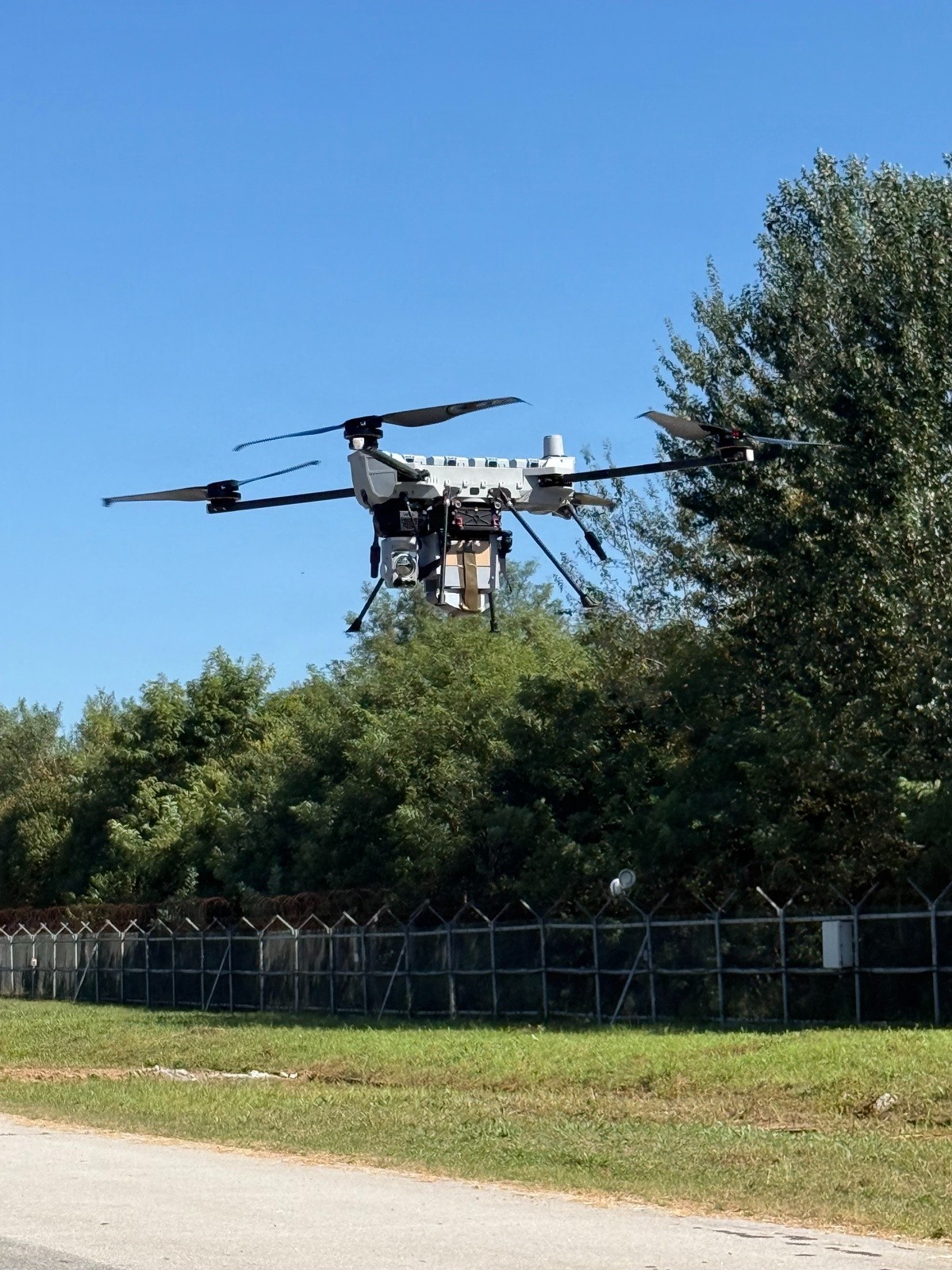
CAMP HUMPHREYS, South Korea — Modernization alone cannot solve the complex security challenges facing Eighth Army and its allies. It must be coupled with continuous tactical innovation and experimentation. For the past eight months, the 532nd Military Intelligence Battalion “Black Horse,” 501st Military Intelligence Brigade (Theater), has worked to identify and test viable capabilities supporting counter-unmanned aircraft systems operations.
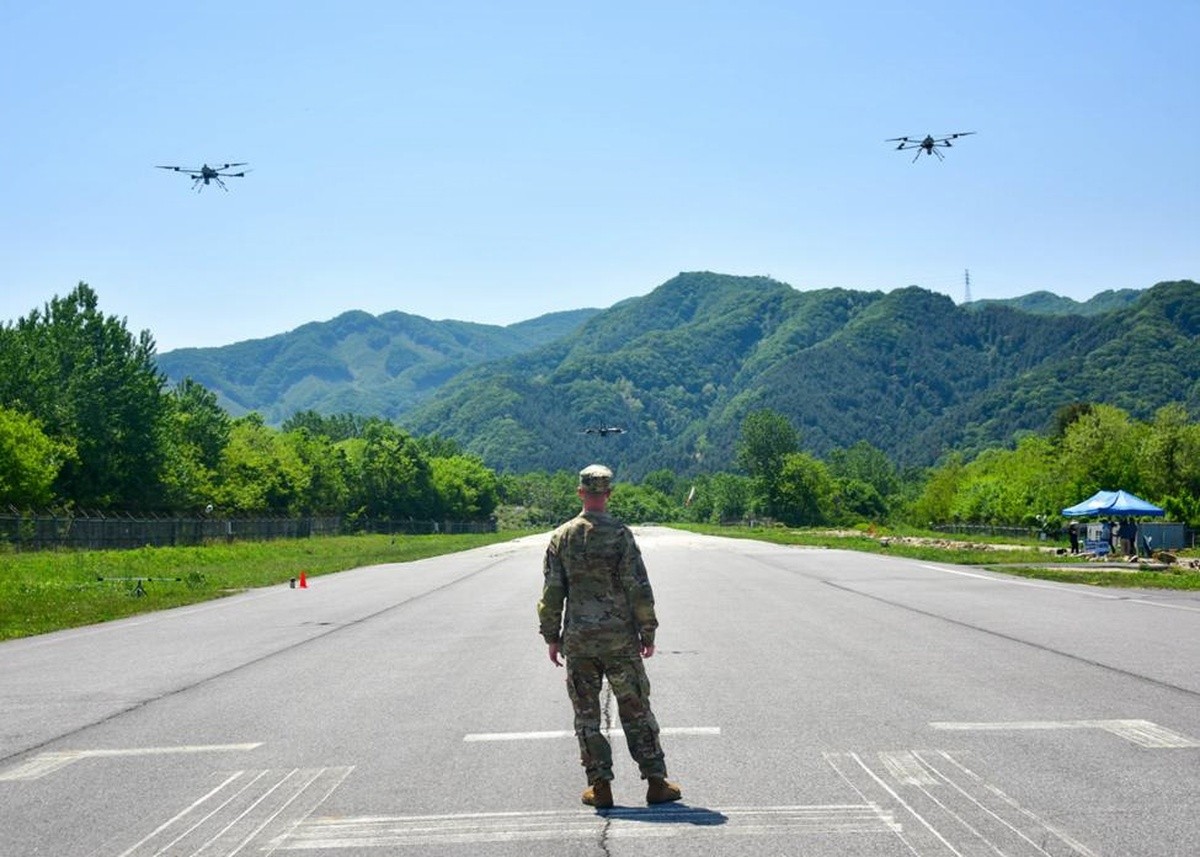
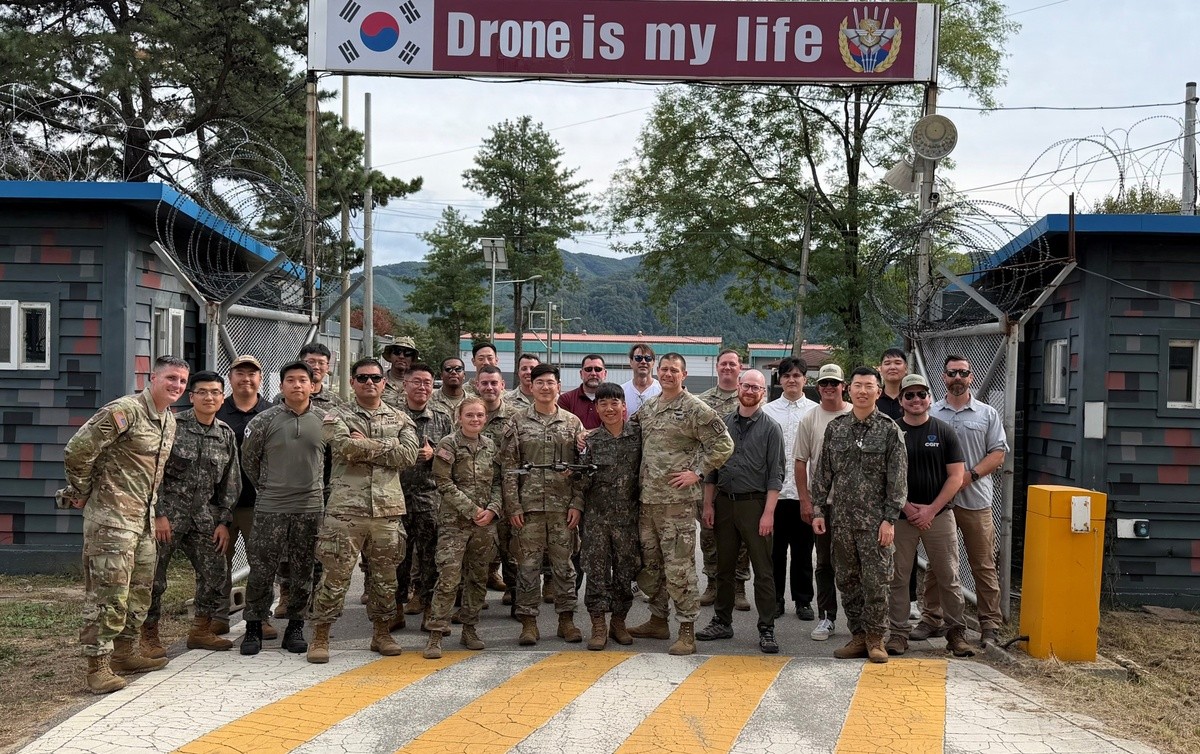
Partnering with the U.S. Army Combat Capabilities Development Command Army Research Laboratory, 2nd Infantry Division, industry partners and Republic of Korea Army forces, the unit executed Project MANOWAR, a series of two-week field experiments at Camp Humphreys and Baegiri Airfield, home of the Republic of Korea Army Drone Academy.
Lt. Col. William Campbell, commander of the 532nd MI Battalion, highlighted the importance of the project and the challenges the team is working to address.
“The mass proliferation of Group 1 and 2 unmanned aircraft systems and first-person-view systems has eliminated the concept of sanctuary,” Campbell said. “On the Korean Peninsula, complex urban terrain and dense foliage restrict line of sight. These FPV threats shorten our decision space and could place tactical units at risk."
“To win in an environment where drones are omnipresent, we must treat counter-unmanned aircraft systems readiness not as a specialized task, but as a basic skill. Every echelon must be integrated into a continuous, multilayered defense.”
Project MANOWAR, short for Mobile Acoustic Network for Operational Warning and Aerial Reconnaissance, is a low-cost, attritable counter-unmanned aircraft systems capability designed to detect, classify and locate low-signature small unmanned aircraft systems, including lethal first-person-view drones.
Designed to fit within an integrated, layered air defense architecture, the system features a 3D-printed chassis paired with a custom machine-learning algorithm developed in-house by military intelligence Soldiers in collaboration with scientists from the Army Research Laboratory’s Mechanical Sensing Branch.
Functioning as a distributed, self-healing mesh network, individual sensors act as relay stations powered by standard military batteries. This passive acoustic network extends coverage and provides scalable protection for locations ranging from patrol bases to critical theater infrastructure.
During trials at Baegiri Airfield, the system’s confidence rating against low-altitude threats increased significantly between the May and September events because of improved, Super Intelligence-enabled detection. By September, the system validated high-fidelity classification and localization capabilities, achieving more than 90% window-level confidence against low-altitude threats.
“Our May experiment established the initial sensing baseline. By September, we had developed a smaller onboard model using recordings collected through our sensors and labels created by our 35T Soldiers,” said Chief Warrant Officer 3 Sidney Beck, a senior all-source data scientist for the 532nd MI Battalion.
“Operators observed steadier detections, and the team demonstrated the delivery of sensor reports through a self-healing mesh-network reporting system to a separate local display,” Beck said.
The 532nd MI Battalion is now focused on transitioning the successful experiment to scaled production and a formal Army program of record.
“Transitioning Project MANOWAR to a program of record is critical to achieving the scale necessary for modern conflict,” Campbell said. “This scalable sensor provides a high-volume, cost-effective detection layer that can also be exported to support other geographic combatant commands.”
Project MANOWAR represents a broader shift in how Eighth Army tests novel solutions against emerging threats. It also strengthens the alliance by incorporating Republic of Korea partners and emphasizing procedural, technical and interpersonal interoperability tailored to the Korean Theater of Operations.
“Our bilateral experimentation with our Republic of Korea Army partners demonstrated that rapid experimentation is a powerful force multiplier when facing emerging threats,” Campbell said. “The collaboration among tactical operators, developers and multinational stakeholders allowed us to identify integration gaps in real time, refining our shared tactics, techniques and procedures for early warning.”
Overall, the project demonstrated the value of combined, Soldier-led research and development in addressing emerging threats. This experimentation and collaboration reflect Eighth Army’s commitment to adapting its posture to prevail in future conflicts.
Social Sharing