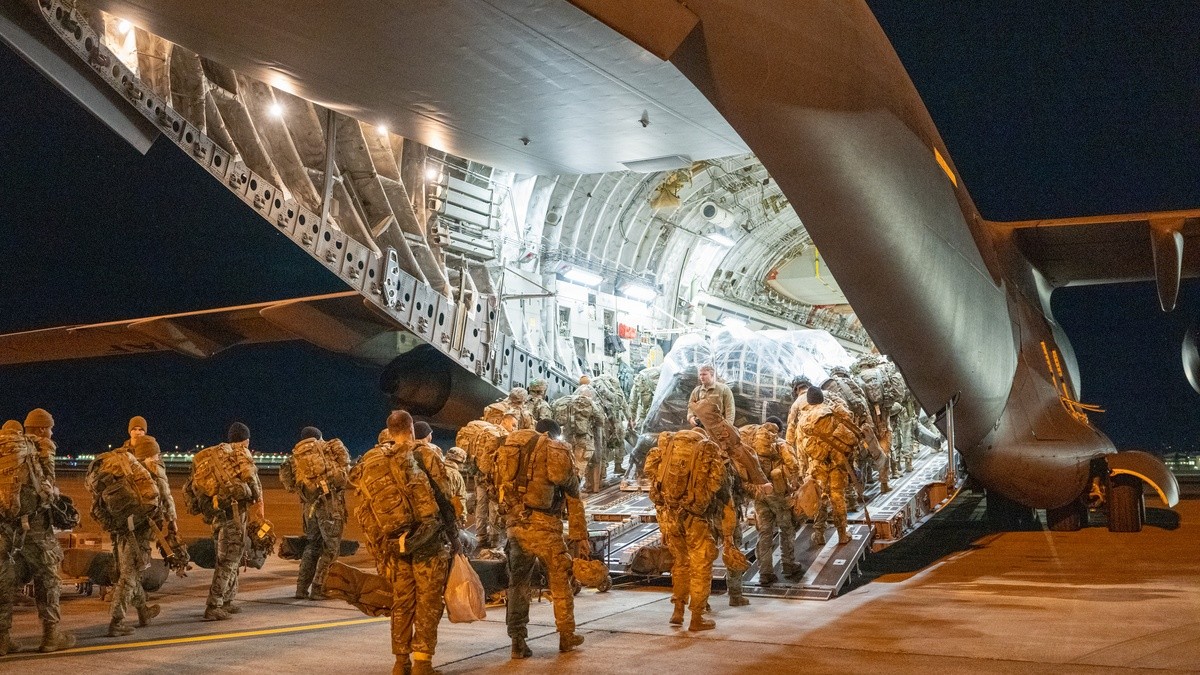
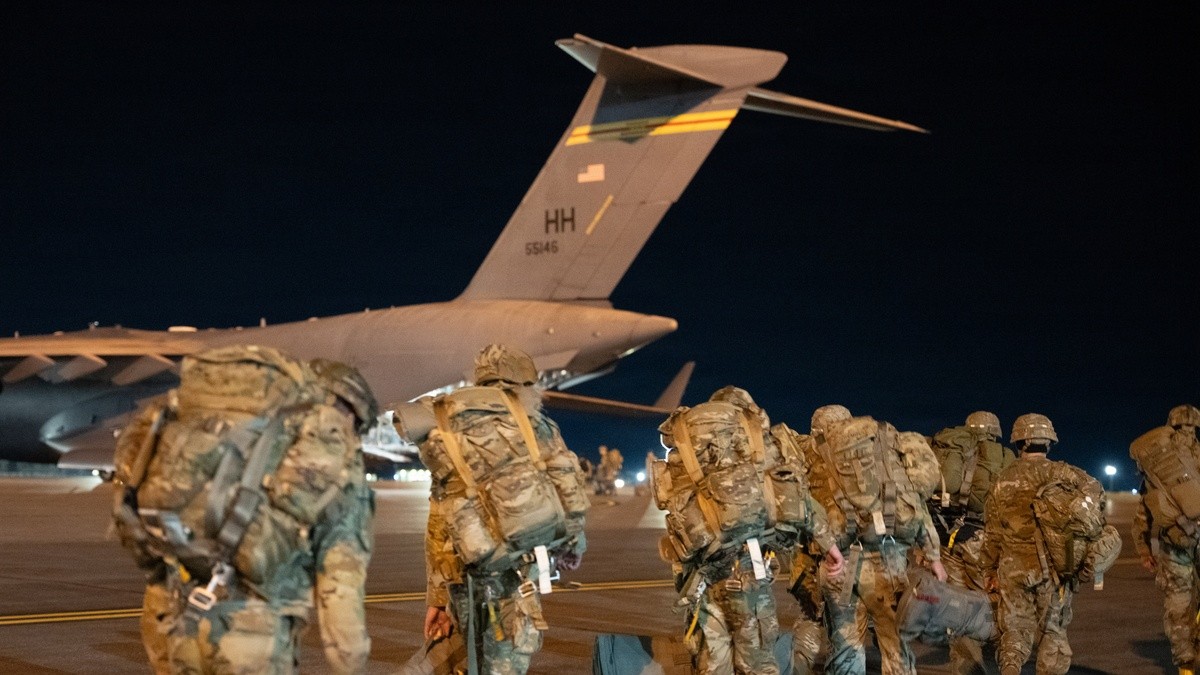
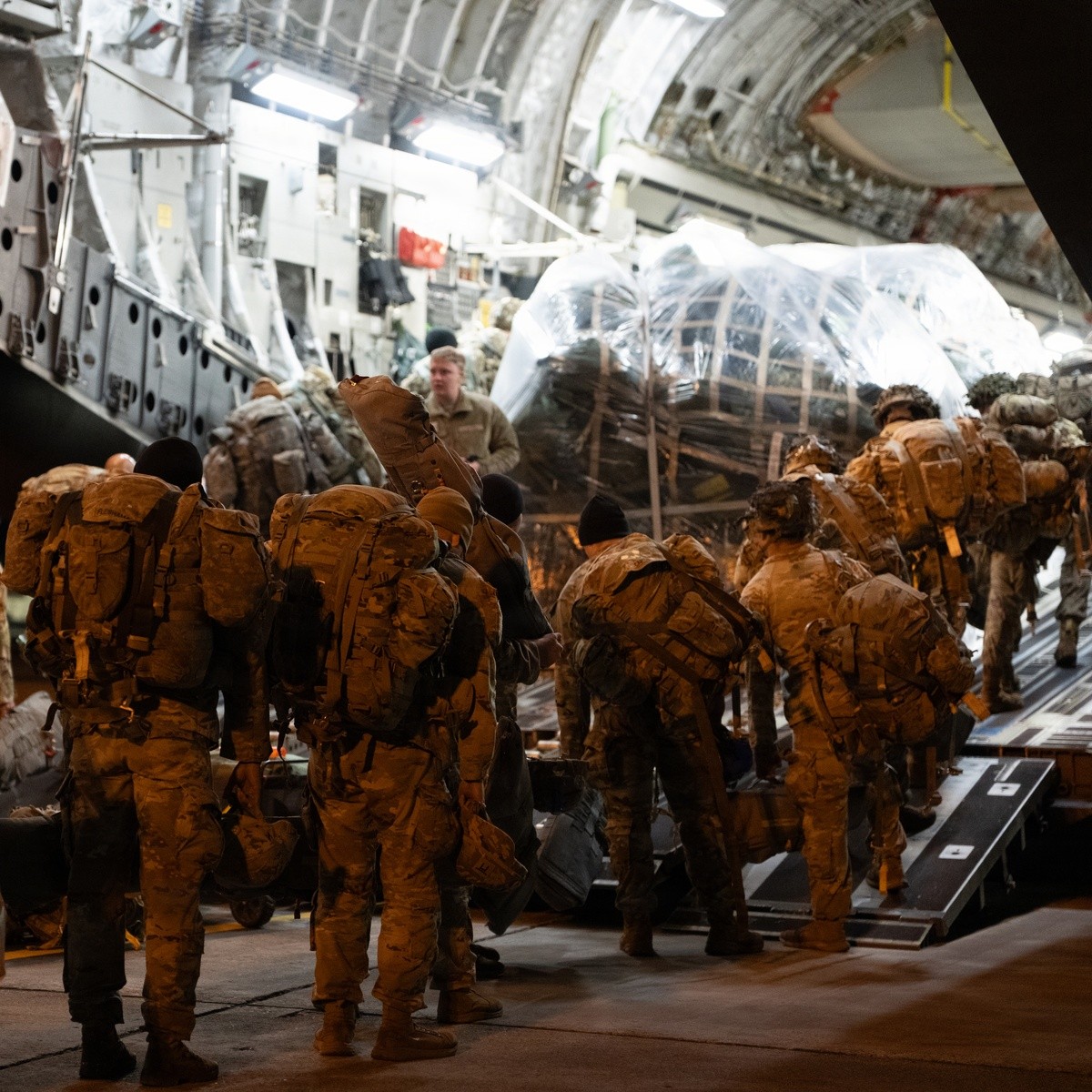
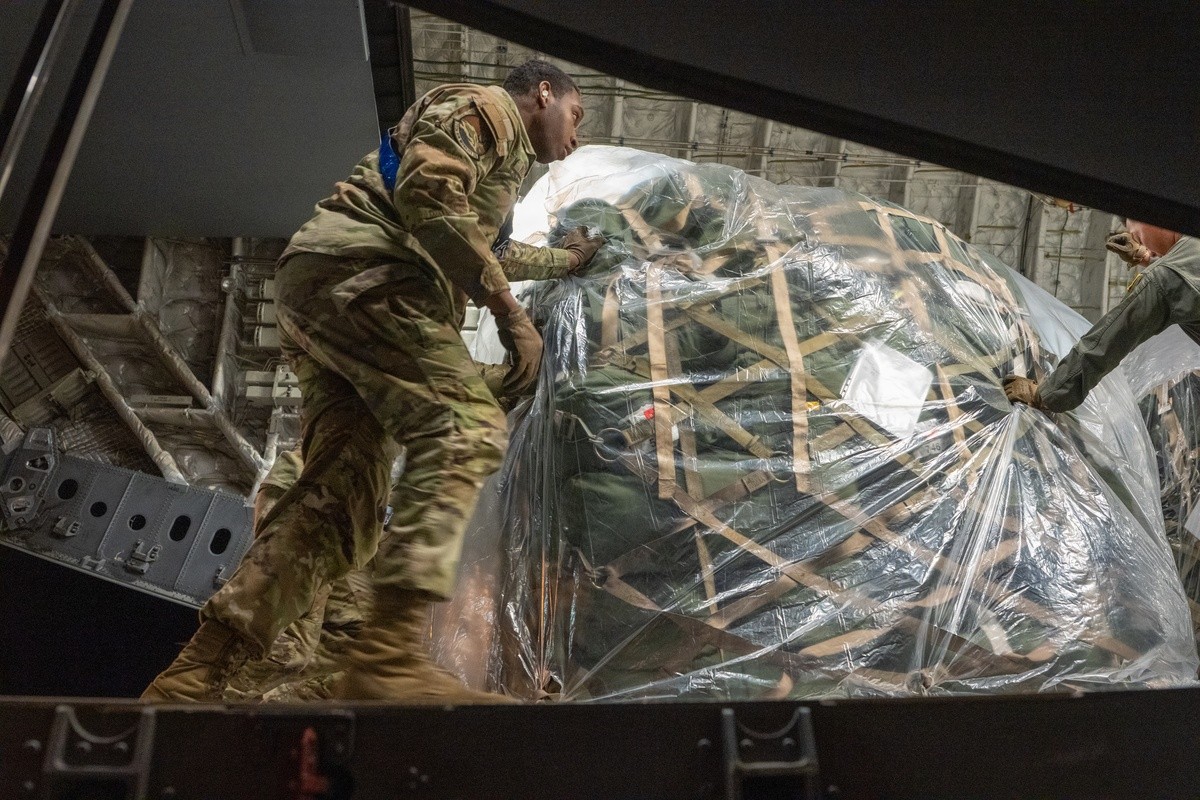
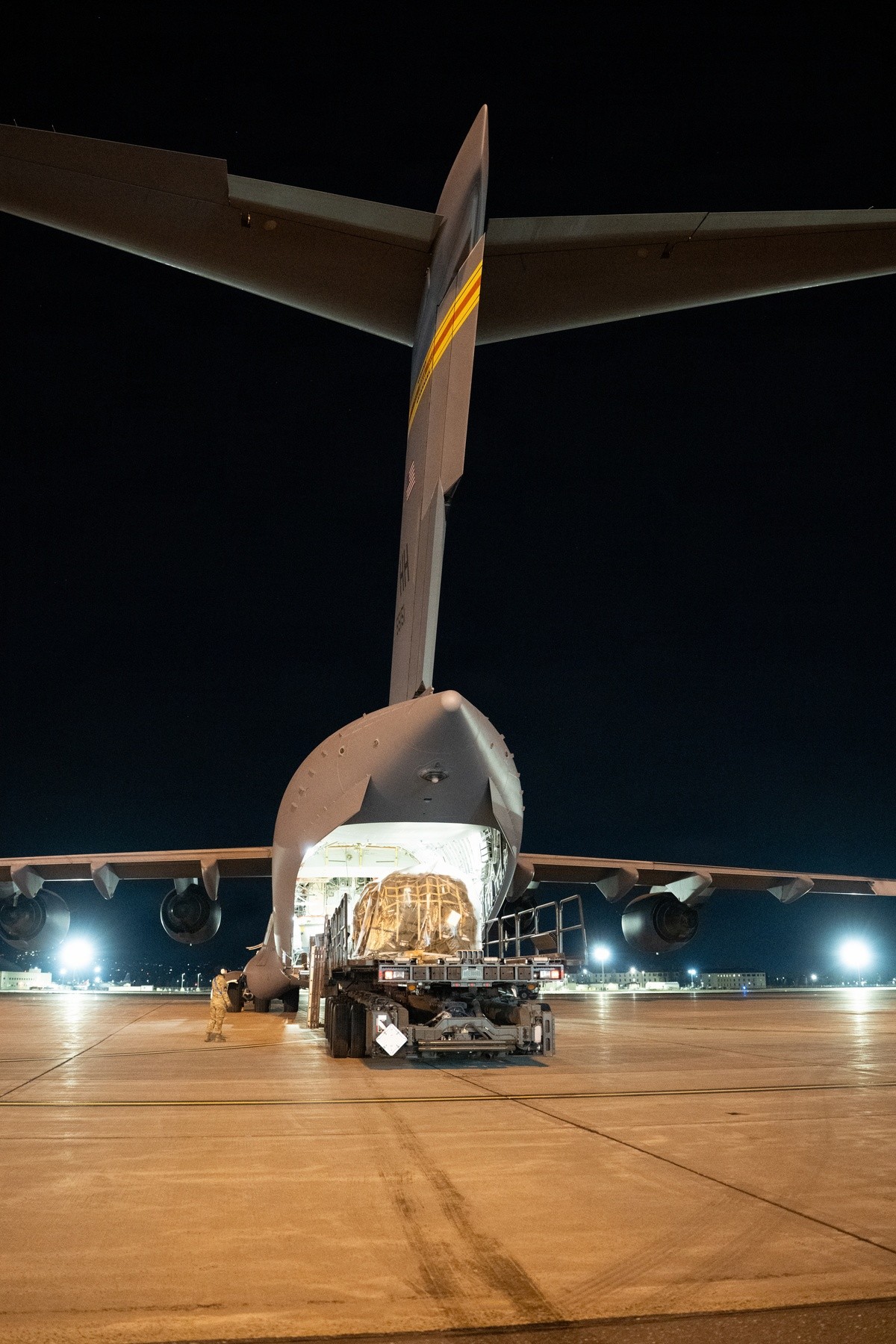
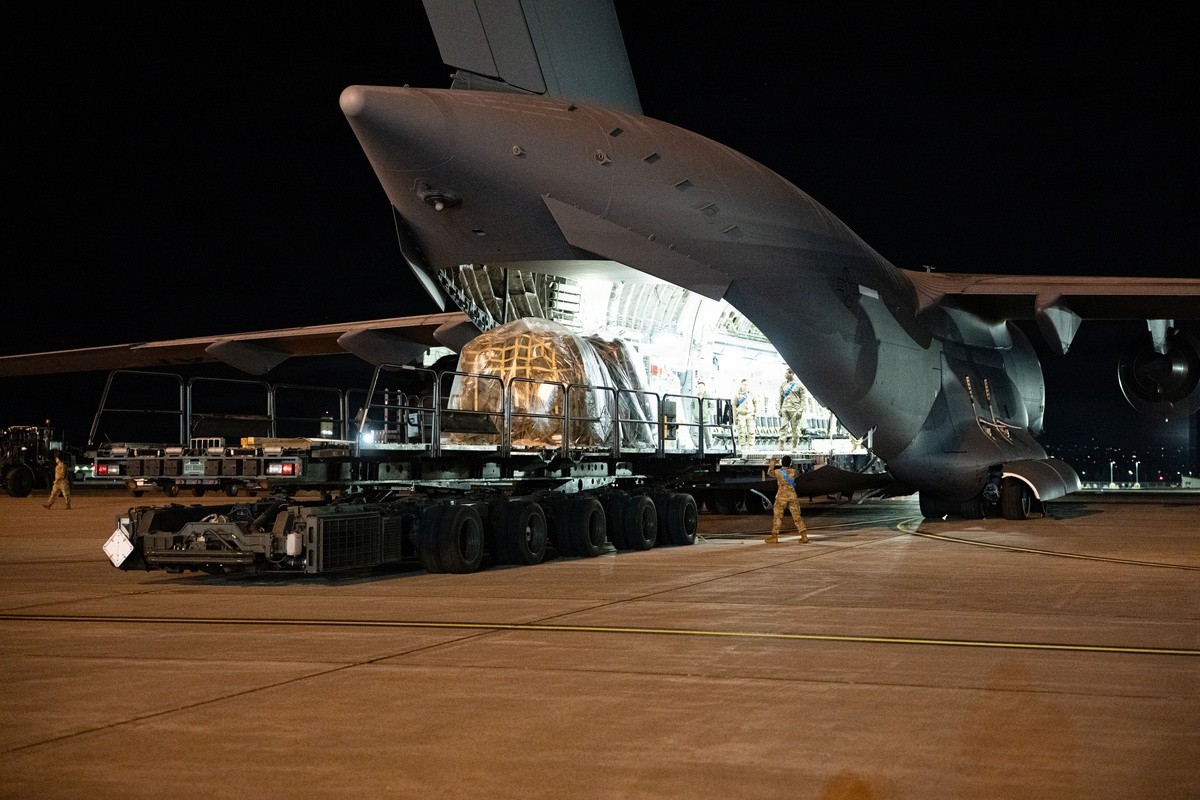
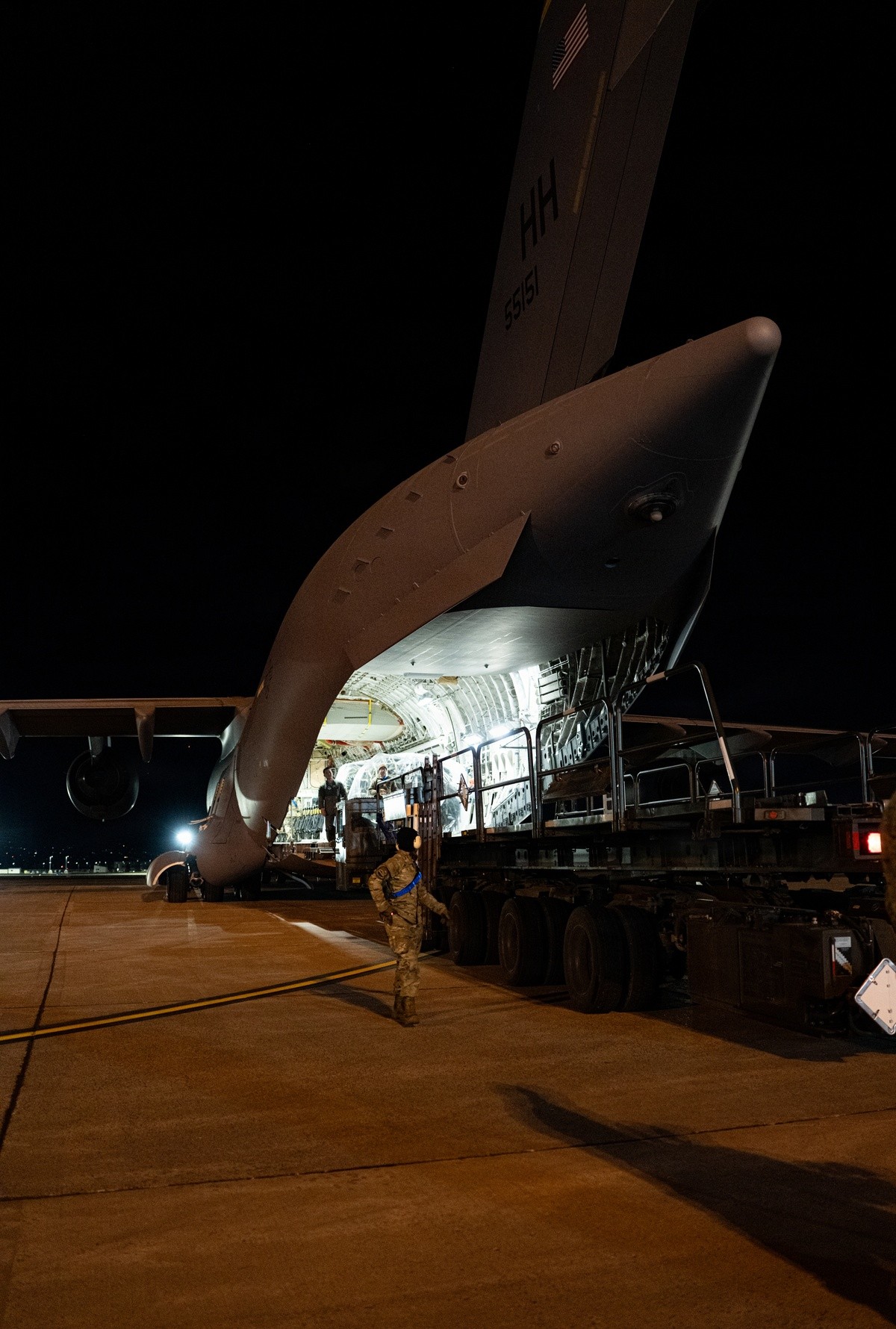
JOINT BASE ELMENDORF-RICHARDSON, Alaska — Paratroopers from the 11th Airborne Division executed a joint forcible entry operation into Hawaii, marking their division’s participation in the Joint Pacific Multinational Readiness Center Rotation 27-01.
Known as "Arctic Aloha," the operation saw Alaska-based paratroopers depart Joint Base Elmendorf-Richardson execute an in-flight rig and deploy directly into a joint forcible entry operation in the United States Pacific Command area of responsibility while in continuous flight.
Displaying joint, long-distance synchronization, the JBER-based main body conducted an in-flight link-up with one of its infantry companies flying from Japan, after concluding their participation in Operation Keen Sword, to jump as a unified battalion task force into Hawaii. For the "Arctic Angels," the exercise serves as a critical validation of their unique role as the Army’s only Arctic and Pacific airborne division.
In-flight rigging is the complex process of paratroopers putting on, adjusting and safety-inspecting their parachutes and combat equipment while inside the aircraft during flight, rather than on the ground before takeoff. For a flight of this distance, rigging in the air is a critical capability. It allows paratroopers to fly without the crushing weight of their parachutes and combat gear for nearly eight hours, preserving their physical endurance so they can land fresh, alert and immediately ready for the close battle.
"This exercise gives us the opportunity to validate our ability to strategically deploy and project power across a large distance," said Col. Matthew Adamczyk, deputy commanding officer for operations for the 11th Airborne Division. "We can project a battalion task force or larger from Alaska, execute an in-flight rig and then insert directly into the Pacific [area of responsibility]. Securing a key piece of infrastructure in this manner enables follow-on operations."
A primary training objective during the nearly 3,000-mile flight was testing in-route mission command. Taking off from Alaska, the division monitored the battlefield at flight altitude above the Pacific Ocean, maintaining a constant digital link with I Corps, U.S. Army Pacific headquarters and joint forces monitoring the operation from Joint Base Pearl Harbor-Hickam, Hawaii.
"After taking off from JBER, we monitored the battlefield from inside our aircraft while I Corps and the joint force sets the conditions for our entry," Adamczyk explained. "This allowed us to ensure conditions were set and maintain that vital link with our division and corps headquarters as we fly."
The exercise serves as a real-world application of the Army’s newest operational warfighting guidance, How the Army Fights, which organizes land power around four elements: convergence, strike, close battle and endurance. To begin the operation, I Corps established convergence by coordinating space, cyber and electronic assets, while theater forces and the 25th Infantry Division executed strikes to disable the simulated enemy's air defenses. Once those conditions were met, the 11th Airborne Division paratroopers initiated the close battle, jumping into the contested area to seize key infrastructure and secure the terrain.
The rapid projection of airborne forces from the below-freezing temperatures of Alaska to the tropical, archipelagic terrain of Hawaii builds readiness and underscores the U.S. military's commitment to peace through strength and credible regional deterrence.
Adamczyk explained the deterrence value of the operation's global reach.
"This exercise demonstrates our ability to rapidly project combat-credible power into an archipelagic environment when called upon," Adamczyk said. "Because we are the Arctic Airborne division, we can operate in the Pacific [area of responsibility], or we can fly over the pole and be in Northern Europe in eight to nine hours."
Following the operation in Hawaii, the paratroopers will fly back to Alaska, executing another airborne assault straight into their brigade's field training exercises in the Richardson Training Area. This demanding training sequence serves as preparation for JPMRC 27-02 in the Donnelly Training Area in interior Alaska this February, where the 2nd Mobile Brigade Combat Team (Airborne) will face temperatures that often drop to 40 degrees below zero.
While the primary training audience of JPMRC 27-01 remains the 2nd Mobile Brigade, 25th Infantry Division, the integration of the 11th Airborne Division adds a robust joint and multi-division dimension to the Combat Training Center rotation without distracting from the brigade’s focus. The rotation brings together approximately 10,000 personnel across the U.S. Army, Air Force, Navy and Marine Corps, alongside international allies and partners. By participating, the 11th Airborne Division exercises cross-division coordination with the 25th Infantry Division and improves joint interoperability.
Ultimately, Arctic Aloha reinforces the 11th Airborne Division's posture as a lethal, survivable and rapidly deployable force that provides the Joint Force and USARPAC with a decisive, flexible response option to ensure a free and open Indo-Pacific.
Social Sharing