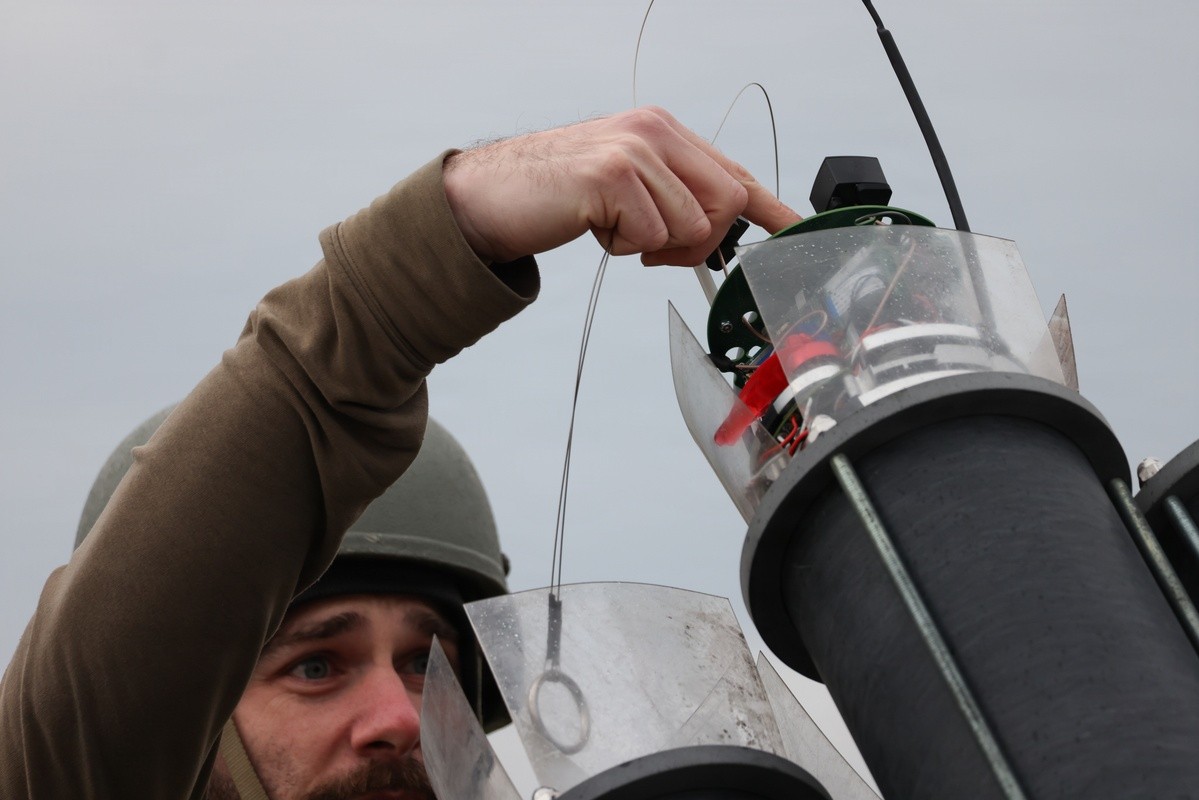
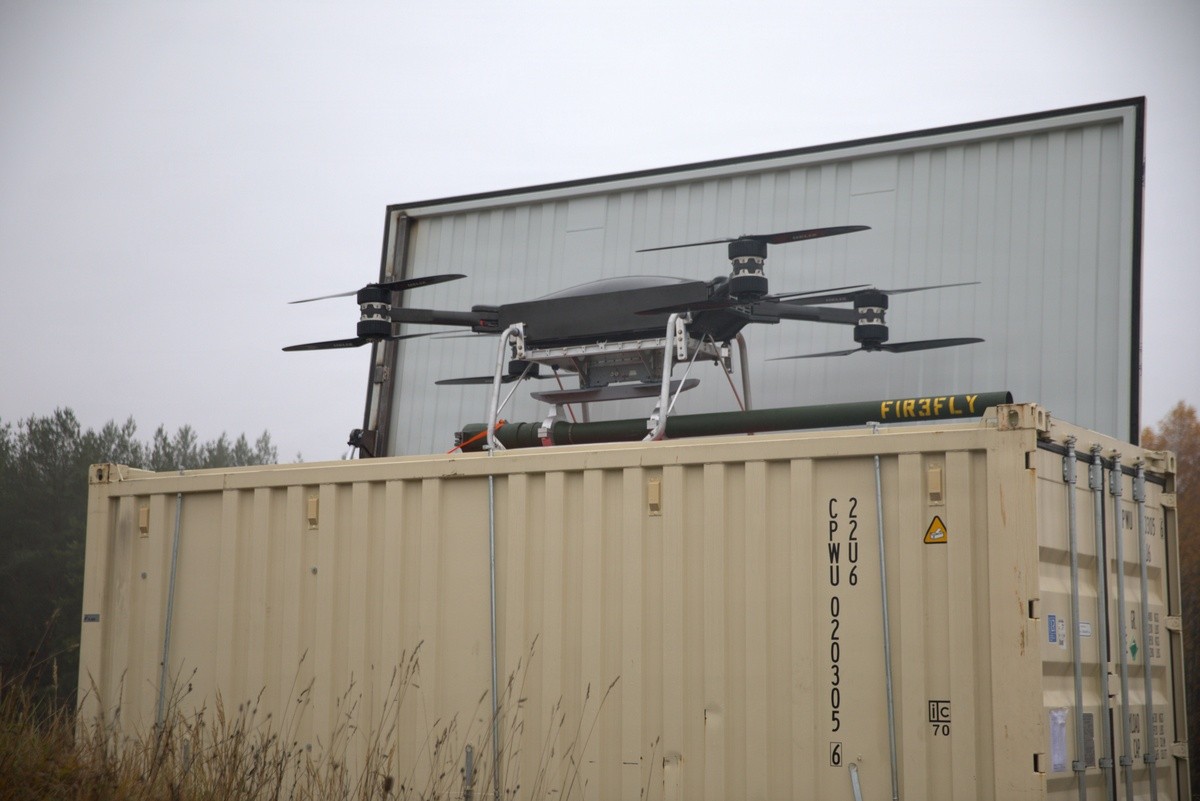
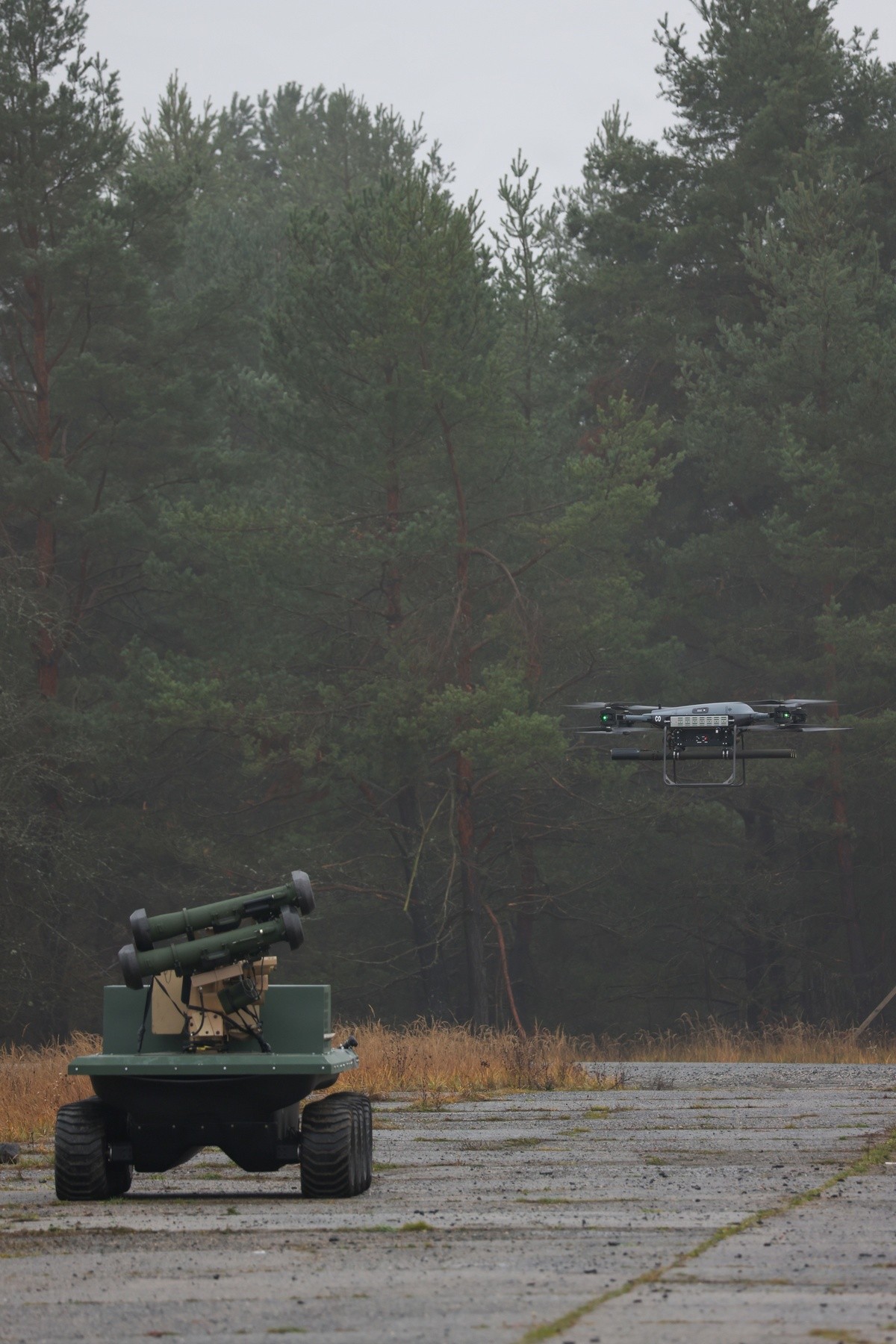
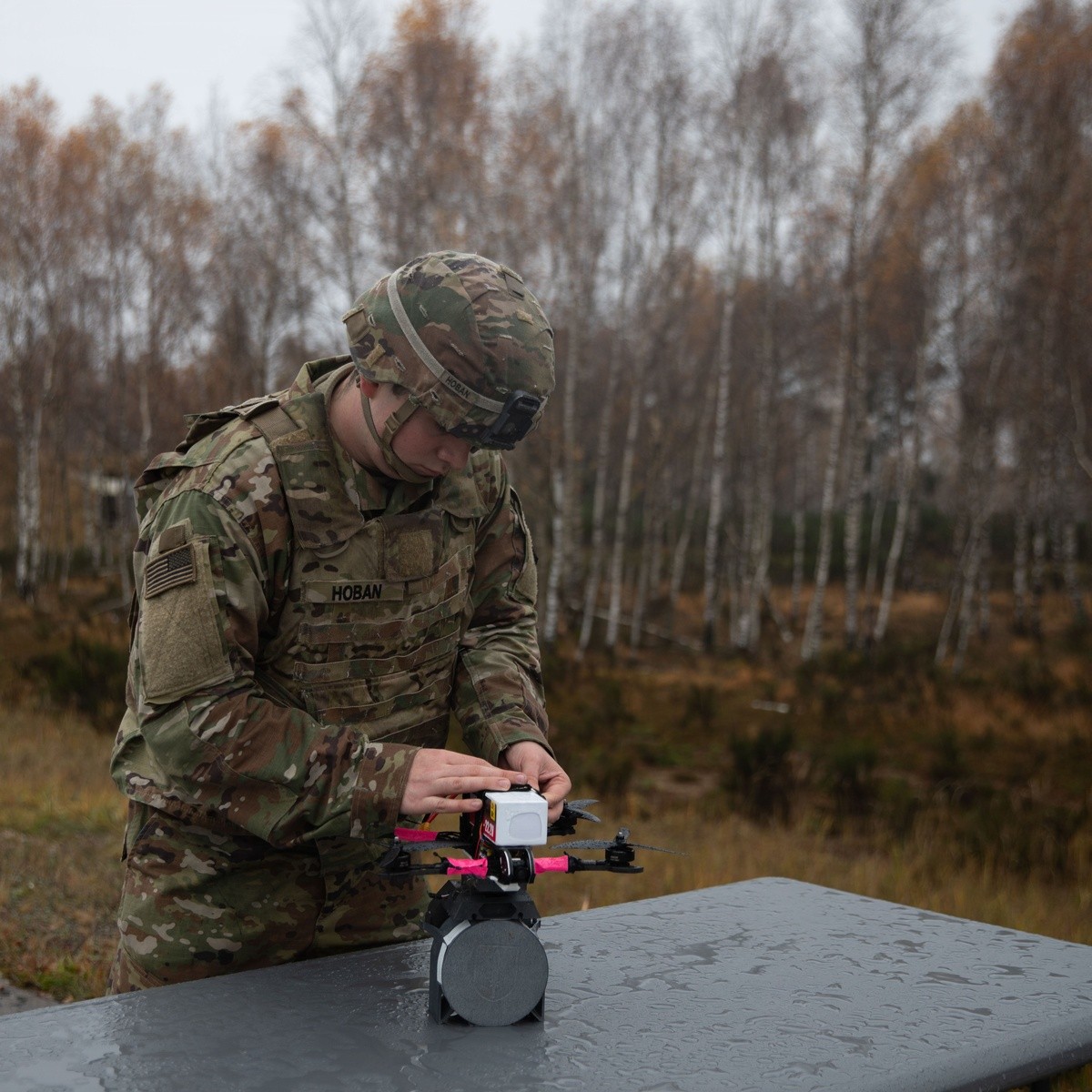
coordination with USAREUR-AF and 7th Army Training Command, shows a static display of the TRV-400, an autonomous cargo drone equipped with FIR3FLY anti-armor capability, at Grafenwoehr Training Area, Germany, Nov. 12, 2026. The training focused on warfighting readiness and deterrence through training and collective exercises, building lethal, adaptable, combat-credible formations. (U.S. Army Reserve photo by Staff Sgt. Vontrae Hampton) View original
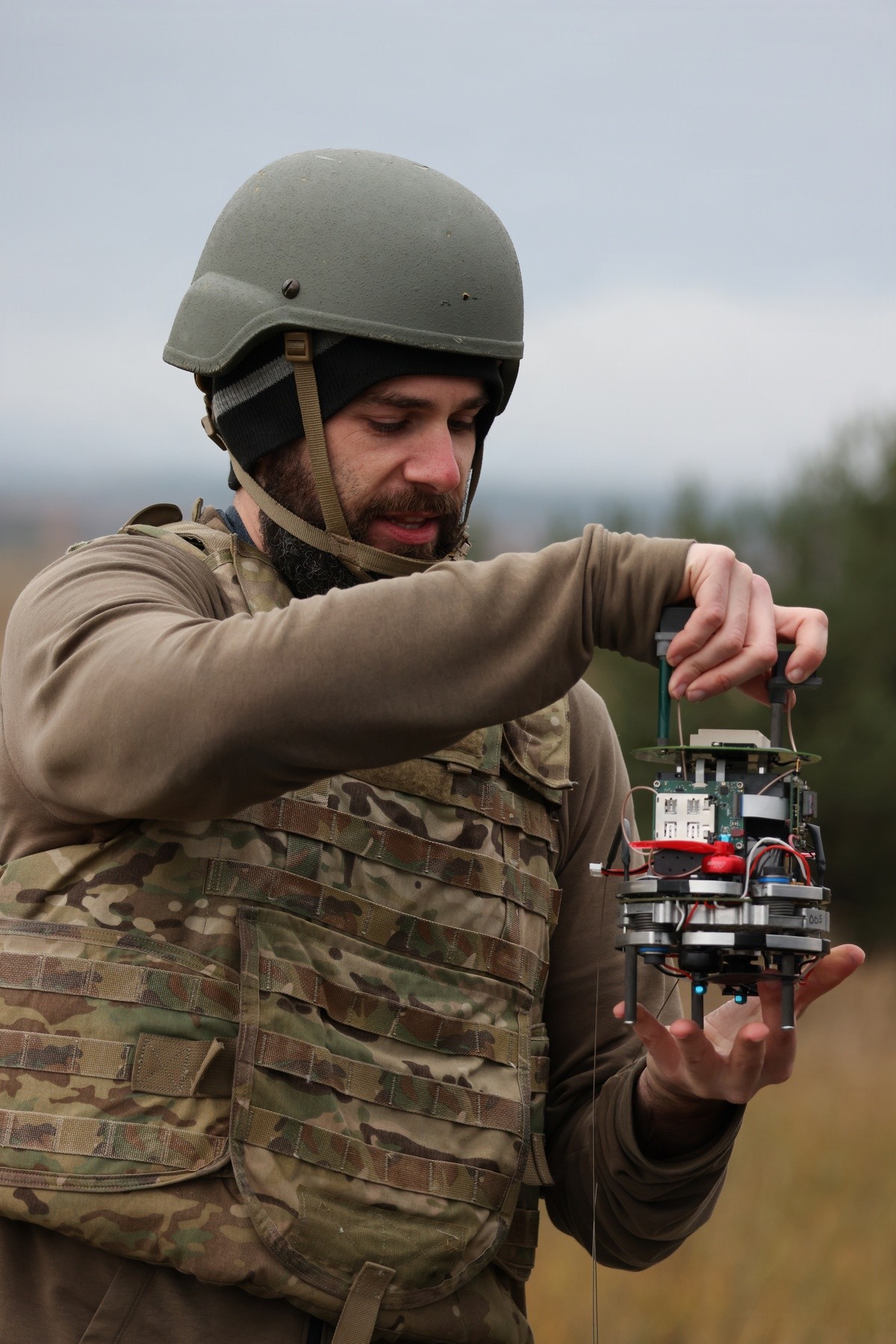
GRAFENWOEHR, Germany — The U.S. Army Combat Capabilities Development Command (DEVCOM) Armaments Center, in partnership with U.S. Army Europe and Africa and 7th Army Training Command, conducted a live-fire technology demonstration at Grafenwoehr Training Area, Nov. 12, 2026, to evaluate emerging unmanned air and ground capabilities.
The demonstration explored how drones and unmanned ground vehicles could help Soldiers strike targets from greater distances, reduce their exposure to danger and give commanders more affordable options for future combat operations.
The event brought together engineers, Army leaders and Soldiers to test how emerging technology could work alongside existing Army weapons. The demonstration included drones dropping smoke, striking targets individually and working together to conduct coordinated attacks. It also showed how unmanned ground vehicles could carry weapons and launch drones without requiring Soldiers to operate directly beside them.
“This is the art of the possible,” said Troy Brannon, a strategic adviser for the Expanded Maneuver-Air portfolio at DEVCOM Armaments Center who led the demonstration. “It’s all about scalability, lethality, reach and autonomy to enable strike for our ground maneuver commanders.”
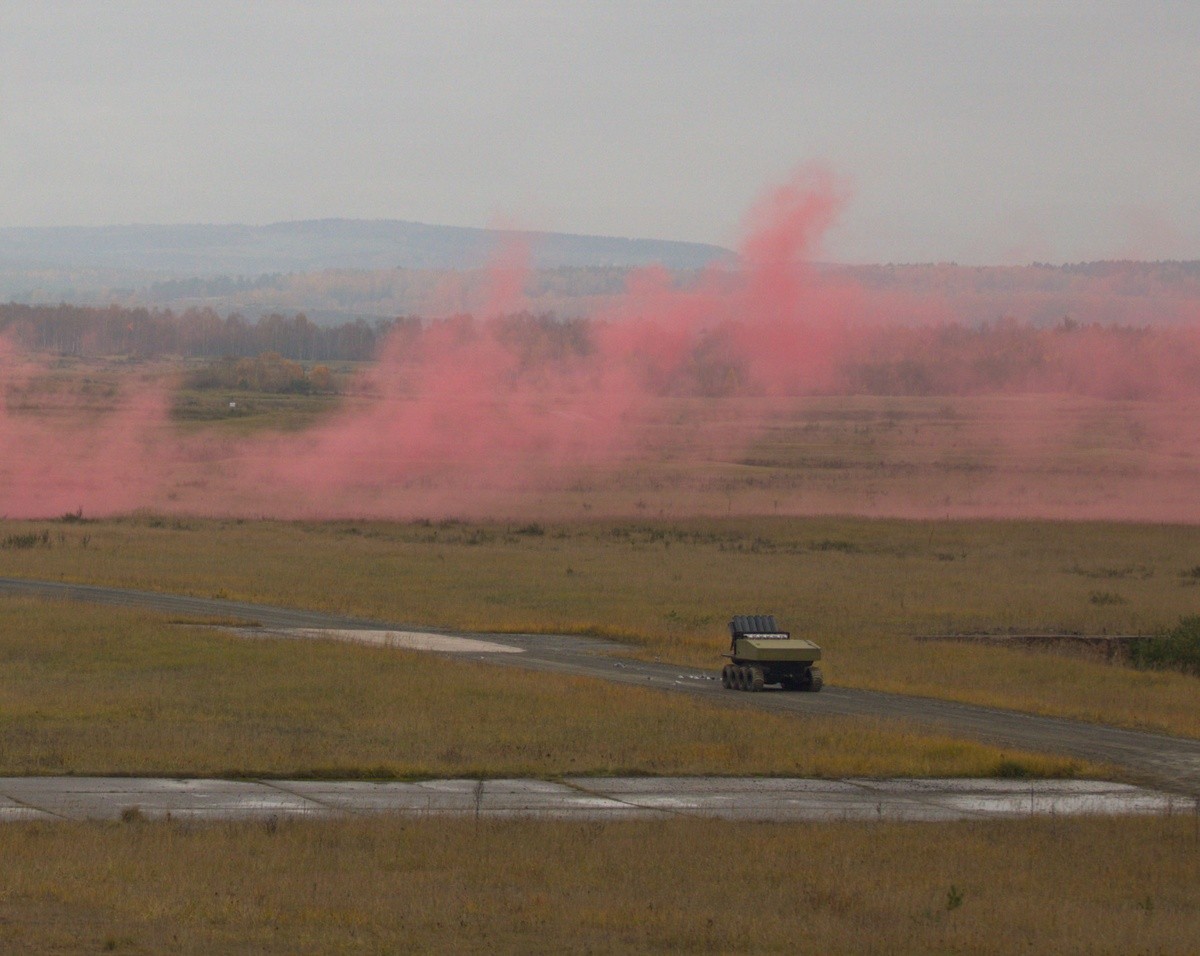
coordination with USAREUR-AF and 7th Army Training Command, conducts a live-fire demonstration of emerging unmanned air and ground capabilities at Grafenwoehr Training Area, Germany, Nov. 12, 2026. The training focused on warfighting readiness and deterrence through training and collective exercises, building lethal, adaptable, combat-credible formations. (U.S. Army Reserve video by Staff Sgt. Vontrae Hampton) View original
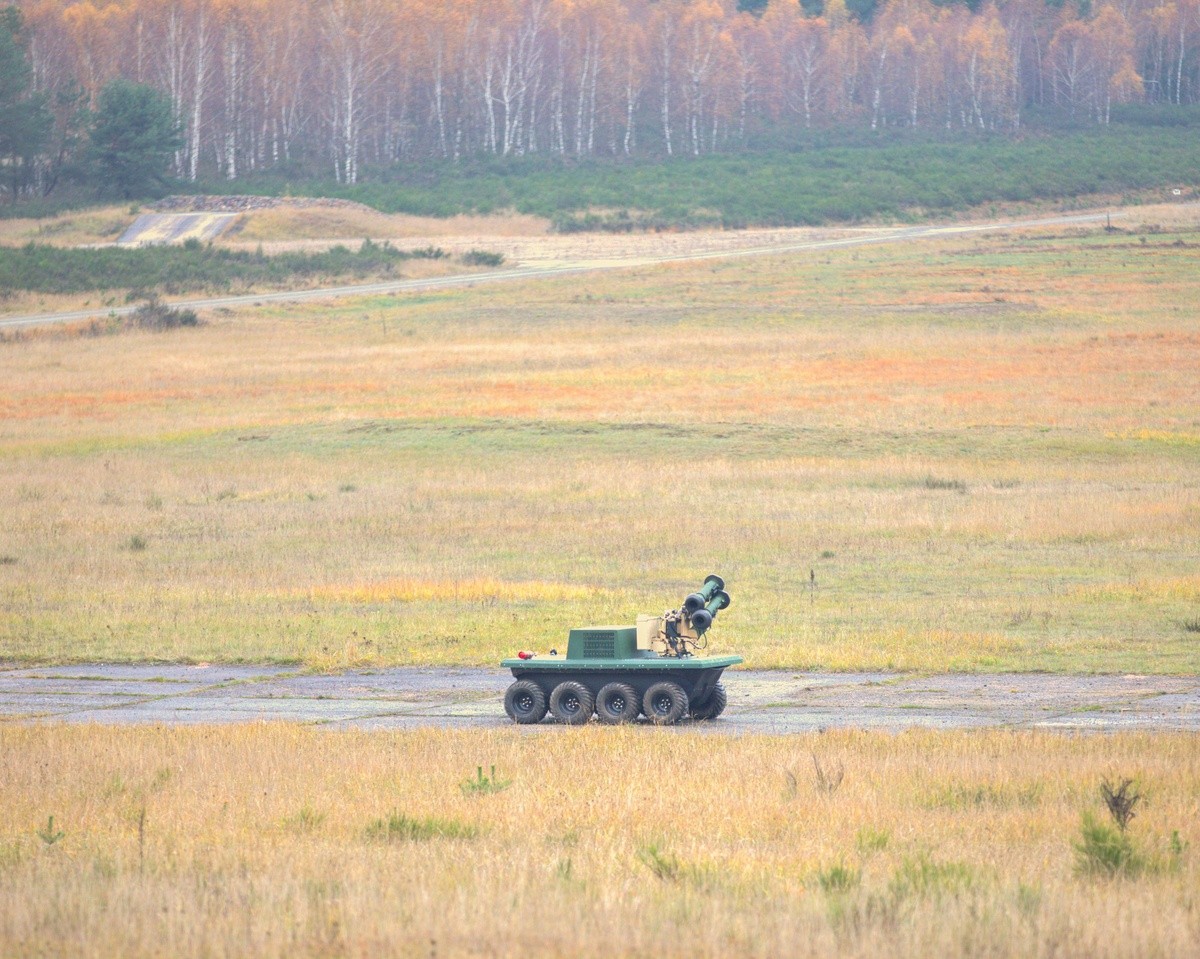
coordination with USAREUR-AF and 7th Army Training Command showcase a R3NEGADE unmanned ground vehicle equipped with a Remotely Operated Weapon Station and a Javelin missile system during a live-fire demonstration of emerging unmanned air and ground capabilities at Grafenwoehr Training Area, Germany, Nov. 12, 2026. The training focused on warfighting readiness and deterrence through training and collective exercises, building lethal, adaptable, combat-credible formations. (U.S. Army Reserve photo by Staff Sgt. Vontrae Hampton) View original
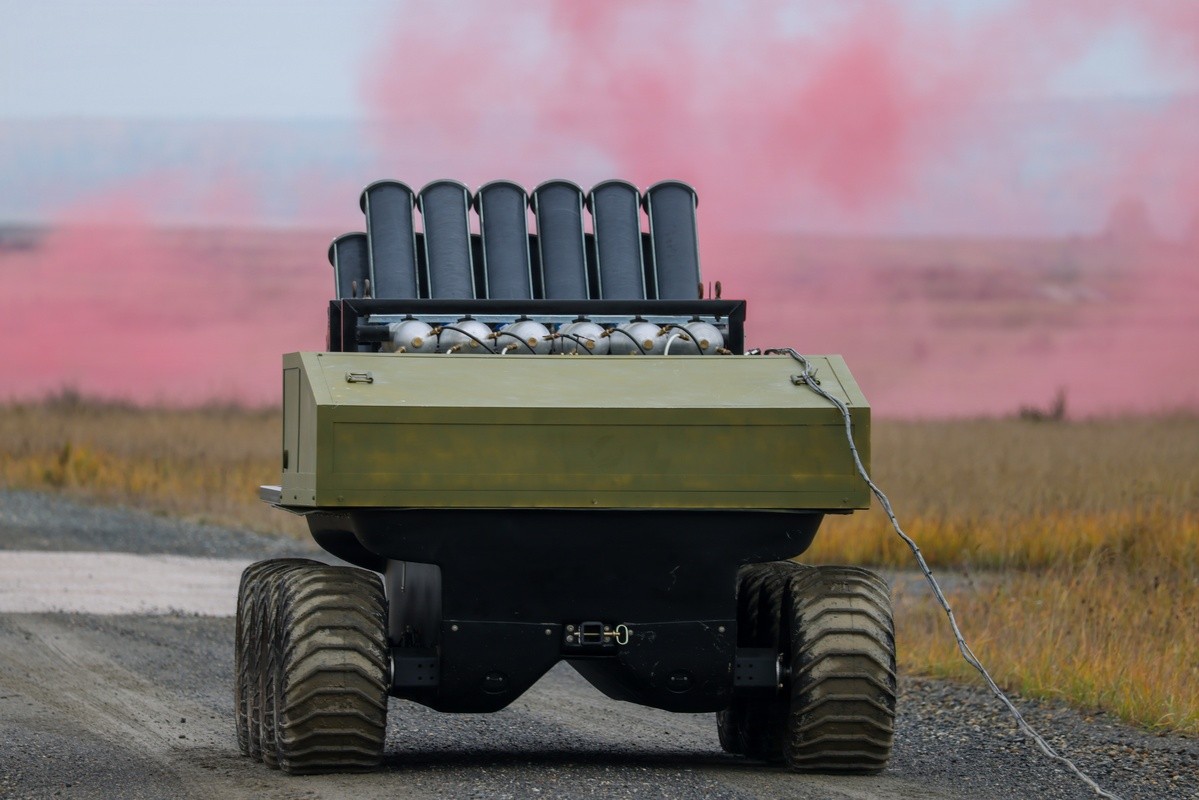
During the live-fire sequence, a TRV-150 drone dropped smoke onto a target, followed by a group of drones launched from a HIV3 swarm drone launcher mounted on a R3NEGADE, an unmanned ground vehicle. The drones then conducted an autonomous strike on a target. Soldiers from the 173rd Airborne Brigade also conducted a strike using a first-person-view drone, which allows an operator to see through a camera mounted on the aircraft.
A second R3NEGADE vehicle featured a remotely operated weapon system equipped with a Javelin missile. The configuration illustrated how unmanned vehicles could carry different weapons and equipment to support a variety of missions.
The demonstration also included a static display of a TRV-400 aircraft equipped with the developmental FIR3FLY anti-armor capability. The aircraft was part of a containerized system designed to explore how drones could be stored and remotely deployed when needed.
Alex Tomosieski, program manager for the Remote Rapid Response Autonomous Contingency Team, or R3ACT, explained how containerized systems could provide commanders with additional options for distributed operations.
“The purpose of this effort is to place modular air and ground platforms inside containerized systems so commanders can pre-position capabilities and deploy unmanned assets where they are needed,” Tomosieski said. “This gives formations more adaptable options while helping shift risk away from Soldiers.”
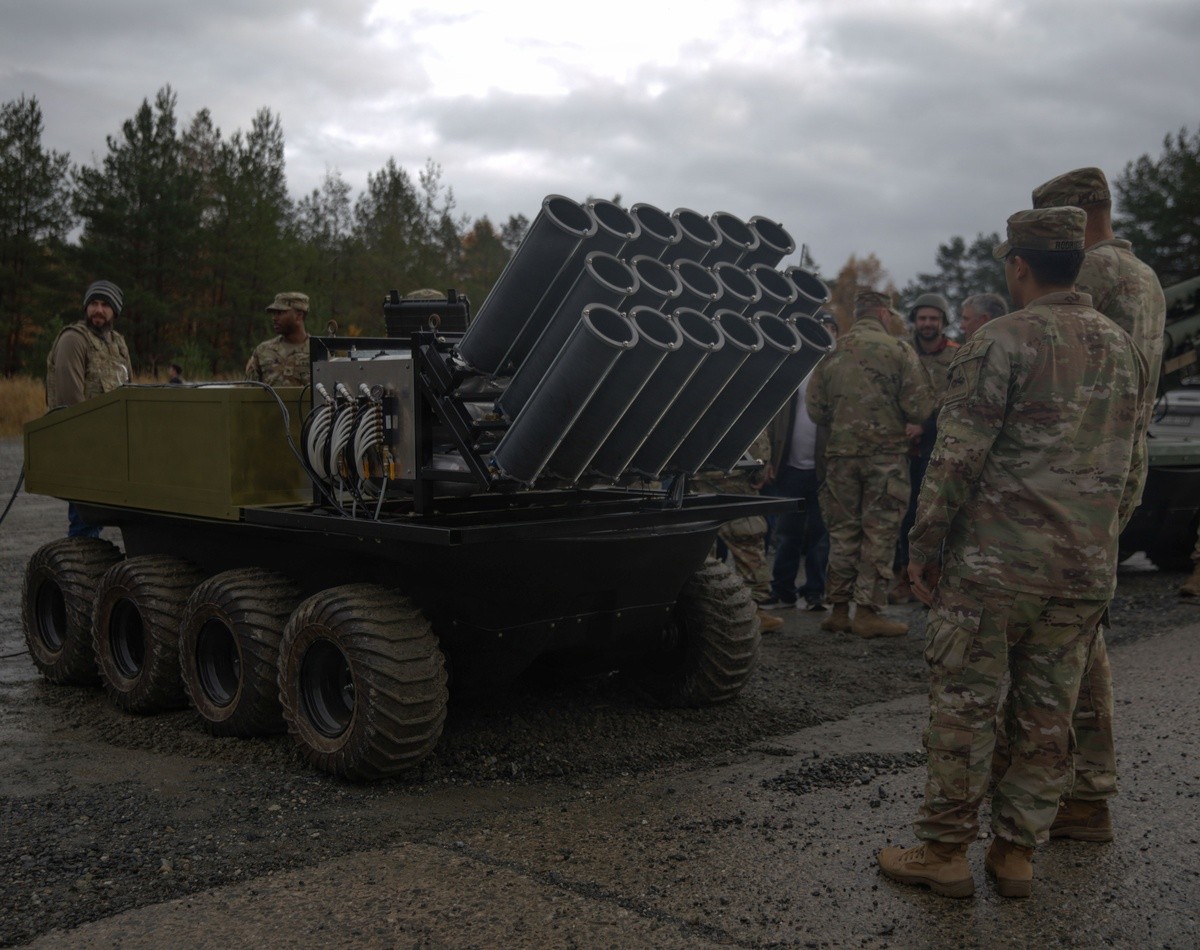
coordination with USAREUR-AF and 7th Army Training Command showcases a R3NEGADE unmanned ground vehicle equipped with a HIV3 swarm drone launcher during a live-fire demonstration of emerging unmanned air and ground capabilities at Grafenwoehr Training Area, Germany, Nov. 12, 2026. The training focused on warfighting readiness and deterrence through training and collective exercises, building lethal, adaptable, combat-credible formations. (U.S. Army Reserve video by Staff Sgt. Vontrae Hampton) View original
Another focus of the demonstration was affordability. By combining commercially available technology with existing Army weapons and equipment, developers are exploring ways to produce effective systems that can be used across more Army units rather than relying solely on expensive, specialized platforms.
“It’s about scale,” Brannon said. “We need scalable, cheap, affordable, lethal options for our warfighters.”
Conducting the demonstration in Germany also connected the technology to the needs of Army forces in Europe, where U.S. Soldiers regularly train alongside NATO allies and partners. The systems could eventually give units more ways to respond to threats across large areas while reducing the need to place Soldiers directly in harm's way.
Command Sgt. Maj. Thinh Huynh, DEVCOM's command sergeant major, emphasized that developing new equipment is only part of the process. Soldiers must also have opportunities to evaluate the technology and help engineers understand what works in the field.
“Engineers can develop the technology, but we need Soldiers involved from the beginning to make sure it works for them,” Huynh said. “Their feedback helps us improve the equipment, make it more effective and get better capabilities into their hands faster.”
Soldiers from the 173rd Airborne Brigade operated drones during the demonstration, while personnel from other Army units observed the systems and considered how they might be used in future operations.
Sgt. Dean Aguirre, a drone operator assigned to the 173rd Airborne Brigade, highlighted the importance of involving the Soldiers who may eventually use these systems in combat.
“Being part of demonstrations like this gives Soldiers a chance to see what these systems can do and how we could use them in the field,” Aguirre said. “It's important that the people who will actually operate the equipment have a voice in how it's developed.”
The demonstration highlighted how emerging unmanned systems could support two elements of the Army's new operational framework, How the Army Fights: strike and endurance. By combining affordable drones, unmanned ground vehicles and existing weapons, the Army is exploring ways to strike targets at greater distances, sustain combat operations over time and give commanders more options on the battlefield.
Social Sharing