Biological threats are rapidly evolving in modern warfare. Recent advances in synthetic and artificial intelligence and machine learning technologies make it easier for adversaries to engineer pathogens that can go undetected by traditional methods and potentially harm countless people. To better understand the evolving threat and maintain force protection, warfighters need to know what threats they are dealing with and whether they have the means to protect and defend themselves at the ready.
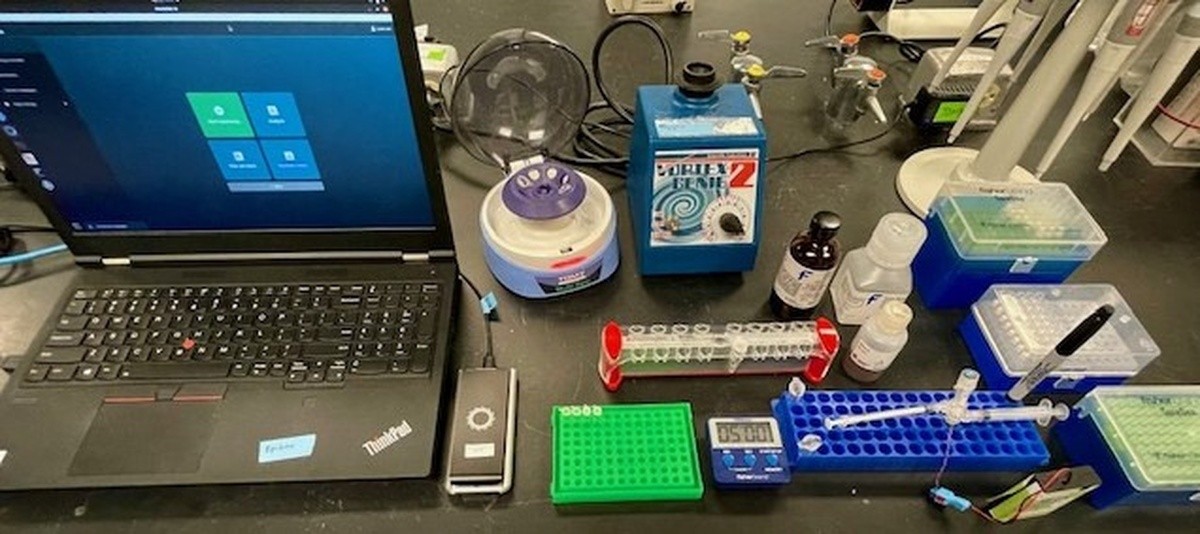
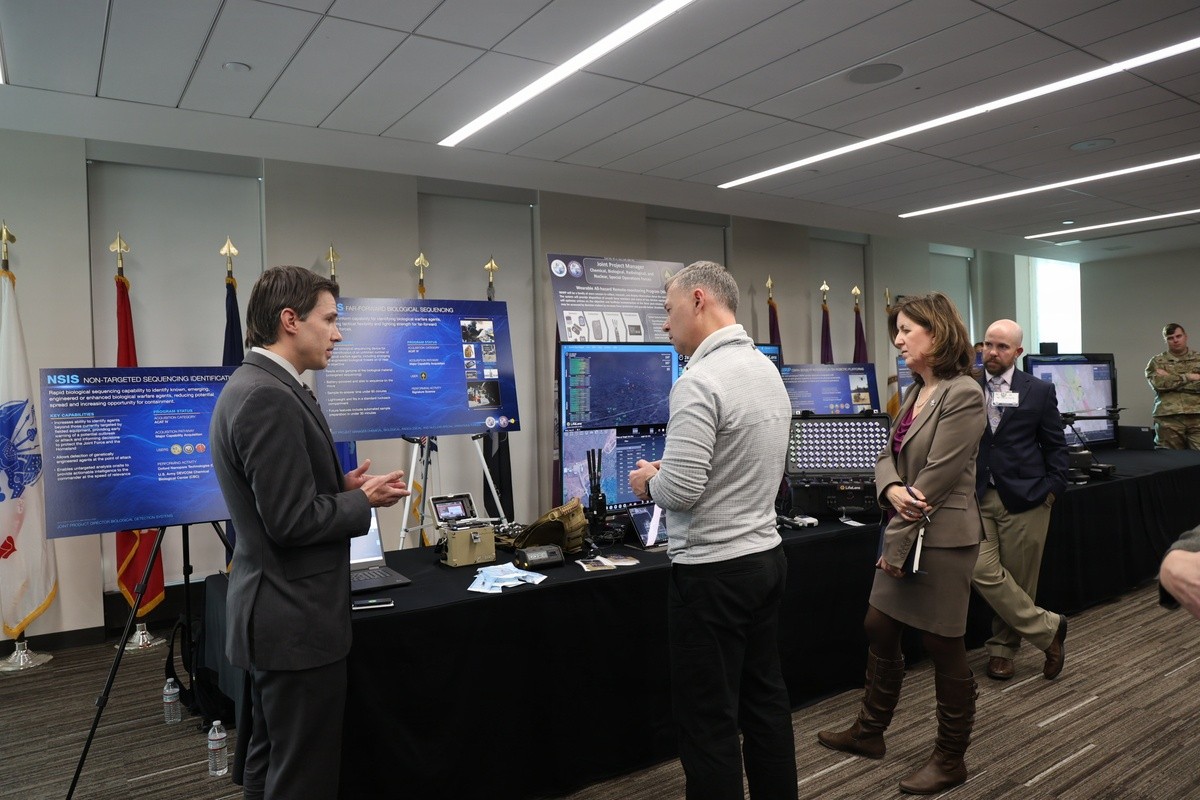
The Portfolio Acquisition Executive for Layered Protection and Integration (PAE LP&I) is working toward fielding advanced sequencing technologies under the Far-Forward Biological Sequencing (FFBS) and Non-targeted Sequencing Identification System (NSIS) programs to detect and identify biological agents as far forward, or as close to the site of exposure, as possible. FFBS program, led by Joint Project Manager for CBRN Special Operations Forces (JPM CBRN SOF), is a system that allows users to rapidly identify more than 30,000 biological organisms from samples using a small, ruggedized integrated console that requires minimal materials and expertise to operate. The NSIS program led by Joint Project Manager for CBRN Integrated Early Warning (JPM CBRN IEW) is a laboratory-based system that utilizes a laptop with an even larger database (over 129,000 organisms). The NSIS is designed for more advanced users with prior microbiological training to provide robust biological sequencing capability on site.
Both systems use untargeted DNA and RNA sequencing technology, which determines the genomic make-up of the sample. The sequencing data is mapped against a large database to determine the species present in the sample on site. Even if a biothreat has never been encountered before, the sequencing data can potentially be quickly assessed and characterized based on information in the database.
Currently, warfighters identify biothreats in the field using targeted handheld and polymerase chain reaction (PCR) assays that are limited to identifying a small number of known biological threats. Genetically engineered pathogens or novel biological threats may not be detected using these technologies, but they can be identified using sequencing technology.
For the sequencing method to work effectively, specific reagents must be used during sample preparation. Current reagents used in sequencing require cold storage as low as -20°C. This presents an issue requiring cold shipping and storage in resource limited, far-forward settings, which restricts a unit’s ability to effectively use these biological identification systems.
To reduce logistical burden and expand access to tools provided under the FFBS and NSIS programs, PAE LP&I is collaborating with commercial and government partners to develop shelf-stabilized reagents using methods such as vitrification and lyophilization. Vitrification is a process that transforms a substance into a glass-like, non-crystalline structure through rapid cooling or melting. Lyophilization is the process of freeze-drying material. Both techniques allow reagents to be stored at room temperature, potentially eliminating the need for cold storage and expanding the number of operational units that can successfully operate sequencing equipment in the field.
“If we are able to equip more units with sequencing technology, we could greatly enhance our biosurveillance capabilities in the field,” said Cory Bernhards, Ph.D., FFBS/NSIS subject matter expert and research biologist from the U.S. Army Combat Capabilities Development Command (DEVCOM) Chemical Biological Center. “Sequencing has the power to identify any biological threat. Eliminating the need for cold storage removes a barrier and will enable broader use.”
Army Maj. Ashley Sperry, assistant program manager, JPM CBRN SOF, added, “Reagent vitrification solves a critical operational bottleneck. Eliminating cold-chain logistics ensures reagents remain stable in austere environments, broadens far-forward deployment and significantly lowers program lifecycle sustainment costs across the force.”
Unlocking ways to make the sequencing capability more accessible is a game changer. The in-field sequencing capability allows the War Department to transform and move faster.
“Cold-chain shipping and storage has long been a challenge in the biodefense and medical fields,” said Shanmuga Sozhamannan, Ph.D., subject matter expert and technical coordinator for the Joint Project Lead (JPL) for CBRN Enabling Technologies. “Our hope is that we can quickly field this capability and apply what we’re learning in this effort toward other warfighter capabilities that are constrained by cold-chain shipping and storage and short shelf-lives.”
Sozhamannan said the team is about halfway through developing the proof-of-concept for the shelf stabilization effort and is looking forward to deploying the finished product to support far-forward sequencing technology by the warfighter and other USG customers in austere environments.
Bernhards added, “Achieving shelf stabilization in the field is more than solving a logistical challenge, it’s giving our warfighters an enhanced biological identification capability that increases survivability, decision advantage and the ability to remain active in the face of biological threats on the battlefield.”
Social Sharing