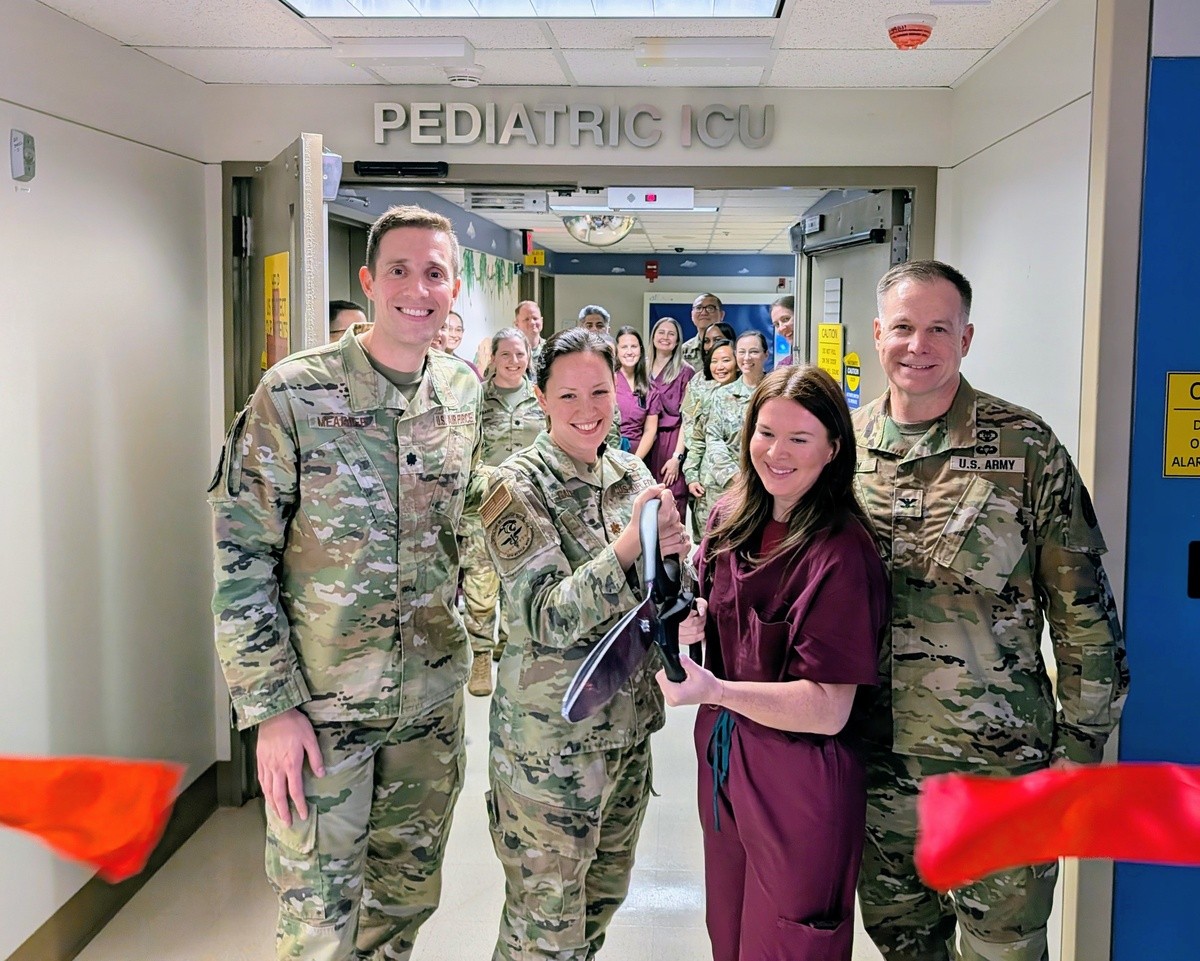
JOINT BASE SAN ANTONIO-FORT SAM HOUSTON, Texas (Nov. 4, 2026) – Brooke Army Medical Center’s Pediatric Intensive Care Unit reopened Oct. 19, almost a year after it closed on Halloween 2025.
“I’m so proud of all the work the members of the PICU team have done to bring this capability back to BAMC,” said Col Kevin Kelly, BAMC’s commander. “They never gave up on the idea that they could come back. They knew how vital a PICU is to our patients and they all continued their efforts to get us to where we are today.”
A shortage of PICU nurses forced the unit to close in 2025. Several factors contributed to the scarcity of available nurses, including deployments, extended military schools and training, and a hiring freeze that prevented BAMC from hiring civilian replacements. Because PICU nurses require specialized training, BAMC could not reassign nurses from other areas to fill in the gaps.
“A lack of staffing can kill a PICU,” said Army Lt. Col. Marcus Burgess, BAMC’s chief of critical care nursing services. “A PICU’s ability to thrive is based on physician services; but their ability to survive is based on nursing services.”
Since the closure, BAMC’s PICU leadership has strengthened nurse staffing by adding civilian PICU nurses and pairing them with military nurses. Combining military and civilian staff helps maintain adequate staffing when military members deploy or are sent on training or actual missions outside of BAMC.
Air Force Maj. Hannah Gale, the PICU medical director, said the PICU also supports training functions within BAMC. Along with supporting pediatric graduate medical education and surgical services, the PICU gives BAMC’s pediatric residents more complete training.
Kimberly Bogue, the PICU’s interim clinical nurse officer in charge, said there are numerous benefits to having a PICU at BAMC.
“The PICU keeps patients here at BAMC instead of us having to send them elsewhere,” Bogue said. “We support the operating rooms. Some surgeries require the availability of a PICU to complete and for patients to have follow-on care.”
BAMC’s in-house PICU allows parents of pediatric patients to stay with their children. Also, pediatric patients can receive follow-on care in the same location, Bogue said. This helps both patients and families with continuity of care.
“This is a benefit to children with chronic medical conditions,” said Air Force Maj. Kayla Rondina, chief of child nursing services. “If patients and their parents know our staff, this becomes more of a welcoming environment for them.”
According to Rondina, pediatric patients with chronic medical conditions face a higher risk of ICU admission and readmission and they tend to stay longer. Having access to BAMC’s PICU lets patients stay with their same providers and nurses instead of having to go to other medical facilities for one set of care and a different one for ICU-type care. This lessens stress on the whole family because they are in a welcoming environment with familiar people.
PICU staff also assist Exceptional Family Member Program beneficiaries. Young EFMP patients often need specialized care , and military families need access to treatment facilities with certain capabilities – capabilities that BAMC’s PICU can provide.
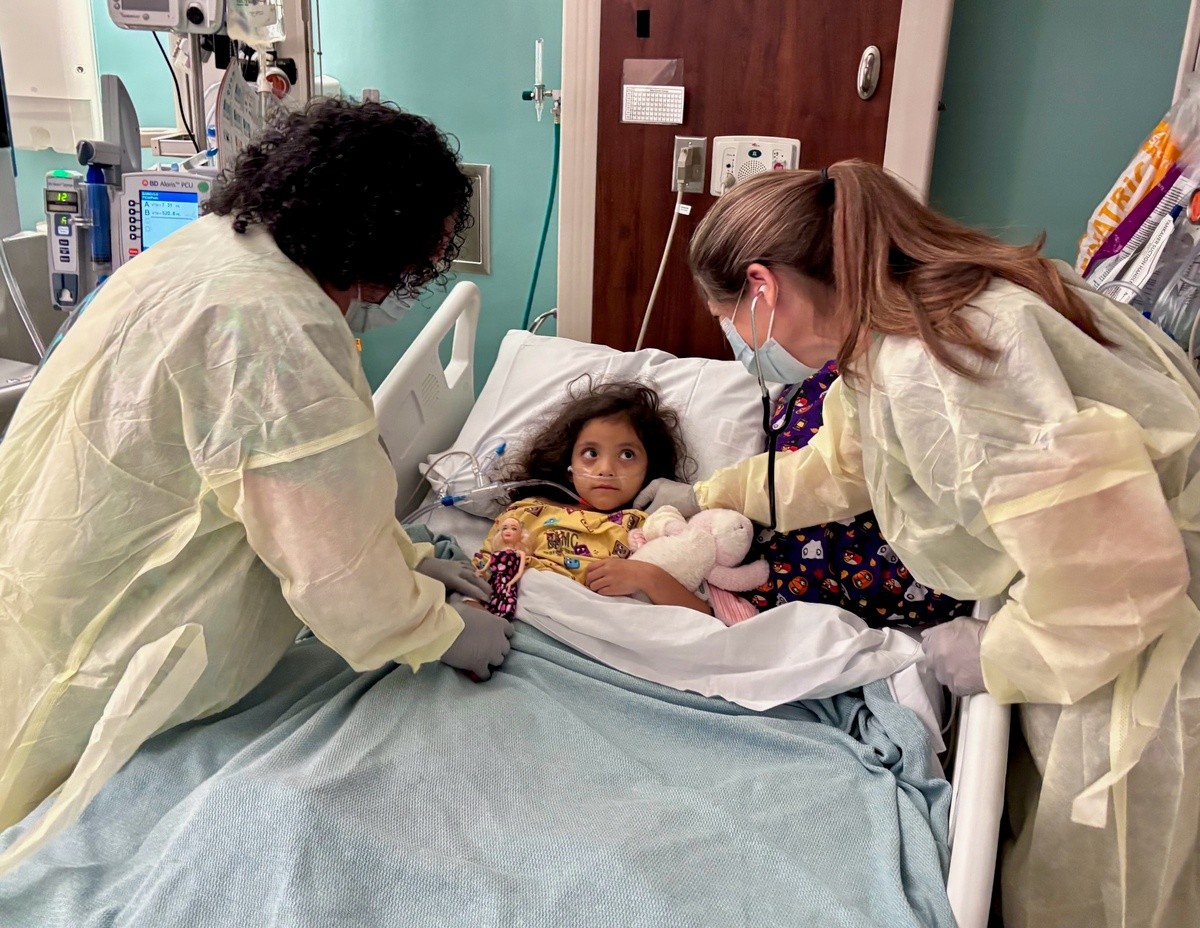
The newly reopened PICU received its first two inpatients just a couple of days after reopening. Janet Castillo brought in her five-year-old daughter, Marilyn Rivera Castillo, for upper respiratory issues. When she came in, Janet didn’t know the PICU was open. She brought her daughter to the emergency department early in the morning. Doctors there determined Marilyn needed additional care and admitted her into the PICU.
“I feel good knowing that this type of care is available,” Janet said. “I was scared when I brought her in because I didn’t know what was happening. Now that we are here (in the PICU), I am comfortable knowing that she is receiving the best care here at BAMC, and it’s even better that I can stay with her.”
Social Sharing