PICATINNY ARSENAL, N.J. - With decades of fuze experience and knowhow at risk of disappearing as engineers begin to transition out, the U.S. Army Combat Capabilities Development Command (DEVCOM) Armaments Center has stepped up to the task of readying the workforce.
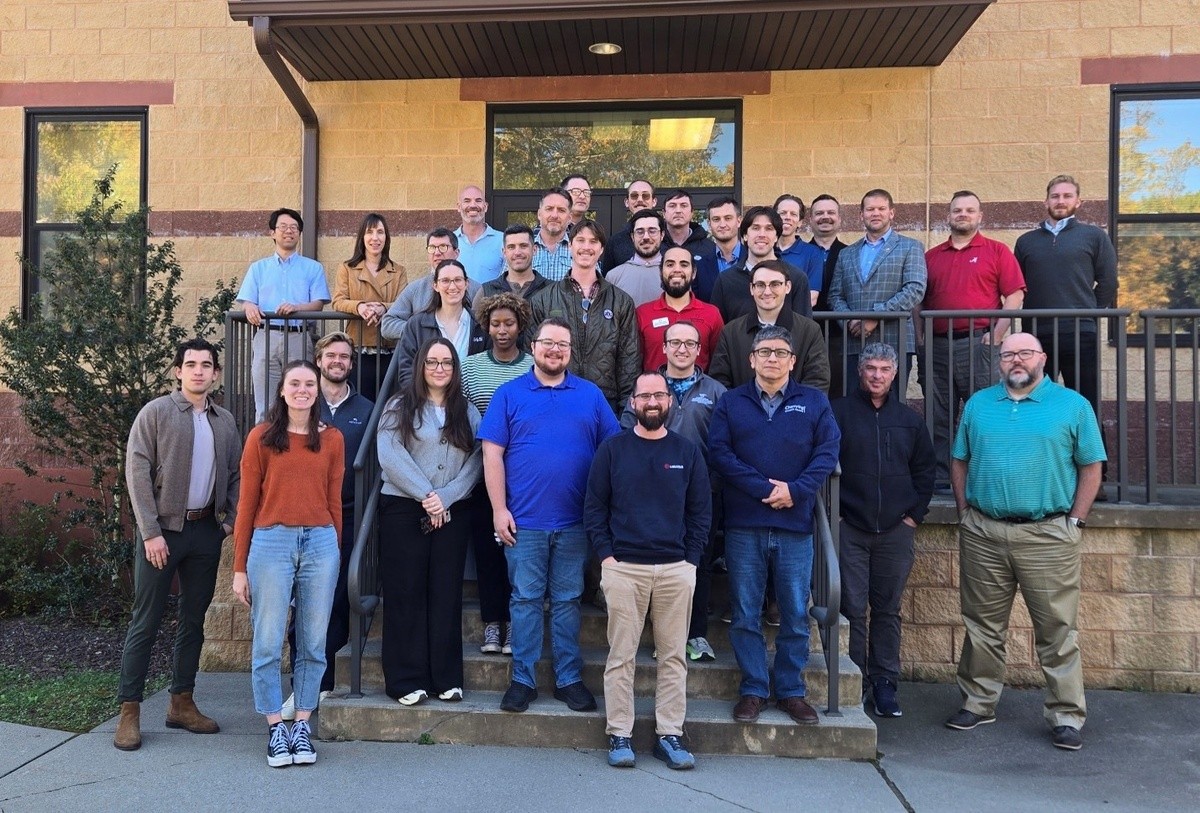
Between Monday, Oct. 19 and Friday, Oct. 23, the Armaments Center hosted a course related to munition fuzes for 30 business professionals from small and big business alike. Taught by Senior Fuze Subject Matter Expert Tom Emanski, Acting Army Fuze Management Office Chief Sandy Picinic, Army Fuze Safety Review Board Executive Secretary Briar Ostar-Exel and Armaments Center Fuze Division Engineer Lam Vo, the course provided an open forum for engineers to examine the fundamentals of fuze design, safety philosophies, operational environments and emerging threats, while engaging directly with the experts who help shape military safety standards and evaluations. Fuzes, being the component in a munition that decides when and under what conditions the warhead should function, are a critical component in munitions directly responsible for providing both safety to the warfighter and down range lethality.
According to Emanski, the course was conceived after industrial partners repeatedly signaled how few options there were to learn about fuzing in academia. The field is very rarely taught in traditional academic programs, so many professionals must learn the fundamentals on the job, and while the Armaments Center’s Armament Graduate School (AGS) does have a fuze elective, it is only open to students at the school, making it difficult to preserve knowledge as prior subject matter experts in industry begin to retire. Built from the elective, the course provided training to help both new hires and established professionals develop a shared foundation on fuzes and pass their knowledge forward.
The National Armaments Consortium helped advertise, process applications and coordinate logistics, and Emanski, Picinic and Vo signed on as instructors as they already supported a related elective at AGS. Though the course was planned for some time, it only took about nine weeks to screen applicants and select attendees, Emanski said. The course was capped to 30 students to preserve interactive two-way discussion and deep learning, as any larger would approach a lecture.
“It’s to help as a starting point to understand this very unique item called ‘fuze’, which plays a critical role in our munitions,” noted Picinic.
During the course, attendees received a basic overview of fuzes, delved into the fundamentals of fuze safety design architectures and environments, discussed hand-placed ordnance, target detection, among other topics. The syllabus also addressed the ever-changing landscape of unmanned systems, in which fuzes are a quintessential component, and explained both electronic and mechanical aspects.
“Fuzes are on just about every munition out there. It’s challenging to teach a course when there’s so many use cases,” said Emanski. “Each fuze for every commodity item is different, so we’re teaching a course where there are many different examples, use cases and CONOPs (concepts of operation).”
The students themselves came from both small and large businesses; some had a decade of experience with fuzes, while others had never touched one before. This spectrum of experience, alongside the wide variety in business backgrounds, led to meaningful engagement throughout the week.
“My group designs and builds seekers and tracking missile interceptors. We're expanding our capabilities, and this was an area identified as a key gap where we wanted to deepen our expertise,” said Boeing Integrated Air and Missile Defense engineer Erik Stein.
Several students noted not only the broad omnibus, but how different the course was from what they expected. Falcata AI Engineer Adam Tuck showed surprise at spending a full day talking about interrupted fuzes, which use purely mechanical components to keep the fuze from setting a munition off too early, and non-interrupted fuzes, which use electronics. Wild West Systems Chief Engineer of Munitions and Energetics John Granier called the discussion about balancing cost and safety “fascinating,” while TETAC Incorporated Chief Executive Officer Mark Benson noted the section on fuze safety boards and how it humanized a force usually unseen.
Participants praised the course universally for offering information otherwise not available to industry and expressed hope that a similar course would be offered again in the future.
“I think a lot of the reason why this is so niche is that there’s no awareness of this at the collegiate level. It’d be cool, now that we’re opening this up to industry, if that eventually bleeds down to universities and maybe gets more people interested earlier on rather than as we go through our careers. I didn’t know what a fuze was when I started,” said Day and Zimmermann Munitions Director of Business Development Christopher Stemple.
According to Emanski, there have already been inquiries from industry members about when the Armaments Center can offer the course again in the future. Seeing the success of the course, the Armaments Center has already started working with NAC representatives and industry to expand the course offering in 2027.
Social Sharing