FORT LEONARD WOOD, Mo. — In Week 4 of U.S. Army Basic Combat Training, more than 100 trainees finished Red Phase by completing their first official Army Fitness Test, negotiating rugged Ozark terrain during tactical land navigation and successfully executing their first field training exercise.
Completing this phase was the biggest milestone for trainees, said Sgt. 1st Class Jared Croft, Company A senior drill sergeant, 3rd Battalion, 10th Infantry Regiment, 3rd Chemical Brigade.
“They are beginning to understand the standards and hold themselves and their teammates to them,” he said. “Beyond individual events, we saw trainees become more accountable, respond to corrections faster and take greater pride in their formation and equipment.”
“They established self-confidence and came together as members of a team truly embracing the Alpha Company Assassins mentality.”
Croft noted trainees did especially well on the AFT.
“The trainees brought great effort and encouraged each other throughout the events. We can see their fitness improving through better endurance, stronger movement and faster recovery during daily training,” Croft said.
“They are starting to recognize what they can accomplish when they stay consistent and push themselves.”
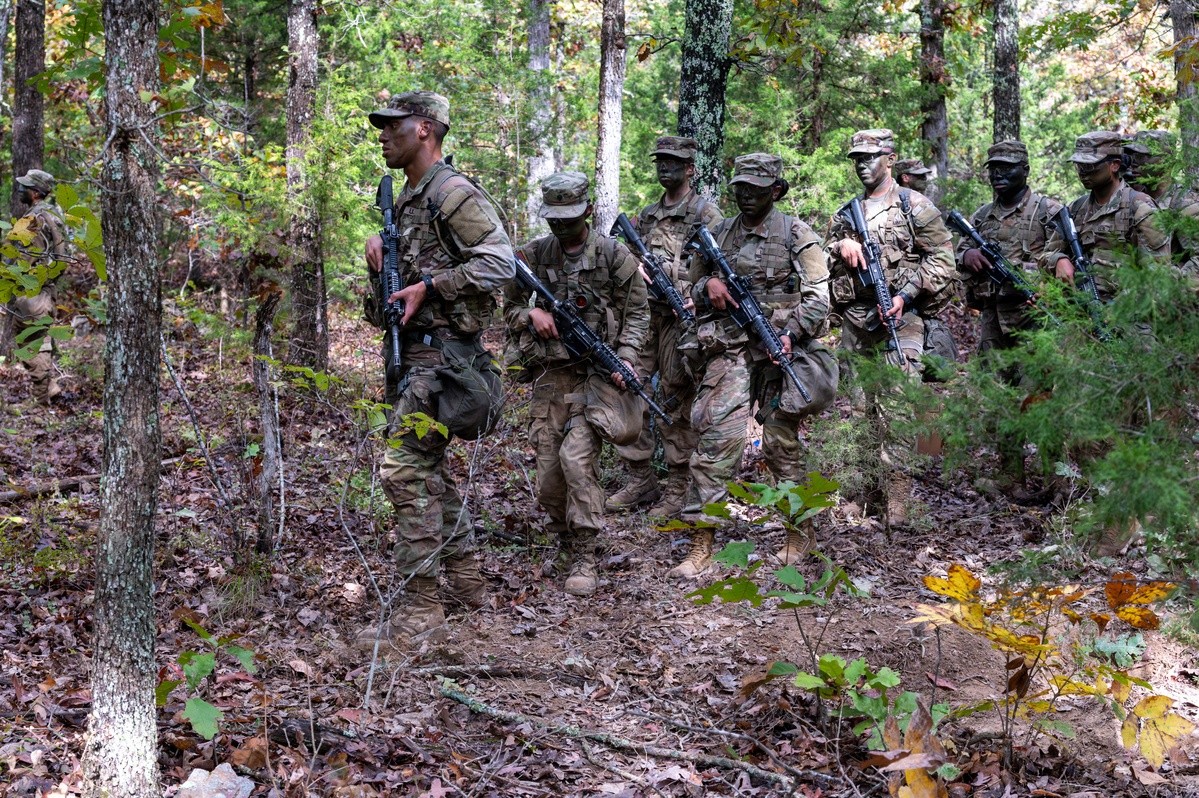
Braving persistent autumn rain Oct. 14, 2026, trainees translated classroom fundamentals into field application as they navigated the dense, wet timber of the Missouri Ozarks.


“They practiced reading maps, plotting points, determining direction with a compass and using pace counts to estimate distance,” Croft said. “They had to study the terrain, communicate with their teammates and make decisions about how to reach their assigned points.”
Croft said trainees did “very well.”
“There was some understandable hesitation at the beginning, but their confidence grew as they applied what they had learned,” he said. “Watching them find their points and trust their preparation was rewarding.”
Company A trainee, Pvt. Hannah Klemm, in BCT to become a 68W combat medic specialist, said her group was the first to finish land navigation and find all the points, because they “used their maps and Fort Leonard Wood’s unique trail system to their advantage.”
“The basic map reading class we had last week helped us to be able to recognize terrain features,” Klemm said. “We went down a steep drop that was easily identifiable on our map, so we knew we had to go across it to find our next point.”
The inclement weather failed to break their momentum; rather, Croft noted, it reinforced a foundational lesson instilled by their drill sergeants — a Soldier trains to fight and win in any condition.
“We didn’t mind the rain,” Klemm said. “War doesn’t stop for rain. Our drill sergeants have told us we need to be able to operate in any weather condition — heat, thunderstorms, sleet, cold, rain, snow — because as Soldiers we will need to be able to acclimate to any weather.”
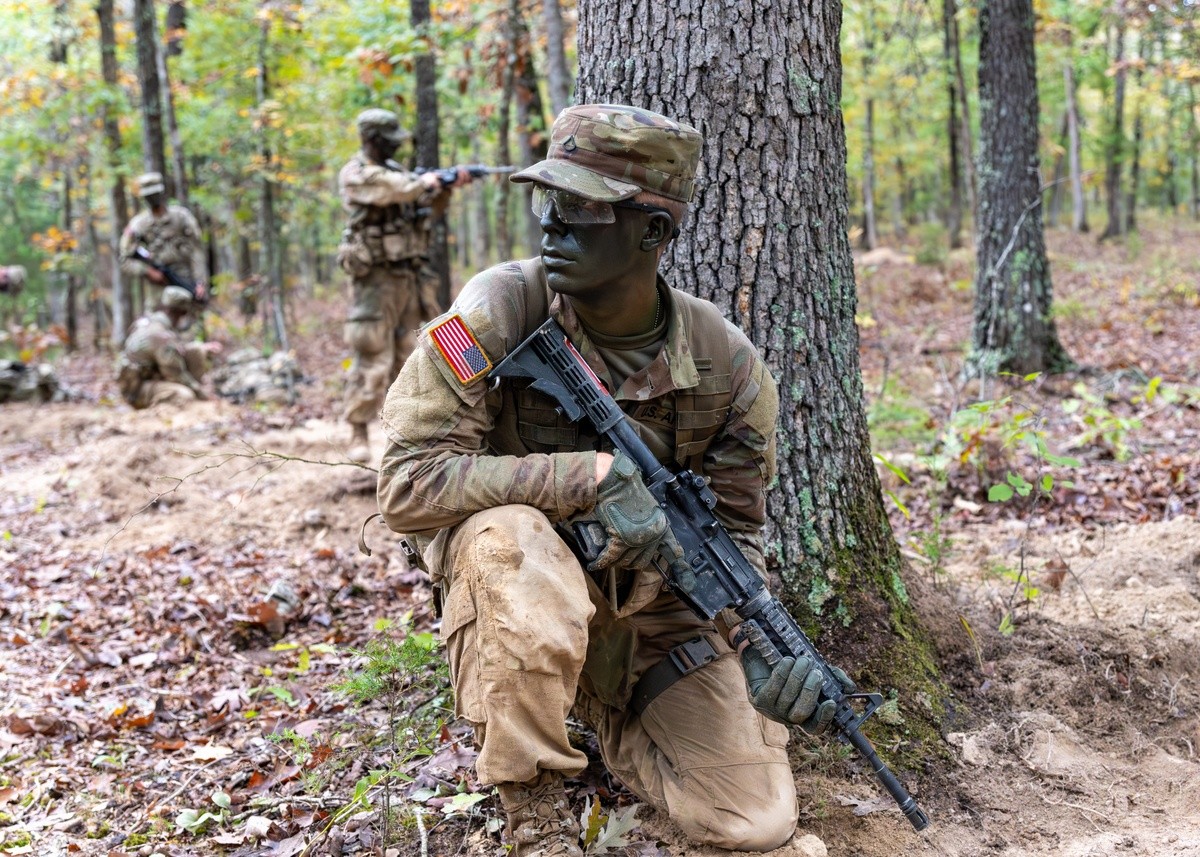
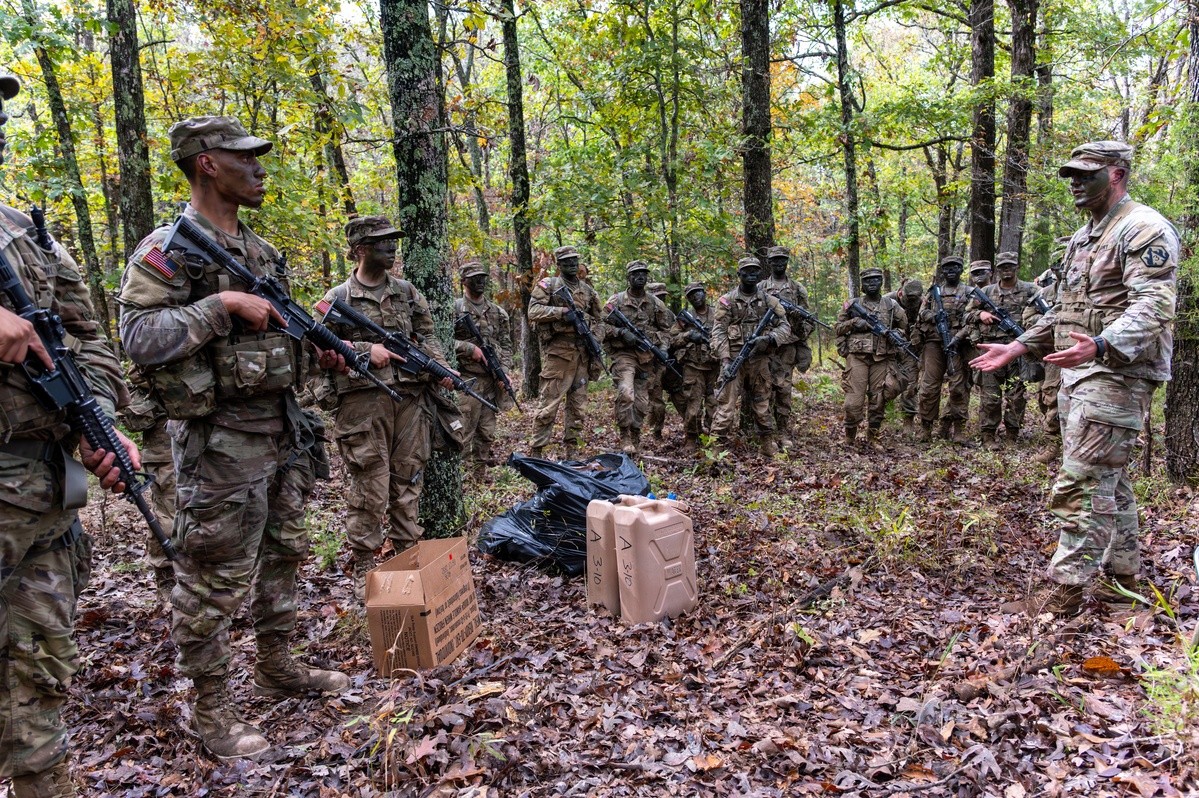
From land nav, trainees transitioned to the field for the Hammer Field Training Exercise, which served as the culminating event for Red Phase.
“The Hammer is an introductory field training exercise that brings together the basic Soldier skills trainees have been learning,” Croft said. “It introduces the demands of operating and spending the night in a field environment, with an emphasis on discipline, teamwork, security and accountability.”
According to Croft, moving to the field shifts trainees out of the routine of the barracks and provides their first exposure to small-unit tactics and patrol base operations.
During Hammer, recruits sharpened their skills in tactical movement, camouflage, communication, equipment accountability and maintaining security.


“They practiced managing their equipment and taking care of themselves and their battle buddies in the field. One of the biggest lessons was understanding how everyone’s preparation affects the entire team,” Croft said. “These all play key fundamental factors in sharpening their warfighter abilities.”
Using their issued field gear, trainees dug fighting positions before settling into the bivouac area to spend the night in the field.

“The experience taught them how to prepare a sleeping area, organize their equipment and maintain security while rotating through rest periods,” Croft said, and spending the night outside makes the field environment feel “much more real” for trainees.
“They did exceptionally well. They stayed motivated, responded to guidance and supported each other through unfamiliar conditions,” he added. “What stood out most was their willingness to take responsibility and help their battle buddies. We saw a more confident and cohesive team by the end of the exercise.”
Having completed their first FTX, trainees earned the privilege to start vocally commanding the formation's marching rhythm through cadence.
“They take a lot of pride in it. Their discipline and teamwork have progressed, and cadence gives them a way to express that growing confidence and comradery,” Croft said. “You can hear the difference in their energy when they march together and sound off in formation.”
Between major field events, trainees tackled classroom instruction designed to build well-rounded Soldiers, such as fitness performance optimization and personal financial management classes.
“Hip Stability Class teaches exercises that strengthen the muscles supporting the hips and improve control and stability. That foundation supports the running, marching, lifting and carrying they do throughout training,” Croft said. “We want them to develop good movement habits early so they can handle increasing physical demands.”
In a Leave and Earnings Statement class, trainees learned how to read their LES, the military’s version of a pay stub.
“They learn to identify their pay, allowances, deductions, leave balance and retirement contributions,” Croft said. “Understanding their LES helps them manage their money, recognize potential pay issues and take responsibility for their financial readiness.”
Oct. 17, 2026, recruits cycled through an Engagement Skills Trainer facility, a firing simulator that laid the groundwork for Croft’s favorite block of instruction — basic rifle marksmanship.
“Trainees used simulated weapons and targets to practice marksmanship in a controlled environment. They work on their firing positions, aiming, breathing and trigger control while receiving feedback from their drill sergeants,” he said. “It allows us to identify and correct problems early, helping them build confidence and consistency before live-fire training.”
A month into training, Croft said Week 4 brought trainees’ progress into focus.
“We watched them apply their training, overcome uncertainty and succeed together. Completing Red Phase represents a lot of hard work, and they should be proud of that accomplishment,” Croft said. “They have built a strong foundation for the challenges ahead.”
According to Croft, closing out Red Phase is only the baseline — the rest of BCT is when the “real work” begins.
“Longer field problems, long range days and more miles on foot under load,” he said. “They have their work cut out for them, but the end goal is worth the grit they have to put in.”
More Week 4 photos are available to view on Fort Leonard Wood's Flickr.
As the unit advances to White Phase in Week 5, trainees will log long hours across Fort Leonard Wood’s live-fire ranges — mastering grouping and zeroing fundamentals on their M4 carbines before earning their marksmanship badges during Week 6 qualification.
Social Sharing