1 / 9
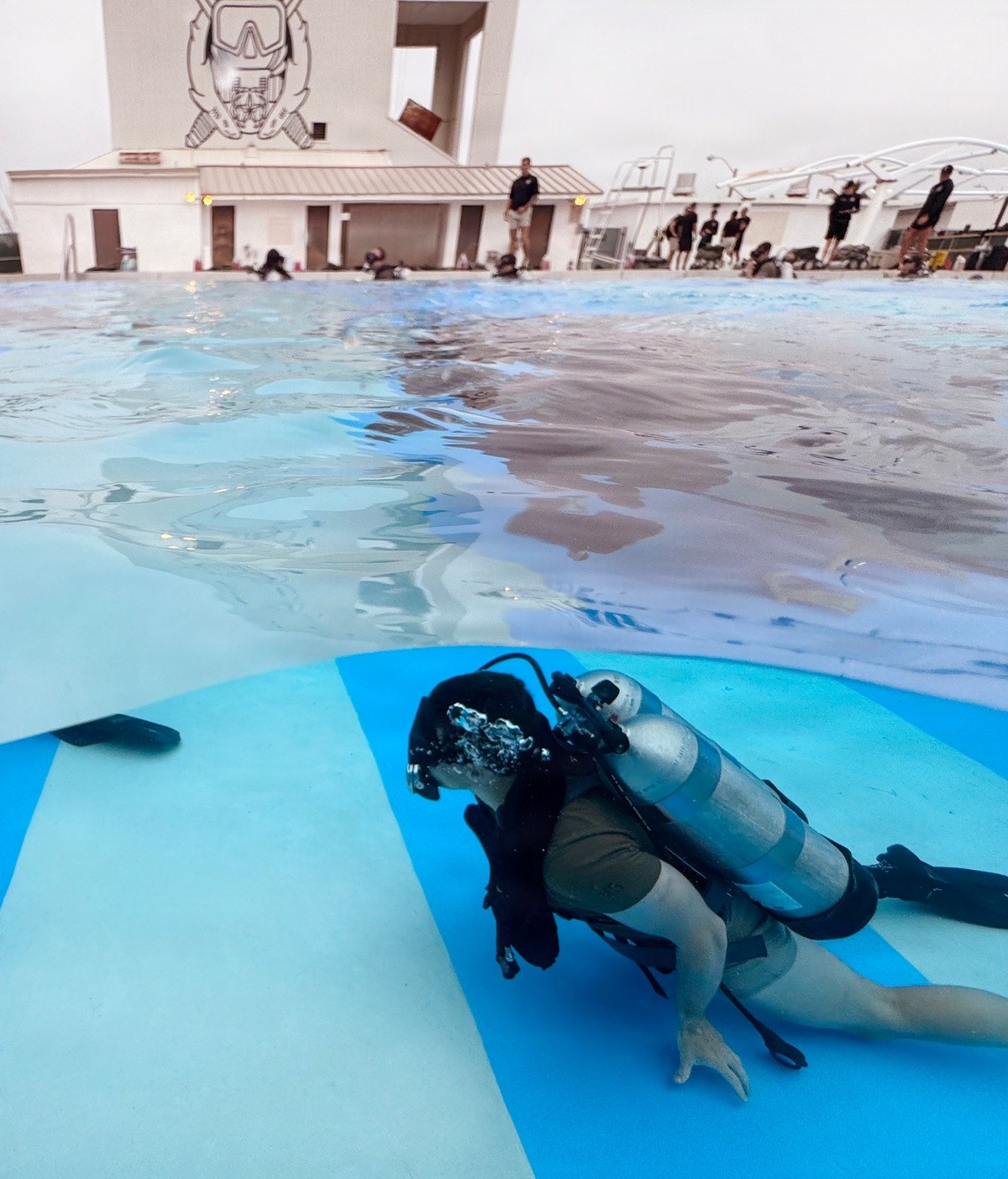
Students assigned to the U.S. Army John F. Kennedy Special Warfare Center and School, who are in the Special Forces Combat Diver Qualification Course, take part in open-circuit scuba training in a pool at NAS Key West, Florida February 18, 2026. Students who attended the six-week course were qualified as basic military open-circuit and closed-circuit combat divers knowledgeable in waterborne surface infiltration and exfiltration tactics, techniques and procedures and qualified in waterborne operations including day and night ocean subsurface navigation swims, day and night infiltration dives, deep dives, search dives, diving physics, physiology and injuries, marine hazards, tides and currents. (U.S. Army photo by K. Kassens)
(Photo Credit: K. Kassens)View original2 / 9
Instructors from the U.S. Army John F. Kennedy Special Warfare Center and School, perform Dive Supervisor Personnel Inspections on students who are in the Special Forces Combat Diver Qualification Course, prior to taking part in open-circuit training at NAS Key West, Florida February 19, 2026. Students who attended the six-week course were qualified as basic military open-circuit and closed-circuit combat divers knowledgeable in waterborne surface infiltration and exfiltration tactics, techniques and procedures and qualified in waterborne operations including day and night ocean subsurface navigation swims, day and night infiltration dives, deep dives, search dives, diving physics, physiology and injuries, marine hazards, tides and currents. (U.S. Army photo by K. Kassens)
(Photo Credit: K. Kassens)View original3 / 9
Students assigned to the U.S. Army John F. Kennedy Special Warfare Center and School, who are in the Special Forces Combat Diver Qualification Course, take part in open-circuit scuba training in a pool at NAS Key West, Florida February 18, 2026. Students who attended the six-week course were qualified as basic military open-circuit and closed-circuit combat divers knowledgeable in waterborne surface infiltration and exfiltration tactics, techniques and procedures and qualified in waterborne operations including day and night ocean subsurface navigation swims, day and night infiltration dives, deep dives, search dives, diving physics, physiology and injuries, marine hazards, tides and currents. (U.S. Army photo by K. Kassens)
(Photo Credit: K. Kassens)View original4 / 9
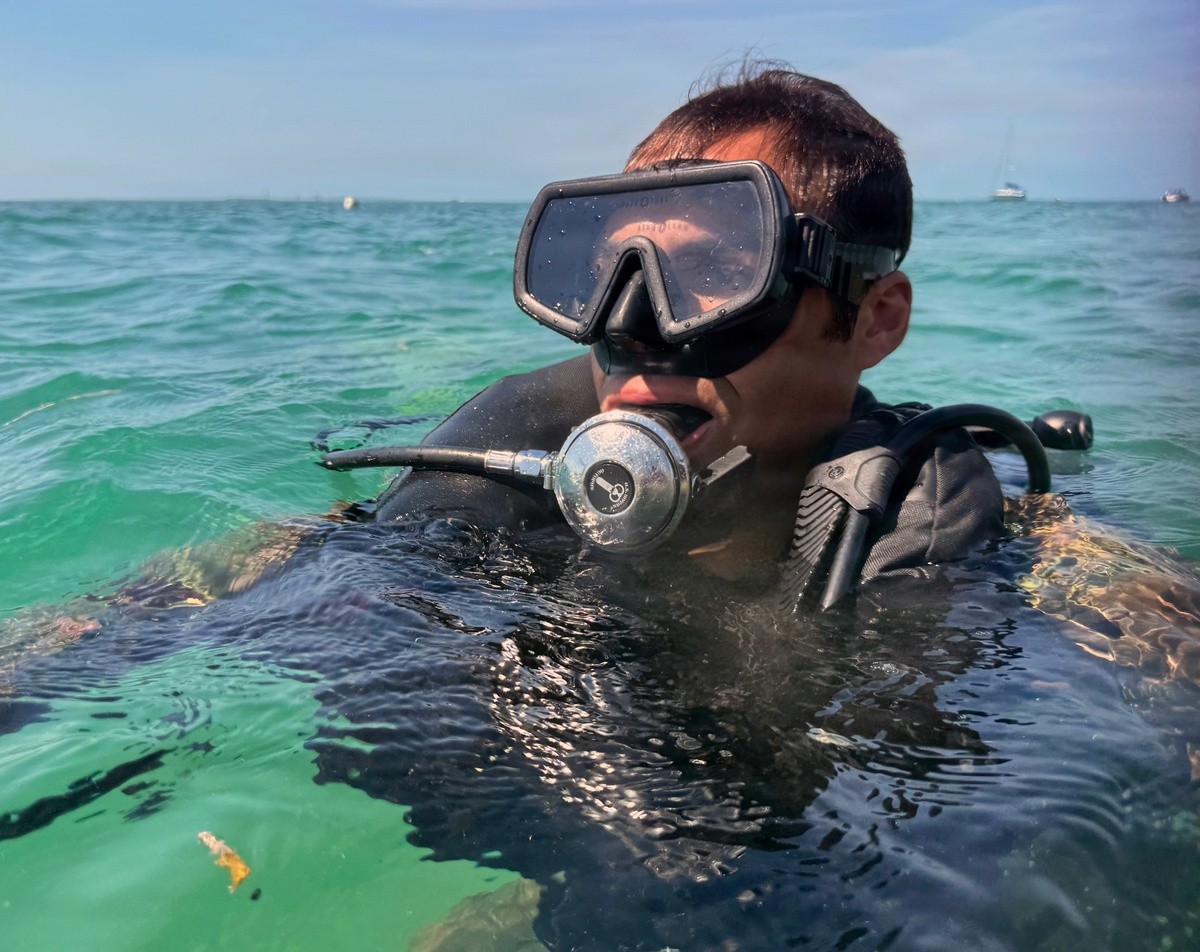
Students assigned to the U.S. Army John F. Kennedy Special Warfare Center and School, who are in the Special Forces Combat Diver Qualification Course, conduct open-circuit scuba training in the waters off NAS Key West, Florida February 19, 2026. Students who attended the six-week course were qualified as basic military open-circuit and closed-circuit combat divers knowledgeable in waterborne surface infiltration and exfiltration tactics, techniques and procedures and qualified in waterborne operations including day and night ocean subsurface navigation swims, day and night infiltration dives, deep dives, search dives, diving physics, physiology and injuries, marine hazards, tides and currents. (U.S. Army photo by K. Kassens)
(Photo Credit: K. Kassens)View original5 / 9
Instructors from the U.S. Army John F. Kennedy Special Warfare Center and School, perform Dive Supervisor Personnel Inspections on students who are in the Special Forces Combat Diver Qualification Course, prior to taking part in open-circuit training at NAS Key West, Florida February 19, 2026. Students who attended the six-week course were qualified as basic military open-circuit and closed-circuit combat divers knowledgeable in waterborne surface infiltration and exfiltration tactics, techniques and procedures and qualified in waterborne operations including day and night ocean subsurface navigation swims, day and night infiltration dives, deep dives, search dives, diving physics, physiology and injuries, marine hazards, tides and currents. (U.S. Army photo by K. Kassens)
(Photo Credit: K. Kassens)View original6 / 9
Students assigned to the U.S. Army John F. Kennedy Special Warfare Center and School, who are in the Special Forces Combat Diver Qualification Course, take part in open-circuit scuba training in a pool at NAS Key West, Florida February 18, 2026. Students who attended the six-week course were qualified as basic military open-circuit and closed-circuit combat divers knowledgeable in waterborne surface infiltration and exfiltration tactics, techniques and procedures and qualified in waterborne operations including day and night ocean subsurface navigation swims, day and night infiltration dives, deep dives, search dives, diving physics, physiology and injuries, marine hazards, tides and currents. (U.S. Army photo by K. Kassens)
(Photo Credit: K. Kassens)View original7 / 9
A student assigned to the U.S. Army John F. Kennedy Special Warfare Center and School, who is in the Special Forces Combat Diver Qualification Course, conducts open-circuit scuba training in the waters off NAS Key West, Florida February 19, 2026. Students who attended the six-week course were qualified as basic military open-circuit and closed-circuit combat divers knowledgeable in waterborne surface infiltration and exfiltration tactics, techniques and procedures and qualified in waterborne operations including day and night ocean subsurface navigation swims, day and night infiltration dives, deep dives, search dives, diving physics, physiology and injuries, marine hazards, tides and currents. (U.S. Army photo by K. Kassens)
(Photo Credit: K. Kassens)View original8 / 9
An instructor from the U.S. Army John F. Kennedy Special Warfare Center and School, conducts a Dive Supervisor Personnel Inspection on a student who is in the Special Forces Combat Diver Qualification Course, prior to taking part in open-circuit training at NAS Key West, Florida February 19, 2026. Students who attended the six-week course were qualified as basic military open-circuit and closed-circuit combat divers knowledgeable in waterborne surface infiltration and exfiltration tactics, techniques and procedures and qualified in waterborne operations including day and night ocean subsurface navigation swims, day and night infiltration dives, deep dives, search dives, diving physics, physiology and injuries, marine hazards, tides and currents. (U.S. Army photo by K. Kassens)
(Photo Credit: K. Kassens)View original9 / 9
Students assigned to the U.S. Army John F. Kennedy Special Warfare Center and School, who are in the Special Forces Combat Diver Qualification Course, take part in open-circuit scuba training in a pool at NAS Key West, Florida February 18, 2026. Students who attended the six-week course were qualified as basic military open-circuit and closed-circuit combat divers knowledgeable in waterborne surface infiltration and exfiltration tactics, techniques and procedures and qualified in waterborne operations including day and night ocean subsurface navigation swims, day and night infiltration dives, deep dives, search dives, diving physics, physiology and injuries, marine hazards, tides and currents. (U.S. Army photo by K. Kassens)
(Photo Credit: K. Kassens)View original
FORT BRAGG, N.C. - As the Department of War continues to focus on military advanced capabilities, the U.S. Army John F. Kennedy Special Warfare Center and School exemplify the Department’s initiatives through lethality, warrior ethos and readiness.
Nested under the 2nd Special Warfare Training Group (Airborne) lies the Special Forces Under Water Operations, coined the dive school.
Housed at Naval Air Station Key West, Florida, the dive school prepares selected service members to become basic military open-circuit and closed-circuit combat divers. The course is designed to develop the skills required to conduct waterborne surface and sub-surface infiltration and exfiltration operations in a variety of challenging conditions.
Sergeant Maj. Alex Stewart, the senior enlisted leader at the school, said the overall mission is to train U.S. Army Special Forces, other branches of special operations forces and select foreign military, to become combat surface and subsurface infiltrators, and to meet U.S. Special Operations Command combatant commander’s requirements.
“Dive School produces the best open-circuit and closed-circuit combat divers in the Army,” Stewart said. “It creates a Soldier that will not quit and will not fail.”
The course also serves as the Army’s subject matter expert in developing special operations under- and over-water doctrine and programs of instruction.
During the course, students learn about specialized physical conditioning, waterborne operations, including day and night ocean subsurface navigation swims, infiltration dives, deep dives, search dives, closed-circuit and open-circuit dives, surface swims, small boat operations, and a culmination situational training exercise.
Stewart said there are several prerequisites necessary to attend dive school.
“Each Special Forces group conduct their own Maritime Assessment Course and combat diver preparation in order for the student to receive their validation certificate, which is required to come to the Combat Diver Qualification Course,” Stewart said. “Each event of MAC gets more difficult over the 10-day long course.”
An instructor identified as “Nick,” whose uses an alias for identity management purposes, said the Maritime Assessment Course prepares students for the basics, teaches them fundamentals and most importantly, to never quit.
“The Maritime Assessment Course also teaches them how to not be stressed under water, which is a critical skill,” Nick said.
Students must also meet strict medical fitness standards, including a hyperbaric chamber pressure equalization test and pass a modified Army Fitness Test.
“They arrive, and on day-one, take the Army Fitness Test,” Stewart said. “They’re issued their gear and equipment, check it for fit and maintenance, and learn how to wear each item. Students are in the pool on day two.”
The students begin training in a controlled environment, where they build and refine their skills in the newly renovated 62,000-cubic foot swimming pool before progressing to the open ocean. The deliberate progression allows instructors to evaluate students as they learn the fundamentals of military diving, navigation and underwater operations.
“During the first two weeks of basic open-circuit diving, they also learn emergency procedures and undergo the one-man confidence test,” Stewart said. “[…] It tests if they can confidently and competently do what’s necessary to resolve a problem while underwater.
After the basic diving portion, the students undergo advanced open-circuit training, where they do a deep dive.
During the third week of training, the students begin basic closed-circuit dives using the Lung Activated Rebreather system. Students are taught how to build, maintain and test the system in the pool before diving in the ocean.
“Once they pass testing in the pool, they begin navigation dives in the ocean with a partner,” Stewart said. “One student is the navigator, who holds and maintains a compass board, while his partner keeps a look out for obstacles or obstructions as they travel under water.”
The fourth and fifth weeks are advanced closed-circuit training, where students begin putting all the skills learned to the test, diving with an eight-to-12-man element.
“They also learn techniques on how to conduct a beach landing site infiltration,” Stewart said. “They execute this during the day and at night.”
As training progresses, instructors move students from controlled conditions to increasingly realistic scenarios in the open waters surrounding Key West. The transition tests not only technical diving skills, but also the discipline, physical endurance and mental resilience required to operate in a maritime environment.
Throughout all the training, the students are taught and tested on waterborne infiltration tasks, which is everything conducted on the surface, such as airborne and helocast infiltration and the use of the Combat Rubber Rafting Craft.
They also learn combat dive tasks, which are all things below the surface.
“Our course is unique because we cover a lot of waterborne training,” Stewart said. “The course is capped off with a three-day field training exercise that includes a combat dive infiltration, then an advance into a guerrilla base and finally a dive with a raid.”
The course also extends beyond underwater operations. Students train for waterborne missions that include jumps from various aircraft into the Sgt. Maj. Jerry D. Patton Water Drop Zone and helocasting from helicopters into the water before beginning an assigned mission.
Stewart said that the Special Forces Combat Diver Qualification Course is widely regarded as one of the most difficult courses in the U.S. Army. Those who successfully complete the six-week program earn the coveted combat diver badge, signifying their qualification as Special Forces combat divers and their ability to conduct specialized waterborne operations.
“For the service members who complete the course, the badge represents more than six weeks of training,” Stewart said. “It marks the culmination of an intense process designed to prepare them to enter, move through and exit some of the world's most challenging environments.”
He added that the Combat Diver Qualification Course is a critical component of developing lethal and adaptable special operations leaders.
“This course forges leaders of character who can thrive in complex, threat-informed environments," Stewart said. “They are not just acquiring a tactical skill; they are demonstrating the mental resilience and disciplined initiative required to lead teams in high-stakes maritime operations. By producing competent and committed combat divers, we are directly contributing to the Army's warfighting readiness and building a more lethal force for the future, which is at the Special Warfare Center and School’s core purpose.”






Social Sharing