1 / 4
Fort Bliss and 1st Armored Division senior leaders along with distinguished guests of ICON Prime come together for a ribbon cutting ceremony to officially open the new 3-D barracks on Fort Bliss, Texas, July 28, 2026. The project represents the largest deployment of robotic construction capabilities for the Department of War to date, highlighting how emerging technologies are reshaping Army infrastructure.
(Photo Credit: U.S. Army photo by Sgt. Brandon Camaquin)View original2 / 4
U.S. Army Maj. Gen. Curtis Taylor, 1st Armored Division and Fort Bliss commanding general, addresses the crowd and media during a ribbon-cutting ceremony for the newly constructed, 3D-printed barracks on Fort Bliss, Texas, July 28, 2026. 1st Armored Division, the U.S. Army Corps of Engineers and ICON present the first of ten 3D-printed barracks for up to 560 service members to modernize Army infrastructure, enhance readiness and provide energy-resilient, high-quality housing at a fraction of the time and cost of traditional construction.
(Photo Credit: U.S. Army photo by Sgt. Brandon Camaquin)View original3 / 4
U.S. Army Col. Michael Soyka, Fort Bliss garrison commander, talks amongst members of the El Paso community about the infrastructure of the newly 3-D barracks during a ribbon cutting ceremony on Fort Bliss, Texas, July 28, 2026. This $62.8 million contract consisted of ten open-bay 3D printed transient training barracks, accommodating up to 560 service members and was completed within six months.
(Photo Credit: U.S. Army photo by Sgt. Brandon Camaquin)View original4 / 4
U.S. Army Col. Michael Soyka, Fort Bliss garrison commander, and El Paso Mayor Renard Johnson, tour the newly constructed 3-D barracks during a ribbon cutting ceremony on Fort Bliss, Texas, July 28, 2026. By partnering with ICON and the U.S. Army Engineers to finish construction in about six months, demonstrating a faster, more economical way to build high quality, energy efficient barracks that improves Soldier quality of life and supports mission readiness.
(Photo Credit: U.S. Army photo by Sgt. Brandon Camaquin)View original
FORT BLISS, Texas — Fort Bliss leadership held a ribbon-cutting ceremony for the first of 10 new 3D-printed barracks on the installation July 28, 2026.
The project represents the largest deployment of robotic construction capabilities for the Department of War to date, highlighting how emerging technologies are reshaping Army infrastructure.
The 3D-construction process provides a faster, more economical way to build high-quality, energy-efficient barracks that improve Soldiers’ quality of life and support mission readiness.
“[T]his project is about much more than statistics, 3D printing or cost savings,” said Maj. Gen. Curtis Tayor, the commanding general of Fort Bliss. “It is about combat readiness, and most importantly, it is about taking care of our people. … This facility sends a clear and undeniable message to every Soldier who walks through its doors: We value you. We value your mission. And we value your sacrifice.”
This initiative builds upon a 2024 proof of concept at Fort Bliss that produced two 3D-printed buildings of a similar design that have been actively housing service members since their opening.
Fort Bliss 3D-printed Army Barracks
(Photo Credit: Sophia Espinosa)View original
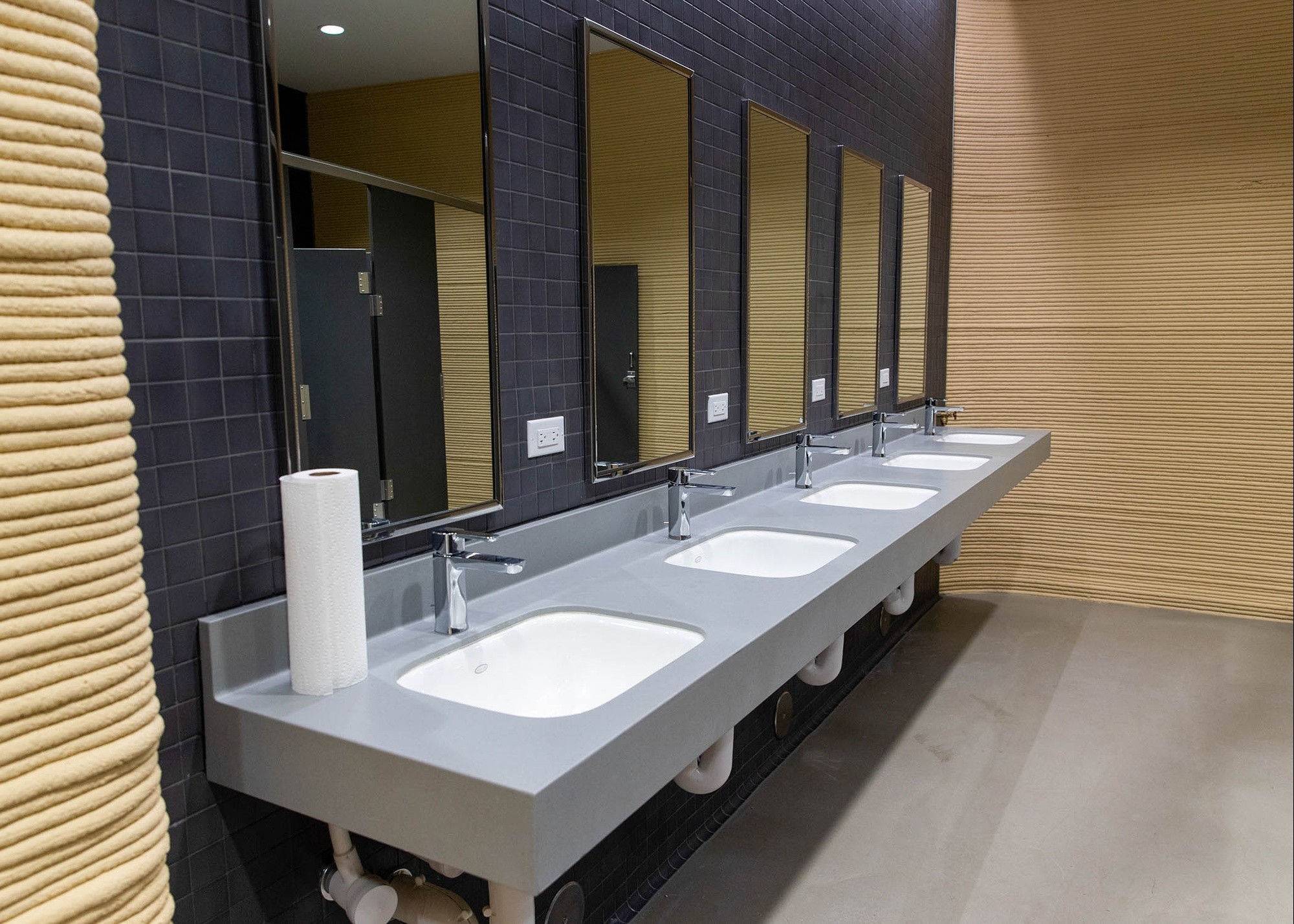
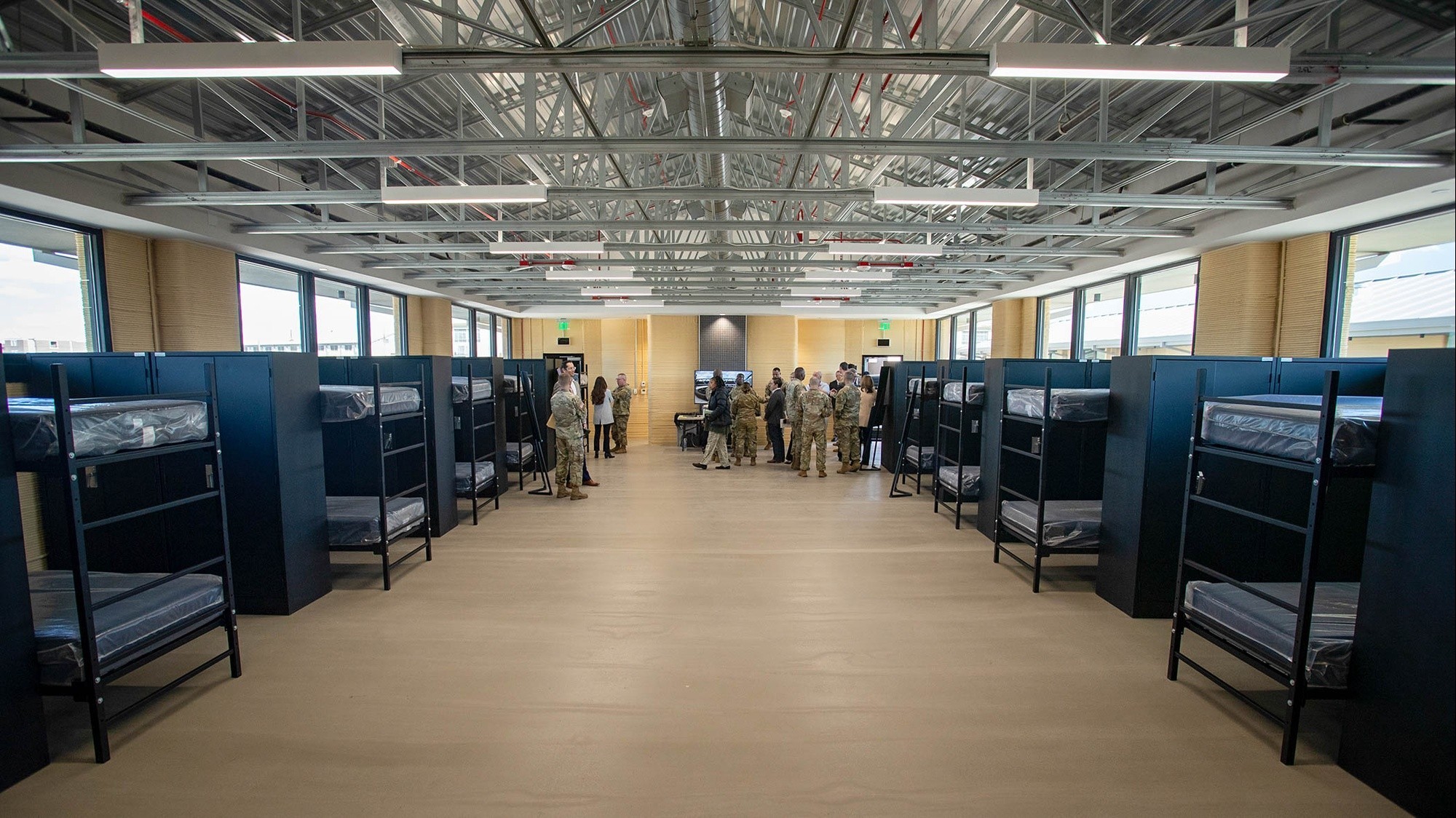
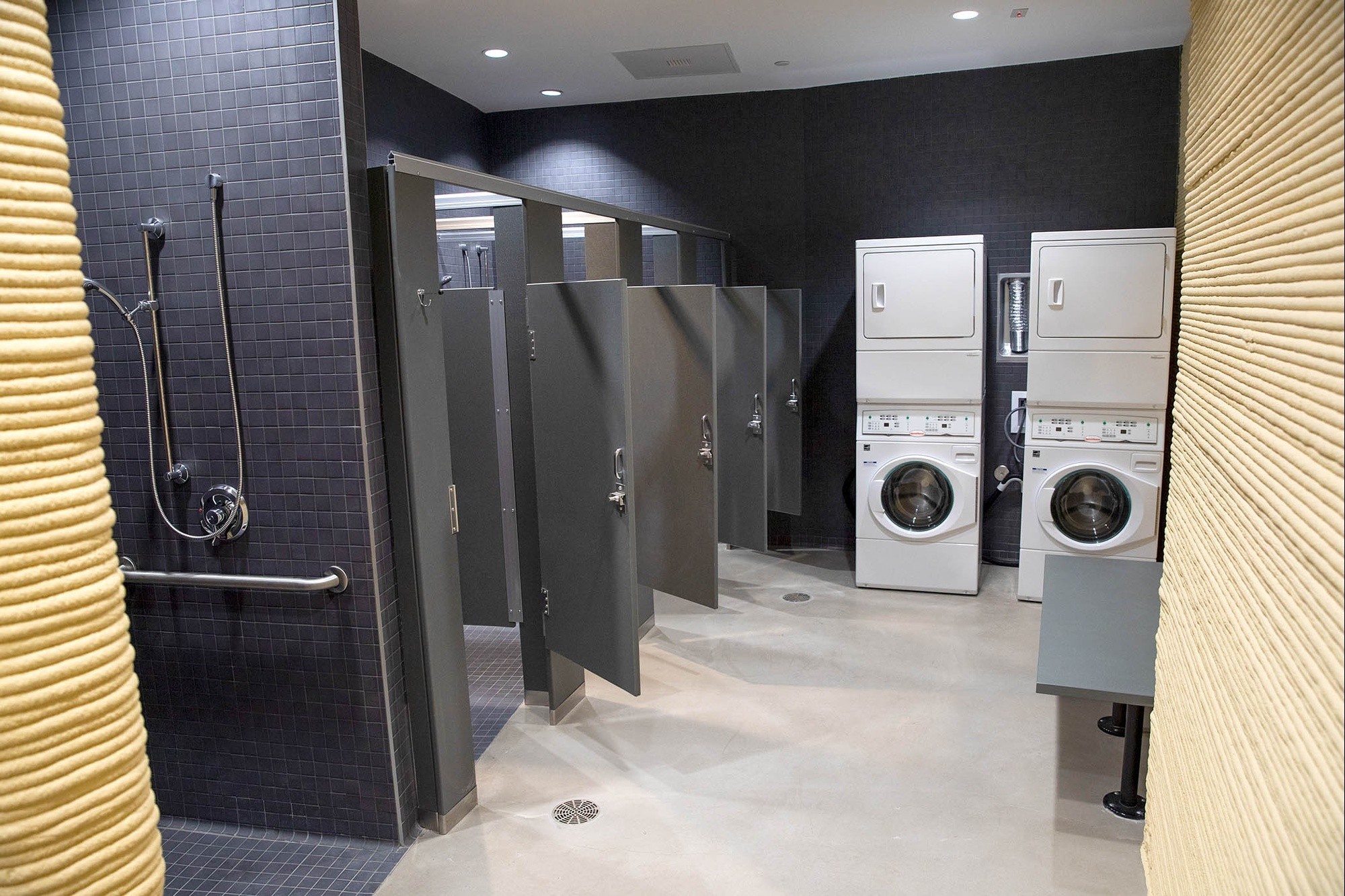
An example of the facilities in one of the new 3D-printed barracks at Fort Bliss, Texas, Jan. 29, 2025. According to ICON, an Austin, Texas, company that spearheaded the project, the buildings each encompass 5,700 square feet. When construction began in 2024, these barracks were the largest planned 3D-printed structures in the Western Hemisphere.
(Photo Credit: U.S. Army photo by David Poe)View original
The current contract consists of 10 open-bay, 3D-printed transient training barracks accommodating up to 560 service members. The printing phase of all 10 buildings took 58 days with an estimated contract to delivery time of just nine months.
The new barracks will replace aging temporary structures with energy-resilient, durable buildings that have reduced life-cycle costs.
The ceremony officially opened the first two buildings of the 10 under construction. The project is expected to be completed in September.
Each conditioned building is Unified Facilities Criteria-compliant and has an area of 5,772 square feet, covering a total of 78,000 square feet. The U.S. Army achieved a 9.3% cost savings compared to traditional military construction benchmarks set by the U.S. Army Corps of Engineers, at four times the speed of traditional construction methods.
Army leaders, stakeholders and guests tour one of three new 3D-printed barracks at Fort Bliss, Texas, Jan. 29, 2025. According to ICON, an Austin, Texas, company that spearheaded the project, the buildings each encompass 5,700 square feet. When construction began in 2024, these barracks were the largest planned 3D-printed structures in the Western Hemisphere.
(Photo Credit: David Poe)View original
An example of the facilities in one of the new 3D-printed barracks at Fort Bliss, Texas, Jan. 29, 2025. According to ICON, an Austin, Texas, company that spearheaded the project, the buildings each encompass 5,700 square feet. When construction began in 2024, these barracks were the largest planned 3D-printed structures in the Western Hemisphere.
(Photo Credit: U.S. Army photo by David Poe)View original
In the immediate future, these barracks will house members of Task Force Bastogne who are serving as a part of Joint Task Force - Southern Border in support of Operation Ardent Vanguard, preserving the territorial integrity of the United States.
“In the coming weeks, when the next unit finishes a demanding shift on the border, they won’t have to drive an hour into the desert,” said Taylor. “Instead, they will return here — to permanent, energy-resilient, world-class housing just steps away from gyms, dining facilities and recreation areas.”
These new barracks will continue to provide permanent-structure, high-quality housing as a part of the JTF- Southern Border Campus on Fort Bliss as units rotate in support of the mission.


Social Sharing