Future conflict will stress sustainment systems in contested and distributed environments. Aviation units will require rapid refuel and rearm capability across extended distances. The unit that sustains aircraft faster will retain operational tempo and combat power.
Current petroleum support for forward arming and refueling points (FARPs) and for areas for forward arming and refueling (AFARs) remains concentrated within combat aviation brigade (CAB) formations. This structure creates a single point of failure and limits operational reach at the division level. Most Soldiers who are not in CAB formations lack repetitions in cold and hot aircraft refueling and do not train to aviation inspection standards such as the Aviation Resource Management Survey (ARMS) requirements. Cold refueling occurs with aircraft shut down and engines off, while hot refueling occurs with aircraft engines operating and rotors turning.
The Army must expand FARP/AFAR capability beyond CAB formations. It must build a force where multiple units can establish and operate FARPs/AFARs without reliance on a single formation. This requires a change in how the Army trains 92F Petroleum Supply Specialists and how it integrates expeditionary fuel systems such as the Tactical Air-Ground Refueling System (TAGRS).
Problem
The Army does not employ FARP/AFAR operations as a baseline competency across the force. Most sustainment units lack trained personnel to establish and operate FARPs/AFARs without CAB support. This gap limits flexibility during large-scale combat operations (LSCO).
Current FARP/AFAR planning still relies heavily on bulk fuel distribution platforms such as the M978 Heavy Expanded Mobility Tactical Truck tanker to transport fuel forward. Aircraft refueling operations then rely on expeditionary systems such as the Advanced Forward Area Refueling System (AAFARS) and TAGRS to establish rapid capability near maneuver forces. Bulk fuel systems and expeditionary refueling packages require significant lift, time, and access to ground lines of communication (GLOCs). In early-entry operations or restricted terrain, this dependence delays refuel capability and slows aviation tempo.
Army Doctrine Publication 4-0, Sustainment, and Field Manual 4-0, Sustainment Operations, require sustainment forces to extend operational reach and enable endurance. Current petroleum training and equipment integration do not fully support this requirement. When units cannot rapidly establish FARPs/AFARs, aircraft wait for fuel; operations slow; and risk to mission increases.
Solution
The Army must modernize 92F training to produce Soldiers who can execute FARP/AFAR operations across any formation while integrating both bulk and expeditionary fuel systems.
The 101st Airborne Division (Air Assault) implemented a division-level progressive training model designed to increase FARP/AFAR capability across sustainment formations. This approach aligns with Army Transformation in Contact (TiC) initiatives focused on increasing sustainment flexibility, distributed operations, and survivability during LSCO.
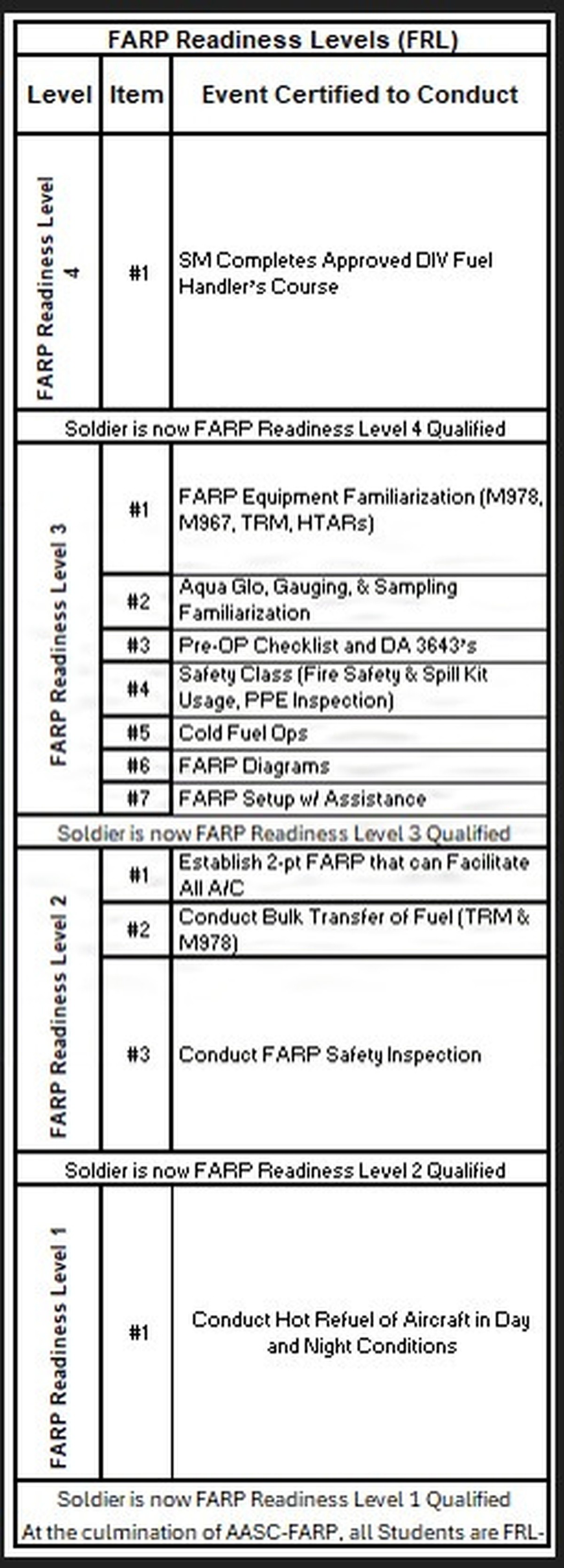
The model consists of three stages conducted within the division sustainment brigade (DSB):
- Stage 1: Fuel Handler Certification Course: Soldiers complete a 40-hour program. Soldiers train to aviation standards and demonstrate proficiency in system setup, safety procedures, and refueling operations. Training includes written tests and hands-on execution.
- Stage 2: Air Assault Sustainers Course and FARP/AFAR Team Certification: Soldiers train on sling-load operations, equipment movement, and FARP/AFAR establishment in austere environments. Training includes day and night operations and leader certification for FARP/AFAR team execution. Soldiers conduct live FARP/AFAR operations under realistic conditions and receive certification to operate under mission constraints.
- Stage 3: Hot Refueling Qualification: Soldiers conduct live refueling operations with running aircraft under operational conditions.
In parallel with training, the division integrates expeditionary systems such as the TAGRS into sustainment exercises to enable rapid establishment of small-footprint FARPs/AFARs during early-entry operations. These systems supported rapid emplacement, reduced reliance on bulk fuel platforms, and increased survivability through displacement and distributed operations.
During division training events, TAGRS supported initial refueling capability before establishment of larger sustainment nodes. Bulk fuel systems such as the M978 and AAFARS expanded refueling capacity as operations matured.
Results
The 101st Division Sustainment Brigade certified over 200 personnel across sustainment formations and enabled multiple battalion-level elements to establish and operate FARPs/AFARs outside of CAB formations.
The division sustainment brigade requires each company to certify a FARP/AFAR team. Leaders track progression through training meetings, quarterly training briefs, and sustainment training assessments. The brigade enforces standards through validation and evaluation at echelon using the eight-step training model.
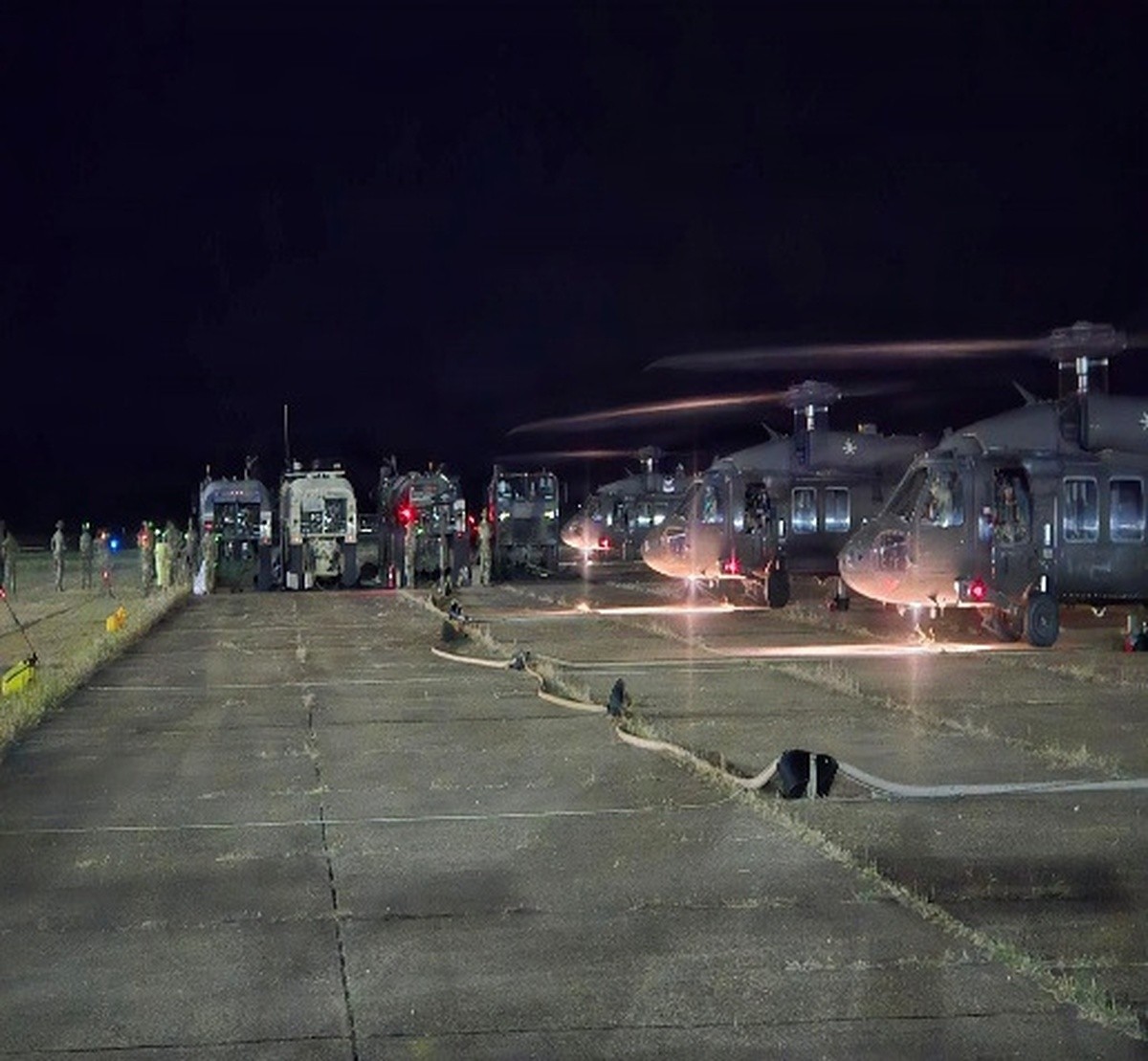
Units executed multiple large-scale, long-range air assault operations supported by internally generated FARP/AFAR capability. Sustainment elements established refuel sites that supported continuous aviation operations across extended distances.
Integration of TAGRS enabled rapid establishment of FARPs/AFARs during early phases of operations. Units established initial refuel capability with a reduced footprint and expanded to bulk systems as operations matured. This reduced reliance on a single sustainment node and increased operational flexibility.
Implications for the Army
This approach supports Army transformation efforts focused on distributed sustainment operations, survivability, operational reach, and sustainment support during LSCO. Expanding FARP/AFAR capability beyond CAB formations increases operational flexibility and reduces reliance on centralized sustainment nodes in contested environments.
Recommendations for U.S. Army Combined Arms Support Command (CASCOM) and the U.S. Army Quartermaster School:
- Integrate FARP/AFAR operations into 92F institutional and sustainment training to support distributed operations and LSCO sustainment requirements.
- Establish standardized sustainment — led by FARP/AFAR certification guidance.
- Require division and brigade-level validation of FARP/AFAR capability during LSCO exercises.
- Expand training and requirements beyond CAB organizations.
- Evaluate systems such as the TAGRS for potential integration into sustainment training and operational experimentation.
This approach will build redundancy across the force, reduce operational risk, and increase the Army’s ability to sustain aviation in contested environments.
Conclusion
Sustainment determines tempo. Tempo determines operational outcome.
The Army and divisions conducting LSCO cannot rely on a single formation to execute FARPs/AFARs. The Army must build a force where multiple units establish and operate FARPs/AFARs across all environments and conditions. Modernizing 92F training will create those capabilities. Integration of expeditionary systems such as TAGRS will further enable rapid, small-footprint refuel operations during early-entry phases of combat. This approach will expand operational reach, increase endurance, and enable aviation forces to operate without delay in LSCO.
--------------------
CW3 Damien S. Drake serves as the senior petroleum systems technician for the 101st Division Sustainment Brigade, 101st Airborne Division (Air Assault), Fort Campbell, Kentucky. He has over 20 years of Army service and provides technical oversight for petroleum distribution, fuel readiness, and sustainment operations supporting division-level training and contingency missions. He holds a Bachelor of Science degree in psychology and is a graduate of the Warrant Officer Candidate School, Petroleum Systems Technician Warrant Officer Basic Course, and Warrant Officer Advanced Course.
--------------------
This article was published in the summer 2026 edition of Army Sustainment Professional Bulletin.
RELATED LINKS
Army Sustainment on Line of Departure
--------------------------------------------------------------------------------------------
Social Sharing