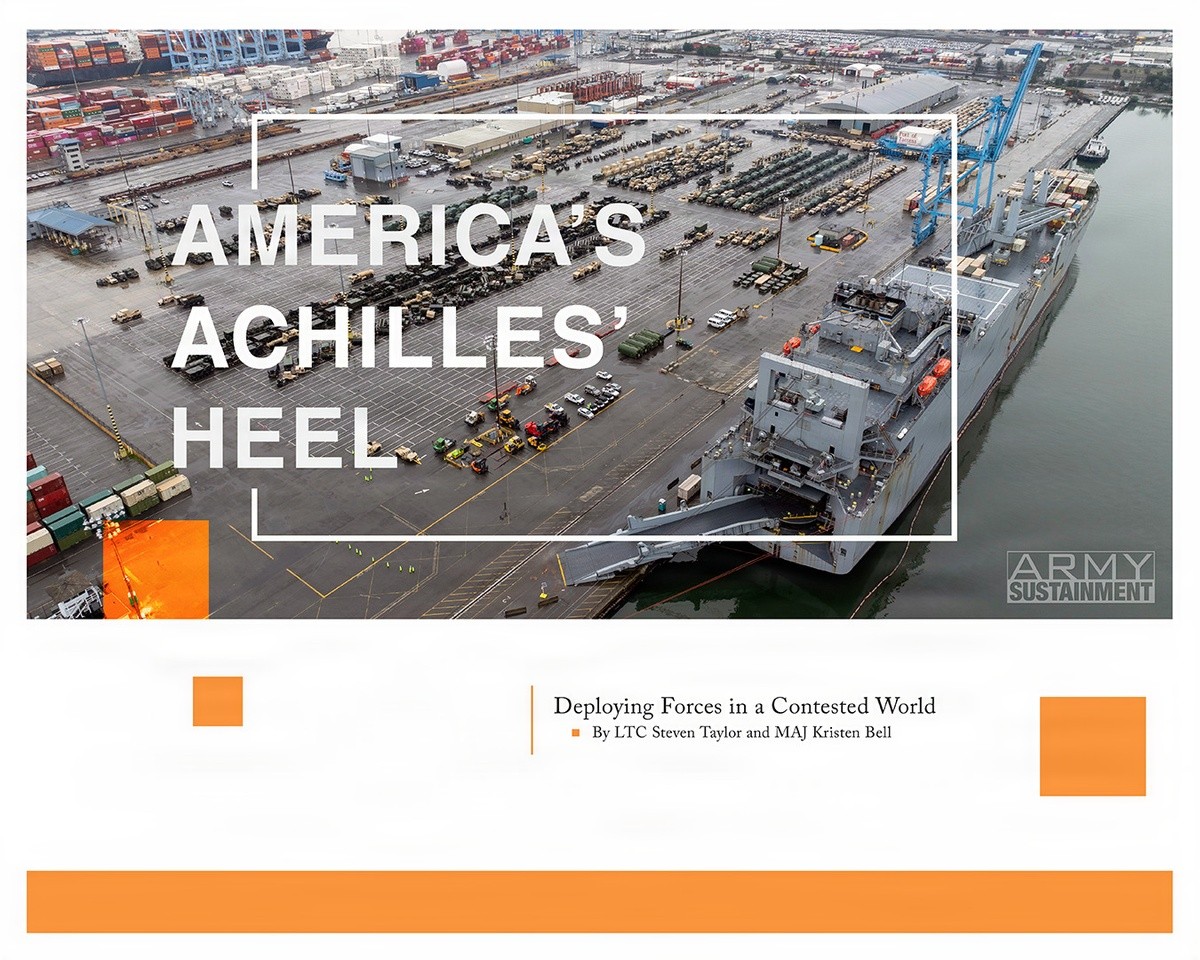

The strategic environment is in constant motion. The pacing challenge of a peer adversary demands that the joint deployment and distribution enterprise and the U.S. Army Transportation Command (ARTRANS) project combat power at a scale and speed not tested in decades. During Operations Desert Shield and Desert Storm, strategic deployment timelines revealed significant challenges in rapidly projecting heavy armored formations into theater. Although the U.S. ultimately deployed overwhelming combat power, transportation bottlenecks, port congestion, and limited strategic sealift capacity delayed the arrival and integration of some combat units, complicating operational synchronization and multinational force reception efforts. The benchmark is clear and daunting: can we execute a deployment of this magnitude to win the nation’s next war? Compounding this challenge, future deployments may begin from a contested homeland. Adversaries possess the capability to disrupt mobilization through cyberattacks, information operations, sabotage, and long-range precision strikes against critical transportation infrastructure. The assumption that deployment operations will originate from a secure sanctuary can no longer be taken for granted, requiring commanders to integrate force protection and resilience measures from home station to the port of embarkation.
ARTRANS continues to refine and validate its reception, staging, onward movement, integration, and surface deployment processes through real-world missions such as Operation Turbo Fusion. This effort focused on assessing the capacity of West Coast terminal operations under duress, executing synchronization through Maven Smart System for a unified operational picture, and operating under a contested logistics scenario where supply lines are. The scenario incorporated multi-domain threats including cyber disruptions, degraded communications, unmanned aerial system surveillance, and simulated attacks against transportation nodes, requiring Task Force (TF)-833 to operate with reduced visibility and increased operational risk. The integration of the Deployment Support Command was essential because it tested their mobilization, reception, and ability to rapidly integrate and execute operations in a multi-component TF across geographically dispersed ports operating simultaneously. This includes vital collaboration with commercial industry partners to augment military capabilities, ensuring a resilient and robust logistics network for the joint force. To meet these demands the 596th Transportation Surface Brigade tasked the 833rd Transportation Battalion to provide command and control (C2) at four strategic seaports dispersed across the Pacific Northwest and Alaska. The 833d Transportation Battalion established TF-833 to meet these objectives.
The mission of the 833rd Transportation Battalion was to plan, integrate, and synchronize surface deployment and distribution services and execute port operations from the Pacific Northwest and Alaska strategic seaports in support of munitions and global warfighting requirements.
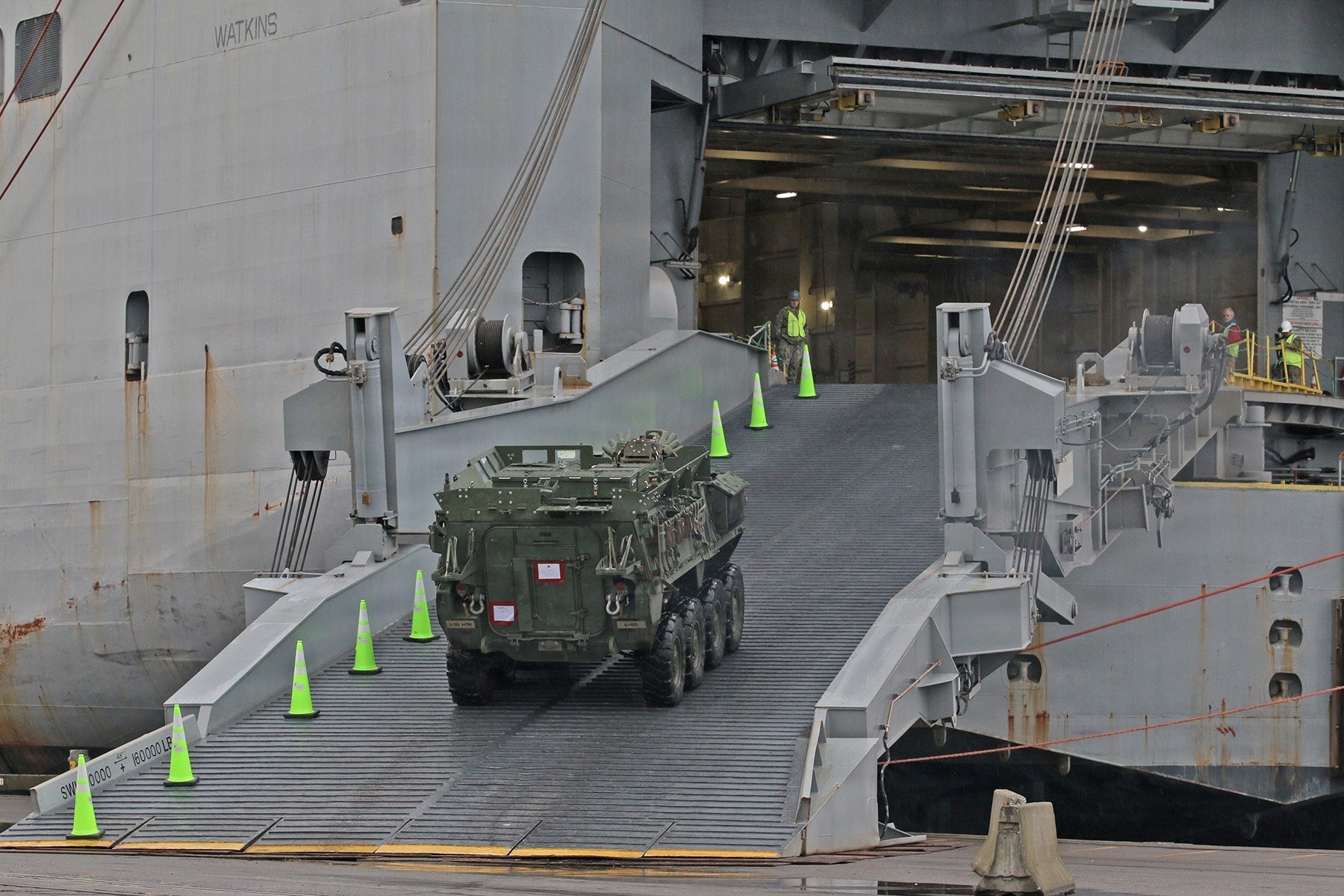
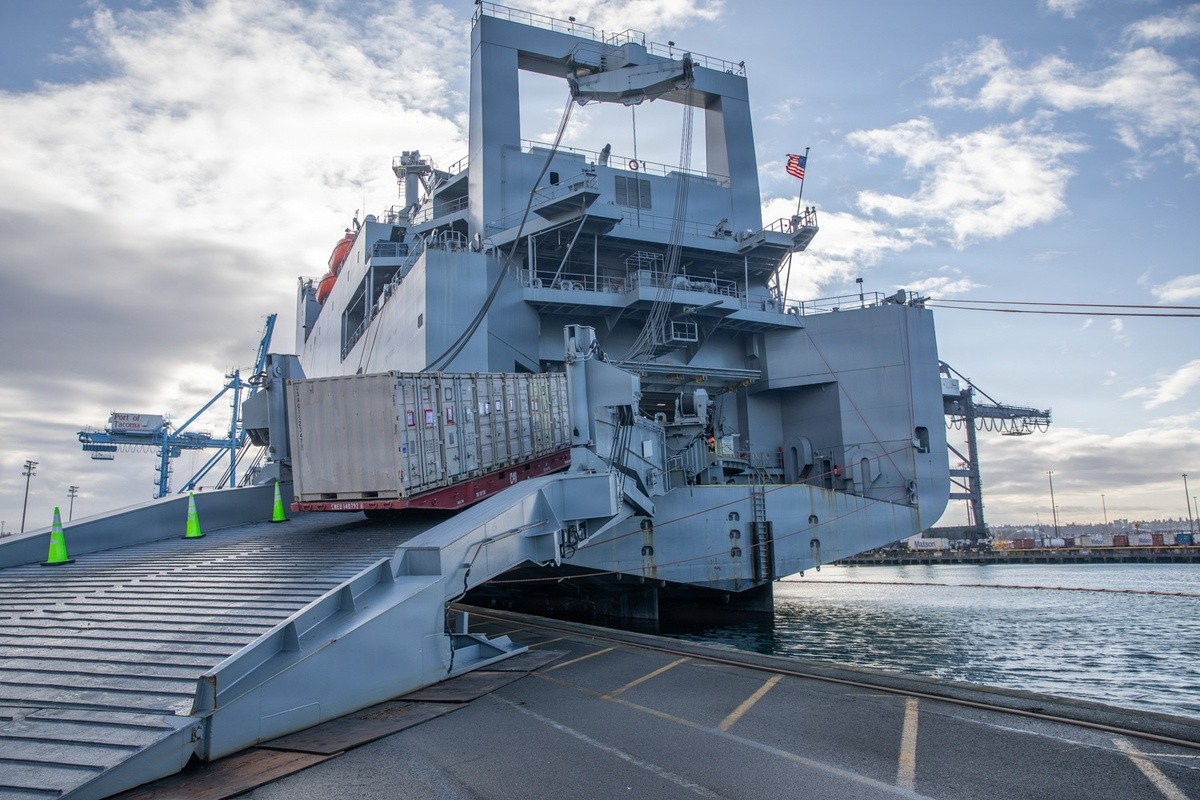
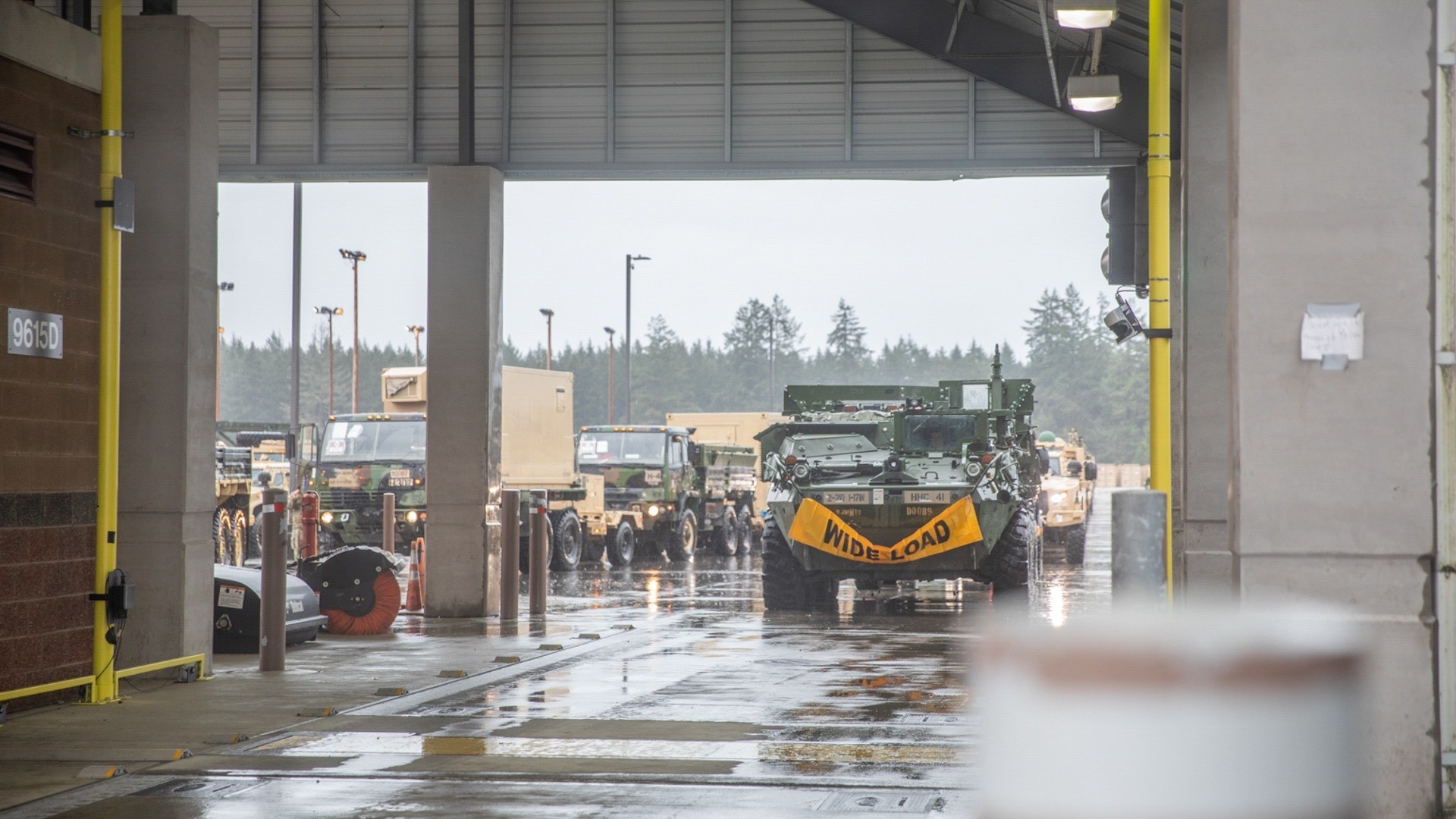
Operation Turbo Fusion was a combination of real-world deployment and sustainment operations. Think of the exercise as an umbrella for covering deployment and redeployments supporting Korea Rotational Forces 17; Operation Pathways 26-1A and 26-1B; Army preposition stock-3/Pacific Equipment Set; ammunition sustainment missions (AS66, AS67, AC68); foreign military sales (AF16); and Korea Enduring Equipment Set retrograde, closely replicating the scale and scope of a contingency by providing the rigor of dispersed, simultaneous operations over time in the Pacific Northwest and Alaska. Collectively, these missions involved multiple vessel load-outs, thousands of pieces of rolling stock, containers, and sustainment cargo moving through four strategic seaports over more than 75 consecutive days of operations. In the current strategic environment, active deterrence and force posturing across the globe require large-scale surface movements that aircraft cannot provide. Every equipment move is no longer a routine training event, but a critical stress test of the deployment enterprise.
While TF-833’s execution of Operation Turbo Fusion was a tactical success, it also exposed significant friction points that would become catastrophic fractures under the immense pressure of large-scale combat operations (LSCO). Army deployment planning factors associated with LSCO envision strategic sealift requirements approaching approximately 50 ships loaded within a 60-day period to support rapid force projection into a major theater conflict. While exact requirements vary by operational plan, this benchmark provides a useful illustration of the scale demanded by LSCO. The faster equipment gets to the forward line of troops, the more survivability is improved. To prepare for the 50-ship challenge, we must move beyond passively acknowledging lessons learned and instead act on urgent learning demands. Learning demands are the non-negotiable requirements for building a deployment process that functions at the speed of war.
Demand 1: Data Integrity at Scale
During Operation Turbo Fusion, data discrepancies were a source of constant friction. A single brigade combat team made six significant changes to the unit deployment list at the last minute, making cargo tracking nearly impossible. For perspective, the failure to receive an accurate pull from Global Air Transportation Execution System (GATES) forced the traffic management section of TF-833 to manually create more than 500 records in GATES. This was manageable, though incredibly inefficient in a small-scale operation. The manual creation of more than 500 records represented a substantial portion of the cargo processed during the operation and required personnel to divert attention from planning, synchronization, and execution activities. Additionally, this exposes the data to significant potential for human errors.
Now, imagine that if in LSCO a single operation generated over 500 manually corrected records, scaling similar error rates across a deployment effort involving roughly 50 vessels could produce tens of thousands of discrepancies requiring reconciliation. Manual data entry is not a scalable solution. In LSCO, there is no time to individually verify bumper numbers, chase down missing transportation control numbers, or correct dimensional data because a unit used estimates instead of measurements verified through the installation strategic deployment center. Data inaccuracies at that scale will lead to misloaded ships, broken unit integrity, and a fatal delay in the delivery of combat power. Beyond slowing force projection, data inaccuracies increase vessel dwell time at strategic seaports, creating lucrative targets for adversary intelligence collection, long-range fires, and cyber-enabled disruption efforts.
The learning demand: We must enforce absolute data discipline. Units must conduct recurring deployment data scrub exercises, validate equipment dimensions through installation deployment support teams, and establish commander-certified deployment data reviews before lock-in dates. Data lock-in timelines must remain sacrosanct, and automated validation tools must identify discrepancies long before cargo arrives at the port.
Demand 2: Synchronized Execution Under Pressure
Operation Turbo Fusion highlighted seams in our inter-unit coordination. Convoys arrived outside scheduled windows, and guidance regarding combat-configured equipment requirements was not consistently communicated early enough to enable efficient stow planning, forcing last-minute adjustments. This was overcome by the adaptability of port personnel. However, in LSCO, the entire deployment enterprise, from the fort to the port, becomes a target. An adversary will not give us the time to adapt to uncoordinated arrivals.
A convoy arriving late to a port during LSCO does not just disrupt a single vessel’s schedule; it creates cascading scheduling impacts across ports, railheads, marshaling areas, and vessel loading timelines. Such delays extend exposure times at critical transportation nodes, increasing opportunities for enemy surveillance, targeting, and disruption operations. When we take this to the next level, in a contested environment, we will not have the luxury and convenience of communicating via cellphone. This risk is amplified by our current technical limitations. In a contested environment, secure, redundant communication is not a luxury; it is essential for survival and synchronized execution.
The learning demand: We must institutionalize synchronized reporting procedures across all mobility echelons and resource our forward C2 nodes with the deployable Secret Internet Protocol Router Network capabilities needed for the C2 dispersed operations in a contested environment. Additionally, installation transportation offices and deployment authorities must possess the authority to delay or halt movements that fail to meet deployment standards, preventing deficiencies from compounding at the port.
Demand 3: Flawless Fundamentals and Deployment Discipline
The most frustrating friction points are often the most basic. During Operation Turbo Fusion, not-mission-capable equipment arrived without dead-tow placards, creating confusion and slowing operations. Caging bolts had been removed from equipment, forcing contractors to waste precious time sourcing and reinstalling them before the assets could be safely loaded.
This lack of basic deployment discipline is a peacetime luxury we cannot afford. When loading 50 ships in 60 days, there is zero margin for error. We will not have the time or resources to fix thousands of easily preventable mistakes. Every minute a stevedore spends trying to identify a dead-towed vehicle or searching for a missing part is a minute lost to the operational timeline. Multiplied across the force, these minor lapses create strategic delays.
The learning demand: Unit readiness is not solely measured through maintenance and tactical proficiency. Commands must conduct deployment readiness inspections, enforce command deployment discipline program standards, rehearse deployment tasks during training exercises, and establish deployment metrics that are routinely briefed alongside readiness indicators. Adherence to standards such as placarding, caging bolt accountability, and proper equipment preparation must be treated as critical readiness requirements.
Conclusion: Forging a Weapon of Global Reach
Operation Turbo Fusion was a success, but it was also a warning and an opportunity to see ourselves. The friction we experienced is a gift: a clear indicator of where our deployment enterprise will break under the strain of LSCO. Relying on the tactical agility of our Soldiers and civilians to overcome systemic failures to consistently enforce established deployment standards, regulations, and processes is not a strategy for victory against a peer adversary.
To build an Army that can project combat power to the priority theater at the speed of war, we must treat these findings as demands for immediate, decisive action. Finally, these learning demands must be communicated to units before deployment operations begin and incorporated into deployment evaluations. Establishing measurable standards and assessing unit performance against those standards will improve accountability, reinforce deployment discipline, and help institutionalize best practices across the force.
--------------------
LTC Steven Taylor is a student at the Joint and Combined Warfighting School in Norfolk, Virginia, and will attend the Army War College, Asia-Pacific Center for Security Studies Fellowship in Honolulu, Hawaii, in summer 2026. He commanded the 833rd Transportation Battalion. He previously served in various roles across the Indo-Pacific. He is a graduate of the Army Command and General Staff College on Fort Leavenworth, Kansas. He earned his commission in the Transportation Corps following his enlistment as an M1A1 Abrams tank armor crewman.
MAJ Kristen Bell serves as the S-3 at the 833rd Transportation Battalion. As the operations officer, she was the lead officer in charge during Operation Turbo Fusion, leading her team of Soldiers and Army civilians through more than 75 days of operations at four strategic seaports across the Pacific Northwest and Alaska. She previously served in a variety of positions, serving in U.S. Army Alaska, 7th Transportation Brigade (Expeditionary), and the U.S. Army Combined Arms Support Command. She holds a master’s degree in supply chain management from Virginia Commonwealth University. She holds a U.S. Coast Guard Third Mate Unlimited Tonnage license.
--------------------
This article was published in the summer 2026 edition of Army Sustainment Professional Bulletin.
RELATED LINKS
Army Sustainment on Line of Departure
---------------------------------------------------------------------------------------------
Social Sharing