


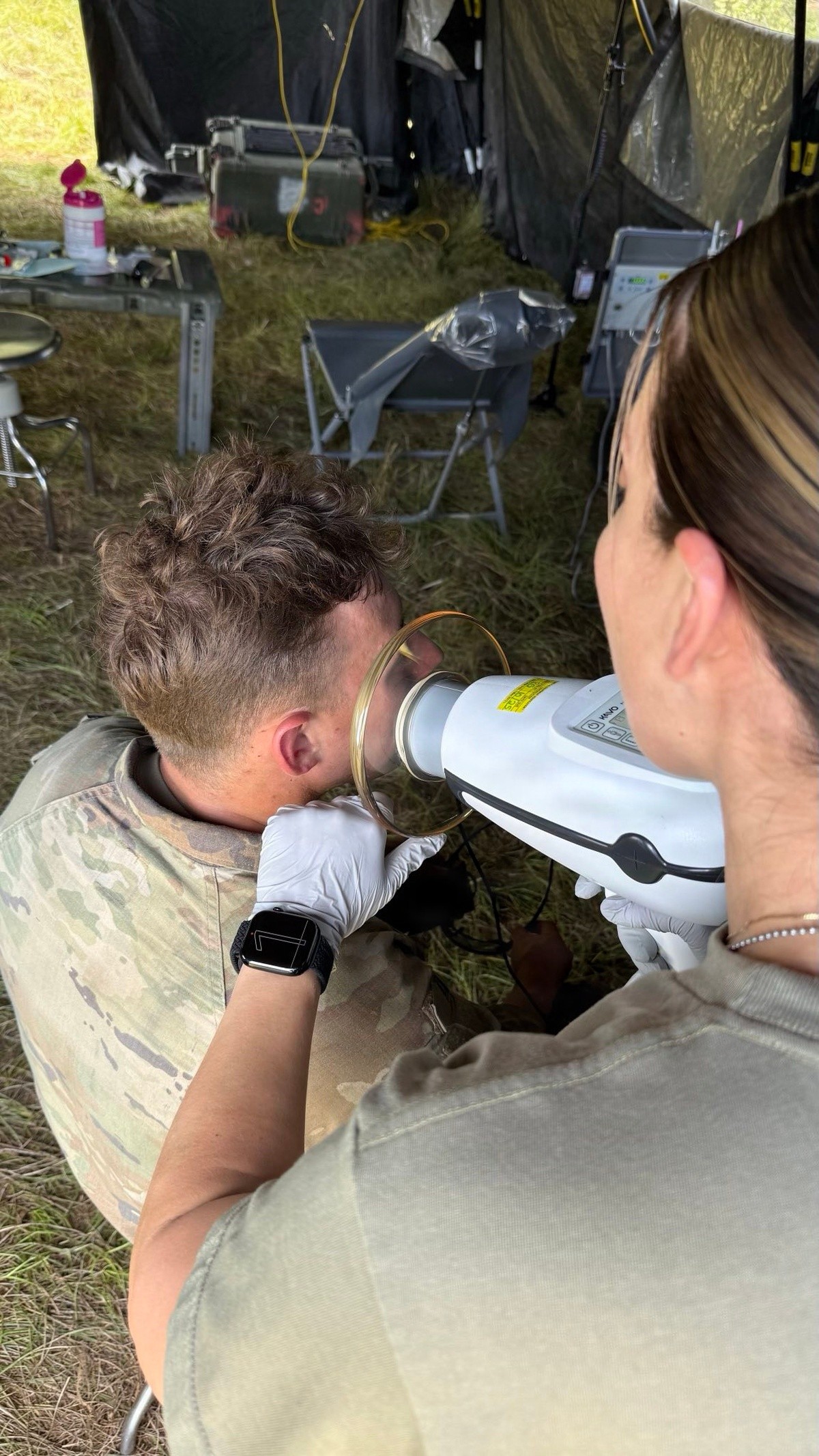
Army dentistry must strategically adapt to the unique challenges that austere environments present. Dental teams must provide agile dental care to ensure the health and readiness of Soldiers deployed in dispersed or contested locations. Consequently, leaders must equip dental teams with portable equipment and streamlined protocols that enable them to deliver both effective and expeditious care. This agility would allow dental providers to manage dental emergencies immediately while simultaneously implementing preventive measures to eliminate potential issues before they escalate. When Army Dentistry embraces innovative strategies and mobile dental solutions, it enhances force resilience and ensures commanders maintain Soldiers in mission-ready status despite unpredictable conditions in both garrison and theater environments. This proactive approach will sustain operational effectiveness and support the overall health and well-being of military personnel.
Historical trends since World War II have proven the burden caused by dental emergencies. Between November 1942 to November 1943, over 650,000 dental patients were seen by U.S. Army Dentists in Europe. During the Vietnam War, numerous reports showed how dental issues impacted combat effectiveness, often preventing Soldiers from performing their essential duties for up to a week. In Operation Inherent Resolve, medical evacuations (MEDEVACs) due to dental disease and nonbattle injuries were as high as 16%. Dental Readiness Classification 1 (DRC1) Soldiers have no remaining dental treatment needed, whereas those in Dental Readiness Classification 2 (DRC2) have pending treatment needs that are non-urgent. Between 2009and 2023, Soldiers who were DRC1 and DRC2 actually accounted for 70% of dental emergencies. A closer look at Ukrainian dental emergencies since February 2022 shows that oral surgery was the primary treatment in 63% of encounters. This was likely due to inconsistent dental care from the civilian population that was rapidly mobilized. With the shift to large-scale combat operations and subsequent restrictions for MEDEVACs, Role 2 must be capable of addressing any emergencies that lie within its scope.
During residency training, the first exposure to operational dentistry and mentors were from an experienced U.S. special operations forces (SOF) dental team that had conducted recent expeditionary dental missions. They proved the demand, productivity, and practicality that functional mobile dental platforms provide to deployed units.
With just one year of active-duty experience as a dental resident and no time in an operational unit, I reported to the 703rd Brigade Support Battalion (703rd BSB), 2nd Armored Brigade Combat Team (2 ABCT), in August 2025. Within a few weeks, I found myself thrusted into a joint field training exercise (FTX) in September, while planning for my unit’s own FTX in October. Surprisingly, leadership held little expectations or requirements for field dentistry. In recent years, the unit had not used operational dental equipment to deliver treatment at FTXs. Although time was limited, this presented the ideal opportunity for the dental team to leverage, test, and improve capabilities. Any success highlighting our operational dental ability would better prepare the unit for future training and deployments.
The Army Dental Corps defines its mission as follows: “delivering global dental services to enable sustained readiness of the Total Force.” Through collaboration with the Fort Stewart Dental Health Activity (DENTAC) and strong support from unit leadership, the dental team safely conducted patient care in the field, maximized training opportunities, and showcased future possibilities. This article discusses each phase as part of a process, which may serve as a starting framework for integrating consistent dental support into Army operations.
Planning
The previous brigade (BDE) dentist, experienced mentors, and continuing education resources guided me in this new process. I attended BDE medical synchronization meetings to achieve a better understanding of medical logistics within the unit, contacted the medical officers and platoon sergeants of each battalion, and gained Medical Protection System (MEDPROS) access, which allowed me to identify Soldiers in need of dental exams. DRC4 Soldiers require an updated dental exam and are non-deployable.
A partnership with Fort Stewart DENTAC was developed early in the process. Communicating my limitations with the DENTAC dental liaison was an essential part in achieving the goals for the FTX. Upon my request, the Fort Stewart DENTAC provided essential supply items, which enabled field dental examinations and the delivery of emergent dental care. Moreover, the DENTAC suggested utilizing additional 68E Dental Specialists and 68EX2 Preventative Dentistry Specialists in the field to augment our expeditionary capabilities while providing valuable training experience.
Not-mission-capable (NMC) equipment and absence of Class VIII supplies were the main limitations for field dental care. The unit had not used the field dental equipment in nearly a year, since 2 ABCT’s previous rotation to Europe. The sterilizer and dental operating unit, both critical for any long-term dental capabilities, were NMC. Moreover, alternative sterilization methods were discouraged. The solution was to use single-use instruments. Furthermore, the team located a backup portable dental operating unit, the Aseptico Transport II. Not providing dental care was not an option.
The goals of the 703rd BSB commander were combined with the preventative dental approach of the DENTAC commander. Therefore, we established the following objectives for the FTX: (1) confirm examination and radiographic capabilities; (2) conduct field dental examinations to increase unit dental readiness; (3) conduct at least one day of mobile dental care operations to identify capability gaps; and (4) enable 68E personnel to achieve proficiency in their individual critical task lists (ICTLs).
Preparing
The dental team organized preparation into two broad capability categories: readiness examinations and operational care. Preparing for readiness examinations required obtaining and updating a laptop that could access patient charting and capture radiographs in the field. Winn Army Community Hospital Information Management Division and their technical contacts installed the local version of the Apteryx XrayVision software onto the government laptop. This configuration allowed the dental team to store images captured in the field without virtual private network (VPN) access. The images would later be forwarded to XrayVision with a single click once network connectivity was re-established. The team conducted a successful validation test to ensure the sensor and software could acquire, display, and upload images to the patient charts offline.
Preparing for operational care can be overwhelming, but the team identified the essentials necessary for routine and minor emergency care, tracked shortages, and relayed that information to the dental liaison. The BDE 68Es introduced me to the field equipment. Between 2 ABCT and DENTAC resources, we successfully packed the equipment and supplies needed for field dental examinations and minor emergency treatment.
By accessing MEDPROS, the team obtained lists of Soldiers from every battalion who required annual dental examinations. Subsequently, the lists were forwarded to the medical officers/leadership asking for Soldier availability to address their needs. A flexible patient care schedule was established in the field to align with the training rhythm. The dental team sustained ongoing communication with the medical officers and their platoon sergeants throughout the execution phase.
Executing
The hospital facilitated transportation between the ambulance exchange point (AXP) to and from the rear. Charlie Company (C Co) allocated personnel, time, and vehicles to transport DENTAC personnel to and from the designated AXP and Role 2 each day. Additionally, C Co leadership coordinated with other company commanders to send their Soldiers to the Role 2 for dental examinations.
With a total of 44 patient encounters, 40 of whom received periodic examinations, the dental team removed Soldiers from or prevented them from entering DRC4, or non-deployable status. All objectives established in the planning phase were met. The team practiced preventative dentistry and educated patients in oral hygiene and nutrition, which were tailored toward field conditions. The BDE 68E as well as other motivated DENTAC 68EX2s and 68Es proactively educated fellow Soldiers on healthy habits. The team also triaged and treated several minor dental emergencies, including desensitizing agent and a temporary filling to address one Soldier’s tooth pain. That Soldier was then able to participate with his unit’s water training exercise symptom-free and without a MEDEVAC to the rear.
Four dentists, two 68EX2s, and eight 68Es from the DENTAC participated. They were introduced to the Role 2 setting and field environment, experiences they might not otherwise encounter during their careers. The providers obtained exposure to field dental care and its associated challenges. The 68E/68EX2s familiarized themselves with field equipment and provided hands-on clinical assistance, while completing their ICTL field requirements. The BDE 68E and I (the BDE dentist) remained for the FTX’s duration, prepared to address any last-minute patients or sick calls.
The dental team successfully conducted examinations for one day at another battalion’s Role 1 tent, further confirming limited mobile capability. Items packed consisted of one supply case, the dental unit, and a government laptop. We utilized a standing litter as the dental chair, completed set up within a few minutes, and began patient processing. The Aseptico dental unit required a sufficient power source for operation, such as a Light Medium Tactical Vehicle, as opposed to the smaller sources typically used at Role 1. Another challenge involved laptop connectivity issues with the VPN via Starlink throughout the field environment. The team adapted by using paper charts, which were later transcribed onto the integrated dental software in a timely manner with the support of the other brigade 68E in the rear. The team properly documented all vitals, patient notes, and radiographs, as if they were completed inside the garrison dental clinic.
Despite constrained timelines, capability gaps, and competing training priorities, the dental team achieved the established objectives for the 2 ABCT field exercise. This success resulted substantially from the unit leadership supporting and trusting the team’s vision as their dental provider and the partnership with the local DENTAC to overcome the deficiencies. This achievement demonstrated the potential of the BDE dental team as an asset deserving the resourcing and modernization required for future training and deployment scenarios. As observed in recent SOF dental missions, these platforms provide preventative, routine, and emergency care to our Soldiers, reducing the logistical burden to provide evacuation or outsource dental care to the local economies.
Expanding BDE dental capabilities will directly enhance Soldier readiness, while saving thousands of dollars in transportation and additional procedure costs. Extended training exercises will no longer prevent access to dental care. Although numerous improvements are required, a small investment in modernizing the dental platform can transform field exercises into opportunities to improve unit readiness and provide practical experience to the BDE dental team while identifying operational capability gaps. Continued recognition of dental services as an operational asset in field environments will directly benefit both the dental teams and unit effectiveness.
--------------------
LTC Mike Sanford serves as the commander of 703rd Brigade Support Battalion, 2nd Armored Brigade Combat Team, 3rd Infantry Division, at Fort Stewart, Georgia. He previously served as the strategic planner to the Secretary of the Army and the executive assistant to the Joint Staff J-4 director. He also served as a brigade S-3 and battalion executive officer in the 82nd Airborne Division. He was commissioned as a lieutenant in the Transportation Corps in 2008. He earned a Master of Science degree in logistics management from Florida Institute of Technology and a Master of Public Policy degree from Georgetown University.
CPT Becky Lee serves as the brigade dentist of the 2nd Armored Brigade Combat Team at Fort Stewart, Georgia. She was a Health Professions Scholarship recipient and direct commissioned as a second lieutenant in 2020. She completed the one-year Army Advanced Education in General Dentistry program on Fort Sill, Oklahoma. She earned a Doctor of Dental Medicine degree from the University of New England.
--------------------
This article was published in the summer 2026 edition of Army Sustainment Professional Bulletin.
RELATED LINKS
Army Sustainment on Line of Departure
--------------------------------------------------------------------------------------------
Social Sharing