
SCHOFIELD BARRACKS, Hawaii — The 25th Infantry Division, with its missions spanning the vast Indo-pacific region, is adopting more agile, secure and safe methods of protecting its battlefield communications.
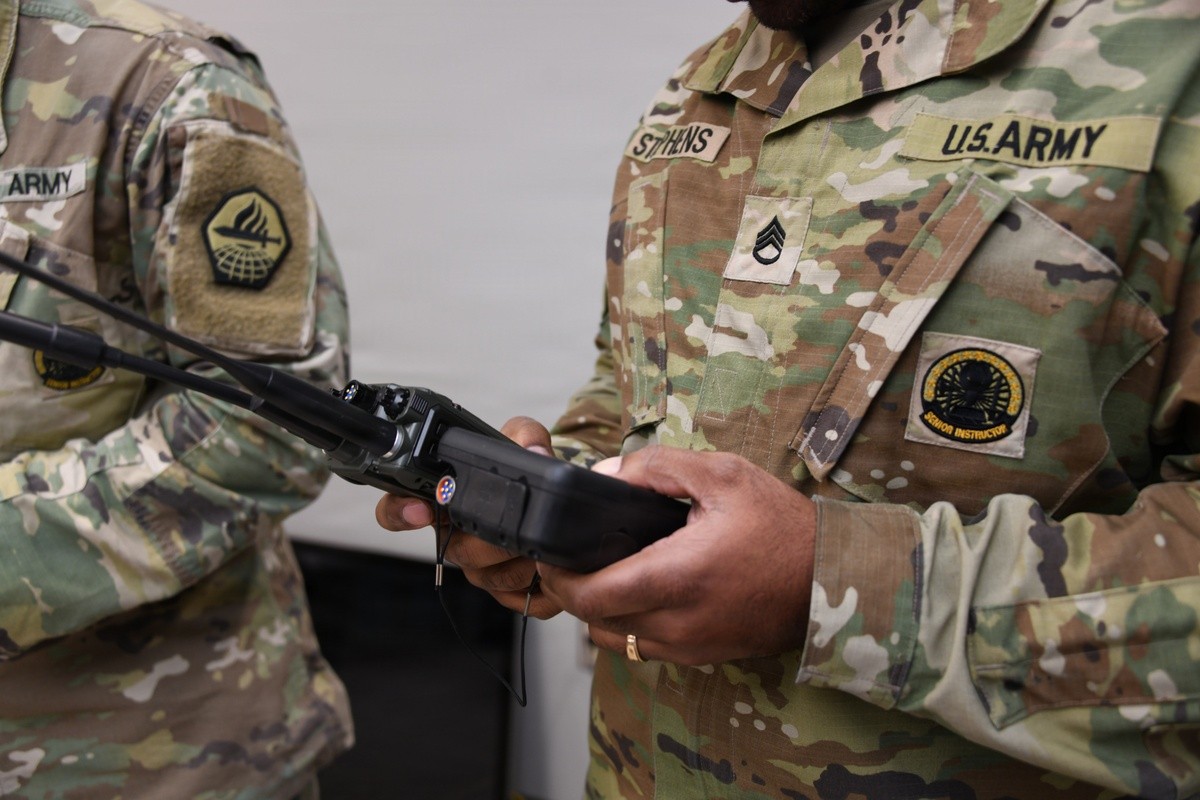
In line with the U.S. Army’s communications security modernization effort, the division is moving away from decades-old practices of physically loading electronic “keys” — the essential data needed to secure critical battlefield communications and decrypt vital intelligence — onto a legacy key fill device for hand delivery and instead turning to over-the-network key delivery.
“Personnel travelling with a key fill device — often at great distances — faced risks to themselves and the devices, especially if the delivery led them through contested environments,” said Derek Harberts, COMSEC product manager, under Capability Program Executive Command and Control Information Network.
As it conducts the U.S. Army Pacific’s Operation Pathways training engagements this year in Southeast Asia, the 25th ID is leveraging the Intermediary Application, or iApp, software. iApp utilizes certified means to distribute cryptographic keys as data across world-wide networks, enabling geographically dispersed COMSEC personnel to request, receive and manage cryptographic keys.
Following an initial assessment with its 3rd Mobile Brigade Combat Team during the Joint Multinational Pacific Readiness Command 26-01 rotation last November, division COMSEC and signal operations leaders see iApp as an ideal option for managing its COMSEC across remote, disconnected operating environments, unable to connect to the enterprise network.
A COMSEC manager pre-loads the necessary keys onto the iApp server to allow the software to act as a secure, forward-deployed digital key locker.

“This capability has proven critical in support of our Philippines exercises this spring and summer,” said Lt. Col. Adam Brinkman, 25th ID G-6. “There have been multiple times unforeseen or additional COMSEC requirements have arisen, and the team is able to support in austere locations with use of a [secret internet protocol router network] laptop to obtain COMSEC data in near real-time.”
“Previously, legacy handheld devices could take up to a week for the needed COMSEC personnel to reach our destination,” he said.
In addition to protecting the physical safety of COMSEC personnel, key fill devices can get corrupted, either by physically mishandling them or not adhering to all key management procedures, Brinkman noted.
While iApp performs well in the 25th ID’s remote areas of operation, not all its battlefield situations are the same. Command and control nodes connected to a stable, high-bandwidth network can conduct COMSEC key management using modern in-line network encryptors that are key management infrastructure-aware.
“Think of it as choosing the right tool for the right environment,” Harberts said. “Both are part of the same modernization strategy, but they solve different problems.”
KMI is a National Security Agency-led program responsible for generation and initial distribution of all COMSEC key material. It supports combatant commands, joint services, DoW agencies, federal agencies and coalition partners and allies. Receiving keys directly from the KMI web-based storefront, hosted by the NSA, eliminates the risk of key exposure while in the field.
Prior to its JPMRC 26-01 event, the 25th ID G-6 staff enabled all its COMSEC key devices to become KMI-aware, citing the additional enhancements of modern high-speed voice, data and video communications security capabilities.
Now, with both iApp and KMI-aware devices inserted into their operations, the division can choose the best method for key delivery based on location, operational environment, and network stability, with iApp providing the most speed and flexibility at the tactical edge.
“Since iApp is server based and accessible via the tactical network, it eliminates the need to access the KMI storefront for every transaction,” Harberts said. “However, the unit’s existing KMI-aware devices will provide connected networks with the most efficient and automated path, requiring the least human intervention.”
“It’s all about reducing risks across the architecture while increasing capabilities for the commander,” he said.
Social Sharing