
ROCK ISLAND ARSENAL, Ill. – Army Field Support Battalion–Riley and AFSBn–Lewis were recently recognized with the Chief of Staff of the Army’s Deployment Excellence Award for outstanding performance in deployment operations. The award highlights units that set the standard in efficiency, safety, and readiness across the force.
The DEA honors top performers in four mission‑critical areas - maintenance, deployment operations, food service, and supply - reflecting the essential functions that keep the Army moving. It showcases organizations that consistently deliver excellence behind the scenes.
Deployment operations, in particular, demand precision, planning, and deep expertise. Much of this work happens out of sight, but it is vital to sustaining the Army’s ability to respond when and where needed. The award recognizes the units whose professionalism and attention to detail ensure that equipment, people, and capabilities arrive exactly where they’re required.
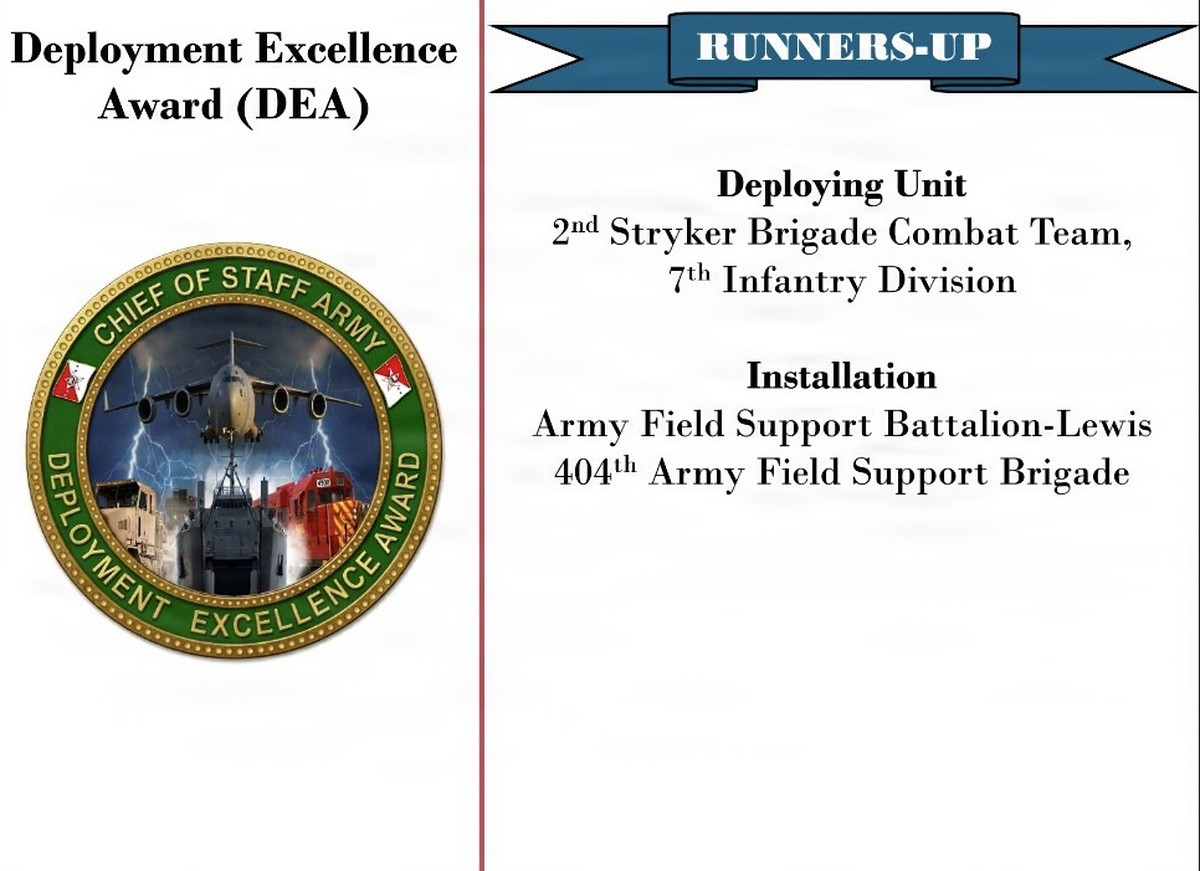
AFSBn-Riley was recognized as the winner in the installation category of the Deployment Excellence Award, with AFSBn-Lewis being the runner-up. Their achievement highlights the strength of unity, training, readiness, teamwork, and efficiency within the Army. Both were recognized virtually at an awards ceremony on May 6, 2026.
Both battalions fall under U.S. Army Sustainment Command, which ensures Soldiers receive the equipment they need - whether it’s uniforms or vehicles - anywhere in the world. ASC drives sustainment, materiel readiness, and logistics support, including the meticulous preparation at home station required for deployment. AFSBn-Riley is located at Fort Riley, Kansas, while AFSBn-Lewis operates out of Joint Base Lewis-McChord, Washington.
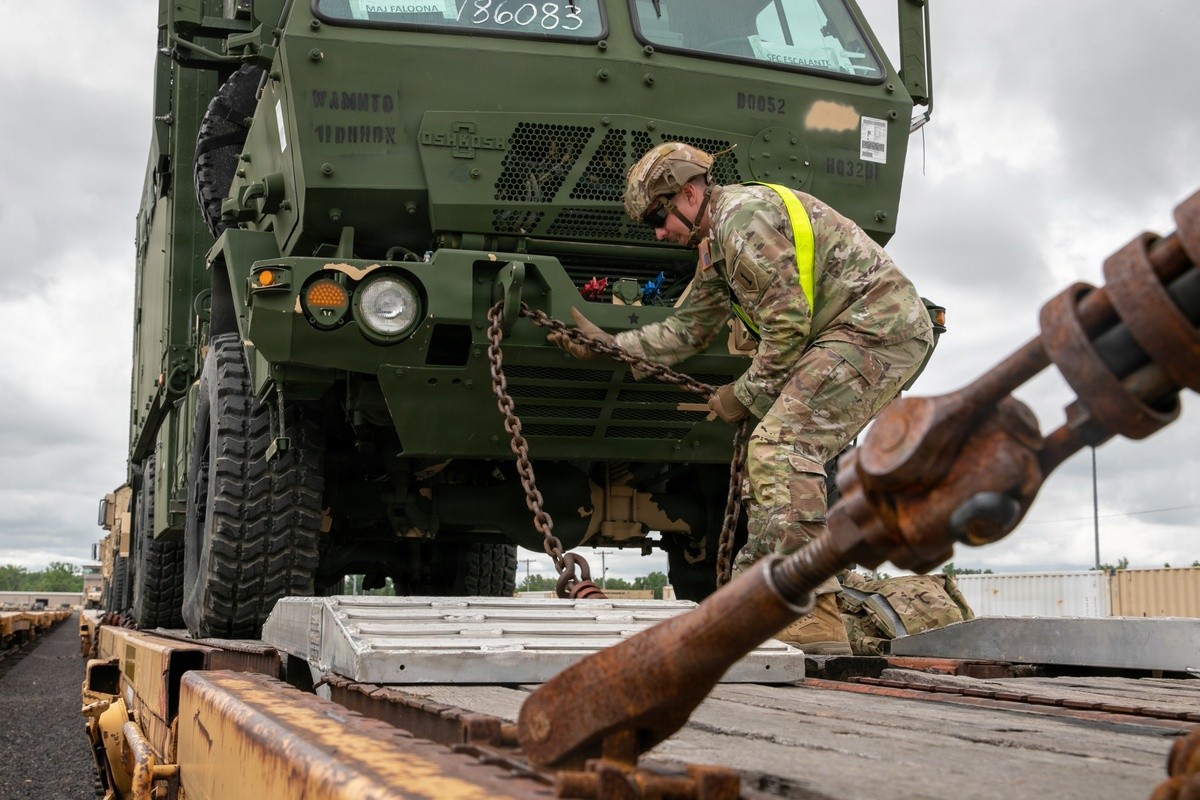
AFSBn-Riley won by supporting nearly a dozen brigade-level, half a dozen battalion-level, and more than two dozen company-level deployments and redeployments across the U.S. European Command and U.S. Central Command within the last year. This heavy workload utilized all methods of transportation – rail, vessel, commercial truck, contracted aircraft, and strategic airlift. Moving a tank from the U.S. to Europe looks very different from moving ammunition across state lines, and many items travel through multiple transportation modes before reaching their destination. Ensuring safety and efficiency in every move is key to protecting people, equipment, and readiness.
To strengthen deployment expertise across the formation, AFSBn–Riley leaders identified gaps in unit movement, HAZMAT certification, and container control. They addressed these shortfalls through a focused three‑day training session in their deployment facility, improving proficiency and ensuring future movements run smoothly.
“We thought it would translate into a smoother deployment process,” explained Lt. Col. Malcolm J. Wilson III, AFSBn-Riley’s commander. “The units who were able to fit these training sessions into their training schedule were better able to develop accurate unit deployment lists, better prepare their unit-owned international organization for standardization equipment for shipment, and equipped to pass the Coast Guard’s HAZMAT inspections.”
In addition, AFSBn-Riley improved the deployment process by inspecting and sealing units’ shipping containers early - right in their motor pool before anything moved to the rail yard. This allowed them to finish weighing and processing containers before vehicles arrived, which prevented holdups at the inspection point and gave the battalion a final chance to coach units on load security and paperwork so everything was correct before movement began.
Through the targeted training and process improvements, AFSBn-Riley accelerated deployment timelines and made movements smoother, enabling the battalion to safely and effectively execute a high volume of missions in a short period.
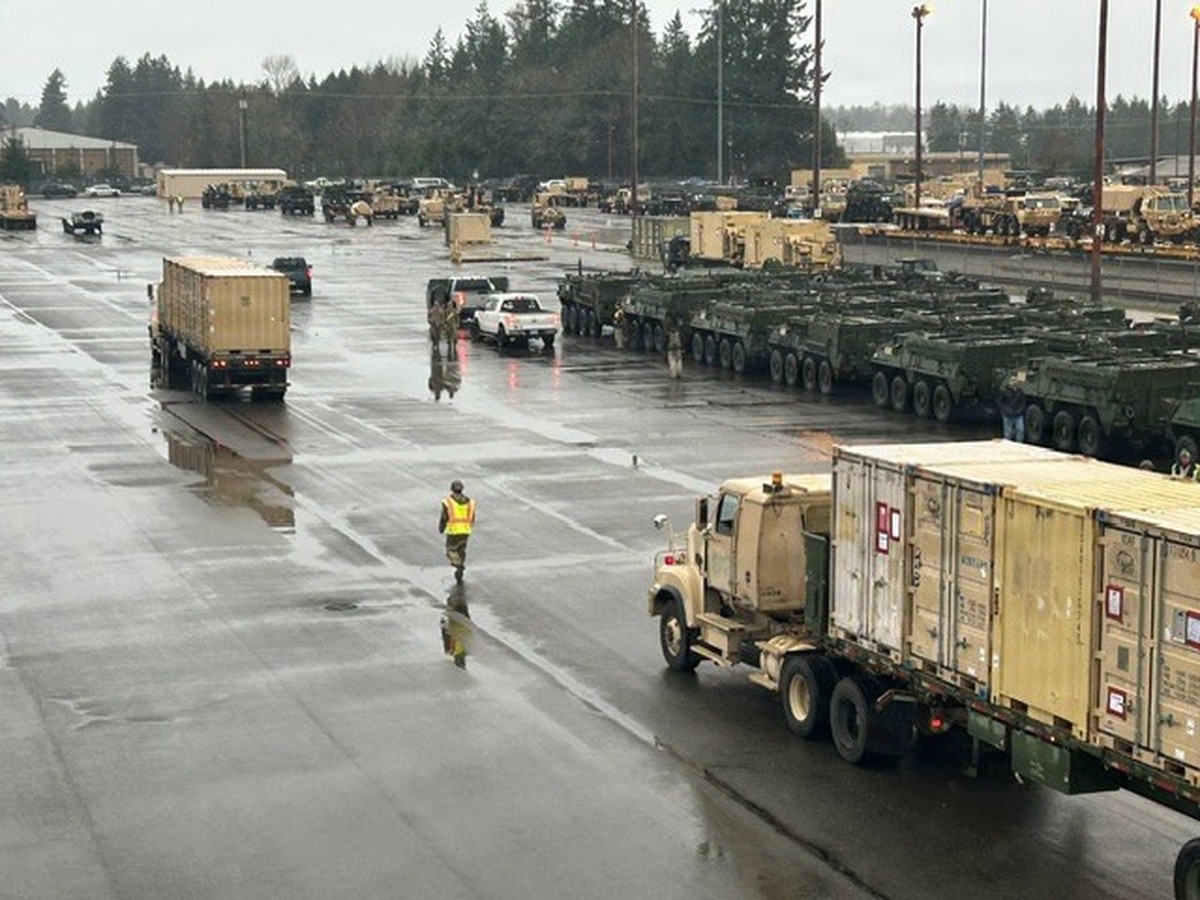
AFSBn-Lewis also had an impressive year. They supported four major deployments between October 2025 and April 2026 and enhanced learning through unit movement conferences with supported units. Additionally, classes on rail operations, transportation inspection points and scales, and pallet building helped make the processes faster and safer for everyone involved.
Their biggest move was the Korean Rotational Force, which required multiple transport methods to move nearly 2,900 pieces of equipment across the ocean. They’ll have another brigade rotation in Korea for fiscal year 2028 and hope to build on the strong foundation they already have for that movement and other deployments.
“Continuous growth is always happening,” said Joseph DeBlois, chief of the installation transportation division at AFSBn-Lewis. “We have units deploying and redeploying for worldwide deployments and exercises every month. We host movement conferences with every unit prior to them starting their operations and hold after action reviews to capture lessons learned and improve us and the units.”
DeBlois said they always stick to a set timeline for moving equipment through the Strategic Deployment Center, which helps avoid bottlenecking and sets expectations for when equipment will go through each part of the process. Sometimes, there are multiple movements going on at the same time in order to keep things moving at the targeted pace. Through training and communication, equipment gets loaded safely and on schedule.
Both battalions have forged a strong bond and coordination with their supported units. Investing in training and safety has improved current operations and set future ones up for success. From here, both battalions hope to set an even higher standard for logistics, readiness and safety.
Social Sharing