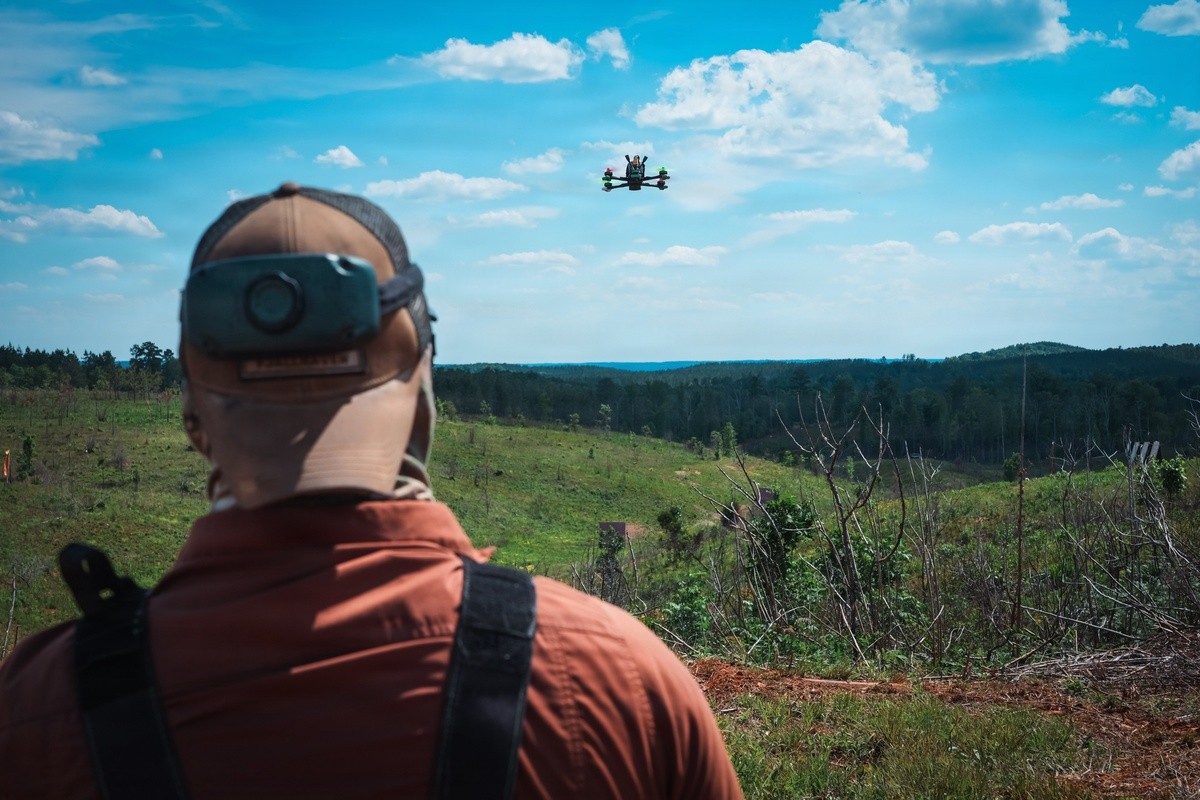
assigned to 1st Special Forces Command (Airborne) pilots
a UAV at a counter- drone range in Ellerbe, North
Carolina, May 5, 2026. This range was conducted to test
Soldiers on precise execution of UAVs targets in vast
combat areas. (U.S. Army photo by Ssg. Gabriel E. Davis) View original
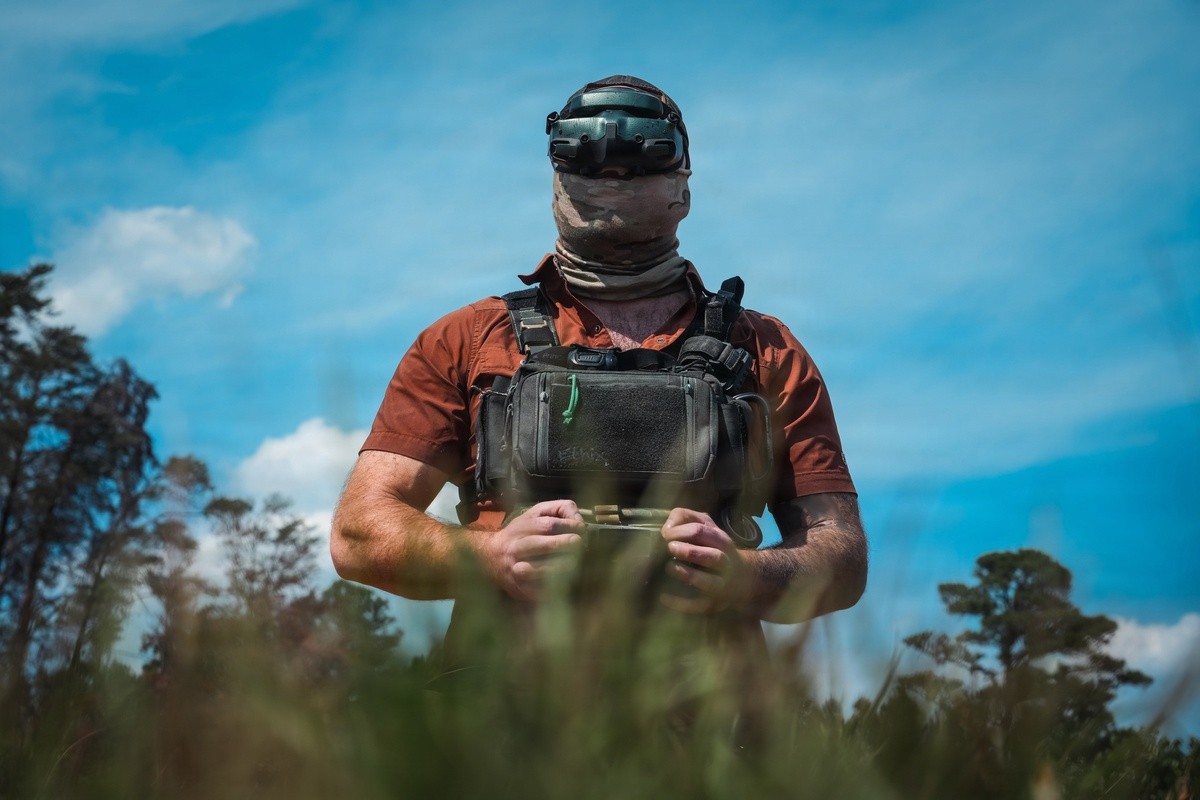
assigned to 1st Special Forces Command (Airborne) pilots
a UAV at a counter-drone range in Ellerbe, North Carolina,
May 5, 2026. UAV flight equipment consists of a drone, a
radio controller, a wireless transceiver, and First Person
View (FPV) goggles. This photo has been altered to
protect the identity of the operator. (U.S. Army photo by
Ssg. Gabriel E. Davis) View original
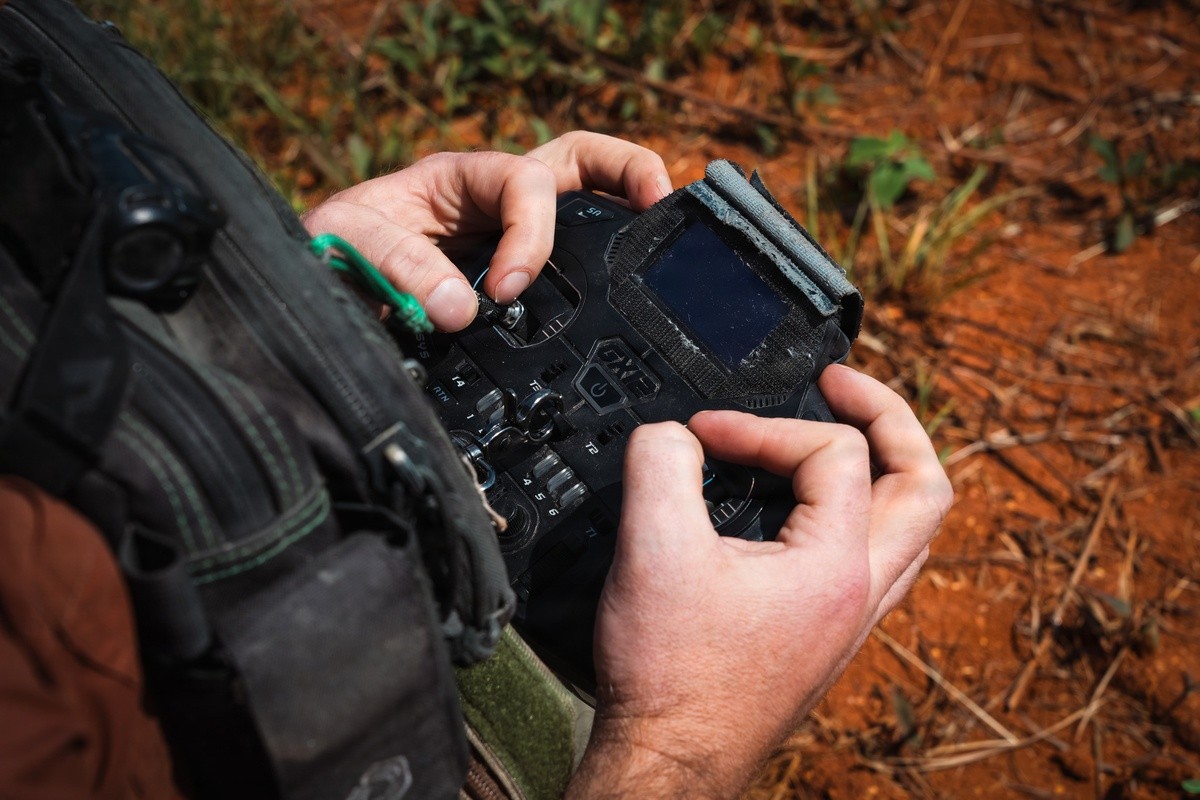
assigned to 1st Special Forces Command (Airborne) pilots
a UAV at a range in Ellerbe, North Carolina, May 5, 2026.
The remote control is used to send flight commands to the
UAV through radio frequencies. (U.S. Army photo by Ssg.
Gabriel E. Davis) View original
FORT BRAGG, N.C. - The war in Ukraine has revealed why a shift in counter‑unmanned aerial system (c-UAS) training is necessary. The widespread use of First-Person View (FPV) drones has shown how quickly unmanned aerial systems (UAS) can overwhelm traditional defenses. These lessons reinforced the U.S. Army’s need for adaptable, scalable c-UAS tools that Soldiers can employ immediately, without waiting years for new systems to reach the field.
The question at the forefront of leaders’ discussions on c-UAS is clear: How can Soldiers best protect themselves and the formation?
The Fort Bragg Joint Innovation Outpost (JIOP) answered this question by serving as a bridge between the private sector and the tactical edge. Through the JIOP’s collaborative ecosystem with industry and academia, a low-cost solution that uses legacy Army weaponry was presented by industry partners to iterate and test alongside Soldiers. Rather than investing resources into creating entirely new capabilities, the Army could leverage proven, readily available organic weaponry already within its arsenal.
"Our primary goal is to bypass traditional, years-long procurement cycles and put effective solutions into the hands of our Soldiers immediately," said Col. Thomas Monaghan, director of the JIOP. "By validating these commercially available and legacy systems in a tactical environment, we can scale cost-effective capabilities across the force and flip the acquisition cost curve back in our favor."
Soldiers assigned to the Army Marksmanship Unit, 1st Special Forces Command and the 82nd Airborne Division conducted an anti‑drone training and data‑collection exercise at a local range near Fort Bragg, North Carolina from May 5–7, 2026. They sharpened their anti‑drone targeting skills using standardized Army weaponry, focusing on engaging both surveillance and weaponized drones.
A key objective of the event was to gather data on the effectiveness of various ammunition types against FPV drones traveling at speeds exceeding 40 miles per hour. By pursuing specialized kinetic solutions, the U.S. Army is acquiring cost-effective, scalable solutions that put the economic advantage back in their favor.

Special Forces Command (Airborne) stage piloting
equipment in preparation for a counter-drone
demonstration at a range in Ellerbe, North Carolina, May
5, 2026. Unmanned Aerial System (UAS) flight equipment consists of a UAV, a radio
controller, a wireless transceiver, and First Person View (FPV) goggles. (U.S.
Army photo by Ssg. Gabriel E. Davis) View original
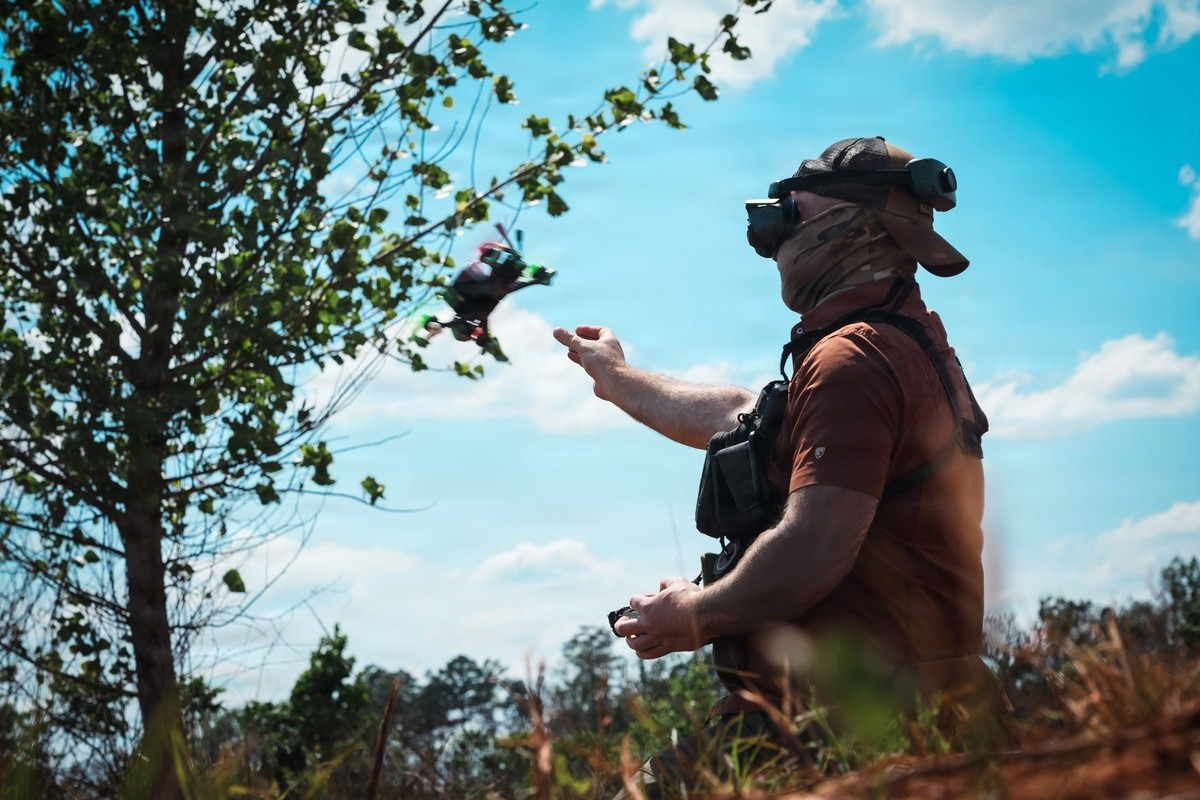
assigned to 1st Special Forces Command (Airborne)
releases a UAV for a flight demonstration at a counter-
drone range in Ellerbe, North Carolina, May 5, 2026. UAVs
are flown using First Person View (FPV) goggles to see
real-time, immersive video feed from the drone's internal
camera. This photo has been altered to protect the identity
of the operator. (U.S. Army photo by Ssg. Gabriel E.
Davis) View original
The C5ISR International Technology Integrators, working in partnership with the JIOP, oversaw the data collection and performance evaluations, while the range provided a flexible and realistic live-fire testing site. Leveraging its rapid-acquisition framework, the JIOP helps close the gap between commercial developers and tactical end users.
"Here at the Joint Innovation Outpost, we’re building a layered defensive‑fires framework for division and corps formations: integrating sensors and counter‑UAS technologies at scale,” said Lt. Gen. Greg Anderson, commander of the XVIII Airborne Corps. “Alongside industry partners, we’re testing everything from drone‑on‑drone interceptors and frangible close‑range munitions to electronic attack systems that break control links.”
In addition to live FPV drone engagements, Soldiers practiced marksmanship and tracking using clay pigeons and paper targets. These varied target types simulated different movement patterns and engagement scenarios to enhance overall proficiency.
For Soldiers on the ground, adaptable, low‑cost weaponry directly addresses the asymmetric cost curve of modern warfare. The JIOP aims to validate its rapid‑iteration model during this event: taking an urgent requirement, executing live‑environment tactical testing within months rather than years, and closing the feedback loop in real time.
“These capabilities are being tested, refined and trained here,” said Anderson. “As our forward‑deployed forces continue defeating drones in real operations, we’re adapting our training infrastructure and updating doctrine to match what we’re learning in real time.”
As the Army adapts to a battlefield transformed by fast‑evolving drones, efforts like the JIOP’s c-UAS testing show how quickly the force is learning and responding. By pairing real‑world lessons with rapid experimentation, the XVIII Airborne Corps ensures it can counter emerging threats without being outpaced or outspent, strengthening both readiness and resilience across the formation.
Social Sharing