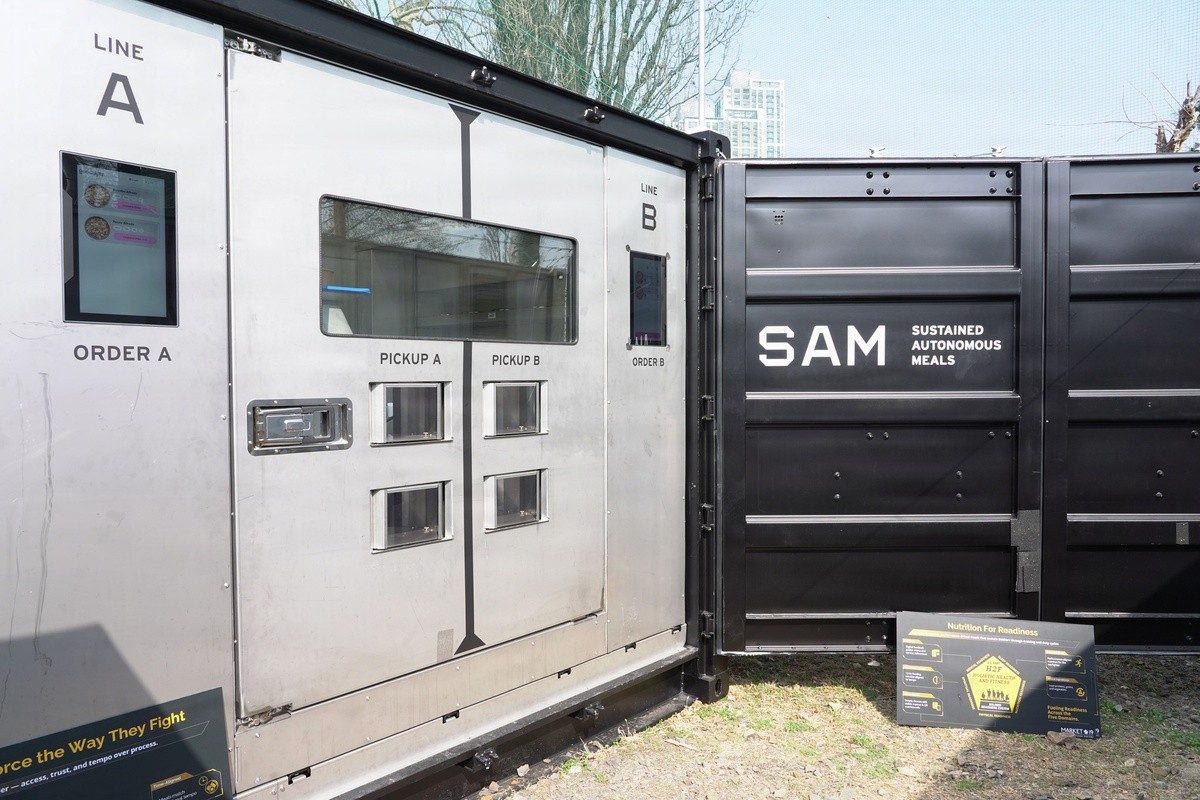
CAMP WALKER, Republic of Korea — Innovation in motion! Building on the success of its autonomous dining facility, Market 19, the 19th Expeditionary Sustainment Command is now testing a mobile version of the system that extends access to fresh, hot meals for Soldiers operating beyond the garrison environment.
The Sustained Autonomous Meals, or SAM, is a containerized extension of the Market 19 concept, designed to deliver on-demand meals in field environments, improving both operational flexibility and Soldier quality of life.
“This is essentially the same autonomous cooking system, but now in a 20-foot container that can go where dining facilities can’t,” said U.S. Army Chief Warrant Officer 3 River Mitchell, food advisor, 19th Expeditionary Sustainment Command. “It allows us to bring freshly prepared meals directly to Soldiers, even in austere locations.”
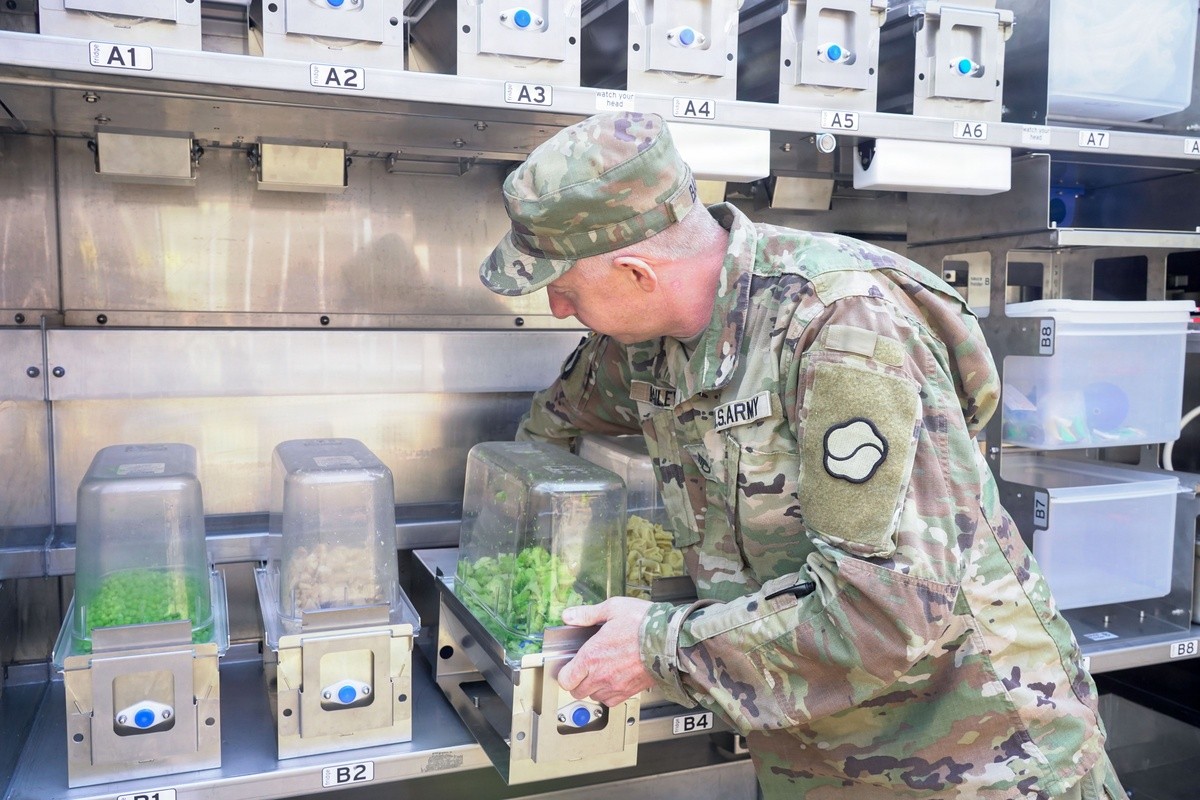

Unlike traditional field feeding methods that rely on scheduled meal times or pre-packaged rations, the containerized system prepares meals to order using fresh ingredients. Soldiers can access hot meals based on their operational schedule, rather than being limited to fixed dining times.
“I think the biggest value is that we’re driving bottom-up innovation and transforming at the speed of industry,” Mitchell said. “We’re not waiting on long development cycles - we’re testing, learning, and improving in real time.”
The system is capable of producing over 120 meals per hour and can operate continuously with minimal personnel, requiring only a small team for ingredient preparation and oversight. Its mobility allows it to support a wide range of missions, from port operations to large-scale exercises and forward-deployed environments.
For Soldiers training on the system, the impact is already clear.
“It’s amazing. It’s going to be a change in the future for us,” said U.S. Army Staff Sgt. Darren Bailey, the noncommissioned officer in charge of Market 19. “I think the robot is going to be a great asset to us and really change the culture for 92 gulfs, our culinary specialists.”
Inside the container, two robotic arms prepare and plate meals while a built-in holding system keeps food at temperature, allowing for rapid service during high-demand periods. The system can store multiple completed meals while continuing to cook additional orders, increasing efficiency without sacrificing quality.

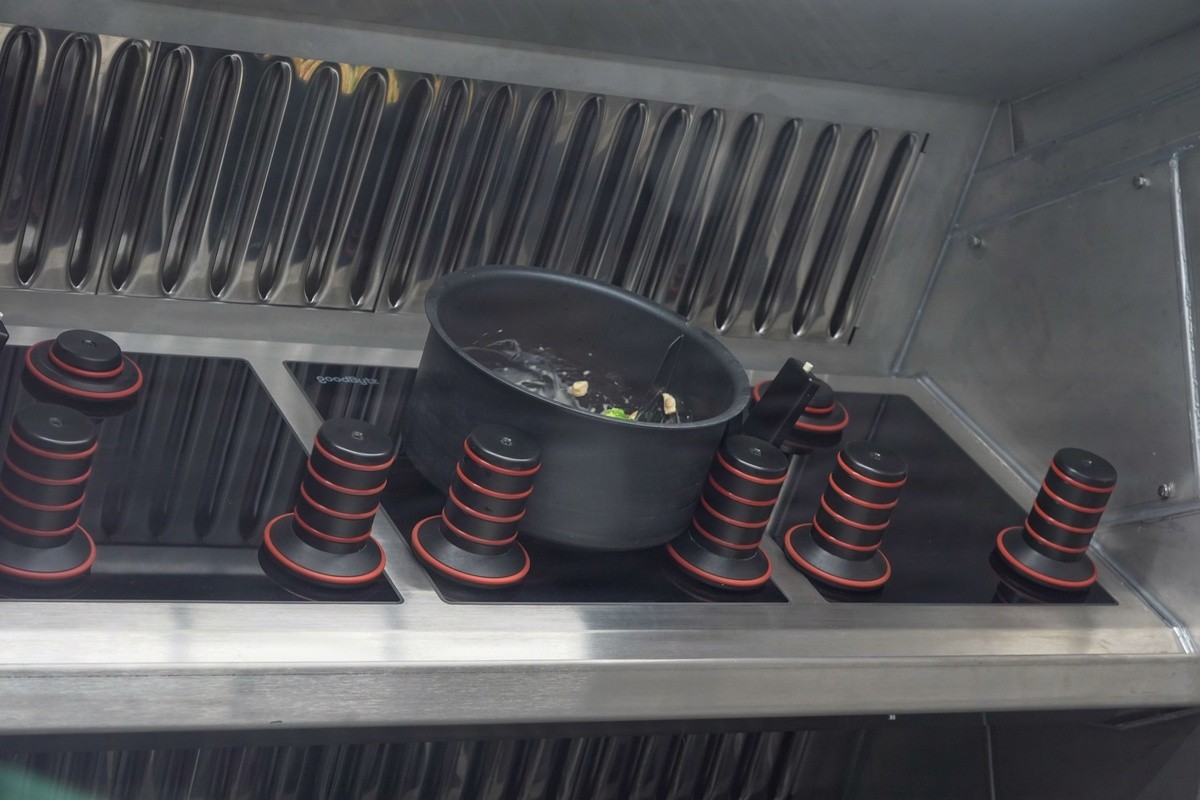
Beyond convenience, the containerized kitchen supports broader Army modernization efforts by integrating commercial technology into sustainment operations. This approach reflects a shift toward faster innovation and adaptability in the field that senior Army leaders have emphasized.
The system also directly contributes to Soldier readiness by improving access to nutritious meals. Compared to traditional mass-prepared field feeding, freshly made meals better support performance and recovery in demanding environments.
For units operating in remote or resource-constrained areas, the impact can be significant. With less hands needed for cooking, smaller teams of culinary specialists can feed an entire company. The containerized system gives commanders an additional option to sustain their formations, reducing reliance on pre-packaged meals and expanding access to fresh food.
“The data we collect here will guide decisions about future locations and applications,” Mitchell said. “We want to see how this can support sustainment both in the Pacific and eventually in the continental United States.”
SAM is currently in its initial testing phase on the Korean Peninsula. Over the coming months, Soldiers and leaders will evaluate its performance, scalability and potential for wider use across the Army.
As the Army continues to modernize its sustainment capabilities, initiatives like this represent a shift toward more agile, Soldier-focused solutions — ensuring that no matter the environment, Soldiers remain fueled, ready and resilient.
Social Sharing