Army Expands Quality of Life and Reforms Bonus Methods to Retain Senior Warrant Officers in Service
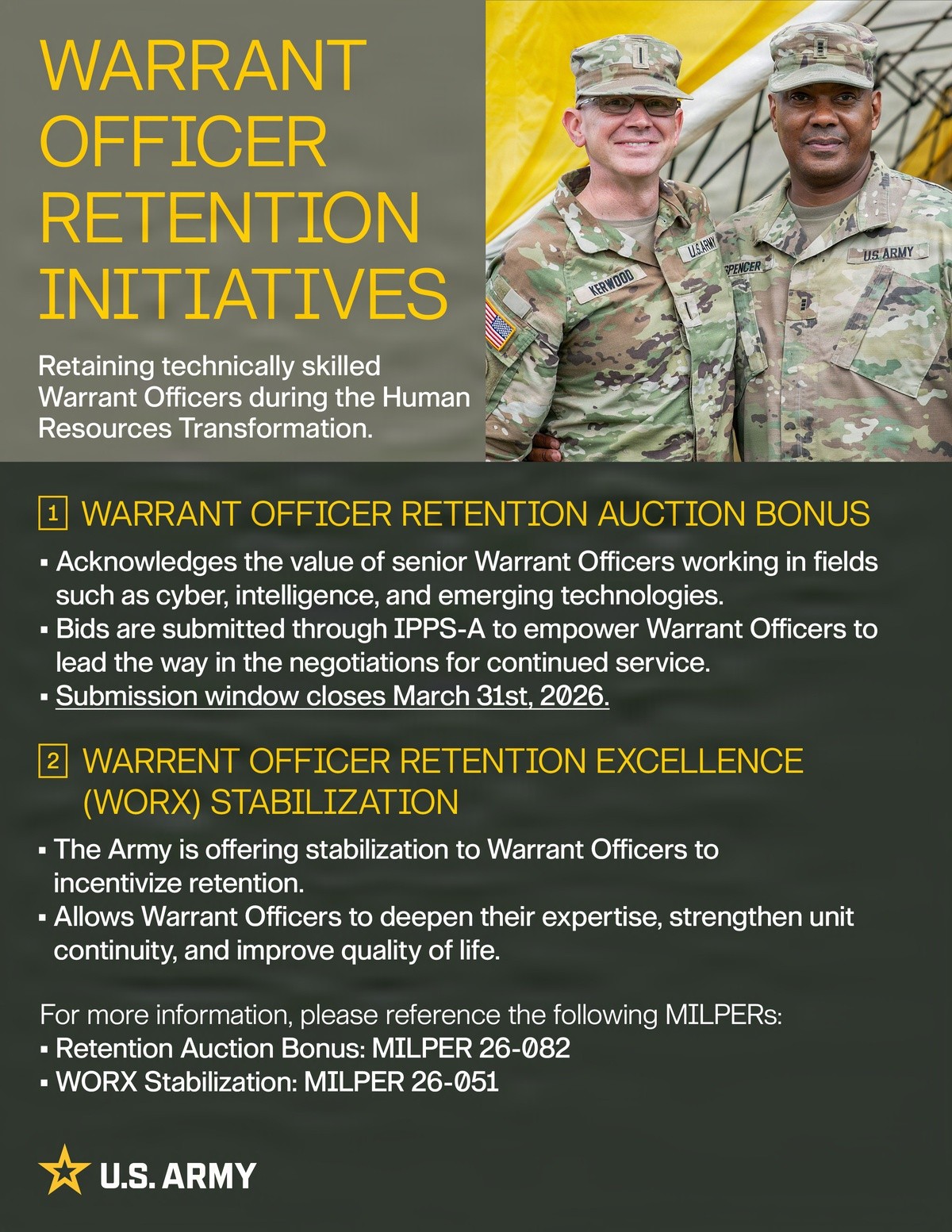
WASHINGTON — The U.S. Army is launching multifaceted initiatives to keep its most experienced technical experts in uniform. A part of the Human Resources Continuous Transformation efforts, a new stabilization initiative and the updated retention bonus are aimed at senior warrant officers.
One initiative links the Army Warrant Officer Retention & eXcellence program, known as WORX, with a modernized Warrant Officer Retention Bonus. The revitalized WORX, called WORX-Stabilize, is a shift toward addressing both the professional expectations and personal needs of the Army’s technical force.
WORX‑Stabilize focuses on reducing the frequent relocations that traditionally shape military life. Under WORX-Stabilize, warrant officers in high‑demand specialties may remain in the same geographic area or unit for longer periods, which allows soldiers to deepen their expertise, strengthen unit continuity, and provide families with greater predictability.
The initiative reflects a broader Army push to improve quality of life while maintaining readiness. By limiting unnecessary moves, the Army aims to retain seasoned professionals who might otherwise leave service due to instability at home.
Another initiative introduced recently is the Warrant Officer Retention Bonus Auction, which is a redesigned retention bonus that acknowledges the value of senior warrant officers working in fields such as cyber, intelligence, and emerging technologies.
The bonus initiative conducted through the Integrated Personnel and Pay System–Army (IPPS‑A) marks one of the most significant changes under the Army’s Human Resources Continuous Transformation effort. Officials say the goal is simple; improve the soldier experience by replacing outdated, one-size-fits-all programs with systems that are transparent, flexible and built around individual needs.
“This pilot program for the FY26 Warrant Officer Retention Bonus addresses a need for increasing the number of senior technical experts in high-demand fields like cyber, intelligence, and logistics,” stated Colonel Angela Chipman, Chief, Military Personnel Accessions & Retention Division.
Under the new model, senior warrant officers can confidentially submit bids through their IPPS‑A account, indicating the bonus amount they believe reflects the value of their continued service. The system then uses those bids to determine fair, market clearing rates for all selected participants.
The first of many Warrant Officer Townhalls on this new initiative was held in February 2026, with 250 mid-grade and senior warrant officers in attendance, opening a direct line of communication. The town halls are designed to explain what the program is about, giving warrant officers a clear understanding of its purpose, structure, and intent. They also create space for meaningful feedback that leaders can use to shape and adjust the bonus program. The insights will also allow the Army to learn, adapt, and refine its retention strategies for the entire force, demonstrating a genuine commitment to improving processes based on collaboration with soldiers.
Rather than relying on older, one‑size‑fits‑all models, the updated bonus structure is intended to function more like a professional negotiation. The goal is to offer competitive compensation that reflect the specialized skills these soldiers bring to the force.
Army officials describe the combined programs as a coordinated response to feedback from the field. The stabilization effort addresses family and lifestyle concerns, while the bonus underscores the professional value of warrant officers’ expertise.
“This groundbreaking process acknowledges their unique skills and gives them unprecedented control in determining what their time and expertise are worth,” said Chipman.
Both initiatives fall under the Army’s Human Resources Continuous Transformation effort, which aims to modernize personnel policies and strengthen the service’s ability to attract and retain skilled soldiers.
By pairing quality‑of‑life improvements with targeted financial incentives, the Army hopes to keep its most experienced technical leaders in uniform ensuring they continue to mentor junior soldiers and contribute to the service’s operational edge.
Social Sharing