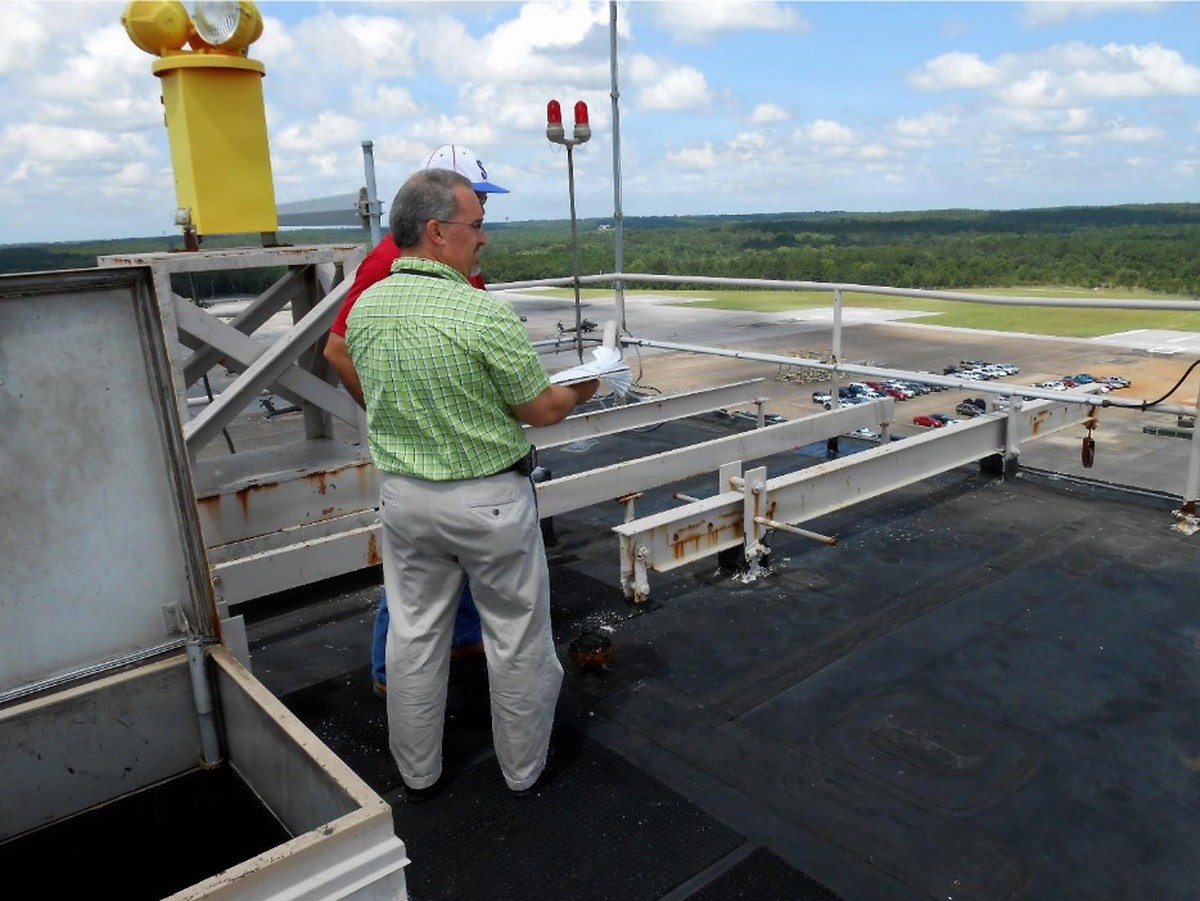
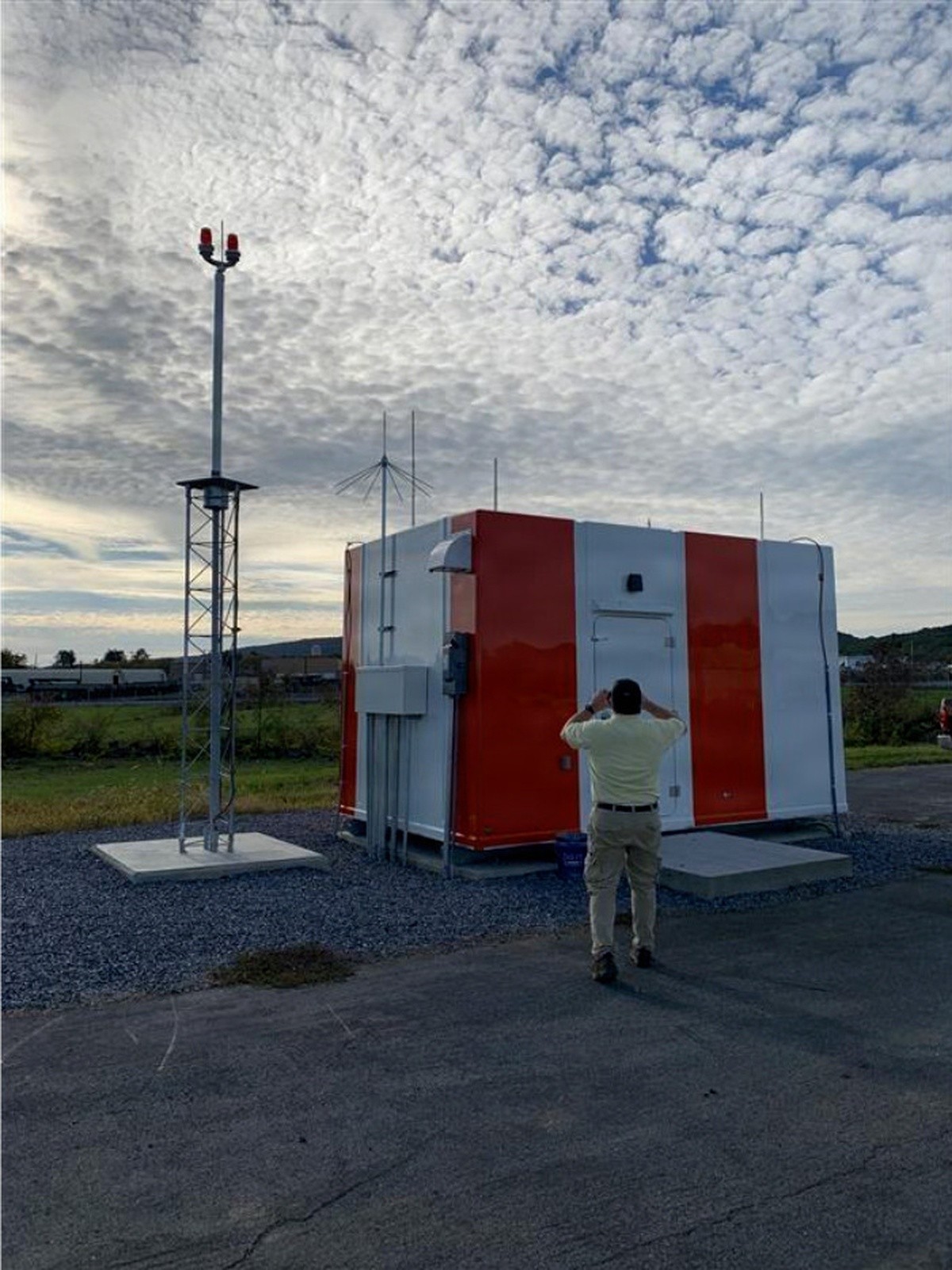
FORT DETRICK, Md. – As the landscape of air traffic control changes with the proliferation of unmanned aerial systems, the U.S. Army Communications-Electronics Command’s Information Systems Engineering Command is up to the challenge of upgrading technology infrastructure and command and control systems to support these changes. The USAISEC Air Traffic Control Engineering Team is a group of specialized engineers playing a vital, behind-the-scenes role in ensuring the safety and readiness of Army aviation operations worldwide.
The Air Traffic Control Engineering Team is part of the USAISEC Fort Detrick Engineering Directorate and provides critical lifecycle engineering and management for the Army’s air traffic control systems. This directorate’s work supports Army readiness and modernization priorities directly by ensuring the compliance, performance, and technological advancement of critical infrastructure at Army airfields.
USAISEC’s air traffic control mission is twofold: providing essential engineering oversight for air traffic control equipment modernization in partnership with Army acquisition offices and managing mandated drawing records for all Army aviation facilities.
Task 1: Overseeing air traffic control equipment modernization
The Air Traffic Control Engineering Team’s first task involves providing specialized engineering support to Product Manager Assured Airspace Access, an acquisition office at Redstone Arsenal, Ala. PdM A3S utilizes the decades of expertise USAISEC engineers possess to interpret and evaluate technical issues that PdM A3S can apply to program, cost, and schedule decisions.
Through these efforts, the team provides PdM A3S with extensive historical expertise regarding the fixed-base air traffic control systems portfolio at Army airfields worldwide. The team’s participation in many products that PdM A3S fields allows for effort synchronization, redundancy reduction, and interpretation of the Department of War contractors’ technical information.
PdM A3S utilizes USAISEC engineers’ expertise in feasibility studies, site surveys, contracting documentation reviews, material solutions evaluations, test support, artifact archiving for future use in modernization planning, and advising on new technology requirements for future replacement solutions.
This enables the modernization of air traffic control equipment that keeps Army airfields aligned with Federal Aviation Administration equipment in the National Airspace System. USAISEC’s engineering expertise complements PdM A3S air traffic control modernization efforts, which are validated by the Air Traffic Services Command.
Task 2: Managing mandated drawing records
The Air Traffic Control Engineering Team’s second task is managing plant-in-place drawing records, a responsibility designated to USAISEC in Army Regulation 95-2. This decades-old mission from the U.S. Army Materiel Command provides a centralized agency for managing the master drawings of airfields. These records are crucial for everything from daily operations to formal Aviation Resource Management Survey inspections, which assess the readiness and performance of airfield systems that are critical to warfighter training.
To support the AR 95-2 mandate, USAISEC dedicates personnel to ensure the effective management of plant-in-place drawing records. These personnel diligently update facility records based on airfield changes and redline updates collected during equipment upgrades. This provides Army airfield personnel with updated site records required for operational readiness inspections.
To maximize resources, the team leverages travel associated with other projects to survey airfields and create these updates, avoiding additional costs. This efficient approach demonstrates fiscal stewardship while ensuring Army aviation facilities can maintain accurate records and meet regulatory requirements.
USAISEC’s impact on Army aviation operational readiness
This long-standing partnership between USAISEC and PdM A3S, dating back to 1986, provides lifecycle oversight for modernization projects involving radios, voice switches, legal recorders, navigational aids, and radars. Recent efforts have focused on modernizing key systems like the National Airspace System Voice Recorder, Digital Airport Surveillance Radar, and instrument landing system.
USAISEC’s early and continuous involvement ensures program standardization, historical continuity, and consistent technical oversight across multiple complex systems and locations. This integration of sustainment and acquisition is a cornerstone of AMC’s strategy to enhance installation readiness and deliver enduring support to the warfighter.
Through its meticulous work providing expert engineering for modernization programs and managing drawing records, the USAISEC Air Traffic Control Engineering Team is a cornerstone of Army aviation. The team’s dedication ensures the success of current and future air traffic control programs, enhancing the operational readiness of Army airfields and supporting the Army’s transformation for the challenges of today and tomorrow.
Social Sharing