
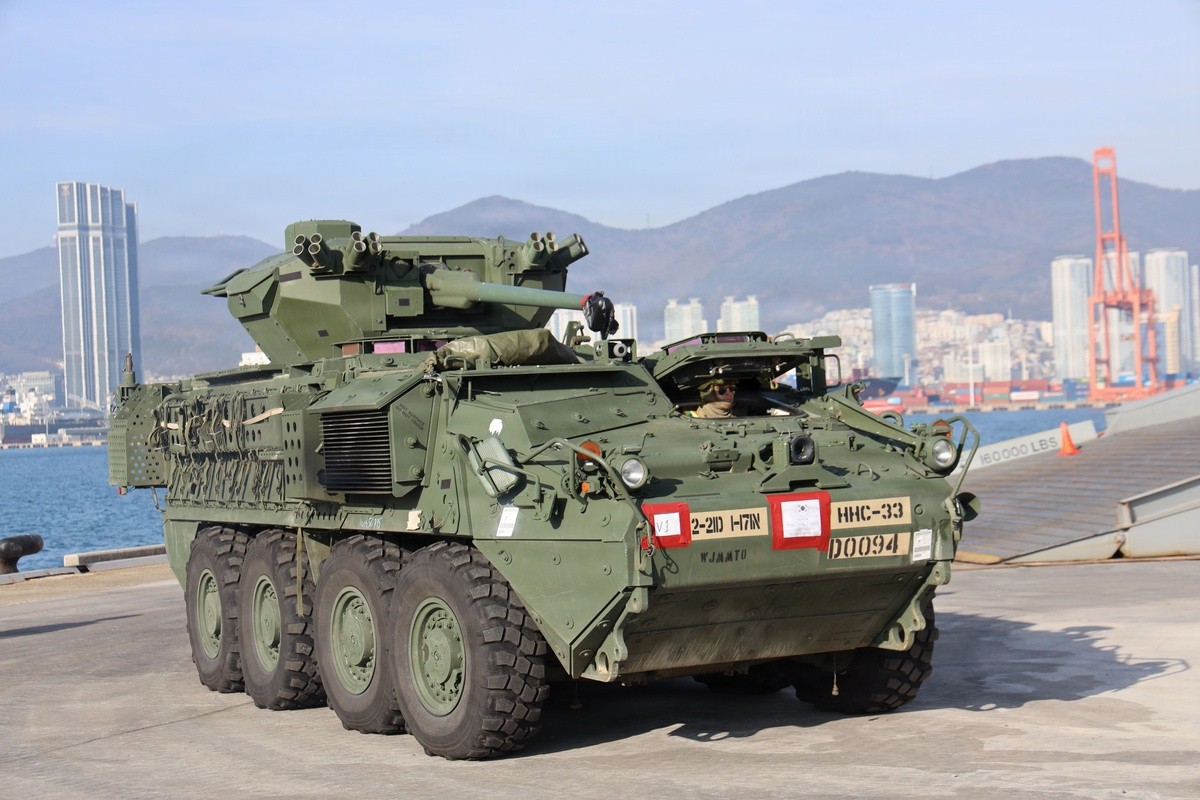
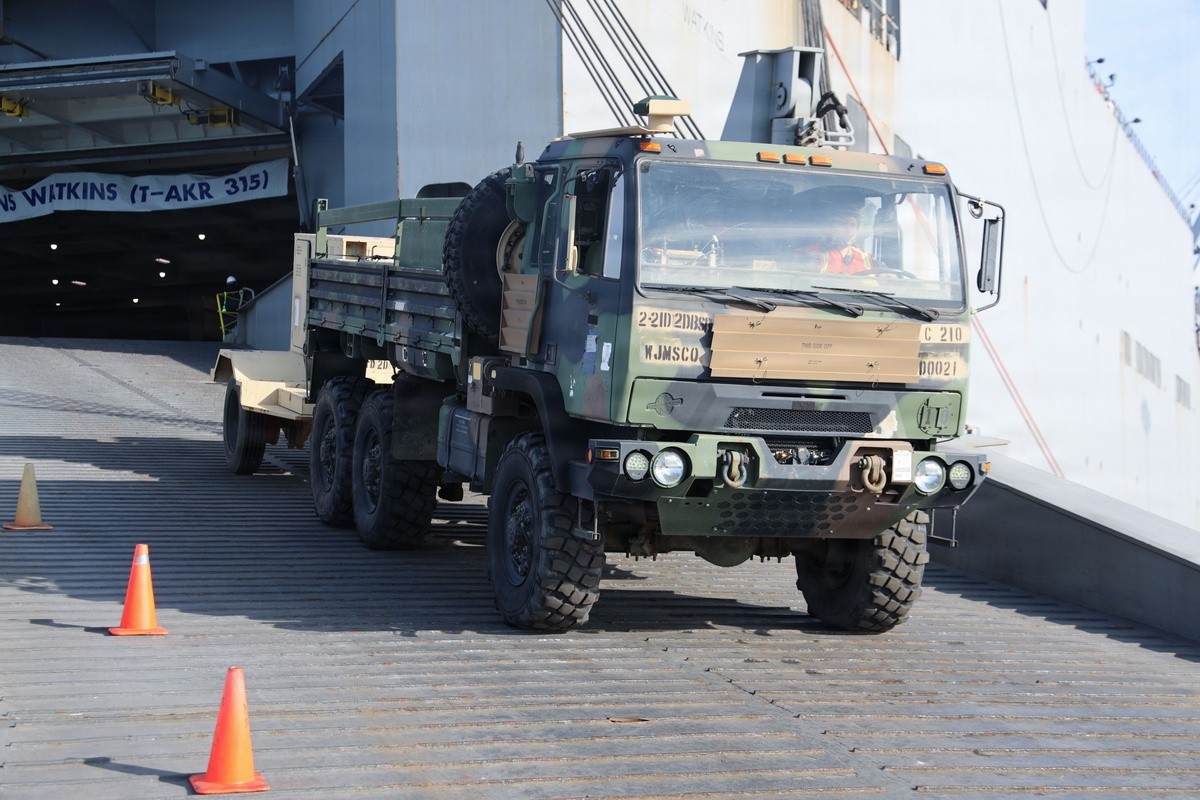

BUSAN, Republic of Korea - At the port, readiness begins with movement. Lines of military vehicles, containers and equipment drove down the ramp of the USNS Watkins and onto the pier as Soldiers carried out port operations supporting the Korean Rotational Force (KRF) mission. The operation ensures a smooth transition between rotating U.S. Army brigade combat teams on the Korean Peninsula and demonstrates the Army’s ability to rapidly relocate combat power where it is needed.
KRF is an annual deployment cycle that ensures the Army always maintains fully trained and capable units in Korea, reinforcing the U.S. commitment to the Republic of Korea and maintaining a strong deterrent posture in the region. This year, the 2nd Stryker Brigade Combat Team, 2nd Infantry Division, replaced the 1st Stryker Brigade Combat Team, 4th Infantry Division on Korea Peninsula.
"For us, it is about proving we can move combat power when it matters," said U.S. Army Maj. Joseph Cabalo, executive officer, 837th Transportation Battalion, 599th Transportation Brigade. "Every vehicle we offload and every container we stage shows that our logistics network works when it is put to the test."
Soldiers from the 837th Transportation Battalion facilitated port operations at Pyeongtaek Port, located south of Seoul near Camp Humphreys, and Pier 8 in Busan on the southeastern coast of the Korean Peninsula. Their mission focused on offloading equipment from arriving vessels while staging outgoing equipment for redeployment to the United States as part of the Army’s Reception, Staging, Onward Movement and Integration process.
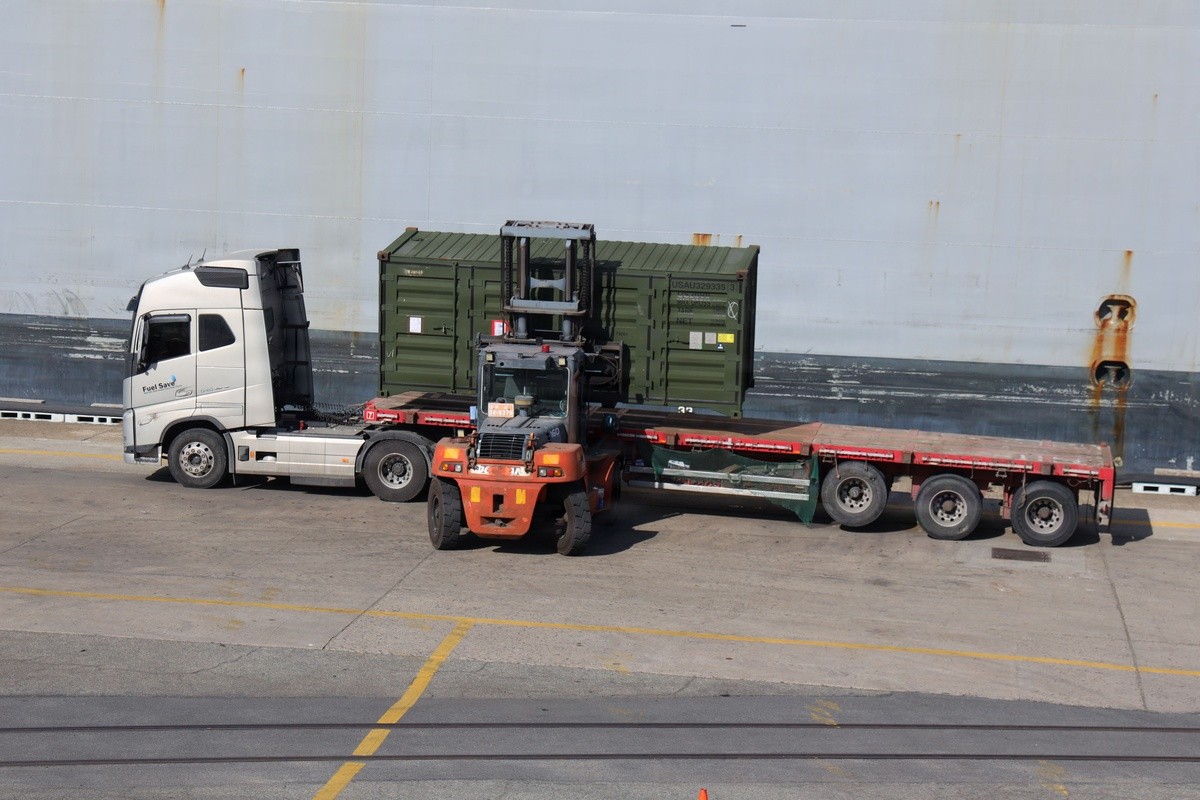
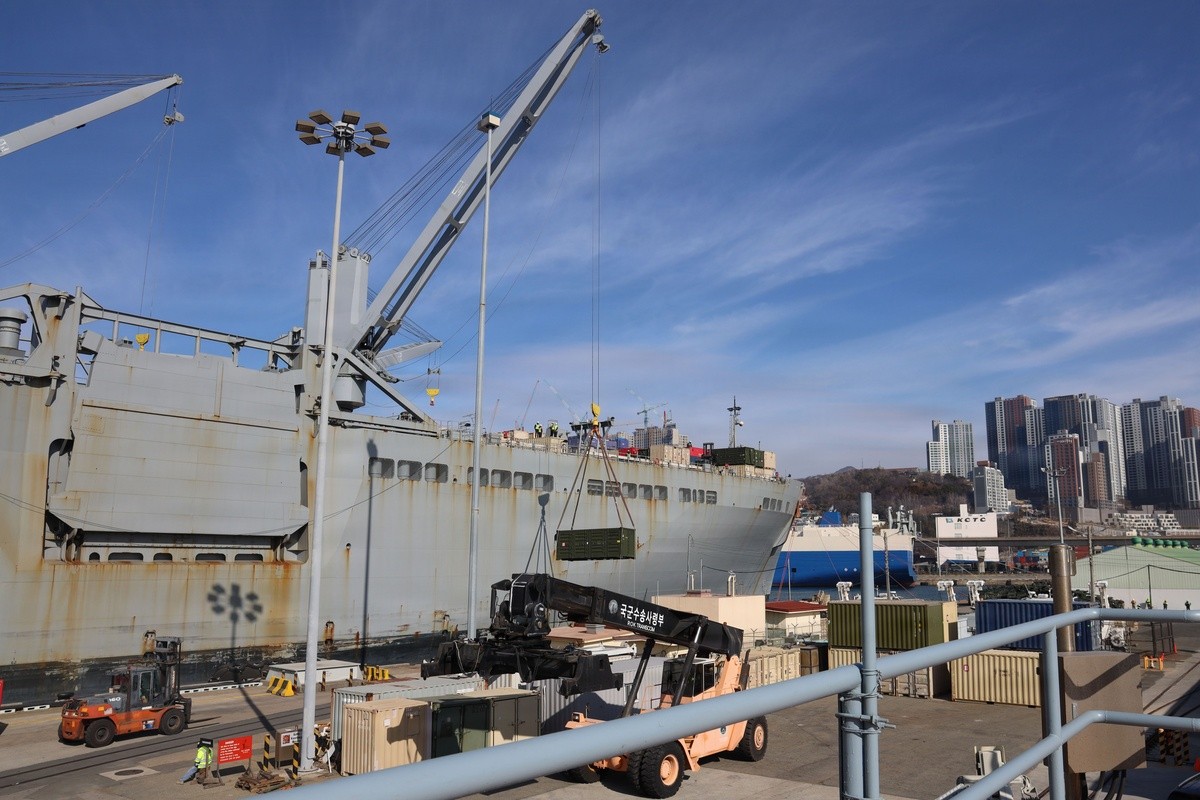
Throughout the operation, crews maintained a steady flow of equipment moving on and off the ships. Vehicles rolled down ramps, containers were lifted by cranes and material handling equipment, and staging areas were carefully managed to keep operations moving without congestion.
Each step required coordination between multiple organizations, including the 19th Expeditionary Sustainment Command, the 2nd Infantry Division, and the Republic of Korea Army Port Operations Group, which helped manage container yards and provide material handling equipment during operations.
This year’s rotation marked the first time the battalion executed a two-port operation. Teams had to manage tidal limitations at Pyeongtaek and limited staging space at Pier 8 while still maintaining operational timelines.
"The scale of this mission really shows what our sustainment teams are capable of," Cabalo said. "It is not just about moving equipment off a ship; It is about synchronizing people, equipment, and partners across the theater so everything arrives where it needs to be."
For the Soldiers working along the pier, the successful operation highlighted more than the complexity of military logistics. It demonstrated the Army’s ability to move and sustain combat power across the Indo-Pacific, reinforcing the strength of the United States-Republic of Korea alliance and ensuring the force in Korea remains ready to fight tonight.
Social Sharing