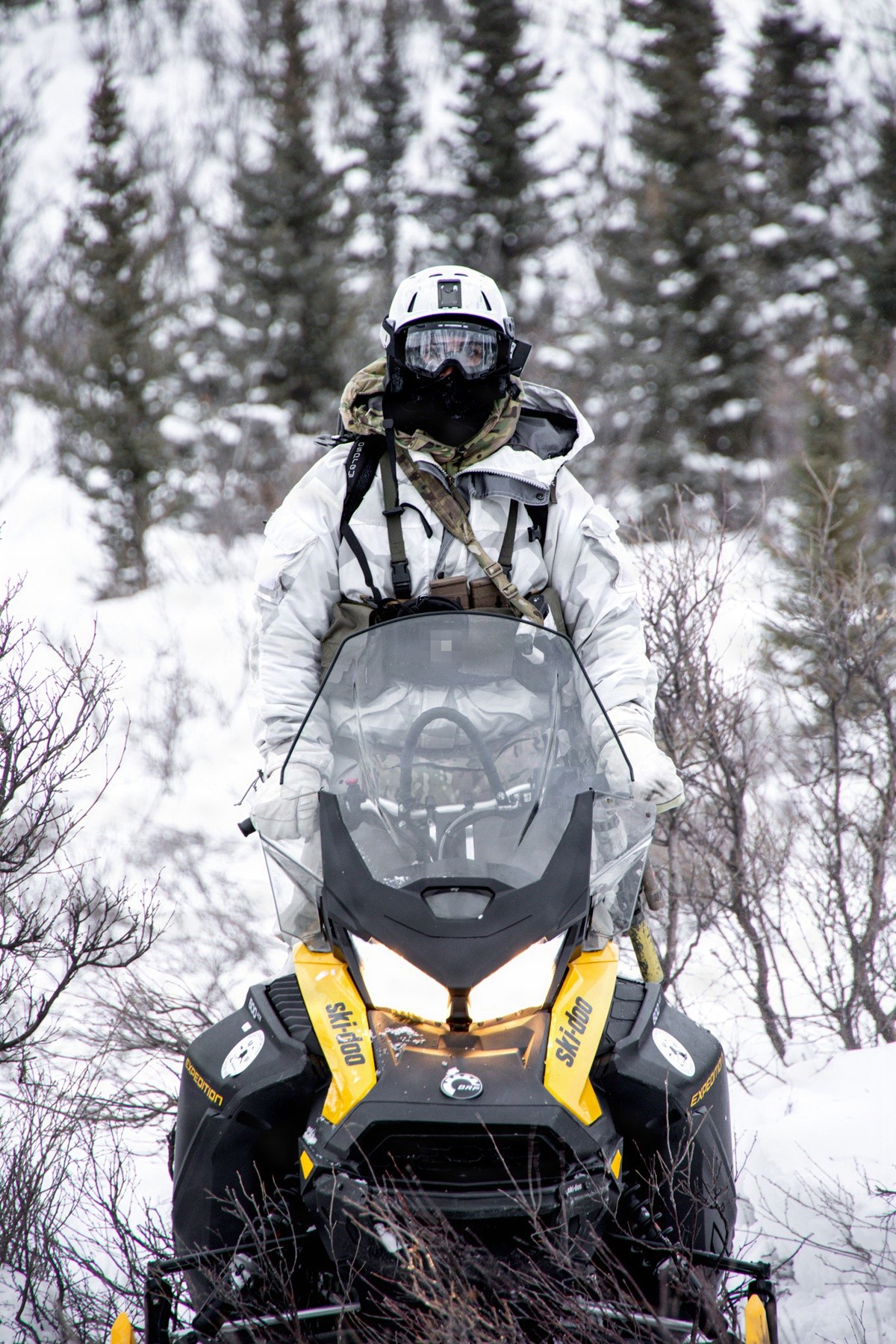

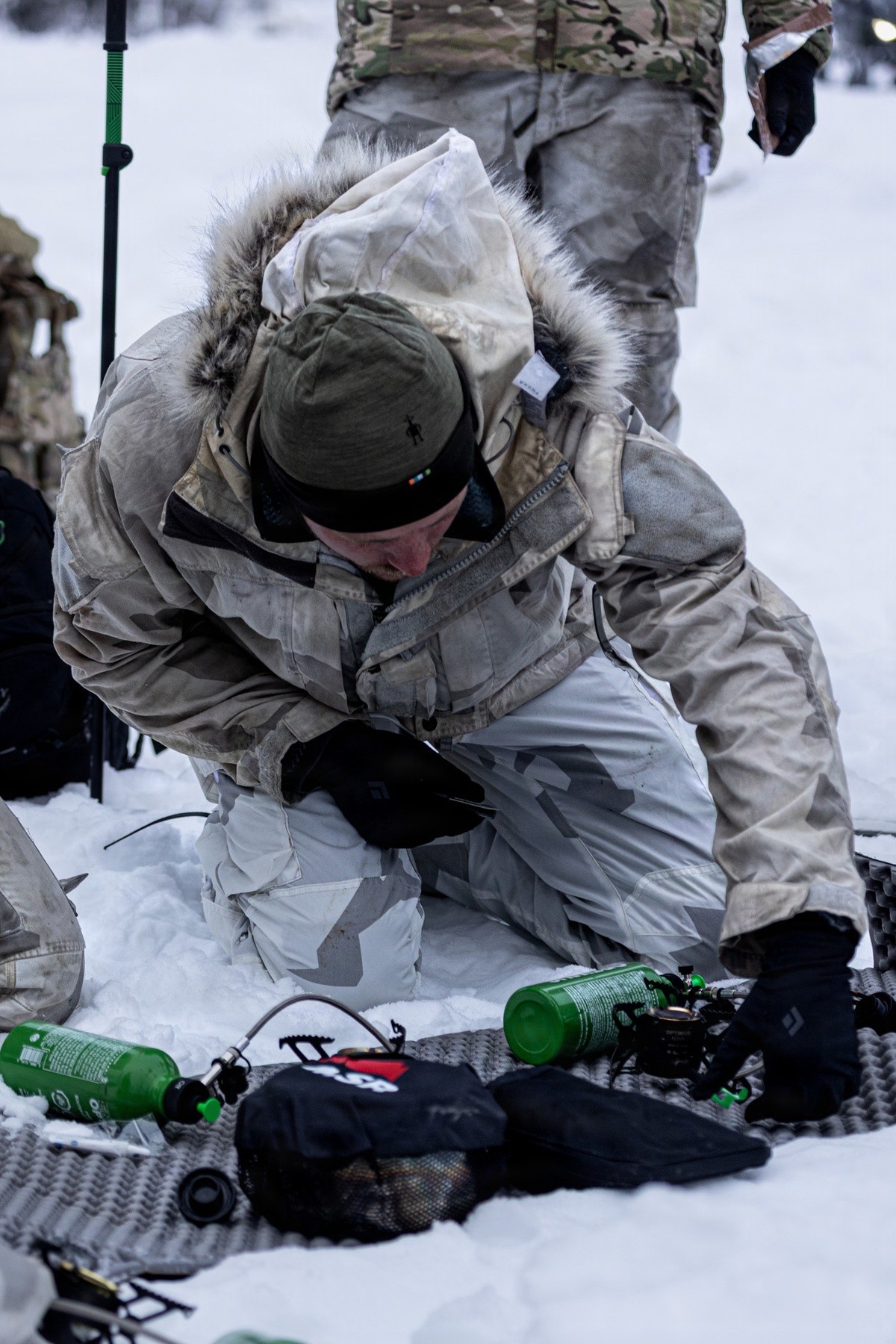
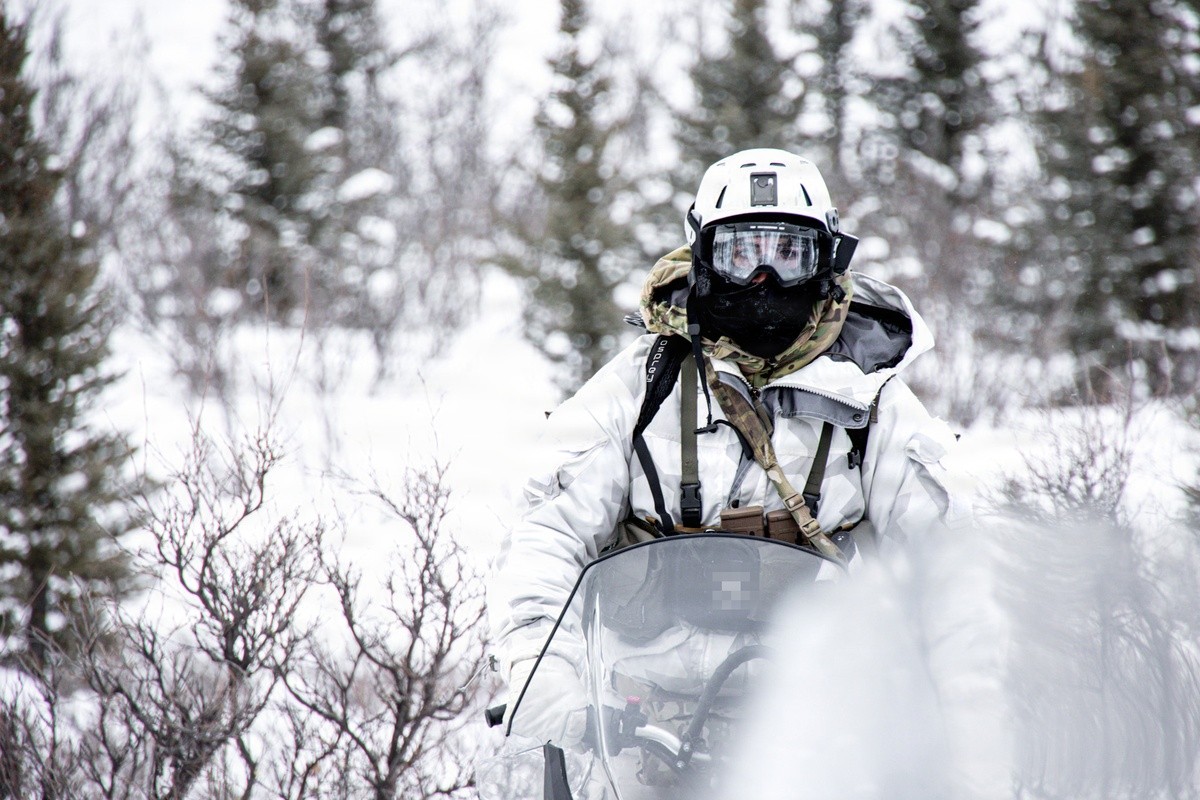
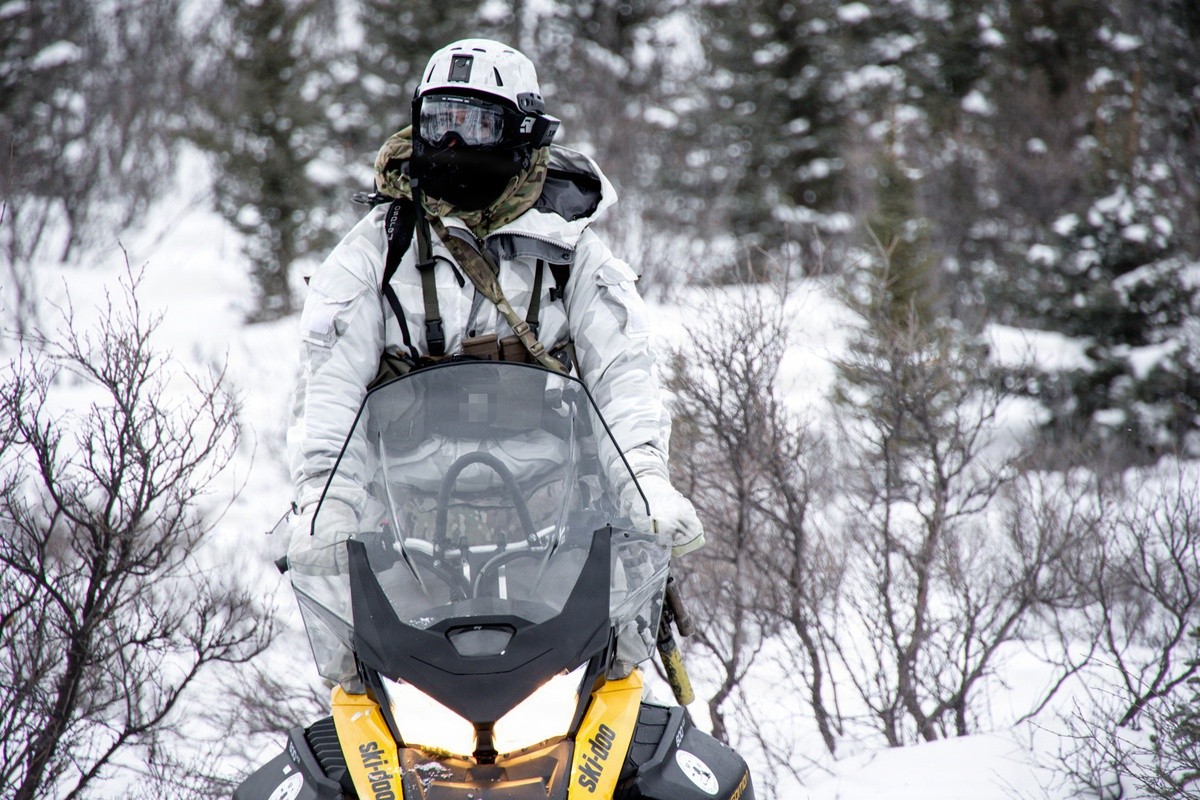
FORT WAINWRIGHT, Alaska — Across the freezing subarctic region, Green Berets immersed themselves in some of the most physically and mentally taxing cold weather training for the Joint Pacific Multinational Training Center 26-02 rotation across multiple training areas in central and southern Alaska.
Green Berets and enablers assigned to 3rd Battalion, 10th Special Forces Group (Airborne) pushed their bodies to the limit and used their unique set of skills to enhance the effectiveness of 11th Airborne Division in a simulated large-scale combat operation from Feb. 11-20, 2026.
Several small teams of operators leveraged reconnaissance and disruption of adversary technology to ultimately give the joint force commander a decisive advantage in fires and maneuver across the battlespace.
“We’ve got our place [in large-scale combat operations] and it is using tactical actions with our specialized signals intelligence and electronic warfare analysts to achieve strategic results,” said Maj. Scott Ratzer, the 3rd Battalion Alpha company commander. “This gives us a chance to identify important [enemy] targets on the division’s high-priority target list and disrupt [enemy] command and control, sustainment and logistics.”
Prior to entering the JPMRC training area, multiple Special Forces Operational Detachment–Alphas, SFOD-A, and support personnel conducted 14 days of focused cold weather training in Alaska to refine fundamental survival skills required to operate in Arctic conditions.

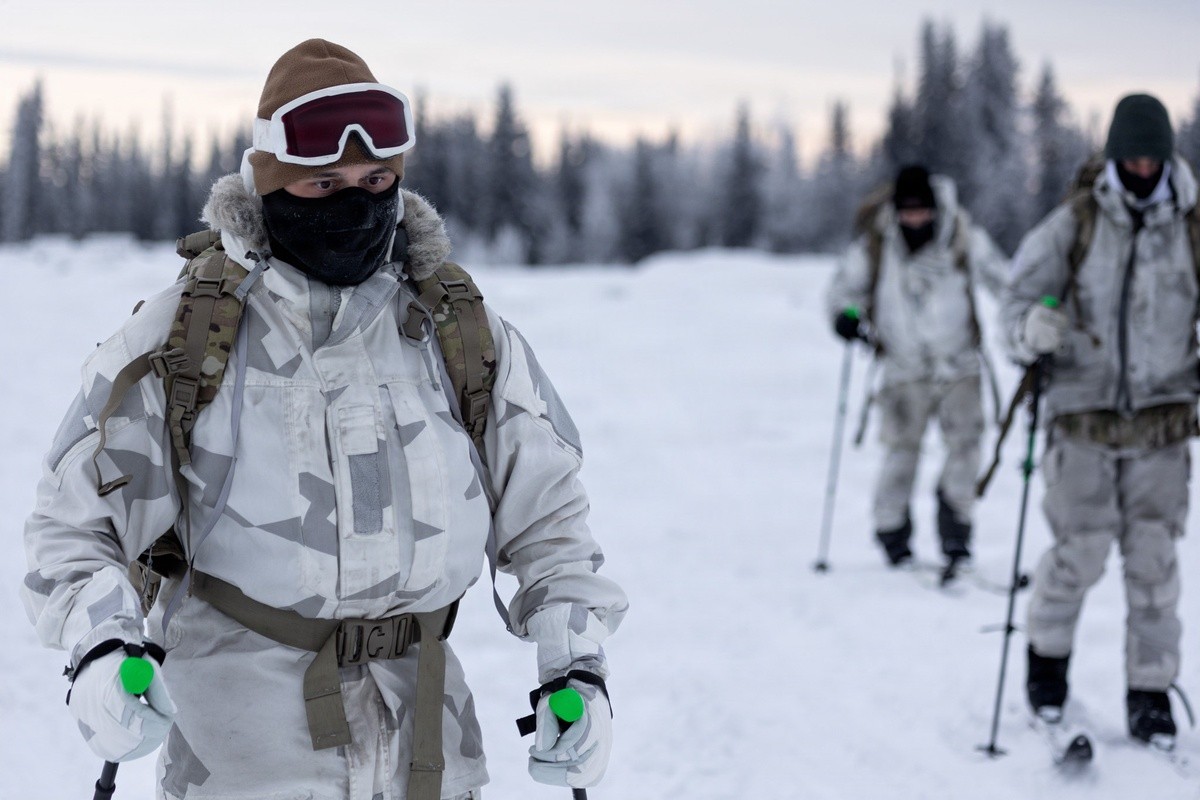
The teams rehearsed small-unit movement over snow-covered and restrictive terrain, cold weather sustainment to include meal preparation, communications in extreme temperatures, and long-duration dismounted operations. The training reinforced the technical discipline required to maintain combat power when equipment, batteries, and even basic tasks become more complex in sub-zero environments.
“Having two weeks of solid cold-weather training prior to going into the box helped us and other teams really prepare for the subfreezing temperatures that we were going to face in the box,” said a Special Forces Team Sergeant, the senior NCO on an ODA. “When guys are exposed to this environment [like Alaska], they stop doing the simple things - changing socks, drinking water, and eating. These mistakes can begin to snowball if not taken seriously.”
Building on that foundation, the ODAs integrated emerging technologies to extend their reach well beyond line-of-sight contact. The 3rd Battalion’s premiere military free fall, MFF, team practiced a high-altitude high opening jump to field test cold-weather equipment, communications gear, and layered clothing configurations in a true Arctic environment prior to entering the training area.
By executing the infiltration under realistic conditions, the ODA identified equipment limitations, refined load plans and confirmed that critical systems would function upon landing.
“If we can prove we’re able to execute an MFF jump in arctic conditions, that’s just one more option the commander has in his back pocket,” said a special forces detachment commander. “Weather and terrain up here can limit how you move forces, so testing our gear and our procedures in this environment gives higher headquarters the flexibility to insert a team where and when it makes sense.”
This training underscores the Army’s focus on building agile, lethal formations capable of projecting combat power in any climate and against any adversary.
Adaptability is a key component in building lethality and first-person view drones assist 10th SFG (A) signals intelligence Soldiers in collecting critical information to hand off to 11th Airborne Division for rocket and missile support.
“FPV drones give us a fast, low-signature way to confirm what we’re seeing on the ground and tighten up our target picture,” said a signals intelligence Soldier. “Instead of relying solely on reports or larger platforms, we can push a drone forward, get eyes on the objective in real time, and provide accurate information to the commander. That speed and precision makes a big difference when it comes to reconnaissance and confirming prior intel.”
As the rotation wrapped up, Green Berets from 3rd Battalion, 10th Special Forces Group (Airborne) returned from Alaska having honed their cold-weather skills and tested their equipment in extreme conditions. From survival basics to using FPV drones for real-time reconnaissance, they showed the Army’s focus on adaptability, precision, and readiness. The training ensures commanders have the tools and information needed to gain an edge on any battlefield.
The Joint Pacific Multinational Readiness Center is the U.S. Army's premier Combat Training Center in the Indo-Pacific region. Established as a "home-station" and exportable capability, it allows units to train in their own regional environments—such as jungles, archipelagos, and extreme cold—rather than traveling to conventional training centers in the continental United States.
Social Sharing