

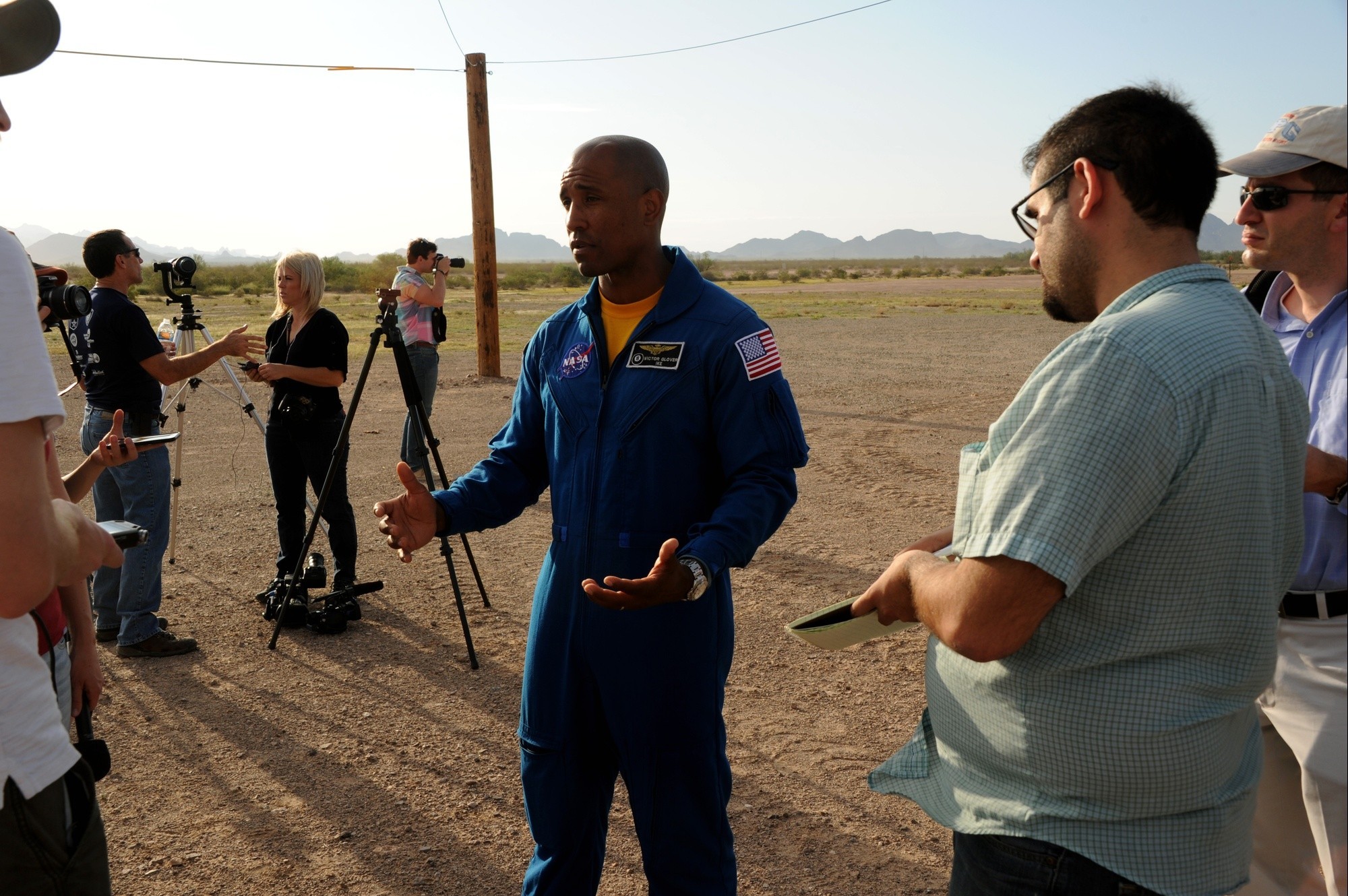
Here, Glover (center) speaks to media representatives in the moments before a test of the CPAS on August 26, 2015. “A rocket with an American flag on the side of it is one of the most important things NASA is going to do in the near future in human spaceflight,” he said at the time VIEW ORIGINAL
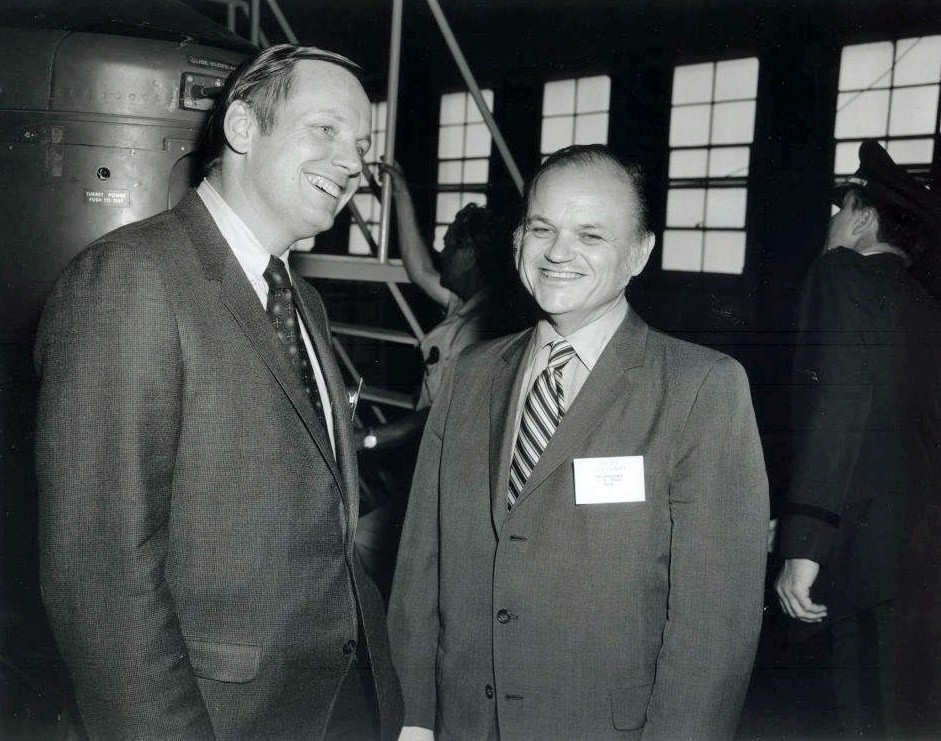
Nineteen months after taking his giant leap for mankind, in February 1971 the Apollo 11 commander visited YPG to witness testing of the AH-56 Cheyenne attack helicopter, where he was joined by then-congressman Lucien Nedzi (right) of Michigan.
Though the AH-56 was cancelled by the Army the following year, the program was a boon to aviation testing at YPG, as it brought about the construction of a substantial amount of infrastructure like laser and optical tracking sites.
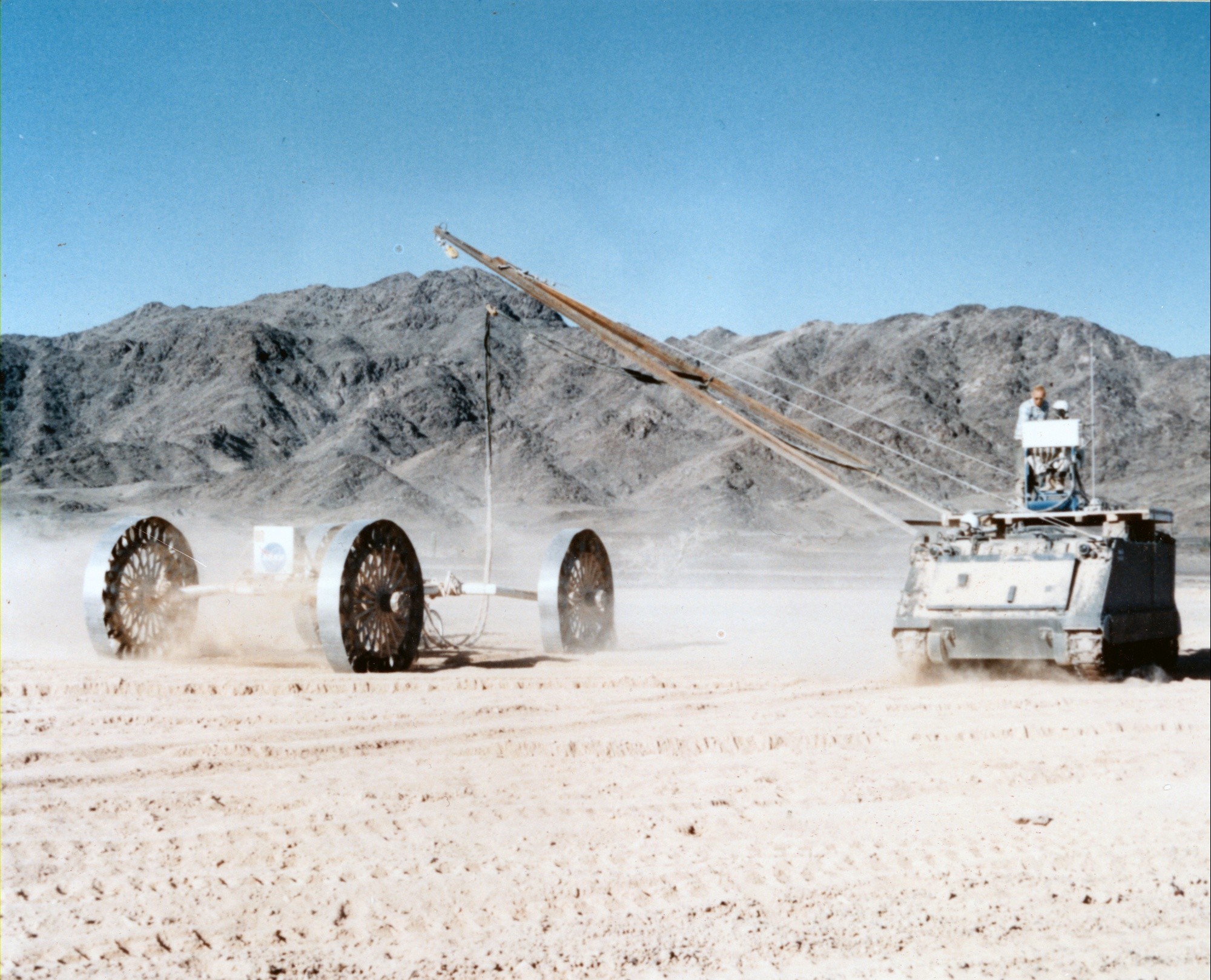
YPG has done testing for the National Aeronautics and Space Administration (NASA) since 1966, when the mobility test article (MTA), a precursor to the lunar rover, came here for engineer design evaluations. VIEW ORIGINAL
YUMA PROVING GROUND, Ariz.-- The National Aeronautics and Space Administration (NASA) announced the first crewed mission of the Artemis II will fly around the moon after an opportune launch window sometime between early February and the end of April.
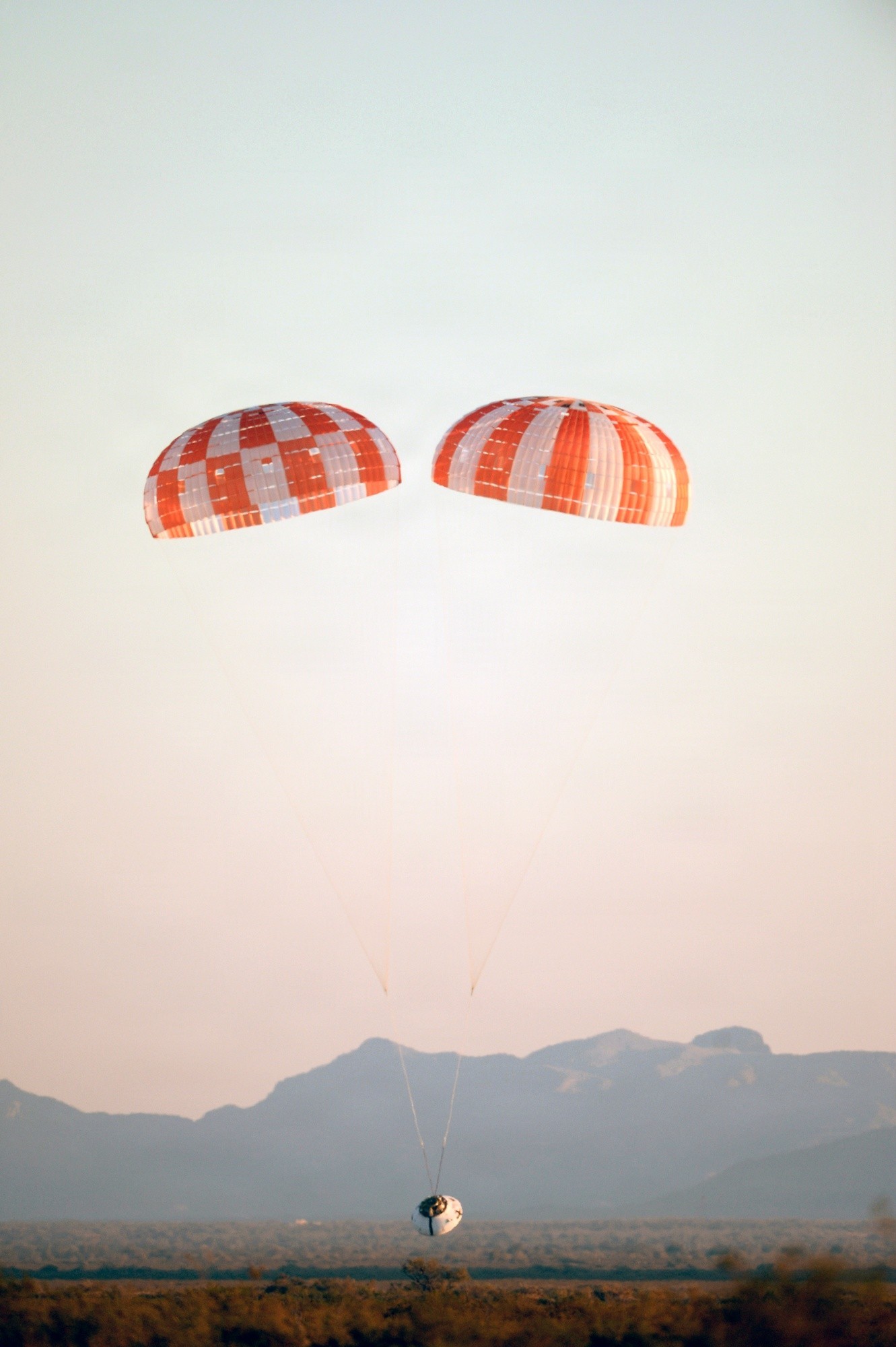
The mission will be capped by the deployment of the Orion space capsule’s parachutes, rigorously evaluated at U.S. Army Yuma Proving Ground (YPG) in multiple developmental tests between 2011 and 2018.
The mission’s pilot is slated to be Victor Glover, an astronaut who witnessed multiple developmental tests of the Capsule Parachute Assembly System (CPAS) here. Glover and his crew mates went into a pre-launch health stabilization, or quarantine, on January 23 in preparation for the mission.
Most people associate space travel with tremendous speed, but safe deceleration is just as important for the astronauts on board: Whereas a spacecraft has to travel at approximately 20,000 miles per hour to escape the Earth, to return its occupants safely to the ground the same capsule needs to be decelerated from as fast as 24,500 miles per hour to speeds slower than most people drive automobiles on residential streets.
Meanwhile, the extreme friction generated by the capsule hurtling back into Earth’s atmosphere at such a tremendous speed means its exterior heats to more than 4,000 degrees Fahrenheit.
Safely landing under these conditions is a tremendous undertaking, and large parachutes play an important role in accomplishing it. The rope that makes up the CPAS’ cord is made of Kevlar, the strong synthetic fiber used in body armor: the change was made from steel as a result of testing at YPG. Each main parachute consists of 10,000 square feet of fabric: the CPAS system is designed to deploy sequentially and pass through two stages prior to being fully open: on re-entry, two drogue parachutes deploy to slow the hurtling 10-ton capsule prior to three main parachutes taking it down to a languid landing speed of 17 miles per hour.
Further, the parachute system is designed with redundancies meant to protect the safe landing of astronauts even in extreme scenarios such as two parachutes failing, or a catastrophic mishap shortly after takeoff. In many of the tests at YPG, evaluators intentionally rigged one or more of the CPAS’ parachutes to not deploy to ensure that the remaining functioning chutes could withstand the additional stress of speed and mass the failure would cause.
In addition to being able to outfit the test vehicle with far more instrumentation and cameras than would be possible if it was coming from space, testing over land at YPG made recovery and examination of the parachutes easier than when the capsule lands in the ocean following a real space mission.
The years of hard work paid off. Following a launch on November 16, 2022, the uncrewed Orion took a 1.4 million mile round-trip journey that took it past the moon, reentering the atmosphere and splashing down safely in the Pacific Ocean after the CPAS deployed without a hitch on December 11, 2022.
YPG has hosted developmental testing for NASA since the earliest days of the space program. The precursor to the lunar rover used during the last moon landings in 1971 and 1972, dubbed the ‘mobility test article,’ was tested at the proving ground in 1966. Astronaut Neil Armstrong, the first human to walk on the surface of the moon, visited YPG to witness developmental testing of the AH-56 Cheyenne Attack Helicopter in 1971.
Social Sharing